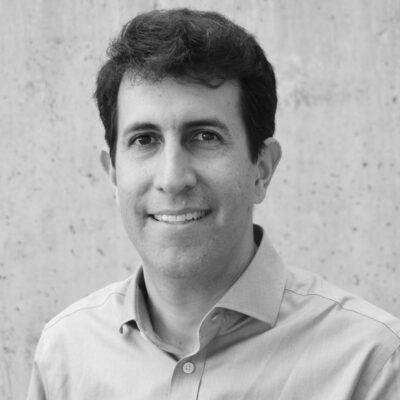
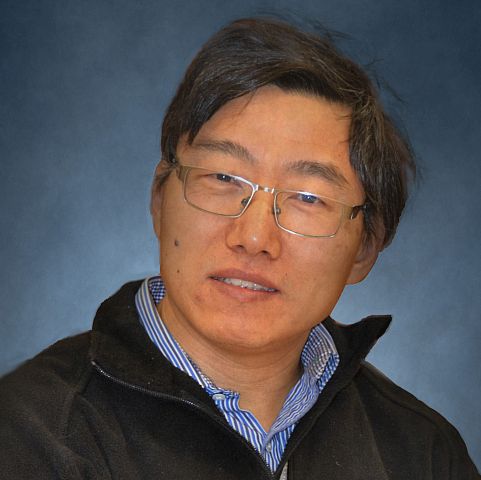
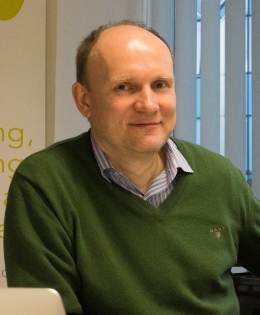
Nirupam Roy is an Assistant Professor at the Department of Computer Science, University of Maryland, College Park, and Director of the iCoSMoS research lab. His work bridges wireless networking, mobile computing, and acoustic sensing with applications in IoT, localization, healthcare, security, and wearables. Research Focus: Wireless Networking & Mobile Sensing Awards: Best paper award, MobiSys 2022 Best demo award, MobiSys 2021 CSL Ph.D. Thesis Award, UIUC 2019 Students: Nakul Garg, Yang Bai, Irtaza Shahid, Harshvardhan Takawale, Aritrik Ghosh, Ayushi Mishra, Sumbul Zehra, Justin Goodman Grants: NSF CAREER award (2023), Meta Research Award (2023)
Stephan Conermann serves as Professor of Islamic Studies and Dean of the Faculty of Arts and Humanities at the University of Bonn, where he has held continuous academic appointments since 2003. His institutional leadership includes directorship of the Annemarie Schimmel Kolleg (2010-2022), Bonn Center for Transcultural Narratology, and significant administrative roles culminating in his current deanship since 2023. Academic Background: Doctorate in Oriental Philology/Islamic Studies (Kiel University, 1996, magna cum laude) Magisterstudium in Asian History, Oriental and Slavic Philology (Kiel University, 1992) Conermann's research examines pre-modern Islamic societies through narrative strategies in historiography, with specialized focus on Mamluk Sultanate governance (1250-1517), Delhi Sultanate/Mughal transitions, and Transottomanica mobility dynamics. His work uniquely connects asymmetrical dependencies (particularly slavery systems), power structures, and global entanglements across South Asia, Middle East, and Eastern Europe. His extensive publication portfolio shows consistent thematic evolution toward comparative frameworks analyzing slavery beyond Eurocentric models, narrative construction of power across cultures, and mobility as historical catalyst. Recent scholarship increasingly integrates transcultural methodology with digital humanities approaches. Academic Leadership: Supervised 290+ theses (59 PhD, 96 Magister, 47 Master, 88 Bachelor) Acquired ~9 million euros in third-party funding (DFG, BMBF, DAAD) Editor of 15+ publication series including Mamluk Studies and Dependency and Slavery Studies Conermann directs the Bonn Center for Transcultural Narratology and co-leads the EXC 2036 'Beyond Slavery and Freedom' cluster, fostering interdisciplinary research on pre-modern dependency systems through international collaborations across Europe, Asia, and the Americas.
Dr. Chandranath Adak is an Assistant Professor at the Department of Computer Science and Engineering, Indian Institute of Technology Patna (IIT Patna), and concurrently serves as a Visiting Fellow at the School of Computer Science, University of Technology Sydney (UTS), Australia. He holds a Ph.D. in Analytics from UTS (2019) and previously served as an Assistant Professor at Indian Institute of Information Technology Lucknow (IIITL) and the Centre for Data Science at JIS Institute of Advanced Studies, Kolkata. Education: Ph.D. (Analytics), University of Technology Sydney (2019) M.Tech., Computer Science and Engineering, University of Kalyani (2014) B.Tech., Computer Science and Engineering, West Bengal University of Technology (2012) Research Interests: His work spans Computer Vision, Deep Learning, Reinforcement Learning, Document Image Analysis, and AI-driven solutions for healthcare, forensics, and industrial automation. He has pioneered methods in biomarker detection using electrochemical sensors combined with ML models, handwriting analysis for educational and forensic applications, and anomaly detection in industrial systems. His research bridges theoretical advances with real-world applications, such as medical diagnostics and quality control systems. Publications: His recent work includes innovations in biosensor-based medical diagnostics, handwriting evaluation systems, and transformer networks for historical document analysis. These contributions reflect a focus on interdisciplinary applications of AI across healthcare, cultural heritage preservation, and industrial automation. Awards: Start-up Research Grant, SERB, India (2022) Dr. Kalam Doctoral Scholarship, UTS (2018) IEEE CIS Graduate Student Research Grant (2017) Senior Member, IEEE (2024) Teaching & Supervision: Taught courses at UTS including 'Introduction to Data Analytics' and supervised research in machine learning and computer vision. His mentorship emphasizes hands-on experience with AI tools and real-world problem-solving. Labs & Teams: Engaged in collaborative projects at UTS's CIBCI Centre and Griffith University's IIIS, focusing on computational intelligence and sensor-driven AI systems.
Daniel Rodríguez is Chancellor’s Professor of City & Regional Planning at UC Berkeley and Director of the Institute for Transportation Studies. His research examines transportation-land development interactions and their environmental/health consequences, with focus on climate adaptation strategies, equity in urban mobility, and health impacts in Latin American cities. Current projects analyze behavioral responses to extreme heat, green space benefits, and low-emission zones. Education: PhD, University of Michigan (2000) MS, Transportation, MIT (1996) BS, Business Administration, Fordham University (1994) Rodríguez employs interdisciplinary approaches to study how physical urban attributes influence behavior and health. His work integrates transportation policy, environmental planning, and health geography, emphasizing low-income communities. Research utilizes geospatial analysis, epidemiological methods, and behavioral modeling to inform urban sustainability. Publications focus on transportation equity (45%), urban health (35%), and climate adaptation (20%), with strong emphasis on Latin America. Recent articles demonstrate innovative spatial analysis techniques including computer vision and multi-city ecological studies. Awards: Best Paper, Risk Analysis (2015) Excellence in Safety Research Award, RWJF/CDC (2015) Fred Burggraf Award, TRB (2000) Advises doctoral students and teaches sustainable mobility, transportation policy, and active transportation planning. Leads research teams on SALURBAL project analyzing urban health determinants across 11 countries. Future work focuses on climate-resilient infrastructure financing and mega-city mobility transitions.
Jonathan Levine is a Professor of Urban and Regional Planning at the University of Michigan's Taubman College of Architecture and Urban Planning, where he has been faculty since 1991. His work focuses on transportation planning, housing and equitable development, and land use and environmental planning, with a particular emphasis on shifting from mobility-based to accessibility-based planning paradigms. Levine's educational background includes: Ph.D. in City and Regional Planning from the University of California, Berkeley M.C.P. in City and Regional Planning from the University of California, Berkeley M.S. in Engineering (Civil Engineering-Transportation focus) from the University of California, Berkeley B.S. in Political Economy of Natural Resources from the University of California, Berkeley His research centers on the potential and rationales for policy reform in transportation and land use. Levine argues that a shift in the transportation and land-use planning paradigm from a mobility to an accessibility basis is compelled by transportation theory and would be transformative to planning practices. His current work includes sponsored projects and the book "From Mobility to Accessibility: Transforming Urban Transportation and Land-Use Planning" (Cornell University Press, 2019), co-authored with Joe Grengs and Louis Merlin. He previously authored "Zoned Out: Regulation, Markets, and Choices in Transportation and Metropolitan Land Use" (Resources for the Future, 2006), which argued for policy reform based on expanding households' effective range of choices. Levine's recent publications demonstrate a clear trend toward accessibility-based evaluation of transportation systems and land-use planning. His articles explore topics such as comparing bus rapid transit and light rail, project-level accessibility analysis, overcoming the last-mile problem, and the effects of automated transit systems. His work consistently challenges traditional transportation planning paradigms and advocates for approaches that prioritize access to destinations rather than mere mobility. Levine's contributions to the field have been recognized with several prestigious awards: 2010 Chester Rapkin Award for best paper in the Journal of Planning Education and Research 2011 Residential Fellowship at the Rockefeller Foundation Center in Bellagio, Italy 2001 Excellence in Urban Policy Scholarship Award from the Association of Collegiate Schools of Planning and U.S. Department of Housing and Urban Development 1996 Best of Association of Collegiate Schools of Planning Award Levine has led significant research projects including Implementation of Accessibility-Based Evaluation for Transportation and Land-Use Planning funded by NEXTRANS, Sustainable Transportation for a 3rd Century addressing the last mile problem, and Accessibility Evaluation from Laboratory to Practice. His teaching portfolio includes Transportation and Land-Use Planning, Public Economics for Urban Planning, Research Design, and the MUP Capstone studio, where he guides students through real-world planning challenges. As a thought leader in urban planning, Levine regularly contributes to public discourse on zoning policies, housing diversity, and transportation planning. He has been featured in numerous media outlets discussing how land use policies impact sustainability, affordability, and racial justice, emphasizing that "zoning is behind all of it, and is not only the cause, but exacerbates it." His insights on the historical role of single-family zoning in perpetuating racial segregation have been particularly influential in contemporary housing policy debates.
Dr. Johan P Larsson serves as a Lecturer in Economics and Public Policy within the Department of Land Economy at the University of Cambridge, concurrently holding a Fellowship and Director of Studies position in Land Economy. His academic profile bridges theoretical and empirical research in spatial economic phenomena, with emphasis on policy-relevant investigations of regional competitiveness and urban dynamics. His educational foundation includes: PhD from Jönköping University Dr. Larsson's research program centers on economic geography and regional science, specializing in urban economics and entrepreneurship. He examines how historical industrial structures, neighborhood effects, and policy interventions shape economic integration and innovation ecosystems. Methodologically, he combines quantitative analysis of large-scale datasets with natural experiments (e.g., pandemic-induced remote work) to isolate causal mechanisms in spatial economic processes. His recent publication trajectory (2021-2025) reveals consistent focus on three interconnected domains: evaluation of place-based policies (e.g., City Deals), analysis of the entrepreneurial state's role in innovation, and investigation of immigrant integration dynamics. These works predominantly utilize Scandinavian and English case studies while generating globally applicable theoretical insights, demonstrating methodological sophistication through spatial econometrics and policy counterfactuals. Recognition for his scholarly contributions includes: The JIBS Student Association’s Pedagogical Prize (2017) The Martin Beckmann Award from Regional Science International (2015) Jan Wallander scholar designation (2015) His teaching portfolio spans Microeconomics, Macroeconomics, Urban economics, and Applied statistics, reflecting his interdisciplinary expertise. While doctoral advisees aren't explicitly listed, his Director of Studies role indicates active undergraduate supervision within Cambridge's collegiate system. Current research appears focused on post-pandemic labor geography and mission-oriented innovation policy evaluation, though dedicated laboratories or formal research teams aren't mentioned in available materials.
Mohammad Aliannejadi is an Assistant Professor at the IRLab (formerly ILPS) within the Informatics Institute at the University of Amsterdam. His research focuses on Information Retrieval (IR), machine learning, natural language processing (NLP), and conversational systems, particularly in modeling user information needs on mobile devices and conversational search systems. He holds a Ph.D. in Informatics from Università della Svizzera italiana (USI), Lugano, Switzerland, and a M.Sc. in Computer Engineering from Tehran Polytechnic. During his Ph.D., he visited the CIIR Lab at the University of Massachusetts Amherst, USA. His research interests include conversational search systems, recommender systems, unified search frameworks, and user-centric evaluation methodologies. Notable contributions include work on clarifying questions in open-domain dialogues, contextual suggestion systems, and cross-market recommendation. Aliannejadi has organized major shared tasks and workshops, including the IGLU Contest (NeurIPS 2021) and XMRec Workshop (RecSys 2021). He serves on program committees of top IR conferences like SIGIR, CIKM, and ECIR, and has authored over 50 peer-reviewed publications in these areas. His work has received recognition, including top performance in TREC Contextual Suggestion tracks (2015, 2016). He actively contributes to the IR community through teaching, including courses on Information Retrieval and Human-in-the-Loop Machine Learning at the University of Amsterdam.
Clark Olson is a Professor in the Division of Computing & Software Systems at the University of Washington Bothell, part of the School of Science, Technology, Engineering & Mathematics. He earned his Ph.D. in Computer Science from UC Berkeley (1994), M.S. in Electrical Engineering (1990), and B.S. in Computer Engineering (1989) from the University of Washington, Seattle. Education: Ph.D. in Computer Science (2017) from University of California, Berkeley M.S. in Electrical Engineering (1990) from University of Washington, Seattle B.S. in Computer Engineering (1989) from University of Washington, Seattle His research focuses on computer vision, robot navigation, and clustering algorithms. He has developed techniques for Mars rover terrain mapping, subspace clustering, and geometric feature matching. His work bridges theory and application in autonomous systems and image analysis. Analysis of his publications reveals expertise in computer vision (8 papers), clustering algorithms (4 papers), and robotics (5 papers). Key subtopics include Mars exploration (3 papers), Hough transforms (3 papers), and probabilistic methods (3 papers). Professor Olson teaches courses ranging from introductory programming (CSS 161-162) to advanced topics in computer vision (CSS 487-587) and algorithm design (CSS 549). He also advises on the CSSE Capstone (CSS 497) projects requiring rigorous prerequisites and structured evaluation criteria.
Alexis Berne is an Associate Professor at the Environmental Remote Sensing Laboratory (LTE) within the School of Architecture, Civil and Environmental Engineering (ENAC) at École Polytechnique Fédérale de Lausanne (EPFL). He co-directs the SSIE-GE program and serves as a member of the CDS (Commission for Doctoral Studies) . His research spans radar meteorology, precipitation microphysics, polar precipitation, and geostatistics, with a focus on mountainous and polar regions. Current Positions Associate Professor, LTE, EPFL (2013–present) Co-Director, SSIE-GE, EPFL PhD Program Committee Member, EDCE-GE, EPFL Research Interests include the remote sensing of precipitation, particularly snowfall and ice production mechanisms, using radar and geostatistical methods. His work addresses atmospheric processes in extreme environments like Antarctica and the Swiss Alps, leveraging machine learning and numerical modeling for climate analysis. Teaching encompasses courses on remote sensing, atmospheric processes, and climate change, emphasizing interdisciplinary approaches and spatiotemporal variability. He advises current PhD students such as Heather Anne Corden and Gionata Ghiggi, alongside mentoring past students like Jacopo Grazioli and Timothy Hugh Raupach.
Prof. Christian Heipke is a distinguished academic serving as Dean of the Faculty of Civil Engineering and Geodetic Science at Leibniz University Hannover, Germany. He also holds the position of Executive Director at the Institute of Photogrammetry and GeoInformation (IPI), one of the leading research institutions in geospatial sciences within the faculty. His leadership extends across multiple committees including the Curriculum and Teaching Committee, Admissions and Examination Boards for Geodetic Science and Geoinformatics, and Navigation and Environmental Robotics. As a Professor at IPI, he maintains active research while overseeing significant academic and administrative responsibilities at the university. Professor Heipke's research spans multiple domains within geospatial sciences, with particular emphasis on: Advanced photogrammetric techniques and algorithms Remote sensing applications for environmental monitoring Computer vision approaches for geospatial data analysis Urban development monitoring using satellite imagery Machine learning applications in geoinformatics Disaster prediction and management systems His recent scholarly output reveals a strong focus on integrating cutting-edge computer vision and deep learning techniques with traditional photogrammetric methods. Analysis of his 15 most recent publications shows a clear trajectory toward more sophisticated AI-driven approaches for processing geospatial data, with particular attention to time-series analysis, uncertainty quantification, and multi-view systems. His work bridges theoretical advancements with practical applications in flood forecasting, deforestation monitoring, urban planning, and construction materials analysis. The geographic scope of his research has expanded significantly, with recent projects focusing on international case studies in the Philippines and tropical regions. Professor Heipke leads the Institute of Photogrammetry and GeoInformation, a major research hub that has celebrated 75 years of contributions to the field. His leadership extends to the Graduiertenkolleg 2159: "Integrity and Collaboration in Dynamic Sensor Networks," where he serves as a professor overseeing doctoral research. The institute maintains state-of-the-art facilities for processing satellite imagery, aerial photography, and developing novel algorithms for geospatial data analysis. Under his direction, the institute has strengthened its international collaborations and interdisciplinary research approaches, particularly in addressing Sustainable Development Goals through geospatial technologies.
Professor Oliver Razum at Bielefeld University's Faculty of Health Sciences leads Working Group 3 in Epidemiology & International Public Health. He serves on multiple commissions including the Faculty Conference and Teaching Commission, and contributes to the Center for Statistics and Bielefeld Center for Data Science. His work focuses on Epidemiology of migration and health Refugee health inequalities Medical rehabilitation equity Othering processes in public health Gender-sensitive health research Recent articles explore 2026 medical rehabilitation for people with disabilities, 2025 refugee mental health frameworks, and 2024 pandemic equity research. Key scientific contributions include the 2025 Georg Forster Fellowship and leadership in diversity-sensitive healthcare initiatives. His research spans urban neighborhood health effects , digital rehabilitation , and structural racism in healthcare . Current projects address intersectional inequalities , post-migration stress , and gender as social determinant . Professor Razum maintains active collaborations with institutions like the German Research Foundation and DRV Westphalia.
Qingguo Li is a Professor and Associate Head at the Department of Mechanical and Materials Engineering , Queen's University , and a member of the Ingenuity Labs Research Institute . He specializes in biomechanical system design, energy harvesting, wearable sensors, gait analysis, and load carriage systems. His research integrates robotics, biomedical engineering, and sensor technology to develop human-centric devices and mobility aids. Current Roles : Professor, Associate Head, Queen's University Research Institute : Ingenuity Labs Research Institute Lab : Bio-Mechatronics and Robotics Laboratory His work focuses on biomechanical energy harvesting , IMU-based motion analysis , and assistive device development . Key applications include stroke rehabilitation, gait monitoring, and wearable power generation systems. Articles span cable-driven robots , smart walkers , and 3D printing mechanisms , emphasizing human-robot interaction and dynamic modeling . The lab explores sensor calibration , adaptive control algorithms , and human movement optimization . Areas of impact include rehabilitation engineering , load carriage stability , wearable sensor accuracy , and assistive robotics . His team develops solutions for gait asymmetry detection , post-stroke mobility , and low-cost energy systems , leveraging machine learning and kinetic modeling .
Janis Stirna is a Professor and Unit Head at the Department of Computer and Systems Sciences (DSV), Stockholm University. He leads the PRECIS research group, focusing on theories and tools for organizational and IT solution design. PhD in Computer and Systems Sciences (2001), Royal Institute of Technology, Sweden Associate Professor (2008), Jönköping University Research Interests include enterprise modeling, requirements engineering, organizational patterns, and knowledge management. His work spans methodologies like EKP, EKD, and 4EM, with notable coordination of the EU FP7 project CaaS (Capability as a Service). He co-edited key Springer publications on enterprise modeling and capability management. Teaching: Delivers Object-Oriented System Analysis with UML to DSV BSc students. Leadership: Chairs IFIP Working Group 8.1 and co-initiated the PoEM conference series.
Professor Roberta Fida is the Head of the Leadership and Management Department at Aston Business School, part of Aston University in the UK. She holds a Professorship in Organisational Behaviour and Organisational Psychology, with prior roles including Professor of Work Psychology at the University of East Anglia and Chair of the Ethics Committee there. A Chartered Occupational Psychologist with the British Psychological Society, her research focuses on unethical workplace behaviors, moral disengagement, and workplace stress, particularly in healthcare contexts. She specializes in advanced data analytics like structural equation modeling and has led major grants including EDI initiatives and studies on workplace aggression policy mapping. Her work bridges academic research with practical applications to foster ethical and inclusive organizational cultures. Education: Laurea (5-year degree in Work and Organizational Psychology) from Sapienza University of Rome (2002) MA in Organizational Training (2004–2005) PhD in Psychology from Sapienza University (2006) Postgraduate Certificate in Higher Education Practice (UEA, 2017) Italian National Qualifications as Full Professor (2017) and Associate Professor (2013) Research Interests: Her core areas include moral disengagement, counterproductive workplace behaviors, stress resilience, healthcare leadership, and EDI. She has published over 60 articles and is listed in Stanford's Top 2% Scientists globally. Awards & Grants: NIHR Work & Health Development Award (2023–2024) for EDI Smart-Dash (£95,855) INAIL grants totaling over €1.1 million for psychosocial risk studies and work-related stress analyses ESRC funding for workplace wellbeing research (£659,540) Research Council of Canada grant for nurse leadership studies ($202,852) Teaching & Supervision: She has taught across undergraduate to postgraduate levels, including modules on organizational psychology, multivariate analysis, and conflict management. She supervises PhD students and has led course design for programs focusing on organizational wellbeing and research methods.
Dr. Jon Gruda is an Assistant Professor and Lecturer in Organisational Behaviour at Maynooth University's School of Business. He holds a PhD in Management from emlyon Business School (France) and a joint Dr. rer. nat. in Psychology from Goethe University Frankfurt. His research focuses on relational leadership, dark leadership traits, anxiety in the workplace, and personality psychology, with a strong emphasis on integrating machine learning and AI methodologies. Gruda has been recognized with prestigious awards, including selection for the Lindau Nobel Laureates Meeting in Economic Sciences (2020). His interdisciplinary work includes predicting anxiety and personality traits via social media data analysis. He serves as an Associate Editor for journals like Personality and Individual Differences and Frontiers in Psychology . Education PhD in Management, emlyon Business School (2012–2017) Dr. rer. nat. in Psychology, Goethe University Frankfurt (2012–2017) MSc in Affective Neuroscience, Maastricht University (2018) MSc in Management Research, emlyon Business School (2012–2014) Triple MSc in Management, City University London/ESCP Europe (2010–2012) BSc in International Business & Management, University of Groningen (2007–2010) Research Interests Gruda’s work bridges leadership studies, personality psychology, and data science. Key areas include: Dark leadership traits (e.g., narcissism, Machiavellianism) and their organizational impacts Machine learning applications for detecting anxiety and personality traits via social media Cross-cultural studies on leadership perceptions and attachment orientations Impact of physiological/psychosocial factors on leadership effectiveness Publications & Projects Recent projects include predicting state-level health outcomes linked to narcissism and developing algorithms to track anxiety using Twitter data. Over 20 peer-reviewed articles since 2017 highlight his contributions to organizational behavior and computational social science. Awards 7th Lindau Nobel Laureates Meeting on Economic Sciences (2020) Benedictine University Award (Academy of Management, 2020) Wharton Global Faculty Development Program (2020) Grants & Collaborations Gruda leads projects on pro-environmental behavior and collaborates with the National Care Experience Programme on healthcare feedback analysis. Seed funding includes €301,930 for computational text analytics in healthcare. Labs & Teams Interdisciplinary research collaborations span psychology, data science, and public health, with a focus on applying machine learning to organizational challenges.