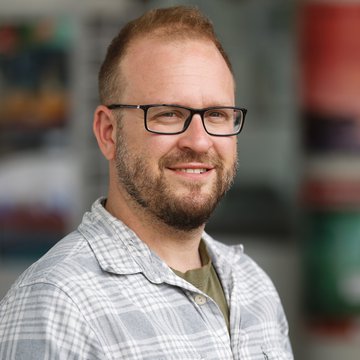
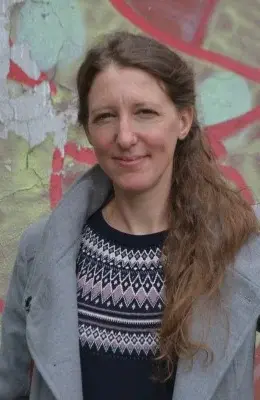
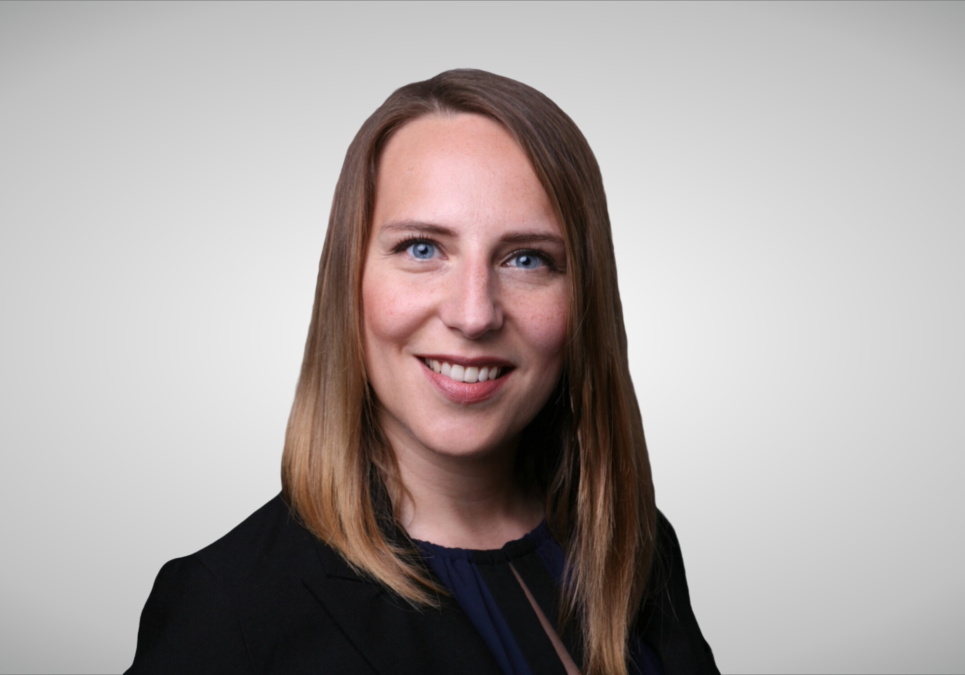
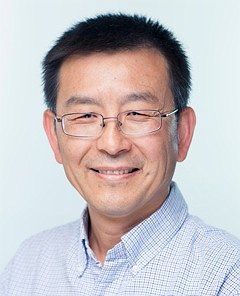
Hajo A. Reijers is a Professor at the University of Utrecht, Netherlands, with a former affiliation at Vrije Universiteit Amsterdam. His research focuses on Business Process Management (BPM), Process Mining, and Robotic Process Automation (RPA), emphasizing practical applications in healthcare, organizational processes, and human-computer interaction. He contributes to developing tools like SWORD for detecting workarounds and DEUCE for auditing electronic health records. His work spans algorithm development for process discovery, predictive analytics, and optimization techniques. Key areas include analyzing event logs, modeling workplace behavior, and enhancing process transparency. Reijers collaborates extensively with industry partners, addressing challenges in process automation, employee acceptance of AI, and ethical monitoring. His contributions to conferences like BPM, CAiSE, and ICIS highlight interdisciplinary approaches, combining computer science with organizational studies. Notable projects include frameworks for task mining, reinforcement learning in care processes, and pattern recognition in government transparency assessments. Research initiatives often involve cross-disciplinary teams, exploring topics like workplace well-being through process mining, decision-making support systems, and overcoming barriers to BPM adoption. His work bridges theoretical advancements with real-world impact, influencing both academic discourse and practical business solutions.
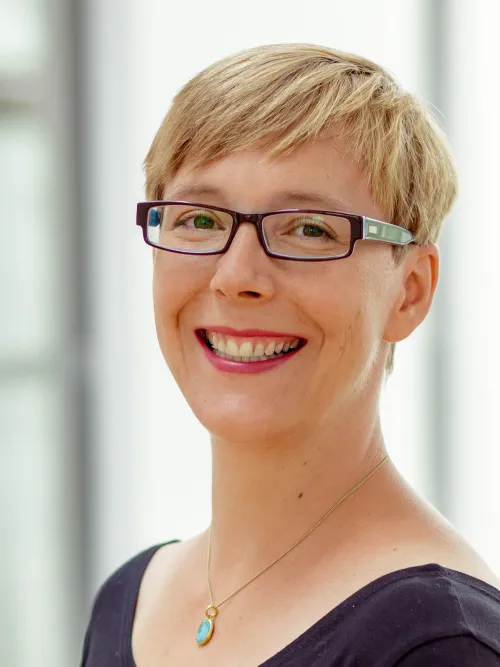
Dr. Rosanne Rademaker is a Research Professor and Group Leader at the Rademaker Lab, part of the Ernst Strüngmann Institute (ESI) in Frankfurt, Germany, affiliated with Goethe University’s Department of Psychology. Her research focuses on understanding how sensation and cognition interact to shape human perception, particularly in visual working memory, attention, and physiological arousal states. Her lab employs behavioral, computational, and neuroimaging techniques (fMRI, M/EEG) to explore how the brain balances perceptual input with stored memories. In addition to foundational work on memory and attention, the lab investigates context effects on perception, motor-output impacts on visual processing, and computational neural principles. Rosanne emphasizes collaborative, fun science, fostering an inclusive environment through outreach and international collaborations. Key recent work includes studies on categorical representations in the visual hierarchy and neural dynamics during memory recall. Lab Members: Giuliana Giorjiani (PhD), Noa Noelle Krause (MSc), Amit Rawal (PhD), Maria Servetnik (PhD), Nursima Ünver Aydingül (PhD). Grants & Collaborations: Mishal Qubad’s “Junior Clinician Scientist” grant on schizophrenia visual maps, international collaborations with Toronto and the Max Planck School of Cognition. Teaching: Lectures on “Introduction to Cognitive Psychology” at Goethe University. Publications highlight her work in Nature Neuroscience , eLife , and Journal of Cognitive Neuroscience , with over 30 peer-reviewed articles. The lab actively engages in conferences (VSS, ECVP) and hosts annual retreats to promote scientific exchange.
Dr. Noam Libeskind is a faculty member and group head of the Cosmography and Large-Scale Structure group at the Leibniz-Institut für Astrophysik Potsdam (AIP). He specializes in mapping the Universe's large-scale structure and using these maps to simulate the local environment. His work bridges observational and theoretical astrophysics, focusing on galaxy formation, the Local Group dynamics, and cosmographic reconstructions. He has held professorial positions, including at the Institute of Two Infinities (Université de Lyon-1) until 2021. Current projects include leading trans-national initiatives on cosmic web impacts (with Purple Mountain Observatory) and gravity tests via Local Group simulations (with Polish Academy of Sciences). Libeskind’s research interests include satellite galaxies, matter distribution reconstructions, and alignments of galaxies relative to their environments. His work has been featured in Scientific American and Sky & Telescope , highlighting contributions such as cosmography of the Local Universe and dark matter studies. Key collaborations span institutions like Hebrew University, Shanghai Astronomical Observatory, and Durham University. He leads projects like CLUES (Constrained Local UniversE Simulation) and HESTIA (High-resolution Environmental Simulations) to model the Local Universe. His team’s efforts have been recognized, including a 2024 municipal award for organizing impactful scientific meetings. Publications span cosmological simulations, galactic dynamics, and observational cosmology, with a focus on advancing understanding of the Milky Way, Andromeda, and their surrounding structures.
Dr. Sara Keller is a Postdoctoral Fellow at the Max-Weber-Kolleg (University of Erfurt), specializing in Architectural Theory and South Asian Urban History . Her current habilitation thesis "Water Urbanities..." (submission Feb 2025) explores medieval South Asian water architecture. University of Erfurt: Postdoctoral Fellow (2025) Max-Weber-Kolleg: Researcher in Architectural and Cultural Studies Research Focus : • Water Urbanities – analyzing water spaces as socio-political-religious urban nodes • Architectural Resonance – investigating built environments as 'living organisms' • Inter-cultural Connections – tracking Mediterranean-Indian Ocean knowledge transfers Publication Trends : Her 15 recent works (2016–2024) establish a water-centric urban theory for South Asia, combining archaeological analysis with cultural geography , epigraphic studies , and comparative architectural philosophy (Vāstu śāstra, Islamic traditions).
Dr. Theresa Züger is an interdisciplinary researcher leading the AI & Society Lab at the Alexander von Humboldt Institute for Internet and Society (HIIG). She investigates how AI systems can be designed to serve the common good, focusing on initiatives that promote sustainability, strengthen social inclusion, and enable technology reuse through open systems. Her work addresses societal challenges associated with artificial intelligence at political, social, and cultural levels, contributing to accurate assessment of AI's societal implications. Züger received her Ph.D. in Media Studies from Humboldt University in Berlin in 2017 with her dissertation 'Reload Disobedience,' focusing on digital forms of civil disobedience. Previously, she earned an M.A. in Theatre, Film and Television Studies as well as German and Philosophy from the University of Cologne. She also headed the office responsible for the German government's Third Engagement Report on behalf of the Federal Ministry for Family Affairs, Senior Citizens, Women and Youth (BMFSFJ). Her research centers on Public Interest AI, examining how AI development and deployment can benefit society rather than primarily maximizing profit. Current projects include 'Impact AI' (funded by Volkswagen Foundation), which develops auditing methods to assess AI projects' impact on public interest and sustainability, and 'Human in the Loop,' investigating how automated decision-making processes should be designed for successful human-machine interaction. She previously led the 'Public Interest AI' project, developing a theoretically grounded understanding of public interest AI and creating prototypes like a web accessibility tool and fact-checking application. Analysis of her recent publications reveals a consistent focus on bridging AI technology with societal values. Her work spans technical aspects of AI implementation, ethical considerations, and practical applications that serve public interests. Key trends include human-AI collaboration frameworks, accessibility enhancements, critical examination of AI hype, and theoretical foundations for public interest-oriented AI development. Züger serves as Vice-Chair of the UNESCO Commission on Communication and Information and participates in several juries including the Deep Tech Award, Digital Places – Land of Ideas, and the Civic Innovation Fund. She is also a regular event moderator for organizations like the Berlin-Brandenburg Media Authority, re:publica, and transmediale. As project leader of Impact AI and head of the AI & Society Lab, Züger directs significant research initiatives with funding from organizations like the Volkswagen Foundation. Her work involves extensive collaboration with academic and practical partners across Europe and globally, particularly through projects addressing women in tech and international AI governance. The AI & Society Lab functions as an interdisciplinary interface for new research approaches and knowledge transfer in AI, promoting inclusive, human rights-friendly, and sustainable AI strategies in Europe.
Jinqiu Yang is an Associate Professor in the Department of Computer Science and Software Engineering at Concordia University in Montreal, Canada. Her research focuses on improving software reliability and quality assurance, particularly in the context of machine learning systems and autonomous vehicles. She leads active research projects in software testing, automated program repair, and mining software repositories, with strong connections to both academic and industrial applications. Her research interests span software reliability, quality assurance of machine learning systems including autonomous vehicles, software testing, automated program repair, text analytics of software artifacts, and mining software repositories. She has developed novel approaches for testing deep learning libraries, evaluating robustness in autonomous driving systems, and tracking the evolution of static code warnings. Her work bridges traditional software engineering with emerging challenges in AI systems, addressing critical issues of reliability and safety in complex software environments. Yang's recent publications (2021-2025) demonstrate a clear trajectory toward AI/ML system reliability, with increasing focus on autonomous vehicles, concept drift detection, and security aspects of large language models. Her work spans both theoretical foundations and practical applications, often involving empirical studies of real-world systems and development of practical tools to address identified challenges. ACM SIGSOFT Distinguished Paper Award Dr. Yang actively mentors graduate students and is currently recruiting Master's and PhD candidates. She has secured significant research funding including NSERC Discovery Grants (2019-2025), Gina Cody Research and Innovation Fellowship (2024-2026), and participation in the NSERC CREATE Program SE4AI (2021-2026). Her research is supported by multiple grants including NOVA – FRQNT-NSERC PROGRAM (2024-2027) and Volt-Age Seed Grant (2024-2026). She leads research in the O-RISA Lab at Concordia University, focusing on reliability and security aspects of intelligent software systems. Her team collaborates with industry partners including IBM, where she previously worked at IBM Watson Research Lab and IBM CAS, bringing practical experience to her academic research.
Jingling Xue is a Scientia Professor at the School of Computer Science and Engineering at the University of New South Wales (UNSW) in Sydney, Australia. As an IEEE Fellow of the Computer Society, he leads the Programming Languages and Compilers research group, focusing on practical applications of compiler optimization and program analysis techniques. His work bridges theoretical foundations with real-world software systems, particularly in developing open-source tools for large-scale program analysis. Professor Xue received his B.Eng and M.Eng degrees from Tsinghua University in 1984 and 1987, respectively, followed by a PhD from the University of Edinburgh in 1992. His academic journey has established him as a leading figure in programming languages and compiler technology. Xue's research spans programming languages, compiler technology, and program analysis with emphasis on practical relevance. His current projects include compiler techniques for improving parallelism and locality, pointer/alias analysis for million-line-scale programs, and static/dynamic analysis for detecting bugs and security vulnerabilities in real-world applications like web browsers and Android apps. His group actively develops open-source tools to support scientific replicability and reproducibility in these areas. His recent publications demonstrate a strong focus on applying program analysis techniques to modern challenges including AI compilers, homomorphic encryption, security vulnerability detection, and graph processing systems. The work shows evolution from traditional compiler optimization to addressing emerging domains like privacy-preserving computation and deep learning systems while maintaining rigorous theoretical foundations. Scientific Awards: Best Paper Award at CGO'13 Best Paper Award at CGO'16 Distinguished Paper Award at ECOOP'16 Distinguished Paper Award at ICSE'18 Distinguished Paper Award at ISSTA'19 Distinguished Paper Award at ASE'19 Distinguished Artifact Award at ISSTA'23 Best Artifact Award at FSE'23 Distinguished Paper Award at ASE'23 Test-of-Time Award at CGO'21 Professor Xue has successfully supervised 30 PhD students to completion, many of whom now work as professors or researchers in academia and industry. He has served as Program Chair for major conferences including LCTES'13, CC'18, CGO'20, and General Chair for LCTES'20. His group currently focuses on memory safety in Rust, smart contract analysis, AI compilers, compilation for privacy-preserving computation, and adversarial attacks in deep learning. The Programming Languages and Compilers group maintains strong connections with industry partners, translating theoretical advances into practical tools for real-world software development challenges. Their work on pointer analysis, memory safety, and compiler optimizations continues to influence both academic research and industrial practice.
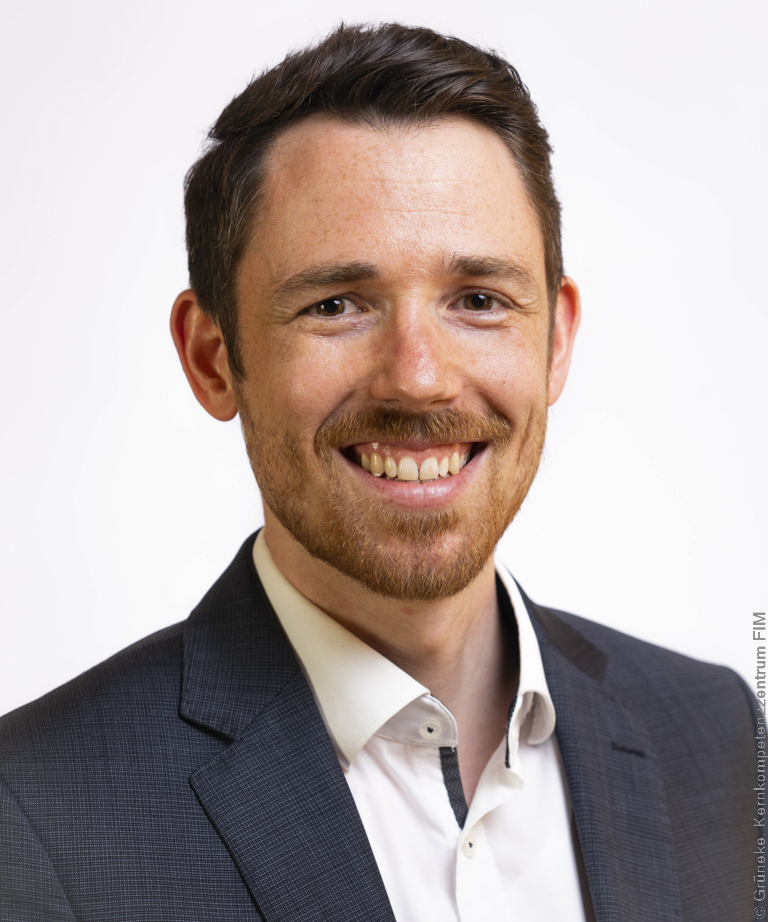
Prof. Dr. Manfred Schoch serves as Professor of Business Informatics at Esslingen University of Applied Sciences' Faculty of Computer Science and Information Technology. He concurrently holds leadership roles at Fraunhofer FIT's Business Informatics branch and directs the FIM Research Institute for Information Management. His career bridges academic research with industrial digital transformation projects across sectors including transportation, finance, and manufacturing. His educational foundation includes: Summa cum laude doctorate from University of Hohenheim focusing on digital workplace communication technologies M.Sc. in Information-Oriented Business Administration and B.Sc. in Business Informatics from University of Augsburg Academic exchange at University of Pittsburgh's Joseph M. Katz Graduate School of Business Prof. Schoch's research centers on three interconnected domains: technology implementation in digital workplaces, strategic IT management and enterprise architecture, and data-driven workflow automation. He employs mixed-method approaches combining quantitative network/survey analysis with qualitative interview techniques to examine technology's organizational impact. Recent work investigates pandemic-driven remote work adaptations, AI integration challenges, and behavior change support systems for workplace stress management. His publication trajectory (2022-2025) reveals intensifying focus on generative AI applications, digital workplace resilience, and ethical technology adoption. Key themes include human-AI collaboration models, technostress mitigation, and CSR-guided digitalization. His work appears in premier venues like European Journal of Information Systems and ICIS proceedings. Professional recognition includes: Hohenheim Teaching Prize (2022) for innovative digital management pedagogy He actively supervises student theses through industry-collaborative projects with companies including DB Fernverkehr and Allianz. His research funding stems from Bavarian consortium initiatives like ForDigitHealth and international partnerships with MIT and Microsoft Research. Current grants focus on sustainable hybrid work models and AI-enhanced decision systems. As FIM Research Institute director, he leads cross-disciplinary teams developing practical digital transformation frameworks. The institute maintains strong industry connections through its Digital Leadership Academy and applied consulting projects addressing real-world challenges in workflow automation and IT-business alignment.
Dr. Katrin Vogt is a researcher at the University of Konstanz, specializing in neuroethology and sensory systems. Her work focuses on understanding recurrent neural circuits governing state-dependent behavior, particularly in olfactory systems of Drosophila larvae. She leads a subproject investigating hunger-dependent serotonergic modulation in the antennal lobe, collaborating with a doctoral student. Her research bridges vertebrate and invertebrate models to identify conserved network principles across species. Dr. Vogt is part of a DFG-funded interdisciplinary team examining recurrent circuits' roles in flexible behavioral responses to environmental changes. Her research interests include neural circuitry modulation, sensory integration, and behavioral plasticity. Key projects involve analyzing how sensory inputs are modulated by internal states like hunger, and how recurrent connections enable adaptive responses. She has contributed to studies on visual and olfactory memory formation, multisensory integration, and navigational strategies in Drosophila. Publications highlight work on dopamine signaling in taste punishment, social behavior in larvae, and cross-species odor coding principles. Her findings aim to uncover fundamental mechanisms underlying sensory-driven behavior and neural plasticity in both vertebrates and invertebrates.
Dr. Gabriella Mosca is a Junior Group Leader at the Centre for Biochemistry (ZMBP) at the University of Tübingen, leading the Biomechanical Modeling of Morphogenesis (BM²) Lab within the Department of Genetics. Her research focuses on understanding the interplay between biomechanics and morphogenesis in plant systems, particularly using computational tools like MorphoMechanX . This software integrates finite element methods to model 3D tissue growth, cell wall mechanics, and genetic signaling in plant development. Her work bridges computational modeling with experimental data from partner labs, addressing questions such as how mechanical forces influence growth patterns and cell fate decisions. Key areas include explosive seed dispersal mechanics, leaf shape diversity, and ovule primordium development. She collaborates internationally on projects involving plant cell mechanics, tissue stiffness, and developmental constraints. Publications highlight contributions to understanding plant cell geometry, cytokinin signaling in roots, and the role of organ geometry in reproductive cell fate. Current projects emphasize developing customizable computational frameworks to simulate plant growth dynamics from confocal imaging data. The lab actively recruits students with backgrounds in physics, computer science, and mathematics to tackle interdisciplinary challenges in plant morphogenesis.
Dr. Parm von Oheimb is a Researcher in the Mollusc Collection at the Museum für Naturkunde – Leibniz Institute for Evolution and Biodiversity Research in Berlin, Germany, where he has worked since 2019. His research focuses on malacology, biodiversity patterns, evolutionary biology, and biogeography, with particular emphasis on land snails and freshwater mollusks across diverse ecosystems including the Tibetan Plateau, Vietnam, and urban environments. Previously, he held postdoctoral positions at The Natural History Museum in London (2015-2019) and Justus Liebig University Giessen (2013-2015). Dr. von Oheimb earned his Dr. rer. nat. in 2013 from Justus Liebig University Giessen with a dissertation titled "Phylogeography at the 'Roof of the World' – Diversity and distribution of freshwater mollusks at the Tibetan Plateau and the Himalayas." He completed his Diploma in Biology with distinction in 2008 from the same institution. His educational background provided the foundation for his extensive research on mollusk systematics, biogeography, and evolutionary patterns across diverse geographical regions. Dr. von Oheimb's research interests span multiple areas of malacology and biodiversity science. His work on Tibetan Plateau freshwater gastropods has contributed significantly to understanding high-altitude adaptation and historical biogeography. His research in Vietnam has focused on limestone karst ecosystems and the biodiversity of land snails, revealing cryptic species diversity and community assembly patterns. More recently, he has investigated urban biodiversity, particularly examining cemeteries as habitats for terrestrial gastropods in Berlin. His methodological approaches integrate field surveys, molecular phylogenetics, morphological analysis, and biogeographical modeling to address fundamental questions in evolutionary biology and ecology. His extensive publication record demonstrates consistent research output across multiple continents and habitats, with a clear trajectory from high-altitude freshwater systems to tropical limestone karsts and urban environments. The research shows a consistent focus on molluscan biodiversity patterns while adapting methodologies to address specific ecological and evolutionary questions in each system. His work often involves large international collaborations, reflecting the global nature of biodiversity research. Dr. von Oheimb has received several scientific awards including a Research Fellowship from the Deutsche Forschungsgemeinschaft (2015-2017), a Travel Award from the Malacological Society of London (2016), and the J. Frances Allen Institute of Malacology Outstanding Publication Award (2013). He has also received multiple awards for poster presentations at international conferences. As a dedicated researcher, Dr. von Oheimb has served as a Subject Editor for Zoosystematics and Evolution since 2025 and is an active member of several scientific societies including The Malacological Society of London, Unitas Malacologica, and the German Malacological Society. His work contributes to multiple research programs at the Museum für Naturkunde, particularly the "Dynamics of Nature" initiative and the "Life between Graves" project examining cemetery biodiversity. Dr. von Oheimb also contributes to science communication through the "Schemenkabinett" project and has developed various popular science formats. His research leverages the extensive mollusk collections at the Museum für Naturkunde, connecting traditional taxonomy with modern molecular approaches to address contemporary questions in biodiversity science.
Claudia Buschhorn is a Professor for Childhood Education at Hamburg University of Applied Sciences , Department of Social Work. Her career spans academic, practical, and research roles in early childhood education and child welfare. Research Focus: Social inequality in educational access Early intervention systems for child welfare Interagency collaboration in school social work Child protection frameworks Impact-oriented evaluation methodologies Publications reveal expertise in family support, healthcare-social work integration, and life-course sociology, with a particular emphasis on vulnerable populations and cross-sectoral cooperation. Professional Trajectory: Since 2019: Professor at HAW Hamburg 2017-2019: Trainer at LWL State Youth Welfare Office 2013-2017: Lecturer at University of Münster Earlier roles: Consultant, Research Assistant, and Trainee Teacher
Prof. Dr. Antje Michel serves as Research Professor of Information Didactics and Knowledge Transfer at the University of Applied Sciences Potsdam within the Department of Information Sciences. She holds key leadership roles including Vice Dean for Research and Transfer and membership on the Faculty Council, driving institutional strategy while maintaining active research and teaching responsibilities in digital information environments. Academic Background: Doctorate in Sociology, Free University of Berlin (2003) Diplom (Master's equivalent) in Sociology, Free University of Berlin (2001) Master's in Sociology, Georg-August University of Göttingen (1998) Research Focus: Michel pioneers research at the intersection of information behavior , literacy frameworks (data, information, media), and transdisciplinary knowledge integration . Her work critically examines digital competence development through participatory methodologies, with growing emphasis on urban futures and smart city applications. She develops didactic approaches for information literacy across diverse knowledge cultures while investigating scientific socialization processes in academic settings. Publication Trends: Recent work (2021-2025) reveals three dominant trajectories: (1) AI's disruptive impact on information literacy requiring new assessment frameworks; (2) transdisciplinary methodologies for urban mobility and smart city development; (3) national standardization of information competence through collaborative frameworks. Her publications consistently bridge theoretical rigor with practical implementation in real-world laboratories. Scientific Recognition: 2024 Triple E-Award 1st prize for community engagement initiative 2022 Innovation Award for Real-World Laboratories (BMWK) 2022 German Mobility Award nomination 2023 'Land of Ideas' initiative award for digital outreach Research Leadership: Michel directs multiple major funded projects including BMBF's MaaS L.A.B.S. (mobility-as-a-service platform), MWFK's Präsenzstelle Luckenwalde (university outreach hub), and the multi-institutional InNoWest project. Her grant portfolio emphasizes participatory design, stakeholder co-creation, and measurable societal impact through transdisciplinary knowledge transfer. Research Ecosystem: She anchors her work in the Institute for Applied Research Urban Futures (IaF), while actively shaping national discourse as founding member of both the Society for Transdisciplinary and Participatory Research (GTPF) and Global Alliance for Inter- and Transdisciplinarity (ITD Alliance). Her leadership extends to editorial boards and scientific advisory roles including the Leibniz Institute for Psychology.
Prof. Ute-Christine Klehe is a Full Professor in Work and Organizational Psychology at Justus-Liebig-University Giessen (Germany) since October 2011, with prior tenured positions at the University of Amsterdam (2009-2011 as Associate Professor; 2005-2009 as Assistant Professor). She has conducted visiting research at Ghent University (2010) and maintains affiliations with the Academy of Management, Society of Industrial and Organizational Psychology (SIOP), and European Association of Work and Organizational Psychology (EAWOP). Ph.D. in Organizational Behaviour and Human Resource Management (University of Toronto, 2003) Diplom in Psychology (Philipps-Universität Marburg, 2000) Research focus spans career adaptability, job search dynamics, personnel selection validity, refugee labor market integration, and psychological assessment. Her work combines individual self-regulation with organizational factors, examining transitions across the lifespan. Recent publications emphasize: Career adaptability profiles and transitions Refugee integration barriers Age discrimination effects Psychopathy in workplace contexts Goal achievement strategies Scientific contributions include: 2017 Best Symposium Award (Academy of Management Careers Division) 2017 Highly Commended Award (Career Development International) 2014-2020 DFG grants for faking in selection & transparency effects Editorial roles in Journal of Organizational Behavior , Human Performance , and Journal of Vocational Behavior Grants and projects demonstrate €400,000+ funding for initiatives like TWOPAC training (2024-2025) and cross-European collaborations. She supervises funded PhD candidates and contributes to policy-oriented publications like SIOP White Papers.
Prof. Ronny Baierl serves as Professor of Key Qualifications at Dresden University of Applied Sciences' Faculty of Business Administration since 2017, concurrently holding roles as Chairman of the Examination Board and supervisor for university cooperation with New Uzbekistan University. Previously, he was Professor of Business Administration at SRH University of Applied Sciences Berlin (2013-2017) and held positions at University of St. Gallen and WHU - Otto Beisheim School of Management, with practical experience in management consultancies and automotive sector. His research centers on innovation-oriented management and entrepreneurial thinking, with specific expertise in entrepreneurship education (particularly digital environments), service management, team composition dynamics, and competence development frameworks. He investigates social interaction's impact on entrepreneurial intentions among hearing-impaired populations and analyzes coopetition dynamics in corporate venture capital. Publication analysis reveals consistent focus on social/inclusive entrepreneurship with recurring emphasis on deaf/hard-of-hearing communities. His work integrates entrepreneurial team decision-making studies with network attribute analysis in corporate innovation contexts, frequently employing conjoint analysis and meta-study methodologies across interdisciplinary boundaries. Scientific Awards : No awards or fellowships were specified in available documentation. Advising and Grants Thesis Supervision : Actively guides bachelor's/master's theses on innovation management, business development, and competence frameworks with empirical survey requirements for advanced work Student Support System : Enforces strict timelines including 24-hour email responses, two-week recommendation preparation, and four-week paper corrections Project Leadership : Directed Center for Interdisciplinary Education (2017-2025) and managed Convictus UG consultancy (2016-2025), indicating substantial project funding oversight Labs and Teams : Former director of Dresden University's Center for Interdisciplinary Education (2017-2025) and SRH Berlin's Institute for Service Management (2016-2018), with active international collaborations including New Uzbekistan University and Sapienza University of Rome.