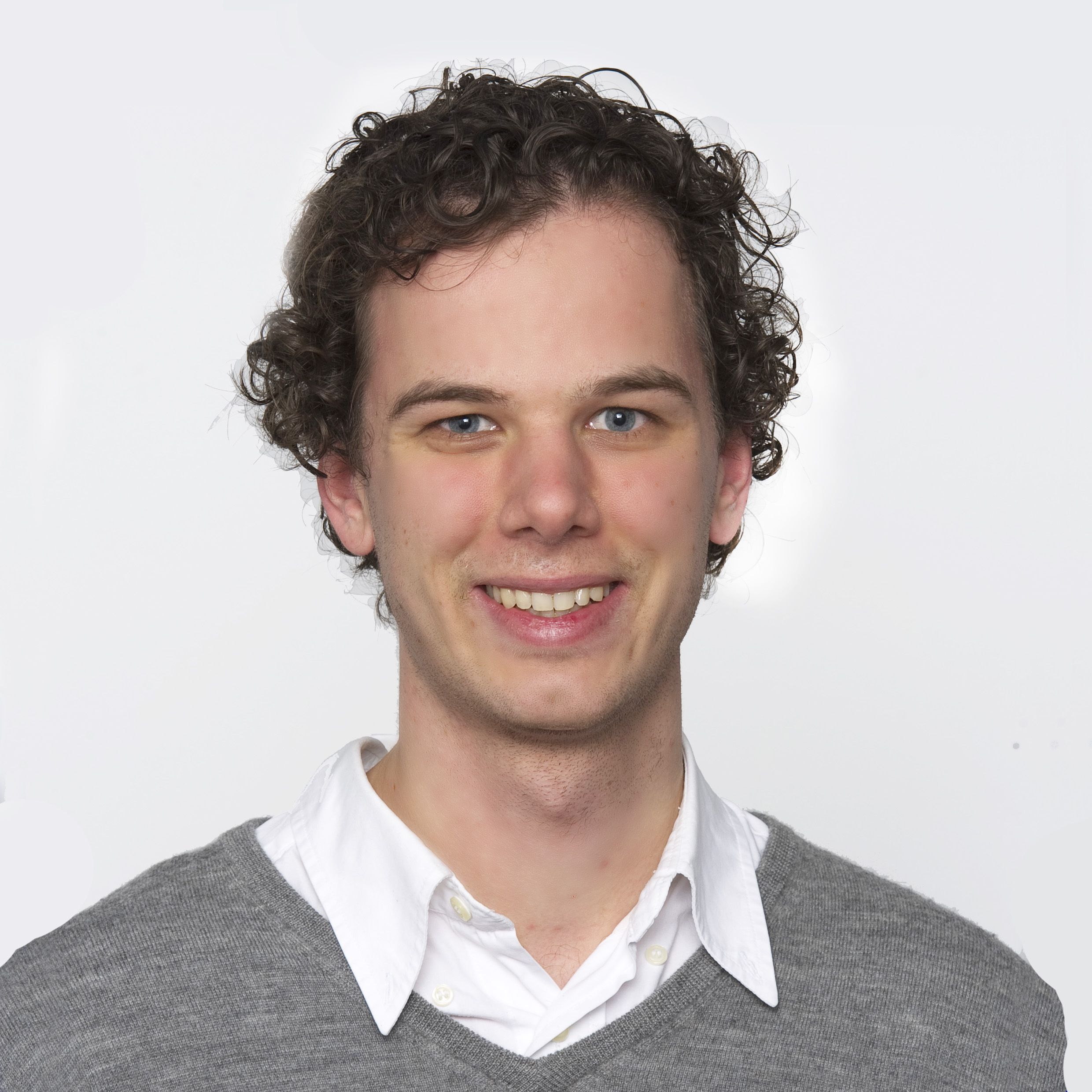
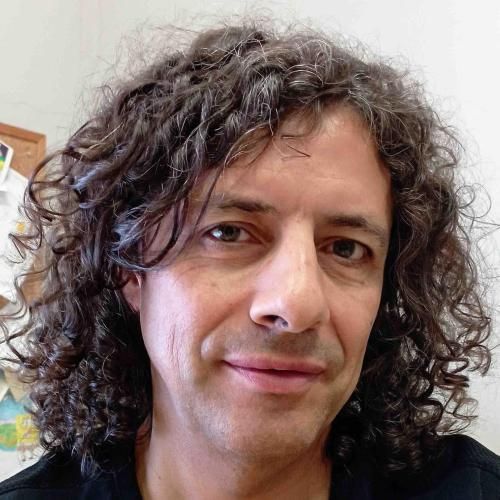
Felix Wellschmied is an Associate Professor in the Department of Economics at the University Carlos III de Madrid and serves as Director of the Master in Economics program. He holds a PhD in Economics from Bonn University. His research focuses on Macroeconomics , with a particular emphasis on labor market dynamics, wage inequality, and public policy interventions. Key areas include the analysis of furlough schemes during economic recessions, the interplay between wage and employment risks, and the long-term impacts of structural economic policies. Recent work explores geographic mobility patterns over the life-cycle, monopsony effects in East Germany, and the welfare implications of asset-based income support programs. His publications frequently address policy-relevant questions using advanced econometric techniques. Publications span topics such as labor reallocation during crises, entrepreneurial wealth dynamics, and life-cycle earnings risk modeling. He has contributed to understanding the cyclical behavior of job and worker flows in Germany and Spain, with a focus on policy evaluations. Wellschmied's research has been published in top journals like the American Economic Journal: Macroeconomics and is supported by grants from the Ramón y Cajal Researcher Program. His work bridges theoretical macroeconomic frameworks with empirical policy analysis.
Javier Courel Ibáñez serves as a Permanent Labor Professor (Associate Professor) in the Department of Physical Education and Sports at the Faculty of Education and Sports Sciences Melilla. His teaching responsibilities include structured tutoring sessions held Wednesdays from 9:00-12:00 and 15:00-19:00 in Office 007 across both academic semesters. His research spans Sports Science , Exercise Physiology , and Biomechanics , with concentrated expertise in athletic performance assessment, injury epidemiology, and evidence-based exercise interventions. Key domains include football (soccer) injury dynamics, padel performance analysis, rehabilitation protocols for tendinopathies, and physical activity applications for aging populations and post-COVID-19 recovery. His methodological approach integrates velocity-based resistance training, systematic literature reviews, and prospective cohort studies to address contemporary challenges in sports medicine. Analysis of his 2022-2025 publications reveals three dominant research trajectories: pandemic-related sports injury patterns (particularly in female football), technology-driven performance assessment (MyotonPRO reliability, resistance-band testing), and special population interventions (older adults, rheumatic conditions). His work consistently bridges laboratory findings with practical applications through EULAR collaborations and sport-specific training protocols.
Daniel Miravet Arnau is an Associate Professor of Economics at the Department of Economics, Rovira i Virgili University, and a Mobility Technician at the Camp de Tarragona Territorial Authority for Mobility. His academic career spans teaching and research in sustainable mobility, tourism economics, labor economics, and education economics. His research focuses on tourist mobility and public transport optimization, often using data science tools like smart card analysis. Projects include studies on pandemic impacts on transport, high-speed rail effects, and seasonal tourism dynamics. He has contributed to understanding education-labor market alignment and human capital competencies. Recent publications address: COVID-19's influence on tourist and urban mobility (2020-2023) Transport mode choices in seasonal destinations Data-driven frameworks for public transport planning Education economics and labor market outcomes He has taught courses in Transport Economics, Tourism, Innovation, and Macroeconomics since 2005.
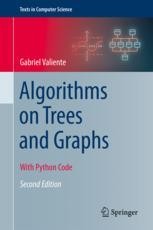
Gabriel Valiente is an accredited Full Professor in the Department of Computer Science at Universitat Politècnica de Catalunya - BarcelonaTech (UPC). His research focuses on algorithms, bioinformatics, and combinatorial pattern matching with applications in computational biology. He is affiliated with the Algorithms, Bioinformatics, Complexity and Formal Methods Research Group and the Institute of Mathematics of UPC. Valiente has authored influential books like Algorithms on Trees and Graphs and Combinatorial Pattern Matching Algorithms in Computational Biology . His work spans phylogenetic network analysis, graph algorithms, and metagenomic sequence analysis. Key contributions include methods for comparing phylogenetic trees (e.g., generalized Robinson-Foulds distance), aligning biological networks (e.g., virus-host protein interaction networks via ILP), and taxonomic classification in metagenomics (e.g., MetaShot). His research integrates algorithm design with applications in microbiology, virology, and systems biology. Valiente’s publications demonstrate expertise in tree-based algorithms, graph theory, and bioinformatics tool development. His recent work addresses challenges in virus-host interaction modeling and scalable analysis of large biological networks.
Dr. Jaime Boal Martín-Larrauri is an Associate Professor at the School of Engineering (ICAI) of Comillas Pontifical University, affiliated with the Electronics, Control and Communications Department. He holds a PhD in Engineering Systems Modeling (2014) and coordinates the M.Eng. in Intelligent Industry since 2019. His research focuses on robotics, computer vision, reinforcement learning, IoT, energy efficiency, and Industry 4.0 applications. He co-founded Stemy Energy (2018–2024) as CTO, developing energy efficiency solutions. Education: PhD in Research in Engineering Systems Modelling, Comillas Pontifical University (2014) M.Sc. in Research in Engineering Systems Modelling, Comillas Pontifical University (2012) Industrial Engineer (Electronics), Comillas Pontifical University (2010) Research Interests: His work integrates hardware-software systems, emphasizing robotic control, energy-efficient IoT platforms, and AI-driven solutions for industrial automation. Key projects include drone detection systems, smart energy grids, and reinforcement learning for industrial robots. Publications & Trends: Recent articles emphasize robotic learning, energy efficiency, and AI interpretability. Notable contributions include reinforcement learning robustness improvements and IoT energy platform architectures. Awards: Multiple Chair for Smart Industry Awards (2021–2024) for outstanding student projects under his supervision Extraordinary End-of-Degree Award (2011) Grants & Labs: Lead projects funded by ENDESA, Ferrovial, MIT, and the Madrid Regional Government. Active in the Institute for Research in Technology (IIT), collaborating on robotics and energy systems. Labs/Teams: Contributes to the IIT’s robotics and IoT research groups, focusing on autonomous systems and smart industry applications.
Raquel Dosil Lago is an Assistant Professor at the University of Santiago de Compostela, affiliated with the Department of Electronics and Computing within the Higher Technical School of Engineering. Her research focuses on Artificial Vision, Computer Vision, and Robotics, with applications in environmental monitoring and medical imaging. She holds a PhD in Computer Science from the University of Santiago de Compostela (2005), supervised by Dr. José Ramón Fernández Vidal and Dr. José Manuel Pardo López. Her research interests emphasize multisensory systems, drone-based environmental surveillance, visual attention models, and feature detection in 3D medical imaging. Recent work includes drone payloads for maritime pollution detection and biologically inspired vision systems. Earlier contributions span saliency detection, photogrammetry, and composite feature integration for motion analysis. Publications reflect a progression from early medical imaging and 3D pattern partitioning (2000s) to modern drone and environmental applications (2020s). Key themes include sensor fusion, CNN-based detection, and human-like visual attention mechanisms. She is part of the Artificial Vision research group, collaborating on projects like BIVSEE and AVSS challenges. No scientific awards are explicitly mentioned. Her academic advising includes her doctoral thesis committee. Research grants and future work details are not provided in the source text.
Xosé Ramón Fernández Vidal is a Professor at the University of Santiago de Compostela, affiliated with the Department of Applied Physics within the Higher Polytechnic School of Engineering. His research focuses on Computer Vision, Image Processing, and Machine Learning, with applications in robotics, medical imaging, and environmental analysis. He holds a Doctorate from the same university (1996), specializing in geometric recognition methodologies. His work bridges computational models of visual attention and practical systems like UAV navigation, wireframe modeling for 3D reconstruction, and synthetic image generation for AI training. He is part of the Artificial Vision group at the Center for Research in Intelligent Technologies (CITIUS). Key research themes include visual saliency modeling, robust feature matching in low-textured environments, and algorithmic approaches to scene recognition. His contributions span over 40 publications since 1997, emphasizing interdisciplinary applications such as flour quality assessment via neural networks and environmental variable analysis in agricultural settings. While no formal awards are listed, his sustained output reflects impactful contributions to computational vision systems. His current projects involve developing biologically inspired vision systems (e.g., BIVSEE) and advancing datasets like Sid4vam for attention modeling. He collaborates with industry and academic partners in robotics, medical imaging, and environmental monitoring. No doctoral students are explicitly listed, though his research groups likely involve postgraduate researchers. His address is in Compostela, Galicia, Spain.
Guillem Perarnau Llobet is an Associate Professor at the Department of Mathematics, Universitat Politècnica de Catalunya (UPC), affiliated with CRM (Centre de Recerca Matemàtica), IMTech (Institut de Matemàtiques de la UPC), and BGSMath (Barcelona Graduate School of Mathematics). His academic journey includes a PhD at UPC under Oriol Serra, followed by a CARP Postdoc Fellowship at McGill University with Bruce Reed and Louigi Addario-Berry (2013–2015), and a Lecturer position at the University of Birmingham (2016–2019). Current Role: Associate Professor, UPC Past Roles: Lecturer, University of Birmingham; Postdoc, McGill University Affiliations: CRM, IMTech, BGSMath Research Focus: Probabilistic and Extremal Combinatorics, Random Combinatorial Structures, Discrete Stochastic Processes, and Analysis of Randomized Algorithms. His work bridges theoretical rigor with practical algorithmic insights, particularly in graph theory and random graph dynamics. Article Trends: Recent publications emphasize algorithmic combinatorics, probabilistic methods in random graphs, and hypergraph Hamiltonicity. Key themes include mixing times, synchronization, and percolation phenomena across diverse graph models. Scientific Awards: CARP Postdoc Fellowship Grants & Collaborations: COCOA Grant (coPI) RandNET MSCA Exchange Programme Participant Spanish Discrete and Algorithmic Mathematics Network Coordinator
Roberto Iglesias Rodríguez is an Associate Professor at the University of Santiago de Compostela, Spain, with a focus on robotics and machine learning. He holds a B.S. and Ph.D. in Physics from the same institution (1996, 2003). His work addresses lifelong robot learning, federated learning, and deployment of intelligent systems in heterogeneous environments. Current affiliation: University of Santiago de Compostela Academic rank: Associate Professor Education: B.S. and Ph.D. in Physics (1996, 2003) His research spans robotics, machine learning, and sensor fusion , emphasizing adaptive algorithms for non-IID data, concept drift, and real-time environmental interaction. Projects include service robots learning from humans, distributed control architectures, and federated learning strategies. Recent publications analyze continual learning , scene recognition , and human-robot collaboration . Key themes: robust navigation, multi-sensor systems, and explainable AI.
Manuel Armenteros Gallardo is an Associate Professor and Deputy Director of Infrastructure and Laboratories in the Department of Communications at the University Carlos III de Madrid. He also serves as Vice Dean of Audiovisual Communications, overseeing academic and technical operations. His research focuses on multimedia technologies, sports refereeing systems (particularly VAR), 3D and stereoscopic imaging, and educational technology integration in sports training. Key research interests include the application of virtual reality in referee education, gamification for 21st-century skills, and photogrammetry in cultural heritage preservation. He has pioneered projects like the Octoson surround sound system and interactive video tools for FIFA referee training. Over 50 publications since 2011 reflect his work in sports technology, audiovisual production, and educational innovation. Recent articles emphasize VAR system experiments in international football, 3D workflow optimization, and immersive audio-visual techniques. His work bridges academic research with practical applications in sports arbitration and cultural heritage documentation. No scientific awards are listed, but his contributions to audiovisual and sports technology are evident through his extensive publication record. He leads laboratory infrastructure management and collaborates on multimedia teaching materials for FIFA instructors.
Manuel Blanco Velasco is a Professor at the Department of Signal Theory and Communications, Universidad de Alcalá. His research focuses on biomedical signal processing, particularly in electrocardiogram (ECG) analysis, machine learning applications in healthcare, and communication systems. He holds a PhD from Universidad de Alcalá (2004) with a thesis on ECG compression using modulated filter banks. His work bridges signal processing theory and practical biomedical engineering, addressing challenges in ECG noise classification, T-wave alternans detection, and telemedicine systems. Research interests include: Medical signal processing for arrhythmia detection Deep learning models for clinical data interpretation OFDM-based communication systems ECG compression and denoising algorithms His recent publications emphasize interpretable deep learning methods for ECG analysis, noise characterization in long-term monitoring, and ensemble approaches for T-wave alternans detection. Contributions span both biomedical and communication engineering domains, reflecting his interdisciplinary expertise.
Saturnino Maldonado Bascón is a full Professor at the Universidad de Alcalá, affiliated with the Signal Theory and Communications Department. His research focuses on advanced signal processing techniques, machine learning applications, and computer vision systems. He earned his doctorate from Universidad de Alcalá in 1999 with a thesis on multiresolution analysis for image compression. Key research interests include traffic sign recognition, video surveillance algorithms, 3D object recognition, and noise reduction in digital images. His work frequently employs support vector machines (SVM), spatial pyramids, and clustering methods to address challenges in robotics, autonomous systems, and sensor data analysis. Publications highlight contributions to vehicle tracking, odometry correction in differential robots, and efficient video annotation techniques. His research group (GRAM) develops multisensorial analysis solutions for intelligent infrastructure systems like the WHISNU platform. Maldonado has explored diverse applications from biomedical signal processing to traffic management systems through grants and collaborative projects. No scientific awards are explicitly mentioned, but his extensive publication record reflects sustained academic impact. He leads a research team focused on real-time systems, sensor fusion, and computer vision applications in both academic and industrial contexts.
Pantaleón David Romero Sánchez is an Adjunct Professor and researcher at the School of Technical Education (ESET), University CEU-Cardenal Herrera, Valencia, Spain. He is affiliated with the Department of Mathematics, Physics and Technological Sciences and teaches in the Design Engineering and Product Development program, as well as in Business Management and Teacher Education. His academic background includes a PhD in Computational Mathematics from the University of Valencia (2009) and a degree in Mathematics from the same institution (2002). His research spans applied mathematics with a strong focus on digital restoration of artistic heritage. Key areas include: Mathematical modeling in painting and sculpture restoration Blind deconvolution and denoising techniques Fractional operators and integro-differential equations 3D matching in computational archaeology Digital reintegration using computational fluid dynamics and AI-based historical pattern recognition Colorimetry and color spaces adapted to restoration Systems dynamics applied to drug addiction and behavioral models General topology and graph theory He leads the research group GDARC (Group of Digital Image Restoration of Artistic Heritage) and is also a member of GenosysCEU, focusing on precision computational genomics in oncohematological neoplasms. Although no specific publications are listed, his work demonstrates a strong interdisciplinary trend combining mathematics, computer science, heritage conservation, and biomedical modeling. He has presented at academic events such as the conference on Mathematical Modelling in Engineering & Human Behaviour (2016). He collaborates with researchers from the University of Valencia, Universidade Federal de Viçosa (Brazil), and Pontifical Catholic University of Rio de Janeiro. No scientific awards or student advisement details are mentioned in the provided texts.
Yolanda Fatima Rebollo Sanz is a Professor at the Universidad Pablo de Olavide's Department of Economics. Her research focuses on labor economics, unemployment insurance systems, job turnover dynamics, and wage mobility patterns, with particular emphasis on Spain's dual labor market. She also explores drunk driving's economic externalities and gender disparities in cognitive competencies. Her articles analyze critical topics including: Labor market transitions and unemployment benefit impacts Wage subsidy effectiveness in regional contexts Risk assessment for drunk driving policy Gender wage gaps and cognitive skill differentials Temporary contract stepping stone effects Rebollo Sanz has published extensively in journals like Labour Economics, Accident Analysis & Prevention, and The Manchester School. Her methodological approaches include multinomial endogenous switching models, hazard rate analysis, and censored data econometrics. Current projects continue examining employment stability factors and policy interventions in labor markets.
Prof. Juan Manuel Górriz Sáez is a Full Professor at the University of Granada (Spain) in the Faculty of Science, Physics Section, and also serves as a Research Associate at the University of Cambridge (UK). He is the head of the SiPBA (Signal Processing and Biomedical Applications) research group and collaborates as principal investigator with top research centers worldwide including University of Regensburg, Northeastern University, University of Cambridge, LM University of Munich, University of Liege, University of Milan, and University of Aveiro. Dr. Górriz received his BSc degrees in Physics and Electronic Engineering from the University of Granada in 2000, followed by Ph.D. degrees from the Universities of Cádiz (2003) and Granada (2006). His research focuses on statistical signal processing in biomedical applications, with particular expertise in Voice Activity Detection, Distributed Speech Recognition, Blind Source Separation, and Independent Component Analysis. His work in image processing for biomedical applications includes anatomical/functional brain imaging (PET, SPECT, fMRI, MRI), development of computer-aided diagnosis systems, feature extraction algorithms, image registration algorithms, and supervised classification for neurological disease diagnosis. His research has significant applications in early detection of Alzheimer's disease and other neurological conditions. Analysis of his recent publications reveals a strong trend toward applying machine learning techniques, particularly support vector machines and random forests, to medical image analysis for Alzheimer's disease diagnosis. His work integrates advanced signal processing with clinical applications, focusing on feature extraction, dimensionality reduction, and pattern recognition in brain imaging data from SPECT, PET, and MRI modalities. ASI Award (2008) UGR Social Council Award (2010) Real Academia de Ingenieria Medal Award (2015) Dr. Górriz has supervised numerous PhD and Master's students through various funding mechanisms including FPI Grants, MICINN contracts, Excellence Grants, Erasmus Mundus programs, and DAAD Grants. His research has been supported by multiple competitive grants including PETRI DENCLASES (PET2006-0253), Proyecto de Excelencia TIC 2566, Proyecto de Excelencia TIC 4530, and Nuevas Técnicas de Reconstrucción, Procesado, Clasificación y Fusión de Imágenes Médicas para Diagnóstico Precoz de la Enfermedad de Alzheimer (TEC2008-02113/TEC). As head of the SiPBA research group, Dr. Górriz leads a multidisciplinary team of researchers focused on signal and image processing applications in biomedical contexts. The group maintains active collaborations with international research centers and has developed novel approaches for brain image analysis, particularly for early Alzheimer's disease detection.