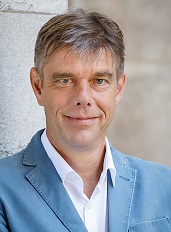
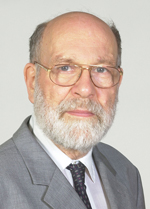
Univ.-Prof. Martin Pinzger is a Professor at the Department of Informatics Systems, Alpen-Adria-Universität Klagenfurt. He serves as Head of Department and Member of the Senate, actively contributing to academic governance. Research Focus: Automating Software Engineering Tasks, Mining Software Repositories, Program Analysis, Software Evolution and Visualization Recent Work: Developing tools for API evolution analysis, cybersecurity AI (CAI), robotics benchmarking (RobotPerf), and dependency validation His research combines empirical studies with tool development for software maintenance and security. Current projects address challenges in REST API breaking changes, cloud security certifications, and robotic system performance evaluation. Publications since 2023 demonstrate continued engagement with topics spanning AI-driven code segmentation, microservice API evolution, and cybersecurity tool development. Key trends include cross-disciplinary applications of NLP to software engineering and security-focused tool creation. Contact: martin.pinzger@aau.at
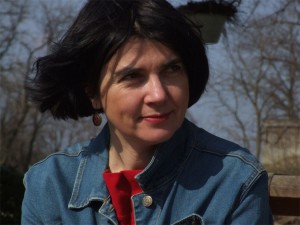
Anamarija Batista is an Assistant Professor in Art Education at the Department of Fine Arts & Design, Mozarteum University. Her work bridges art, architecture, and economics through interdisciplinary research and curation. She holds degrees in economics and art history from the University of Vienna, with additional studies in German as a foreign language. Affiliations: Mozarteum University (School of Music & Art Education) Roles: Academic researcher, curator, and educator Her research explores modern/contemporary art practices, architectural theory, and socio-economic frameworks. Notable projects include the long-term initiative Artist as spatial planner (since 2012) and exhibitions such as The Distance View (2023) and Productive Work - what is it supposed to be? (2018). She has co-edited influential volumes like Rethinking Density (2017) and authored works on urban typologies and temporalities in artistic practice. Her publications blend artistic critique with socio-economic analysis, addressing topics like urban transformation, labor relations, and cultural policy. Recent works include a 2024 monograph on obsolete architectural typologies and a collaborative study on wage labor history.
Univ.-Prof. Robert Rollinger is a full professor at the University of Innsbruck’s Department of Ancient History and Oriental Studies. He holds academic degrees from the Leopold-Franzens-Universität Innsbruck, including a M.A. (1989), PhD (1993), and Habilitation (1999). His research focuses on the interconnections between the Aegean and Ancient Near East, Achaemenid history, and global historiography. Rollinger has held prestigious positions such as editor of journals like Nikephoros and Ancient History Bulletin , and is a member of institutions including the Academia Europaea and the Austrian Academy of Sciences. Research Interests Contacts between Aegean and Near Eastern worlds Ancient Near Eastern historiography Empire studies (especially Achaemenid Persia) Global and entangled history approaches Awards Dr. Seibert-Preis (1995) Preis des Fürstentums Liechtenstein (1998) Wissenschaftspreis des Österreichischen Olympischen Comités (1999) Ausonius-Preis (2023) He leads major projects like the NAWA Chair on Achaemenid-Roman empire comparisons and chairs the Austrian Academy’s “Transformation Processes and Empire” commission. His work emphasizes cross-cultural connections and imperial legacies in antiquity.
Joanna Jurewicz serves as Professor at the University of Warsaw's Faculty of Oriental Studies within the Department of South Asian Studies. Elected to Academia Europaea in 2002 following her habilitation, she maintains active scholarly engagement in Vedic studies and cognitive linguistics. Her institutional affiliation spans decades, rooted in Warsaw's Indological tradition since her 1990 doctorate. Her research centers on cognitive-linguistic analysis of the Ṛgveda, examining metaphorical structures, conceptual formation in archaic thought, and philosophical continuities into Upaniṣadic literature. Key contributions include deconstructing Vedic concepts of self (ātmán), desire (kāma), and cosmic order through frameworks like "fire cognition" and spatial metaphors. This interdisciplinary approach bridges linguistics, philosophy, and religious studies to reveal systematic cognitive patterns in ancient Indian thought. Jurewicz's publication trajectory shows consistent focus on Ṛgvedic semantics since the 1990s, evolving toward comprehensive analyses of Indian philosophical development. Her work demonstrates methodological innovation through cognitive linguistics applied to classical texts, influencing contemporary Indological scholarship across Central and Eastern Europe. Prime Minister Award for outstanding academic achievements (2010) for 'Fire and Cognition in the Ṛgveda' Member of Academia Europaea (2002) Her editorial leadership includes co-editing significant volumes like 'Symbolism of Meadows and Pastures in Ancient Beliefs' and 'Cultural Conditions of Development in Asia and Africa.' Jurewicz actively participates in commemorative academic projects, such as the 50th Anniversary of Indological Studies at Warsaw University (2003/2004), where she contributed analyses of ritual language and hydraulic metaphors. Her scholarly network extends across European Indological conferences, evidenced by collaborations with institutions like the Polish Semiotic Society and University of Warsaw Press.
Ineke Sluiter is a Professor of Greek Literature and Linguistics at Leiden University, holding the highest-ranking professorship (Hoogleraar 1) since 2006. She has served as Chair of the Classics Department at Leiden (2000–2004) and Academic Director of the Dutch National Graduate School in Classics (OIKOS) (2000–2011). She is a member of the Royal Dutch Academy of Arts and Sciences (KNAW) and the Royal Holland Society of Arts and Sciences (KHMW). Her research focuses on ancient language theory, rhetoric, and the intersection of classical studies with modern societal issues. She co-directed the Penn-Leiden Colloquia on Ancient Values (2000–2010), producing influential volumes on topics like aesthetic and ethical values in antiquity. Education: PhD in Classics from Vrije Universiteit Amsterdam (1990). Previous roles include Associate Professor at the University of Pennsylvania and fellowships at the Institute for Advanced Study (Princeton) and the Center for Hellenic Studies (Washington DC). Research interests emphasize ancient linguistic practices, public discourse on norms, and bridging classicism with contemporary challenges. Notable works include studies on Galen’s medical-grammatical connections and analyses of Homeric narrative techniques. She has supervised over 20 PhD students and received prestigious grants such as the Spinoza Prize (2010), the highest Dutch research award. Awards include the 2020 Honorary Doctorate from Bristol University and multiple fellowships. Her leadership roles in national and international academic bodies highlight her influence in shaping classical scholarship.
Navid Rekab-saz is an Assistant Professor at the Institute of Computational Perception, Johannes Kepler University Linz (JKU), Austria. He is actively involved in research and teaching, offering courses such as Natural Language Processing and Natural Language Processing with Deep Learning . He maintains regular office hours and is accessible via email and a dedicated booking system for meetings. His research focuses on natural language processing , information retrieval , fairness and bias in AI , and recommender systems , with applications in humanitarian action and ethical AI. He employs deep learning and machine learning techniques to address challenges in bias mitigation, explainability, and domain adaptation. His work often bridges technical innovation with societal impact, especially in developing inclusive and fair AI systems. The recent publications of Navid Rekab-saz reflect a strong trend in debiasing strategies , parameter-efficient learning , and evaluation of societal biases in search and recommendation systems. His research spans from foundational work on word embeddings and retrieval models to applied studies in humanitarian NLP and gender bias in user queries. He frequently collaborates with a broad network of researchers and contributes to the development of datasets and benchmarks. Scientific Awards: Best Student Paper Award at ISMIR 2022 for 'Traces of Globalization in Online Music Consumption Patterns and Results of Recommendation Algorithms' Advising and Grants: Navid Rekab-saz has advised and collaborated with numerous students and researchers, many of whom are co-authors on his publications. While specific grant details are not listed in the provided text, his extensive publication record in top-tier venues suggests active involvement in funded research projects, likely supported by national or European funding bodies. He is also engaged in interdisciplinary research, particularly at the intersection of technical AI and legal or social implications. Labs and Teams: He is a core member of the Institute of Computational Perception at JKU, where he contributes to research projects in computational linguistics and AI. He collaborates closely with the team led by Prof. Markus Schedl and participates in initiatives related to music information retrieval, fairness in AI, and humanitarian applications of NLP.
Dirk Geeraerts is a full Professor of Linguistics at the University of Leuven (KU Leuven), where he has held a faculty position since 1993. He studied Germanic languages (Dutch and English) and holds a bachelor's degree in Philosophy, earning his PhD in 1981. His academic career includes professorships at the Kortrijk campus of the University of Leuven (1986–1993) and the University of Leiden (1985–1986), as well as foundational research at the Instituut voor Nederlandse Lexicologie (1977–1985). Research Focus : Geeraerts specializes in lexical semantics , lexicology , and cognitive linguistics , particularly examining social variation , diachronic change , and empirical semantic methods . His work bridges theoretical and applied lexicography, notably through his editorial role in the Van Dale Groot woordenboek van de Nederlandse taal (1995–2005). Scientific Contributions : Founded the international journal Cognitive Linguistics Co-editor of The Oxford Handbook of Cognitive Linguistics Managing editor of the Cognitive Linguistics Research monograph series Honors and Awards : 1978: L.K. Engels Award 1992: Flemish Government Award for Wat er in een woord zit 2003: Member of the Royal Academy for Dutch Language and Literature (KANTL) 2020: Matthias de Vries Medal for Dutch lexicology contributions Labs and Teams : Established the Quantitative Lexicology and Variational Linguistics (QLVL) research group at the University of Leuven, advancing empirical approaches to lexical and semantic studies.
Prof. Martin Teufel is a Professor at the University of Teacher Education Styria, Austria, affiliated with the Institute for Digital Media Education. He specializes in educational technology with a focus on mobile learning, digital competency, and innovative teaching methodologies. His work includes developing MOOC-based learning systems and analyzing student digital preparedness. Key projects include the Styrian University Conference digital competency analysis and the Digital Learning Lab initiative. He holds a BEd from the University of Graz and actively contributes to teacher training programs integrating emerging technologies. Research interests span digital pedagogy, seamless learning environments, and computational thinking tools like BBC micro:bit. His publications highlight patterns in online learning behaviors and institutional digital transformation strategies. He advises on educational technology policy and has led cross-institutional studies on student readiness for digital education. His work often bridges theory and practice through collaborative formats like the Hochschuldidaktik-Café for educators' professional development. Teaching responsibilities include courses on digital media in education and technology-enhanced learning design. He manages educational technology projects and serves as a consultant for digital learning infrastructure. His GPG public key (F361ADE9) indicates active engagement in secure academic communication.
Manfred Kern serves as Professor and Head of the Department of German Studies at Paris Lodron University Salzburg. With an extensive publication record dating back to 1995 and continuing through 2025, he maintains an active research profile in medieval literature and digital humanities. His leadership role as department head and project manager for significant research initiatives demonstrates his standing within the academic community. Professor Kern's research interests center on medieval literary cultures, particularly through the lens of digital humanities. His work on the Wenceslas Bible represents a significant interdisciplinary contribution, combining traditional philological approaches with cutting-edge computer vision techniques. His recent editorial work on disability representation in art ( Kunst und Gebrechen ) demonstrates expanding scholarly interests at the intersection of cultural history and visual studies. His research consistently bridges historical scholarship with contemporary methodological innovations. Kern's publication trends reveal a strategic evolution from traditional literary studies toward digital humanities applications. His most recent work (2024-2025) shows a strong emphasis on computational analysis of historical manuscripts, particularly the Wenceslas Bible project, while simultaneously developing theoretical frameworks for understanding disability representation in historical art contexts. This dual focus represents a sophisticated integration of technical and humanistic approaches to cultural heritage. As project manager for significant research initiatives including WB-DEA (The Wenceslas Bible - Digital Edition and Analysis, 2022-2024), TALC_ME (Textual and Literary Cultures in Medieval Europe, 2014-2017), and ALIENA (Old literature re-aestheticized in the experience space, 2010-2013), Professor Kern has secured substantial research funding and built collaborative networks across institutions. His organizational role in numerous academic events, including the IZMF lecture series and the In Nomine conference on medieval naming practices, further demonstrates his leadership in the field. Professor Kern actively participates in departmental and university governance, serving on habilitation committees and appointment committees (Berufungskommission). His academic service extends to editorial work and conference organization, reflecting his commitment to scholarly community building. His leadership of the German Studies department at Paris Lodron University Salzburg positions him at the center of academic activity in his field.
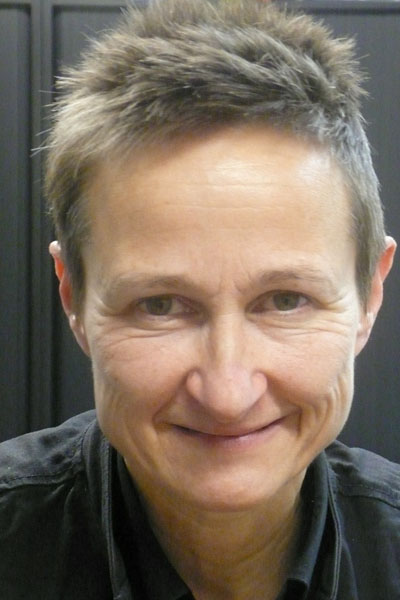
Jennifer Culbertson is an Associate Professor at the University of Edinburgh, where she has been a faculty member since 2014 when she took up a Chancellor's Fellowship, later being promoted to Reader (equivalent to Associate Professor) in 2018. She is a founding member of the Centre for Language Evolution at Edinburgh and maintains an active research program in experimental linguistics and cognitive science. Dr. Culbertson obtained her PhD in Cognitive Science from Johns Hopkins University in 2010, with her dissertation receiving the Robert J. Glushko Prize for Outstanding Dissertations in Cognitive Science in 2011. Her primary research investigates how languages are shaped by learning and use, with particular focus on grammatical structures (like word order) and morphological categories (gender and person systems). She employs experimental and computational methods to explore how typological universals arise from properties of the human cognitive system. Her work bridges theoretical linguistics, cognitive science, and language evolution, examining the cognitive constraints that influence linguistic patterns across diverse languages and learning contexts. She frequently uses artificial language learning paradigms to isolate specific cognitive mechanisms underlying language structure. Analysis of her recent publications reveals a consistent focus on cognitive biases in linguistic structure, particularly in word order and morphological systems. Her research increasingly incorporates cross-population studies (including work with autistic learners) and developmental perspectives to understand how language patterns emerge across different populations and throughout the lifespan. She examines how simplicity principles, communicative efficiency, and statistical learning shape linguistic structure. Dr. Culbertson's scientific contributions have been recognized with several prestigious awards: Robert J. Glushko Prize for Outstanding Dissertations in Cognitive Science (2011) ERC Starting Grant Young Academy of Europe membership (2019) Her research has been supported by over €2 million in funding from the ESRC and ERC. While specific advisees aren't mentioned in the provided text, her active publication record with numerous co-authors suggests she mentors graduate students and early-career researchers. Her work has significant implications for understanding language universals, language acquisition, and the cognitive foundations of linguistic structure. As a founding member of the Centre for Language Evolution at Edinburgh, Dr. Culbertson collaborates with an interdisciplinary team investigating the biological, cognitive, and cultural foundations of human language. Her research often intersects with psychology, cognitive science, and computational linguistics, contributing to a comprehensive understanding of language as both a cognitive and social phenomenon.
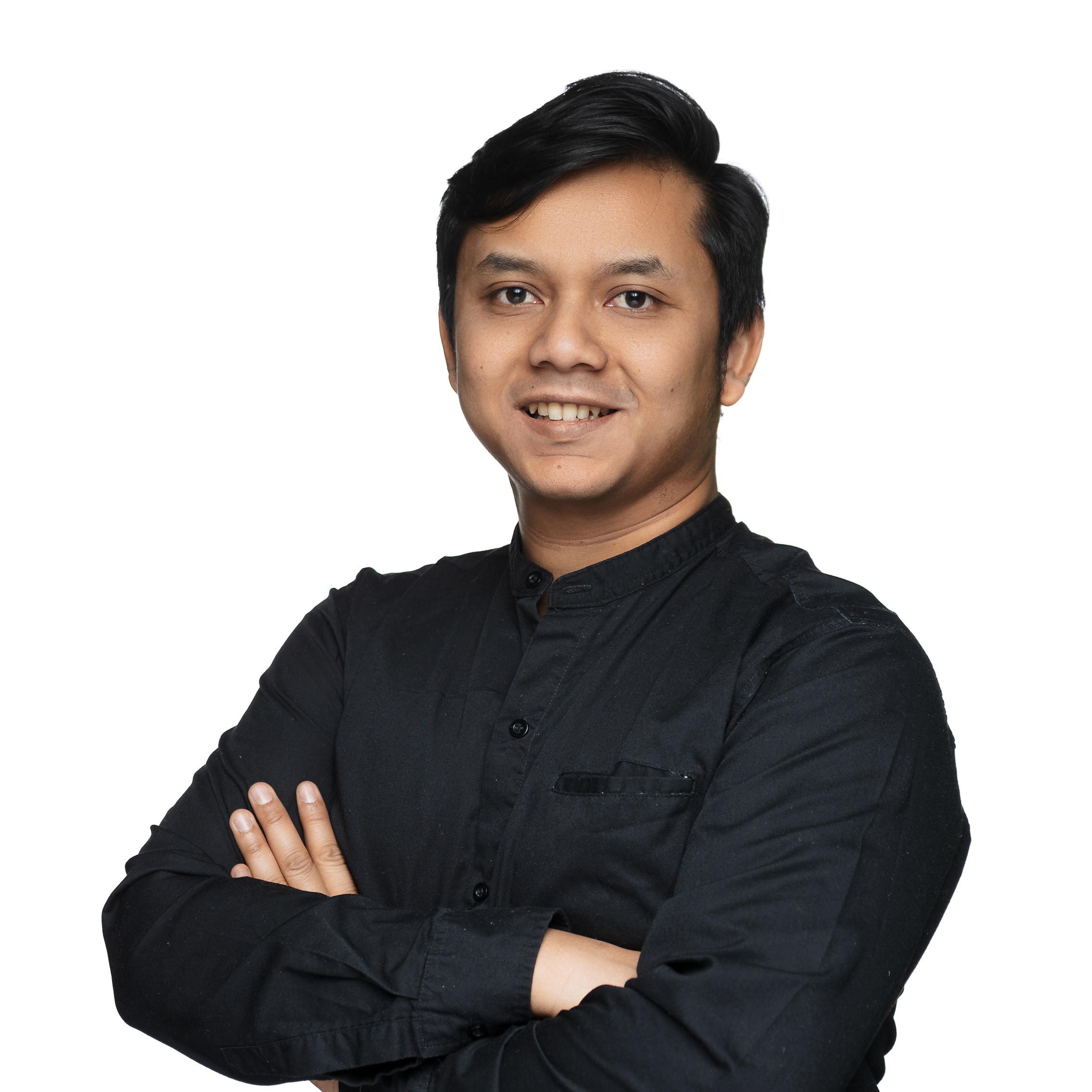
Fajar Juang Ekaputra is a Tenure Track Assistant Professor at the Institute of Data, Process, and Knowledge Management (DPKM), WU Vienna and a part-time Postdoctoral Researcher at the Data Science research unit, TU Wien . With a focus on Semantic Web , Knowledge Graphs , and their integration with Machine Learning in Neurosymbolic AI systems, his work spans domains like Cyber-Physical Systems and Materials Engineering . Education: Dr.techn. (2018), TU Wien M.T. (2010) and S.T. (2008), Institute Teknologi Bandung (ITB) Research Interests center on hybrid AI systems combining Semantic Web and Machine Learning , with applications in Cyber-Physical Systems (e.g., smart grids, smart buildings), data privacy in smart cities, and materials engineering . His 102+ publications include frameworks like SWeMLS-KG and SHACL4Protege . Recent Articles (2024) address explainable AI in cyber-physical systems, privacy trust in data infrastructures, and neurosymbolic frameworks . Earlier works (2023–2022) explore ontology-based data management , auditable AI , and hybrid system architectures . Scientific Awards: Best Paper Awards (ICoDSE 2023, ICoDSE 2016) Best Poster Nomination (SEMANTiCS 2019) PhD Scholarship (Austria’s Agency for Education and Internationalisation, 2012) Advising includes supervising PhD students (e.g., Majlinda Llugiqi, Katrin Schreiberhuber) and master’s theses on topics like knowledge graph characteristics and data quality assessment . He leads projects such as FAIR-AI (FFG-funded, 2024–2026) and SENSE (Horizon Europe, 2023–2025).
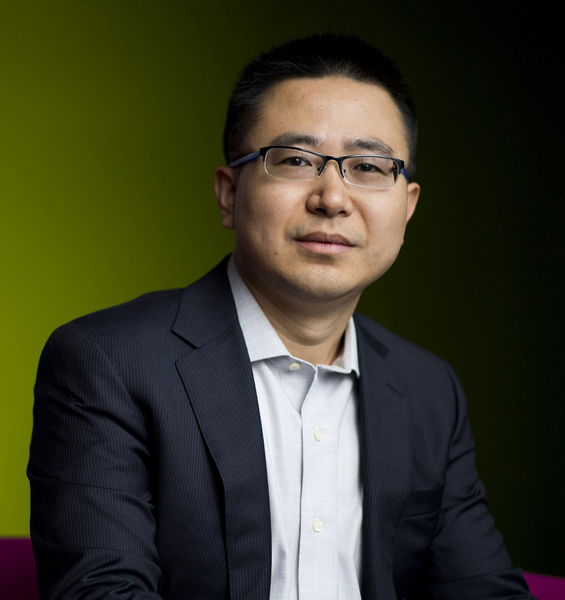
Yun Fu is a Distinguished Professor at Northeastern University, affiliated with the College of Engineering and Khoury College of Computer Science. He holds tenure in Electrical and Computer Engineering (ECE). His roles include Professor, Senior Vice President at Shiseido Americas, founder of Giaran (acquired by Shiseido), and co-founder of TVision Insights. He earned his Ph.D. from the University of Illinois at Urbana-Champaign. His research focuses on artificial intelligence, computer vision, machine learning, and data mining. Key achievements include over 500 publications, 50+ patents, and prestigious awards like IEEE Fellow, OSA Fellow, and AAIA Fellow. He leads the SMILE Lab, exploring AI applications in vision, robotics, and healthcare. Notable entrepreneurship includes AI-driven ventures in cosmetics and media analytics. Research interests emphasize AI-driven solutions for computer vision challenges, including anomaly detection, trajectory prediction, and multimodal learning. His work bridges academia and industry, with impactful contributions to both fields.
Univ.-Prof. Dr. Philipp Ther is a Professor of Central European History at the University of Vienna, leading the Research Center for the History of Transformations (RECET) and serving as Deputy Head of the Research Platform for the Study of Transformations and Eastern Europe . He previously held the Chair of Comparative European History at the European University Institute in Florence. His research focuses on post-1989 political and social transformations , East Central European cultural and social history , nationalism , and ethnic cleansing . He has authored award-winning books including Europe since 1989: A History (Princeton UP, 2016), recipient of the Leipzig Book Fair non-fiction prize, and The Outsiders: Refugees in Europe since 1492 (Princeton UP, 2019). He leads major projects like Transformations from Below: Shipyards and Labour Relations in the Uljanik (Croatia) and Gdynia (Poland) Shipyards since the 1980s (2016–2019), funded by German and Austrian research councils. He was awarded the prestigious Wittgenstein Prize (2019), Austria’s highest scientific honor. Teaching : Leads seminars on transformation theories, East European globalization history, and music in the Habsburg Empire. Publications : Over 15 books translated into 15 languages, 12 co-edited volumes, and numerous articles. Affiliations : Department of East European History, University of Vienna; Research Platform for Transformations/Eastern Europe.
Timo Fleischer is an Associate Professor in the Chemistry Didactics Working Group at the University of Salzburg, affiliated with both the Faculty of Natural and Life Sciences and the School of Education. He leads key educational innovation projects including EXBOX-Digital, ChemGerLab-VR, and RECC Salzburg, and plays a significant role in digital science education development. Education: Bachelor of Science in Geography and Chemistry, University of Kiel (2011) Master of Education in Geography and Chemistry, University of Kiel (2013) PhD in Science Education, TUM School of Education (2017) Habilitation in Chemistry Didactics, University of Salzburg (2024) His research focuses on the effectiveness of digital media in teacher education and chemistry classrooms, the development of digital teaching and learning materials, and the integration of experimentation and modeling in science education. He is particularly interested in how digital tools support the learning of chemical language and representations. His work bridges educational theory and practical classroom innovation. His recent publications demonstrate a strong emphasis on digital scaffolding, augmented and virtual reality in chemistry labs, eye-tracking during experiments, and the use of fiction as an anchor in science teaching. These works reflect a trend toward immersive, technology-enhanced, and student-centered learning environments in science education. Scientific Awards: Ehrenurkunde Polytechnik-Preis 2022 – Projekt EXBOX-Digital Kulturfondspreis 2020 für das Projekt MINT:labs Science City Itzling Comenius-EduMedia-Siegel für EXBOX-Digital (2020) Qualitätslabel „Regional Educational Competence Centre“ (RECC) (2018–2021) Junior-Fellowship, Kolleg Didaktik:digital (2016–2017) Timo Fleischer has supervised various research projects and collaborated with numerous colleagues and students, though specific advisees are not listed. He has secured recognition and funding for initiatives such as EXBOX-Digital and MINT:labs, indicating successful grant acquisition. He is actively involved in teacher training, curriculum development, and science communication. He leads several innovative labs and teams, including ChemGerLab-VR (a virtual reality chemistry lab), EdTechAll, and the development of MINT:labs Science City Itzling. These initiatives focus on creating digital, hands-on, and inclusive science learning environments for both students and teachers.
Wolfgang Ulrich Dressler is a Full Member of the Division of Humanities and Social Sciences at the Austrian Academy of Sciences since 1992 and maintains primary affiliation with the University of Vienna. His scholarly identity centers on foundational contributions to linguistic theory across multiple subdisciplines. His research traverses General linguistics, Psycholinguistics, Sociolinguistics, and Cognitive linguistics with particular emphasis on morphological processes, phonological structures, and the mental lexicon. Recent work demonstrates sustained focus on German morphonotactics and literary language phenomena, bridging theoretical frameworks with empirical corpus analysis. Publications from 2020-2024 reveal consistent investigation into word formation mechanisms, obstruent cluster patterning, and developmental lexicon acquisition. His scholarship integrates cognitive, corpus-based, and cross-linguistic methodologies while maintaining strong connections to literary and theatrical language contexts. Dr. Dressler's exceptional contributions are recognized through: Multiple honorary doctorates (Sorbonne, University of Athens, Adam Mickiewicz University) Prestigious lifetime achievement awards (Grand Cardinal Innitzer Prize, Theodor Körner Prize) Membership in leading academies including Norwegian Academy of Sciences, Academia Europaea, and Hungarian Academy of Sciences Honorary status in major linguistic societies (Linguistic Society of America, Societas Linguistica Europaea) His international standing is further evidenced by affiliations with the Royal Danish Academy, Accademia Nazionale dei Lincei, and Accademia della Crusca.