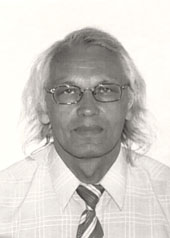
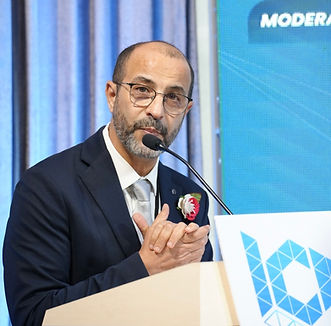
Vladas Žulkus is a Professor at Klaipėda University's Department of History and Archaeology, specializing in Baltic archaeology and medieval history. Born in 1945, he has held pivotal roles including Head of the Department of History (1998–2001), Director of the Center for the Study of Western Lithuanian and Prussian History (2001–2002), and Rector of Klaipėda University (2002, 2006). His career includes positions at the Klaipėda Restoration and Design Institute and the Klaipėda Museum of the History of Lithuania Minor. His research focuses on: Medieval urban centers (Klaipėda Castle, Palanga) Curonian Iron Age culture Baltic-Scandinavian interactions Underwater archaeology in the Baltic Sea Žulkus' publications emphasize Baltic tribal societies, maritime heritage, and medieval infrastructure, with recurring themes of cultural exchange and settlement patterns. His 2009 Lithuanian Science Prize recognized groundbreaking work on Baltic Sea regional studies. Key affiliations include chairing the Lithuanian Archaeological Society (2001–2003) and supervising archaeological projects like Šventoji ship explorations and Plateliai Lake castle surveys. No student advisories or grants are detailed in the source text.
Egidijus Aleksandravicius serves as a Professor in the Department of History at Vilnius University and holds leadership positions including head of Academia cum laude, director of the Lithuanian Diaspora Institute, President of the Lithuanian National Committee for Historical Science, and Chairman of the Open Lithuania Foundation Board. He is an active public intellectual and member of the World Association of Lithuanian Scholars, Lithuanian Historical Society, and Samogitian Cultural Society. His habilitated doctorate in humanities was complemented by international scientific experience at Wisconsin State University (Madison), University of Illinois, and University of Helsinki. Research focuses on Lithuanian cultural history in the 19th century, historiography, and diaspora studies, examining memory formation, exile consciousness, and civil society emergence during Lithuania's 19th-20th century revival. Alexandravicius has authored twenty books and published over one hundred articles in Lithuanian and international scientific journals. As director of the Lithuanian Diaspora Institute, he leads research on migration patterns, identity preservation, and cultural continuity within global Lithuanian communities. No specific scientific awards were referenced in the source material.
Boleslovas Dapkūnas is a Lecturer at Vilnius University's Faculty of Mathematics and Informatics, actively teaching Internet technologies since the 2016/2017 academic year with scheduled instruction extending through the 2025/2026 semester. His teaching responsibilities include conducting exercise sessions for subgroup MIF-Wholesale (2,317) in Internet technologies. His research focuses on interdisciplinary mathematical modeling at the intersection of biology and physics, with core expertise in: Mathematical and computational modeling of bacterial growth dynamics Pattern formation mechanisms in microbial populations Self-organization phenomena across biological scales Environmental factor effects (oxygen, gravity) on bacterial systems His work demonstrates how mathematical frameworks can unify understanding of biological processes from bacterial colonies to human societies. No scientific awards or honors were documented in the provided materials. Available information indicates active teaching responsibilities but provides no details regarding student supervision, research grants, or laboratory affiliations.
Audrius Aleknavičius is a Researcher at Vytautas Magnus University's Bioeconomy Research Institute, specializing in land management and consolidation. Previously serving as Professor (2010-2020) and Head of the Department of Land Management (2008-2012), he has been affiliated with the Agriculture Academy since 1997, when it was known as the Lithuanian University of Agriculture until 2011, and later as Aleksandras Stulginskis University (2011-2018). Dr. Aleknavičius earned his Doctor of Technological Sciences degree in 2002 after graduating from the Lithuanian Academy of Agriculture in 1995. He furthered his education at the Royal Institute of Technology in Stockholm, completing studies there in 2007. His international experience includes internships in Sweden (1999, 2000, 2001) and Taiwan (2003), which have informed his comparative approach to land management systems. His research focuses on critical aspects of land administration, with particular expertise in land consolidation, agricultural land use development, and real estate valuation. Dr. Aleknavičius has pioneered methods for optimizing large farm holdings, analyzing land market dynamics across Lithuanian municipalities, and adapting European land consolidation models to different national contexts including Ukraine. His work bridges theoretical land management principles with practical applications for improving agricultural efficiency and rural development. Recent publications reveal a strong trend toward practical solutions for land fragmentation issues, with significant attention to municipal-level land planning schemes and pre-emption rights for farm owners. His research increasingly incorporates comparative analysis of Baltic states' land administration systems while addressing contemporary challenges in land markets following Lithuania's land reform completion. Dr. Aleknavičius has supervised numerous master's theses covering diverse aspects of land management, from agricultural land use in specific municipalities to land lease processes and special land use conditions. His academic mentorship has produced research addressing practical land administration challenges across Lithuania's regions. Working within the Department of Land Use Planning and Geomatics, he contributes to the Agriculture Academy's mission of advancing sustainable land management practices. His current research activities focus on optimizing land holdings for large agricultural enterprises, analyzing land market intensity across Lithuanian municipalities, and developing more efficient land administration models through comparative analysis of European systems.
Professor Yuosre F. Badir is a distinguished academic and administrator at the Asian Institute of Technology, serving as both Dean and Professor of Technology and Innovation Management at the School of Management (SOM). With a Ph.D. in Management of Technology from EPFL Lausanne and advanced degrees in logistics, project management, and civil engineering, he brings over two decades of expertise in innovation management and digital transformation across global institutions. Education : Ph.D. in Management of Technology (EPFL), Master in Logistics (EPFL), MSc in Project Management (University of Putra Malaysia), B.Sc. in Civil Engineering (University of Benghazi) Research Interests : Managing technological innovation, digital transformation, green innovation, and innovation dynamics in SMEs International Experience : Research Fellow at Tokyo Institute of Technology, Visiting Scholar at NYU, and various roles at EPFL and European University in Geneva His publications demonstrate a consistent focus on innovation management in emerging markets, with particular emphasis on green innovation , open innovation strategies , and digital transformation in SMEs. Over 15 recent publications reveal patterns in sustainable business practices , technology adoption , and organizational innovation across multiple disciplines. Key Awards and Recognitions : Best paper award in Strategic Marketing Track at ANZMAC 2017 Best paper award in Entrepreneurship and Innovation Track at ANZMAC 2016 Best article award at International Conference on Emerging Trends in Business and Economy 2014 Selected among top ten engineering 'works of value' by IEEE USA Today's Engineer 2003 Professor Badir has advised numerous publications through collaborative research while teaching advanced courses in Technology-based M&A , Corporate Technology Strategy , and Qualitative Research Methods . His work has been published in top journals including Research Policy , Journal of Product Innovation Management , and IEEE Transactions on Engineering Management .
Visvaldas Legkauskas is an Associate Professor at the Department of Psychology , Vytautas Magnus University . His research focuses on self-concept , identity , basic needs , and social media usage patterns across age groups. Key Research Areas : Psychological aspects of social media, social influence, motivation, creativity. Students Advised : Greta Žitkutė (2025), Joana Markauskienė (2025), Monika Pranckevičiūtė (2024), and others in psychology and education domains. Publications (2025–2019) analyze correlations between self-esteem and learning motivation , gender roles in romantic relationships , and social media usage impacts on psychosocial adjustment . Methodologies include quantitative surveys and standardized scales like Rosenberg Self-Esteem Scale and BSMS. Collaborations span psychology, education, and gender studies, addressing topics like conflict resolution and marital satisfaction in Lithuanian contexts.
Romas Baronas serves as a Professor at the Faculty of Mathematics and Informatics, Vilnius University, actively teaching Database Management Systems and supervising Master's thesis research as evidenced by his current teaching schedule extending through the 2025/2026 academic year. His academic profile demonstrates sustained engagement in both educational and research activities within the university's mathematics and informatics framework. Professor Baronas' research centers on advanced mathematical modeling of biological systems, with primary focus areas including biosensor optimization, bacterial self-organization phenomena, enzyme kinetics, and bioreactor design. His work employs computational analysis to investigate diffusion limitations, pattern formation in microbial populations, and reaction-diffusion dynamics, bridging theoretical mathematics with practical biotechnological applications. The interdisciplinary nature of his research integrates microbiology, electrochemistry, and nanotechnology to develop predictive models for complex biological processes. Analysis of his 15 most recent publications (2020-2025) reveals consistent thematic progression in mathematical biosensor modeling, with increasing emphasis on bacterial pattern formation, oxygen consumption dynamics, and multi-layer system optimization. His scholarly output demonstrates methodological evolution from foundational biosensor modeling toward sophisticated investigations of bacterial self-organization across scales, incorporating fractal analysis and gravity effects. The research consistently applies nonlinear dynamics and computational simulation to address challenges in bioreactor efficiency and biosensor sensitivity. Professor Baronas has supervised Master's students through thesis preparation activities, though specific student names and grant details are not documented in the provided materials. His academic service includes editorial contributions as a referee for INFORMATICA journal, reflecting his standing in the scholarly community. While laboratory affiliations are not explicitly stated, his research methodology suggests involvement with computational modeling facilities supporting his extensive publication record in mathematical biosciences.
Gintautas Grigas is an Associate Professor and Affiliated Scientist at the Institute of Mathematics and Informatics , Vilnius University, Lithuania, serving within the Educational Systems Group . Since joining the Institute in 1965, he has become one of Lithuania’s most prolific authors in computer science education and software localization. Education: 1959 – Graduated, Faculty of Electrical Engineering, Kaunas Polytechnic Institute (now Kaunas University of Technology) 1970 – Candidate of Technical Sciences (post-graduate), nostrified 1992 to Doctor of Mathematical Sciences Continuing education courses in programming languages, data types and programming technology at Vytautas Magnus University, Vilnius University and Vilnius Pedagogical University Research Interests Grigas’ scientific work centres on four tightly interwoven themes: abstract data types , programming teaching methodology , computer terminology , and software localization . His contributions range from theoretical analyses of data structures to practical guidelines for localizing major software suites into Lithuanian. He has also pioneered studies on how interface defects influence national language culture and on letter-frequency analyses supporting cryptography and linguistic research. Publication Trends Across more than 150 scholarly and professional works, a clear progression is evident: early focus on programming fundamentals and Lithuanian computing history, followed by intensive investigation of localization pedagogy, and more recently, mobile-device text input and cultural impacts of internationalization errors. Collaborative volumes such as the Encyclopedic Dictionary of Computing and the textbook Fundamentals of Software Localization have become standard references in Lithuanian computer science curricula. Awards & Recognition No specific competitive awards are listed; however, his sustained output—40 books, 100+ scientific articles, 250+ popular/professional articles—is itself a testament to national academic recognition. Doctoral Advising & Grants While individual doctoral students are not named, Grigas has long contributed to doctoral education through the Institute’s doctoral committees and study guides. His research has been supported by national projects on software localization and educational technology, although explicit grant numbers are not provided in the text. Labs & Teams He carries out his work within the Educational Systems Group , a subdivision of the Institute of Mathematics and Informatics, located at Akademijos St. 4, Vilnius. The group investigates learning technologies, curriculum design, and the societal impact of digital systems, providing a collaborative environment for his ongoing projects.
Dovilė Galdauskaitė is an Assistant Professor in the Department of Sociology at Vilnius University's Faculty of Philosophy. She specializes in fertility studies, family sociology, and gender sociology, with strong methodological expertise in quantitative research. Her work bridges academic scholarship with practical statistical applications through her concurrent position at Statistics Lithuania. Education: PhD in Philosophy (Sociology), Vilnius University, 2023 MA in Demography, Vytautas Magnus University, 2018 BA in Sociology, Vytautas Magnus University, 2016 Galdauskaitė's research focuses on the complex relationship between changing gender roles, fertility decisions, and family formation in contemporary Lithuanian society. Her work examines how evolving gender attitudes influence reproductive behavior and life planning, with particular attention to the intersection of happiness research and demographic patterns. Through sophisticated quantitative methodologies, she investigates demographic transitions in post-Soviet contexts, contributing valuable insights to understanding Eastern European fertility trends within broader European demographic frameworks. Her publication record reveals a coherent scholarly trajectory examining fertility dynamics through multiple theoretical lenses including gender revolution theory, happiness research, and comparative demographic analysis. Galdauskaitė consistently employs large-scale survey data from international studies (Family and Fertility Survey, Generations and Gender Survey) combined with qualitative insights to develop nuanced understandings of reproductive behavior. Dovilė Galdauskaitė teaches courses including Introduction to Statistics in Social Sciences (seminars), Data Analysis (seminars), Fundamentals of Educational Research (quantitative studies), and Sociology of Family and Sexuality. Her dual appointment allows her to integrate academic research with practical statistical work in official statistics. She actively participates in international scholarly networks, including COST network CA21143 TraFaDy on transnational family dynamics in Europe, and contributes to activities covering gender and equality statistics, population statistics, census work, and Sustainable Development Goals implementation through her role at Statistics Lithuania.
Judita Giparaitė is an Associate Professor at Vytautas Magnus University in Kaunas, Lithuania, working within the Faculty of Humanities and the Department of Foreign Language, Literary and Translation Studies. She also maintains strong affiliations with the Education Academy and Teacher Training Institute at the university. With a Doctor of Sciences degree earned in 2004 and achieving Associate Professor status in 2018, she represents a significant academic presence in Lithuanian linguistics. Dr. Giparaitė's research spans multiple dimensions of linguistic inquiry with particular emphasis on Grammar, Corpus Linguistics, and Contrastive Linguistics. Her scholarly work demonstrates sophisticated methodological approaches combining quantitative and qualitative analysis of linguistic phenomena. She has developed expertise in analyzing grammatical structures across languages, particularly examining English and Lithuanian comparisons, and applying corpus-based methodologies to investigate language patterns in authentic contexts. Analysis of her supervised research reveals consistent focus areas including corpus linguistics applications in language teaching, morphological analysis of contemporary language phenomena, and cross-variety linguistic comparisons. Her students' work frequently employs major linguistic corpora such as the British National Corpus, Corpus of Contemporary Lithuanian Language, and GloWbE, demonstrating her influence in promoting rigorous empirical approaches to linguistic research. As an educator, Dr. Giparaitė has supervised numerous bachelor's and master's theses exploring innovative intersections of traditional linguistic theory with emerging technologies. Her students have investigated topics ranging from artificial intelligence applications in language learning to digital media integration in classroom settings, reflecting her forward-looking approach to language education. Her mentorship style appears to encourage methodologically sophisticated research that bridges theoretical understanding with practical classroom applications.
Violeta Davoliūtė is a Professor at Vilnius University's Institute of International Relations and Political Science (TSPMI), specializing in memory politics and historical trauma. She holds a PhD from the University of Toronto and has been a visiting scholar at Yale University, École des hautes études en sciences sociales, Uppsala University, and Imre Kertész Kolleg Jena. Her research examines the intersection of Holocaust memory, Soviet legacies, and national identity in Eastern Europe. Her core research interests include: The politics of Holocaust remembrance and perpetrator/victim narratives Soviet and post-Soviet memory regimes in the Baltic states Testimonial ethics and trauma transmission across generations National identity formation through historical narratives Recent publications analyze patterns in cinematic representations of historical violence, testimonial archives of wartime sexual violence, and debates around Soviet-era monuments. Her work frequently engages with tensions between national heroic narratives and marginalized histories of complicity. Key scientific recognitions include: Senior Fellowship at the Vienna Wiesenthal Institute for Holocaust Studies (2022-2023) Leadership of EUROPAST – a Horizon Europe project on public history (2022-2025) Representative for Lithuania in the COST Action 'Slow Memory' network (2021-2025) She directs the (Post)Soviet Memory Studies Center and serves on advisory boards for international research consortia including the ERC-funded 'Translating Memories' project. Her work bridges academic research and public history through editorial roles like co-editing the CEU Press book series Memory, Heritage and Public History in Central and Eastern Europe .
Rima Cicėnienė is an Associate Professor at Vilnius University's Faculty of Communication, specializing in the Department of Book, Media and Publishing Studies. Her research focuses on manuscript book history, documentary heritage management, and archival science, with particular emphasis on the cultural and historical contexts of the Grand Duchy of Lithuania (GDL). She holds a doctoral degree and has been actively involved in academic and cultural heritage initiatives since the early 2000s. Her work explores the intersection of manuscript and printed book cultures in pre-modern Lithuania, the evolution of book societies, and the preservation of cultural heritage. Cicėnienė has contributed to numerous international conferences, including roles in organizing panels on topics like Francysk Skaryna's legacy and the 200th anniversary of Lithuanian periodicals. She has also participated in digitization projects and served on national committees for UNESCO's 'Memory of the World' program and cultural heritage restitution efforts. Cicėnienė's publications span codicology, historical book studies, and interdisciplinary cultural analysis. Recent work includes studies on non-print periodicals in the Wroblewski Library and the historical trajectories of codicological research in Lithuania. Her articles often bridge historical methodologies with contemporary archival practices, emphasizing the role of manuscripts as primary sources for understanding socio-cultural dynamics. She is an editorial board member of several journals, including Slavistica Vilnensis and Rukopisna ta Knyžkova Spadshchyna Ukrayiny , and has curated exhibitions showcasing rare manuscripts and historical documents from Lithuania's cultural heritage collections.
Prof. Dr. Adomas Butrimas is a distinguished art historian and archaeologist affiliated with the Vilnius Academy of Arts (VAA), serving as a Professor in the Department of Art History and Theory since 2002. He has held significant administrative roles including Rector (2004–2011) and Vice-Rector for Education (2011–2014), and initiated the Institute of Art Research (1994) and VAA Publishing House. 1978: BA in Archaeology, Faculty of History, Vilnius University 1985: PhD in Art History, Vilnius University His research focuses on art history, archaeology, prehistoric art, and Lithuanian history , with particular expertise in Baltic amber traditions, Mesolithic-Neolithic transitions, and Western Lithuanian cultural landscapes. He has led major projects like Prehistoric Art: Chronology, Context, Ritual and Symbols (2015–2018) and Crafted Bone and Horn Artefacts from Western Lithuania (2021–2024). Current research trends emphasize hunter-gatherer technology (e.g., T-shaped antler axes, socketed harpoon heads), bioarchaeological identity formation , and Baltic cultural landscape evolution over 5,000 years. His work bridges archaeological methodology with artistic symbolism, particularly in Mesolithic-Neolithic contexts. Scientific Awards Knight of the Order of Orange-Nassau, Netherlands (2008) Cross of Recognition, Latvia (2011) Order for Merits to Lithuania (Knight's Cross, 2014) Man of the Year in Design (2009) As editor-in-chief of Acta Academiae Artium Vilnensis , he has supervised numerous doctoral theses and organized international conferences. His lab affiliations include VAA's Art and Research Department, Art and Design Lab, and the Institute of Art Research, which he founded in 1994.
Aleksejus Kononovičius is a Senior Researcher at Vilnius University's Institute of Theoretical Physics and Astronomy within the Faculty of Physics. His research spans interdisciplinary applications of physics principles to complex social and financial systems, with particular expertise in modeling collective behavior through statistical and computational approaches. Dr. Kononovičius's primary research interests focus on sociophysics, econophysics, and the physics of complex systems. His work explores opinion dynamics through various voter models (noisy voter model, compartmental voter model, scaled voter model), long-range memory phenomena in both physical and social contexts, and agent-based modeling of social and financial systems. He investigates how nonlinear stochastic dynamics can explain patterns in parliamentary elections, financial markets, and semiconductor physics. His research demonstrates how fundamental physical principles can elucidate complex phenomena across diverse domains. Analysis of his publication record reveals a consistent focus on developing and applying mathematical models to understand complex systems. His recent work (2023-2024) examines delayed interactions in voter models and 1/f noise in semiconductors, while maintaining his longstanding interest in long-range memory phenomena. The interdisciplinary nature of his research bridges statistical physics, social sciences, and finance, with applications ranging from understanding political behavior to financial market dynamics and physical material properties. 2020 Young scientist scholarship 'Effect of non-linearity on long-range memory properties of fractional Gaussian noise' awarded by Lithuanian Academy of Sciences Promotional scholarships for doctoral candidates (2013-2015) granted by Research Council of Lithuania IARIA Best Paper Award (2011) Dr. Kononovičius has supervised 3 bachelor degree theses, 1 master degree thesis, and 4 internship projects, demonstrating his commitment to mentoring the next generation of researchers. His research has been supported by multiple grants and scholarships from the Research Council of Lithuania. He actively contributes to the scientific community through his participation in the Complex Physical and Social Systems Group at Vilnius University. He maintains an active presence in the scientific community through the 'Physics of Risk' science blog (https://rf.mokslasplius.lt/), which serves as a platform for science popularization and educational activities related to his research interests. His work exemplifies the growing field of applying physics methodologies to understand complex social and economic phenomena.
Dr. Šarūnas Mikolaitis is an Associate Professor and Senior Researcher at Vilnius University's Institute of Theoretical Physics and Astronomy (ITPA). His research focuses on stellar evolution, galaxy chemodynamics, and chemical abundances in stars, with a particular emphasis on understanding the chemical composition of planetary host stars and Galactic structure using data from the Gaia-ESO Survey and other international collaborations. Institution: Institute of Theoretical Physics and Astronomy (ITPA), Vilnius University Research Area: Stellar evolution, chemodynamics of the Galaxy Key Collaborations: Gaia-ESO Survey, AMBRE project, PLATO mission Research Trends: Analysis of elemental abundances (C, N, O, Fe, neutron-capture elements) in open clusters and field stars, using high-resolution spectroscopy and machine learning techniques to trace Galactic chemical evolution, age-abundance relations, and star-planet connections. Publication Highlights: Contributions to the Gaia-ESO Survey data releases, studies on neutron-capture elements in planetary hosts, and investigations of mixing processes in RS CVn and hot subdwarf stars. His work often involves international consortia and large-scale spectroscopic datasets.