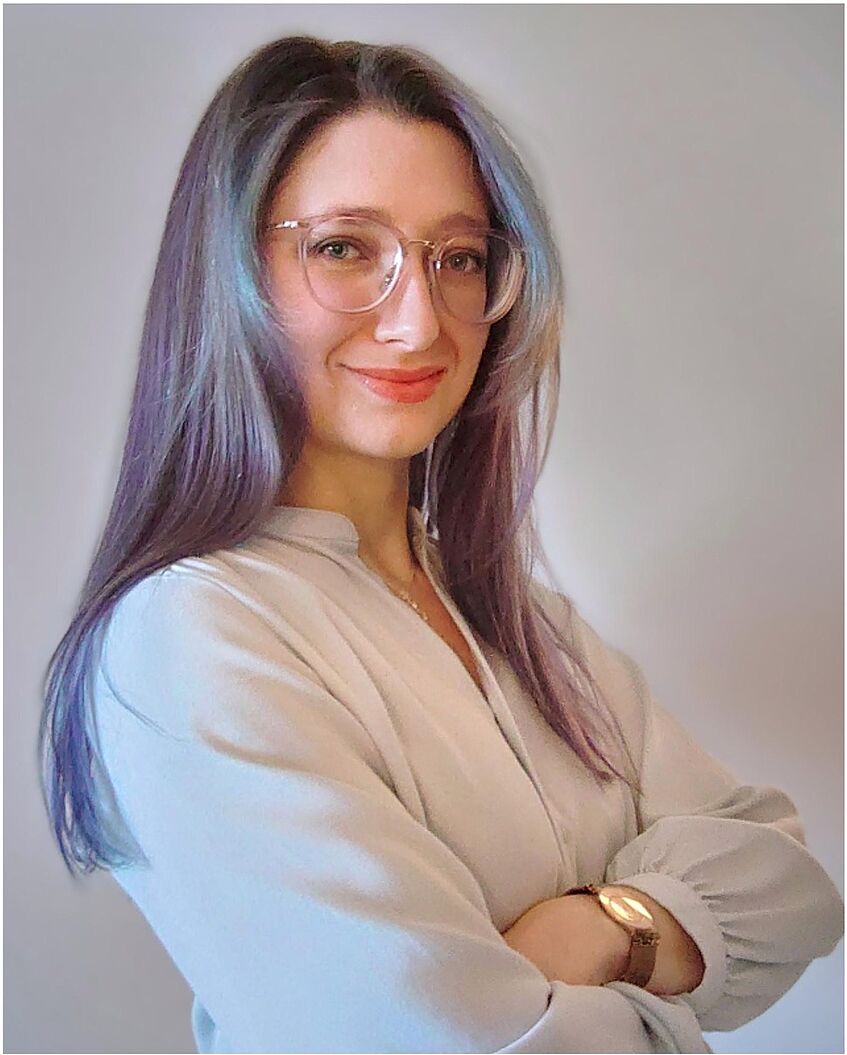
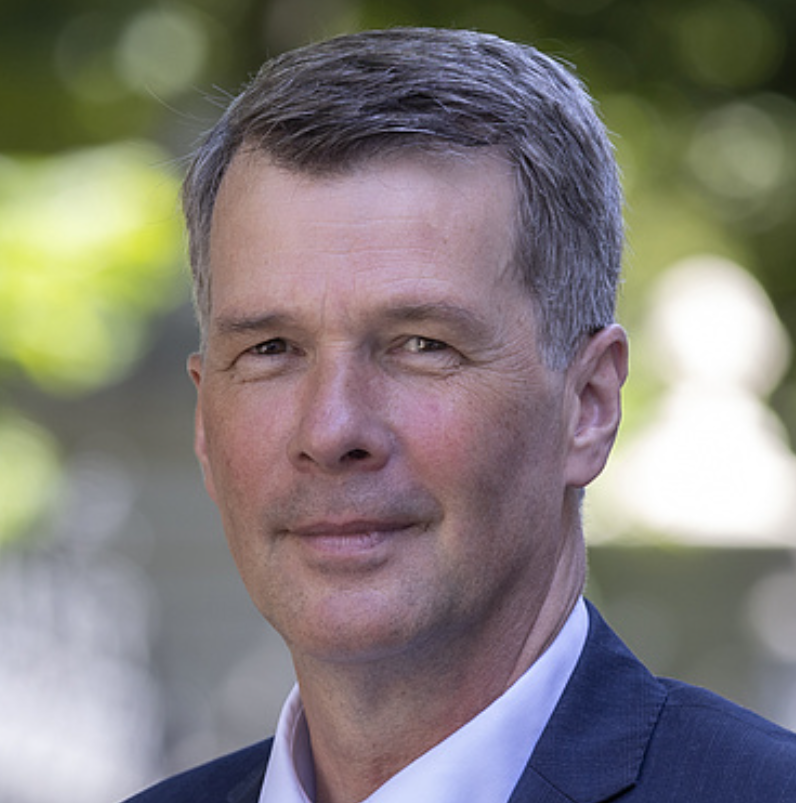
Marian Lux is a researcher affiliated with the Faculty of Computer Science, specializing in workflow systems and business process management through the Research Group Workflow Systems and Technology. Her academic profile centers on the intersection of process modeling, user behavior analysis, and search algorithm development within information systems. Her research interests span business process management and process mining, with particular emphasis on: User behavior patterns in search process models Quality assessment of business process execution Pattern recognition in workflow systems Data-driven optimization of customer journey processes Digital transformation frameworks for smart communities Analysis of her publication history reveals a consistent trajectory from foundational work on search process modeling (2018-2019) toward broader applications in digital ecosystems (2023), demonstrating increasing scope from technical process analysis to societal-scale digital transformation projects. Her research bridges theoretical computer science with practical business process applications across tourism, e-commerce, and rural community development domains. Marian Lux actively contributes to the Research Group Workflow Systems and Technology, where she develops methodologies for analyzing process execution data and modeling common behavioral patterns. Her work frequently employs ontology-based approaches and leverages underlying data structures to identify optimization opportunities in complex workflow systems.
Bernd Aichner is a researcher in the Faculty of Physics at an unspecified university, specializing in Physics of Functional Materials . His work focuses on superconducting materials, ion beam nanotechnology, and vortex dynamics in high-temperature superconductors. Research Interests : Thin films and nanostructured superconductors Ion beam irradiation for defect engineering Quantum magnonics and magnetic field effects Topological properties of Abrikosov vortices Scientific Achievements : Awarded the OePG PhD Thesis Award in 2023 for his work on superconducting thin films. Active in international collaborations, particularly in ion beam-driven superconducting research. Professional Activities : Delivered 36 lectures and presentations (2015–2025) on topics such as vortex pinning and quantum device fabrication. Co-authored 14 peer-reviewed publications (2015–2024) and 2 preprints (2025). Featured in a 2019 Press Report titled 'From Japanese Basket Weaving to Ion Beam Nanotechnology' discussing his outreach efforts.
Robert Konrat is a full-time Professor at the Department of Structural and Computational Biology within the Max Perutz Laboratories at the University of Vienna. His research focuses on advanced NMR spectroscopy techniques for studying intrinsically disordered proteins (IDPs), protein dynamics, and molecular interactions, with a particular emphasis on phosphotyrosine interactome analysis and isotope labeling methods. Key Research Areas: NMR spectroscopy, IDP dynamics, osteopontin structure-function relationships, selective isotope labeling, and molecular interaction mapping. Projects: Ongoing work includes "NMR spectroscopy of intrinsically disordered proteins" (2025-2028) and "NMR studies of IDP dynamics" (2022-2025), alongside completed projects on osteopontin's role in bone material. Recent publications highlight innovations in NMR methodology for studying protein-ligand interactions, Tau protein posttranslational modifications, and IDP structural heterogeneity. Collaborations span Austria and international institutions, with activities including poster presentations at scientific conferences since 2022. His work contributes to fundamental understanding in structural biology and has methodological implications for biochemical research, though specific SDG contributions remain unspecified in the provided data.
Sonja Kunz is a University Assistant (Post-Doc) at the Department of Occupational, Economic and Social Psychology within the Faculty of Psychology at the University of Vienna. Her work focuses on applying social cognition theories to consumer behavior, particularly in food perception and sustainability-related judgments. Current Position: University Assistant (Post-Doc), University of Vienna Research Focus: Consumer behavior, health-taste beliefs, sustainability attributes Email: sonja.kunz@univie.ac.at Research Interests Sonja investigates how consumers form misbeliefs about food by integrating environmental cues. Her SoKo Lab research explores the paradoxical relationship between health and taste perceptions, and she leads the ComMEATted project on promoting meat alternatives through behavioral insights. Key themes include cognitive illusions, product differentiation, and contextual influences on dietary choices. Publication Trends Her recent work centers on novel food adoption, sustainability communication, and environmental cue effects. Articles address topics like package color saturation, menu frequency biases, and traffic light labeling, reflecting interdisciplinary approaches combining psychology and marketing.
Katharina Korecky-Kröll is a Senior Lecturer at the Department of German Studies, University of Vienna, and an Academy Scientist at the Austrian Centre for Digital Humanities and Cultural Heritage (ACDH-CH) since 2025 and 2023 respectively. Her research focuses on corpus linguistics, psycholinguistics, and sociolinguistics, particularly examining linguistic variation in Austrian German morphology, lexis, and pragmatics. She leads projects like the SFB German in Austria (DiÖ) and uses CHILDES for crosslinguistic studies on first language acquisition. Education: PhD in Linguistics (2012), MA in Linguistics and French (2000), and postgraduate studies in Computer Science and Azure Data Science (2021). Her methodological expertise includes NLP (spaCy, Python), statistical analysis, and experimental phonetics. Recent work explores morphopragmatic effects during the pandemic, lexical variation in Austrian dialects, and bilingual children's plurals. She integrates teaching with research, supervising courses on Germanic linguistics and language acquisition. Key publications address diminutives, morphonotactics, and social factors in language acquisition. She collaborates on digital humanities projects like LexAT21 and WBÖ, and her grants include FFG and OEAD funding for language development studies. Current presentations focus on LLM-assisted dialect lexicography and morphological dynamics in Austrian German.
Dr. E. Christiana Köhler is a Professor and Head of the Department of Egyptology at the University of Vienna, specializing in Predynastic and Early Dynastic Egyptian archaeology, material culture, and state formation processes. She teaches courses on Ancient Egyptian civilization, archaeology, and nutrition/environmental studies in the Nile Valley. Focus on Abydos and Helwan excavation sites Expertise in ceramic analysis and chronological studies Engaged in fieldwork and laboratory research Her research explores funerary practices, social complexity, and the role of material culture in Early Egypt. She leads the University of Vienna Middle Egypt Project, emphasizing multidisciplinary methodologies. Recent publications analyze Meret-Neith's tomb, chert mining in Wadi el-Sheikh, and ceramic residue studies, reflecting her interest in technological and ideological developments during state formation. Collaborates with international teams and contributes to academic discourse through conference organization and edited volumes.
Gabriele Scharrer-Liska is a researcher at the Vienna Institute for Archaeological Science, affiliated with the University of Vienna. Her work focuses on medieval and early medieval archaeology, with a particular emphasis on settlement patterns, bioarchaeology, geoarchaeology, and material culture. Research areas: Medieval archaeology, settlement analysis, climate change indicators, cultural heritage Contact: gabriele.scharrer@univie.ac.at Her recent publications highlight interdisciplinary approaches to understanding deserted medieval villages, Avar-period cemeteries, and post-medieval Swiss settlements. Key themes include funerary practices, paleoenvironmental reconstruction, and cultural transitions in Central Europe. Notable projects include the 'DeVill' digitization initiative and studies of the Frohsdorf cemetery. She contributes to academic discourse through collaborative research and archaeological theory, though no specific awards or grants are mentioned in the provided texts.
Ingrid Reiweger is an Associate Professor at the University of Natural Resources and Life Sciences, Vienna (BOKU), where she conducts research at the Institute of Mountain Risk Engineering within the Department of Civil Engineering and Natural Hazards. Her work focuses on snow physics, avalanche dynamics, and mountain risk management, bridging fundamental research with practical safety applications. Dr. Reiweger's research spans snow mechanics, glaciology, and cryospheric sciences, emphasizing both theoretical modeling and field applications. Her work combines physics-based approaches with innovative measurement techniques to understand snowpack stability, avalanche formation mechanisms, and risk assessment methodologies. Recent projects highlight her expertise in developing sensor technologies for snow monitoring and analyzing the impacts of changing snow conditions on avalanche hazards. Analysis of her recent publications reveals a strong emphasis on practical applications of snow science, particularly in developing monitoring systems using drones and sensor arrays, optimizing avalanche simulation parameters, and addressing specific challenges like glide-snow avalanches in construction sites. Her research demonstrates a clear trajectory from fundamental snow physics toward increasingly applied studies that directly inform mountain safety practices. International Snow Science Workshop (ISSW) Avalanche Divas Award (2018) Marie Heim-Vögtlin Grant of the Swiss National Science Foundation (2014) Multiple ISSW Avalanche Divas travel grants (2016, 2010) Young Scientists Award at Swiss Geoscience Meeting (2009) Dr. Reiweger actively supervises graduate students and leads multiple research projects funded by national companies and federal ministries. Her work often involves transdisciplinary collaboration with practitioners in avalanche control, mountain rescue services, and winter tourism. She maintains a strong international research network, evidenced by her ongoing summer research visits to the WSL Institute for Snow and Avalanche Research SLF in Davos.
Sonja Vospernik is an Associate Professor at the Institute of Forest Growth , University of Natural Resources and Life Sciences, Vienna. With a career spanning 2000–2022 at BOKU, she specializes in empirical forest growth analysis using dendrometer, tree ring, and forest inventory data. Her work focuses on growth responses to climate change and interspecific/intraspecific competition, with applications in forest management and wood quality modeling . She teaches forest growth and mensuration at bachelor, master, and doctoral levels. Education : Dipl. Ing. (2000), Dr. nat. techn. (2005) Habilitation : Forest Growth (2016) Her research interests include: Climate sensitivity of tree growth Species interaction in mixed forests High-elevation forest dynamics Statistical modeling of forest systems Wood quality and damage assessment Recent publications emphasize soil-climate interactions , species mixture effects , and machine learning applications in forest growth analysis. She has received the Thurn und Taxis Award (2005) for forestry research. Her advising includes 18 theses on topics like bark stripping, growth modeling, and forest biodiversity. She serves as Associate Editor for Trees - Structure and Function and Reviewer for multiple journals.
Univ.-Prof. Dr. Andrea K. Steiner serves as Professor of Climate Analysis and Dean of the Faculty of Environmental, Regional and Educational Sciences at the University of Graz since 2023. She leads the Global Climate Analysis Research Group at the Wegener Center for Climate & Global Change and previously directed the Wegener Center (2019-2023). Her academic career spans nearly three decades at the University of Graz with significant international recognition in atmospheric physics and climate science. Prof. Steiner earned her Ph.D. in Natural Sciences in Meteorology and Geophysics from the University of Graz (1996-1998) with honors, followed by an M.Sc. in Geophysics (1992-1995) and diplomas in Environmental Science and Meteorology. Her doctoral research focused on high-resolution sounding of climate variables using radio-occultation techniques, establishing the foundation for her expertise in atmospheric remote sensing. Her research centers on atmospheric and climate physics, with a focus on climate analysis using atmospheric remote sensing for global and regional monitoring. She has pioneered the use of satellite-based radio occultation observations as critical datasets for climate research. Key areas include atmospheric climate change and its drivers, trend detection and attribution, analysis of atmospheric variability and dynamics, and extreme events (including blocking patterns, volcanic eruptions, and wildfires). Radio occultation data since 2001 enables detailed atmospheric study, revealing long-term trends of tropospheric warming with stratospheric cooling that influence global climate patterns. Her publication record shows consistent focus on atmospheric temperature changes, stratospheric cooling, tropopause height variations, and climate impacts of extreme events. Recent work increasingly integrates machine learning with traditional atmospheric observations, particularly using GNSS radio occultation data for advanced climate monitoring and analysis. Major scientific recognition includes: 2022: Austria22 – Austrian of the Year in Research (DiePresse) 2022: Research highlight in Nature Climate Change 2018: Frontier article in Geophysical Research Letters 2018: Highlight article in Atmospheric Measurement Techniques 2008: Femtech Expert award from Austrian ministry 2003: Burgen Scholar award from Academia Europaea Prof. Steiner has supervised numerous BSc, MSc, and PhD students across Physics and Environmental System Science programs. She has secured significant research funding through the Austrian Science Fund (FWF), including projects like 'Atmospheric Vertical Structure and Trends in Climate Data' (2015-2019) and participation in the 'Climate Change Uncertainties, Thresholds and Coping Strategies' project (2014-2023). Her leadership extends to coordinating international research networks and serving on scientific advisory panels for major climate initiatives. She leads the Global Climate Analysis Research Group at the Wegener Center and plays key roles in international climate research networks including the World Climate Research Programme (WCRP), where she serves on the Scientific Steering Group of the Explaining and Predicting Earth System Change Lighthouse Activity. She also serves on the Steering Committee of the Radio Occultation Meteorology Satellite Application Facility (ROM SAF) under EUMETSAT and as WCRP Regional Focal Point for Europe and Western Asia.
Michael Pammer is a Professor and Deputy Head of the Institute for Social and Economic History at Johannes Kepler University Linz. He has been affiliated with the university since 1992, initially as a university assistant and since 2001 as a university lecturer, eventually attaining the rank of full Professor. His educational background includes law (Dr. jur. 1985), history, and German studies (Mag. phil. 1986, Dr. phil. 1991) from the University of Salzburg. He completed his habilitation in 2001 with a thesis on wealth distribution in 19th-century Austria. Pammer's research focuses on Central European economic and social history of the 18th-20th centuries, with particular expertise in wealth and income distribution, public finances, agricultural history, and the history of National Socialism. His work often examines the interplay between economic structures and social developments in historical context. His most notable publication is Development and Inequality: Austria in the 19th Century (2002), which analyzes how additional national income was distributed between social strata during the period of industrialization in the Habsburg Monarchy. Erwin Schrödinger Fellow at University of Minnesota (1994/95) Pammer has served on the Commission for the History of the Habsburg Monarchy of the Austrian Academy of Sciences (2008-2011) and the advisory board of the Central European Digital Economic and Social History Archive (ZEDHIA) (2012-2015). He is currently a member of the European Network for the Comparative History of Population Geography and Occupational Structure (ENCHOS) and co-editor of the 'Economy and History' series at Mohr Siebeck. His current research projects include studies on 19th century public finances, income distribution in Cisleithania before 1914, childhood diseases and infant mortality, agricultural history, and occupational structure from the 17th to 19th centuries.
Bernhard Schuster is an Associate Professor at the Institute of Synthetic Bioarchitectures within the Department of Biotechnology and Food Science at the University of Natural Resources and Life Sciences, Vienna (BOKU). His research focuses on biomimetic systems using S-layer proteins for membrane engineering, biosensor development, and nanobiotechnology applications. Doctoral Degree (1995) and Postdoctoral Qualification (2004) from TU Graz Active in international research networks and conference presentations Key research areas include: Self-assembly of S-layer proteins and lipid membranes Bioinspired materials for antimicrobial peptide studies Nanocarrier systems with S-layer functionalization Membrane protein integration in synthetic environments Recent publications (2015-2024) demonstrate expertise in: Graphene-lipid biosensors CRISPR-based archaeal S-layer studies Hybrid polymer/lipid membrane architectures Cell-free protein synthesis for membrane transporters Scientific recognition includes: Best Paper Award (2014) at Quantum, Nano/Bio and Micro Technologies conference He contributes to: Academic community through conference keynote invitations Interdisciplinary collaborations across Europe Training in synthetic biology and membrane biotechnology
Michael Razen is currently the Head of Department & Studies in Business & Management at MCI | The Entrepreneurial School® (since 2023). Previously, he held roles including Assistant Professor at the University of Innsbruck (2017–2022) and Research Associate (2014–2016). He earned a PhD in Economics from the University of Innsbruck (2017) and a Habilitation (2023), granting him the title Priv.-Doz. His academic trajectory also includes a Master of Science in Finance and Economics from the London School of Economics (2017) and a Bachelor’s degree in Business and Economics from Universität Innsbruck (2011). His research focuses on behavioral finance, experimental economics, and financial literacy. Notable studies explore decision-making under uncertainty, corporate social responsibility in family firms, and reproducibility in financial research. He leads the 'FiT - Financial Training' program, addressing youth financial education through behavioral finance principles. Razen has received awards including the Bates-White Prize runner-up (2022) and the CFA Society Austria Prize (2018). Research Grants: Society for Financial Econometrics (2022), Hypo Tirol Bank (2017) Advising: Supervised theses on AI-driven financial tools and CSR in entrepreneurial contexts Labs/Teams: Leads FiT program, collaborates with the Research Platform Organizations & Society
Ao.Univ.Prof. Dipl.-Ing. Dr.techn. Horst Bischof is an Associate Professor at Vienna University of Technology (TU Wien). His work focuses on computer vision, medical imaging, and pattern recognition. He has contributed to projects in automated medical diagnosis (e.g., rheumatoid arthritis assessment), 3D reconstruction, and cultural heritage preservation through advanced segmentation techniques. He has supervised numerous students including S. Veigl, A. Belbachir, and G. Langs. Bischof has edited proceedings like the 2005 Computer Vision Winter Workshop and published extensively on topics like Markov Random Fields, Active Appearance Models, and Canonical Correlation Analysis. His research bridges computer science and biomedical applications, with notable contributions to anatomical structure localization and robust model learning. He collaborates with institutions like the European Society of Musculoskeletal Radiology and has developed systems such as the RheumaCoachCAD for automated scoring of bone erosions. Education: Dipl.-Ing. (Master of Engineering) and Dr.techn. (Doctor of Technical Sciences) from TU Wien. Key Projects: CAD systems for rheumatoid arthritis, 3D rock-art segmentation, and MRF-based medical image analysis. Research interests emphasize integrating computational methods into clinical diagnostics and heritage conservation. His work on sparse MRF models and group-wise learning has advanced automated medical image processing techniques.
Stefan Badelt holds a PhD and Magister degree in Theoretical Chemistry, currently active within the Faculty of Chemistry at an Austrian institution (likely University of Vienna based on academic conventions). His research spans computational RNA biology, bioinformatics, and molecular engineering with continuous publication output from 2011 through projected 2025 activities. RNA Folding (100%) Protein Secondary Structure (67%) Transcription Processes (45%) Circular RNA Mechanics Alu Element Biology His research focuses on cotranscriptional RNA folding dynamics, developing computational tools like DrForna for visualization and DrTransformer for heuristic folding prediction. Recent work critically examines deep learning limitations in RNA structure prediction while advancing nearest-neighbor energy models. His fingerprint reveals strong specialization in RNA polymerase II dynamics and non-pseudoknotted structural systems. Publication trends show consistent output in high-impact bioinformatics journals, with 2022-2023 featuring significant algorithmic contributions. His work bridges computational methods with experimental validation, particularly in RNA folding pathways and DNA strand-displacement systems. While no specific awards are documented, his publications demonstrate substantial scholarly impact with multiple papers exceeding 10 Mendeley readers and significant citation metrics. Badelt actively mentors students through collaborative projects, evidenced by co-authored publications with Laurenz Miksch and others. His research receives support through computational biology grants enabling development of tools like the commit-and-delay model for RNA dynamics. Future work includes domain-level design of cotranscriptional folding pathways presented at upcoming 2024-2025 conferences. He operates within the Theoretical Chemistry research ecosystem, collaborating closely with Ivo Hofacker's group on RNA bioinformatics. Current activities focus on exact coarse-grained dynamics modeling and pseudoknot-free pathway design, positioning his lab at the intersection of computational biology and molecular engineering.