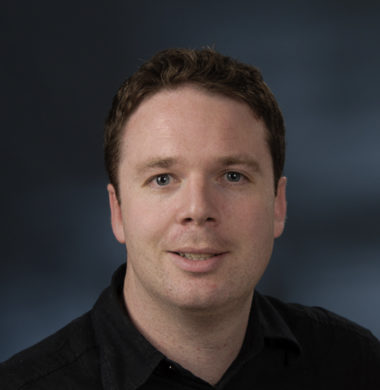
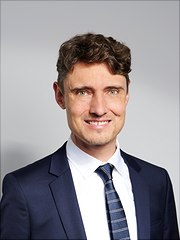
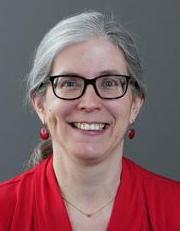
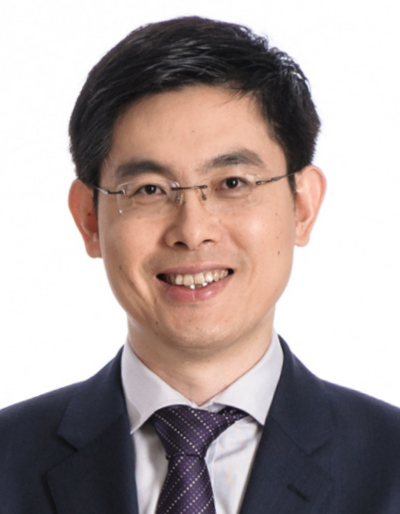
Prof. Dr. Julia Vogt is an Assistant Professor at the Department of Computer Science at ETH Zürich, leading the Professur für Medizin. Datenwiss. Her research focuses on medical machine learning, data science, and AI applications in healthcare. She specializes in developing interpretable AI systems for clinical decision support, particularly in pediatric diabetes management, medical imaging analysis, and anomaly detection. Her work bridges translational gaps by emphasizing causal approaches and clinical validation. Her academic role includes teaching courses like the Data Science Lab (263-3300-00L/10L) and Topics in Medical Machine Learning (263-5100-00L). Her lab's research spans predictive modeling for nocturnal hypoglycemia, echocardiogram analysis for pulmonary hypertension detection, and multimodal learning in radiology. She also contributes to national pediatric data initiatives like SwissPedHealth. Key technical areas include concept bottleneck models, stochastic AI frameworks, and generative models for medical signal denoising. Her work often emphasizes model interpretability, fairness, and robustness to distribution shifts. She collaborates on projects involving wearable devices for pediatric monitoring and AI-driven rehabilitation tools for post-stroke gait analysis.
Zion Zibly, MD, MBA is an Associate Professor in the Department of Neurosurgery at Yale School of Medicine . He holds multiple leadership roles including Director of the Center of Neuromodulation , Director of the Center of Neurosurgical Cancer Pain , and Head of Stereotactic & Functional Neurosurgery and the Focused Ultrasound Institute . Previously served as Chair of Neurosurgery at Sheba Medical Center after graduating from Technion’s Faculty of Medicine (MD) and Coller School of Management (MBA). Research Interests: Specializes in Neuromodulation for movement disorders (Parkinson’s, tremors, dystonia), Deep Brain Stimulation , Gene Therapy for pediatric neurodegenerative conditions, Oncological Neurosurgery , and Neurological Pain Management . Combines Functional Neurosurgery with Focused Ultrasound technology. Scientific Contributions: Participated in pioneering Alzheimer’s brain stimulator procedures and Gene Therapy applications. Active member of the North American Association of Functional Neurosurgery and Israeli Neurosurgical Society . Clinical Expertise: Implantation of electrostimulators for Parkinson’s and essential tremor, treatment of Benign/Malignant CNS Tumors , and management of Neurological Pain Conditions . Affiliated with Yale Cancer Center and Center for Brain & Mind Health .
Rachel M. Werner, MD, PhD, is a Professor of Medicine at the Perelman School of Medicine and holds the Robert D. Eilers Memorial – William Maul Measey Professorship in Health Care Management and Economics at the Wharton School , both at the University of Pennsylvania . She serves as Executive Director of the Leonard Davis Institute of Health Economics and is an Attending Physician at the Philadelphia Veterans Affairs Medical Center . Dr. Werner is a Core Investigator with the VA Center for Health Equity Research and Promotion and a Senior Fellow at the Leonard Davis Institute . Education: B.A. in Political Science, Macalester College (1992) M.D. in Medicine, University of Pennsylvania School of Medicine (1998) Ph.D. in Health Economics, Wharton School, University of Pennsylvania (2004) Dr. Werner's research program, spanning over two decades, explores the effects of health care payment policies and quality improvement incentives on delivery systems, with a focus on unintended consequences such as worsening racial disparities through public quality reporting. She employs causal inference methods from observational data and leads R01 grants from the Agency for Healthcare Research and Quality (AHRQ) and the National Institute on Aging (NIA) . Scientific Awards: Alice Hersh New Investigator Award Presidential Early Career Award for Scientists and Engineers American Federation of Medical Research (AFMR) Outstanding Investigator Award Elected member of the National Academy of Medicine Her work influences federal and state advisory committees and evaluates Medicaid policies , Medicare systems, and post-acute care models . She directs a VA national center assessing the medical home effectiveness and collaborates with institutions like the Center for Health Equity Research and Promotion and the Center for Health Incentives and Behavioral Economics .
Nick Bansback is an Honorary Visiting Professor in the School of Population and Public Health at the University of British Columbia (primary affiliation) and affiliated with NUS Saw Swee Hock School of Public Health. His research focuses on maximizing healthcare value through economic evaluation, patient preference measurement, and decision analysis. He holds a PhD in Health Economics and Decision Sciences (University of Sheffield, 2010), an MSc in Health Economics (2004), and a BSc in Mathematics (2001). Key research areas include health technology assessment, patient-reported outcomes, and cost-effectiveness analysis of treatments for chronic conditions like rheumatoid arthritis and multiple sclerosis. He has pioneered methods for incorporating patient preferences into healthcare decisions, including developing decision aids and discrete-choice experiments. His work has been recognized with awards such as the UBC Killam Research Award (2020) and the Canadian Agency for Drugs and Technology in Health Rising Star Award (2016). He has contributed to over 30 peer-reviewed publications, emphasizing practical applications of health economics to improve healthcare resource allocation and patient-centered care. Prof. Bansback’s career spans postdoctoral research at UBC, health economics roles at the Centre for Health Evaluation and Outcomes Sciences, and early research at the University of Sheffield. His interdisciplinary approach bridges clinical practice, policy, and quantitative methods to address complex healthcare challenges.
Prof. Dr. Jonas Schreyögg is a Professor of Healthcare Management and Scientific Director of the Hamburg Center for Health Economics (HCHE) at the University of Hamburg since 2010. He holds the Chair of Healthcare Management and serves as Deputy Chairman of the German Council of Economic Experts for Health and Nursing Care. His roles also include memberships on scientific advisory boards and associated research at Stanford University. Education & Career: Doctorate and Habilitation (2008) from Technical University of Berlin Former Professor at Ludwig-Maximilians-University of Munich (LMU Munich) Junior Professor at Technical University of Berlin Harkness Fellow at Stanford University (2006–2007) Research Interests: Focus on healthcare systems, health economics, hospital payment reforms, pandemic policy responses, and healthcare workforce optimization. Key areas include DRG systems, healthcare competition, and socioeconomic disparities in health outcomes. He has conducted extensive research on the impact of policy interventions during the COVID-19 pandemic, including lockdown perceptions and vaccine acceptance. Grants & Awards: Recipient of the Harkness Fellowship, German National Academic Foundation doctoral scholarship, and multiple research grants. His work has been published in leading journals like Health Affairs , Journal of Public Health , and Social Science & Medicine . Professional Activities: Engaged in international collaborations and teaching in Norway, Singapore, Taiwan, and the U.S. He advises on healthcare policy and has contributed to high-profile reports on healthcare workforce sustainability and pandemic response strategies.
Vicki L. Plano Clark is a Professor in the Research Methods area of the School of Education at the University of Cincinnati, where she advises students in the Quantitative and Mixed Methods Research Methodologies (QMRM) concentration of the Educational Studies doctoral program and the Applied Research Methods (ARM) track of the Educational Studies master's program. She joined the University of Cincinnati in 2012 after serving as the director of the Office of Qualitative and Mixed Methods Research at the University of Nebraska-Lincoln. Dr. Plano Clark earned her Ph.D. in Quantitative and Qualitative Methods in Education from the University of Nebraska-Lincoln (2005), M.S. in Physics from Michigan State University (1993), and B.A. in Physics from Kalamazoo College (1990). Her academic journey transitioned from physics education to research methodology, bringing a unique interdisciplinary perspective to her work. As a leading methodologist specializing in mixed methods research, Dr. Plano Clark's scholarship focuses on delineating useful designs for conducting mixed methods research, examining procedural issues associated with these designs, and exploring the contexts for the adoption and use of mixed methods. Her research spans diverse application areas including cancer pain management, STEM graduate student identity development, teacher professional development, and the well-being of rural low-income families. Her work demonstrates how mixed methods approaches can effectively address complex research questions across multiple disciplines. Dr. Plano Clark has made significant contributions to the field through her editorial leadership and publications. She was the founding Managing Editor for the Journal of Mixed Methods Research and currently serves as an Associate Editor. In 2011, she co-led the development of Best Practices for Mixed Methods in the Health Sciences for NIH's Office of Behavioral and Social Sciences Research. In 2012, she became a founding co-editor of the Mixed Methods Research Series with Sage Publications. She has authored numerous influential books including 'Designing and Conducting Mixed Methods Research' (now in its 3rd edition) and 'Mixed Methods Research: A Guide to the Field.' Founding Managing Editor for the Journal of Mixed Methods Research Co-developer of NIH's Best Practices for Mixed Methods in the Health Sciences (2011) Founding co-editor of the Mixed Methods Research Series with Sage Publications (2012) Chair of the Mixed Methods Research Special Interest Group of AERA As an active researcher, Dr. Plano Clark has secured multiple grants including a Department of Education grant evaluating Ohio Network of Education Transformation (ONET) Schools (as Principal Investigator) and a UC University Research Council grant on reducing mass incarceration by improving public defense (as Collaborator). Her recent publications continue to advance methodological understanding in mixed methods research, with a focus on integration techniques, terminology challenges, and applications across health sciences and education. Dr. Plano Clark maintains an active role in the research community through invited presentations and workshops worldwide, helping to train the next generation of researchers in mixed methods approaches and contributing to the ongoing development of methodological standards and practices.
LUO Nan is an Associate Professor and Domain Leader (Health Systems & Behavioral Sciences) at the NUS Saw Swee Hock School of Public Health (Primary affiliation) and holds a joint appointment at the NUS Yong Loo Lin School of Medicine. Their research focuses on health-related quality of life measurement, health services research, and health economics. Education: B.Sc. (1996) Shenyang Pharmaceutical University, China; M.Sc. (1999) Shenyang Pharmaceutical University, China; Ph.D. (2004) National University of Singapore. Research interests include advancing methodologies for health outcomes measurement, evaluating healthcare systems' effectiveness, and informing policy through economic analyses. Their work bridges clinical practice, public health, and health economics, with notable contributions to pharmacoeconomics and health services research. Major publications span quality of life assessment frameworks and economic evaluations in healthcare. Professional activities include roles as a Health Economics Specialist at the Singapore Ministry of Health and adjunct positions at Singapore Eye Research Institute. Administrative leadership includes guiding the Health Systems and Behavioral Sciences domain. Luo has held grants and consulting roles, though specific funding details are not listed here. Their work is associated with collaborative initiatives like the Health Intervention and Policy Evaluation Research (HIPER) cohort studies.
Jeff Searl is a Professor in the Department of Communicative Sciences and Disorders at Michigan State University (MSU), within the College of Communication Arts and Sciences. Previously, he held faculty roles at the University of Kansas Medical Center’s Hearing and Speech Department and the Otolaryngology – Head & Neck Surgery Department. He earned his Ph.D. from the University of Kansas. His research focuses on understanding how chemoradiation and surgery for head and neck cancers affect speech and voice production. The goal is to develop clinical practices that preserve or rehabilitate communication for patients post-treatment. His methods include physiological, acoustic, and auditory-perceptual measurements. Key emphases include optimizing communication while balancing speech intelligibility, physical/cognitive effort, and associated fatigue. Recent work addresses pandemic impacts on laryngectomy patients, clinician practices during crises, and vocal effort measurement across cultures. His lab investigates articulatory pressures, tracheoesophageal speech dynamics, and dysphagia treatment innovations. Though no specific awards are listed, his contributions to voice rehabilitation and clinical methodologies are significant. Dr. Searl advises on telemedicine applications for Parkinson’s voice therapy, group therapy feasibility, and alaryngeal communication modalities. His lab at MSU collaborates on interdisciplinary projects involving speech-language pathologists, engineers, and oncologists to advance communication restoration technologies.
Jeffrey T. Jensen, M.D., M.P.H., is the Leon Speroff Professor and Vice Chair for Research in the Department of Obstetrics and Gynecology at Oregon Health & Science University (OHSU). He holds joint appointments as Professor of Public Health and Preventive Medicine and serves as a Core Scientist at the Oregon National Primate Research Center (ONPRC). Dr. Jensen completed his medical degree at Emory University, a Master of Public Health at the University of Washington, and residency training at OHSU. Research Focus: Dr. Jensen leads translational and clinical research programs focused on contraceptive innovation. His work emphasizes nonhuman primate models to develop: Novel contraceptive agents targeting oocyte-specific pathways Non-surgical permanent contraception methods Optimized emergency contraception for diverse populations He directs OHSU's Women’s Health Research Unit and the Gates Foundation-funded Oregon Permanent Contraception Research Center (OPERM). Recent Publications: His 15 most recent articles (2023-2025) demonstrate concentrated expertise in: Advanced hormonal contraceptive formulations (IUDs, vaginal rings, oral agents) Weight-adjusted dosing strategies for emergency contraception Biomarker validation for contraceptive efficacy monitoring Real-world assessment of bleeding pattern management Leadership & Collaboration: Dr. Jensen is Principal Investigator of the NICHD Contraception Clinical Trials Network and collaborates with global health organizations (CONRAD, FHI360, Population Council). He serves as Deputy Editor for the journal Contraception and consults for multiple pharmaceutical companies on product development.
Christine Clark, MD, MSc is an attending laryngologist at Weill Cornell Medicine’s Sean Parker Institute for the Voice and Assistant Professor in the Department of Otolaryngology-Head and Neck Surgery at Weill Cornell Medical College. She earned her B.A. from the University of Pittsburgh (2011) and her M.D. from Pennsylvania State University College of Medicine (2017), followed by residency at Georgetown University Medical Center and a fellowship in Laryngology at Weill Cornell, where she also obtained a master’s degree in Clinical and Translational Science. B.A. - University of Pittsburgh (2011) M.D. - Pennsylvania State University College of Medicine (2017) Residency - Georgetown University Medical Center Fellowship - Sean Parker Institute for the Voice (Laryngology) Master’s - Clinical and Translational Science at Weill Cornell Dr. Clark specializes in evaluating and treating swallowing, voice, and airway disorders. Her research focuses on chronic cough, laryngeal hypersensitivity, and benign phonotraumatic vocal fold lesions. She has developed clinical tools like the 3D-printed injection laryngoplasty simulator and quality improvement initiatives for surgical airway management. Her clinical work and research span topics such as vocal fold hemorrhage management, pharyngeal residue quantification in dysphagia, and granuloma as markers of malignancy. Recent publications emphasize global otolaryngology capacity building and performer-specific voice injury care. Scientific awards include: Teaching awards for excellence in medical student education during residency Dr. Clark is affiliated with the Sean Parker Institute for the Voice at Weill Cornell Medicine and serves as an Assistant Professor of Otolaryngology.
Marita Dale is a Senior Lecturer in the Discipline of Physiotherapy at the University of Sydney and an Early Career Researcher affiliated with the Charles Perkins Centre. She specializes in cardiorespiratory physiotherapy, focusing on exercise interventions for chronic respiratory and cardiac diseases, particularly asbestos-related and dust-related conditions. Her work emphasizes improving accessibility to pulmonary rehabilitation services and leveraging mHealth technologies for patient care. Education: PhD in Physiotherapy (2016, University of Sydney). Her research interests include optimizing pulmonary rehabilitation through mobile health platforms, such as the m-PR™ app, and investigating pediatric burn injury rehabilitation, including orthosis use and scar prevention. She also explores multimorbidity management and simulation-based learning in healthcare education. Recent studies have highlighted her contributions to COPD care protocols, telehealth implementation during the pandemic, and qualitative analyses of patient experiences. Major awards: Sydney School of Health Sciences Teaching Citation (2022), Ashurst Prize for Outstanding Oral Presentation (2015), Helga Pettitt FHS Postgraduate Study Award (2010). Marita supervises Honours, Masters, and PhD students, including Mitchell Taylor on airway clearance in bronchiectasis. Her teaching spans undergraduate and postgraduate programs in cardiopulmonary and musculoskeletal physiotherapy. She collaborates on projects like the Lung Support Service, a nationwide text message program for chronic respiratory patients during the pandemic, and contributed to the commercialization of the Perx-R app for pulmonary rehab. Labs/teams: Active member of the Charles Perkins Centre, focusing on interdisciplinary chronic disease research and healthcare innovation.
Laia Becares is a Professor of Social Science and Health at King's College London, part of the School of Global Affairs and the Department of Global Health & Social Medicine. She previously held roles at the University of Sussex (2018-2022) and the University of Manchester (2010-2018), where she maintains an Honorary position. She serves as an Editor of Sociology of Health and Illness and on the Academic Reference Group of the NHS Race and Health Observatory. Her work is funded by organizations such as the Nuffield Foundation and the Health Foundation. Laia holds a PhD in Social Epidemiology from University College London (UCL) and a Master's in Public Health from Boston University School of Public Health. Her research employs an interdisciplinary approach, collaborating with sociologists, psychiatrists, geographers, and demographers to understand how discrimination and marginalization perpetuate social and health inequities. Key areas include racism, homophobia/heterosexism, LGBTQ+ inequalities, and the impact of systemic oppression across life stages. She co-developed the Queerantine Study on pandemic impacts on LGBTQ+ communities and leads the ESRC Centre for Society and Mental Health, fostering student mentorship in health inequality topics. Her scientific awards include ESRC/MRC Postdoctoral Research Fellowship (2010-2012), Hallsworth Research Fellowship (2012-2016), and ESRC Future Research Leader Fellowship (2012-2015). Recent work focuses on ethnic healthcare disparities in multimorbidity and longitudinal studies of racism's effects on health outcomes. Ongoing projects include LGBTQ+ policymaking networks and the GHSM Anti Racism Steering Group, addressing structural inequities in academia and healthcare. Laia’s grants include Nuffield Foundation funding for ethnic inequalities in later life and Health Foundation support for healthcare equity studies. She advocates for integrating lived experiences into research design, particularly through the Evidence for Equality National Survey (EVENS). Her lab affiliations include Queer@King’s and the ESRC Centre for Society and Mental Health, emphasizing collaborative, community-driven approaches.
Nashwa Masnoon is a Postdoctoral Research Fellow in Geriatric Pharmacotherapy at the Kolling Institute, part of the Faculty of Medicine and Health at the University of Sydney. She is also a hospital pharmacist at the Royal North Shore Hospital. Her academic background includes a BPharm(Hons) and a PhD from the University of South Australia, where her doctoral work focused on identifying risks of adverse outcomes from polypharmacy in older adults with multimorbidity. Dr Masnoon’s research interests span geriatric pharmacology, deprescribing practices, pharmacoepidemiology, and quality use of medicines. Her current projects include developing stewardship programs for anticholinergic/sedative deprescribing, optimizing medication use in hospitals for older patients, and educating hospital pharmacists using the Drug Burden Index intervention bundle. She has co-supervised Honours students in 2022 and 2023, focusing on deprescribing in hospital settings and patient-reported experiences post-intervention. Research Themes: Healthy Ageing Key Approaches: Systematic reviews, clinical interventions, pharmacoepidemiological analysis Dr Masnoon has received notable awards including the 2023 FMH Showcase Travel Award, Royal North Shore Hospital Travel Fellowship (2023), and a 2017 People’s Choice Award for her 3 Minute Thesis presentation. Her work emphasizes improving medication outcomes through evidence-based deprescribing and precision medicine approaches. She is affiliated with the Australasian Pharmaceutical Science Association (APSA), International Pharmaceutical Federation (FIP), and Australian Deprescribing Network (ADeN). Her grants include the 2024 electronic frailty index project and a 2022 travel award-funded initiative.
Catherine Marco, MD, is a Professor in the Department of Emergency Medicine. Her work focuses on emergency care delivery, medical ethics, and residency training. She has contributed to over 187 peer-reviewed publications and actively addresses issues like healthcare civility and gender disparities in medical salaries. Research interests include emergency department operations, patient-provider communication, and ethical challenges in emergency settings. Her recent work explores cannabis-related symptom discordance and the moral imperative of civility in healthcare. Recipient of the 2024 Dean's Award for Excellence in Teaching Co-author of influential studies on residency training outcomes and trauma assessment protocols
Christopher G. Tarolli, MD is an Associate Professor in the Department of Neurology at the University of Rochester School of Medicine and Dentistry. He specializes in movement disorders, particularly Parkinson's disease and Huntington's disease, and serves as Director of the Mind, Brain, Behavior neuroscience course and Associate Program Director of the Adult Neurology Residency Program. His work bridges clinical practice with research in wearable sensor technology, palliative care, and health professions education. MD from SUNY Downstate College of Medicine (2012) Residency & Fellowship at University of Rochester Medical Center (2012-2018) Masters of Science in Health Professions Education (Warner School, UR) Dr. Tarolli's research focuses on novel technologies for neurological assessment, practice-based research in movement disorders, and palliative care models. He has contributed to studies on wearable sensors, remote video-based clinical trials, and symptom burden analysis in Parkinson's and Huntington disease. His work emphasizes patient-centered care and digital health innovation. Recent publications highlight his expertise in: Wearable sensor validation for neurodegenerative diseases Telemedicine applications in Parkinson's disease Palliative care integration across disease trajectories Smartphone-based Huntington's disease monitoring Machine learning for movement disorder severity quantification Quality measures in Parkinson's care Awards include the Herbert W. Mapstone Prize for Excellence in Second Year Teaching and participation in the American Academy of Neurology Emerging Leaders Program. Dr. Tarolli also leads clinical research initiatives and educational programs at the University of Rochester Medical Center.