Jelle Schoppink is a Researcher at the University of Twente , specializing in the Mesoscale Chemical Systems department. His work bridges physics, mechanical engineering, and biomedical innovation, focusing on laser-driven thermocavitation for needle-free injection technologies. Research Focus: Thermocavitation dynamics in microchannels Laser-induced bubble formation and control Microfluidic confinement engineering Biomedical device design and optimization Colloidal glass transition mechanics Scientific Contributions: Schoppink has pioneered needle-free jet injection devices using fiber lasers and microfluidic systems. His recent publications analyze cavitation flows, laser beam properties, and confinement effects, advancing biomedical engineering and fluid dynamics. Collaborations span materials science, biotechnology, and physics. Collaborations & Activities: Active in public engagement, Schoppink participated in media discussions about his work, including Dutch National TV appearances. He collaborated on projects examining surface roughness effects in colloidal systems and contributed to patent filings for jet ejection devices.
Erica Pastore is a Fixed-term Researcher in the Department of Management and Production Engineering (DIGEP) at Politecnico di Torino , affiliated with the College of Management and Production Engineering . Her work spans mathematical modeling, production planning, and simulation optimization within industrial engineering contexts. Teaching roles: Course Lecturer (2024/25, Management and Production Engineering), Course Collaborator (2025/26, Management Engineering) Sciences: Production Systems , Manufacturing Technologies , Sustainable Operations Her research focuses on mathematical modeling for production planning and optimization , examining variability propagation in manufacturing systems, additive manufacturing time estimation , and circular economy strategies at scheduling levels. Publications address flow line optimization , parallel batching , and healthcare logistics through simulation and analytical modeling . Recent work trends include flow time minimization (2025), additive manufacturing scheduling (2024), idle time reduction (2023), and urban logistics (2022). She has collaborated on 15+ publications since 2012, working with colleagues like Arianna Alfieri , Claudio Castiglione , and Barbara Previtali across production optimization, healthcare systems, and logistics.
Jeroen Van Schependom is a researcher at Vrije Universiteit Brussel’s Neurology department, specializing in artificial intelligence-assisted modeling in clinical sciences. He leads projects such as FWOTM1254 (2024–2028) and FWOTM1215 (2024–2027) focused on multiple sclerosis (MS) and Alzheimer’s disease. His work aims to develop novel biomarkers and improve understanding of disrupted cortical networks in neurodegenerative conditions. His research integrates neuroimaging , computational neuroscience , and machine learning to analyze brain network dynamics, particularly information processing speed deficits and cognitive rehabilitation in MS. Key methodologies include connectome analysis , transcranial stimulation , and vision-based signal processing . Notable scientific awards include the Marie-Curie Seal of Excellence (2019) and the Research Prize of the Belgian Neurological Society (2018) . His recent publications explore smartphone-based cognitive screening, vaccination efficacy in MS patients, and AI-driven neurophysiological modeling. Projects : 28 ongoing, including 3D imaging techniques for tissue analysis and transcranial current stimulation for cerebral blood flow improvement. Public Engagement : Delivered talks on AI in healthcare (2023) and barriers to open science (2024).
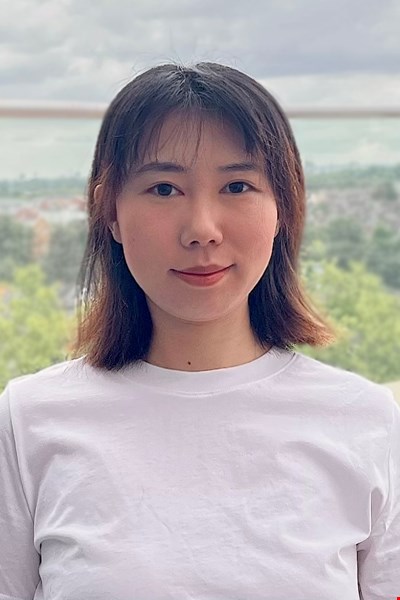
Dr. Bin Zhang serves as a Lecturer in Additive Manufacturing within the Department of Mechanical and Aerospace Engineering at Brunel University London's College of Engineering, Design and Physical Sciences. Her primary research focuses on developing advanced biomaterials and biofabrication techniques for tissue regeneration, drug delivery systems, and medical device innovation through 3D printing technologies. Education: PhD in Bioengineering, University College London, UK MSc in Mechanical Engineering, University College London, UK Her research integrates additive manufacturing with pharmaceutical sciences to create functional engineered tissues for wound healing, bone regeneration, and disease modeling. Key areas include 3D bioprinting of drug-loaded scaffolds, microneedle sensor fabrication, and computational modeling of tissue environments. She maintains active collaborations with institutions including UNC-Chapel Hill and NC State University. Analysis of her 15 most recent publications (2020-2024) reveals strong emphasis on pharmaceutical additive manufacturing (70% of works), with significant contributions to tissue engineering scaffolds (20%) and computational modeling (10%). Her work consistently bridges material science, drug delivery kinetics, and clinical applications, with increasing focus on AI integration in bioprinting processes since 2023. Professional Affiliations: Member, Academy of Pharmaceutical Sciences Member, Institute of Mechanical Engineers (IMechE) Member, IEEE Engineering in Medicine and Biology Society Dr. Zhang actively supervises PhD students in additive manufacturing of medical devices and microrobots, while securing research funding including a Royal Society grant (2024-2026) for 3D printing gradient scaffolds for osteoarthritic joint repair. Her lab develops in vitro 3D joint models and collaborates with clinicians through projects like Xcell for microgravity tissue studies.
Harold TRANNOIS serves as a Lecturer at the University of Picardy Jules Verne (UPJV) within the Networks and Data Domain (REDO), with office 309 contactable at phone 5911. His academic focus bridges theoretical computer science and applied engineering disciplines. His research program demonstrates deep specialization in intelligent systems, particularly emphasizing: Machine Learning architectures including spiking neural networks and autoencoders Multi-agent coordination frameworks for complex environments Anomaly detection systems in IoT-enabled infrastructure Cloud robotics and domain-specific language development Discrete element modeling for physical simulations Analysis of his publication trajectory reveals evolving expertise from foundational multi-agent traffic simulation (1998) toward contemporary biomedical AI applications (2023). Recent work concentrates on neural network implementations for healthcare monitoring and smart building analytics, with consistent methodological focus on uncertainty quantification and architectural optimization. Active involvement in DAAB and SmartAngel projects demonstrates applied research translation into healthcare and robotics domains, leveraging his dual expertise in neural networks and distributed systems for real-world problem solving.
Dr. Hunter Bennett is a Senior Lecturer in Exercise and Sport Science at the University of South Australia's Allied Health and Human Performance unit. With a PhD completed in 2020, his research focuses on optimizing training modalities to enhance performance in athletic, clinical, and general populations while addressing injury prevention and concussion risk factors. Education: PhD (University of South Australia, 2020) Research Interests: Hunter's work spans cold-water immersion , blood flow restriction training , and training distribution strategies , emphasizing physiological adaptation, injury prevention, and mental wellbeing. His recent studies explore time-dependent effects of interventions like CWI on inflammation and stress, BFR-RT for rheumatoid arthritis patients, and training periodization in cycling. Publications Trends: His 2025 articles highlight interdisciplinary applications of exercise science, from concussion recovery protocols to meta-analyses on cognitive benefits of physical activity. Earlier 2024 works address athlete-specific physiology (e.g., jockeys) and community health impacts (e.g., frailty in aging). Scientific Awards: 2022 Exercise Scientist of the Year (Exercise and Sport Science Australia) Grants: Collaborative funding includes the Arthritis Australia National Research Grant for BFR-RT studies. His work bridges clinical and sports performance domains, emphasizing evidence-based practice.
Professor Yngve Lamo is a faculty member at Western Norway University of Applied Sciences (HVL) in the Department of Computer Science, Electrical Engineering and Mathematical Sciences. His research spans formal methods, model-driven engineering, and healthcare information systems with a particular focus on business process modeling and mental health technology applications. Institution: Western Norway University of Applied Sciences Department: Computer Science, Electrical Engineering and Mathematical Sciences Location: Bergen KRONSTAD D410 Contact: +47 55 58 75 67 Professor Lamo's research focuses on formal methods in software engineering, particularly model-driven engineering approaches for business process modeling and analysis. His work demonstrates significant contributions to BPMN formalization using graph transformation systems, multi-model consistency management, and healthcare information systems. He has developed tools like the Visual Debugger and BPMN Analyzer 2.0 that provide practical solutions for model analysis and verification. His publication trends reveal a strong focus on applying formal methods to healthcare systems, particularly in mental health technology. Recent work (2022-2024) shows increasing emphasis on privacy-preserving data analysis, adaptive mental health systems, and multi-dimensional health data frameworks. His research bridges theoretical computer science with practical healthcare applications, demonstrating consistent productivity with numerous publications each year across top venues in software engineering and health informatics. Professor Lamo has made significant contributions to model-driven engineering, particularly in the areas of BPMN analysis, multi-model consistency, and healthcare information systems. His work on the Visual Debugger tool and BPMN Analyzer 2.0 represents practical applications of his theoretical research in formal methods. His research program demonstrates strong continuity in model-driven engineering approaches while expanding into healthcare applications. Current projects focus on adaptive technology for mental health care, privacy-preserving data analysis for health systems, and advanced techniques for multi-model consistency management. Professor Lamo's work shows strong interdisciplinary collaboration, particularly between computer science and healthcare domains.
Ralf Ehricht is Professor and Head of the Research Department of Optical Molecular Diagnostics and System Technology at the Leibniz Institute of Photonic Technology (Leibniz-IPHT) in Germany. His research focuses on developing advanced photonic-based diagnostic technologies for pathogen detection and characterization, with particular emphasis on molecular diagnostics for antibiotic-resistant bacteria. His research interests span molecular diagnostics, bacterial pathogenesis, antibiotic resistance mechanisms, and genomic epidemiology. Dr. Ehricht specializes in developing microarray-based diagnostic tools, studying Staphylococcus aureus evolution and transmission patterns across human and animal populations, and investigating novel detection methods for carbapenem-resistant organisms and other antibiotic-resistant pathogens. His work bridges laboratory research with practical clinical applications, emphasizing rapid, cost-effective diagnostic solutions for healthcare settings. Analysis of his recent publications reveals a strong focus on molecular diagnostics for antibiotic-resistant bacteria, particularly Staphylococcus aureus and Enterococcus. He has developed innovative tools like AssayBLAST for in silico analysis of molecular assays and CarbaScan LyoBead for carbapenemase detection. His research demonstrates expertise in genomic epidemiology, with studies spanning multiple continents including Germany, UAE, Rwanda, and Egypt, highlighting the global nature of antibiotic resistance challenges. Dr. Ehricht leads an active research group with extensive national and international collaborations. His department focuses on optical molecular diagnostics and system technology, developing photonic-based approaches for pathogen detection. His work has significant implications for clinical microbiology, public health surveillance, and the One Health approach to understanding antimicrobial resistance transmission between humans, animals, and the environment.
Diego Munguia Izquierdo is a University Professor at Universidad Pablo de Olavide , affiliated with the Department of Sports and Information Technology and the Center for Research in Physical and Sports Performance (CIRFD) . His research spans physical activity interventions, fibromyalgia management, and sports performance optimization. Education: Doctorate from University of Zaragoza (2006), thesis: "Effect of a 16-week aquatic physical activity program at 30-32ºC on fibromyalgia symptoms" Research interests include: Exercise physiology for chronic conditions (fibromyalgia, McArdle disease) Sedentary behavior assessment Health promotion in mental illness and pregnancy Validation of physical assessment tools Behavioral aspects of exercise adherence Article trends highlight interdisciplinary work across Sports Science , Public Health , and Clinical Medicine , with a focus on exercise interventions , mental health , and chronic disease management . Key projects: PsychiActive Project : Physical activity for severe mental disorders PregnActive Project : Exercise in pregnancy Al-Andalus Study : Land/water-based exercise for fibromyalgia
Dr. Daniel Mmereki is a Researcher in the Department of Radiation Oncology at the Faculty of Health Sciences, University of the Witwatersrand. His work bridges environmental exposure science, occupational health, and cancer treatment optimization. With a PhD from China University of Geosciences, he has established himself as a multidisciplinary researcher focusing on exposure assessment and control measures across various settings. Dr. Mmereki leads the Technology and Management Systems Theme of the Exposure Science Degrees program and lectures on Exposure Science, Exposure Pathway Analysis, and Exposure Science and Data Analytics. He also teaches Basic Principles of Occupational Hygiene to Bachelor of Health Science undergraduate students. His educational background combines engineering with exposure science, creating a unique interdisciplinary perspective. His research spans three primary domains: environmental exposure science (particularly phthalates and dust exposure in various settings), waste management systems (with focus on African contexts), and radiotherapy optimization to improve patient flow in cancer treatment. Recent work shows an increasing emphasis on applying exposure science principles to healthcare settings, particularly in radiation oncology where he examines efficiency improvements in patient treatment pathways. His publication record demonstrates a strong trajectory from foundational work on solid waste management in Botswana and China to current research addressing critical healthcare challenges in South Africa. Iraj Zandi Award (USA) for contributing to the field of solid waste technology and management-2016. The Thirty-First Conference on Solid Waste Technology, Philadelphia, PA, USA: April 3-4, 2016 by Widner University Dr. Mmereki has served as an invited reviewer for high-quality journals and has edited books and published book chapters in his field. His current research focuses on implementing remote radiotherapy planning systems to increase patient flow at Johannesburg Academic Hospital, South Africa, representing a strategic pivot from his earlier environmental exposure work to direct healthcare delivery challenges in the South African context. He leads research teams examining healthcare waste management in Gauteng Province and developing protocols for optimizing cancer treatment efficiency.
Roger Guillory serves as an Assistant Professor in the Joint Department of Biomedical Engineering at Marquette University and Medical College of Wisconsin, and holds a secondary appointment as Assistant Professor in the MCW Department of Pediatrics. He directs the Regenerative Engineered Biomaterials Lab, where his research focuses on developing innovative biomaterials solutions for vascular medical applications. Dr. Guillory earned his BS and PhD in Biomedical Engineering from Michigan Technological University, followed by a Postdoctoral Research Fellowship at Northwestern University's Department of Biomedical Engineering. His educational background provides a strong foundation in both the theoretical and practical aspects of biomaterials science and engineering. His research program centers on cellular and molecular interactions of bioactive materials, with particular emphasis on bioabsorbable metals and advanced biomaterials characterization techniques. Dr. Guillory's work specifically targets the development of biomaterials for vascular medical devices, including stents and other implantable technologies that can safely degrade within the body while promoting healing. His laboratory investigates how material properties influence biological responses, with the goal of creating next-generation medical devices that minimize complications and improve patient outcomes. Analysis of Dr. Guillory's recent publications reveals a strong focus on magnesium-based biomaterials and their applications in vascular medicine. His research spans from fundamental materials science investigations to preclinical in vivo testing, with particular attention to corrosion behavior, endothelialization processes, and inflammatory responses. The work demonstrates a clear trajectory toward clinical translation of bioresorbable metallic implants, especially for cardiovascular applications. Dr. Guillory currently leads multiple significant research projects, including an NIH-funded study on bioresorbable magnesium alloys and their interactions with the inflammatory microenvironment. His work bridges engineering principles with clinical needs, positioning him at the forefront of regenerative biomaterials development. As principal investigator on multiple grants, Dr. Guillory manages research funding from both the Medical College of Wisconsin's Cardiovascular Research Center and the National Institutes of Health. His current projects focus on predicting degradation rates of arterial magnesium implants using machine learning approaches, understanding the relationship between magnesium alloy corrosion and inflammatory responses, and developing biodegradable elastomers for vascular grafts. These projects involve interdisciplinary collaborations across engineering, medicine, and data science disciplines. At the Regenerative Engineered Biomaterials Lab, Dr. Guillory leads a research team dedicated to advancing the field of bioresorbable metallic implants. The lab employs a multidisciplinary approach combining materials science, cellular biology, and engineering design to develop novel solutions for vascular interventions. Current projects focus on optimizing material composition, surface modifications, and device designs to improve biocompatibility and functionality of next-generation medical implants.
Jade J. Wong-You-Cheong serves as Professor in the Department of Diagnostic Radiology and Nuclear Medicine at the University of Maryland School of Medicine, holding secondary appointments in Surgery and administrative leadership as Vice Chair of Quality & Patient Safety at the University of Maryland Medical Center (UMMC). Her academic foundation includes a BSc (Hons) in Pathology (1982) and MBChB (Hons) (1984) from the University of Manchester Medical School, followed by comprehensive UK clinical training: Pre-Registration House Officer in Medicine (Hope Hospital, Salford 1984-1985) Pre-Registration House Officer in Surgery (Manchester Royal Infirmary 1985) Senior House Officer in Cardiothoracic Medicine (Wythenshawe Hospital 1985-1986) Senior House Officer in General Medicine (Manchester Royal Infirmary 1986-1987) Registrar in Diagnostic Radiology (Manchester Teaching Hospitals 1987-1990) Senior Registrar positions across Manchester hospitals (1991-1993) Fellowship in CT/MRI/US at University of Maryland (1993-1994) A board-certified abdominal imaging specialist, Dr. Wong-You-Cheong focuses on urinary tract and gynecological applications with advanced expertise in ultrasound diagnosis and ultrasound-guided interventions. Her clinical practice emphasizes precision imaging for complex pelvic disorders and obstetric conditions while maintaining dual UK (FRCR) and US (ABR) board certifications. Analysis of her 2011-2014 publications reveals concentrated scholarship in pelvic MRI optimization, transplant imaging, and evidence-based obstetric ultrasound protocols. Key contributions include ACR Appropriateness Criteria development for first-trimester bleeding and innovations in motion artifact reduction for pelvic MRI, demonstrating consistent methodological rigor across gynecological, urological, and transplant imaging domains. No scientific awards, prizes, or medals were documented in the source material, though her professional certifications include MRCP (1987), FRCR (1991), Maryland Diagnostic Radiology certification (1995), Obstetric Ultrasound accreditation (1996), and American Board of Radiology Diplomate status (1997). The provided documentation contains no references to graduate student mentorship, research grant funding, or laboratory affiliations. Her Vice Chair role in Quality & Patient Safety suggests operational leadership in healthcare quality systems rather than traditional research team management. No dedicated research laboratories or collaborative scientific teams were described in the source material, with clinical activities centered at UMMC's W1L060 facility.
Cynthia L. Benson serves as Interim Medical Director and Director of Quality for the University Hospital at Downstate Emergency Department at SUNY Downstate Health Sciences University. As a board-certified emergency physician with over 15 years of experience, she holds the academic rank of Clinical Assistant Professor of Emergency Medicine and demonstrates leadership in high-volume academic and community healthcare settings. Her educational background includes a Doctor of Osteopathic Medicine (DO), a Master of Public Health (MPH) from Nova Southeastern University, and an Executive MBA from Wagner College. She completed her residency and chief residency at SUNY Downstate/King’s County Hospital Center. Dr. Benson specializes in optimizing emergency care through quality improvement methodologies, clinical decision-making frameworks, and healthcare administration strategies. Her work focuses on enhancing patient flow, interdisciplinary collaboration, and operational efficiency in emergency departments while maintaining a patient-centered approach to care delivery. Her professional recognition includes fellowship in the American College of Emergency Physicians (FACEP). As an educator, Dr. Benson actively mentors residents and medical students, frequently lecturing on quality improvement techniques and professional development. Her administrative leadership extends to previous roles at Northwell Health and Overlook Hospital (Atlantic Health System), where she pioneered innovations in emergency department operations and quality metrics. She currently leads the University Hospital at Downstate Emergency Department, driving initiatives that integrate clinical excellence with operational improvements through collaborative team structures.
Natalie R. Danna, MD is an Associate Professor in the Department of Orthopaedics at the University of Maryland School of Medicine, serving as Medical Director for the Waterloo Ambulatory Surgery Center and Residency Program Director of Orthopaedics. Her educational background includes a Bachelor of Arts (Cum Laude) from Georgetown University (2000-2004) and an MD from Rutgers – Robert Wood Johnson Medical School (2006-2011). Dr. Danna's research centers on Foot and Ankle Surgery , with expertise in ankle arthritis, replacement, fractures, trauma, deformities, Achilles rupture, and sports injuries. She actively investigates biomaterials for bone healing and orthopaedic implant design, bridging clinical practice with innovative surgical solutions. Analysis of her 14 recent publications reveals dual expertise in foot/ankle conditions and biomaterials science. Her work spans ankle trauma management, osseointegration of implants, and antibiotic delivery systems for osteomyelitis, with recent contributions (2018-2020) on resorbable scaffolds and perfusion in clubfoot. She also advances medical education through studies on patient resource readability and fellowship website quality. As Residency Program Director, Dr. Danna oversees orthopaedic resident training while maintaining active clinical leadership at the Waterloo Ambulatory Surgery Center. Her publications on medical education resources demonstrate commitment to optimizing orthopaedic training curricula and patient communication tools.
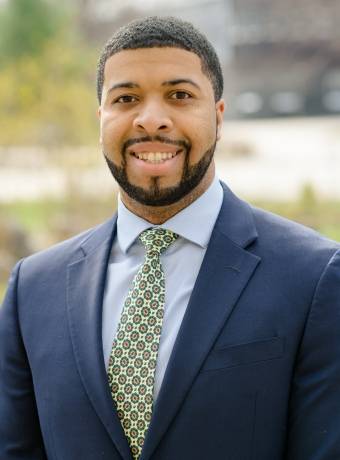
Joseph A. Nelson is an Assistant Professor of Emergency Medicine in the Division of Critical Care Medicine at the University of Maryland School of Medicine , where he also serves as an Attending Physician at the University of Maryland Medical Center and University of Maryland Capital Region Health. His work bridges clinical practice, medical education, and healthcare operations to address systemic inequities and improve patient care. Education: BS in Biomedical Education with Honors and Minor in Bioethics, CUNY School of Medicine (2013) MD and MBA, NYU Grossman School of Medicine and NYU Stern School of Business (2017) Emergency Medicine Residency, University of California, San Francisco (2021) Critical Care Medicine Fellowship, University of Maryland School of Medicine (2023) Research and Professional Focus: Dr. Nelson’s expertise spans health equity for racial/ethnic minorities, healthcare management, operations reform, and curriculum development. He advocates for addressing structural inefficiencies in emergency departments, particularly those affecting critically ill patients. His accomplishments include enhancing electronic health records, clinical documentation, and patient flow strategies. Initiatives: Dr. Nelson has contributed to public health campaigns such as Starting the Conversation: A Perfect Example of a Flawed System (Johnson & Johnson) and the We Are You SF: Covid-19 Vaccination Campaign , which highlight his commitment to dismantling systemic healthcare disparities.