Prof. Kim Jelfs is a Professor in Computational Materials Chemistry at Imperial College London's Department of Chemistry, part of the Faculty of Natural Sciences. Her research focuses on computational design of functional molecular materials, particularly porous organic cages, polymer membranes, and materials for energy storage. She leads the Jelfs Group, collaborating with synthetic teams to bridge theory and experiment. Key affiliations include the Institute for Digital Molecular Design and Fabrication (DigiFAB), the Artificial Intelligence Network, and the Thomas Young Centre. Her work is funded by the Royal Society, EPSRC, ERC, and industry partners. Research interests span materials engineering, theoretical chemistry, and AI-driven discovery. Notable projects involve developing porous liquids, ion-selective membranes for batteries, and computational workflows for material screening. She co-directs DigiFAB and contributes to Imperial's Data Science Institute. Her group emphasizes interdisciplinary approaches to accelerate material innovation.
Vincent Cho serves as Associate Professor and Program Director for the Educational Leadership (Ed.D.) and Professional School Administrator Program (PSAP) at Boston College's Department of Educational Leadership & Higher Education. His research bridges educational leadership theory with practical technology integration challenges in K-12 settings, focusing on the human dimensions of digital transformation in schools. His academic credentials include: Ph.D. from the University of Texas at Austin M.Ed. from the University of Houston B.A. from Boston College Cho's research examines how technologies reshape school discipline systems, data-informed decision processes, and professional identities of educators. With extensive experience as a former classroom teacher and school administrator, he investigates the 'people problems' that emerge during technology implementation, particularly how digital tools create unintended consequences in school organization and culture. His work emphasizes practical solutions for educational leaders navigating the digital age. Analysis of his recent publications (2016-2024) reveals three evolving research trajectories: (1) the impact of behavior management technologies on school discipline equity, (2) data system implementation challenges in educational leadership, and (3) social media's role in professional learning networks. His 2024 work on 'The New Discipline Machinery' critically examines algorithmic behavior tracking apps, while earlier award-winning research (2012-2021) established foundational insights into Twitter-based knowledge brokering among school leaders. His scholarly recognition includes: Carol Weinstein Outstanding Research Award from AERA's Classroom Management SIG (2021) Early Career Scholar of Color award from AERA's Committee on Scholars of Color (2013) Best Paper Award from AERA's Organizational Theory SIG (2012) As Program Director for BC's Ed.D. program, Cho mentors doctoral candidates in educational leadership while maintaining active research collaborations. His current affiliations include serving as Affiliate Faculty for UCEA's CASTLE Center (2021-present) and Advisory Board Member for UMass-Lowell's Center for Program Evaluation (2020-present), reflecting sustained engagement with national educational technology initiatives. Funded projects include EU Parliament presentations on digital-era school innovation and multi-year studies of data system impacts on student achievement.
Molly Hand is an Associate Lecturer and Entrepreneur in Residence in the Department of English at Florida State University, part of the College of Arts and Sciences. She directs the Editing Internship Program and teaches courses such as Renaissance Poetry and Prose, the History of Illustrated Texts, and Text Technologies. Her research focuses on animals, gender, and the occult in early modern literature, with notable publications including co-editing Animals, Animality, and Literature (Cambridge, 2018) and articles in Studies in the Literary Imagination and Preternature . Dr. Hand earned her Ph.D. in 2009 and has maintained professional engagement beyond academia, emphasizing career preparation and internships. She serves as book review editor for Borrowers and Lenders , contributing to scholarly discourse on early modern texts and contemporary academic practices. Her work bridges literary analysis with pedagogical innovation, particularly through exploring visual and material culture in historical contexts. Recent research trends highlight interdisciplinary approaches to animal studies, ecocriticism, and gender in early modern drama and poetry. Her articles analyze witchcraft, labor, and environmental themes in works by Middleton and Shakespeare. Awards and grants are not explicitly listed, though her contributions to academic and professional development are central to her role. Advising and mentorship focus on internship programs and alternative career pathways, reflecting her commitment to student success outside traditional academia. Collaborative efforts include co-editing volumes and curating digital projects like the Pulter Project, showcasing underrepresented voices in early modern literature.
Dr. Will Harrison is an Honorary Research Fellow at the School of Psychology , The University of Queensland , Australia. His research focuses on understanding the neural and computational mechanisms underlying visual perception, attention, and working memory. Academic Rank: Research Fellow Email: w.harrison@psy.uq.edu.au Research Interests: Dr. Harrison investigates how the human visual system integrates information across eye movements, the role of natural image statistics in perception, and the neural coding of orientation and spatial uncertainty. His work bridges experimental psychology, computational neuroscience, and psychophysics. Publications (2019–2025): Recent studies examine transsaccadic attention allocation , prior expectations in visual neural tuning , confidence judgments in multisensory decisions , and visual crowding mechanisms . His computational models often incorporate gain fields, Bayesian inference, and feature binding dynamics.
Katja Schwarz serves as Associate Professor in the Department of Intellectual Development at the University of Education Ludwigsburg's School of Education. She holds the civil service rank of Academic Councillor in pedagogy and didactics, focusing on intellectual development. Her office is located at Reuteallee 46, 71634 Ludwigsburg (Room 8,018), with contact via +49 7141 140-2105 or katja.schwarz@ph-ludwigsburg.de. She maintains active appointments by email arrangement and participates in institutional governance as a Member of the Faculty Council. Her research centers on Autism History , Disability Studies , and Inclusive Pedagogy , with specific expertise in supportive communication, post-school support systems, and social-legal classification frameworks (ICF, SGB IX/BTHG). Current investigations examine autism representation in film, psychiatric museum curation, and international acceptance models. Her methodological approach integrates historical analysis with participatory research involving autistic individuals. Recent publications reveal strong thematic concentration on autism historiography and representation, with increasing focus on museum-based educational approaches and cross-cultural perspectives. Her 2020-2025 output demonstrates systematic exploration of autism classification systems, film portrayals, and practical support service implementation across Baden-Württemberg. Member of autismus Deutschland eV Federal Association for the Promotion of People with Autism Member of the scientific advisory board of the Psychiatry Museum Emmendingen Collaboration with Prof. Santoshi Halder on international autism research She supervises extensive student research, particularly through university seminars involving museum excursions and autism film analysis. Her projects frequently translate academic work into practical resources for autism therapy centers, with multiple unpublished implementation concepts for family relief services and preventative care systems across Baden-Württemberg.
Synne Skjulstad is a Professor at Kristiania University of Applied Sciences, specifically within the Westerdals Department of Creativity, Storytelling and Design at the School of Arts, Design and Media. She holds a Ph.D. from the Department of Media and Communication, University of Oslo and teaches across various programmes including design communication with an emphasis on fashion as artistic cultural expression. Her educational background includes a doctoral degree from the University of Oslo's Department of Media and Communication, providing her with a strong foundation in media theory that informs her interdisciplinary approach to fashion, design, and digital media studies. Professor Skjulstad's research spans the intersection of media aesthetics, platform studies, design studies, and fashion studies. Her work focuses on visual communication, the relationship between communication and design in the arts and wider cultural field, and Norwegian independent fashion practice. She has a strong interest in artistic research methods and incorporates these into her work. Her ongoing research seeks to unpack Norwegian fashion history, contributing significantly to the understanding of fashion as cultural expression. Her research demonstrates how fashion brands engage with contemporary internet cultures and social media platforms, particularly examining the role of internet memes in fashion media. Her publications in journals such as Fashion Theory, International Journal of Fashion Studies, and Kunst og Kultur demonstrate her expertise in the evolving landscape of fashion media in the digital age, with particular attention to how fashion brands like Vetements leverage social media platforms to create participatory fashion experiences. She was the lead researcher for the project 'Norwegian Fashion: Cultural Production and Aesthetic Media Practice,' which investigated the relationship between fashion design, aesthetics, and social media practices in Norway. Her work bridges theoretical frameworks from media studies, fashion theory, and design research to create a comprehensive understanding of contemporary fashion media practices. Professor Skjulstad collaborates with institutions such as the Oslo National Academy of the Arts and has contributed significantly to the development of design research methods at the Master's program in Design at Kristiania. Her approach integrates artistic research methods with traditional academic inquiry, creating innovative pathways for understanding the complex relationship between fashion, media, and digital culture.
Dr. Mary Lauren Benton is an Assistant Professor in the Department of Computer Science at Baylor University's College of Engineering and Computer Science. She holds a Ph.D. and M.S. in Biomedical Informatics from Vanderbilt University (2020, 2018) and a B.S.I. in Bioinformatics from Baylor University (2015). Education: Ph.D. (Vanderbilt, 2020), M.S. (Vanderbilt, 2018), B.S.I. (Baylor, 2015) Her research focuses on computational biology and gene regulation, particularly how DNA sequences influence genome function and human disease risk through integrated datasets. Recent work explores enhancer-gene interactions, epigenetic mechanisms, and the application of graph neural networks to genomic problems. Selected publications highlight interdisciplinary trends across genomics (e.g., Cis-regulatory landscapes , CTCF motif accessibility ) and computer science (e.g., Dynamic graph attention , Node classification ).
Dr. Katherine Herbert is a Professor in the School of Computing at Montclair State University, specializing in bioinformatics, database systems, and data science education. She holds a BS from Saint Peter's College, and MS and PhD from New Jersey Institute of Technology. Her research focuses on data quality, data cleaning, and integration within scientific datasets, with a strong emphasis on bioinformatics and cheminformatics. She leads multiple NSF-funded initiatives including space weather forecasting using machine learning (ANSWERS Project) and interdisciplinary data science training for educators (DATA3 RET Site). Dr. Herbert has secured over $1.2M in grants, collaborating on projects like Cyberinfrastructure-Enabled Machine Learning for Space Weather and Opening Pathways in Chemistry. She has authored 47+ peer-reviewed publications, including work on K-12 computer science integration and solar weather STEM education. Her teaching spans undergraduate and graduate courses in databases, data mining, and interdisciplinary computing. She advises multiple NSF-funded programs targeting STEM equity, including Pathways to STEM Degrees for underrepresented students. Labs/Teams: Active in Montclair's Data Science and Cyberinfrastructure Research Group, leading collaborations with NASA-funded space weather initiatives and regional STEM education networks.
Franco Pestilli is an Associate Professor in the Department of Psychology at the University of Texas at Austin, where he has been since 2020. Previously, he served as an Associate Professor at Indiana University. His research focuses on brain networks, white matter, and the development of open-science technologies, including the cloud platform brainlife.io , which supports neuroscience education, transparency, and data standardization. He earned a Ph.D. in Psychology from New York University, a B.A. from the University of Rome La Sapienza, and completed postdoctoral training at Stanford University and Columbia University. His work integrates computational neuroscience, neuroimaging, and data science to address challenges in brain research and promote FAIR (Findable, Accessible, Interoperable, Reusable) data principles. Recent publications highlight his leadership in advancing decentralized data management, brain imaging standards (BIDS), and reproducible neuroimaging analysis. His lab develops tools like ezBIDS and Neurodesk , emphasizing open-source platforms and collaborative frameworks for global neuroscience communities. Despite his focus on technological innovation, no scientific awards are explicitly mentioned in the text. Dr. Pestilli collaborates with international researchers and accepts graduate students for the 2025–2026 academic year. He drives initiatives to democratize access to neuroimaging infrastructure, aiming to accelerate brain health discovery through technology and data science integration.
Nadine Ziemert is a Professor at the University of Tübingen, where she leads the research group "Translational Genome Mining for Natural Products" at the Interfaculty Institute of Microbiology and Infection Medicine. She is also a member of the CMFI (Cluster of Excellence "Controlling Microbes to Fight Infections") Board of Directors and serves as the Cluster's Equal Opportunities Officer since 2019. Dr. Ziemert received her biology education at Humboldt University in Berlin, where she earned her Ph.D. in 2009. She then pursued postdoctoral research at the Scripps Institute of Oceanography in California, where she also worked as a project scientist from 2013-2014. In 2014, she returned to Germany to accept a professorship in Translational Natural Product Genomics at the University of Tübingen. Her research focuses on the evolution of antibiotics and the genomics of their bacterial producers. Dr. Ziemert's work centers on understanding the evolution and distribution of bacterial secondary metabolites, with particular interest in those with antibacterial properties. Using bioinformatic tools developed by her research group, she has demonstrated that unexplored bacterial genera hold significant genomic potential for producing specialized metabolites, including those from uncultivated bacteria. Her group adheres to Open Access principles, making all data, protocols, and computational tools freely available to the scientific community. Dr. Ziemert's publication record reveals a strong focus on natural product discovery, bioinformatics tool development, and the genomic analysis of antibiotic-producing bacteria. Her work spans the development of databases and computational methods for genome mining, analysis of biosynthetic gene clusters across diverse bacterial taxa, and exploration of ecological contexts for antibiotic production. Recent publications emphasize collaborative efforts in standardizing data for natural product research and expanding the taxonomic scope of genome mining approaches. Dr. Ziemert is actively involved in mentoring students and postdoctoral researchers in her field. Her research group emphasizes collaborative science and open data sharing, contributing significantly to the development of community resources for natural product discovery.
Simon Sladen is an academic and curator specializing in performance studies, particularly British pantomime and popular culture. He is affiliated with the Royal College of Art (RCA), where he serves in the School of Arts & Humanities as the person responsible for the History of Design's Performance pathway and supervises dissertation students working on performance-related topics. Prior to joining the RCA in 2017, he lectured on theatre and performance courses at Royal Holloway, University of London, the University of Winchester, and Syracuse University, New York. Since 2015, he has held the position of Senior Curator of Modern and Contemporary Performance at the Victoria and Albert Museum (V&A), which he joined in 2012. Sladen's research explores how celebrity disrupts performance structures and leads to new interpretations, as well as how perceptions of tradition and nation are inherited and enacted through performance. His recent scholarly focus has centered on cross-dressed performance, costume, iconography, and training in contemporary British Pantomime. This research directly informs both his academic supervision and his curatorial practice at the V&A, creating a unique synergy between theoretical inquiry and museum work. His scholarly output demonstrates a clear evolution in focus toward British performance traditions, particularly pantomime, with publications spanning from early explorations of pantomime's global dimensions to more recent detailed analyses of specific aspects like training networks and celebrity reception. The publications reveal an interdisciplinary approach that bridges academic research with practical curation, reflecting his dual institutional roles. Professional Recognition: Stephen Joseph Award from the Society for Theatre Research (2013) for research into pantomime traditions and genre evolution Sladen maintains significant professional engagement through his role as Chair of the Society for Theatre Research, membership on the editorial board of the British Theatre Guide, participation in the Shakespeare North Museum panel, and chairing the Academic Advisory Board of Blackpool Museum. His academic influence extends through external examiner roles at the University of Kingston and Wimbledon College of Arts, where he contributes to shaping theatre and costume design education.
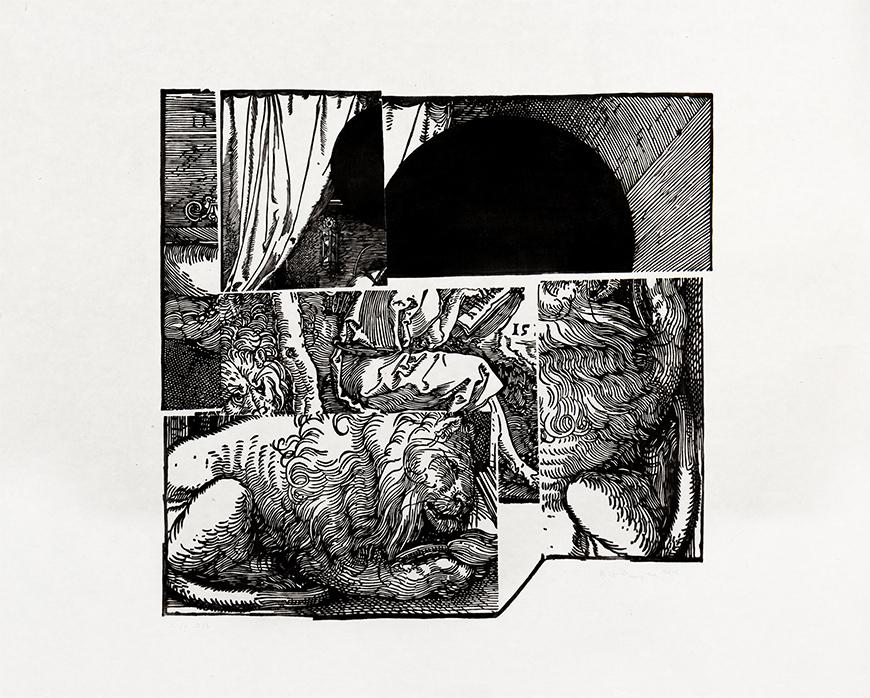
Elisabeth Meyer is an Associate Professor in the Department of Art at Cornell University’s College of Architecture, Art, and Planning (AAP). She is a New York-based artist whose work explores print media, serial imagery, and narrative structures through book and folio formats, incorporating drawing, painting, and sculpture. Her artistic practice is deeply influenced by architecture, nature, and history. Her research and creative work focus on print media , artist books , and visual narratives , often investigating the multiple and the potential for tangential storytelling. She employs techniques such as rubbing, collage, and stenciling, blending traditional and contemporary methods. Her recent projects include large-scale prints and sculptural multiples developed through collaborative grants. The most recent works in her portfolio (2021–2016) reveal a sustained engagement with intaglio , woodcut , and mixed-media printmaking , often in series such as Tarotesque and Route Not Taken , which explore symbolic, architectural, and personal themes. These works reflect a deep commitment to material experimentation and narrative complexity. Her major awards include: Jeffrey S. Lehman Grant for Scholarly Exchange with China (2018 and 2015) Jurors Prize, The Boston Printmakers North American Print Biennial (2018) Baer Art Center Residency, Iceland (2009) She also received a CCA Grant to collaborate with Joanna Malinowska on cross-institutional artistic exchange and print production. Meyer has curated exhibitions such as Print, Text, Language (2014) and Hybrid Prints (2013), and has coordinated student collaborations with professional artists. She has served as a visiting critic at Brown University, Massachusetts College of Art, and RISD. Her teaching includes courses in print media, professional collaboration, and the artist’s book. There is no mention of formal advisees in the provided text. She maintains an active exhibition record across the U.S. and internationally, with recent participation in events such as the International Academic Printmaking Alliance in China (2018).
Tuğba Süzek is an Associate Professor in the Department of Computer Engineering at Muğla Sıtkı Koçman University, Turkey. She holds a PhD in Bioinformatics from George Mason University (2012), an MSc from Johns Hopkins University (2000), and a BSc from Middle East Technical University (1997). Academic Background: BSc: Computer Engineering, Middle East Technical University (1993-1997) MSc: Bioinformatics, Johns Hopkins University (1998-2000) PhD: Bioinformatics, George Mason University (2003-2012) Research Interests center on bioinformatics , machine learning in healthcare , cancer genomics , transcriptomics , and molecular data analysis . She develops tools like TCGAnalyzeR for pan-cancer cohort discovery and CompCorona for coronavirus transcriptome analysis. Recent Articles span lung cancer pathogenesis, orthodontic malocclusion prediction, microbiome-host disease associations, and AI-driven diagnostic tools. Her work bridges cheminformatics and bioinformatics for drug repurposing. Scientific Awards ORISE Fellowship (2000) Patent Holder: System for Early Diagnosis of Skeleton Syndromes (2024) Advising and Grants include supervising student theses on AI in orthodontics and molecular cancer research . She leads EU-funded projects like Intraperitoneal immune modulation and TÜBİTAK grants for drug repurposing and neurodegenerative disease analysis .
Dr Frank Po-Yen Lin is a medical oncologist and clinical informatician based in Sydney, Australia with conjoint research appointments at the NHMRC Clinical Trial Centre, University of Sydney and the Kinghorn Centre for Clinical Genomics, Garvan Institute of Medical Research. Education: 2022: Fellowship of the Australasian Institute of Digital Health (FAIDH) 2019: Fellowship of the Royal Australasian College of Physicians (FRACP), Internal Medicine (Medical Oncology) 2009: PhD in Medical Informatics, University of New South Wales 2003: MB ChB, University of Otago, New Zealand Dr Lin's research focuses on evidence-based precision medicine and the application of digital health in oncology, with particular emphasis on empowering genomic decision-making, multidisciplinary care, and biomarker development through artificial intelligence and machine learning. He is co-investigator of several clinical trials in early drug development as part of the Australian Genomic Cancer Medicine Program and leads the development of the TOPOGRAPH precision oncology knowledgebase and open source resources for treatment decision-support and electronic medical record analytics. His publication portfolio includes 52 journal articles, 2 book chapters, 6 conference papers, 1 conference poster, 9 conference abstracts, and 6 preprints, demonstrating substantial scholarly output across his research domains. Analysis of his recent work reveals a strong emphasis on integrating AI with clinical oncology practice, developing decision-support tools, and advancing precision medicine implementation. Professional Recognition: Associate Editor of JCO Clinical Cancer Informatics Chief investigator and co-investigator on multiple research grants Fellowship of the Australasian Institute of Digital Health (2022) Fellowship of the Royal Australasian College of Physicians (2019) Dr Lin actively supervises research candidates in medical oncology, precision oncology, clinical trials, artificial intelligence applications in medicine, applied and translational genomics, and medical informatics decision-support systems. His work bridges clinical oncology practice with cutting-edge informatics approaches to improve cancer care delivery and outcomes.
Dorota Ostrowska is a Senior Lecturer at Birkbeck, University of London's School of Creative Arts, Culture and Communication, specializing in Film and Screen Media. She joined Birkbeck in 2008 as a Lecturer, was promoted to Senior Lecturer in 2014, and currently serves as Assistant Dean for Business Engagement and Partnerships. She directs the MA Film and Screen Media program and co-directs Postgraduate Research at FMACS. Her research spans three primary domains: Film Festival Studies focusing on historical, spatial and programming aspects of international festivals; Eastern European Cinema examining socialist/post-socialist film cultures in Poland; and French Cinema analyzing New Wave movements and cultural contexts. She has developed innovative pathways including Film Programming and Curating and oversees Birkbeck's involvement in the Venice Biennale Fellowship. Her 15 most recent publications (2007-2025) reveal a methodological evolution from historical analysis of Eastern European cinema toward contemporary film festival studies, with increasing emphasis on crisis programming (migration, pandemic), spatial theory, and ethical frameworks. Key trends include decolonizing festival practices, sensory ethnography of red-carpet cultures, and digital transformations in festival operations. As supervision lead, she has guided doctoral research including Sarah Durcan's 2018 thesis on History of Art Research. Her institutional leadership includes founding roles in the European Network for Cinema and Media Studies (NECS), co-hosting its 2011 London conference, and establishing Café Solaris during the pandemic to sustain intellectual community. She has held visiting positions at Université de Montpellier (2021) and Universidad de Navarra (2008, 2009).