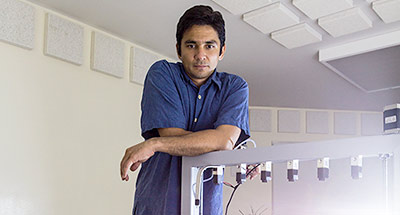
Dr. Richard Y. Zhao is a tenured Professor in the Department of Pathology and Microbiology-Immunology at the University of Maryland School of Medicine. His research combines molecular biology, fission yeast genetics, mammalian biology, and virology to study virus-host interactions, particularly for HIV and Zika virus. He previously held academic positions at Northwestern University and Columbia University and has contributed to over 120 peer-reviewed articles. B.S., China Oceanography University (1981) M.S., Oregon State University (1995) Ph.D., Oregon State University (1991) Postdoctoral Training, Columbia University (1991-1992) Dr. Zhao's research focuses on: Virus-host interactions and pathogenicity High-throughput drug screening for antivirals Role of viral proteins in neuroinflammation and cancer Translational genomics in precision medicine His recent publications highlight SARS-CoV-2 ORF3a, Zika envelope proteins, and HIV protease inhibitors, emphasizing host-pathogen mechanisms across species. He has served on NIH panels and editorial boards for journals like Cell Research and Retrovirology . Scientific awards include: Fellow, American Academy of Microbiology (2019) Bernard L Mirkin Endowed Chair (2001-2004) Honorary Director, Shandong Gallo Institute (2009) Distinguished Service from SCBA (2015) Outstanding Service from CBA-USA (2016) Dr. Zhao also contributes to clinical diagnostics and personalized medicine through molecular testing and pharmacogenetics programs.
Francesca Chiodi is a Senior Professor in the Department of Microbiology, Tumor and Cell Biology at Karolinska Institutet, Sweden. Her research focuses on HIV pathogenesis, host-microbe interactions, and immune responses in infectious diseases. She holds a Docent title from Karolinska Institutet (1991) and has been continuously employed there since 2004. Her work spans virology, immunology, and clinical trials, with emphasis on HIV prevention strategies, mucosal immunity, and translational research. Research highlights include studies on HIV pre-exposure prophylaxis (PrEP), host gene expression in foreskin tissue, and viral surface protein epitope profiling. She has led projects evaluating SARS-CoV-2 responses in mucosal tissues and contributed to global initiatives like the CHAPS study in sub-Saharan Africa. Her division, the Division of Host-Microbe , investigates microbial pathogenesis and immune mechanisms in chronic infections. Key collaborations include studies on B-cell dysfunction in HIV and TB co-infections, as well as vaccine design for immunocompromised populations. Publications (2020–2024) reflect her focus on clinical trials, transcriptomic analyses, and translational models. She has advised numerous collaborative studies but no formal student advisees are listed. Research funding includes grants for mucosal HIV prevention and SARS-CoV-2 pathogenesis studies. Ongoing work explores immune reconstitution in early antiretroviral therapy and correlates of protective immunity in mucosal tissues.
Dr. Elemir Simko is a Professor in the Department of Veterinary Pathology at the University of Saskatchewan, affiliated with Prairie Diagnostic Services. He holds a DVM from the University of Belgrade (Yugoslavia) and a DVSc from the University of Guelph, and is a Diplomate of the American College of Veterinary Pathologists. Since 1998, he has coordinated core anatomic pathology courses at both undergraduate and graduate levels. His research focuses on honey bee health, agricultural sustainability, comparative pathology, and innate immunity. Recent work includes studies on honey bee pathogen dynamics, pesticide impacts, and equine septic arthritis diagnostics using biomarkers. He collaborates extensively with researchers on investigative pathology and contributes to diagnostic services. Education: DVM (University of Belgrade), DVSc (University of Guelph), ACVP Diplomate Key Research Themes: Honey bee health, infectious disease pathogenesis, antimicrobial resistance, and diagnostic pathology Collaborations: Prairie Diagnostic Services, multiple veterinary and agricultural researchers Dr. Simko’s publications span veterinary pathology, honey bee health, and equine medicine. His recent articles highlight advancements in diagnostic techniques for septic arthritis in horses and interventions to mitigate honey bee colony threats. He has no listed awards but maintains active roles in teaching and applied research.
Clive Potter is Professor of Environmental Policy at Imperial College London's Centre for Environmental Policy within the Faculty of Natural Sciences. His interdisciplinary work bridges environmental science and social science to inform government policy, with specific focus on plant biosecurity, ecosystem services, and stakeholder engagement in rural and urban contexts. Professor Potter's research centers on agricultural restructuring and sustainable land use governance in industrialized nations, examining 25+ years of policy evolution and farmer responses to market, policy, and socio-cultural shifts. He investigates policy learning mechanisms and public involvement in environmental risk management, particularly regarding tree disease epidemics like ash dieback, analyzing how historical knowledge and local observations integrate into biosecurity frameworks. His approach combines natural science collaborations with social survey methodologies across UK and EU contexts. Recent publications (2021-2024) reveal intensifying focus on urban forestry dynamics during crises (including COVID-19), socio-ecological art-science collaborations, and policy innovations for landscape-scale conservation. Key trends include systematic analysis of tree pest impacts in cities, integration of public health co-benefits in climate policy, and novel stakeholder engagement methods using digital tools. His work increasingly addresses equity dimensions in environmental governance and the role of diverse knowledge systems in managing complex socio-ecological risks.
Steven Sinkins is Professor in Microbiology and Tropical Medicine at the University of Glasgow, affiliated with the MRC-University of Glasgow Centre for Virus Research. His research focuses on controlling mosquito-borne diseases through innovative biological approaches. He directs the ANTI-VeC international research network and leads a team investigating microbial solutions to vector-borne pathogens. Research interests center on: Wolbachia symbionts for arbovirus control Microsporidian malaria-blocking symbionts in Anopheles mosquitoes Field implementation of biocontrol strategies against dengue and Zika viruses Molecular mechanisms of pathogen blocking in mosquito vectors Publication analysis reveals consistent focus on: Wolbachia-mediated viral inhibition mechanisms Field trials of novel vector control methods Genetic and symbiotic approaches to disease prevention Mosquito-symbiont-pathogen tripartite interactions Scientific recognition includes: Wellcome Trust Senior Research Fellowship (2006-2021) Leads multiple research grants: Wellcome Trust: Optimal implementation of Wolbachia programmes (2022-2027) Open Philanthropy: Microsporidia symbionts for malaria control (2020-2023) BBSRC: Genetic and symbiotic disease control strategies (2017-2020) Directs the Sinkins Group at the MRC-University of Glasgow Centre for Virus Research, collaborating internationally with partners in Malaysia, Kenya, Burkina Faso, and Australia to develop and implement novel vector control solutions.
Lorin D. Warnick is currently serving as the Austin O. Hooey Dean of Veterinary Medicine at Cornell University College of Veterinary Medicine. He is a tenured Professor in the Department of Population Medicine and Diagnostic Sciences, where his research focuses on the epidemiology of Salmonella infections and antimicrobial resistance in enteric bacteria affecting both domestic animals and humans. A key contributor to Cornell's response to the COVID-19 pandemic, he has led research on SARS-CoV-2 diagnostic testing and campus outbreak dynamics. Education : B.S. in Microbiology (1984) from Brigham Young University DVM (1988) from Colorado State University Ph.D. in Veterinary Medicine (Epidemiology) and Statistics from Cornell University (1994) Professional Experience : Assistant Professor (1994-1996) at Virginia-Maryland Regional College of Veterinary Medicine Assistant/Associate Professor (1996-2008) and Professor (2008-present) at Cornell University Section Chief in Ambulatory and Production Medicine (1997-1999) Research Interests span veterinary epidemiology, antimicrobial resistance, foodborne pathogens, and public health. His work connects animal and human health through One Health frameworks, particularly in Salmonella transmission dynamics between dairy cattle and humans. He has pioneered surveillance systems for infectious diseases, including the model used during Cornell's COVID-19 response. Scientific Awards include: Phi Zeta Veterinary Honor Society (1987) Phi Kappa Phi Honor Society (1988) Honorary Diploma from American Veterinary Epidemiology Society (2018) One Cornell Award for Leadership in Pandemic Testing (2021) Advising and Grants highlight his role in mentoring students and leading interdisciplinary research teams. His grants focus on antimicrobial resistance mitigation, dairy calf health, and pandemic response infrastructure. He has collaborated extensively with institutions like USDA and CDC on foodborne disease research. Labs and Collaborations include leadership in Cornell's Veterinary Diagnostic Laboratories and contributions to the American College of Veterinary Preventive Medicine. His work integrates epidemiological modeling, microbiome analysis, and policy development for sustainable agricultural practices.
Dr. Byeonghwa Jeon is an Associate Professor in the Division of Environmental Health Sciences at the University of Minnesota. His research focuses on antibiotic resistance mechanisms, stress tolerance in foodborne pathogens, and development of antimicrobial alternatives such as bacteriophages and antioxidant-based therapies. Education: PhD in Veterinary Medical Sciences, University of Tokyo, Japan MSc in Food Science and Biotechnology, Lund University, Sweden BSc in Food Science and Technology, Seoul National University, Korea Postdoctorate in Veterinary Microbiology and Preventive Medicine, Iowa State University Dr. Jeon's research employs molecular biology, genomics, and microbial ecology to study Campylobacter jejuni, a leading enteric pathogen, with emphasis on stress responses, biofilm formation, and antibiotic resistance. His work aims to develop interventions to disrupt bacterial survival pathways and reduce public health impacts. Recent publications highlight his exploration of antioxidant-mediated antimicrobial synergy, cold tolerance mechanisms, and phage-based control of multidrug-resistant bacteria. Key collaborations include researchers from South Korea, Canada, and the U.S. Areas of investigation include: Stress tolerance in foodborne pathogens Molecular mechanisms of antibiotic resistance Bacteriophage applications for STEC and Salmonella Oxidative stress and biofilm regulation Wall teichoic acid roles in Listeria Adjuvant strategies for bacitracin against MRSA
Andrew McArthur is a Professor in the Department of Biochemistry & Biomedical Sciences at McMaster University, where he leads the McArthur Laboratory. His research focuses on bioinformatics , genomics , and computational biology with a specialization in genomic surveillance of antimicrobial resistance (AMR) . He spearheads the Comprehensive Antibiotic Resistance Database (CARD) and collaborates with the Canadian Anti-Infective Innovation Network (CAIN) , GenEpio Consortium , and IRIDA Platform for pathogen genomics. Education : PhD in Biochemistry (University of Victoria, 1996), Postdoctoral work at Marine Biological Laboratory (1998-1999) and National Museum of Natural History (1996-1998) His research spans antimicrobial resistance surveillance , machine learning applications , viral genomics (including SARS-CoV-2), and pathogen evolution . He has developed tools like CARD and IRIDA to standardize AMR data and enable rapid infectious disease analysis. Recent work includes machine learning models for predicting AMR, cloud-based pathogen detection , and resistome profiling in clinical and environmental contexts. He has mentored graduate students including Jalees Nasir (HSGSA Impact Award 2025), Dirk Hackenberger , Autumn Arnold , and Emily Bordeleau , as well as postdoctoral fellows like Sheridan Baker . His teaching includes courses in practical bioinformatics and biomedical consulting at McMaster University.
Christine Moe is a Professor and the Eugene J. Gangarosa Chair in Safe Water and Sanitation at Emory University’s Rollins School of Public Health. Her primary appointment is in the Hubert Department of Global Health, with joint roles in Environmental Health and Epidemiology. She holds a PhD from the University of North Carolina and has conducted postdoctoral research at the CDC. Moe’s research focuses on environmental transmission of pathogens, particularly noroviruses and waterborne diseases, with fieldwork in over 30 countries. Her work includes studies on sanitation systems, water quality, and wastewater surveillance. She directs Emory’s Center for Global Safe Water, emphasizing global health equity. Awards include the prestigious Eugene J. Gangarosa Chair. Her contributions span lab-based viral studies and community-level interventions to improve water and sanitation in low-resource settings. Education: PhD in Environmental Sciences (UNC-Chapel Hill), MS in Environmental Science (UNC), BA in Biology (Swarthmore College). Research Interests: Environmental health, waterborne pathogens, norovirus transmission, and global sanitation infrastructure. She has pioneered wastewater-based epidemiology to monitor disease outbreaks and assess public health risks in healthcare and urban environments.
Andrea Santangeli serves as a Supervisor in the Doctoral Programme in Wildlife Biology and holds a Docentship in the Organismal and Evolutionary Biology Research Program at the University of Helsinki's Faculty of Biological and Environmental Sciences. He maintains an additional affiliation as an Honorary Fellow at the University of Cape Town's FitzPatrick Institute of African Ornithology under the National Research Foundation Centre of Excellence since August 2019. His research spans international collaborations across multiple continents, with particular focus on African and European conservation challenges. Dr. Santangeli completed his doctoral thesis titled 'Assessing the effectiveness of different approaches to species conservation' at the University of Helsinki in 2013. His educational background established the foundation for his current research program focused on evidence-based conservation strategies and effectiveness assessment. His research interests center on wildlife conservation biology, particularly avian ecology and species protection. Santangeli's work examines human-wildlife interactions, conservation prioritization, and the effectiveness of different conservation approaches. He investigates how climate change affects species distributions and community composition, with special attention to vulture conservation, bird-feeding practices, and the impacts of agricultural systems on biodiversity. His approach integrates ecological, social, and policy dimensions to develop comprehensive conservation solutions. Species conservation effectiveness Human-wildlife interactions Climate change impacts on biodiversity Vulture conservation Bird community dynamics Ecosystem services assessment Analysis of Santangeli's recent publications (2023-2025) reveals a strong focus on interdisciplinary conservation science addressing urgent global challenges. His work increasingly integrates One Health approaches, examining connections between wildlife health, ecosystem functioning, and human activities. Key themes include climate change adaptation strategies, human dimensions of conservation, and technological innovations for monitoring and protection. His research shows growing emphasis on policy-relevant science that directly informs conservation decision-making at multiple scales. His scientific recognition includes an Honorary Fellowship at the University of Cape Town's prestigious FitzPatrick Institute of African Ornithology, part of the DST NRF Centre of Excellence. This position acknowledges his significant contributions to African ornithology and conservation science, particularly his work on vulture conservation across the continent. As a doctoral supervisor, Santangeli guides the next generation of conservation scientists through the Wildlife Biology doctoral program. His research is supported by multiple projects, including the ongoing 'Understanding the drivers and species ecological traits underpinning the global trade in wild birds' (2019-2024), which examines wildlife trade dynamics and conservation implications. His work demonstrates strong international collaboration networks across Europe, Africa, and beyond. Santangeli's research activities involve extensive fieldwork, data analysis, and policy engagement. He participates in academic visits to institutions like the Center d'Études Biologiques de Chizé in France and contributes to scientific conferences and peer review for leading conservation journals. His work often involves citizen science approaches, as evidenced by the 'iratebirds' project on aesthetic attraction to birds.
Saumik Basu is an Assistant Professor in the Department of Entomology at the University of Georgia (UGA), based at the Tifton Campus within the College of Agricultural & Environmental Sciences. His research focuses on developing sustainable integrated pest management (IPM) strategies for vegetable crops in South Georgia. He leads the Vegetable Entomology Lab, which investigates pest complexes like whiteflies, diamondback moths, and pepper weevils, along with their interactions with plant pathogens. His work emphasizes molecular ecology, plant defense mechanisms, and the role of abiotic factors (e.g., climate, soil microbiota) in pest management. Education: B.S. in Human Physiology, University of Calcutta M.S. in Biotechnology, Visva-Bharati University Ph.D. in Molecular Plant Virology, Jawaharlal Nehru University Postdoctoral Research: University of Nebraska-Lincoln (UNL) and Washington State University (WSU) Research Interests: Molecular mechanisms of plant-insect interactions Sustainable IPM for vegetable pests Plant defense signaling and phytohormonal crosstalk Impact of soil microbiota on pest-pathogen dynamics Climate change effects on agroecosystems Lab & Collaborations: The lab collaborates with county extension agents, growers, and other research groups to translate findings into practical solutions. Current projects address pest attack order effects on plant defenses and the role of biopesticides like Metarhizium fungus. Graduate students and postdocs work on topics such as soil amendments for pest resistance and vector-borne disease transmission. Advising & Grants: Advises Ph.D. candidate Sourav Pal and M.S. student Rajesh Udavant. Technical staff includes Charles Laney Gruver, an expert in field trials and insect rearing. Undergraduate Alexis Crossgrove supports lab activities. Labs/Teams: Vegetable Entomology Lab (UGA), previously affiliated with Molecular Plant Sciences at WSU.
Professor Enda Cummins is a faculty member at University College Dublin (UCD), serving as Professor and Deputy Head of the School of Biosystems and Food Engineering. He also holds roles as Head of Teaching and Learning and Visiting Professor at KU Leuven, Belgium. His research focuses on risk assessment, predictive modeling, food safety, and environmental contamination, with an emphasis on chemicals (e.g., acrylamide, nanoparticles) and pathogens (E. coli, Salmonella). He leads a multidisciplinary team and coordinates the EU-funded H2020 ITN project PROTECT, addressing climate change impacts on food safety. Education: BAgrSc, MEngSc, PhD from UCD. Teaching emphasizes problem-based learning and integrates research innovations. He developed the EU-funded Erasmus+ Predictive Modelling and Risk Assessment program and coordinates the MEngSc in Food Engineering. Grants include projects on antimicrobial resistance, nanoparticle toxicity, and urease inhibitor efficacy. Over 100 peer-reviewed publications and 123 conference papers highlight his work on risk assessment, food safety, and environmental modeling.
Dr. Alejandro Banda serves as Clinical Professor in the Department of Pathobiology and Population Medicine at Mississippi State University's College of Veterinary Medicine, while concurrently holding the position of Executive Director for the MSU Veterinary Research and Diagnostic Laboratory (MVRDLS). He leads the poultry and mammalian virology laboratories and oversees the vivarium operations, directing critical diagnostic and research functions. His educational foundation includes: Ph.D. in Medical Microbiology from the University of Georgia (2002) D.V.M. from the National Autonomous University of Mexico (1998) M.S. in Veterinary Medicine from the National Autonomous University of Mexico (1996) Dr. Banda's research centers on veterinary virology with specialized expertise in poultry disease diagnostics and wildlife pathogen surveillance . His work bridges laboratory science with field applications, particularly in chronic wasting disease (CWD) ecology and avian influenza epidemiology. He employs advanced genomic techniques like iSeq100 and MinION sequencing for pathogen characterization, focusing on practical solutions for agricultural and wildlife health challenges. His investigations frequently address immunosuppressive diseases in poultry production systems and novel disease transmission pathways in wild species. Recent publications demonstrate a clear trajectory toward environmental disease surveillance methodologies, particularly leveraging natural animal behaviors for non-invasive CWD monitoring in deer populations. His work simultaneously addresses critical poultry health issues including neurologic diseases in commercial flocks and parasitic infections in exotic avian species, reflecting dual expertise in domestic animal medicine and wildlife disease ecology. Dr. Banda actively directs laboratory operations at MVRDLS, managing the poultry virology section, mammalian virology laboratory, and vivarium facilities. His leadership integrates diagnostic services with research initiatives focused on emerging pathogens affecting both agricultural and wildlife populations in Mississippi and beyond.
Dr. Tamas Mona is a Postdoctoral Research Associate in the Department of Plant Sciences at the University of Cambridge , affiliated with the Epidemiology and Modelling Group . His work focuses on environmental suitability models for large-scale epidemiological forecasting, particularly in wheat rust outbreaks across Africa, the Middle East, and Asia. Collaborations include the UK Met Office, CIMMYT, and institutions in Ethiopia, Kenya, Bangladesh, and Nepal. PhD in Environmental Sciences (2019), Eötvös Loránd University MSc in Meteorology (2013), Eötvös Loránd University BSc in Physics with Meteorology (2011), Eötvös Loránd University Research interests integrate meteorological applications with epidemiological models to predict crop disease outbreaks. Key projects involve tracking transmission pathways for stem rust pathogens and analyzing how irrigation creates green bridges for intercontinental pathogen spread. Publications emphasize environmental science and computational epidemiology . Current collaborations span Sub-Saharan Africa (EIAR, ATI, KARLO) and South Asia (BWMRI, NARC) through initiatives like the Global Food Security IRC . Modeling frameworks developed by Mona contribute to policy advisory systems for emerging pest threats, aligning with DEFRA and UK government strategies.
Camilo Mora is a Professor in the Department of Geography at the University of Hawaii at Manoa, where he maintains an active research laboratory and teaches courses on environmental issues, biogeography, and data analysis. His academic journey began with a BSc in Marine Biology from Universidad del Valle in Colombia (1999), followed by a PhD in Biology from the University of Windsor, Canada (2005). He completed postdoctoral fellowships at the University of Auckland (2005), Scripps Institution of Oceanography (2006-2008), and Dalhousie University (2008-2010). BSc, Marine Biology, Universidad del Valle, Colombia (1999) PhD, Biology, University of Windsor, Canada (2005) Postdoctoral Fellow, University of Auckland (2005) Postdoctoral Fellow, Scripps Institution of Oceanography (2006-2008) Postdoctoral Fellow, Dalhousie University (2008-2010) Mora's research spans interconnected lines focused on understanding biodiversity patterns and their modification by human activities, with particular emphasis on climate change impacts. His lab specializes in big data analytics applied to diverse environmental challenges including heatwaves, disease transmission, marine ecosystems, and even unconventional topics like Bitcoin's environmental footprint. The Mora Lab operates on a 'divide and conquer' approach to tackle large research questions by breaking data gathering into individual parts that can be concatenated into central databases. Mora has received the CSS Excellence in Research award (2014) for his significant contributions to environmental science. His influential publications include groundbreaking work on the global risk of deadly heat (2017), the projected timing of climate departure from historical variability (2013), and the finding that over half of known human pathogenic diseases can be aggravated by climate change (2022). CSS Excellence in Research (2014) Highly cited publications in Nature and Nature Climate Change Research featured in major international media outlets Development of innovative research methodologies for large-scale analyses Mora leads an active research group that engages students in the full scientific process from idea generation to publication. His approach to mentoring involves creating yearly classes where graduate students, professors, and international advisors collaborate to tackle significant research questions, with papers typically completed within a single semester. His Carbon Neutrality Challenge project, spearheaded by his daughter Asryelle Mora, provides a practical mechanism for individuals to offset carbon emissions through tree planting. The Mora Lab maintains a distinctive approach to environmental research, working on seemingly diverse topics from reef fishes to Bitcoin, united by their reliance on big data analytics. This interdisciplinary methodology has produced impactful research across multiple domains of environmental science and climate change impacts, establishing Mora as a significant contributor to our understanding of humanity's environmental challenges.