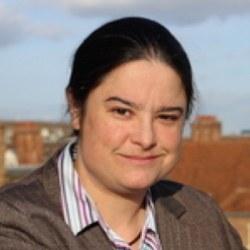
Prof. Waldemar Kolanus leads the Molecular Immunology and Cell Biology department at the University of Bonn's Life & Medical Sciences Institute (LIMES) . His research bridges immunoregulation , stem cell dynamics , and metabolic stress responses in immune cells. Unit 2 member at LIMES Principal investigator in SFB 704 and ImmunoSensation Cluster Leads a multidisciplinary lab with postdocs, PhD students, and technical staff His work focuses on intracellular signaling pathways connecting immune activation to tissue homeostasis, particularly through: Cytohesin proteins in integrin-mediated adhesion and migration TRIM71 in stem cell regulation and congenital hydrocephalus High-salt environments affecting macrophage function Publication trends show expertise in immune cell migration , genetic models , and chemical inhibition , with frequent use of mice and zebrafish for in vivo studies. Key articles explore: TRIM71's dual role in auditory development and germ cell maintenance Cytohesin family's Golgi regulation and insulin signaling Ruxolitinib's off-target migration inhibition of dendritic cells Contact details: Address: LIMES Institute, Carl-Troll-Straße 31, Bonn Email: kolanus.sekretariat@uni-bonn.de Phone: +49 228 73-62788
Trent K. Bollinger is a Professor in the Department of Veterinary Pathology at the University of Saskatchewan's Western College of Veterinary Medicine (WCVM), and serves as Regional Director for the Western/Northern Region of the Canadian Wildlife Health Cooperative (CWHC). His academic credentials include a BSc (Honours) from the University of Saskatchewan (1984), a DVM (Distinction) from the University of Saskatchewan (1988), and a DVSc in Pathology from the Ontario Veterinary College (1992). Dr. Bollinger's research focuses on the pathology and epidemiology of diseases in wildlife and fish, with particular emphasis on chronic wasting disease in deer/elk and white-nose syndrome in bats. He has conducted extensive studies on disease transmission dynamics, wildlife population health, and the ecological impacts of emerging pathogens. His work bridges veterinary science, ecology, and conservation biology. His publications demonstrate expertise in viral and bacterial zoonoses, fungal pathogens affecting bats, and spatial epidemiology of wildlife diseases. Recent research highlights include investigating sylvatic plague in prairie dogs, coronavirus persistence in hibernating bats, and landscape connectivity's role in chronic wasting disease spread. His studies often combine molecular diagnostics, field observations, and ecological modeling. Dr. Bollinger collaborates with national and international wildlife agencies, contributing to disease surveillance and management strategies for endangered species. His work emphasizes the interconnectedness of wildlife health, ecosystem health, and public health concerns.
Professor John W. Edmunds is a leading academic in Infectious Disease Modelling at the London School of Hygiene and Tropical Medicine (LSHTM). Holding a Professor position since 2013 and serving as Dean of the Faculty of Epidemiology and Population Health (2013-2019), he combines mathematical, statistical, and economic models to inform public health policy. His part-time role at the Health Protection Agency (HPA) since 2008 underscores his policy advisory contributions. PhD in Infectious Disease Modelling (Imperial College, 1994) MSc in Health Economics (University of York, 1995) BSc in Biology (Imperial College, 1989) His research focuses on understanding disease transmission and optimizing control strategies. He has pioneered methods integrating social contact surveys , participatory surveillance (e.g., Influenzanet), and economic analysis to evaluate vaccines and interventions. Recent work includes SARS-CoV-2 dynamics , Ebola spatial forecasting , and typhoid vaccine prioritization . His 15 most recent publications highlight social contact patterns (Reconnect, CoMix studies), vaccine impact (HPV, typhoid), and real-time outbreak analytics (Ebola, cholera). Key trends include digital epidemiology , behavioral surveillance , and cross-country modeling for global health. Knighthood (2024) for services to epidemiology Weldon Memorial Prize (2022) for biostatistics contributions FMedSci (2018) for medical science excellence OBE (2016) for public service As an educator, he teaches "Modelling and the Dynamics of Infectious Diseases" and co-organizes "Pandemics: Emergence, Spread and Response" . Current grants include National Institute for Health and Care Research projects on post-pandemic surveillance and Bill & Melinda Gates Foundation funding for polio eradication. He leads collaborations with the Centre for Mathematical Modelling of Infectious Diseases , Vaccine Centre , and Health in Humanitarian Crises Centre , while advising UK and WHO committees on zoonotic influenza , variants , and testing programs .
Prof. Dr. Deniz Tasdemir is a Full Professor (W3) of Marine Natural Products Chemistry at GEOMAR Helmholtz-Zentrum für Ozeanforschung Kiel and serves as Director of the GEOMAR-Biotech center and Head of the Marine Natural Product Chemistry Research Unit. Her career spans institutions including the National University of Ireland Galway and UCL School of Pharmacy. PhD in Pharmacy, ETH Zurich (1997) Post-doctoral work, University of Utah (2001) Dr. Helmut Legerlotz Fellowship, University of Zurich (2002-2025) Her research focuses on marine chemical ecology , metabolomics , and bioprospecting for bioactive compounds from sponges, algae, and marine microbiomes. Recent work explores seagrass pathogen reduction, microbiome interactions, and aquafeed applications. Scientific awards include: Waters Award for Natural Products Innovation (2016) Egon Stahl Silver Medal (2005) Pierre Fabre Prize (2004) ETH Zurich Medal (1997) She leads collaborative projects on ocean sustainability and marine drug discovery, with editorial roles in Marine Drugs , Planta Medica , and Phytochemistry Letters .
Prof. Dr. Alex Hall is an Associate Professor at the Department of Environmental Systems Science and Head of the Institute of Integrative Biology at ETH Zürich , Switzerland. He holds a PhD from the University of Edinburgh (2008), followed by postdoctoral work at the University of Oxford and ETH Zürich, including prestigious SNSF Ambizione and Marie Curie Intra-European fellowships. Research Focus: The Hall lab investigates Microbial interactions in human microbiomes Antibiotic resistance evolution Horizontal gene transfer dynamics Computational and in vitro modeling of microbial communities Evolutionary medicine applications Scientific Contributions: His recent studies analyze probiotic treatments for Staphylococcus aureus decolonization, strain-specific ecological success in gut microbiomes, and CRISPR-Cas system roles in plasmid conflicts. The lab employs computational frameworks combined with experimental validations. Scientific Awards: SNSF Ambizione fellowship Marie Curie Intra-European fellowship He also serves on the SNSF PRIMA fellowship evaluation panel and the ETH Zürich Coordination Council Medicine .
Jennifer L. Clarke is a Professor in the Department of Statistics at the University of Nebraska–Lincoln and Director of the Quantitative Life Science Initiative. She holds leadership roles in enabling big data integration across the University of Nebraska system through collaborative research programs. Her affiliations include the Institute of Agriculture and Natural Resources (IANR) and the College of Agriculture and Natural Resources. Dr. Clarke's research focuses on statistical methodology for high-dimensional data, computational biology, bioinformatics, and bacterial genomics. Her work bridges statistical innovation with applications in oncology, microbiome analysis, and agricultural phenomics. Key areas include predictive modeling, machine learning, and genomic/metagenomic data integration. Her recent publications span cancer biomarker discovery, plant phenotyping methodologies, and microbial community analysis, reflecting her interdisciplinary approach. Articles emphasize translational applications like therapeutic target identification and precision agriculture. Dr. Clarke leads initiatives fostering collaboration between statisticians and domain scientists, including the Quantitative Life Science Initiative and contributions to the Agricultural Genome-to-Phenome Initiative (AG2PI). Her work advances data-driven solutions for healthcare and food security challenges. Notable projects include developing statistical tools for microbiome studies, analyzing root architecture via 3D imaging, and investigating cranberry-derived compounds' cancer-inhibitory mechanisms. Her methodological contributions include hybrid clustering techniques and predictive model validation frameworks.
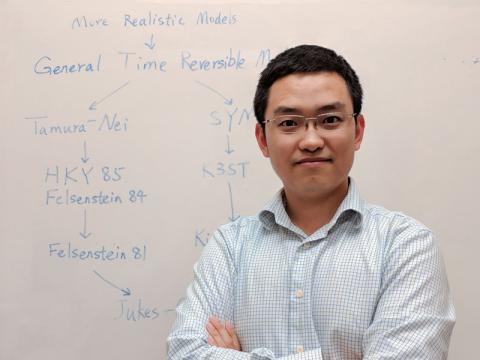
Xiang Ji is an Assistant Professor in the Department of Mathematics at Tulane University, affiliated with the School of Science & Engineering. His research focuses on statistical phylogenetics, computational biology, and bioinformatics, particularly in viral evolution and genomic epidemiology. He collaborates with Dr. Wu-Min Deng on cancer biology research from a bioinformatics perspective. Education: Ph.D., 2017: Bioinformatics and Statistics (Co-Major), North Carolina State University M.S., 2013: Material Science and Engineering, North Carolina State University B.S., 2011: Economics (Double Major) and Physics, Peking University Research Interests: Dr. Ji develops statistical models and computational tools for phylogenetic analysis, including scalable algorithms for large-scale genomic data. His work spans viral evolution, zoonotic disease surveillance, and parallel computing libraries for Bayesian inference. He emphasizes practical implementations such as Torchtree and TreeFlow . Articles Trends: Recent publications emphasize viral evolution dynamics (e.g., SARS-CoV-2, avian influenza), genomic surveillance strategies, and computational methods for phylogenetic inference. His work often bridges statistical theory with real-world applications in public health and epidemiology. Advising & Grants: While specific grant details are not listed, his active research program indicates involvement in funding initiatives related to computational biology and viral evolution. He teaches advanced courses in data analysis, linear models, and probability theory. Labs & Teams: Collaborates with Tulane’s Cancer Biology group and maintains partnerships with institutions globally, focusing on genomic epidemiology and phylogenetic software development.
Dr. Michael Wilczek is Assistant Teaching Professor in Biotechnology/Bioinformatics at Northeastern University's Roux Institute. His research bridges virology, bioinformatics, and educational innovation, with particular focus on JC polyomavirus pathogenesis and graduate education reform. Key research domains include: Molecular mechanisms of viral infections Bioinformatic analysis of host-pathogen interactions Observational health and real-world evidence Evidence-based graduate education His publication record demonstrates: Expertise in JC polyomavirus cellular pathways Innovative applications of machine learning in virology High-throughput drug screening methodologies Health disparities research in aging populations
Professor Guy Williams is a leading academic at the University of Cambridge with a focus on imaging science and clinical neurosciences, affiliated with Downing College and the Wolfson Brain Imaging Centre . Holding a PhD in Physics from his initial Natural Sciences degree, he specializes in nuclear magnetic resonance (NMR) and MRI techniques for brain imaging. Education: BA, PhD in Physics His research centers on non-invasive imaging of brain structure and function, particularly in traumatic brain injury (TBI) and dementia. His work involves developing novel MRI pulse sequences and advanced data analysis algorithms, including AI-based diagnostic tools. He leads studies on white matter integrity post-trauma, longitudinal dementia assessment, and applications of MRI in disorders of consciousness and addiction. Recent publications highlight collaborations in traumatic brain injury outcomes, AI-guided dementia prediction, and neuroimaging of post-COVID cognitive deficits. His team's work on ultra-high field laminar fMRI and distortion correction methods has advanced clinical neuroscience applications. Key techniques include diffusion tensor imaging (DTI), 7 Tesla MRI, and positron emission tomography (PET/MR). His research spans from basic NMR physics to clinical translation, with a strong emphasis on multi-site studies and real-world diagnostic implementation.
George T.-C. Chiu is a Professor in the School of Mechanical Engineering at Purdue University, with courtesy appointments in Electrical and Computer Engineering and Psychological Sciences. He holds a 50% appointment as Assistant Dean for Global Engineering Programs and Partnerships. Previously, he served as a Program Director at the NSF, managing the Control Systems Program and National Robotics Initiative. His research focuses on mechatronics, dynamical systems, and control, with applications in printing, robotics, and human-machine interaction. Education: PhD (1994), University of California, Berkeley MS (1990), University of California, Berkeley BS (1985), National Taiwan University Research Interests: Functional printing technologies for biomedical and environmental sensors Robotics and human-robot interaction Control systems for manufacturing and dynamic systems Energy-efficient sensor design His work bridges mechanical engineering, materials science, and control theory, addressing challenges in precision manufacturing and sustainable technology. Awards: Fellow, ASME (2021) Fellow, Society for Imaging Science and Technology Grants & Projects: USDA-funded projects on food safety sensors and sustainable agriculture NSF initiatives in robotics and additive manufacturing Collaborative research with industry partners like HP and the Army Labs & Outreach: Founded the Purdue FIRST Programs, mentoring K-12 students in robotics. Co-developed experiential courses for student mentors, fostering leadership and project management skills.
David Blair is a Professor at James Cook University, specializing in parasitic flatworms, molecular systematics, and evolutionary biology. His research focuses on understanding the genetic diversity, phylogeography, and host-parasite interactions of species such as Schistosoma, Paragonimus, and Opisthorchis. He has contributed extensively to studies on the molecular evolution of parasitic organisms and their implications for human and wildlife health. Key research areas include: molecular taxonomy of trematodes, phylogenetic analysis of parasitic flatworms, and genomic studies of host-parasite coevolution. Collaborations span global institutions, addressing public health challenges like paragonimiasis and fasciolosis. His work integrates field studies, lab-based molecular techniques, and computational biology to unravel evolutionary dynamics and ecological adaptations. Recent studies focus on the genetic diversity of Daphnia species, dugong population genetics, and drug-resistant Mycobacterium tuberculosis. His publications in journals like *Parasitology*, *Molecular Phylogenetics and Evolution*, and *Scientific Reports* highlight interdisciplinary approaches to parasitology and conservation biology.
Amit R. Reddi is a Professor at the Department of Chemistry, Georgia Institute of Technology. His research focuses on metalloproteins, particularly the mechanisms of heme trafficking and redox signaling in relation to cancer, neurodegenerative disorders, and infectious diseases. He has received numerous awards for both research and teaching excellence. Education : B.A. from Carleton College (2003) Ph.D. from Columbia University (2008) NIH Postdoctoral Fellowship at Johns Hopkins University (2013) Research Interests : The Reddi laboratory investigates cellular mechanisms of metalloprotein activation and inter-biomolecular communication in metabolic and signaling pathways critical to human health. Key projects explore heme trafficking pathways and the role of Cu/Zn Superoxide Dismutase (SOD1) in redox signaling, with implications for cancer, neurodegenerative diseases, and microbial pathogenesis. Scientific Awards : Vasser Woolley Faculty Fellowship (2021) Student Recognition of Excellence in Teaching Class of 1934 Award (2021) CTL/BP Junior Faculty Excellence in Teaching Award (2019) Bergmann Memorial Award (2018) Blanchard Professorship (2016) NSF CAREER Award (2015) NIH NRSA Post-doctoral Fellowship (2008-2011) Grants & Fellowships : NSF CAREER Award (2015) Sigma Xi Grants-In-Aid-of-Research (2003) NIH Cancer Research Training Award Fellowship (1999-2001)
Prof. Dr. Jing Wang is a Full Professor at the Department of Civil, Environmental and Geomatic Engineering at ETH Zürich. His research focuses on air pollution control, nanoparticle transport, and environmental health and safety (EHS) impacts of nanomaterials. He has held roles including Assistant Professor at ETH Zürich (2010–present), Research Assistant Professor at the University of Minnesota (2007–2010), and postdoctoral associate in Particle Technology (2005–2007). Education: Bachelor’s in Engineering (2000) – Tsinghua University, Beijing Master’s in Computer Sciences (2003) – University of Minnesota PhD in Aerospace Engineering (2005) – University of Minnesota Research Interests: Air/water filtration technologies Nanoparticle emission reduction and measurement Multiphase flow mechanics Environmental impacts of nanomaterials Collaborations: Industrial partnerships include 3M, BASF, Boeing, Intel, Samsung, and others in nanoparticle measurement and filtration solutions. Honors: 2011 Smoluchowski Award (Association for Aerosol Research) 2006 ‘Best Dissertation’ Award (University of Minnesota) 2004 Doctoral Dissertation Fellowship Teaching: Courses include Air Pollution Control, Environmental Engineering Seminars, and Excursions for Environmental Engineers. Labs/Teams: Leads the Particle Technology Lab and collaborates with the Institute of Environmental Engineering at ETH Zürich.
Masato Kato serves as Professor in the Department of Biochemistry at the University of Texas Southwestern Medical Center since 2020 and concurrently as Team Leader at Japan's National Institutes for Quantum and Radiological Science and Technology. His academic trajectory includes progressive appointments from Assistant Professor (2004-2014) to Associate Professor (2014-2020) at UT Southwestern, with prior postdoctoral training at Harvard Medical School and Nara Institute of Science and Technology. 2020-present: Professor, Department of Biochemistry, UT Southwestern 2020-present: Team Leader, National Institutes for Quantum and Radiological Science and Technology, Japan 2014-2020: Associate Professor, Department of Biochemistry, UT Southwestern 2010-2014: Assistant Professor, Department of Biochemistry and Internal Medicine, UT Southwestern 2004-2010: Assistant Professor, Department of Internal Medicine, UT Southwestern 1999-2004: Postdoctoral Fellow, Ellenberger Lab, Harvard Medical School 1998-1999: Postdoctoral Fellow, Hakoshima Lab, Nara Institute of Science and Technology Dr. Kato's research pioneers the biophysical characterization of protein phase separation, particularly focusing on low-complexity domains (LCDs) in neurodegenerative disease contexts. His work establishes fundamental mechanisms of biomolecular condensate formation, including hydrogel polymerization, liquid-solid transitions, and mutation-induced dysregulation in ALS/FTD. Key contributions demonstrate how C9orf72-encoded poly-dipeptides disrupt nucleocytoplasmic transport and how redox states regulate Ataxin-2 phase behavior, bridging structural biochemistry with pathological mechanisms. Analysis of his 22 publications reveals a cohesive research program centered on LCD-driven phase transitions. The most recent 15 articles (2012-2019) systematically investigate pathological aggregation in neurodegeneration, structural basis of condensate formation, and regulatory mechanisms like phosphorylation and oxidation. This body of work establishes LCDs as central players in both physiological RNA granule assembly and disease-associated solidification, with strong emphasis on C9orf72-related ALS/FTD mechanisms. Dr. Kato maintains active leadership within the McKnight Laboratory at UT Southwestern, where his team employs integrated approaches spanning structural biology, cell biology, and biophysics to dissect phase separation mechanisms. His collaborative network includes prominent neuroscience and biochemistry groups, with co-authorship on key studies in Cell, Science, and PNAS.
Professor Julia Gog is a leading academic at the University of Cambridge, holding the position of Professor of Mathematical Biology within the Department of Applied Mathematics and Theoretical Physics (DAMTP). She also serves as the David N. Moore Fellow and Director of Studies in Mathematics at Queens' College, Cambridge. Research Interests: Mathematics of infectious diseases Viral bioinformatics Influenza modelling Infectious disease dynamics Pathogen evolution Salmonella Affiliations: Cambridge Infectious Diseases (Principal Investigator) Queens' College, Cambridge (David N. Moore Fellow and Director of Studies) Department of Applied Mathematics and Theoretical Physics (DAMTP)