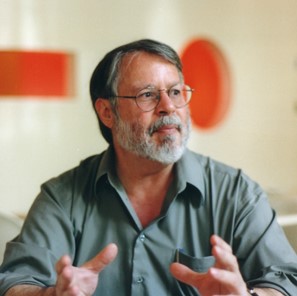
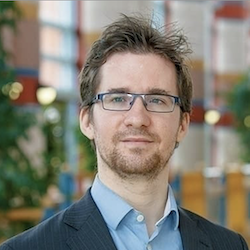
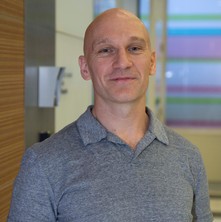
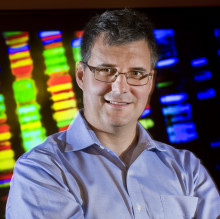
Mark Liberman is a Trustee Professor at the University of Pennsylvania , holding appointments in the Department of Linguistics and Department of Computer and Information Science . He serves as Director of the Linguistic Data Consortium and Faculty Director of Ware College House . His career spans linguistics, speech technology, and computational methods. Education: Harvard University (1965-1969), MIT (M.S. 1972, Ph.D. 1975) Professional Experience: AT&T Bell Laboratories (1975-1990), University of Pennsylvania (1990-present) His research interests include: Corpus-based Phonetics : Analyzing speech patterns via large-scale datasets. Clinical Applications : Developing speech biomarkers for neurodegenerative diseases. Tonal Phonology : Studying lexical tone and intonation in languages like Yoruba and Mandarin. Formal Annotation Models : Creating frameworks for linguistic data standardization. Recent publications highlight automated speech analysis, cross-linguistic prosody, and digital biomarkers for conditions like ALS-FTD and Alzheimer’s. His collaborations span computational linguistics , neurology , and cognitive science . Scientific awards include the IEEE James L. Flanagan Award (2017), Antonio Zampolli Prize (2010), and fellowships from the AAAS and Linguistic Society of America . He advises PhD students May Chan and Jonathan Him Nok Lee and contributes to editorial boards for journals like Cognition and Annual Review of Linguistics . His work bridges speech science , language technology , and neurocognitive research .
Arti Singh is an Assistant Professor in the Department of Agronomy at Iowa State University. Her research focuses on plant breeding, soybean diseases, genomics, and phenomics, with a strong emphasis on integrating artificial intelligence and high-throughput technologies into agricultural systems. She leads projects involving AI-driven disease identification, precision agriculture, and crop improvement strategies. Her expertise includes developing machine learning models for real-time weed and insect classification (e.g., WeedNet and InsectNet), deploying drones and ground robots for crop phenotyping, and leveraging genomic data to map traits like flowering time and disease resistance in legumes. Singh collaborates on initiatives like the AIIRA Institute for Resilient Agriculture and the BioTrove biodiversity dataset. Singh’s work spans plant stress phenotyping, digital twin technologies for plant sciences, and multi-sensor phenotyping for early disease detection. Her research bridges computational methods with traditional agronomy, aiming to enhance crop resilience and sustainability in the face of environmental challenges. Her recent projects include optimizing robotic navigation for precision agriculture, improving soybean yield estimation via video analysis, and dissecting genetic architectures of traits in mungbean and soybean using GWAS and genomic tools. She actively contributes to conferences and publishes in high-impact journals, advancing both foundational and applied aspects of agricultural science.
David Stillwell serves as Professor of Computational Social Science at Cambridge Judge Business School and Academic Director of The Psychometrics Centre, University of Cambridge. His research leverages big data to understand human psychology and behavior, with significant contributions in personality prediction from digital footprints and personalized advertising applications. His educational background includes: BSc in Psychology from the University of Nottingham (2007) MSc in Research Methods from the University of Nottingham (2008) PhD in Decision Making from the University of Nottingham (2012) Dr. Stillwell's research centers on computational social science and psychometrics, pioneering the myPersonality Facebook application that collected data from over 6 million users. His work demonstrates computers can predict personality as accurately as spouses, reveals psychological targeting's advertising effectiveness, and establishes links between personality-matched spending and life satisfaction. He also explores linguistic honesty markers through profanity analysis and personality-based dating patterns. His recent publications (2019-2025) reveal a strong trajectory toward AI evaluation using psychometric frameworks, particularly in medical and general-purpose AI assessment. Key themes include fairness metrics in language models, crisis emotional responses through social media, and computational personality recognition - demonstrating consistent innovation at the psychology-technology intersection. He has received significant recognition: Top 10 most influential papers of 2013 by Altmetric Nieman Journalism Lab highlight of 2013 Named in 'top 30 thinkers under 30' by Pacific Standard Magazine Dr. Stillwell maintains active industry engagement through consultancy with Barclays, Hilton, and Ubisoft on projects spanning computer-adaptive testing systems to interactive experiences like Predictive World for Watch Dogs 2. His policy impact is substantial, with citations by the European Data Protection Supervisor, World Bank, and multiple national governments, leading to speaking engagements at the European Parliament and Bank of England. As Academic Director of The Psychometrics Centre, he leads a global hub for advancing psychological assessment through innovative methods including Concerto open-source software, collaborating with organizations ranging from the European Commission to major corporations on psychometric applications in people analytics and digital behavior.
Associate Professor Adam Irwin is an NHMRC Emerging Leadership Fellow and Associate Professor in Infectious Diseases at the University of Queensland (UQ) and Queensland Children’s Hospital. He holds positions within the UQ Centre for Clinical Research, Faculty of Health, Medicine and Behavioural Sciences. His work focuses on early sepsis recognition, antimicrobial stewardship, and pediatric infectious diseases. Dr. Irwin completed his medical degree at the University of Birmingham and his PhD in 2016 from the University of Liverpool’s Institute of Infection and Global Health. He has led initiatives like the Queensland Paediatric Sepsis Program, recognized with a Global Sepsis Alliance Award and Queensland Health Excellence Awards. His research spans sepsis pathway implementation, antimicrobial resistance trends, and rapid diagnostic tools. Notable grants include NHMRC funding for studies on multi-drug resistant infections and Children’s Hospital Foundation support for genomics and antimicrobial stewardship projects. He supervises PhD candidates in areas like bloodstream infections and molecular diagnostics. Dr. Irwin collaborates across institutions, contributing to projects such as the RAPIDS Study Group and the PAEDS surveillance network. Awards include the NHMRC Emerging Leadership Fellowship and recognition for sepsis program excellence. His work emphasizes translating research into clinical practice, improving outcomes for critically ill children through evidence-based protocols and innovative diagnostics.
Roles & Affiliations: Ikhlas Khan serves as Director of the National Center for Natural Products Research (NCNPR), Distinguished Professor, and Research Professor of Pharmacognosy at the University of Mississippi's School of Pharmacy. He also leads the FDA Program and coordinates natural products research across multiple initiatives, including the Sino-US TCM Research Center and the Center for Research of Indian Systems of Medicine (CRISM). Education: B.Sc. Chemistry (1980) - Aligarh Muslim University, India M.Sc. Organic Chemistry (1982) - Aligarh Muslim University, India Ph.D. Pharmacy (1987) - Ludwig-Maximilians-Universität, Munich Postdoctoral Studies - Swiss Federal Institute of Technology (ETH), Zurich Research Focus: Dr. Khan specializes in natural products research with emphasis on: Phytomedicine: Standardization of herbal products via analytical fingerprinting, pesticide/herbicide residue analysis, and bioanalytical quality control. Drug Discovery: Isolation of bioactive natural products, development of analytical methods for phytochemical characterization, and chiral separation techniques. Metabolism Studies: Role of metabolism in drug/natural product activity, particularly in aminoquinoline antimalarials. His work bridges academia, industry, and regulatory bodies, shaping policies for botanical supplements. Key Contributions: Over 850 peer-reviewed publications and leadership in high-impact projects like the FDA Center of Excellence. His lab pioneered methods to combat herbal product adulteration and safety issues. Awards & Recognition: UM Distinguished Professor Award (2018) Wiley Award (AOAC International, 2018) Qihuang International Prize (2017) Honoris Causa Doctorate (University of Hamdard, 2012) Labs & Collaborations: Directs the NCNPR, a global leader in natural products research, and collaborates with institutions worldwide. His team develops technologies for herbal product authentication and drug metabolism studies.
Mikael Thollesson is a Senior Lecturer at Uppsala University, affiliated with the Department of Organismal Biology; Systematic Biology and Klubban’s Biological Station. His research focuses on evolutionary biology, phylogenetics, taxonomy, and molecular biology, particularly in marine and freshwater sponges (Porifera), bacterial pathogens, and computational methods in evolutionary analysis. Evolutionary Biology Marine Biology Taxonomy His recent publications highlight trends in sponge biodiversity, phylogeography, bacterial horizontal gene transfer, and mitochondrial gene evolution. Key articles include studies on Swedish demosponge faunas, Silene sect. Arenosae systematics, and computational tools like SPRIT for detecting gene transfers. No explicit awards or grants are mentioned.
Dr. Mihai Pop is a Professor of Computer Science and Director of the University of Maryland Institute for Advanced Computer Studies (UMIACS). He holds appointments in the Department of Computer Science, UMIACS, and the Center for Bioinformatics and Computational Biology (CBCB). His research focuses on computational biology, metagenomics, and algorithm development for genomic data analysis. He received a Ph.D. in Computer Science from Johns Hopkins University (2000), followed by work at The Institute for Genomic Research (TIGR) developing genome assembly algorithms. Education: Ph.D., Computer Science, Johns Hopkins University, 2000. Research Interests: Bioinformatics, genomics, metagenomics, computational geometry, software testing. His lab develops tools for analyzing microbial communities and has pioneered methods for metagenomic assembly and analysis. Notable tools include the AMOS genome assembly toolkit. Recent Article Trends: Recent work emphasizes long-read sequencing, metagenomic profiling (e.g., TIPP3), and strain-level analysis (e.g., Strainy). He addresses challenges in scaling sequence-based searches and improving taxonomic resolution in large datasets. Awards: ACM Fellow (2019), ISCB Fellow (2022), UMD Excellence in Teaching Award (2015). Grants & Leadership: Co-leader of the Human Microbiome Project data analysis group. Active in diversity initiatives to promote inclusivity in computational fields. Labs/Teams: Pop Lab (pop-lab.org) focuses on computational methods for microbial genomics and metagenomics.
Elizabeth A. Simpson is an Associate Professor in the Department of Psychology at the University of Miami's College of Arts and Sciences. She serves as Associate Director of the Child Division and directs the Social Cognition Laboratory, focusing on infant social and cognitive development through interdisciplinary methodologies. Education: Ph.D. in Psychology (unspecified institution) Key Research Areas: Developmental Psychology, Autism, Social Cognition, Primate Studies, Visual Attention, Infant Behavior Her research investigates individual differences in infant visual attention, social motivation, and physiological markers like salivary oxytocin. Recent studies demonstrate: Stability of attentional patterns from newborn to 14 months Sex differences in early face detection Links between oxytocin levels and social affect in infants Neurophysiological markers in newborns later diagnosed with ASD Scientific awards include the NSF CAREER grant for neonatal imitation research. She contributes to open science initiatives through the ManyBabies consortium and develops remote eye-tracking methods for broader accessibility. Current lab work explores: Parent-infant affective interactions during still-face episodes Predictive power of early attentional biases Development of pathogen avoidance behaviors Cross-species comparisons of social cognition
Dr. Ahmet Acar is an Associate Professor at the Department of Biological Sciences, Middle East Technical University (METU), Ankara, Turkey. He leads the Cancer Precision Medicine and Drug Resistance Laboratory, focusing on understanding mechanisms of drug resistance in cancer. His research integrates experimental models, next-generation sequencing, and deep learning to address clinical challenges in cancer therapy. Dr. Acar holds a B.Sc. from METU's Biological Sciences department and a Ph.D. from the Cancer Research UK Manchester Institute. He completed postdoctoral training at the Institute of Cancer Research, London, and the University of Manchester. Research Interests: Drug resistance mechanisms, precision oncology, tumor microenvironment modeling, patient-derived organoids, computational pathology, and evolutionary cancer biology. His lab develops 2D/3D co-culture systems, PDO biobanks, and AI-driven histopathology tools to improve treatment strategies. Recent Work Trends: Recent publications emphasize tumor evolution modeling, matrix mechanics in drug resistance, and AI applications in histopathology. Collaborations with hospitals in Turkey and Europe support PDO biobank initiatives. His team explores evolutionary steering strategies to exploit collateral drug sensitivities. Labs/Teams: Precision Medicine and Drug Resistance Lab at METU focuses on interdisciplinary approaches combining wet-lab experiments with computational methods. Current projects include ex vivo tumor modeling and AI-driven diagnostic tools for oncology.
Professor Matthias Mann is a world-leading scientist serving as Director of the Proteomics and Signal Transduction department at the Max Planck Institute of Biochemistry in Martinsried, Germany, and Director of the Proteomics department at the Novo Nordisk Foundation Center for Protein Research, Faculty of Health Sciences, University of Copenhagen, Denmark. With an h-index exceeding 277 and over 350,000 citations, he is recognized as the highest cited German researcher and one of the most influential scientists globally in proteomics. His educational background includes: Ph.D. in Chemical Engineering from Yale University (1988) Master's Degree in Physics from Georg August University Göttingen (1984) Bachelor's of Arts in Mathematics from Georg August University Göttingen (1982) Professor Mann's research focuses on advancing mass spectrometry-based proteomics to understand biological systems at the protein level. His work spans technological developments in mass spectrometry, bioinformatics and computational analysis, signal transduction and posttranslational modifications, and clinical proteomics applications for disease diagnosis and treatment. The Mann lab has pioneered groundbreaking methods like SILAC for quantitative proteomics and MaxQuant for proteome data analysis. Their vision is to translate proteomics knowledge into clinical practice for predictive, diagnostic, and preventive medicine, with recent work focusing on AI-guided platforms for analyzing proteomes from minimal tissue samples. Analysis of Professor Mann's recent publications reveals a strong trend toward clinical applications of proteomics, particularly in cancer research, metabolic diseases, and neurodegenerative disorders. His work increasingly integrates spatial proteomics, single-cell resolution techniques, and artificial intelligence approaches to uncover disease mechanisms and identify potential biomarkers, with a clear shift from basic technology development toward direct clinical applications and personalized medicine. Professor Mann has received numerous prestigious awards throughout his career: 2025: Elected member of the American National Academy of Sciences 2024: Dr. H.P. Heineken Award for Biochemistry and Biophysics 2023: Otto Warburg Medal 2019: Nominated member of the Bavarian Academy of Sciences 2013: Elected member of Leopoldina German National Academy of Sciences 2012: Körber European Science Award, Louis-Jeantet Foundation Prize for Medicine, Ernst Schering Prize, and Leibniz Prize Professor Mann leads a highly collaborative research team involved in multiple international networks including the Bill & Melinda Gates Foundation, Michael J. Fox Foundation for Parkinson's Research, CLINSPECT-M, and Munich Heart Alliance. His lab has mentored numerous successful researchers, with several former postdocs receiving prestigious ERC Starting Grants. The Mann group has developed innovative clinical proteomics pipelines for analyzing archived tissue specimens and body fluids, aiming to identify protein markers for early detection of diseases such as diabetes and cancer. The Mann lab operates across two major research centers with state-of-the-art mass spectrometry facilities. Their Clinical Knowledge Graph platform integrates multi-omics data with extensive metadata, creating an ecosystem for machine learning applications in proteomics. Current research focuses on developing highly sensitive methods that can profile thousands of proteins from minimal cell samples, enabling the identification of critical disease-related proteins and supporting the development of individualized therapies.
Sushmita Roy is a Professor at the University of Wisconsin–Madison, affiliated with the Department of Computer Sciences and the College of Letters and Science. Her research focuses on developing computational methods in statistical machine learning to understand gene regulatory networks in living cells, particularly under environmental, developmental, disease, and evolutionary contexts. She explores bulk and single-cell genomic data integration to study processes like cell fate specification, host-microbe interactions, and diseases such as cancer and neurodevelopmental disorders. Her work emphasizes three key areas: inference of genome-scale transcriptional networks, evolutionary analysis of regulatory networks, and 3D genome organization dynamics. Roy’s lab collaborates across disciplines, leveraging genomic data from plant and mammalian systems. She has contributed to methodologies for analyzing chromatin accessibility, single-cell profiling, and network-based models of pathogen systems. Her affiliations include Wisconsin Institutes for Discovery, and she is a leader in computational biology and systems genomics research.
Professor Francis Butler is a Full Professor at University College Dublin's School of Biosystems and Food Engineering, where he has been since 1990. His academic roles include research leadership in food safety, food chain integrity, and microbial risk assessment. He leads the UCD Institute for Food and Health and the UCD Centre for Food Safety as a Principal Investigator. Education: BE, Grad Dip University Teaching & Learning, MBA, and PhD from University College Dublin. Research Focus: His work centers on food safety hazards, quantitative risk assessment, and next-generation sequencing for pathogen identification. Recent projects include Listeria monocytogenes growth modeling, norovirus in oysters, and hepatitis E in pork products. He has secured over €6 million in research grants, including EU-funded projects like FOODINTEGRITY and SIGMACHAIN. Awards & Recognition: European Food Safety Authority Fellowship, Marie Sklodowska-Curie Fellowship, and UCD Teaching Grant. He coordinates international educational programs, including the UCD MSC Food Safety and Risk Analysis. Professional Activities: Member of EFSA advisory committees, editorial boards (e.g., Microbial Risk Analysis ), and international conference chairs. His work bridges academia, industry, and policy to enhance food safety standards globally.
Professor John W. Edmunds is a leading academic in Infectious Disease Modelling at the London School of Hygiene and Tropical Medicine (LSHTM). Holding a Professor position since 2013 and serving as Dean of the Faculty of Epidemiology and Population Health (2013-2019), he combines mathematical, statistical, and economic models to inform public health policy. His part-time role at the Health Protection Agency (HPA) since 2008 underscores his policy advisory contributions. PhD in Infectious Disease Modelling (Imperial College, 1994) MSc in Health Economics (University of York, 1995) BSc in Biology (Imperial College, 1989) His research focuses on understanding disease transmission and optimizing control strategies. He has pioneered methods integrating social contact surveys , participatory surveillance (e.g., Influenzanet), and economic analysis to evaluate vaccines and interventions. Recent work includes SARS-CoV-2 dynamics , Ebola spatial forecasting , and typhoid vaccine prioritization . His 15 most recent publications highlight social contact patterns (Reconnect, CoMix studies), vaccine impact (HPV, typhoid), and real-time outbreak analytics (Ebola, cholera). Key trends include digital epidemiology , behavioral surveillance , and cross-country modeling for global health. Knighthood (2024) for services to epidemiology Weldon Memorial Prize (2022) for biostatistics contributions FMedSci (2018) for medical science excellence OBE (2016) for public service As an educator, he teaches "Modelling and the Dynamics of Infectious Diseases" and co-organizes "Pandemics: Emergence, Spread and Response" . Current grants include National Institute for Health and Care Research projects on post-pandemic surveillance and Bill & Melinda Gates Foundation funding for polio eradication. He leads collaborations with the Centre for Mathematical Modelling of Infectious Diseases , Vaccine Centre , and Health in Humanitarian Crises Centre , while advising UK and WHO committees on zoonotic influenza , variants , and testing programs .
Dr. Madjid Mohseni is a Professor in the Department of Chemical and Biological Engineering at the University of British Columbia's Faculty of Applied Science. He serves as the Scientific Director of the Community Circle on Scaling Business Innovation for Humanity with his office located in CHBE 221. Dr. Mohseni leads the Water Laboratory (http://waterlab.chbe.ubc.ca/), focusing on water quality and advanced treatment technologies for drinking water applications. Dr. Mohseni earned his Ph.D. (1998) and M.A.Sc. (1994) from the University of Toronto, and his B.Sc. from Amirkabir University of Technology in Iran. His educational background has prepared him for his current research in water treatment and environmental engineering. His research program centers on developing, evaluating, and implementing advanced oxidation processes (AOPs), particularly UV-based AOPs, ion exchange, and electrochemical processes. His laboratory conducts both laboratory-scale development and pilot-scale field evaluations at partner community sites. Current work emphasizes PFAS remediation through various approaches including advanced oxidation/reduction processes, ion exchange technologies, and electrochemical methods. He also investigates novel materials like MXenes for water purification and develops practical solutions for municipal and community water systems. Analysis of Dr. Mohseni's recent publications reveals a strong focus on emerging contaminants, particularly PFAS, with significant emphasis on UV-based treatments and vacuum UV technology. His research consistently bridges fundamental science with real-world applications, developing technologies specifically tailored for small community water systems while addressing critical water quality challenges. Dr. Mohseni maintains affiliations with the Clean Energy Research Centre and the Bioproducts Institute at UBC, demonstrating his commitment to interdisciplinary research that addresses environmental challenges through innovative engineering solutions. His work aims to advance the science behind water treatment technologies while offering communities more efficient and cost-effective solutions to protect human health and the environment.
Lauren Andrews serves as Associate Professor and Marvin and Eva Schlanger Faculty Fellow in the Department of Chemical Engineering at the University of Massachusetts Amherst. Her research integrates synthetic biology and genetic engineering to develop programmable cellular systems for biotechnological applications. Education: Postdoctoral Training: Massachusetts Institute of Technology (Biological Engineering and Broad Institute of MIT and Harvard) PhD: University of Colorado Boulder, Chemical Engineering (2012) MS: University of Colorado Boulder, Chemical Engineering (2009) BS: Cornell University, Chemical Engineering (2006) Dr. Andrews' research focuses on establishing genetic design rules for reprogramming cellular regulation and metabolism. Her lab pioneers synthetic gene networks, genetically-encoded biosensors, and high-throughput methodologies for optimizing genetic designs in both model and non-model bacteria. This work enables precise control of cellular sensing, memory, and environmental responses through multiplexed DNA assembly and next-generation sequencing. Analysis of her 15 most recent publications reveals dominant themes in bacterial biosensor development (particularly for bioremediation), quorum sensing engineering, and programmable genetic circuits for probiotic applications. Her research consistently bridges fundamental genetic circuit design with practical implementations in bacterial consortia and non-model organisms. Scientific Awards: Marvin and Eva Schlanger Faculty Fellowship NSF CAREER Award (2020) for "Programmable synthetic microbial consortia for complex multicellular functions" Her grant portfolio demonstrates significant funding for collaborative research in bacterial communication systems and model-guided design of synthetic ecosystems. The Andrews Lab maintains active partnerships with the MIT-Broad Foundry and Cold Spring Harbor Laboratory, where she co-founded the Synthetic Biology Summer Course. Current projects focus on CRISPR-based regulation in non-model bacteria and algorithmic programming of sequential logic in probiotic strains. The Andrews Lab operates within the Life Science Laboratories at UMass Amherst, utilizing advanced facilities for genetic prototyping and high-throughput screening. Her team develops multiplexed tools for exploring genetic design spaces, with particular emphasis on soil bacteria and Gram-positive pathogens for environmental and therapeutic applications.