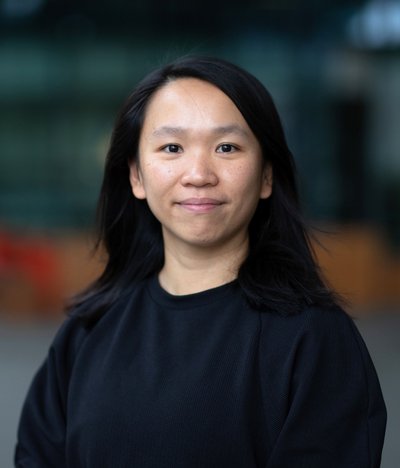
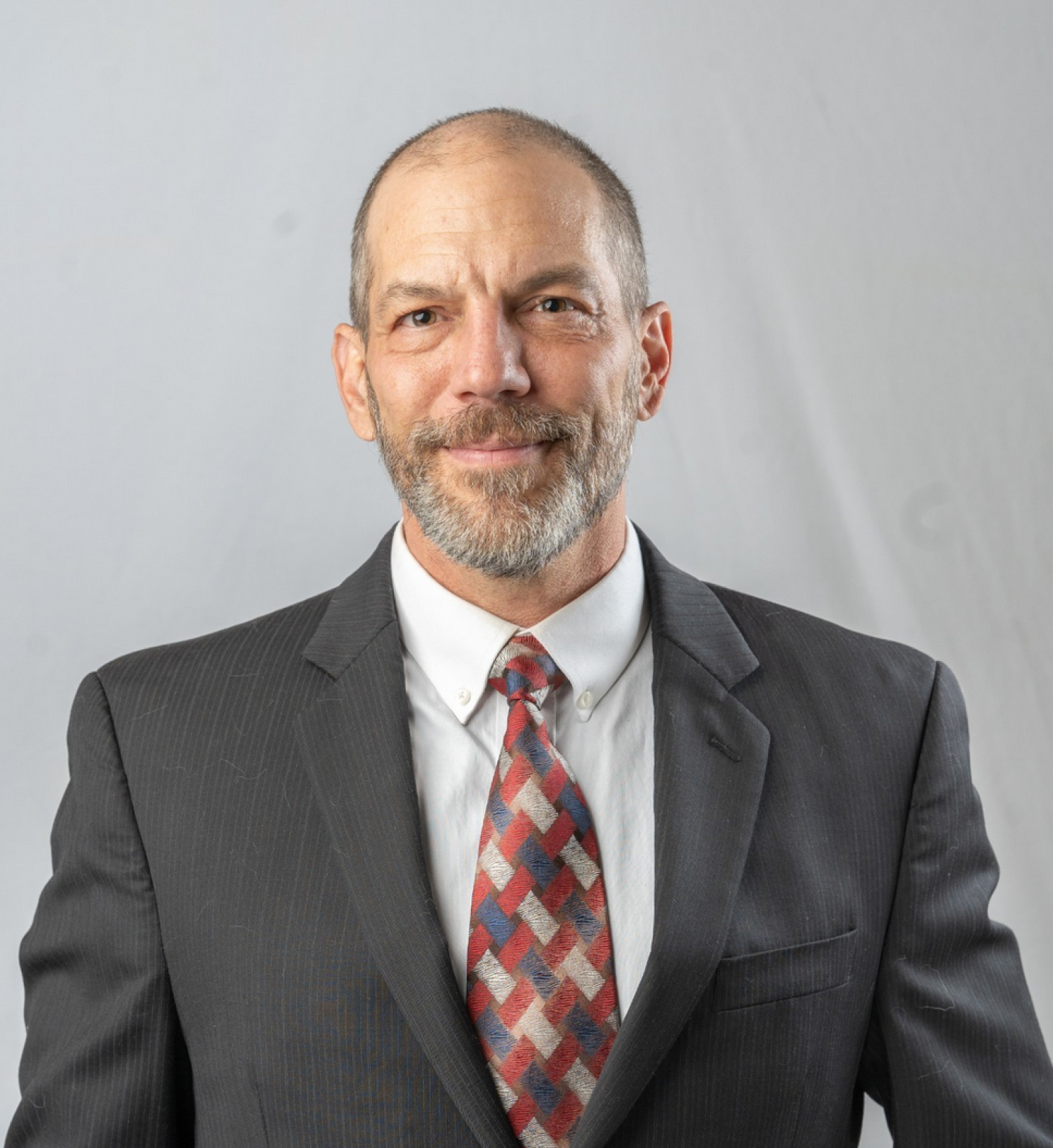
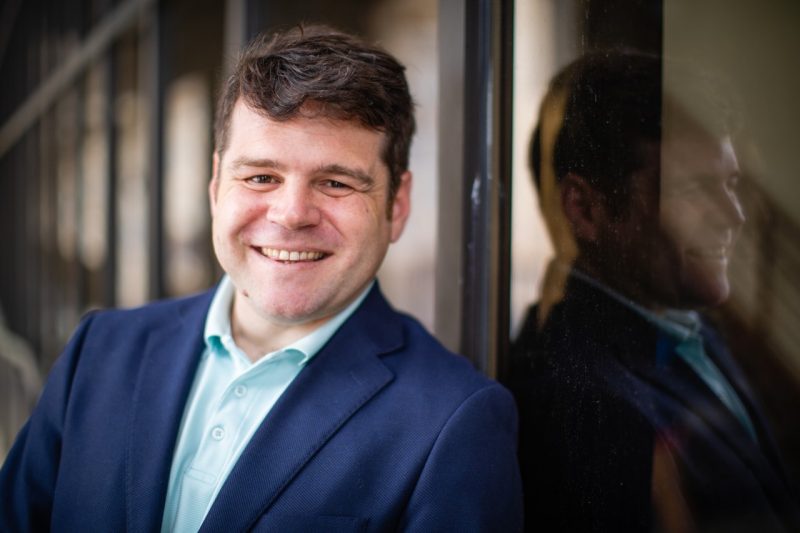
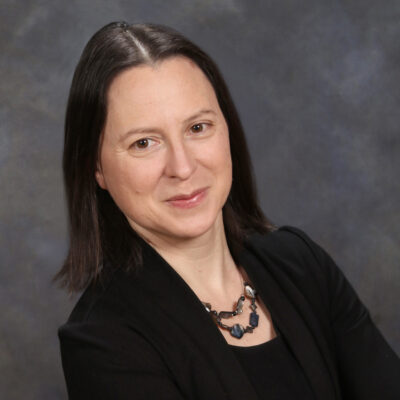
Haiyang Chao is an Associate Professor at the Department of Aerospace Engineering, College of Engineering, University of Kansas. His research focuses on Unmanned Aircraft Systems (UAS) with emphasis on control systems, wind estimation, remote sensing, and cooperative UAV operations. Recent work includes FireCrowdSensing for prescribed fire monitoring Wake vortex hazard estimation for airport UAS operations Thermal imaging for fire spread measurement Vertical wind velocity analysis in fire plumes System identification techniques for flying-wing UAVs Honors include the 2016 Summer Faculty Fellowship at Air Force Research Lab. He leads the Cooperative Unmanned Systems Lab (CUSL) and collaborates with NASA on gust sensing projects. Teaching interests include Avionics, Control Systems, and Autonomous Aerospace Vehicles.
Dr. Martin T. White is a Senior Lecturer in Mechanical Engineering at the University of Sussex (since September 2022), previously serving as a Lecturer in Thermal Power at City, University of London (2019–2022) and a Postdoctoral Research Associate at Imperial College London and City, University of London (2016–2019). His research focuses on advanced energy systems, including waste-heat recovery, organic Rankine cycles (ORC), supercritical CO₂ power cycles, and turbomachinery design. He holds a Royal Academy of Engineering Research Fellowship (2019–2024) for work on next-generation waste-heat recovery systems. Education: MEng (Mechanical Engineering), University of Southampton, 2011 PhD (Mechanical Engineering), City, University of London, 2015 Research Interests: Dr. White’s work emphasizes improving energy efficiency through innovative turbine designs, fluid selection for ORC systems, and the application of supercritical CO₂ in power generation. His projects often involve computational fluid dynamics (CFD) and experimental validation of thermal systems. Grants & Awards: Royal Academy of Engineering Research Fellowship (2019–2024) EPSRC Grant (EP/V001752/1): Industrial Waste Heat Recovery Using Supercritical Carbon Dioxide Cycles (2020–2023) EPSRC Grant (EP/P009131/1): Fundamental Studies on Organic Rankine Cycle Expanders (2017–2021) Recent Contributions: His recent work includes optimizing turbine performance for concentrated solar power plants, developing web-based tools for teaching thermodynamics (e.g., pocketTHERM), and advancing nozzle design for supercritical fluid expansions. His research frequently addresses both theoretical and applied aspects of energy conversion systems.
Michelle Chong is an Assistant Professor at the Department of Mechanical Engineering, Eindhoven University of Technology (TU/e). Her research focuses on mathematical control theory, systems theory, and their applications to cyber-physical systems , neuroscience , robotics , and power systems . Research : Theoretical foundations of control algorithms for hybrid/nonlinear systems Applications : Neural stimulation devices, autonomous systems, energy grids Specializations : Cybersecurity, safety, privacy in networked systems Her recent work involves nonlinear obstacle avoidance for multi-body robots, data-driven power systems analysis, and event-triggered communication protocols for multi-agent systems. She has developed novel methods for secure state estimation, set-based reachability analysis, and resilient control under adversarial conditions, particularly in energy systems and cyber-physical human interactions. She is currently on sabbatical at University of California San Diego (2023-2025) and collaborates with researchers at Lund University , ETH Zürich , and Technion . Her group contributes to TU/e's research clusters: EAISI High Tech Systems EAISI Health Dynamics and Control In educational activities, she teaches Signals and Systems and a new course on Fault Diagnostics and Security for Control Systems . She organizes workshops at major conferences including DISC Summer School , European Control Conference , and American Control Conference .
Eric Le Bourhis is a Lecturer at INALCO (Institut National des Langues et Civilisations Orientales) in the Europe department, where he also serves as Head of the Latvian course and Racism/Anti-Semitism advisor. His research focuses on urban history across Soviet Union, Latvia, and France, with particular emphasis on housing practices, Holocaust studies, and Baltic region history. Current affiliations: INALCO, Europe-Eurasia Research Center (CREE) Teaching areas: Baltic region history, Latvian grammar/culture, Holocaust history Research Interests include social history embedded in spatial analysis, with micro-historical approaches to housing spoliation in Paris (1940-1946), Soviet urban planning in Riga (1945-1990), and Holocaust-related urban dynamics. His work connects housing policies with broader societal transformations. Recent publications (2021-2025) analyze: Jewish housing spoliation in Paris; Soviet architectural practices in Latvia; Holocaust urban geography; and Cold War nuclear threat planning. These works implement archival research across multiple languages and comparative analysis frameworks. Scientific distinctions include: Académie d’Architecture first prize (2017) Société française d'histoire urbaine special thesis prize (2016) Administrative roles cover Latvian course leadership and Holocaust-related advisory functions. He co-organizes research seminars at EHESS on Baltic spaces and Soviet historiography, while maintaining cross-disciplinary collaborations through CREE research center.
Keivan Navaie is a Professor of Intelligent Networks at Lancaster University’s School of Computing and Communications. He serves as a member of the Independent Scientific Advisory Committee at the Alan Turing Institute, overseeing the £100 million BridgeAI programme, and previously as Principal AI Technology Advisor to the UK Information Commissioner’s Office (ICO). He is recognized with Fellowships from the Institution of Engineering and Technology (IET), Chartered Engineer status in the UK, Senior Fellowship of the Higher Education Academy (HEA), and the IEEE Young Investigator Award. Research Focus: Wireless communications, mathematics, artificial intelligence, 6G networks, blockchain technology, edge computing, cognitive radio networks, and non-orthogonal multiple access (NOMA). Supervision: Actively supervises PhD students in areas like wireless communications and mathematical modeling. Projects: Involved in distributed learning, blockchain integration, 6G research, and spectrum sharing systems. Awards: IEEE Young Investigator Award, Fellow of IET, Chartered Engineer, Senior Fellow of HEA.
Raoof Gholami is a Professor of Energy Resources at the University of Stavanger's Faculty of Science and Technology, Department of Energy Resources. His research focuses on subsurface energy storage, particularly hydrogen and CO₂ sequestration in geological formations. He has contributed extensively to understanding mechanisms like hydrogen leakage in salt caverns, CO₂-mineral interactions in chalk reservoirs, and bio-reactive transport modeling in storage sites. Key research interests include: (1) Hydrogen storage in porous media, (2) CO₂ sequestration risks and geomechanical stability, (3) Reactive transport modeling, and (4) Machine learning applications in reservoir characterization. His work bridges experimental studies (e.g., salt precipitation dynamics) with numerical modeling (e.g., caprock integrity analysis). Recent publications emphasize hydrogen storage challenges (2025), CO₂ storage in chalk (2023), and leakage risk assessment frameworks (2021). His research also explores novel materials like biodegradable surfactants for drilling fluids (2023) and advanced well path design techniques (2022). Collaborations span institutions globally, addressing topics like shale reservoirs, geothermal energy, and subsurface imaging.
Dr. Pablo Ballesteros-Pérez is a researcher in the field of construction engineering and management, with a focus on project scheduling, bidding processes, and human resource allocation. His work addresses critical challenges in construction procurement, weather impact modeling, and team formation using sociometric techniques. Although his current institutional affiliation is not explicitly stated in the provided text, his extensive publication record in top-tier journals indicates a strong academic presence. His research interests span a wide range of topics including construction bidding behavior, multi-attribute auctions, fast-tracking, weather-aware scheduling, and abnormal bid detection. He has developed practical tools such as the Weather-wise planning system and M-PERT for educational purposes. His methodological approaches often involve statistical modeling, operations research, and data-driven analysis of real-world construction projects. The recent articles highlight a consistent trend in analyzing bidding competitiveness, improving procurement efficiency, and integrating environmental factors like weather into scheduling. His work bridges theoretical models with practical applications in construction management, contributing significantly to both academic knowledge and industry practices. Scientific Awards: None explicitly mentioned in the provided text. Advising and Grants: No information available regarding students supervised or research grants obtained. However, his frequent collaborations suggest active participation in research networks and potential involvement in funded projects. Labs and Research Teams: No specific laboratories or research teams are mentioned in the provided text. However, his co-authorship with researchers from various institutions indicates collaborative research efforts in construction management and engineering.
Queena Lee is a Lecturer in Early Years Education at Swinburne University of Technology, within the School of Social Sciences, Media, Film and Education. She holds a PhD from Monash University and brings extensive experience from prior roles at Monash University and Australian Catholic University, where she worked with pre-service teachers in undergraduate and postgraduate programs. Education: Doctor of Philosophy (PhD), Monash University, Australia (2020–2024) Her research is rooted in early childhood education, with a focus on child agency, pedagogy, curriculum development, and cultural-historical theory. She explores how children’s voices and participation are fostered in dynamic social-cultural contexts, and investigates sustainability, citizenship, and play as integral components of early learning. She also examines the impact of curriculum policies and the application of cultural-historical methodology in educational research. Recent publications highlight her innovative work using virtual reality (VR) and simulation technologies to enhance pre-service teacher education. Her research trends show a strong emphasis on immersive learning, teacher preparation, and cross-cultural comparative studies in early childhood settings across Australia, Indonesia, and Vietnam. She also reflects on academic identity and resilience, particularly during the pandemic. Scientific Awards: Doctoral Thesis Award 2024, Early Childhood Australia Queena actively contributes to the academic community through advising, professional development, and leadership. She is a convenor of the Cultural-historical & Activity Theory Special Interest Group (SIG) in the Australian Association for Research in Education (AARE), and is a member of professional organizations including Early Childhood Australia (ECA), AARE, and EECERA. She has led funded and non-funded research projects, particularly in pedagogy for pre-service teacher learning and VR applications in education. Her collaborative network includes researchers across Australia and internationally. Labs and Research Teams: While no formal lab is mentioned, Queena is actively involved in research teams focused on cultural-historical activity theory, early childhood pedagogy, and technology-enhanced teacher education. She collaborates with scholars on VR-based simulations and comparative international studies in early childhood education.
Tracy L. Kijewski-Correa is the William J. Pulte Director of the Pulte Institute for Global Development and Academic Director of the Integration Lab (i-Lab) at the University of Notre Dame's Keough School of Global Affairs. She holds a joint appointment as Professor of Civil Engineering and Global Affairs in the Department of Civil and Environmental Engineering & Earth Sciences. Her research focuses on civil infrastructure challenges in both developed and developing contexts, with particular emphasis on natural hazard assessment and mitigation. A co-founder of Engineering2Empower (E2E), she has developed comprehensive strategies for sustainable housing in Haiti, integrating community-led innovation and market-based solutions. Her work spans multiple regions including Haiti, United States, Latin America, Middle East, South Asia, and South Pacific/Oceania. Kijewski-Correa's recent publications demonstrate a clear trend toward leveraging open data and computational approaches for high-fidelity regional loss estimations, particularly for hurricane risk assessment. Her work increasingly integrates computer vision, Bayesian data integration, and component-level fragility modeling to advance the precision of disaster impact predictions while maintaining computational tractability across large building portfolios. Kellogg Institute Faculty Fellow (since 2011) Her research has been supported by multiple grants including projects focused on climate adaptation in Bangladesh and Haiti, community-driven development in Haiti, post-disaster sheltering programs, and technology incubators for sustainable development. As director of the Pulte Institute and Academic Director of the i-Lab, she leads interdisciplinary teams working at the intersection of engineering, global development, and disaster resilience.
Dr Robert Edwards is a Reader in Mobile Communications and Director of the 5G Research Centre at Loughborough University. Formerly Director of Sheffield's Centre for Mobile Communications Research, he holds Senior Member status in IEEE and is a Chartered Engineer with the IET. His research focuses on biometric radio systems, mobile communications advancements, and the health implications of radio frequency radiation exposure. Education : BEng (Hons) in Electronic Engineering (Communications), University of Sheffield PhD in Communications & Radar Engineering from Sheffield University Research Interests : Developing biometric authentication through radio channel characteristics Antenna design for on-body and industrial applications IoT-based flood monitoring systems in developing regions RF safety assessment and mitigation strategies Key Activities : External Examiner for multiple institutions including American College of Thessaloniki and Arab Open University Member of Wireless World Research Forum's Communications Division Subject advisor for British University in Egypt (Communications Electronics) Labs/Teams : Leads the Loughborough 5G Research Centre and collaborates with the Antenna Team (as noted in his 2013 publications).
Mark Lofquist is an Assistant Research Professor at the University of Colorado's Engineering School, specializing in systems engineering, spectrum management, and RF hardware design. His work focuses on spectrally aware communication systems, dynamic spectrum access, and 4G/5G network technologies. He previously worked at Shared Spectrum Company on the DARPA XG program and has industry experience in mobile electronics, including roles as an instructor and shop manager. Education: Bachelor's and Master's in Electrical Engineering from Virginia Tech (1999, 5-year honors program) Ph.D. in Telecommunication Sciences from the University of Colorado Boulder Research Interests: RF link budget analysis Military and space-grade transceiver design Spectrum coexistence testing Software-defined radio (SDR) Wireless network optimization Advising & Grants: No formal advisees listed. Collaborates with industry partners like Shared Spectrum Company on projects funded by DARPA and other agencies. Active in spectrum policy analysis and regulatory decision frameworks. Labs/Teams: Engages in field testing via partnerships, including radar waveform captures at Fort Story and Point Loma, and spectrum occupancy studies in Maine.
David B. Knight is a Professor in the Department of Engineering Education at Virginia Tech's College of Engineering, where he concurrently serves as Chief of Strategy for the College and Special Assistant to the Provost. His leadership extends to co-Editor-in-Chief of the Journal of Engineering Education , positioning him at the forefront of scholarly discourse in the field. Education: Ph.D. in Higher Education, Pennsylvania State University, 2012 M.S. in Environmental Sciences, University of Virginia, 2009 B.S. in Environmental Sciences, University of Virginia, 2006 Dr. Knight's research operates at macro-scale systems level, leveraging large institutional and national datasets to investigate policy-organizational intersections in engineering education. His work strategically targets equity and inclusion , transfer student pathway optimization , graduate career preparation , and global engineering competency development . The Virginia Tech Data Enlightened Educational Practice (DEEP) Lab, which he founded, implements data-driven approaches to enhance educational efficiency and inclusiveness through rigorous systems analysis. Analysis of his recent publications reveals intensifying focus on systemic barriers in engineering education, particularly credit mobility challenges for transfer students, differential mentorship for academic/industry career paths, and global skill development through international experiences. His research increasingly employs mixed-methods analytics to translate large-scale data into actionable educational reforms. Scientific Awards: None explicitly referenced in source materials. As director of the DEEP Lab, Dr. Knight leads NSF-funded initiatives including IUSE grants for student-centered teaching, HBCU-UP partnerships for research entrepreneurship, and S-STEM projects supporting low-income engineering students. His ROPES Hub research briefs provide evidence-based strategies for transfer student success, while his editorial leadership shapes the Journal of Engineering Education's strategic direction. Though specific advisees aren't listed, his lab and grant projects inherently involve graduate student mentorship in engineering education research methodology.
Pieter-Tjerk de Boer is an Associate Professor at the University of Twente , affiliated with the Electrical Engineering, Mathematics and Computer Science (EEMCS) faculty. He holds dual roles in the Design and Analysis of Communication Systems (Computer Science) and the Digital Society Institute . His research focuses on rare-event simulation, communication systems, and mathematical performance analysis. He earned his PhD in 2000 from the University of Twente with a thesis on queueing models for telecommunication systems. Key research areas include stochastic performance analysis (e.g., importance sampling techniques for queueing networks), computer networking (DNS analysis, IPv6 security), and radio technology (MIMO receivers, harmonic rejection mixers). His work bridges theory and application, addressing challenges in reliability, security, and efficiency of digital systems. Notable contributions include advancements in statistical model checking, automated rare-event simulation for stochastic Petri nets, and open-source intelligence analysis using radio receivers. His findings are published in journals like Simulation , IEEE Transactions , and Performance Evaluation , with over 98 research outputs since 1996. Collaborations span academia and industry, including work on cybersecurity, network management, and hardware-software co-design. Media engagements include discussions on radio receiver usage patterns during the Ukraine war and IPv6-related network vulnerabilities.
Lizhi Shang is an Assistant Professor in the Department of Agricultural & Biological Engineering at Purdue University. His research focuses on Machine Systems Engineering, with an emphasis on hydraulic system innovation, AI-aided design of fluid power components, and advanced computational tribological analysis. He is affiliated with the Maha Fluid Power Research Center, a leading facility for fluid power research. His work integrates experimental and numerical methods to address challenges in hydraulic systems, such as thermal management, cavitation phenomena, and tribological interface performance. He collaborates with interdisciplinary teams to develop compact and efficient fluid power solutions for off-road machinery and aviation systems. Key research themes include axial piston machine optimization, electrohydraulic integration, and sustainable hydraulic technologies. Dr. Shang’s publications span topics like tribology test chamber design, thermal modeling of piston-cylinder interfaces, and cavitation scalability analysis. His research aims to enhance energy efficiency and reliability in fluid power systems across diverse applications.
Elisabeth Gilmore serves as an Associate Professor in the Department of Civil and Environmental Engineering at Carleton University with a formal appointment in the School of Public Policy and Administration. Her interdisciplinary research bridges engineering, social sciences, and public policy to address climate change and environmental challenges at local to global scales, particularly focusing on air pollution and societal responses to environmental transformations. Her core research integrates integrated assessment modeling with socio-political analysis to develop climate scenarios, examine human adaptation behaviors, and identify technological-societal transformation pathways. Key interests span climate governance mechanisms, conflict-climate interactions, migration dynamics, and equity-focused adaptation strategies, with emphasis on vulnerable populations and fragile contexts. Recent work critically examines tipping point discourse, rebel governance in climate-vulnerable regions, and place-based convergence research methodologies. Analysis of her 2024-2025 publications reveals dominant trends in climate policy innovation (particularly state-level fiscal tools), climate-security linkages in conflict-affected regions, and adaptation barriers for marginalized communities. Her work consistently integrates political development frameworks into climate scenarios while challenging deterministic narratives around climate tipping points, emphasizing actionable governance pathways over catastrophic projections.