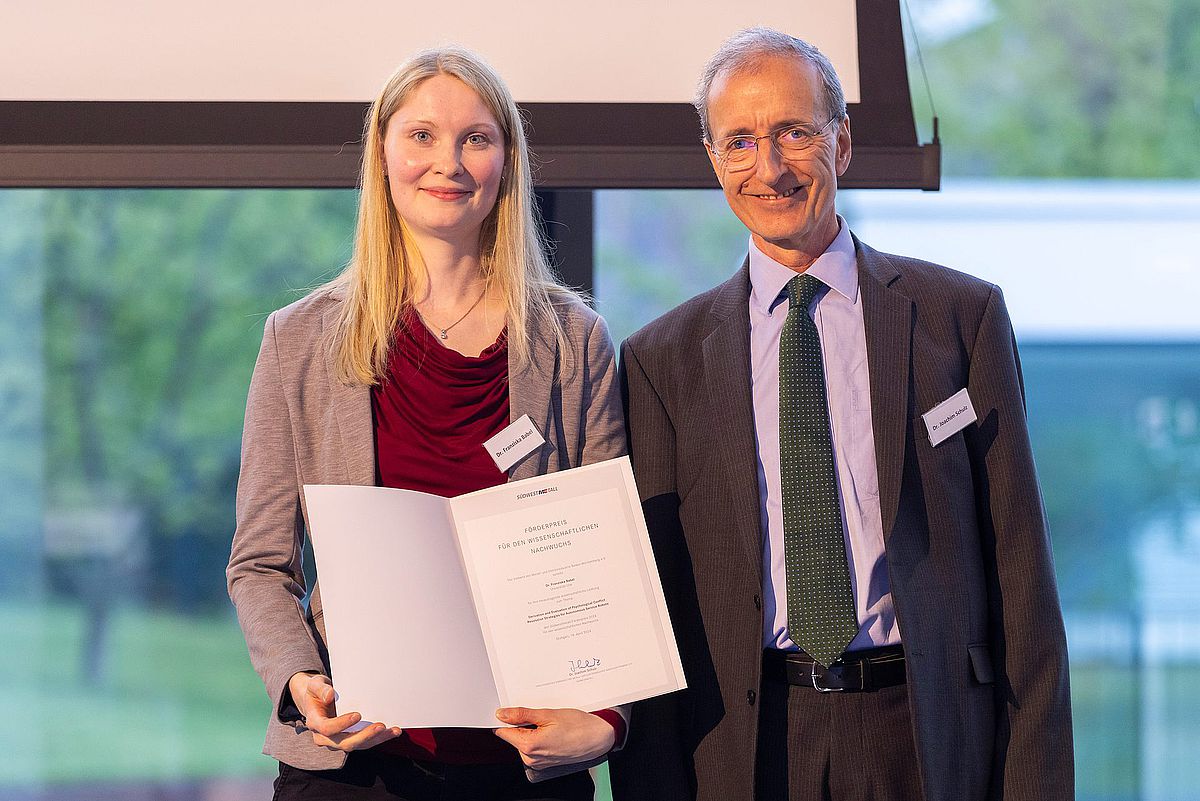
Dr. Franziska Babel is currently a Postdoc researcher at the Cognition and Interaction LAB (COIN) of Linköping University in Sweden. Previously, she completed her PhD at the University of Ulm, where her dissertation focused on developing conflict resolution strategies for autonomous service robots in public spaces. Her research examines how robots can efficiently and socially acceptably resolve goal conflicts with humans, such as path-planning dilemmas in shared environments. Key findings include the effectiveness of politeness and social influence mechanisms over humor or command-based approaches. She has been honored with the Südwestmetall Förderpreis for her impactful work bridging robotics research and industrial applications. Her academic journey reflects a focus on interdisciplinary robotics ethics, combining technical innovation with human-centered design principles.
Anna Kopec is an Assistant Professor in Public Policy and Inequality at Carleton University’s School of Public Policy and Administration (SPPA). Her research focuses on inequality, democratic participation, and poverty, with a specialization in homelessness policy and marginalized communities’ political engagement. She holds a PhD in Political Science from the University of Toronto and an MA in Political Science and International Development from the University of Guelph. Her current book project examines how policies shape political participation among homeless populations, drawing on interviews in Toronto and Melbourne. Key findings include how policy design characteristics interact to influence inclusion and participation pathways. She has conducted SSHRC-funded research on homelessness service accessibility, advocating for visible and equitable service provision. Notable awards include the SPPA Professor of the Year (2022-2023) and SSHRC Doctoral Fellowship (2019-2022). Her work bridges academic inquiry and policy impact, emphasizing lived expertise in policymaking. Teaching responsibilities include courses on policy analysis, governance, and qualitative methods at both undergraduate and graduate levels. Research Grants: SSHRC, Mitacs Current Projects: Expanding visibility studies to 3 Ontario cities; analyzing Canadian homelessness governance Labs/Teams: Collaborates with Homeless Hub, Policy Options, and CBC Radio on public engagement initiatives
Lazaros Kikas is an Associate Professor and Chair of the Department of Mathematics at the University of Detroit Mercy, part of the College of Engineering & Science. He holds a Ph.D. from Oakland University, with master’s degrees from the University of Maryland and University of Detroit, and a B.E.E. from the University of Detroit. His expertise spans Applied Discrete Mathematics, Graph Theory, and their applications to computer science and engineering. Education: Ph.D., Oakland University M.A., University of Maryland M.A., University of Detroit B.E.E., University of Detroit Research Interests: Focuses on Applied Graph Theory, including finding disjoint paths in graphs and graph pansophy. His work bridges mathematical theory with practical problems in computer science and engineering. Professional Experience: Joined University of Detroit Mercy in 2003; began teaching there as a graduate student in 1991. Currently chairs the Mathematics Department. Awards: No specific awards listed in the provided text. Grants & Advising: No explicit details on grants or student advising provided. Likely involved in teaching and departmental leadership roles. Labs/Teams: No specific labs or research teams mentioned.
Edward Lam is a Research Fellow in the Department of Data Science and Artificial Intelligence at Monash University. His research focuses on the intersection of combinatorial optimization and neuro-symbolic AI, developing algorithms for routing, scheduling, control, and analytics, primarily applied to automated decision-making in transportation and logistics. He holds a PhD in Computer Science (2019) and a BSc(Hons) in Mathematics and Statistics (2010), both from the University of Melbourne. Lam is affiliated with CSIRO Data61 and actively supervises PhD students in optimization and machine learning. **Education**: PhD in Computer Science, University of Melbourne (2019) BSc(Hons) in Mathematics and Statistics, University of Melbourne (2010) **Research Interests**: Combinatorial optimization, neuro-symbolic AI, multi-agent systems, and applications in autonomous logistics. His work addresses challenges in routing, scheduling, and decision-making under constraints. **Article Trends**: Recent publications emphasize branch-and-cut-and-price algorithms for multi-agent pathfinding, electric vehicle routing, and hybrid optimization methods. His work bridges theoretical algorithm design with real-world applications in transportation and warehousing. **Awards**: Received the Doctoral Research Award (2019) for outstanding contributions to optimization algorithms. **Advising & Grants**: Currently accepting PhD students focused on combinatorial optimization and machine learning, with available scholarships. Collaborates on projects funded by industry and governmental entities like CSIRO. **Affiliations**: Maintains an external position at CSIRO Data61 and has contributed to patents in optimization algorithms (2018).
Pierre Le Bodic is a Senior Lecturer in the Department of Data Science & AI at Monash University's Faculty of IT. His research focuses on Discrete Optimization, Combinatorial Optimization, and Approximation Complexity, with applications in Multi-Agent Path Finding, Energy Systems, and Constraint Reasoning. He holds a PhD in Computer Science from Université Paris-Sud (2012) and has held postdoctoral positions at Georgia Institute of Technology. His work contributes to UN Sustainable Development Goals related to clean energy and sustainable development. Le Bodic has led or co-led multiple research projects, including the 'AI for Clean Energy and Sustainability' initiative (2023–2027) and 'Improved Constraint Reasoning for Robust Multi-agent Path Planning' (2020–2024). He has published over 40 peer-reviewed articles, emphasizing algorithm design, optimization frameworks, and applications in robotics and sustainability. His recent publications explore abstract branching models, multi-agent path planning, and interpretable machine learning techniques. He actively collaborates internationally, with projects spanning Australia, the US, and Europe.
Dr. Robert Scholz is a senior researcher and Head of the 'Data Analysis and Research' unit at the Institute for Codetermination and Corporate Governance (I.M.U.) of the Hans Böckler Foundation since April 2025. He holds a doctoral degree in Economic Sciences (Dr. rer. pol.) from the University of Cologne and has extensive experience in research roles at institutions like the WZB. His work focuses on corporate governance, industrial relations, and spatial economic dynamics. Scholz has contributed to groundbreaking studies on the impacts of employee codetermination, corporate sustainability, and global production networks. His research bridges theoretical frameworks with practical policy implications, particularly in fostering democratic and sustainable business practices. Education: PhD in Economic and Social Geography (2016), University of Cologne Geography Diploma (2009), Martin Luther University Halle-Wittenberg Pre-degree in Business Administration (2006), Martin Luther University Halle-Wittenberg His research interests span corporate governance structures, the socio-ecological transformation of businesses, and the spatial dimensions of economic activity. Scholz has developed influential indices like the MB-ix to measure codetermination's impact on corporate behavior. His work often addresses how employee participation enhances productivity, sustainability, and fair labor practices. In recent publications, he explores the interplay between codetermination and long-term investments, corporate network dynamics, and the future of vocational education. Scholz’s findings are regularly disseminated in peer-reviewed journals and policy reports, emphasizing actionable insights for policymakers and industry leaders. He has held key roles in collaborative projects at the WZB, including the Globalization, Work, and Production Research Group. His work frequently intersects with debates on regional economic disparities and the future of work, advocating for systemic changes to align corporate strategies with societal and ecological goals.
Nahim Zahur is an Assistant Professor of Economics at Queen’s University (since 2020), holding a PhD from Cornell University (2020). He is affiliated with the John Deutsch Institute for the Study of Economic Policy. His research focuses on Empirical Industrial Organization and Environmental and Energy Economics, with particular emphasis on capital markets, policy impacts on innovation, and energy sector dynamics. Education: B.Soc.Sc. in Economics, National University of Singapore (2011) M.A. in Economics, Cornell University (2017) Ph.D. in Economics, Cornell University (2020) Research Interests: His work bridges industrial organization theory with applied analysis in energy and environmental markets. Key themes include: Market power and spatial pricing in LNG and shipping sectors Policy evaluation for emerging technologies (e.g., EV batteries) Industrial policy effects on innovation and competitiveness Article Trends: Recent work emphasizes long-term contracts' efficiency trade-offs, EV subsidy impacts, and container shipping market dynamics. Key findings include quantification of market power effects in LNG (USD $12B deadweight loss) and policy implications for EV battery cost reduction through learning-by-doing. Awards: Louis Walinsky Outstanding Teaching Award (2016) Peer-reviewed in top journals including Review of Economic Studies and Journal of Political Economy Teaching/Grants: Taught graduate/undergraduate courses in environmental and industrial economics. Research supported by structural modeling approaches applied to global energy markets. Labs/Teams: Collaborates within Queen’s Economics Department and the John Deutsch Institute for policy-oriented research.
Kenneth Kin Lok Leow is an Assistant Professor at the School of Social Sciences, Heriot-Watt University. He is actively accepting PhD students and engages with media for research dissemination. His work primarily focuses on psychological well-being, resilience, emotional intelligence, and organizational behavior, with a strong emphasis on educational and workplace contexts. He has published extensively on topics such as student well-being, stress management, and social support mechanisms. Leow’s research spans both qualitative and quantitative methodologies, addressing issues like the impact of conditional regard on academic performance and the role of spirituality in psychological distress. He has collaborated internationally, contributing to policy-relevant insights in education, healthcare, and workplace environments. His media contributions highlight practical applications of his findings, such as career guidance strategies and improving elderly care practices. His academic trajectory is marked by a commitment to applied research, with studies addressing contemporary challenges like technostress during the pandemic and organizational change resistance. While no specific awards are listed, his prolific publication record reflects a dedication to advancing understanding of well-being across diverse populations.
Professor Felipe Gonzalez is a Professor at the School of Electrical Engineering and Robotics (EER) within the Engineering Faculty at Queensland University of Technology (QUT). He leads the Airborne Sensing Lab and is a Chief Investigator (CI) in the QUT Centre for Robotics (QCR). His research focuses on aerial robotics, UAV automation, and remote sensing, with applications in environmental monitoring, biosecurity, and wildlife conservation. He holds a PhD in Aeronautical Engineering from the University of Sydney. Dr. Gonzalez has secured over $47.1M in grants, including ARC DP, ARC Linkages, CRC projects, and industry partnerships. His work emphasizes translating scientific outcomes into practical solutions for autonomy, sensor design, and UAV-based data analysis. Notable achievements include the Green Falcon solar-powered UAV, which won the iENA 2011 Gold Medal and EDN Innovation Award. His research spans UAV navigation in GPS-denied environments, precision agriculture, and AI-driven environmental monitoring. He has authored/co-authored nearly 130 refereed papers and several books on UAV design and optimization. Professional affiliations include Engineers Australia, AIAA, and the Royal Aeronautical Society. Awards include the Engineers Australia Excellence Award (2010), Vice-Chancellor’s Award (2011), and Chartered Professional Engineer (CPENG) certification. His teaching spans systems engineering, aerospace design, and UAV technologies, with consistently high student evaluations. Current projects include Antarctic vegetation monitoring, multi-UAV path planning, and AI-driven pest surveillance. The Airborne Sensing Lab collaborates with industry and international partners to advance UAV applications in environmental and industrial domains.
Marc Huber is a PreDoc Researcher (academic rank: Researcher) at the Institute of Logic and Computation within the Faculty of Informatics at TU Wien. Currently on leave, he conducts research at the intersection of combinatorial optimization and machine learning, focusing on algorithmic innovations for complex scheduling and sequence problems. His core research interests include: Combinatorial Optimization Machine Learning for Optimization Beam Search and Metaheuristics Staff and Flow Shop Scheduling Sequence Problems (Longest/Shortest Common Subsequence) Algorithm-ML Integration Huber's publication trajectory (2021-2024) reveals a consistent methodological evolution: progressively integrating reinforcement learning and value function approximation into beam search frameworks. This approach has yielded significant advances in staff rostering, multi-agent path finding, and sequence alignment, demonstrating how learned heuristics outperform traditional optimization techniques in solution quality and computational efficiency. Scientific Awards: No awards, fellowships, or medals were documented in available sources. As a thesis supervisor, Huber has guided four master's students at TU Wien through research on graph neural networks for clique problems, reinforcement learning for flow shop scheduling, e-mobility fleet scheduling, and staff resortering algorithms. His advising emphasizes practical implementation of learning-based optimization techniques. He operates within the Algorithms and Complexity research group (E192-01), collaborating closely with Prof. Raidl on algorithm engineering projects funded through TU Wien's research infrastructure. Current work focuses on extending learning beam search to multi-objective combinatorial problems.
Dr. Cait Newport is a Researcher in the Department of Zoology at the University of Oxford, focusing on the visual ecology and cognitive behavior of fish. Her work explores how fish perceive and interact with their environments, particularly in navigating and recognizing objects under varying conditions. She is a Schmidt AI in Science Fellow, emphasizing computational approaches in her research. Her research investigates challenges fish face in object recognition during motion and navigation, including adaptations to vertical movement and environmental factors like turbidity. She has developed tools such as the Detect+ Track software for analyzing fish behavior. Her studies span coral reef fish, archerfish, and goldfish, addressing topics like decision-making under uncertainty, abstract concept learning, and the impact of visual pollution. Dr. Newport's work bridges zoology, computational biology, and cognitive science, contributing to understanding animal cognition and sensory adaptations. Her findings have implications for both basic science and applied contexts, such as conservation and technology.
Brian Van Koten is an Assistant Professor in the Department of Mathematics and Statistics at the University of Massachusetts Amherst. His research focuses on applied probability and numerical analysis, with applications to molecular systems simulation, variance reduction in statistical physics, and numerical methods for saddle point identification. He teaches courses such as Math 652 (Numerical Analysis II), emphasizing computational methods for partial differential equations and optimization in machine learning. Key research interests include computer simulations of biological and materials systems, rare event sampling techniques, and atomistic/continuum coupling methods. He has presented work at institutions like the Institute for Computational and Experimental Research in Mathematics (ICERM) and the Institute for Pure and Applied Mathematics (IPAM), focusing on topics like stratification for Markov chain Monte Carlo and the string method for minimum energy paths. Van Koten's work bridges theoretical numerical analysis with practical computational challenges, addressing issues in multiscale modeling and error analysis. His teaching philosophy integrates advanced numerical methods with real-world applications, supported by detailed course materials on topics like finite difference methods and optimization algorithms for large-scale data science problems.
Mark Groenhuijzen is a Researcher at Vrije Universiteit Amsterdam's Faculty of Social Sciences and Humanities, specializing in Art and Culture, History, and Antiquity. His work focuses on computational approaches to Roman frontier archaeology, particularly transport systems along the Lower Rhine Limes. His research interests center on transport systems , historical network analysis , and paleogeographic reconstruction of Roman frontier zones. Groenhuijzen employs spatial analysis and computational modeling to investigate mobility patterns, settlement development, and economic dynamics in the Roman Empire's frontier regions, with particular emphasis on the Dutch limes zone. Analysis of his publication trends reveals strong focus on integrating computational social science with archaeological research. His work demonstrates increasing sophistication in network analysis methods applied to Roman transport infrastructure, moving from basic spatial modeling toward multiplex network approaches that capture complex economic and social interactions at imperial frontiers. Groenhuijzen is actively involved in significant research projects including Simulating globalisation in the Roman Empire (2025-2029) where he serves as Project Researcher, and the previously completed Finding the limits of the limes project (2012-2017). His project work emphasizes multidisciplinary approaches combining archaeology, geography, and computational methods to model socio-economic dynamics in Roman frontier regions. His academic activities include numerous conference presentations and lectures on reconstructing mobility landscapes, Roman road networks, and transport system analysis in the Dutch limes zone, demonstrating active engagement with the international archaeological research community.
Dr. Andrew Hyland is a Professor of Oncology and Chair of the Department of Health Behavior at Roswell Park Comprehensive Cancer Center. He holds the Robert, Ann and Lew Wallace Endowed Chair in Health Behavior. His expertise centers on tobacco control research, with over 25 years of experience in clinical and population-based studies. He has authored over 300 papers and advised national/international agencies like FDA and NIH. Dr. Hyland leads the Population Assessment of Tobacco and Health (PATH) study, a 14-year longitudinal study tracking 46,000 participants, and directs the New York State Smokers' Quitline. He also co-leads the International Tobacco Control Study across 29 countries. Education: PhD (Epidemiology), MA (Statistics), and BA (Mathematics) from the State University of New York at Buffalo. Research focuses on policy-informing tobacco regulations, smoke-free policies, and product design impacts. Key areas include cessation strategies, mass media campaigns, and tobacco surveillance. Recent articles analyze vaping trends, nicotine exposure, and policy effects. His work bridges epidemiology, biostatistics, and public health to reduce tobacco-related disease burdens.
Ebenezer Afrifa-Yamoah is a researcher at Edith Cowan University's School of Science with a diverse research portfolio spanning environmental science, public health, statistics, and education. His work demonstrates a strong focus on Ghanaian contexts while addressing global challenges in resource management, health, and education. Dr. Afrifa-Yamoah's research interests include: Network analysis and graph modeling of complex systems Local content development in resource extraction sectors Missing data imputation techniques for environmental monitoring Diabetes research and management in Ghanaian populations Entrepreneurship education and student outcomes Climate change impacts and CO2 emissions analysis His methodological expertise spans path analysis, mediation modeling, Bayesian statistics, and network analysis to address complex problems across multiple sectors. Recent publications (2024-2025) show increasing focus on sustainable resource management in African contexts and application of data science to agricultural, public health, and environmental challenges. His work on Ghana's oil and gas sector revealed the centrality of institutional characteristics in driving local content development, while finding economic growth was the least integrated domain in the ecosystem. His scientific contributions include: Methodological advances in missing data imputation for environmental monitoring Analysis of diabetes management biomarkers in Ghanaian populations Studies on occupational health and safety in Ghanaian mining Research on postharvest technology for agricultural products like jackfruit and persimmon Investigations of educational assessment design during the pandemic Dr. Afrifa-Yamoah maintains active collaborations between Australian and Ghanaian institutions, with his interdisciplinary work demonstrating strong methodological rigor across diverse application areas.