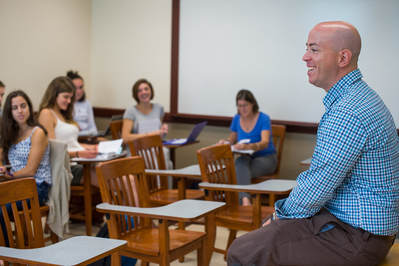
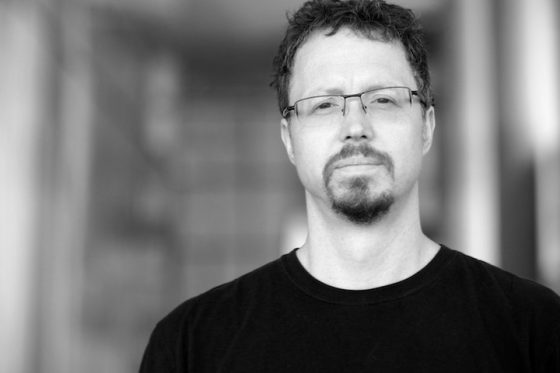
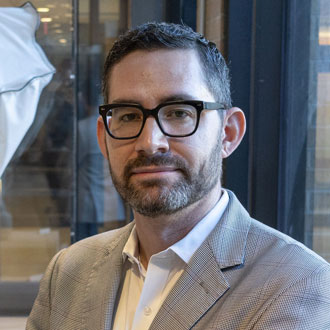
Graham St John is a cultural anthropologist and Research Fellow in Music and Music Technology at the University of Huddersfield's School of Arts and Humanities. His work focuses on transformational events like Burning Man, psytrance culture, and the intersection of psychedelics with electronic music. As founding Executive Editor of Dancecult , he shapes discourse on EDM culture while pursuing biographical research on figures like Terence McKenna. Marie Curie Senior Research Fellow Specializes in liminal spaces and technocultural countercultures Active in festival studies and psychedelic historiography Research Trends : Recent publications examine Terence McKenna's influence on rave culture, Dadaist elements in Burning Man, and global psytrance networks. His work merges ethnography with cultural theory, emphasizing altered consciousness, tribalism, and performative spirituality. Scientific Contributions : Books : 10 titles including Strange Attractor (MIT Press, 2024) Awards : Marie Curie Fellowship, h-index metrics Media : Featured in Burning Man Live podcast discussing playa pataphysics
Philippe Cathé is a Professor at Sorbonne University, specializing in 20th-century French music (1870-1950), harmonic analysis via Nicolas Meeùs' theory of harmonic vectors, and the interplay of sound and image in cinema. He teaches seminars on harmonic vectors and courses on tonality, analytical methods, and music-cinema relationships at both Sorbonne and New York University. His research integrates theoretical innovation with extensive repertoire analysis, spanning from Renaissance to pop music. His publications focus on Charles Koechlin and Claude Terrasse, with notable works including co-edited volumes like Charles Koechlin, Composer and Humanist (Vrin, 2010) and monographs such as 500 Years of Harmonic Music (HDR thesis, 2012). He co-developed the Charles software for harmonic vector analysis. Scientific Awards: Manuscript Prize of the General Council of the Rhône (2003) Conference Organization: Co-organized multiple Petites Biennales de Musique Française and international symposia on musicology, including topics like harmonic vectors and film music. Radio Work: Regular contributor to France-Musique programs on French operetta and composers like Terrasse and Koechlin.
Carla Nappi is the Andrew W. Mellon Chair in the Department of History at the University of Pittsburgh, affiliated with the Kenneth P. Dietrich School of Arts and Sciences. She specializes in the early modern histories of science, health, and translation with a focus on China and Central Eurasia. Her work bridges historical scholarship and creative writing, producing innovative texts like Uninvited: Talking Back to Plato (2020) and Illegible Cities (2021). She holds a Ph.D. from Princeton University (2006) and has held prestigious roles including Canada Research Chair in Historical Pataphysics and fellowships at the National Humanities Center and Max Planck Institute for the History of Science. Her research emphasizes experimental approaches to historiography, blending fiction, poetry, and nonfiction to explore themes like translation's role in shaping knowledge systems. She actively advises graduate students in early modern Chinese studies, historical methodology, and interdisciplinary humanities projects. Nappi has received numerous awards, including the Zhu Kezhen Junior Award and NSF CAREER Grant, and contributes to academic discourse through podcasting (e.g., New Books in East Asian Studies ) and collaborative workshops like the Translating Vitalities Lab series.
Clelia Scala is an Adjunct Lecturer in the Department of Drama at Queen's University's Dan School of Drama and Music. She specializes in mask and puppet design, costume design, shadow puppetry, installations, collage, and illustration. Her interdisciplinary work explores themes of the fantastic, uncanny, and human interaction with nature. Scala has collaborated with institutions such as Carousel Players, Odyssey Theatre, Yale University, and the Center for Puppetry Arts, Atlanta. She has been honored with the 2019 Established Artist Award from the City of St Catharines and supported by grants from the Ontario Arts Council, Canada Council for the Arts, and others. Her research interests blend theatrical design with visual art, emphasizing metamorphosis and storytelling. Recent projects include Jars (a puppet play about eating) and Pataphysical Masks: Faces for a Possible Future . Scala teaches design courses at Queen’s University and leads community workshops on puppet-making and large-scale installations. Her work has been exhibited in galleries across Canada and the U.S., including the Woodstock Art Gallery and the Center for Puppetry Arts. Scala’s creative practice spans film, theatre, and visual art. Notable works include Mr. Elephant’s Party , Birds (Aristophanes adaptation), and Goatsong: a Meditation , a shadow puppet film addressing childhood trauma and societal cruelty. She is also a sought-after collaborator for experimental theatre and puppetry productions, such as Xperimental Puppetry Festival and Voix de Ville .
Daniel Irizarry is a Puerto Rican born International Experimental Theatre director, performer and educator based in NYC. He currently serves as a Lecturer in the Music and Theatre Arts department at the Massachusetts Institute of Technology (MIT) and is the Artistic Director of One-Eighth Theater. His educational background includes: MFA in Acting from Columbia University BA in Drama from The Universidad de Puerto Rico Irizarry's artistic work is characterized by highly stylized and visceral acting, pataphysics, a profound celebration of GERMS, and audience communion through consent. He creates thrillingly kaleidoscopic and boldly physical theatrical experiences, as noted by The New York Times and The New Yorker, emphasizing audience interaction through consent-based frameworks. As an educator, Irizarry has taught at institutions worldwide including Folkwang University (Germany), Bilkent University (Turkey), and Seoul Institute of the Arts (South Korea). He currently advises Dominykas Vaitiekūnas for his PhD thesis at the Lithuanian Academy of Music and Theatre. Irizarry leads One-Eighth Theater, producing experimental works such as 'Retratos' (Chile), 'classdismissed.edu' (world premiere at La MaMa, April 2025), and 'My Onliness' (to be performed at Sibiu International Theatre Festival in June 2025). His career spans directing, performing, and teaching workshops across India, Germany, Japan, Lithuania, Italy, Romania, UK, Colombia, and more, with notable productions including 'The Maids' (New York Times Critics pick) and 'UBU' (Time Out NY Critics pick).
Scott Weintraub is Professor of Spanish in the Department of Languages, Literatures, and Cultures at the University of New Hampshire, specializing in 20th-21st century Latin American literature with emphasis on Chilean experimental poetry and digital humanities. His scholarly profile integrates literary criticism, philosophy, and technological innovation across transnational contexts. His educational foundation includes: A.B. in Spanish from Dartmouth College Ph.D. in Spanish from Emory University (2006) Research focuses on Contemporary Latin American literature , particularly Chilean poetry (Martínez, Huidobro, Zurita), evolving into Digital humanities and Electronic literature . He examines literature's intersections with philosophy, science, and technology through avant-garde movements, with recent work analyzing digital poetics and computational literary production. His theoretical framework bridges Literary theory , Critical theory , and Cultural studies to explore concepts like authorship, futurity, and intermediality. Publication trends reveal sustained engagement with Latin American experimentalism, increasingly incorporating digital methodologies. His scholarship demonstrates thematic continuity in examining literary innovation while adapting to new media paradigms, particularly through electronic literature studies and digital textual analysis. Key recognition includes: Fulbright Specialist award (2019) Research leadership spans multiple funded initiatives including NECLAS Secretariat (2017-2019), Fulbright Specialist projects, and UNH Center for Humanities grants supporting the Puerto Rico Lab and Latin American Digital Poetics. His editorial direction of special journal issues and book series demonstrates collaborative scholarly infrastructure building. He actively shapes the field through presidency of the New England Council of Latin American Studies (NECLAS), senior editorship of A Contracorriente , and participation in the Puerto Rico Lab initiative, fostering interdisciplinary networks in Latin American literary and digital humanities scholarship.
Adam Dickinson is a Professor in the Department of English Language & Literature at Brock University, where he has established a distinguished career at the intersection of poetry and scientific inquiry. Holding a PhD from the University of Alberta, Dickinson's work spans over two decades and encompasses four critically acclaimed poetry collections and extensive scholarly publications. His research, consistently supported by SSHRC funding, pioneers innovative approaches to ecocriticism through scientific frameworks, with particular focus on metabolic processes and the Anthropocene. Education: PhD, University of Alberta Dickinson's research centers on the dynamic synthesis of poetry and scientific discourse, developing what he terms "Metabolic Poetics" to explore the inscrutable connections between human/nonhuman biological processes and global energy systems. His work integrates biosemiotics, pataphysics, and Anthropocene theory to challenge conventional signification, creating alternative modes of poetic composition that engage directly with chemical and microbial realities. This approach manifests in projects like his chemical self-testing documented in Anatomic , where empirical data becomes literary material. Analysis of Dickinson's recent publications reveals a trajectory deepening into material ecocriticism, with increasing emphasis on bodily permeability, microbial ecologies, and toxic precarity. His work transitions from theoretical frameworks toward immersive, interoceptive practices that document environmental entanglement at molecular levels. This evolution demonstrates a commitment to developing poetic forms capable of registering the complex metabolic exchanges defining the Anthropocene, moving beyond traditional ecopoetics to incorporate empirical scientific engagement. Dickinson's literary contributions have earned significant recognition: Finalist, Governor General’s Award for Poetry (2013) for The Polymers Finalist, Trillium Book Award for Poetry (2014, 2007) for The Polymers and Kingdom, Phylum Shortlisted, Raymond Souster Award (2018) for Anatomic Finalist, CBC Poetry Prize (2016) for a section of Anatomic Finalist, K.M. Hunter Artist Award in Literature Nominee, ReLit Award for Poetry (2014) Finalist, Henry Kreisel Award for Best First Book (Alberta Book Awards) As an educator, Dickinson actively supervises graduate students in poetry and poetics, environmental writing, and science-literature intersections. His SSHRC-funded research enables interdisciplinary collaborations that bridge creative practice with scientific inquiry, facilitating participation in major international literary festivals including Poetry International in Rotterdam, Harbourfront International Festival of Authors in Toronto, and Oslo International Poetry Festival. These projects exemplify his commitment to expanding poetic practice through rigorous engagement with scientific methodologies.
Isabella Brandalise is a Postdoctoral Research Fellow at Monash University's Department of Design, part of the Monash Art Design and Architecture (MADA) faculty. She is affiliated with WonderLab, contributing to research on anticipatory practices of co-design and policymaking, funded by the Australian Research Council. Her work bridges creative research, policy design, and social impact through transdisciplinary collaboration. Education: PhD in Design, RMIT University (2020–2024) Master of Fine Arts in Transdisciplinary Design, Parsons School of Design (2014–2016) Master of Arts in Visual Arts, Universidade de Brasília (2014–2016) Bachelor of Arts in Design (Graphic and Industrial), Universidade de Brasília (2008–2013) Research Focus: Brandalise explores participatory design, design anthropology, and the role of imagination in shaping policy. Her practice emphasizes collective learning and experimental methods to address societal challenges. She integrates pataphysical approaches to reimagine design processes. Awards/Grants: Current ARC-funded research on co-design and policymaking. No specific awards listed. Advising & Labs: Part of WonderLab, focusing on anticipatory design methodologies. No listed advisees.
Dr Christopher Hobbs is an Assistant Professor in Music Composition at Coventry University, recognized as a pioneer of Systemic Music in Britain. He holds a PhD from De Montfort University and has held teaching positions including at The Drama Centre, London (1973-1991) and guest lectureships at Redlands University, California. His research focuses on algorithmic composition using Sudoku grids and revival of Erik Satie's works. Current projects include a CD of experimental vocal works funded by CU INTIME and a 2012 paper on Satie's music. Notable contributions include a celebrated 1971 performance of Satie's Vexations with Gavin Bryars, and premiering Satie's Le Fils des Etoiles in 1989. His recordings span works like Sudoku Music (2006) and collaborations with SCHH (2008). Hobbs has also curated the Experimental Music Catalogue since 1968. His artistic outputs blend historical revival with technological innovation, exemplified by over 125 GarageBand-based compositions since 2005. His work frequently intersects with interdisciplinary practices, dance, and experimental soundscapes.
Paul Muhlhauser is an Associate Professor of English at McDaniel College in Westminster, Maryland, specializing in digital media, rhetoric, and technofeminist studies. Originally from Alaska, he transitioned to Maryland where he adapted to new environmental challenges including humidity, poison ivy, and rattlesnakes. His academic expertise spans remix culture, transmedia storytelling, social media branding, pataphysics, and website design. Dr. Muhlhauser earned his Ph.D. (with emphases in rhetoric and digital media) and M.A. from Washington State University in 2009. His research interests include remix culture, transmedia storytelling, website design, technological equity, pataphysics, and dating websites. His work critically examines how digital technologies shape and are shaped by gender dynamics, particularly through his signature concept of 'patagogy'—a playful pedagogy connecting find/replace technologies to pataphysics as heuristics for exploring gender-equitable sociotechnical systems. His scholarly output reveals a consistent focus on technofeminist potentials of everyday digital technologies. His publications analyze how seemingly mundane functions like find/replace and swiping can be reimagined for equity, particularly in dating app environments. His work connects pataphysical concepts (anomaly, syzygia, and clinamen) to digital rhetoric, creating innovative frameworks for understanding technology's role in cultural construction and potential for social transformation. 2014 recipient of Organization of Communication, Language, and Gender Conference Creative Expression Award for Avengendering of the Lambs Self-awarded 'docta' of pataphysics Dr. Muhlhauser serves as Faculty Advisor for both the McDaniel Free Press and the Asian Community Coalition. His teaching philosophy emphasizes experiential learning, with courses designed to help students realize their dreams through creative engagement with digital media. His approach to mentorship focuses on developing students' confidence in technological design and critical digital literacy. He has collaborated with numerous undergraduate students on publications, demonstrating his commitment to involving students directly in scholarly work.
Derek Hales is a Researcher at the University of Salford's School of Science, Engineering & Environment, affiliated with the Built and Human Environments (BuHU) research group and MediaCityUK Immersive Technology Innovation Accelerator. His work bridges architecture, literature, media, and science through speculative design methodologies, operating at the intersection of posthuman futures, cyberphysical technologies, and virtual architectures. His research explores speculative design fiction, experimental architecture, and digital twinning through para-academic initiatives including The New Centre for Research & Practice, Extraordinary Experimental Laboratory, and DreamLab collective. Key projects examine 'machinic organs' for Soft House architecture and infrastructure digital twinning, drawing on Deleuzian philosophy and process thought to challenge disciplinary boundaries between the vegetal, machinic, and virtual. Hales' 12 recent publications (2013-2025) reveal evolving focus from foundational design fiction taxonomies toward digital twinning applications and pataphysical computing. His work consistently engages with objectile theory, anticipation studies, and the philosophical dimensions of virtual architecture, demonstrating interdisciplinary reach across architecture, media studies, and STEM education. Scientific contributions include editorial roles for Digital Creativity and Architecture and Culture , with special issues on design fiction (2013, 2025) and speculative hardware (2016). His research has secured funding from Arts Council England, AHRC, EPSRC, HEIF, ERDF, and UKRI via Innovate UK. As an educator, Hales teaches postgraduate modules including Histories/Theories & Methodologies, Advanced Digital Design Technologies, and Dissertation supervision. Formerly Director of the Professional Doctorate in Built Environment and Master of Architecture programme, he currently convenes the Practice Futures lecture series and leads Professional Studies development within the School.
Mike Waller is a Professor of Design and Innovation at Goldsmiths, University of London, leading the Prospecting and Innovation Studio (Pi Studio). His work focuses on design innovation, emerging technologies, and socially engaged design practices. He has collaborated with organizations like BBC, Microsoft Research, and the London Development Agency on projects addressing community innovation, energy efficiency, and public engagement. Academic Position: Professor of Design and Innovation Key Affiliations: Pi Studio, Goldsmiths Design Department Research interests include applying design methodologies to tackle structural inequalities, fostering startup innovation, and developing tools for community empowerment. Notable projects include the 'Street to Scale' initiative, Geo-Soapbox political engagement tool, and cross-cultural design workshops in South Korea. His work bridges academic research and industry application, with over 25 years of experience in product design, exhibition design, and technology development. Waller holds patents in self-service terminal systems and RFID-enabled interactive furniture.
Edwards Paul is an Associate Professor at Université Paris Cité since 2005, with prior roles including Visiting Professor at UCLA (2016) and CNRS Researcher at the Maison Française, Oxford (2017-2019). His research focuses on Visual Studies, History of Photography, and Comparative Literature (English/French), with a specialization in Alfred Jarry and Punk/Post-Punk cultural movements. He has supervised research on the History of Photography and Alfred Jarry’s period. Key administrative roles include editorships of L’Étoile-Absinthe (Alfred Jarry Society journal) and L’Ouphopo (Ouvroir de Photographie Potentielle), alongside coordination roles at the Maison Française and LARCA. His publications span The Photobook World (2023), analyses of colonial narratives in photography ( Mémoires du livre , 2024), and studies on Punk subcultures (2019). Current projects include research on children’s photobooks and literary photobooks. Grant activities and lab affiliations are not explicitly detailed but implied through his editorial and research leadership roles.
Rolf Gerstlauer , Professor at the Institute of Architecture (Oslo School of Architecture and Design), is an architect, filmmaker, and multimedia artist conducting experimental teaching and artistic research since 1995. His work explores Body & Space Morphologies through neuroqueered architectural phenomenology, interrogating human/non-human relationships in post-natural environments. Academic leadership since 2006 Co-founder of the B3 Generator artistic research platform Curator of international ecoperformance festivals His research examines transdisciplinary intersections between architecture, film, and eco-political performance art. Through collaborations with Julie Dind and Inga Chinilina, he creates works like Weird from Iceland and Drawing NN , blending neurodiverse perspectives with environmental critique. Recent publications focus on: Ecopoetic film alchemy Architectural responses to climate crisis Neuroqueering spatial practice Animism in eco-performance Post-anthropocentric design Gerstlauer contributes to curatorial projects including the International Ecoperformance Film Festival and Architecture as Infrastructure publications. He advocates for artistic research as essential parallel to traditional architectural scholarship.
Peter B. Hyland serves as Director of The Jo Ann (Jody) and Dr. Charles O. Onstead Institute for Education in the Visual Arts and Design at the University of North Texas College of Visual Arts and Design. Joining CVAD in 2015, Hyland collaborates with faculty, staff, students, and community partners to advance the Institute's mission of developing innovative art and design practices for K-12 education through research, project administration, and public dissemination. Hyland's educational background includes a B.F.A. in Studio Art: Drawing and Painting from the University of North Texas (2002) and an M.F.A. in Creative Writing (Poetry) from the University of Houston (2007). Before his position at UNT, he held diverse roles in the arts sector including positions at the Menil Collection, Museum of Fine Arts Houston, and various educational and cultural institutions in Houston. His research interests center on Visual Arts Education, Research-Creation, Postdigital Education, and Contemporary Art practices. Hyland's scholarly work bridges creative practice with educational theory, particularly evident in his co-authored book 'Studious Drift: Movements and Protocols for a Postdigital Education' (2022) and his forthcoming work 'The Alchemy of Research-Creation' (2026). His literary contributions include the poetry collection 'Out Loud' (2013) and numerous book reviews in prominent literary journals. Analysis of Hyland's publications reveals a consistent engagement with the intersection of artistic practice, critical theory, and educational innovation. His work demonstrates particular interest in how contemporary art methodologies can be adapted for educational contexts while maintaining their critical and experimental dimensions. The trajectory of his scholarship shows increasing focus on research-creation methodologies and postdigital educational frameworks. Hyland's professional achievements include: Authorship of the poetry collection 'Out Loud' (Sheep Meadow Press, 2013) Co-authorship of 'Studious Drift: Movements and Protocols for a Postdigital Education' (University of Minnesota Press, 2022) Forthcoming academic book 'The Alchemy of Research-Creation' (SUNY Press, 2026) Extensive publication record of literary reviews in major journals Leadership of the Onstead Institute since 2015 As Director of the Onstead Institute, Hyland oversees research initiatives focused on K-12 visual arts education. His previous fundraising experience at major arts institutions, including work on capital campaigns for the Menil Drawing Institute and MFAH Bayou Bend Visitor Center, informs his approach to project administration and resource development for educational initiatives. Hyland's background in both visual arts (B.F.A.) and creative writing (M.F.A.) provides a unique interdisciplinary perspective that shapes the Institute's programming and research directions. The Onstead Institute, under Hyland's direction, serves as a hub for developing innovative approaches to art and design education, connecting university resources with K-12 educational settings through collaborative projects, research initiatives, and professional development opportunities for educators.