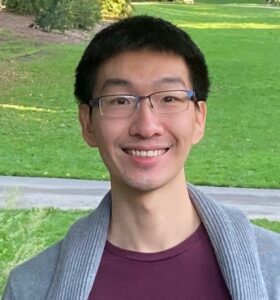
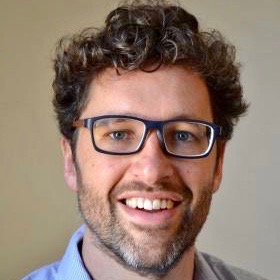
David Mazières is a Professor at Stanford University , affiliated with the School of Engineering and the Department of Computer Science . He serves as a software engineer at the Stellar Development Foundation . His work bridges academic research and industry applications in distributed systems and security. University: Stanford University Academic Rank: Professor Email: dm@scs.stanford.edu Research Interests: David Mazières' research focuses on distributed systems , cryptocurrencies , and computer security . Key areas include consensus protocols (e.g., Stellar ), low-latency scheduling ( Syrup , Shinjuku ), and cryptographic techniques for privacy and security ( SafetyPin , CCFI ). Key Achievements: His notable works include: TCP-ENO (RFC 8547) for secure transport protocols Stellar Consensus Protocol for decentralized finance SOSP 1999 Best Paper for 'Separating key management from file system security' Teaching Contributions: He has taught core and advanced courses at Stanford since 2005, including CS212 (Operating Systems) , CS240h (Functional Systems in Haskell) , and CS251 (Cryptocurrencies and Blockchain Technologies) . Previously taught courses at NYU (2001-2005).
Rachit Agarwal is an Associate Professor in the Department of Computer Science at Cornell University, with research focusing on systems, networking, and theoretical problems arising in practical systems. He leads a research group working on resource disaggregation, host architecture, secure cloud storage, and datacenter design. PhD in Computer Science, Cornell University Undergraduate, IIT Kanpur His research spans three major directions: Resource Disaggregation (with $3M NSF and Google awards), Host Architecture (exploring terabit interconnects), and PANCAKE (secure oblivious cloud storage with $1M NSF award). He also contributed to foundational work in Near-optimal Datacenter Design and Data Plane Monitoring . Awards include the Sloan Fellowship, NSF CAREER, IRTF Applied Networking Prize, and multiple best paper awards. His recent publications focus on host network architecture, congestion control, oblivious data access mechanisms, and secure cloud storage systems. He has advised multiple Ph.D. and postdoctoral researchers who now hold faculty positions at leading institutions. Sloan Research Fellowship NSF CAREER award Kavli Fellowship IRTF Applied Networking Research Prize SIGCOMM Best Student Paper Award Usenix Security Distinguished Paper Award Tau Beta Pi Professor of the Year 2025 Rachit has advised numerous students including current Cornell advisees like Midhul Vuppalapati, Shreyas Kharbanda, and Omar Eqbal. Former advisees include Saksham Agarwal (UIUC), Qizhe Cai (UVA), and Mina Tahmasbi Arashloo (University of Waterloo). His research is supported by large NSF grants and industry awards, with deployments in real-world systems and open-source contributions.
Blase Ur is an Associate Professor of Computer Science at the University of Chicago, leading the UChicago SUPERgroup (Security, Usability, & Privacy Education & Research group). His research focuses on data-driven methods to improve online security, privacy, and usability of complex systems. He holds a PhD from Carnegie Mellon University and an AB from Harvard University. Education: PhD in Societal Computing, Carnegie Mellon University (2016) AB in Computer Science, Harvard University Research Interests: Blase's work spans computer security, privacy, HCI, and ethical AI. He develops tools like password meters, privacy transparency systems, and IoT security solutions. His SUPERgroup emphasizes interdisciplinary collaboration, with projects addressing data-driven decision-making and usability challenges in AI and IoT. Articles Trends: Recent work includes studies on ad transparency systems, user perceptions of privacy in AI, and barriers to passwordless authentication. Research often combines empirical user studies with technical implementations to bridge gaps between security mechanisms and user needs. Awards: NSF CAREER Award (2021) Quantrell Award for Teaching (2021) SIGCHI Outstanding Dissertation Award (2018) Advising & Grants: Advisor to PhD students like Kevin Bryson. Secured grants from NSF, Mozilla, and Meta. Active in outreach to broaden CS participation, including K-12 programs. Labs & Teams: Co-director of the SUPERgroup and affiliated with the Systems Group and CERES Center for Unstoppable Computing at UChicago.
Frank Li is an Assistant Professor at Georgia Tech, affiliated with the School of Cybersecurity and Privacy and School of Electrical & Computer Engineering . His research focuses on computer security and privacy , particularly internet, network, and web security, with a data-driven approach. Education : PhD in Computer Science from UC Berkeley, BS in Computer Science from MIT (Course 6-3) Experience : Previously a visiting researcher at Facebook, with internships at Google and Microsoft Research Research interests include empirical computer security , internet measurement, password policies, IoT security, browser extensions, and DeFi vulnerabilities. His work combines large-scale data analysis, network traffic studies, and user behavior experiments. His publications highlight trends in IPv6 adoption , security notifications, password masking, third-party web content, and PLC security evaluation. Teaching awards include the Student Recognition of Excellence in Teaching (Annual CIOS Award and Semester Honor Roll) at Georgia Tech. He leads the BEES Lab (Better Empirically Established Security), which investigates security and privacy issues through internet-wide measurements, network traffic analysis, and data mining. Lab members include PhD and MS students in computer science.
Giuseppe Ateniese is a Professor and Eminent Scholar in Cybersecurity at George Mason University, affiliated with the Department of Computer Science and Cyber Security Engineering. Formerly, he held the Farber Endowed Chair and chaired the Department of Computer Science at Stevens Institute of Technology. His research focuses on cloud security, applied cryptography, blockchain technology, and AI-driven cybersecurity solutions. He has received prestigious awards including the NSF CAREER Award and Google/IBM Faculty Awards. AIFurther, he teaches courses on blockchains, cryptography fundamentals, and cryptofinance. His work includes pioneering contributions to rewritable blockchains, password cracking via AI (e.g., PassGAN), and secure decentralized systems. Education: PhD in Computer Science, University of Genoa (2000) Laurea (M.Sc.), University of Salerno (1995) Master of Engineering (Honoris Causa), Stevens Institute of Technology (2020) Research Interests: Ateniese’s work bridges theoretical and applied cryptography, with emphasis on blockchain scalability, privacy-preserving machine learning, and secure data storage. He has developed foundational techniques like proxy re-cryptography and accountable storage systems. His recent efforts address AI’s dual role as both a cybersecurity tool and threat vector, including AI-based password cracking and defense strategies against LLM-driven attacks. Awards: NSF CAREER Award (for privacy/security research) Google Faculty Research Award (cloud security) IBM Faculty Award IEEE CISTC Technical Recognition Award Teaching & Labs: He teaches advanced courses on blockchains (CS695), cryptography fundamentals (CYSE/ECE476), and introductory cryptography (CS487/587). His research team focuses on cryptographic protocols, decentralized systems, and AI-security intersections. Collaborations include projects with Accenture on editable blockchain prototypes and NSF-funded work on password security.
Verena Zimmermann serves as Assistant Professor (Tenure Track) for Security, Privacy and Society at ETH Zurich within the Department of Humanities, Social and Political Sciences. She leads the Security, Privacy and Society research group, focusing on human-centered approaches to safety, IT security, and privacy challenges in emerging technologies. Her academic foundation includes a PhD in Usable Security from TU Darmstadt, where her dissertation From the Quest to Replace Passwords towards Supporting Secure and Usable Password Creation earned dual awards from the German Association for Data Protection and Data Security (GDD) and the Ernst-Ludwigs-Hochschulgesellschaft. Zimmermann's research pioneers the shift from viewing humans as security vulnerabilities to recognizing them as integral solutions. Her work spans password security, phishing interventions, smart home privacy, and cybersecurity education, consistently applying human factors principles to design systems that align with natural user behavior. Current projects explore emotional dimensions of security engagement, quantum governance frameworks, and LLM-related privacy concerns through interdisciplinary lenses combining computer science, psychology, and safety science. Recent publications reveal strong thematic trends toward understanding user motivations in security behavior, developing personalized training through augmented reality and adaptive systems, and translating safety science principles to cybersecurity incident management. Her work increasingly addresses societal implications of emerging technologies like quantum computing and generative AI. Her distinguished recognitions include: GDD Dissertation Award for Usable Security research Ernst-Ludwigs-Hochschulgesellschaft Dissertation Award IANUS Award (2nd place) for Moving from a 'Human-as-Problem' to a 'Human-as-Solution' Cybersecurity Mindset Zimmermann actively mentors through ETH's Human-Centered Security and Privacy Lab while collaborating internationally with institutions including ATHENE (German National Center for Applied Cybersecurity), Abertay University's Cybersecurity Division, and the Safety Science Innovation Lab. Her research receives support from Swiss and European funding bodies focused on privacy-preserving technologies and organizational security behavior. At ETH Zurich, she directs the Security, Privacy and Society group which employs design thinking, LEGO Serious Play, and mixed-methods research to tackle real-world security challenges. The team partners with industry stakeholders to develop practical solutions for phishing resistance, smart home privacy, and cybersecurity education while maintaining strong ties to the Research Training Group 2050 Privacy and Trust for Mobile Users.
Grant Ho is an Assistant Professor in the Computer Science Department at the University of Chicago. His research focuses on computer security, particularly at the intersection of data and security. Prior roles include a CSE Postdoctoral Fellowship at UC San Diego, a Visiting Researcher position at Corelight Labs, and a PhD in Computer Science from UC Berkeley (advised by Vern Paxson and David Wagner). He holds a B.S. in Computer Science from Stanford University. **Research Interests**: Enterprise security, AI/ML applications in security, large-scale threat analysis, and data-driven cybersecurity practices. His work spans detecting attacks (e.g., phishing, ransomware), improving security measures, and evaluating the efficacy of security policies. **Awards**: 2023 IEEE Euro S&P Best Paper Award, 2019 and 2017 USENIX Security Distinguished Papers, 2017 Internet Defense Prize, NSF and Facebook Fellowships, and the 2015 IEEE S&P Distinguished Practical Paper Award. **Advising & Teaching**: Current advisees include Aniket Anand (PhD), Christiana Marchese (PhD), and Robert Liu (B.S.). Taught courses include Introduction to Computer Security (CMSC 23200) and seminars on AI/ML and NLP in cybersecurity. Collaborates with industry partners like Barracuda Networks and Dropbox. **Labs & Teams**: Leads a research group focused on enterprise security challenges, emphasizing practical impact and interdisciplinary approaches.
Janne Lindqvist is an Associate Professor at the Department of Computer Science, Aalto University. His research bridges security engineering, human-computer interaction (HCI), and privacy, with a focus on making security systems usable and user-centric. University: Aalto University Department: Department of Computer Science Rank: Associate Professor Email: janne.lindqvist@aalto.fi Lindqvist’s work spans security engineering , privacy systems , and user research , emphasizing practical authentication methods, password management, and human behavior in security contexts. He explores how users interact with systems like TPM APIs, gesture passwords, and mobile authentication mechanisms. Recent publications highlight trends in authentication systems , ubiquitous computing security , and mobile user behavior . Key themes include biometric authentication, gesture-based security, and balancing usability with cryptographic robustness. CHI'25 Honorable Mention Award CHI'24 Best Paper Award His research integrates empirical studies with technical implementations, such as analyzing password forgetting patterns and developing acoustic sensing for vehicle detection (e.g., Auto++, BO-Ear). Collaborative efforts span machine learning, psychology, and embedded systems.
Christof Paar is a Professor of Embedded Security at Ruhr University Bochum's Faculty of Computer Science. His work focuses on hardware security, cryptography, and embedded systems security. He leads the Embedded Security Group within the CASE Cluster of Excellence (Cyber Security in the Age of Large-Scale Attacks), addressing cutting-edge challenges in hardware Trojans, side-channel attacks, and cryptographic engineering. His research spans FPGA and IoT security, with contributions to physical-layer security, wireless jamming defenses, and tamper-resistant systems. Research Interests: Paar's expertise lies in hardware-software co-design for security, with a focus on embedded systems. His work includes analyzing vulnerabilities in FPGAs, developing countermeasures against side-channel attacks, and exploring physical-layer security mechanisms. He also investigates the human factors in hardware reverse engineering and the implications of adversarial machine learning on security systems. Notable Work: Recent publications highlight breakthroughs in detecting hardware Trojans across CMOS generations, breaking industry-standard IP protection mechanisms (IEEE 1735), and proposing novel defenses like IRShield against adversarial wireless sensing. His group actively contributes to standards for secure embedded systems and IoT devices, emphasizing practical implementations.
Furkan Alaca is an Assistant Professor at Queen's University's School of Computing, part of the Faculty of Arts and Science. His research focuses on user authentication systems, addressing security and usability challenges. He holds a Ph.D. (2018) in Computer Science from Carleton University, an M.A.Sc. (2012) in Electrical and Computer Engineering, and a B.Eng. (2010) in Communications Engineering, all from Carleton University. His academic career includes teaching roles at Queen's University and the University of Toronto Mississauga, where he taught courses such as Cryptography, Cybersecurity, and Discrete Mathematics. He is affiliated with Queen's Security Research Group and Computer Security Research Lab. Research interests include computer and internet security, usable security, authentication mechanisms, and systems security. He has contributed to advancements in web authentication frameworks, malware analysis, and privacy-preserving technologies. His work spans conferences like IEEE and ACM, with notable publications in cybersecurity, machine learning, and network efficiency. Current teaching includes CISC 447 (Introduction to Cybersecurity) and CISC 468 (Cryptography). He has advised on courses ranging from undergraduate programming to graduate-level security topics.
David Cash is a Professor in the Department of Computer Science at the University of Chicago. His research focuses on applied and theoretical cryptography, computer security, and theoretical computer science. He joined UChicago in 2018 and has held roles such as teaching courses in cryptography, computer security, and discrete mathematics. Cash has advised numerous PhD and master’s students, including Sam Everett, Alexander Hoover, and Jesse Stern. His work includes constructing quantum-secure cryptography systems, analyzing encrypted data navigation, and foundational theoretical results. He has received notable awards like the 2025 Quantrell Award for Teaching and multiple Best Paper awards at Eurocrypt. Cash's research also explores secure computation, oblivious RAM, and cryptographic agility. His affiliations include the Systems Group at UChicago, focusing on interdisciplinary systems research. Education details are not explicitly provided in the text. However, his career trajectory suggests advanced degrees in computer science or related fields. His teaching spans undergraduate and graduate courses, emphasizing both theoretical foundations (e.g., discrete mathematics) and applied topics like cryptocurrencies and secure systems. Cash actively engages in academic service, including organizing conferences and reviewing research. His work bridges theoretical insights with practical applications, addressing modern computational security challenges. His research contributions span cryptographic protocols, secure data structures, and privacy-preserving technologies. Notable projects include work on searchable encryption, leakage-abuse attacks, and cryptographic systems resilient to quantum computing. Cash collaborates with institutions like Rutgers University and has mentored postdoctoral researchers such as Alexander Hoover. His grants include NSF CAREER awards and Simons Institute fellowships, supporting research in secure outsourcing and cryptographic data protection.
Lorrie Faith Cranor is the Director and Bosch Distinguished Professor in Security and Privacy Technologies at the CyLab Security and Privacy Institute, and the FORE Systems University Professor of Computer Science and Engineering and Public Policy at Carnegie Mellon University. She also directs the CyLab Usable Privacy and Security Laboratory (CUPS) and co-directs the MSIT-Privacy Engineering master’s program. She previously served as Chief Technologist at the U.S. Federal Trade Commission and is a co-founder of Wombat Security Technologies. Carnegie Mellon University – CyLab Security and Privacy Institute School of Computer Science – Department of Computer Science College of Engineering – Department of Engineering and Public Policy PhD Program in Societal Computing Human-Computer Interaction Institute (affiliate) Heinz College (affiliate) Dr. Cranor’s research centers on usable privacy and security, privacy engineering, and technology policy. Her work spans authentication systems, privacy policies, IoT security, and human behavior in digital environments. She has pioneered research on password usability, privacy labels (e.g., 'nutrition labels' for privacy), and privacy decision-making. Her interdisciplinary approach integrates computer science, public policy, and behavioral science to create systems that are both secure and user-friendly. Her recent publications reflect a strong focus on privacy interfaces, consent mechanisms, IoT security labels, and user comprehension of digital privacy. Trends include evaluating the usability of privacy controls across platforms, designing tools for developers to generate accurate privacy disclosures, and understanding user behavior in online tracking and advertising contexts. Her work frequently appears in top venues such as CHI, SOUPS, and PETS. ACM CHI Academy inductee ACM Fellow IEEE Fellow 2018 ACM CHI Social Impact Award 2018 International Association of Privacy Professionals Privacy Leadership Award 2018 IEEE Cybersecurity Award for Practice Alumni Achievement Award, McKelvey School of Engineering Top 100 Innovator under 35, Technology Review Dr. Cranor has advised numerous PhD students in interdisciplinary programs including Societal Computing, Engineering and Public Policy, and Human-Computer Interaction. Her research has been supported by grants from the National Science Foundation, DARPA, and industry partners. She serves on the boards of the Computing Research Association, Center for Democracy and Technology, and Electronic Privacy Information Center. She is a frequent media commentator on privacy and security issues. She leads the CyLab Usable Privacy and Security Laboratory (CUPS), a multidisciplinary research group that includes faculty and students from computer science, policy, and HCI. The lab focuses on making privacy and security systems more intuitive, effective, and user-controlled. Key projects include the Usable Privacy Policy Project, privacy nutrition labels, and the Personalized Privacy Assistant Project.
Dr. Feng Cheng is a Senior Researcher and head of the IT Security Engineering (Sec-Eng) Team at the Hasso Plattner Institute (HPI), Germany, and serves as the Representative of the Chair "Internet Technologies and Systems" at the Digital Engineering Faculty, University of Potsdam. He holds a PhD from the University of Potsdam, an MEng from Beijing University of Technology, and a BEng from Beijing University of Aeronautics and Astronautics. His research is centered on data-driven security engineering, security analytics, network security, cloud security, firewall, IDS/IPS, attack modeling, and penetration testing. Dr. Cheng's research interests span a broad range of cybersecurity domains, with a strong emphasis on security analytics , data-driven threat detection , cloud and network security , and authentication . His work integrates advanced data engineering and machine learning techniques to enhance security operations, including intrusion detection, threat intelligence, and security information and event management (SIEM). Key application areas include IoT security, mobile security, and web security. The recent publications of Dr. Cheng and his team reflect a significant trend towards leveraging big data analytics , machine learning , and graph-based methods for cybersecurity. Their work focuses on developing frameworks for blockchain-based public key infrastructures, advanced SIEM analytics, malware detection using NLP, and chaos engineering for cloud security. This demonstrates a strong commitment to creating practical, scalable, and intelligent solutions for modern security challenges in complex, distributed environments. Dr. Cheng is actively involved in the academic community as a member of ACM and IEEE, a program committee member for numerous international conferences, and an organizer of workshops on cloud computing and cybersecurity. He has also served on editorial boards for international journals. He supervises a large group of PhD, master's, and bachelor's students, guiding research on topics such as security analytics, cyber threat intelligence, digital credentials, and behavioral authentication. He leads the Sec-Eng team, which conducts research on a diverse portfolio including the Security Analytics Lab, HPI-VDB (vulnerability database), Lock-Keeper (physical separation technology), and the Security Lab Generator for scenario-driven security training.
David Jao is a Professor in the Department of Combinatorics and Optimization at the University of Waterloo. His research focuses on post-quantum cryptography, particularly leveraging isogenies of supersingular elliptic curves for secure cryptographic protocols. He is renowned for co-developing the Supersingular Isogeny Key Encapsulation (SIKE) protocol, a leading candidate for post-quantum cryptography standards. His work spans theoretical foundations and practical implementations, including optimizing isogeny-based systems for embedded devices and ARM processors. Research interests include isogeny-based cryptosystems, elliptic curve cryptography, zero-knowledge proofs, and cryptographic security against quantum attacks. He explores applications of expander graphs and Ramanujan graphs in cryptography, alongside algorithmic improvements for cryptographic protocols such as SIDH (Supersingular Isogeny Diffie-Hellman). Key contributions include advancements in key compression techniques for SIKE, side-channel attack mitigation, and formalizing security models for post-quantum key exchange. His publications analyze cryptographic hardness assumptions, such as the discrete logarithm problem in finite groups and the semidirect product structure in isogeny-based systems. Jao’s work bridges theoretical mathematics and applied cryptography, with a focus on ensuring practical security in next-generation cryptographic systems. His research addresses challenges in quantum-resistant authentication, key establishment, and digital signatures, often emphasizing efficiency and resistance to both classical and quantum attacks.
Michael Goldsmith is a Senior Research Fellow at the Department of Computer Science and Worcester College, University of Oxford. He holds multiple leadership positions including Director of the Oxford Martin Programme on AI Threat Detection, Associate Director of the Cyber Security Centre, and Co-Director of the Centre for Doctoral Training in Cybersecurity. His research bridges formal methods, concurrency theory, and practical cybersecurity applications. Goldsmith's research focuses on cybersecurity analytics including threat detection, risk management, and trust frameworks. He pioneered automated cryptoprotocol analysis and investigates multidisciplinary projects spanning mathematical models to socio-technical systems. His core interests include formal verification, AI threat landscapes, privacy architectures, and security protocol design. Analysis of his recent publications reveals strong emphasis on practical cybersecurity challenges: 63% focus on threat detection (especially insider threats), 22% on trust/risk frameworks, and 15% on formal methods applications. His work consistently integrates technical security mechanisms with human factors and organizational contexts. He currently advises Ahmed Salman and has supervised 10+ students including Mary Bispham, Rodrigo Carvalho, and Elizabeth Phillips. His research teams collaborate on projects funded by Technology Strategy Board, government agencies, and industry partners. Goldsmith leads the Oxford Martin Programme on AI Threat Detection and co-directs the Centre for Doctoral Training in Cybersecurity. His research group develops tools for security visualization (CyberVis), trust metrics, and identity management frameworks.