Rahim Rahimi is an Assistant Professor of Materials Engineering at Purdue University, associated with the College of Engineering. His research focuses on advanced materials for biomedical applications, environmental sensing, and flexible electronics. Key interests include developing smart sensors for healthcare, antibacterial coatings for medical implants, and sustainable agricultural monitoring systems. Research emphasizes targeted drug delivery systems via smart capsules, environmental sensor networks for water quality and soil health, and nanotechnology applications in wearable devices. Notable projects include oxygen-generating surgical meshes for wound healing and low-cost wireless sensors for precision agriculture. His work bridges materials science with clinical and environmental challenges, leveraging plasma deposition techniques and nanomaterial functionalization. Recent efforts focus on self-calibrating sensors and integrating machine learning for manufacturing optimization. No scientific awards are explicitly listed in the provided information. His advisory role and grant activities are inferred through his research outputs in materials engineering and biomedical innovation. Rahimi collaborates across disciplines within Purdue's engineering ecosystem, contributing to labs focused on bio-inspired materials and flexible electronics. Future work aims to advance implantable medical devices and scalable sensor technologies for global health applications.
Kwan-Wu Chin is a Professor in the School of Electrical, Computer and Telecommunications Engineering at the University of Wollongong, where he also serves as Head of Postgraduate Studies (HPS) and co-directs the Wireless Technologies Lab (WTL). His research focuses on resource allocation problems in Internet of Things (IoT) systems, maritime networks, edge computing platforms, and integrated sensing-communication systems. Chin leads an active research group currently supervising five PhD students working on UAV networks, edge computing, maritime systems, and metaverse resource allocation. He has graduated over 20 PhD students who now hold positions in academia and industry. Chin serves as editor for Elsevier Computer Communications and IEEE Internet of Things Journal. His work develops optimization techniques using graph theory, stochastic processes, and machine learning for next-generation wireless systems.
Dr. Alexander Paulus serves as a Researcher at the Chair of High-Frequency Engineering within the Department of Electrical Engineering at the Technical University of Munich (TUM), School of Computation, Information and Technology. Working under Prof. Dr.-Ing. Thomas Eibert, he contributes to advanced electromagnetic research and measurement systems development at TUM's Arcisstr. 21 campus in Munich. Research Expertise His core specialization lies in near-field antenna measurement and transformation techniques, with significant contributions to phase retrieval algorithms, inverse source methods, and UAV-based electromagnetic field measurements. He addresses critical challenges including probe correction with unknown antennas, sparse sampling for directive antennas, and electromagnetic modeling of environmental effects like rain attenuation. His work bridges theoretical electromagnetics with practical antenna characterization solutions. Publication Trends From 2014-2025, Paulus has published 25+ papers focusing on near-field to far-field transformations, particularly in phaseless and multi-probe scenarios. Recent work (2023-2025) demonstrates innovation in spectral filtering, sparse reconstruction, and UAV-based systems for defect localization and wet antenna modeling. His research increasingly integrates computational techniques to solve complex inverse problems in antenna measurements. Scientific Recognition No formal awards documented in available information Academic Contributions Student Mentoring: No advisees listed in provided materials Research Funding: Grant details not specified in source text Research Environment Paulus operates within TUM's Chair of High-Frequency Engineering facilities, which include advanced near-field measurement ranges, UAV-based electromagnetic characterization systems, and laboratories for metamaterials research and electromagnetic compatibility testing. His work supports applications in 5G/6G communications, aviation navigation systems, and precision antenna diagnostics.
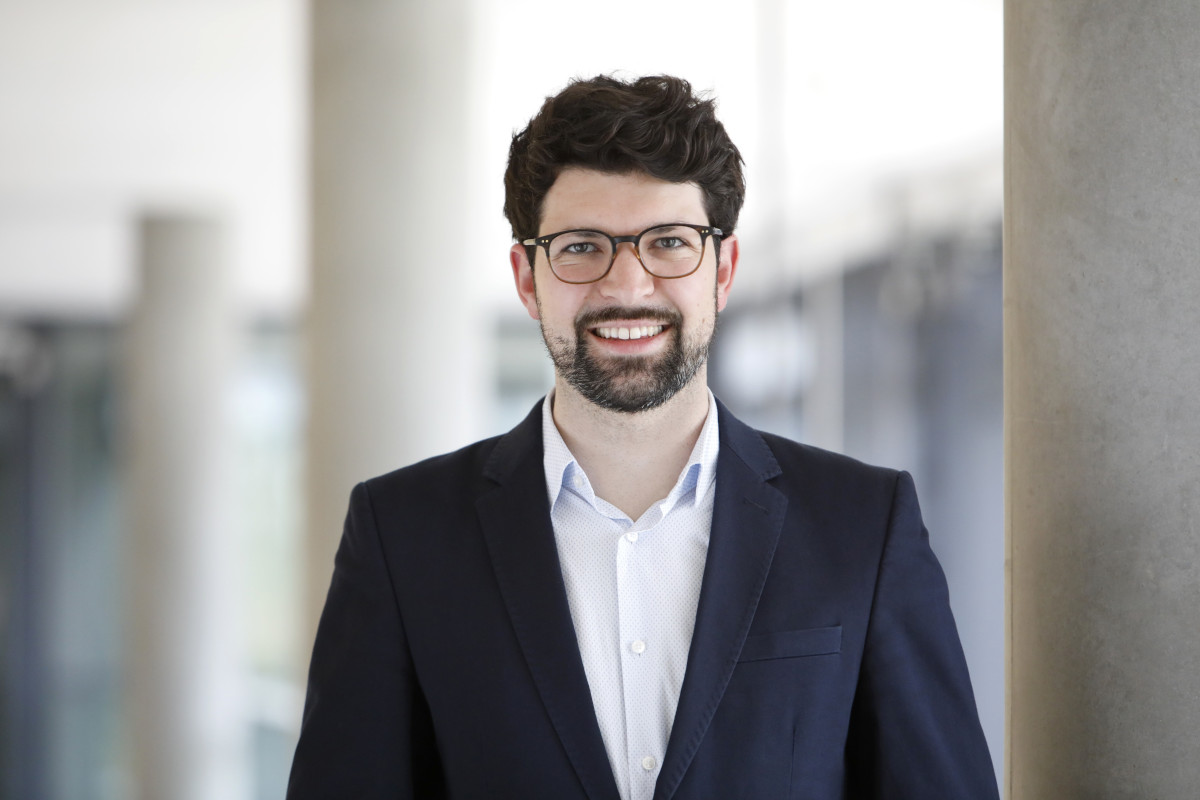
Dr. Adrian Meier is a tenure-track Junior Professor for Communication Science at Friedrich-Alexander University Erlangen-Nuremberg (FAU), holding the Chair of Communication Science since February 2024. Previously, he served as Assistant Professor at the University of Amsterdam (2020-2021) and as a Research Associate at Johannes Gutenberg University Mainz (2015-2020), where he completed his doctorate summa cum laude in August 2020, an MA in Communication Science (2013-2015), and a BA in Journalism and Political Science (2010-2013). His research is conducted through the Junior Professorship for Communication Studies, part of the Institute for Labor Market and Socioeconomics (IAS) within FAU's School of Business, Economics and Social Sciences. Meier's research focuses on media usage and effects research, media psychology, and interpersonal communication, with particular emphasis on the consequences of digital communication for well-being, health, and self-regulation at the interface between work and leisure. His work investigates phenomena such as digital stress, procrastination, and digital communication in the home office. Methodologically, he specializes in in-situ surveys, digital behavioral data analysis, and AI-supported literature syntheses, with a strong commitment to theory-driven, media-psychological, and quantitative-empirical approaches. His research employs short-term longitudinal designs including diary studies and experience sampling, systematic literature reviews, and adheres to open science principles with pre-registration. Analysis of Meier's recent publications reveals a consistent focus on digital disconnection and its relationship to well-being, examining how temporary breaks from digital media can improve situational psychological states. His work innovates in measuring digital behavior beyond simple screen time metrics, exploring nuanced aspects of smartphone usage patterns, temporal dimensions in media effects, and the motivational factors behind digital disconnection. He has made significant contributions to understanding the complex relationship between social media use and mental health, particularly in adolescent populations, while challenging simplistic narratives about passive versus active social media use. Dordick Dissertation Award from ICA Communication & Technology Division Dissertation Prize from German Society for Journalism and Communication Studies (DGPuK) Best Paper Award at Annual Conference of the Section for Reception and Effect Research Editorial board member for Media Psychology, Journal of Media Psychology, and Mobile Media & Communication As an active researcher and educator, Meier supervises bachelor's theses and offers a range of courses in communication science. His research has been funded through prestigious grants including an ERC Starting Grant for his project 'Social Well-Being from Hybrid Interactions in Hybrid Work' (HYIHY), which received €1.5 million in funding. His work has established him as a leading voice in understanding the psychological implications of digital communication in contemporary society, particularly at the intersection of work and personal life in the era of hybrid work arrangements.
Christopher P. Higgins serves as Professor and AMAX Distinguished Chair in the Department of Civil and Environmental Engineering at the Colorado School of Mines, a position he attained in 2025 following his 2022 designation as University Distinguished Professor. Joining Mines in 2009, he leads critical research on environmental contaminants with emphasis on poly- and perfluoroalkyl substances (PFASs) in natural and engineered systems. His educational foundation includes: PhD in Civil and Environmental Engineering from Stanford University (2007) MS in Civil and Environmental Engineering from Stanford University (2002) AB in Chemistry from Harvard University (1998) Dr. Higgins' research program investigates chemical fate and transport mechanisms, particularly PFAS movement through soils and water, human exposure pathways, and remediation technologies. His work integrates field studies, laboratory experiments, and mathematical modeling to address: PFAS leaching dynamics in vadose zones Advanced treatment methods for contaminated media Exposure assessment via water, food, and indoor environments Environmental risk characterization at contaminated sites His recent publications demonstrate increasing focus on analytical method development, source identification, and destruction technologies for ultrashort-chain PFAS compounds. Notable recognitions include: ASCE Huber Prize for Civil Engineering Research (2019) SERDP Environmental Restoration Project of the Year (2020) Honorary Professorship at The University of Queensland, Australia His research program has secured substantial funding from NSF, NIH, EPA, USDA, and DoD, supporting interdisciplinary collaborations and graduate student mentorship. Current initiatives emphasize translating laboratory findings to field applications through partnerships with regulatory agencies and industry stakeholders. Dr. Higgins directs the Center for Environmental Risk Assessment and co-leads the PFAS@Mines Initiative, which coordinates campus-wide research on PFAS contamination through integrated experimental, computational, and policy-focused approaches.
Heather Preisendanz is a Professor in the Department of Agricultural & Biological Engineering at Pennsylvania State University. Her research focuses on the fate, transport, and impacts of emerging contaminants, particularly PFAS, in agricultural and environmental systems. She leads interdisciplinary projects addressing water quality, contaminant mitigation, and sustainable land management. Recent work includes studies on PFAS contamination in private wells and agricultural fields, the efficacy of vegetative buffers, and low-cost water treatment solutions using biochar. She has been recognized as an Institute of Energy and the Environment (IEE) Fellow and contributed to projects like 'Developing Water Treatment Technologies for PFAS Removal in Disadvantaged Communities.' Her research integrates hydrology, biogeochemistry, and socio-technical systems to address environmental challenges. Collaborations include the USDA, Monash University, and the Chesapeake Bay watershed initiatives. She emphasizes translational science, bridging academic research with practical solutions for water sustainability. Affiliations: College of Agricultural Sciences, IEE Fellow, Agricultural & Biological Engineering Department Grants: USDA grants, IEE seed grants, and interdisciplinary funding for PFAS and water quality projects Key Projects: PFAS removal technologies, agroecosystem contaminant mitigation, and policy-relevant environmental assessments
Professor Craig Priest is a faculty member at the University of South Australia within UniSA STEM , focusing on microfluidics , optofluidics , and interfacial science applications. He serves as a Research Degree Supervisor and has contributed to advancements in sensor technology, biomedical engineering, and materials science. Key Research Themes : Development of micropillar array-integrated sensors for rapid vapor detection 3D-printed microstructures to mitigate matrix effects in electrochemical sensing Wettability engineering for passive fluid control in lab-on-a-chip devices PDMS-PS bonding protocols enabling robust cell culture platforms like Heart-Dyno Collaborations & Grants : Collaborated with Queensland University of Technology and QIMR Berghofer on biomedical devices Involved in ARC grants: ARC IH150100028 and ARC DP1094337 Industry partnerships with BHP Billiton and ULVAC Inc. Academic Contributions : Published in IEEE Sensors , APL Materials , and ACS Applied Materials & Interfaces Active in microfluidic device design for biomedical and environmental applications Developed evaporation-driven fluid transport systems for portable biosensing platforms
Alexis Lussier Desbiens is an Associate Professor at the Université de Sherbrooke in the Department of Mechanical Engineering , Faculty of Engineering. He co-founded several research labs and initiatives including NSERC CREATE CoRoM (Collaborative Robotics in Manufacturing) and NSERC CREATE UTILI (Uninhabited Aircraft Systems Training). His work bridges robotics, mechanical design, and sports equipment innovation. PhD in Mechanical Engineering (Stanford University, 2012) BEng in Mechanical Engineering (Université de Sherbrooke, 2005) Postdoctoral Research (Harvard University, 2013) His research focuses on robotics and automation , particularly unmanned aerial vehicles (UAVs) with bioinspired design principles for mechanical intelligence. Key areas include: Autonomous UAV perching and climbing Hybrid locomotion systems Sports equipment dynamics (skis, hockey sticks) Magnetorheological actuator applications Conservation biology tools via aerial sampling Recent publications highlight interdisciplinary work in robotics , sports engineering , and ecological monitoring . His projects often integrate mechanical design with environmental or human-centric applications. Scientific recognition includes: Best Student Paper (IEEE SMC, 2021) Best Poster (ISEA, 2020) National Geographic Explorer (2020) CSME Gold Medal (2005) Current grants (2020-2023) include: $339,000 - High-performance UAV for power line interactions $1.65M - NSERC CREATE UTILI training program $120,000 - Intelligent hockey stick development He also leads the CREATEK Research Lab and maintains global collaborations with institutions like Harvard University, Stanford University, MIT, and EPFL.
Arnaud Bertsch is a Lecturer at the École Polytechnique Fédérale de Lausanne (EPFL) within the School of Engineering (STI) and the Department of Microengineering (IEM). He is affiliated with the Microsystems Laboratory 1 (LMIS1) and has been actively involved in teaching advanced microfabrication techniques and MEMS sensor/actuator practicals. His research spans microfluidics, nanofluidics, biomedical devices, and 3D microfabrication, with a focus on neural probes, drug delivery systems, and cell manipulation technologies. Microfluidic hydrodynamic and dielectrophoretic systems Nanovolcano microelectrode arrays for electrophysiology Thermal control of ionic transport in nanochannels 3D lipid microrobots for drug delivery MEMS-based intraocular pressure sensors Arnaud Bertsch has supervised PhD students including Torres Vila Pol, Zhang Tao, and past advisees like Clémentine Lipp, Nicolas Maïno, and Joan Teixidor. His work bridges fundamental research in nanofluidics with applied biomedical solutions, contributing to fields such as neuroscience, cancer therapy, and implantable medical devices. The articles listed demonstrate expertise in microsystem design, electrochemical sensing, and biofabrication technologies.
Cristian Gómez Canela is a Full Professor in the Department of Analytical and Applied Chemistry at IQS School of Engineering (IQS - Institut Químic de Sarrià), specializing in environmental analytical chemistry with a focus on neurotoxicology and aquatic toxicology. He leads the Environmental Process Engineering and Simulation Group and maintains an active research profile with significant h-index metrics reflecting substantial scholarly impact. His research interests center on environmental toxicology, particularly neurotoxicology of pharmaceuticals and other contaminants in aquatic systems. Using advanced analytical techniques including liquid chromatography and tandem mass spectrometry, his work examines the effects of neuroactive compounds on model organisms like zebrafish and Daphnia magna . His fingerprint reveals strong expertise in neurotransmitter analysis (66%), Daphnia magna toxicology (64%), serotonin-related research (27%), and neurotoxicity mechanisms (21%). His publication record shows consistent productivity with 92 scientific outputs, demonstrating increasing research activity from 2011 to the present, with particularly strong output in recent years (15 publications in 2024 alone). His work spans environmental chemistry, toxicology, and analytical methodology development, with a clear trajectory toward understanding the neurological impacts of environmental contaminants. Zebra Fish neurotoxicology (100%) Neurotransmitter analysis (66%) Daphnia magna toxicology (64%) Behavioral neuroscience (33%) Serotonin-related research (27%) Liquid chromatography methods (27%) Dr. Gómez Canela actively supervises doctoral research through the FI-2025 Joan Oró program and leads multiple significant research projects including CHEMIPARK (as Principal Investigator) and the GESPA environmental process engineering group. His current projects extend through 2028, indicating ongoing research activity and leadership in his field.
Angela Sasic Kalagasidis is a Professor and Department Head at Chalmers University of Technology , leading the Building Physics research group. She serves as a board member of the Moisture Center at Lund University of Technology , contributing to interdisciplinary research in building science. Building Physics Heat and Mass Transfer Energy Efficiency Moisture Safety Indoor VOC Emissions Climate Change Adaptation Her recent publications focus on aerogel-based materials for insulation, urban heat island mitigation , and thermal energy storage systems . Key methodologies include CFD simulations , field testing , and life cycle assessment frameworks . Research trends show emphasis on: Advanced computational tools for hygrothermal analysis Integration of phase change materials in building systems Climate resilience in building envelopes Optimization of ventilation and moisture control
Keyvan Hashtrudi-Zaad is a Professor in the Department of Electrical and Computer Engineering at Queen's University, affiliated with the Smith School of Engineering and the Ingenuity Labs Research Institute. His expertise spans robotics and control systems, with a focus on haptics, telerobotics, tele-rehabilitation, autonomous vehicles, and medical robotics. He holds the email addresses keyvan.hashtrudi-zaad@queensu.ca and khz@queensu.ca, and his office is located in Walter Light Hall, Room 427. Research Interests: His research emphasizes human-robot interaction, haptic interfaces, autonomous systems, and mechatronics. Key areas include kinesthetic haptics, collaborative teleoperation systems, energy storage systems for electric vehicles, and medical robotics applications such as needle deflection estimation and rehabilitation robotics. His work bridges theoretical control systems with practical applications in healthcare and autonomous technologies. Publications: His recent work addresses challenges in haptic system stability, energy-efficient inverters for electric vehicles, and teleoperation networks. Notable projects include a cable-driven parallel robot for stroke rehabilitation and a study comparing DC/BLDC actuators for haptic feedback. His research often integrates sensor fusion, nonlinear control, and dynamic modeling to solve real-world problems. Awards and Recognition: While specific awards are not listed, his extensive publication record and leadership in interdisciplinary robotics initiatives highlight his contributions to the field. He is part of the Interactive Robotics and Intelligent Systems (IRIS) Laboratory, advancing innovations in medical robotics and autonomous systems. Grants and Collaborations: His work likely involves collaborations across engineering and medical disciplines, supported by grants focused on robotics, control systems, and healthcare technologies. The IRIS Lab serves as a hub for developing cutting-edge solutions in haptic training systems and assistive robotics.
Howard Sirotkin is an Associate Professor in the Department of Neurobiology & Behavior at Stony Brook University's Renaissance School of Medicine. His research focuses on neural development, utilizing zebrafish as a model organism to study processes like neural stem cell differentiation, neurodevelopmental disorders (e.g., autism, epilepsy), and the impact of environmental pollutants like PFAS. He holds a PhD from Albert Einstein College of Medicine and has been at Stony Brook since 2002. His lab employs cutting-edge genetic tools and behavioral assays to investigate molecular mechanisms underlying nervous system formation and dysfunction. Education: B.S. Microbiology (University of Florida, 1991); M.S./Ph.D. Molecular Genetics (Albert Einstein College of Medicine, 1993/1996). Research Themes: (1) Neural stem cell regulation, (2) Disease modeling in zebrafish, (3) Chromosome engineering, (4) Environmental toxicant effects Key Technologies: Zebrafish genetics, high-resolution live imaging, CRISPR-based genome editing Lab Members: Includes PhD students (Carly Gomes, Gina Rizzo), MS students, and undergraduate researchers Grants: NIH-funded projects on PFAS toxicity and neural stem cell signaling Facilities: State-of-the-art lab in Stony Brook's Life Sciences Building with dedicated microscopy and behavioral testing suites
Lee Ferguson is a Professor of Civil and Environmental Engineering at Duke University, with additional appointments as Associate Professor in the Division of Marine Science and Policy. His research focuses on environmental analytical chemistry, particularly using high-resolution mass spectrometry to study per- and polyfluoroalkyl substances (PFAS) , microplastics , and endocrine disruptors . Ferguson Lab develops methods for contaminant detection in water systems and investigates chemical leaching from polymers. Ph.D. in Chemistry from Stony Brook University (2002) Former Assistant Professor at University of South Carolina (2003-2009) Recent work includes PFAS analysis in lithium-ion batteries, glyphosate detection in hard waters, and microplastic dye toxicity studies. Key publications explore urban watershed contamination, Sri Lankan drinking water CKDu links, and novel analytical methods for environmental pollutants. Applied Research Fellowship (2022), Kavli Frontiers of Science Fellow (2011) Testified before U.S. Senate on nanotechnology risks Co-founder of NC PFAS Testing Network As an advisor, he mentors Doctoral Candidates Patrick Faught and Anna Lewis , who investigate microplastic dyes and polymer additives. Lab research spans environmental fate of nanomaterials, contaminant bioavailability, and exposomics for health outcomes.
David Lentink is a Full Professor of Biomimetics at the University of Groningen , leading the Biomimetics Group within the Faculty of Science and Engineering. His research bridges biomechanics, aerospace engineering, and robotics, focusing on avian flight mechanics and bio-inspired aerial robotics . Previously at Stanford University, he pioneered the development of the Aerodynamic Force Platform and low-turbulence wind tunnels for animal flight studies. Education : PhD in Aerospace Engineering (Stanford), MSc in Mechanical Engineering (Delft), BSc in Mechanical Engineering (Delft). Research Interests : Understanding bird flight biomechanics to design advanced drones, studying evolutionary adaptations in flight, and developing biohybrid robots with real feathers. Scientific Awards : Dutch Academic Year Prize for the Flight Artists (2013). World Economic Forum Young Scientist under 40 (2013). Alumnus of the Young Academy of The Royal Netherlands Academy of Arts and Sciences. Labs : The Lentink Lab at Groningen’s Linnaeusborg campus integrates bird aviaries, wind tunnels, and maker spaces for bio-inspired robotics development. His team collaborates globally with institutions like Stanford, TU/e, and Sorama.