Joseph H. Nevin is a Professor of Electrical and Computer Engineering at the University of Cincinnati and currently serves as Assistant Dean in the College of Engineering and Applied Science. His research focuses on microelectronics, analog and integrated circuits, sensors, and systems, with notable contributions to lab-on-a-chip technologies and disposable biosensors for point-of-care diagnostics. Education: Ph.D. in Electrical Engineering, University of Cincinnati (1974) M.S. in Microelectronic Processing Systems, University of Cincinnati (1966) B.S. in Electrical Engineering, University of Cincinnati (1964) Research Interests: Nevin’s work bridges microelectronics and biomedical engineering, emphasizing the development of cost-effective, integrated sensor systems. His lab-on-a-chip innovations leverage polymer substrates for disposable clinical diagnostics, while his analog circuit expertise supports signal processing in these systems. He has pioneered magnetic bead-based microfluidic systems for protein analysis and collaborated on charge-balanced biosensor transduction methods. Grant Highlights: NSF Grant (2006-2010): $239,051 for nanoelectrode biosensor research Procter & Gamble Industry Grant (2005-2008): $75,000 for handheld sensor systems Ohio Board of Regents Grant (1997-2000): $225,000 for micromachining in analytical chemistry Lab/Team: His research group integrates microfabrication, sensor design, and biomedical applications, with a focus on translating lab-scale technologies into portable diagnostic tools. Collaborations with industry partners like Procter & Gamble reflect his commitment to applied engineering solutions.
Brian Baucom is an Associate Professor of Clinical Psychology and Director of Clinical Training at the University of Utah's College of Social and Behavioral Science. He holds a BS in Psychology and Engineering Science from Vanderbilt University (2000), MA (2003) and PhD in Clinical Psychology from UCLA (2008), and completed postdoctoral training at USC in clinical/quantitative psychology and electrical engineering (2008-2012). Research examines romantic relationship dynamics, psychopathology, chronic health conditions, and suicide risk using multimodal assessment including physiological measures, speech analysis, and machine learning. Current projects involve developing computational tools for studying couple interaction. Clinical work focuses on increasing access to empirically supported psychotherapies through the Behavioral Health Innovation and Dissemination Center. Recent publications demonstrate interdisciplinary approaches to couple therapy, sleep interventions, and mental health monitoring using passive sensing technology. Advises graduate students and postdoctoral fellows in clinical psychology with specializations in couples research and computational methods.
Marco Grassi is an Associate Professor in the Department of Electrical, Computer and Biomedical Engineering at the University of Pavia, specializing in electrical and electronic measurements (disciplinary sector IMIS-01/B). His academic activities include teaching three major courses: Electronics for Industrial Measurements, Digital IC Design, and Mechanical and Thermal Measurements for both Industrial Automation Engineering and Electrical Engineering programs. Professor Grassi's research spans multiple domains with a strong focus on analog-to-digital conversion techniques , particularly low-power SAR ADCs for audio and space applications, space instrumentation for missions like HERMES and THESEUS, and biomedical electronics including visual prostheses. His work consistently addresses the challenges of precision measurement systems in demanding environments. His recent publications (2023-2025) reveal a research trajectory that bridges fundamental circuit design with high-impact applications in space exploration and medical devices. This interdisciplinary approach has led to contributions in top journals across multiple fields including IEEE Transactions, Astronomy & Astrophysics, and biomedical engineering publications. Professor Grassi has secured patent protection for several of his innovations, particularly in power delivery circuits and microphone electronics, demonstrating the practical applications of his research. His technical expertise spans from theoretical circuit design to flight-ready space instrumentation. As an educator, Professor Grassi maintains an active teaching schedule with courses that integrate his research expertise into the classroom, providing students with exposure to cutting-edge measurement techniques and electronic design principles applicable to both terrestrial and space environments.
Alan Vajda is an Associate Professor in the Department of Integrative Biology at University of Colorado Denver's College of Liberal Arts and Sciences. His research focuses on endocrine disruption mechanisms in aquatic organisms exposed to environmental contaminants. With expertise spanning molecular biology, ecotoxicology, and environmental chemistry, he investigates impacts of pollutants like PFAS, pharmaceuticals, and wastewater effluents on fish physiology and reproduction. His laboratory employs cutting-edge approaches including transcriptomics, multi-omics integration, and in situ biomonitoring to assess watershed-scale ecological risks. Current research examines chemical mixture effects in complex environmental matrices, developing biomarkers for endocrine disruption, and evaluating remediation strategies for contaminated aquatic systems. His publication record demonstrates consistent focus on environmental toxicology mechanisms, with recent work emphasizing PFAS bioaccumulation dynamics, watershed risk modeling, and advanced biomonitoring techniques. Research spans diverse aquatic ecosystems from urban streams to major river basins.
Elliott Rouse is an Associate Professor in the Department of Mechanical Engineering at the University of Michigan , affiliated with the Neurobionics Lab . His research spans biomechanics, robotics, and mechatronics, focusing on exoskeletons , prosthetic limbs , and human locomotion dynamics . His work has been recognized with the Henry Russel Award (2023) NSF CAREER Award (2019) , and his lab was highlighted by Fast Company as an innovative robotics company (2020). He advises students like Azocar, whose 2018 paper on ankle impedance perception won IEEE's second place. Rouse's recent publications emphasize open-source prosthetics , variable stiffness systems , and AI-driven human augmentation , with collaborations on stroke rehabilitation and pediatric orthotics . His research integrates control theory , biomechanics , and user preference modeling to advance wearable robotics.
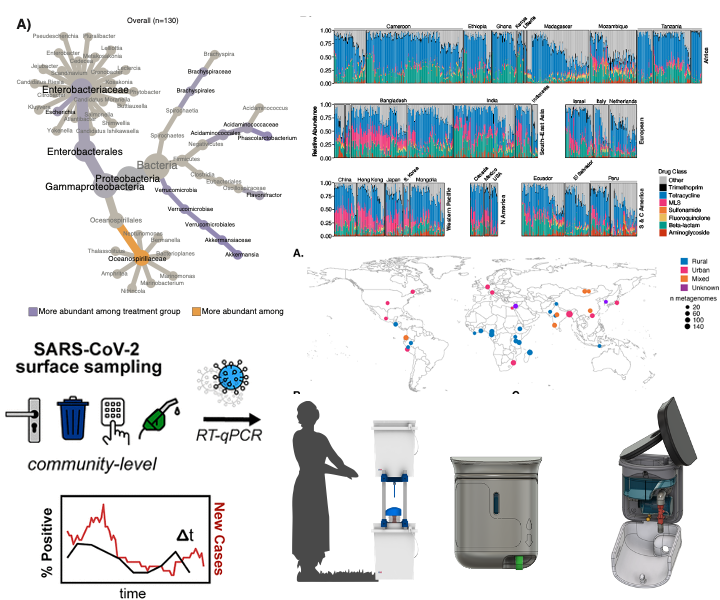
Amy Pickering is an Associate Professor at the University of California, Berkeley, jointly appointed in the Department of Civil and Environmental Engineering (College of Engineering) and the Blum Center for Developing Economies. She holds the Blum Center Distinguished Chair in Global Poverty and Practice and leads the Pickering Lab, which focuses on interdisciplinary research to improve health in low-income countries through engineering, epidemiology, and microbiology. Her educational background includes: Ph.D. in Interdisciplinary Program in Environment and Resources, Stanford University (2011) M.S. in Environmental Engineering, University of California, Berkeley (2004) B.S. in Biological and Environmental Engineering, Cornell University (2003) Dr. Pickering's research centers on disease transmission pathways, water and sanitation systems, public health surveillance, zoonotic diseases, and antimicrobial resistance in resource-limited settings. Her lab develops low-cost interventions like passive chlorination systems and frugal soap dispensers, emphasizing human-centered design to avoid burdening users. Current projects include environmental surveillance using soil and surface sampling, molecular tracking of antibiotic resistance across humans-animals-environment, and evaluating integrated WASH-nutrition interventions. Her approach combines epidemiology, genomics, and engineering to create scalable solutions for interrupting disease transmission in communities. Analysis of her 2025 publications reveals a dominant focus on antimicrobial resistance transmission dynamics using advanced genomic tools (e.g., CRISPR-Cas9 nanopore sequencing), with strong emphasis on environmental surveillance methods and cross-country comparative studies in Bangladesh, Kenya, Peru, and India. Key trends include investigating weather-climate impacts on pathogen transmission, household-level water contamination pathways, and integrated WASH-nutrition interventions to reduce antibiotic use. Her work consistently applies One Health frameworks to address complex disease transmission at human-animal-environment interfaces in low-resource settings. Scientific recognition includes: NSF CAREER Award CZ Biohub Investigator designation Rising Star in Environmental Research (2024) Dr. Pickering secured a $3.5 million NIH research grant in 2024 to advance environmental surveillance of antimicrobial resistance. Her lab actively recruits graduate students and postdocs, emphasizing field-based research in Africa and South Asia. She has published over 80 peer-reviewed articles and maintains active collaborations with institutions in Benin, Kenya, Tanzania, Mali, Mexico, Sri Lanka, Bangladesh, and India. Her advising philosophy prioritizes community co-creation of technologies and rigorous field evaluation of interventions. The Pickering Lab operates as a multidisciplinary team of engineers, microbiologists, and epidemiologists conducting field studies across multiple continents. Current initiatives include the CZ ID platform for pathogen detection, longitudinal sampling of enteric pathogens in pastoralist communities, and development of affordable water quality monitoring tools. The lab maintains strong partnerships with local institutions in study countries to ensure research relevance and sustainability.
Prof. Moeness G. Amin is a Professor in the Department of Electrical and Computer Engineering at Villanova University and Director of the Center for Advanced Communications (CAC). He holds prestigious fellowships from IEEE, SPIE, IET, and EURASIP. His research focuses on radar technologies, signal processing, and sparse sensing with applications in urban monitoring, through-wall imaging, and healthcare. He has secured over $21M in sponsored research, leading projects on radar systems, array processing, and AI-driven sensor networks. Key achievements include the 2022 IEEE Dennis Picard Gold Medal for radar innovation and the 2016 Humboldt Prize. His work on radar for elderly care and wearable sensors has been featured in outlets like CBS Philly and The Verge. Prof. Amin has authored three books and over 300 publications, with notable contributions in IEEE Transactions, EURASIP, and SPIE conferences. His grants span defense, healthcare, and commercial sectors, including partnerships with L3Harris, Comcast, and RTM Vital Signs. Current research includes AI-driven radar systems for activity detection, sparse array design, and compressive sensing in urban environments.
Manasa Kandula is an Assistant Professor in the Department of Physics at the University of Massachusetts Amherst, leading the Bio-inspired Soft Matter Lab . Her research focuses on understanding soft matter systems through experimental and computational approaches, particularly exploring active colloids, glass transitions, and bio-inspired materials. She uses advanced microscopy techniques like liquid-phase TEM to observe dynamic processes at nanometer scales and develops algorithms for data analysis. Current research projects include studying circular microswimmers, colloidal filament dynamics, and polymer adsorption at interfaces. Her interdisciplinary work bridges physics, materials science, and engineering, with applications in designing adaptive materials and understanding living matter analogs. Affiliations: College of Natural Sciences, Department of Physics, UMass Amherst Techniques: Electron microscopy, fluorescence spectroscopy, custom image analysis Key Themes: Non-equilibrium systems, self-organization, soft materials engineering Opportunities exist for graduate, master’s, and undergraduate students to participate in experimental research on soft matter physics. Collaborations are encouraged across disciplines to explore new research frontiers in bio-inspired materials and advanced imaging technologies.
Erin Bayne is a Professor in the Department of Biological Sciences at the University of Alberta, Faculty of Science. He also serves as Director of the Field Research Office and the WildTrax information system. His roles include co-director of the Alberta Biodiversity Monitoring Institute's Science Centre and steering committee member of the Boreal Avian Modelling Project. He leads research on cumulative ecological impacts of human and natural activities, leveraging behavioral ecology, GIS, and habitat modeling to inform conservation strategies. His work spans interactions between species, climate change, and land-use, with a focus on biodiversity in boreal ecosystems. Education: PhD, MSc, BSc (Honors). Research emphasizes avian and wetland ecology, bioacoustics, and industrial impacts. Collaborations include government and industry partners across Canada. He directs the Land Reclamation International Graduate School (LRIGS) and BIOS² programs, fostering interdisciplinary conservation research. Courses taught include BIOL 330 (Biological Data) and BIOL 471/571 (Landscape Ecology). Research interests include landscape ecology, acoustic monitoring of wildlife, and conservation technology. Recent publications focus on avian bioacoustics, climate change effects, and habitat restoration. His lab addresses ecological trade-offs between development and biodiversity, with contributions to policy and practical conservation solutions.
Ryan Allen is an Associate Professor of Environmental Health in the Faculty of Health Sciences at Simon Fraser University. He holds a BS in Physics from Denison University, an MS in Environmental Engineering, and a PhD in Environmental and Occupational Health Sciences from the University of Washington. His research focuses on air pollution exposure assessment, particularly its cardiovascular and developmental impacts, and interventions to mitigate these effects, notably in low- and middle-income countries like Mongolia. His work includes leading the UGAAR randomized controlled trial, investigating HEPA air cleaners' effects on fetal growth and child development. Education: BS Physics (Denison), MS Environmental Engineering (UW), PhD Environmental Health (UW), Postdoc (UW) Key Research Projects: UGAAR Study: HEPA filters during pregnancy and fetal health Multi-Ethnic Study of Atherosclerosis and Air Pollution (MESA Air) West Woodstove Exchange Study in BC Research Interests: Air pollution exposure assessment, cardiovascular epidemiology, intervention efficacy, and global health disparities. He has published extensively on particulate matter (PM2.5), land use regression modeling, and indoor air quality interventions. Grants & Awards: Funded by Canadian Institutes of Health Research (CIHR), BC Lung Association, and Health Canada. His work emphasizes translational research bridging exposure science and public health policy. Labs/Teams: Somers Research Group, leading studies on air pollution and cardiovascular health. Collaborates with international teams in Mongolia and Hong Kong on pollution exposure modeling.
Dr. Itza Mendoza-Sanchez is an Assistant Professor in the Zachry Department of Civil and Environmental Engineering at Texas A&M University, part of the College of Engineering. Her research focuses on environmental engineering and public health, particularly contaminant transport, antibiotic resistance, and water reuse systems. She holds a PhD from Texas A&M University (2007) and completed postdoctoral studies at Michigan State University and Tufts University before joining TAMU. Education: PhD, Civil Engineering, Texas A&M University (2007) M.S., Civil Engineering, Texas A&M University (2002) B.A., Civil Engineering, Instituto Politécnico Nacional (2000) Her research interests include emerging contaminants in soils and groundwater, interactions of physical/chemical/biological processes, and human health-environmental exposure linkages. Recent work addresses wastewater-based public health monitoring in rural communities and flood impacts on urban soil microbiology. Her studies often integrate field data with modeling frameworks to address real-world environmental challenges. Dr. Mendoza-Sanchez’s publications span environmental engineering, microbiology, and public health, emphasizing interdisciplinary solutions to water quality, antibiotic resistance, and disaster resilience. She actively contributes to community-based research in Mexico and Texas, focusing on marginalized populations’ environmental health risks.
Research Professor at University of Pennsylvania leading projects on cyber-physical systems safety. Directs DARPA-funded research in assured autonomy and attack-resilient control systems. Education: PhD in Computer Science from SUNY Stony Brook (1996). Research: Develops formal methods for runtime monitoring and verification of embedded systems. Current projects include medical device interoperability and physiological closed-loop control. Created MaC runtime verification framework and contributed to AADL standardization. Teaching: Advises PhD students in real-time systems and formal verification. Teaches courses on mathematical foundations of computer security. Awards: Best Paper, IEEE/ACM CPS Week (2014) Best Student Paper, RTAS (2012) Labs & Projects: Member of PRECISE Center. Leads DARPA projects on assured autonomy and SPARCS. Collaborates with FDA on medical device safety frameworks.
Yussi Palacios Delgado is a Research Fellow in the Department of Civil & Environmental Engineering at Monash University. Their research focuses on integrating biological and engineering techniques to enhance green infrastructure for water treatment, particularly examining mycorrhizal symbiosis in stormwater biofiltration systems to improve plant drought tolerance and nutrient removal. They also investigate plant physiology and soil moisture to develop monitoring systems for green infrastructure. Key research areas include sustainable water management, environmental biotechnology, and phytoremediation. Recent projects emphasize understanding microbial communities in constructed wetlands and optimizing analytical approaches for faecal contamination monitoring. Collaborations span international institutions, addressing global water quality challenges aligned with UN Sustainable Development Goals. Publications since 2012 reflect a strong focus on mycorrhizal interactions, microalgal physiology, and stormwater treatment systems. Research outputs highlight innovations in passive sampling techniques, symbiotic plant-fungal relationships, and light-driven bioprocess optimization.
Markus Rinio is a **Professor in renewable energy - solar cells** at **Karlstad University** since 2012 and leads the **silicon solar cell research group**. He specializes in investigating defects in silicon solar cells, particularly their impact on performance, and employs advanced techniques like high-resolution 2D mapping (LBIC, dislocation density mapping) and automatic image analysis. His work focuses on next-generation solar cell structures, including defect engineering and material optimization. Education: PhD in Physics: *Untersuchung der prozessabhängigen Ladungsträgerrekombination an Versetzungen in Siliziumsolarzellen* (2004), TU Freiberg. Research Interests: His research spans renewable energy, photovoltaic materials, and semiconductor physics. Key areas include: Defect characterization in multicrystalline silicon solar cells High-resolution imaging techniques (e.g., LBIC, µ-XRF) Material optimization via low-temperature annealing and hydrogen passivation Collaborations with institutions like Fraunhofer ISE (Germany), SINTEF (Norway), and MIT (USA). Publications: Rinio has published extensively on solar cell defects, material characterization, and process optimization. Recent work focuses on software tools (e.g., PVcheck) for system analysis and defect etching protocols. Grants & Projects: Current project: BUSSARD - Busbarless solar cells with passivated contacts for Next Gen Module Integration . Multiple externally funded initiatives on silicon solar cell improvements and defect mitigation. Labs/Teams: He leads the silicon solar cell research group at Karlstad University, collaborating with global partners to advance photovoltaic technologies.
Dr. David Willinger, MSc, is a PostDoc Research Associate at the Department of Psychological Methodology, Karl Landsteiner Private University of Health Sciences. His work bridges cognitive neuroscience, psychological methodology, and digital health technologies. He holds interdisciplinary training in Cognitive Science (University of Vienna) and Medical Informatics (Vienna University of Technology), with formative research experience at the MRI Center of the Medical University of Vienna and the Clinic for Child and Adolescent Psychiatry in Zurich. His research focuses on understanding the neural and cognitive mechanisms underlying psychological processes, particularly in clinical contexts. He specializes in using neuroimaging (fMRI), computational modeling, and digital phenotyping via smartphones and wearables to study mental health, emotion regulation, reading development, and social interaction dynamics. His work aims to translate basic and methodological research into clinically relevant tools for diagnosis and intervention. David Willinger’s recent publications reveal a strong trend in leveraging technology for psychological assessment—such as Bluetooth sensing for social presence, real-time fMRI neurofeedback for emotion regulation, and global biogeophysical datasets for ecological analysis. His research spans developmental neuroscience (reading difficulties in children), affective science (body image and nature exposure), and digital mental health (stress and mood monitoring). Bluetooth-sensed social presence and emotional dynamics (2025) Mechanisms of reading difficulties using fMRI and reinforcement learning models (2025) Real-time fMRI neurofeedback for amygdala modulation (2024) Simulated nature exposure and body image (2024) Resting-state connectivity in adolescent depression (2024) He has collaborated extensively with researchers like Stefan Stieger, Silvia Brem, and Viren Swami. His work has been featured in journals such as iScience , Journal of Neuroscience , Frontiers in Neuroscience , and Body Image , and has received media and academic attention. Dr. Willinger is actively involved in advancing research methodology and teaching, contributing to the development of the Neuroscience and Mental Health PhD program. He emphasizes interdisciplinary perspectives, clinical translation, and methodological rigor in psychological science.