Gordon Blennemann is an Associate Professor at the Faculty of Arts and Sciences , Department of History, Université de Montréal. His research focuses on Medieval History , Hagiography , and Religious Studies , with particular attention to gender dynamics , liturgical practices , and socio-political interactions in medieval Europe. Education: École pratique des hautes études (EPHE), École des Chartes Key research projects include HOmmes et FEmmes en AUtorité (2023–2026) and Modus Machabaeorum (2015–2020), funded by FRQNT, FRQSC, and SSHRC. Supervised 16 graduate theses (2019–2025), including doctoral work on medieval monasticism and master’s projects on Merovingian liturgy, hagiographic exempla, and political crises. His publications (2011–2016) span edited volumes and chapters on topics such as manuscript analysis , canonization processes , and ecclesiastical reform . Collaborations with scholars like Klaus Herbers and Pascal Bastien highlight interdisciplinary approaches to medieval cultural and religious norms.
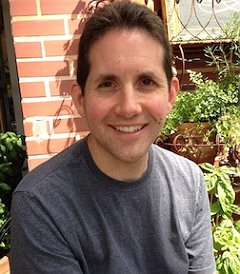
Todd Millstein is a Professor in the Computer Science Department at the University of California, Los Angeles (UCLA). He served as the Computer Science Department Chair from 2022-2025 and is also an Amazon Scholar. His research focuses on making software systems more reliable through programming languages techniques, with significant contributions to network verification and probabilistic programming. Millstein received his Ph.D. from the University of Washington Department of Computer Science, where he was a member of the Cecil group led by Craig Chambers. Prior to that, he completed his undergraduate studies at Brown University under the guidance of Paris Kanellakis and Pascal Van Hentenryck. Millstein's research spans several areas of programming languages and systems with a focus on reliability. He has made significant contributions to network verification, developing the Batfish network configuration analyzer which is now managed by Amazon Web Services and forms the basis of Oracle Cloud's Network Path Analyzer. His work has been recognized with the ACM SIGCOMM Networking Systems Award in 2025. He also works on interactive program verification through lemma synthesis and scalable reasoning methods for probabilistic programming languages. His research bridges programming languages theory with practical systems challenges, as highlighted in his SPLASH/OOPSLA 2024 keynote "Everything is a Program (even if it's not)". Millstein's recent publications demonstrate a consistent focus on verification and reliability across multiple domains. His work shows a progression from foundational programming language techniques to practical applications in networking and probabilistic systems. Key themes include data-driven approaches to program analysis, synthesis of verification artifacts, and applying programming languages techniques to non-traditional domains like network configuration. Millstein's scientific achievements have been recognized with numerous prestigious awards including an NSF CAREER Award, an ACM SIGPLAN Most Influential PLDI Paper Award, an ACM SIGCOMM Networking Systems Award, IEEE Micro Top Picks selection, best-paper awards from PLDI, OOPSLA, and SIGCOMM, a Microsoft Research Outstanding Collaborator Award, an Okawa Foundation Research Grant, an IBM Faculty Award, and a Facebook Research Award. He has also received both the Northrop Grumman Excellence in Teaching Award (for junior faculty) and the Eon Instrumentation Inc. Excellence in Teaching Award (for senior faculty) from UCLA Engineering. Millstein advises several Ph.D. students including Ana Brendel, Poorva Garg (co-advised with Guy Van den Broeck), Rajdeep Mondal (co-advised with George Varghese), and Rathin Singha (co-advised with George Varghese). His research has been supported by various grants including an NSF CAREER Award, Okawa Foundation Research Grant, IBM Faculty Award, and Facebook Research Award. He has also been a Co-Founder and Chief Scientist of Intentionet, which was later acquired by Amazon Web Services. Millstein is actively involved in the Batfish project, an open-source network configuration analyzer that has had significant practical impact. Batfish is now managed by AWS, powers Oracle Cloud's Network Path Analyzer, and is used by dozens of companies. His research group continues to work on network reliability, developing techniques for scalable BGP policy verification and behavioral testing of protocol implementations.
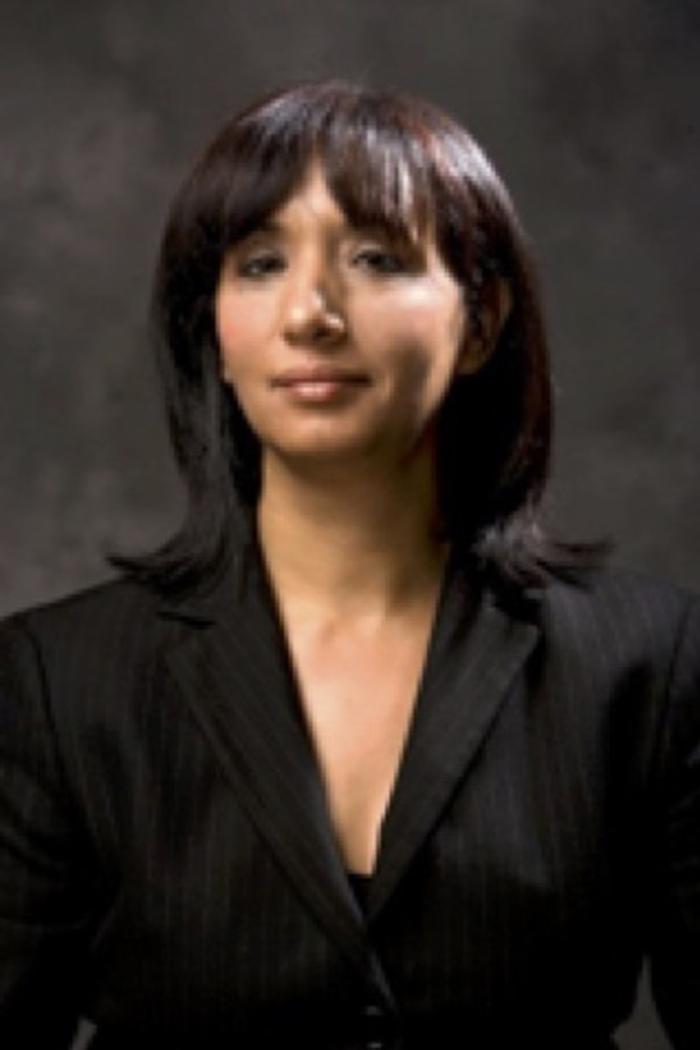
Roles & Affiliation: Research Professor of Physics and Senior Staff Scientist at the Thomas Jefferson National Accelerator Facility. Specializes in nuclear and particle physics with expertise in experimental hadronic physics and electromagnetic probe techniques. Education: BSc in Physics and Mathematics, University Mohamed V, Rabat, Morocco (1984) MSc in Theoretical Physics, University Mohamed V, Rabat, Morocco (1986) Diplôme des Etudes Approfondies, University of Blaise Pascal, France (1987) PhD in Physics, University of Blaise Pascal, France (1991) with thesis: Measurement of the Nucleon Axial Form Factor from Low Energy Pion Electroproduction advised by Prof. Pierre Y. Bertin Strategic Laboratory Leadership Program, University of Chicago Booth School of Business (2010) Research Focus: Experimental investigations into nucleon structure using electromagnetic probes, including axial form factor measurements. Active in pion electroproduction studies and hadronic physics. Engaged in advancing detector technologies through her work on drift chamber tracking systems. Grants & Advising: No specific grants or advisees listed in available records. Labs & Facilities: Primary affiliation with Jefferson Lab's nuclear physics division, contributing to accelerator-based experiments in fundamental nuclear structure.
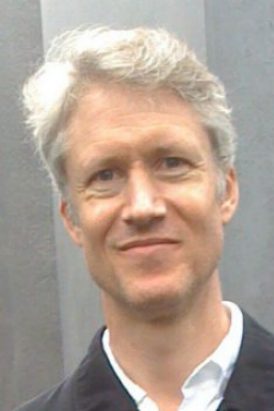
Dr. Pascal Reuss is a Researcher at the Intelligent Information Systems (IIS) Division within the Institute of Computer Science , University of Hildesheim . His work focuses on Case-Based Reasoning (CBR) systems, Multi-Agent Systems , and Knowledge Management applications. Active in CBR framework development and game-based AI research Teaching Computer Science III (Databases) for winter 2025/26 Participating in university sustainability initiatives like Stadtradeln 2024/25 Reuss contributes to AI education through practical implementations in gaming environments and has developed visualization tools for CBR agent behavior. His research spans multi-agent collaboration , dynamic case bases , and domain-specific language implementations for knowledge maintenance. Notable contributions include: Co-developing the FEATURE-TAK framework for knowledge extraction Designing case factories for distributed CBR systems Implementing finite state machines for tactical game agents Creating CBR-based fitness planning systems His work appears in various CBR and Game Development publications from 2011-2024. The research demonstrates practical applications of CBR in aircraft maintenance diagnostics , training plan generation , and educational technology contexts.
Christian Pascal Hirsch is an Associate Professor for Data Science and Statistics at the Department of Mathematics, Aarhus University. His research focuses on random networks inspired by biology and health sciences, utilizing techniques from topological data analysis and stochastic geometry. He is affiliated with the Stochastics group, AU DIGIT Centre, and AU Quantum Campus. Research Interests: Topological data analysis, large deviations theory, spatial random networks, and stochastic geometry. His work includes studies on percolation theory, Gibbs measures, and applications to neural networks and geometric functionals. Publications span journals such as the Journal of Applied and Computational Topology, Journal of Statistical Physics, and Stochastic Processes and Their Applications, covering topics from network topology to Poisson approximation.
Christopher L. Hill is Professor of Modern Japanese Studies in the Department of Asian Languages and Cultures at the University of Michigan. His scholarly work bridges Japanese studies, comparative literature, and intellectual history with a focus on transnational literary and intellectual currents from the nineteenth century to the present. Research Interests: Hill's research centers on the global circulation of literary forms and intellectual concepts. He investigates how genres like the novel travel across borders and how concepts such as 'civilization' and 'culture' become universalized. His work spans Japanese, French, and American contexts while emphasizing intra-Asian connections among Japan, Korea, mainland China, and Taiwan. Hill is particularly fascinated by the 'flow of ideas and literary forms around the world in the modern age,' examining nationalist thought, Japanese intellectuals' views of Asia in the post-imperial postwar era, and the 'Bandung moment' of the 1950s-1960s when decolonizing countries sought to form political and cultural relations outside European and North American frameworks. Publication Trends: Hill's scholarship consistently explores transnational literary history, particularly the movement and transformation of naturalist fiction across global contexts. His work challenges conventional diffusion models by demonstrating the complex, multi-directional pathways through which literary forms travel and transform. Rather than focusing on origination and reception, Hill emphasizes the 'conditions of travel' that enable unexpected transformations of literary forms as they cross cultural boundaries. His recent work has increasingly focused on Japan's relationship with the Global South and anti-colonial movements. Current Projects: "Facing South: Japanese Writers in the Bandung Moment" - examining Japanese writers' responses to decolonization in Africa and Asia during the 1950s-1970s Research on Japanese writers' participation in the Afro-Asian Writers Association and literary conferences following the 1955 Bandung Conference Studies on the reception of Frantz Fanon in Japan during the 1960s Teaching: Hill teaches undergraduate courses on the modern Japanese novel, cultural history of postwar Japan, modernism, samurai representations, and contemporary Japanese social issues. His graduate seminars cover modern Japanese fiction, literature and social theory, cultural history, and the novel in global context. His courses frequently incorporate film, anime, visual art, and philosophy alongside literary texts.
Dr. Oliver Victor is a Research Fellow at the Institute of Philosophy, Heinrich Heine University Düsseldorf (HHU), specializing in existential philosophy, cultural anthropology, and the history of 19th-20th century thought. His work focuses on Camus, Kierkegaard, Nietzsche, and their intersections with ethics, aging, and European cultural foundations. Education: B.A. and M.A. in Philosophy (2013–2016), Ph.D. (2020, summa cum laude) at HHU. Academic Roles: Research Associate (2017–2023), Project Leader for DFG-funded Camus research (since 2023), and Spokesperson for HHU's 'Cultural Foundations of Europe' focus (since 2024). His research explores existentialism's cultural impact, including Camus's Mediterranean philosophy, Kierkegaard's hermeneutics, and Nietzsche's anthropology. Recent projects include translating Camus's early works and organizing interdisciplinary workshops on existential themes. Articles highlight existentialist ethics, cultural identity, and philosophical responses to crises, with collaborations across European institutions. He teaches courses on philosophy of aging, modern individualism, and Camus's works, while co-organizing conferences on topics like 'Negative Anthropology' and 'Philosophy & Film' events.
Pascal Hitzler is a University Distinguished Professor and holds the endowed Lloyd T. Smith Creativity in Engineering Chair at Kansas State University's Department of Computer Science, Carl R. Ice College of Engineering. He directs the Center for Artificial Intelligence and Data Science (CAIDS) and the Institute for Digital Agriculture and Advanced Analytics (ID3A). Previously, he held roles at Wright State University, Karlsruhe Institute of Technology, and TU Dresden. His research focuses on neuro-symbolic AI, semantic web technologies, knowledge graphs, and ontology engineering. Education: PhD in Mathematics (2001, University College Cork), Diplom in Mathematics (1998, University of Tübingen). Academic achievements include over 400 publications, founding editor roles for journals like Neurosymbolic Artificial Intelligence , and leadership in organizations like the Neural-Symbolic Learning and Reasoning Association. Research interests include AI explainability, knowledge representation, and interdisciplinary applications of semantic technologies. He leads the DaSe Lab for Data Semantics, advancing projects like the KnowWhereGraph and Enslaved.org Hub Knowledge Graph. His work bridges symbolic AI with neural networks, emphasizing practical applications in agriculture, environmental science, and historical data preservation. Grants and collaborations span academic, industrial, and international partners. He has advised numerous students and researchers, contributing to both theoretical advancements and real-world semantic systems deployments.
Alice Guionnet is a French mathematician and Research Director at the CNRS, affiliated with the Unité de Mathématiques Pures et Appliquées (UMPA) at École Normale Supérieure de Lyon since 2005. Her research focuses on random matrix theory, probability theory, and their applications in statistical mechanics and large deviations principles. She completed her doctorate in 1995 with a thesis on spin glass dynamics, supervised by Gérard Ben Arous. Her work includes groundbreaking contributions such as the Single Ring Theorem (2009) and studies on large deviations for eigenvalues of Wigner and heavy-tailed matrices. She has been honored with the Oberwolfach Prize (1998), Loève Prize (2009), and Blaise Pascal Medal (2018), and was elected to the French Academy of Sciences in 2017. Key research interests include non-linear Wigner spiked models, spectral phase transitions, and free probability. She has authored over 80 publications, including influential papers on matrix models, eigenvector delocalization, and stochastic processes in disordered systems. Her ERC Project LDRAM (Large Deviations in Random Matrices) explores asymptotic behaviors of random matrix ensembles. Education: PhD from École Normale Supérieure (1995), MSc in Mathematics (ENS Paris, 1989). Labs/Teams: UMPA Lyon, collaborations with CNRS and international institutions. Grants/Awards: Simons Investigator (2012–2015), CNRS Silver Medal (2010).
Federico CISNETTI is a Professor (Maître de Conférences hors classe) at the Université Clermont Auvergne (UCA) , affiliated with the UFR de Chimie and the Matériaux Inorganiques department. He leads research in the Matériaux Luminescents team and serves as Deputy Director of the UFR de Chimie since 2022. His roles include coordinating the Chemistry Licence program (2020–2023) and the Biology-Interface track within it (2017–2022). Education: Ph.D. in Inorganic Chemistry (2007), Université Paris-Sud Habilitation à Diriger des Recherches (HDR, 2013), Université Blaise Pascal Postdoc: CEA-Grenoble (2007–2009) Research Focus: Coordination chemistry of transition metals, organic/organometallic synthesis, click chemistry, luminescent materials (e.g., quantum dots in MOFs), and physicochemical studies of molecular systems. Recent work emphasizes environmentally friendly quantum dots for water treatment and tunable light-emitting materials. Teaching: Covers general chemistry, organic/inorganic chemistry, catalysis, and industrial training programs. Develops courses on chromatography, fluorescence, and coordination chemistry. Labs/Teams: Active in the Matériaux Luminescents group within the Matériaux Inorganiques team, focusing on advanced material synthesis and applications in optoelectronics and environmental catalysis.
Paolo Pagani is a Full Professor at the Department of Philosophy and Cultural Heritage , Ca' Foscari University of Venice , with a focus on Moral Philosophy . He holds the qualification of Full Professor (M-Fil/03) since 2015 and has participated in national research projects (PRIN) like ROSMINI – Analysis and Resources Rosmini’s Thought in a Digital Environment (2022). He contributes to editorial boards of journals such as Eternity & Contradiction. Journal of Fundamental Ontology and Rosmini Studies , and directs the Metafisica book series at Studium-Marcianum. Specializes in Moral Philosophy , Philosophical Anthropology , and the thought of Antonio Rosmini . Teaches courses like Filosofia Morale (Moral Philosophy) and Antropologia Filosofica (Philosophical Anthropology) at Ca' Foscari. Supervised 9 PhD theses and authored over 20 publications, including books on topics like freedom, creation, and metaphysics. His research spans interdisciplinary collaborations, particularly in bioethics and philosophy of religion , and he organizes postgraduate seminars such as FILPRA (Filosofia della Pratica) . He has served on committees for national academic competitions and evaluations, including the Italian Ministry of Education (MIUR) and the National Scientific Habilitation Commission.
David Rabouin is a Directeur de Recherche at the CNRS , affiliated with the SPHERE laboratory (UMR 7219) at the Université de Paris. His work bridges the history and philosophy of mathematics with a focus on early modern figures like Leibniz, Descartes, and Pascal, as well as contemporary French philosophy . He leads the ERC Adg PHILIUMM project (2021–2026) on Leibniz’s manuscripts and previously directed the ANR Mathesis (2017–2021). His research interests include mathesis universalis , the philosophy of infinitesimals , and the historiography of mathematical concepts . His recent publications analyze the interplay between mathematical methods and philosophical frameworks , particularly in 17th-century Europe. He has also organized seminars on mathematical generality and classical age mathematics. Rabouin’s contributions extend to editorial leadership, including co-directing volumes like The Oxford Handbook of Generality in Mathematics and the Sciences (2016) and G.W. Leibniz. Mathesis Universalis (2018). He is a leading voice in historical approaches to mathematical philosophy .
Pascal SALEMBIER is a Professor of Cognitive Ergonomics & Interaction Design at the University of Technology of Troyes (UTT). He serves as Head of the Human and Social Sciences training program and leads the College of Humanities. Trained in experimental cognitive psychology at the University Paris V Sorbonne, he holds a PhD in Ergonomics from the Conservatoire National des Arts et Métiers (Paris) and an Habilitation from the University of Nancy 2. His research focuses on Human-Computer Interaction, Interaction Design, and CSCW (Computer Supported Cooperative Work). Notable projects include studies on nuclear power plant supervision, air-traffic control systems, and contemporary music composition. He contributes to academic publishing as an editorial board member of Computer Supported Cooperative Work and associate editor of Le Travail Humain , and co-founded the e-review Activités . Professional affiliations include membership in the LIST3N laboratory (Laboratoire Informatique et Société Numérique) and active participation in the European Charter for Researchers. His work bridges cognitive science, design, and technology to address collaborative and ergonomic challenges in diverse sectors.
Dr. Pascal Crépey is a Professor at the School of Advanced Studies in Public Health (EHESP) in Rennes, France. He specializes in epidemiology, biostatistics, and the dynamics of communicable diseases. Affiliated with the Department of Quantitative Methods in Public Health (METIS) and UMR 6051 ARENES, his work bridges mathematical modeling, health economics, and infectious disease surveillance. He coordinates the IDEA Field Epidemiology Course and leads research on pandemic mitigation strategies, antibiotic resistance networks, and vaccine effectiveness. Education: Doctorate in Biomathematics and Biostatistics from Pierre and Marie Curie University Dr. Crépey’s research focuses on infectious disease modeling , particularly influenza , COVID-19 , and RSV . His work examines non-pharmaceutical interventions, health economics of prevention , and regional healthcare network dynamics in spreading antibiotic-resistant bacteria. He has authored over 60 peer-reviewed articles. His recent publications highlight trends in Long COVID resource utilization , high-dose influenza vaccines , and mathematical modeling for pandemic preparedness . Key themes include cross-border healthcare coordination, vaccine hesitancy , and big data epidemiology . Dr. Crépey actively trains field epidemiologists through the IDEA course and contributes to policy discussions on influenza vaccination strategies and epidemiological surveillance .
Professor Subhajit Basu is a leading academic at the University of Leeds , holding the position of Professor of Law and Technology within the School of Law . His work bridges Law, Artificial Intelligence, Big Data, and Emerging Technologies , with a focus on the Global South . He has authored influential books including Privacy and Healthcare Data (Routledge, 2016) and Global Perspectives on E-Commerce Taxation Law (Ashgate, 2008). PhD, Liverpool John Moores University LLB, Calcutta University Called to the Bar in 1998, specializing in Corporate Law in India Research Interests span Regulation of Emerging Technologies, AI Governance, Health Data Privacy, Autonomous Systems, and Online Harm . His recent projects include CoR: Sextortion in the Age of Blockchain and Deepfakes (Naif Arab University, 2025–2026) and Autonomy and Moral Agency in Bioethics (WBNUJS, 2024–2025). He previously led EU Horizon projects like PASCAL (2019–2023) on Connected and Autonomous Vehicles. Scientific Awards include the Hind Rattan (Jewel of India, 2020) and fellowships from the Royal Society of Arts and Higher Education Academy . His editorial leadership includes Editor-in-Chief of the International Review of Law Computers and Technology and associate roles on five journals. Notable Grants include funding from Naif Arab University (Saudi Arabia), EU Horizon 2020, EPSRC, and the Atlantic Philanthropies. He has provided consultancy to the National Cybercrime Research Centre (Poland), the Government of Saudi Arabia on AI frameworks, and The Dialogue (India) on IT Rules.