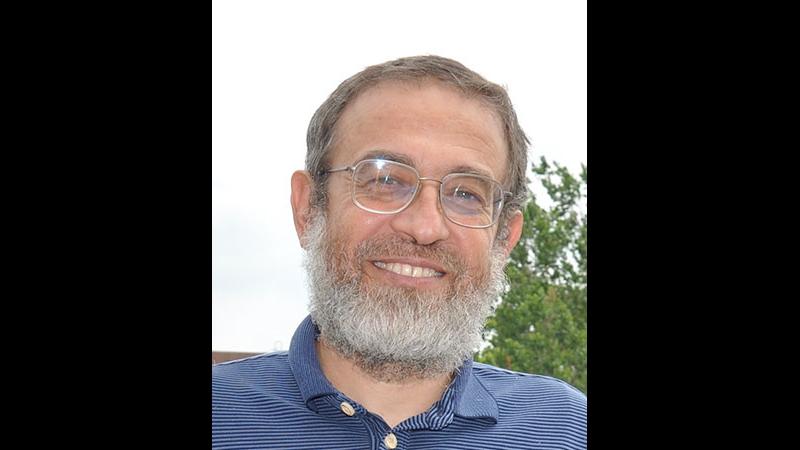
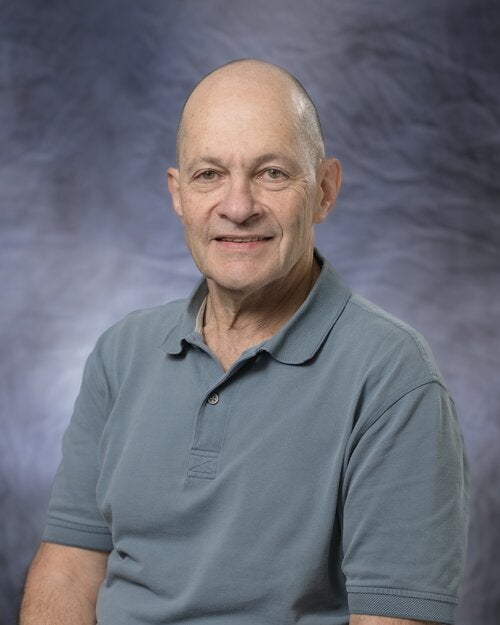
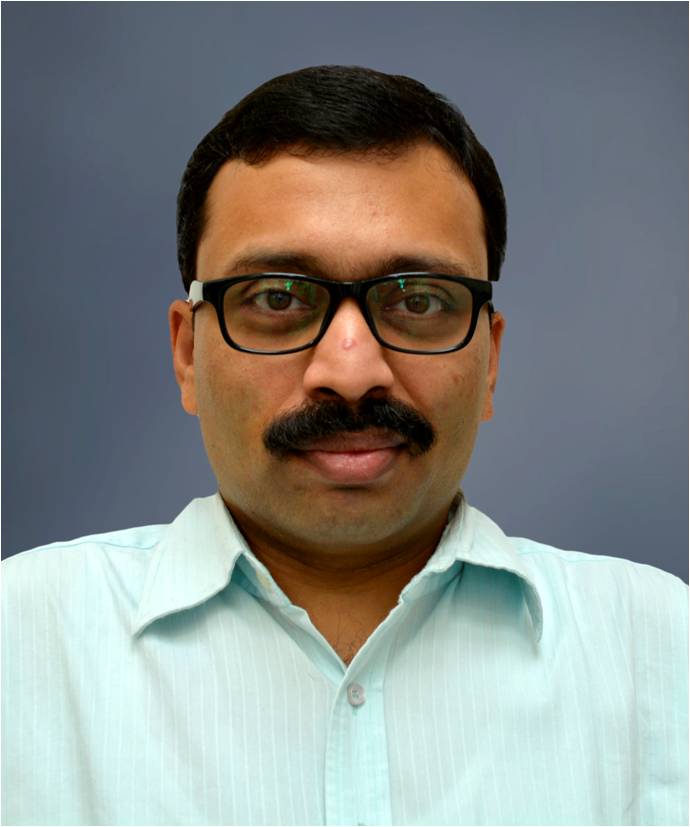
Greta Panova is a Gabilan Distinguished Professor of Science and Engineering and a Professor of Mathematics at the University of Southern California (USC). Her research focuses on Algebraic Combinatorics, with connections to representation theory, statistical mechanics, probability, and computational complexity theory. She also engages in molecular biology modeling. Panova holds editorial roles at journals including the Electronic Journal of Combinatorics, Arnold Mathematical Journal, and Communications of the American Mathematical Society. She is a writer/editor for the Putnam Mathematical Competition (2023-2025) and is currently supported by NSF grants in the CCF division. Her research interests span Algebraic Combinatorics, Representation Theory, Statistical Mechanics, Probability, and Computational Complexity Theory. Specific areas include Kronecker and Littlewood-Richardson coefficients, asymptotic behavior of combinatorial structures, and the interplay between algebraic structures and computational complexity. She also explores applications in molecular biology, particularly protein dynamics in DNA lesions. NSF grants in CCF division (current) Editorial roles at Electronic Journal of Combinatorics, Arnold Mathematical Journal, and others Contributor to the Putnam Mathematical Competition Panova's research is supported by NSF grants, focusing on computational complexity and algebraic combinatorics. She has advised students in areas related to her research, though specific names aren’t listed here. Grants have funded explorations into geometric complexity theory, asymptotic combinatorics, and molecular biology modeling. Her work involves collaborations across disciplines, including statistical mechanics and integrability, as highlighted in her white paper contributions.
Professor David Taubman is a distinguished academic serving as Professor and Deputy Head of School (Research) at the School of Electrical Engineering and Telecommunications (EE&T) at the University of New South Wales (UNSW) in Sydney, Australia. He is also co-director of Kakadu Software Pty. Ltd. and its affiliates Kakadu R&D and Kakadu GPU. With a career spanning over three decades, Professor Taubman has made significant contributions to the field of image and video compression, most notably as the author of the EBCOT coding algorithm adopted in the JPEG2000 international standard. Professor Taubman earned his B.Sc. in Mathematics and Computer Science (1986) and B.E. (Medal) in Electrical Engineering (1988) from the University of Sydney, followed by an M.Sc. (1992) and Ph.D. (1994) in Electrical Engineering from the University of California at Berkeley. His professional journey includes engineering work at the Electricity Commission of N.S.W. (1988-1990), research positions at Hewlett-Packard Laboratories in Palo Alto (1994-1998), and an academic career at UNSW where he progressed from Senior Lecturer (1998-2003) to Associate Professor (2004-2009) and finally to Professor (2009-present). He has held various leadership roles including Head of the EE&T Telecommunications Research Group (2003-2014), Head of the EE&T Signal Processing Research Group (2014-present), Director of Research for the School of EE&T (2011-2016), and Deputy Head of School (Research) since 2017. Professor Taubman's research interests center on image and video compression, with particular expertise in JPEG2000 standards and implementations. His work spans signal processing, wavelet transforms, scalable video coding, motion modeling, and multimedia systems. He has pioneered numerous compression algorithms and frameworks, including the EBCOT coding algorithm that became central to the JPEG2000 standard. His recent research focuses on efficient motion modeling with cuboidal partitioning, learned lifting-based transform structures, and high-throughput implementations of JPEG2000 for video applications. His work bridges theoretical foundations with practical implementations, as evidenced by the commercially successful Kakadu Software tools that have garnered around 500 commercial licensees. Analysis of Professor Taubman's recent publications reveals a consistent focus on advancing compression technologies with particular emphasis on scalability, efficiency, and adaptability. His work spans traditional image compression (JPEG2000 extensions), video coding (cuboid-based partitioning for UHD/360-degree video), and emerging applications (nanopore sequencing data compression). A notable trend is the integration of machine learning techniques with traditional compression frameworks, as seen in his work on learned lifting-based transform structures. His research maintains strong connections to real-world applications across diverse domains including medical imaging, astronomical data processing, and genomic sequencing. IEEE Fellow Engineers Australia Fellow (by invitation) Professor Taubman has served as Associate Editor for the IEEE Transactions on Image Processing for two four-year appointments (2003-2005 and 2010-2013). He has been actively involved in numerous research grants focused on image and video compression technologies, particularly those related to the JPEG2000 standard and its extensions. His work has received significant industry support, reflected in his consultancy with various U.S., Japanese, and Australian corporations. He has also contributed to international standards development as a member of Standards Australia Technical Committee MS-065 (mirroring ISO TC42 on Digital Photography) and as a constitutional member of Standards Australia Technical Committee IT-029 (Coded Representation of Picture, Audio and Multimedia/Hypermedia Information). Professor Taubman co-directs Kakadu Software Pty. Ltd. and its research affiliates Kakadu R&D and Kakadu GPU, which have developed the commercially successful Kakadu Software tools for JPEG2000. His research group at UNSW focuses on advanced image and video compression techniques, with particular expertise in wavelet-based methods, scalable coding, and motion modeling. The group maintains strong industry connections and has contributed significantly to the development and standardization of image compression technologies worldwide.
Gaura Narayan is an Associate Professor of Literature at Purchase College SUNY , specializing in British Romanticism , postcolonial literature and culture , gender studies , and narrative theory . She received her PhD from Columbia University in 1998 and has taught at Purchase College since 1996. Education : BA (Honors), University of Delhi MA, MPhil, PhD, Columbia University Research explores intersections between Romantic-era British literature and colonial/postcolonial South Asian narratives, with a focus on gendered power dynamics and imperial historiography. Her 2010 monograph, Real and Imagined Women in British Romanticism , examines gender’s role in Romantic texts, while her 2025 article in Comparative Literature analyzes imperial discourses around the Black Hole of Calcutta. Publications span critical analyses of Rudyard Kipling, Phoolan Devi, and Virginia Woolf, alongside contributions to anthologies like Narrative Beginnings (2008) and 100 Years of A Passage to India (2024). Current projects investigate British imperial imagination in 1757-1857 India. Awards include the Chancellor’s Award for Excellence in Teaching (2022-2023) and multiple Columbia/Delhi University fellowships. Teaching includes courses on Romanticism, Victorian poetry, postcolonial South Asian literature, and narrative theory. She emphasizes connections between Britain’s imperial legacy and contemporary global power structures.
Walid G. Aref is a Professor of Computer Science at Purdue University since Fall 1999. His research focuses on database systems, spatial and spatio-temporal data management, query processing, and indexing. He has led projects funded by NSF, NIH, and industry partners. Aref is a Fellow of the IEEE and has received awards including the NSF CAREER Award (2001) and VLDB’s Ten-Year Best Paper Award (2016). He serves as Editor-in-Chief of ACM Transactions on Spatial Algorithms and Systems and has authored numerous influential papers. Education: BSc/MSc from Alexandria University (Egypt), PhD from University of Maryland (1993). Research Interests: Extending database functionality for emerging applications like spatial, graph, and sensor databases. Notable contributions include the Chameleon project, AQWA system for big spatial data, and privacy-preserving Casper framework. Selected Projects: NSF-funded work on multi-predicate spatial queries, in-memory graph relational systems, and adaptive spatio-textual processing. Systems like Tornado (spatio-textual streams) and LocationSpark (distributed spatial data) exemplify his contributions. Awards: Multiple best paper awards, IEEE Fellow, and leadership roles in ACM SIGSPATIAL.
Steven Bradlow is a Professor in the Department of Mathematics at the University of Illinois at Urbana-Champaign (UIUC), affiliated with the College of Liberal Arts & Sciences. His research focuses on differential geometry, gauge theory, algebraic geometry, and topology, with particular emphasis on Higgs bundles, moduli spaces, and geometric structures. He holds a PhD from the University of Chicago (1988) and has held additional campus roles as a Professor of Mathematics. Research Interests: Bradlow’s work explores advanced topics such as holomorphic vector bundles, stability conditions, and geometric invariant theory. His studies of Higgs bundles integrate techniques from algebraic geometry, differential geometry, and mathematical physics, addressing questions related to moduli spaces, spectral curves, and representation varieties. He investigates exotic components of surface group representations and their connections to Teichmüller theory, contributing to the broader understanding of geometric structures and their topological properties. Recent Work Trends: Recent publications highlight his focus on Cayley correspondences, higher rank Teichmüller spaces, and uniformization techniques for branched surfaces. His collaborative projects often bridge algebraic and differential geometry, with applications to gauge theories and geometric analysis. He has also contributed to editorial work honoring peers like Karen Uhlenbeck and Oscar García-Prada. Grants & Advising: While specific grant details are not listed, Bradlow has been involved in NSF-funded initiatives (e.g., EMSW21-MCTP, RNMS: Geometric Structures). His advising contributions are reflected in co-authored works with students/postdocs such as Brian Collier and Oscar García-Prada. He is associated with research networks exploring geometric representation theory and mathematical collaborations. Labs/Teams: Active within UIUC’s Department of Mathematics, Bradlow collaborates with researchers in geometry and topology. His work often intersects with interdisciplinary groups studying geometric structures, though specific lab affiliations are not detailed here.
Banu Lokman is a Professor of Operational Research (OR) at the University of Portsmouth, serving as Associate Head (Research and Innovation) in the School of Organisations, Systems and People within the Faculty of Business & Law. She leads the Centre for Innovative and Sustainable Finance and contributes to the Centre for Operational Research & Logistics. Her expertise spans multi-criteria decision-making, optimization, and their applications in healthcare and sustainability. She holds editorial roles at OMEGA and the IMA Journal of Management Mathematics and organizes the NATCOR MCDM courses. Previously, she served as Deputy Director of CORL (2011–2024), Secretary of the International MCDM Society, and Board Member of INFORMS MCDM Section. She currently chairs the INFORMS MCDM Section as President-elect/Vice-President. Education: BSc, MSc, and PhD in Industrial Engineering from Middle East Technical University (METU, Turkey), followed by postdoctoral research at Aalto University (Finland). She taught at METU (2014–2019) and held visiting roles at Aalto University. Research Interests: Focuses on developing optimization methods for multi-criteria decision problems, particularly in healthcare (e.g., optimizing prostate biopsy decisions with Portsmouth NHS Trust) and sustainability. Her work emphasizes algorithms for nondominated set representation, robust efficiency analysis, and cluster ensemble methods. Key Awards: Bernard Roy Award (2022) for outstanding contributions to Multiple Criteria Decision Aiding, and Young Researcher Award (2015). Advising & Grants: Leads a healthcare-related PhD project and contributes to projects like the Social Investment Fund collaboration with Waltham Forest Council. She actively supervises students and participates in research initiatives on supply networks and data control systems. Labs & Teams: Engaged with interdisciplinary teams in operational research and logistics, particularly in applying OR to real-world challenges such as energy market optimization and MRO supply networks.
Daniel Horsley is an Associate Professor and ARC Future Fellow at the School of Mathematical Sciences, Monash University. His research focuses on combinatorial designs and edge decomposition of graphs, with notable contributions to extremal graph theory, Zarankiewicz problems, and graph decomposition theorems. Current Role: ARC Future Fellow, Associate Professor Affiliation: School of Mathematical Sciences, Monash University Active Projects: 'The Zarankiewicz problem through linear hypergraphs and designs' (2022–2025), 'Edge decomposition of dense graphs' (2017–2022), and more Research interests span combinatorial designs, graph decomposition, and extremal combinatorics. His work emphasizes theoretical advancements in design theory, with applications in discrete mathematics and optimization. Recent articles address semi-inducibility, Zarankiewicz numbers, and embedding partial designs, reflecting his expertise in structural and extremal combinatorics. Key awards include the ARC Future Fellowship. His research outputs include over 57 publications in journals like Journal of Graph Theory , SIAM Journal on Discrete Mathematics , and European Journal of Combinatorics . Grant projects include collaborations with ARC, University of Queensland, and University of Melbourne, focusing on Steiner systems, compressed sensing, and combinatorial structure analysis. Advising PhD students and mentoring researchers in discrete mathematics and combinatorial design theory.
Dr. Paul McGarr is a Lecturer in Intelligence Studies at King’s College London (since 2023), part of the Department of War Studies within the Faculty of Social Science & Public Policy. He holds an MA in International History from Royal Holloway, University of London, and a PhD from Royal Holloway (2008). Prior to joining King’s, he served as Lecturer and Associate Professor in US Foreign Policy at the University of Nottingham (2011–2023), where he also held an AHRC Postdoctoral Fellowship (2009–2011). He is a Fellow of the Royal Historical Society and Royal Asiatic Society. His research focuses on security and intelligence outside the Anglosphere, clandestine diplomacy, and covert propaganda. Notable projects include a British Academy-funded study (2017–2019) analyzing emotions in British-India security relations and research fellowships at institutions like the Library of Congress and British Library. Dr. McGarr teaches modules on intelligence in war studies, diplomacy, and peace/war contexts. He supervises PhDs in intelligence agencies outside the Anglosphere, covert action, and disinformation. His authored/co-authored books include Spies in South Asia (2024), The Cold War in South Asia (2013), and India at 70 (2019). Recent articles explore topics like Soviet disinformation in India and the Sino-Indian War’s colonial cartographic roots. He contributes to the King’s Centre for the Study of Intelligence, a hub for interdisciplinary intelligence research.
Anna Bigelow is an Associate Professor of Religious Studies and Director of Graduate Studies at Stanford University. Her research focuses on Islamic Studies, South Asian and Middle Eastern Religions, emphasizing material culture and sacred spaces. She holds a BA from Smith College, MA from Columbia University, and PhD from UC Santa Barbara. Current projects include a comparative study of shared sacred sites in India and Turkey, exploring secularism's intersection with religious practices. Her notable works include Sharing the Sacred: Practicing Pluralism in Muslim North India (2010) and Islam through Objects (2021). She co-edited a special issue on Material Islam for the journal MAVCOR . Her research has been supported by the Carnegie Scholars Program and the Social Science Research Council. Bigelow advises graduate students on contemporary topics like Muslim minority populations, sacred space, and secularism. She emphasizes interdisciplinary methods combining ethnography, archival work, and cultural analysis. She collaborates with the Abbasi Program in Islamic Studies and the Center for South Asia at Stanford. Her articles analyze themes such as material religion, Sufi shrines, and postcolonial identities. She actively critiques the academic job market’s challenges, advising applicants to consider program fit and financial realities.
David Gilkey is an Associate Professor in the Department of Occupational Safety, Health and Industrial Hygiene at Montana Technological University in Butte, MT. He holds a Doctor of Chiropractic degree from Southern California Health Sciences University and a Ph.D. in occupational and environmental health from Colorado State University. Dr. Gilkey is a Certified Professional Ergonomist (CPE), Certified Safety Professional (CSP), and Registered Environmental Health Specialist (REHS/RS), with additional certifications in walkway safety assessment. His research encompasses: Slip/trip/fall prevention through surface friction evaluation Safety climate in construction and mining industries Ergonomic risk assessment in healthcare and manufacturing Agricultural safety focused on ATV/UTV operation Environmental health and biological site safety Occupational stress and burnout biomarkers His recent publications demonstrate strong focus on practical safety solutions in healthcare ergonomics (patient transfers, burnout), industrial settings (noise exposure, material handling), and foundational slip/fall research. Earlier work established his expertise in agricultural ATV safety through injury epidemiology and prevention strategies. Dr. Gilkey teaches courses including OSH 391 (Slips, Trips and Falls), OSH 454 (Ergonomics), IH 542 (Principles of Epidemiology), and advanced industrial hygiene topics. He actively advises undergraduate and graduate students on academics, internships, and career development. As Montana's Health Links Ambassador, he promotes Total Worker Health® programs through the Colorado School of Public Health, helping employers develop Certified Healthy Workplace initiatives that integrate safety and wellness.
FANG Yuan is a tenured Associate Professor at the School of Computing and Information Systems (SCIS), Singapore Management University (SMU). He holds the prestigious Lee Kong Chian Fellowship and leads research in artificial intelligence and data science. His institutional affiliation includes: School of Computing and Information Systems, Singapore Management University Education: Ph.D. in Computer Science, University of Illinois at Urbana-Champaign (2014) Bachelor of Computing (First Class Honors), National University of Singapore (2009) - Top student in Computer Science Research Focus: Dr. FANG specializes in data mining, machine learning, and AI with emphasis on graph learning, information networks, recommendation systems, and knowledge graph applications. His work bridges theoretical foundations with practical applications in social analytics, biomedical informatics, and digital transformation, often employing advanced neural network architectures. Publication Trends: Recent works (2024-2025) demonstrate strong focus on graph machine learning innovations, including graph foundation models, prompt-based learning for dynamic graphs, and LLM-graph integrations. Key themes include few-shot/zero-shot learning, non-homophilic graph processing, and applications in recommendation systems, bioinformatics, and NLP. Methodological advancements frequently involve contrastive learning, transformer architectures, and explainable AI techniques. Awards & Honors: Lee Kong Chian Fellow World's Top 2% Scientist (2024) by Stanford/Elsevier #1 Most Influential Paper at WWW'23 (GraphPrompt) - Paper Digest (2024-09) Top 5 Most Influential Papers at WWW'23 (GraphPrompt) - Paper Digest (2024-05) Top Computer Science Graduate, NUS (2009) Student Advising: Currently advises doctoral candidates including DONG Viet Hoang, LIU Ran, and NIU Yudong. Recently supervised Dr. Zhongzhou Liu's successful PhD defense (2024) on trustworthy recommendation systems. Professional Engagement: Regularly organizes tutorials at premier venues (WWW, KDD) and delivers invited talks internationally on graph learning advancements. Leads multiple research projects in collaboration with industry partners.
Hilde Henriksen Waage is a Research Professor at the Peace Research Institute Oslo (PRIO) and a Professor of History at the University of Oslo . With a focus on Middle East conflicts , peacebuilding , and US foreign policy , she has led major projects like No Peace in Sight? The United States and Afghanistan (2020–2024) and The Geopolitics of Syria’s Reconstruction (2019–2020). Key Research Areas: Mediation in hostile conflicts US-PLO dialogue facilitation Oslo Peace Process legacy Gaza ceasefire analysis Israeli-Palestinian power asymmetry Notable Publications: 2022: Analysis of Sverre Lodgaard’s peace research journey 2021: Geopolitical challenges in Syria’s reconstruction 2018: Critique of Palestinian-Israeli negotiation failures 2013: Historical conflict patterns in the Middle East 2006: Lessons from Norwegian peacekeeping in the Middle East Awards: Admitted to the Norwegian Academy of Science and Letters (2017) Media Engagement: Provided expert analysis on Gaza ceasefire (ABC News, 2025) Commented on Israel’s political instability (Dagbladet, 2025)
Anna Sanpera Trigueros is a Research Professor at the Universitat Autònoma de Barcelona (UAB) and affiliated with the Department of Physics. Since 2005, she has been an ICREA research professor, contributing to quantum information theory and related fields. Education: PhD in Physics from UAB (1992) Postdoctoral Experience: Oxford University, CEA-Saclay, Leibniz University Her research spans Quantum Information , focusing on: Entanglement theory Quantum phase transitions Quantum neural networks Open quantum systems Recent publications highlight trends in quantum simulation, multi-partite entanglement, and hybrid quantum technologies. Key keywords include Quantum Information , Condensed Matter , and Quantum Optics . She actively engages in science popularization and education, mentoring PhD, master's, and TFG students. Her work intersects theoretical physics, quantum computing, and experimental validation through collaborations.
Ken Ono is the STEM Advisor to the Provost and the Marvin Rosenblum Professor of Mathematics at the University of Virginia. He also holds courtesy appointments as Professor of Electrical and Computer Engineering, Professor of Data Science, and Professor of Statistics. Additionally, he is a Fellow of the Shannon Center for Advanced Studies and serves on the Institute for Advanced Study board of trustees and the National Security Agency Advisory Board. His educational background includes a Ph.D. in Mathematics from UCLA (1993) and a B.A. in Mathematics from the University of Chicago (1989). Throughout his distinguished career, Ono has held leadership roles including Vice President of the American Mathematical Society, Chair of the Mathematics Section of the American Association for the Advancement of Science, and Chairman of the Department of Mathematics at UVa. Ken Ono specializes in Number Theory, Combinatorics, Algebra, and Arithmetic Geometry, with recent work expanding into sports analytics and swimming optimization. His research has produced numerous publications on partition theory, modular forms, and related areas, continuing the mathematical legacy of Srinivasa Ramanujan. His recent publications demonstrate a continued focus on partition theory, modular forms, and their connections to prime numbers and combinatorial structures. The work shows sophisticated connections between classical number theory and modern mathematical physics, with applications in cryptography and data science. Guggenheim Fellowship David and Lucile Packard Fellowship Alfred P. Sloan Foundation Fellowship NSF CAREER Award Presidential Early Career Award (2000) National Science Foundation Director's Distinguished Teaching Scholar (2005) University of Chicago Alumni Medal for Professional Achievement (2023) Fellow of the American Mathematical Society Ono has advised 34 PhD students and 17 postdocs, mentoring numerous award winners including 2 Breakthrough Mirzakhani Prize winners, 9 Morgan Prize winners, and 9 Schafer Prize winners. He founded and directs the Spirit of Ramanujan Global STEM Talent Search, which has awarded 125 budding scientists from 23 countries. His research grants have supported extensive REU programs, with continuous undergraduate research opportunities for 25 years. Beyond academia, Ono serves as a technical consultant for elite swimmers, has worked as an Associate Producer on the film The Man Who Knew Infinity , and is actively involved with the Infinity Arts Foundation. His interdisciplinary work spans from pure mathematics to practical applications in sports science, where he has developed data-driven approaches to optimize swimming performance and served as a consultant for Olympic medalists. He co-founded the Velocity Swim Camp with Olympic coach Todd DeSorbo, combining mathematical analytics with elite swimming training.
Somnath Basu is a Professor in the Department of Metallurgical Engineering and Materials Science at the Indian Institute of Technology Bombay. He has been serving in academic roles since 2011, progressing from Assistant Professor to Associate Professor and then to Professor in 2022. His work is deeply rooted in process metallurgy and materials engineering, with a focus on industrial steelmaking technologies. His research interests include metal refining , thermodynamics of slag-metal reactions , phosphorus and sulfur removal , and continuous casting processes . He also explores nanofluids and their transport properties, indicating interdisciplinary engagement. His work bridges fundamental thermodynamic studies with practical industrial applications in iron and steel production. The selected publications reflect a strong trend in steelmaking process optimization , particularly in reaction kinetics , inclusion behavior , and process monitoring . His research spans both experimental investigations and thermodynamic modeling, targeting improvements in steel purity and casting efficiency. Scientific Contributions: Published in leading journals such as ISIJ International , Steel Research International , and Metallurgical and Materials Transactions B . Contributions to understanding phosphorus partitioning, nozzle clogging, and nanofluid conductivity. While no specific students or grants are listed, his long-standing academic position and publication record suggest active supervision of graduate research and involvement in funded projects related to metallurgical process innovation. His work likely supports both academic and industrial advancements in steel technology. He is affiliated with a leading research department equipped with advanced facilities for metallurgical experimentation and process simulation, though specific lab names or team structures are not mentioned in the text.