Prof. Waldemar Kolanus leads the Molecular Immunology and Cell Biology department at the University of Bonn's Life & Medical Sciences Institute (LIMES) . His research bridges immunoregulation , stem cell dynamics , and metabolic stress responses in immune cells. Unit 2 member at LIMES Principal investigator in SFB 704 and ImmunoSensation Cluster Leads a multidisciplinary lab with postdocs, PhD students, and technical staff His work focuses on intracellular signaling pathways connecting immune activation to tissue homeostasis, particularly through: Cytohesin proteins in integrin-mediated adhesion and migration TRIM71 in stem cell regulation and congenital hydrocephalus High-salt environments affecting macrophage function Publication trends show expertise in immune cell migration , genetic models , and chemical inhibition , with frequent use of mice and zebrafish for in vivo studies. Key articles explore: TRIM71's dual role in auditory development and germ cell maintenance Cytohesin family's Golgi regulation and insulin signaling Ruxolitinib's off-target migration inhibition of dendritic cells Contact details: Address: LIMES Institute, Carl-Troll-Straße 31, Bonn Email: kolanus.sekretariat@uni-bonn.de Phone: +49 228 73-62788
Dr. Stephanie Spahr is a Research Group Leader at the Leibniz Institute of Freshwater Ecology and Inland Fisheries (IGB) in Berlin, Germany, where she leads the Organic Contaminants research group within the Department of Ecohydrology and Biogeochemistry. Previously, she served as a Junior Research Group Leader at the University of Tübingen's Center for Applied Geoscience (2019-2021) and as a Postdoctoral Researcher at Stanford University's Department of Civil and Environmental Engineering (2016-2019). Dr. Spahr earned her PhD in Environmental Chemistry from the Swiss Federal Institute of Technology Lausanne (EPFL) and the Swiss Federal Institute of Aquatic Science and Technology (Eawag) in 2016. Her doctoral research focused on the formation of N-nitrosodimethylamine during water disinfection with chloramine. She completed her MSc in Geoecology at the University of Tübingen in 2012, with thesis work on carbon and nitrogen isotope analysis of benzotriazoles conducted at Eawag, and her BSc in Geoecology/Ecosystem Management at the same institution in 2010. Dr. Spahr's research focuses on trace organic contaminants in aquatic systems, with particular expertise in transformation processes of contaminants in natural and engineered systems, advanced oxidation processes for water treatment, urban blue-green infrastructure, and compound-specific isotope analysis. Her work bridges environmental chemistry, engineering, and ecology to address water quality challenges in urban and natural water systems. She employs advanced analytical techniques to track contaminant sources and transformation pathways, with a strong emphasis on practical applications for water treatment and environmental protection. Her recent publications demonstrate a strong focus on biochar-based water treatment technologies, particularly for stormwater management. She investigates how biochar amendments can remove trace organic contaminants from urban runoff, with recent work examining persulfate activation mechanisms, the role of chloride in reactive species formation, and the performance of engineered media filters under dynamic conditions. Her research also extends to understanding contaminant transport in rivers, the ecological impacts of pollutants, and developing analytical methods for environmental monitoring. The interdisciplinary nature of her work connects chemical processes with ecological outcomes. Outstanding Review Paper Award 2023 in Environmental Science: Water Research & Technology Selected for the Falling Walls Female Science Talents Intensive Track 2023 Selected mentee in the Leibniz Mentoring Programme 2022-2023 Best poster award (1st prize) at the Wasser 2022 of the Water Chemistry Society Selected fellow in the Postdoc Academy for Transformational Leadership 2020-2022 (Robert Bosch Stiftung) Selected fellow in the Athene Program for early female career researchers at the University of Tübingen, 2020-2021 As a Research Group Leader, Dr. Spahr supervises multiple research projects including 'POllution in UrbaN ponds, eco-evolutionary Dynamics, and Ecosystem Resilience (POUNDER)', 'Dynamic hyporheic zone', 'NYMPHE', and the 'Incident-related special investigation programme for the environmental disaster in the Oder River'. She serves on the Executive Board of the German Water Chemistry Society and heads its Expert Committee on 'Oxidative Processes'. Her collaborative work spans numerous institutions across Germany and internationally, addressing critical water quality challenges through interdisciplinary approaches. Dr. Spahr leads the Organic Contaminants research group at IGB Berlin, which focuses on understanding the fate and treatment of organic pollutants in water systems. Her team employs advanced analytical techniques including compound-specific isotope analysis to track contaminant sources and transformation pathways. The group collaborates extensively with other departments at IGB and with international partners on projects addressing urban water challenges and ecological impacts of pollution. Current research emphasizes innovative water treatment technologies, particularly biochar-based systems for stormwater management, and investigating the complex interactions between contaminants, aquatic ecosystems, and human activities.
Prof. Morten Hvitfeldt Iversen is a leading researcher in Polar Biological Oceanography at the Alfred Wegener Institute (AWI). He serves as Section Head of the Polar Biological Oceanography department and leads the bridging group 'SeaPump' collaborating with University of Bremen and MARUM. His work focuses on organic matter production, export, and transformation in oceans, linking small-scale microbial processes to large-scale biogeochemical cycles in high-latitude regions. Iversen pioneers optical techniques to study marine aggregates and their role in the biological carbon pump. Research interests include Arctic and Antarctic carbon dynamics, microbial ecology, and the impact of climate change on ocean systems. He leads projects like the 'SeaPump' initiative and contributes to the 6.3 sub-topic 'The future of the biological pump' under POF IV. His work integrates field observations, mooring data, and satellite measurements to understand carbon fluxes and their climate feedbacks. Recent articles highlight his focus on Arctic carbon sinks, microplastic impacts, and zooplankton roles in the biological pump. Iversen actively participates in expeditions aboard the Polarstern and uses advanced optical tools to study particle dynamics. His contributions bridge experimental and observational science to address global climate challenges.
Professor Georg Guggenberger is a distinguished academic at Leibniz University Hannover, where he serves as Professor of Soil Chemistry within the Department of Soil Science at the Institute of Earth System Sciences, Faculty of Natural Sciences. In addition to his research and teaching responsibilities, he holds several significant administrative positions including Vice Dean for Research in the Dean's Office of the Faculty of Natural Sciences, Executive Management at both the Institute of Soil Science and Department of Soil Science levels, and Chair of the Selection Committee for the M.Sc. Landscape Sciences program. Prof. Guggenberger's research program focuses on fundamental processes governing soil organic matter dynamics across diverse ecosystems worldwide, from Arctic to tropical regions. His work investigates biotic and abiotic factors influencing the formation, transport, and stabilization of soil organic matter, with particular emphasis on soil fertility maintenance. He employs advanced methodologies including stable isotope approaches, biomarker analyses, microspectroscopic techniques (XPS, ESEM, NMR, NanoSIMS), and molecular biological methods to study biogeochemical interactions on mineral surfaces, dissolved organic matter dynamics, plant-mycorrhizal-soil interactions, permafrost soil organic matter, and impacts of land use and climate change on soil organisms. Analysis of Prof. Guggenberger's recent publications reveals a strong interdisciplinary research program spanning soil biogeochemistry, carbon cycling, soil microbiology, and climate change impacts. His work integrates field experiments along environmental gradients with laboratory manipulation studies to identify underlying mechanisms. The research shows particular strength in understanding organic matter stabilization mechanisms, microbial contributions to soil processes, and development of sustainable soil management practices that address climate change challenges. Prof. Guggenberger actively contributes to academic service through his leadership roles in examination boards and committees, including the Examination Board for Geosciences programs and the Selection Committee for Landscape Sciences. His administrative responsibilities as Vice Dean for Research demonstrate his commitment to advancing research within the Faculty of Natural Sciences at Leibniz University Hannover.
Rupert Klein is a Professor at Freie Universität Berlin in the Department of Mathematics and Computer Science , specializing in Geophysical Fluid Dynamics . His research spans atmospheric dynamics, numerical methods, and gas dynamics of combustion. Research Interests : Geophysical Fluid Dynamics and Atmospheric Modeling Multiscale Asymptotic Analysis Wave Propagation and Turbulence Combustion and Pressure Gain Combustion Climate Dynamics and Data Assimilation Scientific Awards : DRS Award for Excellent Supervision (2014) ECMWF Fellowship (renewed 2017) His recent work includes multiscale models for atmospheric flows, vortex dynamics, and combustion processes. Key collaborations involve DFG SPP 1276, CRC 1029 (TurbIn), and CRC 1114 (SCCS) projects. He contributes to numerical methods for low-Mach-number flows and geophysical simulations.
Prof. Dr. Nadine Göppert is a University Professor (W3) of Hydrogeology at the Institute of Geological Sciences , Freie Universität Berlin , Germany. She previously served as an Akademische Rätin and Senior Scientist at the Karlsruhe Institute of Technology (KIT) from 2011–2024, and held research positions at the Weizmann Institute of Science (2009–2011) and University of Karlsruhe (2008–2009). Her academic background includes a Dr. rer. nat. (2008) and Diploma in Geology (2002) from the University of Karlsruhe. Education Doctorate in Hydrogeology (2008), University of Karlsruhe Diploma in Geology (2002), University of Karlsruhe Her research focuses on karst hydrology , groundwater tracing , particle transport dynamics , and water quality monitoring in alpine and subtropical karst systems. Recent publications analyze tracer experiments , microplastic transport , and hydrochemical variability across diverse karst environments. Her teaching portfolio includes Applied Hydrogeology , Field Methods , and Laboratory Techniques for students in Geosciences and Water Engineering. She has supervised numerous theses on topics like karst groundwater dynamics and fluorescence-based water quality analysis .
Shengjie Li is a Researcher in the Department of Biogeochemistry at the Max Planck Institute for Marine Microbiology (MPI-Bremen), Germany. Their postdoctoral research focuses on microbial ecology and biogeochemical processes in marine oxygen minimum zones, particularly linking particle properties, microbial communities, and nitrogen-loss dynamics. Li holds a PhD from Peking University (2017-2022) and conducted a guest PhD at the University of Calgary (2020-2021). Research interests include microbial responses to environmental change, nitrogen cycling in aquatic systems, and the interplay between organic carbon, sulfur, and iron in driving nitrate reduction. Key projects explore isotopic signatures of N₂O production, methane dynamics in groundwater, and the role of biochar in stress resistance. Publications highlight contributions to understanding N₂O emissions, cold seep nitrogen-loss mechanisms, and microbial adaptations in fluctuating environments. Ongoing work bridges microbial community analysis with biogeochemical modeling to address global climate impacts.
Ulrich Pöschl is Director of the Multiphase Chemistry Department at the Max Planck Institute for Chemistry and Professor in the Department of Chemistry, Pharmacy and Geosciences at Johannes Gutenberg University (JGU) in Mainz, Germany. He has held leadership roles at MIT, the Max Planck Society, and the Technical University of Munich, and is a globally recognized expert in atmospheric and multiphase chemistry. Education: PhD (Doctor technicae) in Chemistry, Technical University of Graz (1995) Habilitation in Geochemistry, JGU Mainz (2007) Habilitation in Chemistry, Technical University of Munich (2006) Research Interests: His research centers on multiphase processes at the interface of atmosphere, biosphere, and hydrosphere. Key areas include aerosol chemistry, climate interactions, oxidative stress, protein modification, and the health impacts of air pollution. His work integrates field observations, laboratory experiments, and modeling. Publication Trends: His recent research spans atmospheric new particle formation in the Amazon, health effects of air pollution, open access science, and the role of bioaerosols in disease transmission. The work is highly interdisciplinary, bridging environmental science, chemistry, public health, and climate science. Scientific Awards: Highly Cited Researcher (Web of Science, 2014–2024) AGU Union Fellow (2023) Copernicus Medal (2015) Pius XI Gold Medal (2012) EGU Union Service Award (2005) Advising and Grants: Pöschl has mentored numerous PhD and postdoctoral researchers, many of whom now hold senior academic positions worldwide. He leads major international collaborations and has secured significant research funding. He is a strong advocate for open science, having founded the journal Atmospheric Chemistry and Physics and co-leading the OA2020 initiative. Labs and Teams: He leads the Multiphase Chemistry Department at MPIC, overseeing a large interdisciplinary team conducting cutting-edge research on aerosols, climate, and health. His group collaborates globally and uses advanced analytical, experimental, and computational methods.
Prof. Dr.-Ing. David E. Rival is a full Professor at the Institute of Fluid Mechanics within the Faculty of Mechanical Engineering at Technische Universität Braunschweig. His research spans interdisciplinary domains at the intersection of experimental fluid dynamics, data assimilation, network science, and bio-inspiration, with applications in renewable energy systems and bio-mimetic engineering. Former Associate Professor at Queen’s University, Canada Doctoral work on dragonfly flight aerodynamics at TU Darmstadt Alexander von Humboldt research fellowship recipient (2020) Postdoctoral associate at MIT studying shape morphing in nature Research chair at University of Calgary on atmospheric sensing His work focuses on unsteady flow phenomena, bio-inspired design, and advanced measurement techniques. Key projects include: Co-chairing NATO AVT task group on flow separation International collaborations with AFOSR, NATO, and ONR Development of cost-effective flow-tracking sensors for natural environments Investigations into shear-thinning suspension dynamics and vortex ring behavior Recent publications demonstrate a strong emphasis on: Large-scale particle tracking with natural light and UAVs Machine learning for sparse data reconstruction in fluid flows Soft coastal protection methods and ecohydraulics Advanced sensing techniques for atmospheric and industrial applications Scientific Awards: 2020: Alexander von Humboldt Research Fellowship Notable research achievements include textbook authorship on Biological and Bio-Inspired Fluid Dynamics (Springer) and media features in The Nature of Things (David Suzuki) and Discovery Channel’s Daily Planet .
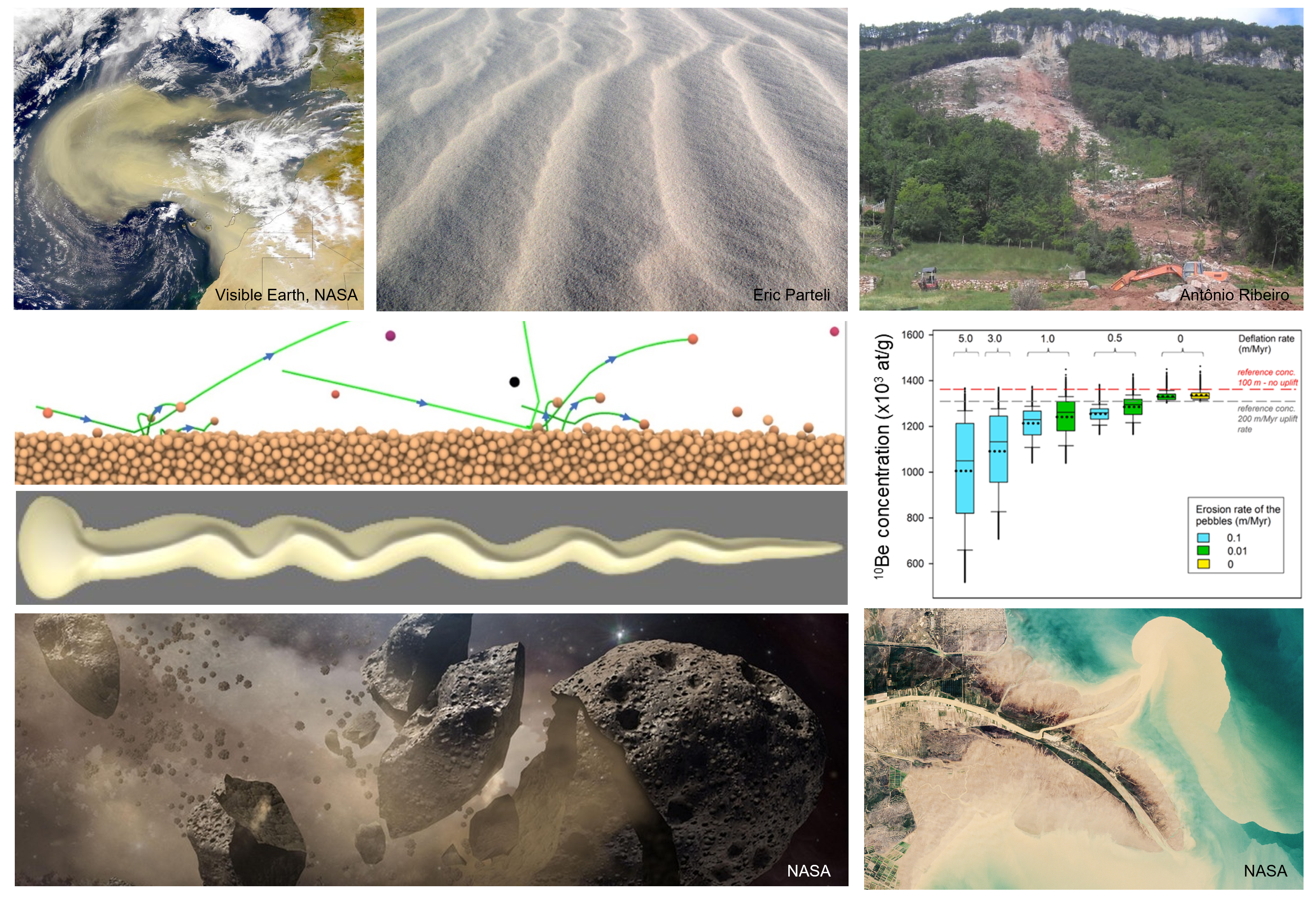
Dr. Eric Parteli is a Heisenberg Group Leader at the Faculty of Physics, University of Duisburg-Essen , with affiliations to the University of Cologne (Computational Geosciences) and The University of Alabama . He leads research on Earth surface particulate materials and their dynamics under wind, fluvial processes, and gravitational forces. Current and former students include PhD candidates, Master/Bachelor candidates, and research assistants like Cong Jiang , Maria Determann , Mateusz Kryger , and Joel Jankowiak . His group develops computational tools to model particle interactions and feedbacks with geomorphology, biosphere, and atmosphere across scales, with applications in climate science, planetary geophysics, and natural hazard risk assessment. Key research themes include aeolian processes , hydrological modeling , granular material behavior , and coupled Earth surface systems . No scientific awards are explicitly mentioned in the provided texts. His lab operates from Room MG 364 at the University of Duisburg-Essen and collaborates with the Computational Geosciences department at the University of Cologne. Recent publications highlight anomalous scaling in sand transport , angle of repose modeling , and regional hydrological systems in arid environments.
Stefan Julich is a Professor of Landscape Studies at Eberswalde University for Sustainable Development, where he has held a professorship since 2022. He is affiliated with the Faculty of Landscape Management and Nature Conservation, contributing to both teaching and research activities. His academic career spans multiple prestigious institutions across Europe, including TU Dresden, Justus-Liebig University Giessen, and the Potsdam Institute for Climate Impact Research. Dr. Julich earned his Diploma in Geography with minors in Geology and Soil Science from Martin-Luther University Halle-Wittenberg (1998-2004), followed by a Dr. rer. nat. (magna cum laude) from Justus-Liebig University Giessen in 2010. His dissertation focused on uncertainties in modeling water and nitrogen cycles in micro- and mesoscale river catchments. His research primarily investigates soil physics and hydrology, with particular emphasis on the influence of land use on soil hydraulic properties, dynamics of water and material cycles in landscapes, and ecosystem services of soils. He employs advanced modeling techniques to simulate water and material flows from soil to landscape scales and develops innovative monitoring concepts and laboratory methods for environmental assessment. Analysis of his recent publications reveals a strong focus on tropical and temperate hydrology, with particular attention to land use change impacts, soil erosion processes, and water resource management in data-scarce regions. His work often bridges theoretical modeling with practical applications in environmental management, particularly in African and European contexts. Professor Julich actively contributes to long-term environmental observation systems, notably the Ecosystemic Environmental Observation (ÖUB) in Brandenburg's biosphere reserves, which monitors 136 sites across various ecosystem types. His research integrates abiotic (soil and water) and biotic (vegetation and fauna) components in comprehensive ecosystem assessments. He teaches courses in soil science, hydrology, and soil-water science within the Bachelor's programs in Landscape Use and Nature Conservation and Organic Agriculture and Marketing. His research projects focus on long-term ecosystem monitoring in biosphere reserves, examining how regional ecosystems evolve under changing environmental conditions.
Dr. Olfa Lopez-D’Angelo is a researcher at the Department of Multiscale Simulation of Particulate Systems at Friedrich-Alexander-Universität Erlangen-Nürnberg. Her research focuses on granular rheology, additive manufacturing for space applications, and the behavior of materials under microgravity conditions. She leads the Rheologie granularer Materialien unter Weltraumbedingungen project (2023–2026), funded by the German Ministry for Economic Affairs and Climate Action (BMWK). Her work bridges theoretical physics, experimental engineering, and space technology. Key research interests include granular fluid dynamics, powder-based manufacturing processes in low-gravity environments, and the structural analysis of metamaterials. She has contributed to pioneering studies on acoustically propelled macroparticles and granular piston-probing in microgravity. Her interdisciplinary approach is evident in collaborations with institutions like ESA and DLR, as well as her involvement in projects such as the VIP-DROP2 module for droplet dynamics experiments. Awards: Granular Matter Gordon Research Conference Poster Prize (2022) ELGRA Research Prize (2021) Fly Your Thesis! 2019 (2018) ESA Networking/Partnering Initiative Fellowship (2017) Dr. Lopez-D’Angelo actively disseminates her work through international conferences (e.g., DPG, IAC) and public engagement initiatives, including the podcast Talk That Science . Her research emphasizes practical applications in space exploration, such as in-situ resource utilization and advanced manufacturing systems for extraterrestrial environments.
Professor Patrick Rinke leads the Chair of AI-based Materials Science at the Technical University of Munich (TUM), within the TUM School of Natural Sciences and Department of Physics. His research group develops advanced electronic structure and machine learning methods to address critical challenges in materials science, surface science, physics, chemistry, and nanoscience. Professor Rinke's research spans multiple cutting-edge domains including electronic structure theory development, machine learning applications for materials science, data-driven materials discovery, biomaterials engineering, atmospheric science applications, clean energy materials, and hybrid materials systems. His work integrates advanced computational methods with practical applications across diverse scientific fields, particularly focusing on how artificial intelligence can transform traditional materials research. Analyzing his recent publications reveals strong trends in applying machine learning techniques to materials discovery, with particular emphasis on Bayesian optimization methods, active learning approaches for molecular data, and efficient dataset generation strategies. His research spans from fundamental electronic structure theory to practical applications in biomaterials, atmospheric science, and renewable energy technologies. Professor Rinke has received several prestigious awards including the August-Wilhelm Scheer visiting professorship (2017), a German Science Foundation research scholarship (2007), the Outstanding Postdoctoral Research Achievement Award from UC Santa Barbara (2009), recognition as an Outstanding Referee for Physical Review journals (2014), and the Institute of Physics Computational Physics Group Thesis Prize (2003). Professor Rinke actively contributes to the academic community through teaching and supervision. For the Winter term 2025/26, he is teaching courses including Academic Writing Skills, Introduction to Machine Learning for Materials Science, Current Topics in AI-Based Materials Science, and Machine Learning for Natural Sciences. His research group includes several team members working on diverse projects spanning the intersection of AI and materials science.
Markus Schartau is a Researcher in the Biogeochemical Modelling Research Unit at GEOMAR Helmholtz Centre for Ocean Research Kiel, where he has worked since 2013. His research focuses on marine biogeochemical modeling, plankton dynamics, and parameter optimization in ecosystem models. With over 69 publications spanning two decades, Schartau has established himself as a leading expert in marine biogeochemical modeling, particularly in the areas of model calibration, mesocosm experiment simulation, and plankton community dynamics. His research interests encompass uncertainty and trustworthiness of biogeochemical model results, species composition and size frequency structures of plankton, methods of parameter optimization and model selection, simulations of mesocosm experiments, physiological and ecological variations of plankton, and temporal and spatial variations of organic substances in coastal ocean areas and estuaries. Schartau's work often bridges theoretical modeling with experimental observations to improve our understanding of marine biogeochemical processes. The analysis of his recent publications (2020-2024) reveals a strong focus on marine biogeochemical modeling, with particular emphasis on plankton dynamics, carbon cycling, and the impacts of environmental change. His work spans multiple spatial scales from coastal systems to the global ocean and integrates approaches from data science, biogeochemistry, and ecosystem modeling. Key themes include model calibration techniques, mesocosm experiment analysis, marine particle dynamics, and the effects of ocean acidification on biogeochemical processes. Schartau actively participates in major research projects including OceanNETs (EU project), BASS (funded by DFG), ICEBERG (EU project), and μARC (funded by BMBF), demonstrating his integration into the international marine science community. His collaborative approach is evident in his extensive co-authorship network across multiple institutions and countries. His career trajectory shows progression from postdoctoral positions at Stony Brook University and the Alfred Wegener Institute to permanent research scientist roles at Helmholtz-Zentrum Geesthacht (now HEREON) and finally at GEOMAR. This path reflects his growing expertise and recognition in the field of marine biogeochemical modeling.
Frank Keutsch is the Stonington Professor of Engineering and Atmospheric Science in the Paulson School of Engineering and Applied Sciences and Professor of Chemistry and Chemical Biology at Harvard University. He holds a joint appointment in both departments and is also a Hans Fischer Senior Fellow at the Technical University of Munich's Institute for Advanced Study (TUM-IAS), where he collaborates with Prof. Jia Chen on air pollution and climate research since 2021. Dr. Keutsch received his PhD in Physical Chemistry from the University of California Berkeley and his Diplom in Chemistry from TU Munich. His academic journey bridges European and American institutions, reflecting his international research perspective and expertise in both fundamental chemistry and applied environmental science. Professor Keutsch's research focuses on understanding atmospheric chemical processes, particularly those related to air quality and climate change. His work combines laboratory experiments, field observations, and modeling to investigate fundamental mechanisms of anthropogenic influence on atmospheric composition. He specializes in photochemical oxidation processes of volatile organic compounds (VOCs) that produce tropospheric ozone and secondary organic aerosols (SOA), which affect human health and climate. His research spans from urban areas to remote tropical forests, from tropical oceans to polar regions, addressing critical environmental challenges across diverse spatial and temporal scales. His recent publications demonstrate a strong focus on air pollution monitoring, climate intervention strategies, and the development of novel measurement techniques. The research shows an increasing integration of machine learning approaches with traditional atmospheric science methods, as well as a growing emphasis on global applications of pollution monitoring technologies and the health impacts of atmospheric pollutants. 2015, LFUI Guest Professorship 2014, Vilas Mid-Career Investigator Award 2013, Vilas Associate Award 2012, Honored Instructor Award 2006, Camille and Henry Dreyfus Award Postdoctoral Program in Environmental Chemistry 2005, Camille and Henry Dreyfus New Faculty Award Hans Fischer Senior Fellowship (2021) As an active mentor, Professor Keutsch is accepting graduate students into his research group. His laboratory develops cutting-edge instrumentation for atmospheric measurements, including the FILIF (Formaldehyde Instrument using Laser-Induced Fluorescence), CHOCHO LIP (Laser-Induced Phosphorescence), EDB-MS (Electrodynamic Balance Mass Spectrometry), and DPOPS systems. These instruments have been deployed in numerous field campaigns across diverse environments worldwide, from forests in Michigan and Colorado to the Amazon rainforest and even Antarctica. His group's work on stratospheric aerosols, particularly related to climate intervention strategies, has gained significant attention in the scientific community.