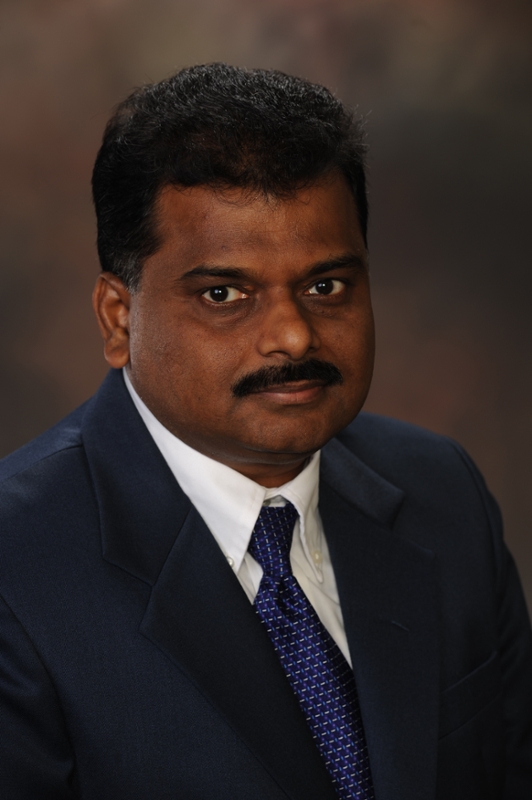
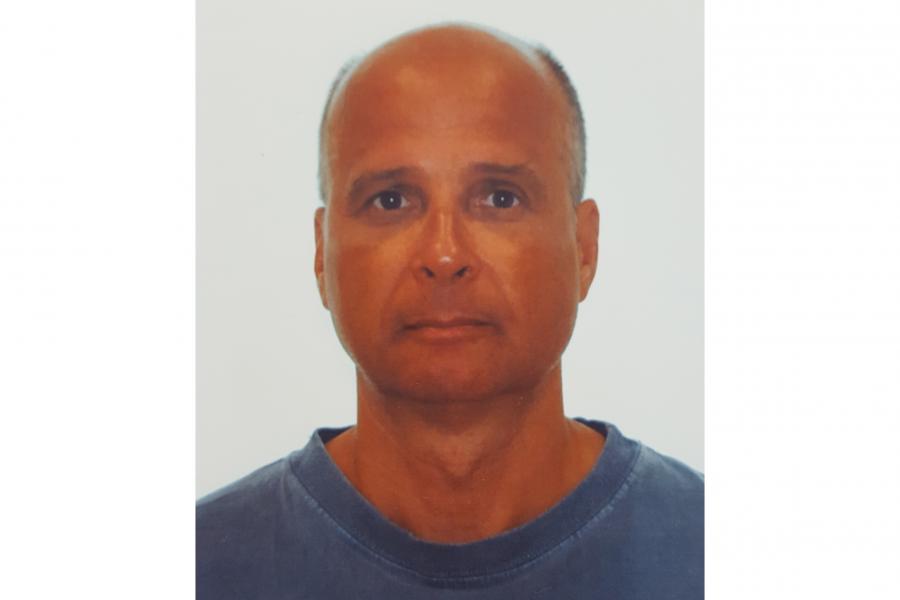
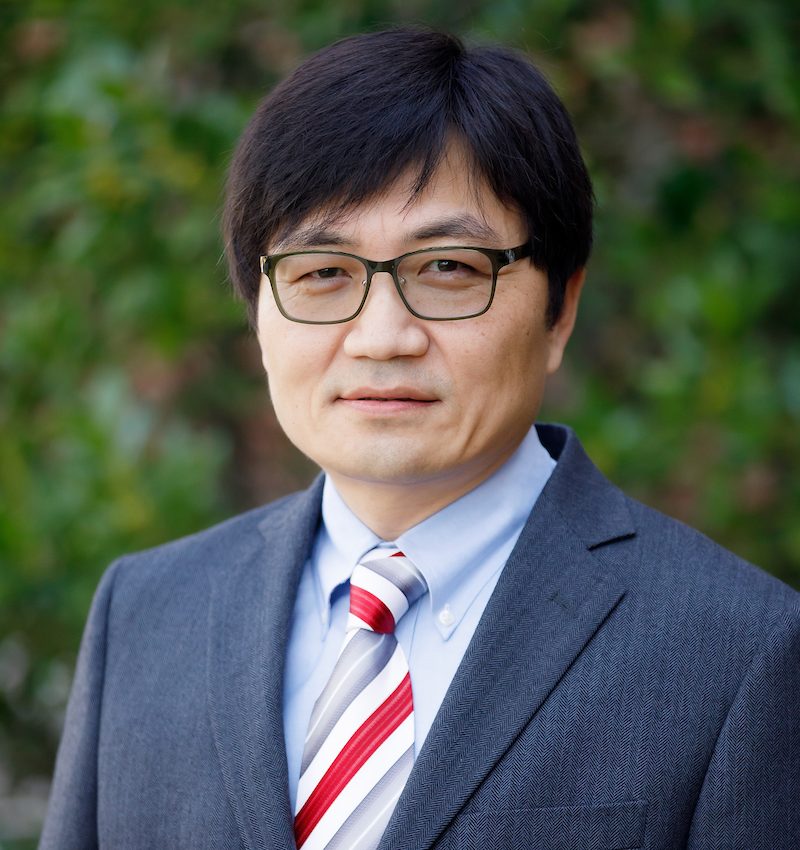
Dr. Mo Rastgaar is a Professor at Purdue Polytechnic Institute, Purdue University. He holds a PhD in Mechanical Engineering from Virginia Tech (2008) and completed a postdoctoral fellowship at MIT's Newman Laboratory for Biomechanics and Human Rehabilitation. He leads the Human-Interactive Robotics Lab (HIRoLab), focused on assistive and rehabilitation robots for enhanced mobility, particularly lower-extremity devices. His research emphasizes understanding agile gait dynamics through human experiments and modeling. Research interests include assistive robotics, cyber-physical systems, dynamics, and control systems. Notable awards include the 2014 NSF CAREER Award. He has secured grants such as the 2019 NRI Collaborative Grant on robotic ankle prosthetics and 2020 grants for undersea infrastructure. Dr. Rastgaar's work bridges biomechanics, robotics, and clinical applications, advancing prosthetic designs and human-robot interaction. Key contributions include developing steerable powered ankle-foot prostheses and exploring multi-robot systems for underwater exploration. His labs integrate interdisciplinary approaches to solve complex mobility challenges, emphasizing both technical innovation and real-world clinical impact.
Petros Koumoutsakos is the Herbert S. Winokur, Jr. Professor of Computing in Science and Engineering at Harvard University's School of Engineering and Applied Sciences (SEAS), where he also serves as Area Chair for Applied Mathematics. His research integrates machine learning with computational science to advance understanding of complex systems, including fluid dynamics, turbulence modeling, and biomedical applications. He leads the CSE Lab, focusing on high-performance computing and interdisciplinary collaborations such as a recent study with Citadel Securities and Google Cloud to simulate heart disease in cloud environments. Key research interests include reinforcement learning for turbulence closures, generative models for PDE solutions, and physics-informed AI for biomedical imaging and wildfire prediction. He was awarded the PRACE HPC Excellence Award (2023) for contributions to high-performance computing. His work bridges computational methods with real-world applications, emphasizing interpretability and scalability in multiscale systems. Grants & Collaborations: Leadership in multi-institutional projects, including turbulence modeling via reinforcement learning and cloud-based HPC studies. Labs/Teams: Director of the CSE Lab, advancing AI, computational fluid dynamics, and biomedical simulations.
Dr. Jean-Christophe Nave is an Associate Professor in the Department of Mathematics and Statistics at McGill University, specializing in applied mathematics, numerical analysis, and computational methods. His research focuses on numerical methods for partial differential equations, fluid mechanics, interface problems, and computer graphics. He holds a PhD from UCSB (2004) and has held academic positions at MIT and McGill since 2005. Currently, he serves on committees such as the Steering Committee of the Institut des Sciences Mathematiques and the CRM Applied Mathematics Lab. His educational background includes a PhD under Professors Xu-Dong Liu and Sanjoy Banerjee. Key research areas include level set methods, fluid-structure interaction, and invariant numerical methods. Notable works include the Correction Function Method for interface problems and the Characteristic Mapping Method for advection problems. Nave’s publications span topics like Poisson equations with discontinuous coefficients, fluid dynamics simulations, and high-order numerical schemes. He has advised numerous graduate and undergraduate students, contributing to their research in applied mathematics and computational science. His work bridges theoretical rigor and practical applications in engineering and physics. He teaches advanced courses such as Numerical Analysis I/II and Computational Methods in Applied Mathematics. His research group collaborates on projects involving fluid dynamics, elasticity, and geometric algorithms, with a focus on developing robust numerical tools for complex systems.
Aaron M. Dollar is the Frederick W. Beinecke Professor of Mechanical Engineering at Yale University, affiliated with the Yale Grab Lab. His research focuses on robotics, mechatronics, robotic grasping, and prosthetics, emphasizing adaptive mechanisms and human-robot interaction. He holds a PhD from Harvard University (2008) and degrees from UMass Amherst. Key research areas include dexterous manipulation, underactuated mechanisms, and assistive devices. His work bridges theory and practical applications, with contributions to prosthetic hands, robotic hands, and modular robotics systems. Recipient of prestigious awards: TR35 Innovator (2010), NSF CAREER Award (2010), DARPA Young Faculty Award (2013), and Air Force Young Investigator Award (2011). Developed the Yale MyoAdapt Hand, a single-actuator prosthetic with high functionality. Pioneered methods in real-to-sim transfer, modular lattice printing, and energy-aware robotic exploration. His lab, the Yale Grab Lab, explores robotics, prosthetics, and human motion analysis. Recent projects include autonomous calibration systems (ARC-Calib) and low-cost robotic hardware (RB5 Explorer).
Cathryn Mitchell is a Professor of Radio Science and Royal Society Industry Fellow at the University of Bath, specializing in ionospheric physics, position, navigation, and timing (PNT). She leads research in the Space & Telecoms Research Group (STAR), focusing on radio propagation, data assimilation, and space weather impacts on communication systems. Her work bridges theoretical, computational, and experimental approaches, with applications in satellite navigation, climate monitoring, and defense sectors. Her research interests include ionospheric tomography, HF communications, and the development of robust PNT systems. Mitchell collaborates extensively with industry partners like Spirent Communications on future navigation technologies and space weather resilience. She has held roles such as Academic Director of the Doctoral College and contributes to interdisciplinary projects like the DRIIVE initiative exploring ionospheric variability with EISCAT-3D radar. Recent work emphasizes ionospheric effects during geomagnetic storms (e.g., the 2024 Gannon Storm) and cooperative autonomous systems under communication constraints. Her projects are funded by the Royal Society, Natural Environment Research Council (NERC), and ESA, addressing challenges in space weather forecasting and PNT system reliability. Awards: Royal Society Industry Fellow (2022–present) Key Projects: Royal Society Industry Fellowship on Future PNT Technologies DRIVERS (DRIIVE): Ionospheric Variability Studies EISCAT-3D FINESSE: Ionospheric Structuring Analysis Mitchell’s lab, STAR, integrates academic and industrial partnerships to advance space weather applications and sustainable navigation systems, contributing to UN Sustainable Development Goals related to climate action and innovation.
Yang Kaidi is an Assistant Professor in the Department of Civil and Environmental Engineering at the National University of Singapore (NUS), affiliated with the Institute of Operations Research and Analytics (IORA) within NUS’s Smart Nation Research Cluster. Their research focuses on intelligent transportation systems, traffic control, shared mobility, and machine learning applications in mobility. Key interests include connected and automated vehicles, privacy-preserving data sharing, and reinforcement learning for traffic optimization. Research highlights include developing parameter privacy-preserving strategies for mixed-autonomy platoons, enhancing safety in autonomous driving via transformer-based trajectory prediction, and optimizing traffic signal timing using connected vehicle data. Their work bridges theoretical control systems with practical urban mobility challenges, addressing issues like ridesourcing-public transit integration, modular transit service operations, and weaving section management in mixed traffic environments. Recent publications emphasize real-time control frameworks, cooperative safety mechanisms, and data-driven solutions for urban and highway systems. Yang’s interdisciplinary approach integrates robotics, optimization, and cybersecurity to advance smart transportation infrastructure. Their contributions are particularly notable in privacy-preserving techniques for traffic state estimation and federated learning applications. While no specific awards or grants are listed, their research aligns with Singapore’s Smart Nation initiatives through IORA’s strategic focus areas. Yang’s work has implications for future traffic management systems, autonomous vehicle coordination, and sustainable urban mobility solutions.
Professor Chun-Hung Chen is a distinguished academic at George Mason University ’s Volgenau School of Engineering , where he holds the rank of Professor in the Department of Systems Engineering and Operations Research . He has also held professorships at National Taiwan University and visiting roles at institutions like University of Pennsylvania and Microsoft Research Asia . Education: PhD in Decision and Control, Harvard University (1994) MS in Electrical Engineering, National Taiwan University (1989) BS in Control Engineering, National Chiao-Tung University (1987) Research Interests focus on Stochastic Simulation Optimization , particularly his pioneering Optimal Computing Budget Allocation (OCBA) methodology. OCBA enhances simulation efficiency by dynamically allocating computational resources to critical design alternatives, reducing computation time by orders of magnitude. Applications span air transportation , healthcare , power grids , and semiconductor manufacturing . His 15 most recent articles (2022–2025) explore intersections of simulation optimization , artificial intelligence , reinforcement learning , and personalized medicine , emphasizing computational efficiency and stochastic systems in domains like microgrids and organ transplant logistics . Scientific Awards include: IEEE Fellow (2015) K.D. Tocher Medal (2017) Best Paper Awards at IEEE CASE (2019), LOGMS (2019), and IEEE ICC (2021) Harvard’s Eliahu I. Jury Award (1994) Advisory roles include editorial leadership in IIE Transactions , Journal of Simulation , and IEEE Transactions series. He has coordinated graduate programs at George Mason (2006–11, 2015–19) and led conferences like INFORMS International Meeting (2025) and Harvard Control Workshop (2024). His work is funded by organizations such as the National Science Foundation , National Institutes of Health , and Department of Energy , with applications in healthcare logistics and microgrid control .
Garrett Warnell is a Visiting Researcher in the Department of Computer Science at The University of Texas at Austin, specializing in artificial intelligence, computer vision, and robotics with applications in autonomous navigation systems. Education: PhD in Electrical Engineering, University of Maryland Master's in Electrical Engineering, University of Maryland B.S. in Computer Engineering, Michigan State University Research Interests: Dr. Warnell's work focuses on machine learning for robotic control , computer vision for scene understanding , and autonomous navigation in challenging environments . His contributions span imitation learning with limited demonstrations, preference-aware path planning, and off-road mobility. Recent research integrates vision-language models and transformer architectures for social navigation and terrain adaptation, emphasizing human-robot collaboration and robustness in constrained spaces. Publication Trends: Analysis of Dr. Warnell's 2023-2025 publications reveals dominant themes in off-road navigation robustness, with emphasis on particle filtering, diffusion models, and transformer networks for geo-localization and terrain adaptation. A significant trend involves human preference alignment through extrapolation techniques and open-vocabulary models for costmap generation, reflecting growing integration of natural language understanding in robotic systems. Scientific Awards: No awards specified in available documentation. Advising and Grants: Public records indicate no listed advisees or grant funding details. Labs and Teams: Affiliated with UT Austin's Computer Science Department, though specific research group affiliations remain undocumented in provided materials.
Sanjeev Baskiyar is a Professor in the Department of Computer Science and Software Engineering at Auburn University's College of Engineering. He has been actively involved in research, teaching, and academic leadership, with a strong focus on computer systems, real-time and embedded computing, scheduling, cloud and fog computing, and energy-aware architectures. Education: Ph.D., Electrical and Computer Engineering, University of Minnesota M.S., Electrical and Computer Engineering, University of Minnesota B.S., Electronics and Communications, Indian Institute of Science, Bangalore B.S., Physics (with honors), and distinction in Mathematics Dr. Baskiyar’s research interests span scheduling, real-time and embedded systems, computer architecture, fog/cloud computing, thermal/energy-aware computing, and STEM education. His recent work explores machine learning applications in scheduling and quantum computing for fake news detection. He has supervised over 25 graduate students, many of whom now hold academic and industry positions. His recent publications emphasize fog computing simulation, service placement, quantum-inspired fake news detection, and adaptive scheduling using machine learning. These works reflect a trend towards intelligent, scalable, and energy-efficient computing systems, particularly in distributed and edge environments. Scientific Awards and Honors: Walker Teaching Excellence Award, Auburn University, 2020 Summer Faculty Fellow, Air Force Research Labs, 2020 Nominated Best Teaching Assistant, University of Minnesota, 1992 Multiples Merit and State-merit Scholarships Honors in Physics and Distinction in Mathematics Dr. Baskiyar has successfully advised numerous MS and PhD students and secured over $2 million in research funding as Principal Investigator from the National Science Foundation, DARPA, NASA, and industry partners like Wind River Systems and Mentor Graphics. His grants focus on parallel computing education, real-time micro-architectures, and embedded systems. He has also served on editorial boards, program committees, and as a reviewer for NSF and IEEE journals. He has held leadership roles including Senator in the University Faculty Senate and Chair of the E-day Committee. Labs and Research Groups: While not explicitly named, Dr. Baskiyar leads a research group focused on computer systems, scheduling, and embedded computing, as evidenced by his long list of graduate student supervision and funded projects in fog, cloud, and real-time systems.
Toshiharu Sugawara is a Professor in the Department of Computer Science and Engineering at Waseda University's Faculty of Science and Engineering, School of Fundamental Science and Engineering, a position he has held since April 2007. With a Ph.D. in Engineering from Waseda University, his research spans multiple domains in artificial intelligence and multi-agent systems, maintaining active collaborations across international institutions and contributing significantly to the field through numerous publications and awards. Dr. Sugawara received his BS and MS degrees in Mathematics from Waseda University in 1980 and 1982, respectively, followed by his Ph.D. in 1992. Before joining Waseda University as faculty, he worked as a Research Scientist at NTT Laboratories from 1982 to 2007, with a visiting researcher position at the University of Massachusetts at Amherst in 1992-1993. He also held part-time lecturer positions at University of Electro-Communications (2003-2007), Waseda University (2004-2006), and Tokyo University of Agriculture and Technology (1990-1991). His research interests focus on artificial intelligence with particular expertise in multi-agent systems, machine learning, cooperation and coordination mechanisms, soft computing, computational social science, and social informatics. His work bridges theoretical foundations with practical applications in network management and information systems. Recent publications demonstrate a strong trajectory toward interpretable multi-agent reinforcement learning, efficient path planning algorithms, and modeling social behaviors in complex networks. His research group has made significant contributions to multi-agent path finding, cooperative task execution, and understanding virtual economies in social media platforms. Dr. Sugawara has received numerous prestigious awards including multiple Best Paper Awards at JAWS conferences (2014, 2015, 2018), ACM SAC 2015, and various research paper awards from Japanese academic societies. His work on multi-agent systems has been consistently recognized for its theoretical rigor and practical impact. As an advisor, Dr. Sugawara has mentored numerous students who have become prominent researchers in their own right, with many co-authoring papers that have received awards. His laboratory maintains strong collaborations with industry partners, particularly in the areas of network management and intelligent systems. Current research directions include developing interpretable multi-agent reinforcement learning frameworks, optimizing multi-agent coordination in constrained environments, and analyzing social dynamics in virtual economies.
Andrea W. Richa is a President's Professor at Arizona State University (ASU), holding positions in the School of Computing and Augmented Intelligence (SCAI), Barrett Honors College, and multiple research centers including the Biodesign Institute's Center for Biocomputing, Security, and Society. She specializes in distributed algorithms, programmable matter, and bio-inspired computing. Richa has led major research initiatives, including a DoD MURI award and an NSF CAREER Award, and has delivered keynote speeches at top conferences like DISC and LATIN. Her work focuses on self-organizing particle systems, wireless networks, and algorithmic foundations of active matter. Educations: PhD (Computer Science, Carnegie Mellon University, 1998), M.S. (Computer Science, Carnegie Mellon University, 1995), B.S. (Computer Science, Federal University of Rio de Janeiro, Brazil, 1989). Research Interests: Distributed algorithms, programmable matter, bio-inspired systems, wireless communication models, graph algorithms, combinatorial optimization, and resource allocation. She leads the Self-Organizing Particle Systems Lab and is part of SCAI's Theory and Algorithms group. Awards: 2024 ASU Mentorship Award, 2021 Mentor of the Year, 2017 SCAI Research Excellence Award, NSF CAREER Award (1999), and multiple grants including DoD MURI. Her research spans theoretical and applied domains, with over 150 publications in top venues. Grants: Current DoD MURI funding (2019-25), NSF awards on Markov chain algorithms and active matter (2021-25), and prior funding on programmable matter (2014-2017). Labs/Teams: SOPS Lab (sops.engineering.asu.edu), contributing to interdisciplinary research in algorithmic matter and bio-inspired systems.
Dr. Joseph Moore is an Assistant Professor in the Department of Mechanical Engineering at Johns Hopkins University (JHU), serving as Director of the Agile and Intelligent Robotics (AIRO) Laboratory. He is affiliated with the Laboratory for Computational Sensing and Robotics (LCSR), the Institute for Assured Autonomy (IAA), and holds a Bridging Faculty appointment in the Research and Exploratory Development Department (REDD) at JHU/APL. His research focuses on computational control, machine learning, and robotics to enable agile systems operating in complex environments. Dr. Moore previously served as Robotics Group Chief Scientist at JHU/APL, leading projects on hybrid unmanned aerial-aquatic vehicles and aerobatic fixed-wing systems. He has secured funding as Principal Investigator (PI) for ONR, DARPA, and ARL programs, particularly in post-stall maneuvering control and multi-robot coordination. His work emphasizes robust control strategies for autonomous systems in constrained environments. Research interests include aerial robotics, optimization, and learning-based control. Notable contributions involve NMPC-based systems, UAV navigation, and adaptive control for uncertain environments. His recent articles highlight advancements in swarm coordination, morphing-wing UAVs, and PAC-NMPC frameworks. Dr. Moore advises students such as Mark Gonzales and Adam Polevoy. Key grants include ONR/DARPA-funded projects on post-stall flight control and Army-funded multi-robot coordination efforts. His lab (AIRO) and collaborations (LCSR, IAA) drive applied and theoretical robotics research.
Dr. Ken Ferens is an Assistant Professor in the Department of Electrical and Computer Engineering at the Price Faculty of Engineering, University of Manitoba. He serves as the Computer Engineering Champion in the Centre for Engineering Professional Practice and Engineering Education and directs the Applied Cognitive Intelligence (ACI) Research Group. Dr. Ferens is a senior member of the Institute of Electrical & Electronics Engineers (IEEE), Chair of the EduManCom Chapter of the IEEE, Vice-Chair of the Computer and Computational Intelligence Chapter of the IEEE, and Chair of the Industry, Teaching Assistants, and Student Forums for Engineering Curriculum Review and Improvement. Ph.D. (Computer Engineering), University of Manitoba, 1996 M.Sc. (Computer Engineering), University of Manitoba, 1991 B.Sc. (Electrical Engineering), University of Manitoba, 1989 Dr. Ferens has over 33 years of research experience in computational intelligence, focusing on cognitive machine learning, artificial intelligence, cognitive computational intelligence, chaos theory applications, agent-based models, and various optimization algorithms including simulated annealing, genetic algorithms, artificial neural networks, and particle swarm optimization. His research applies these techniques to develop software and hardware intrusion detection systems for cybersecurity applications. He teaches graduate-level courses on Computer Network Security and Applied Computational Intelligence, providing students with theoretical background and hands-on experience in state-of-the-art security methods. Analysis of Dr. Ferens' recent publications reveals a strong focus on applying cognitive and chaotic computational techniques to cybersecurity challenges, particularly malware detection and network intrusion detection. His work increasingly integrates complexity theory, fractal analysis, and hybrid optimization approaches to enhance security systems' effectiveness. There's a clear progression toward more sophisticated machine learning architectures applied to increasingly complex security scenarios, with growing emphasis on real-world IoT and network security applications. Best Paper Award at IEEE International Conference on Cognitive Informatics and Cognitive Computing (ICCI*CC 2022) Best Paper Award at IEEE International Conference on Cognitive Informatics and Cognitive Computing (ICCI*CC 2015) Best Journal Paper Award for 2013 (Journal of ICT Research and Applications) Best Poster Award at 12th International Conference on e-Health Networking, Application & Services (2010) Best Paper Award at IASTED International Conference on Computer, Electronics, Control, and Communication (1991) Dr. Ferens collaborates with national and international industry partners including the Department of Advanced Information Management, Content Technology Canadian Tire Corporation (CTC), and Magellan Aerospace. His research group has received funding supporting the Cyber-security Research Program, developing practical applications of computational intelligence for security systems. He has supervised numerous graduate students in the Electrical and Computer Engineering department, focusing on research at the intersection of machine learning and cybersecurity. Dr. Ferens leads the Applied Cognitive Intelligence (ACI) Research Group within the Department of Electrical and Computer Engineering, which focuses on applying cognitive, chaotic, and computationally intelligent algorithms to build intrusion detection systems. The group collaborates with industry partners to develop practical security solutions while providing students with hands-on research experience in cutting-edge security technologies. Their work spans both theoretical algorithm development and practical hardware implementation for real-world security applications.
Dr. Hwan-Sik Yoon is an Associate Professor in the Department of Mechanical Engineering at The University of Alabama, where he focuses on applying Artificial Intelligence (AI) and Machine Learning (ML) to automotive, transportation, and manufacturing systems. His research spans modeling, simulation, and control of dynamic systems, with a strong emphasis on connected and automated vehicles (CAVs), energy-efficient routing, and sensor fusion technologies. Ph.D., Mechanical Engineering, Ohio State University, 2002 M.S., Mechanical Engineering, Ohio State University, 1998 B.S., Physics Education, Seoul National University, Korea, 1994 Dr. Yoon’s research integrates AI/ML into applications such as traffic signal control , excavator manipulator pose estimation , hybrid electric vehicle powertrain control , and factory floor safety monitoring . He is also involved in additive manufacturing , vision-based control systems , and reinforcement learning -driven automotive innovations. Recent publications highlight trends in deep reinforcement learning for vehicle energy efficiency, sensor fusion for traffic surveillance, and neural networks for dynamic system control. His work addresses challenges in multi-component failure analysis and real-time edge computing platforms . NSF Outstanding Faculty Advisor Award (2019) College of Engineering Faculty Productivity Award, Tennessee Tech University (2012) Dr. Yoon leads the Intelligent Structures and Systems Laboratory and serves as the lead CAVs faculty advisor for the University of Alabama’s EcoCAR student team, which has achieved national recognition in advanced vehicle technology competitions.
Professor Lyudmila Mihaylova is a distinguished academic at the University of Sheffield's School of Electrical and Electronic Engineering, where she holds the position of Professor of Signal Processing and Control. She has established herself as a leading researcher in the fields of signal processing, Bayesian methods, and autonomous systems, with significant contributions to particle filtering techniques for intelligent transportation systems. Her work bridges theoretical developments with practical applications across multiple domains including transportation, healthcare, and industrial automation. Prof. Mihaylova's research interests center on nonlinear filtering, sequential Monte Carlo methods, statistical signal processing, and sensor data fusion. Her work spans both theoretical advancements and practical implementations, with particular focus on high-dimensional problems including vehicular traffic flow estimation, image processing, and localization in sensor networks. She has extensive experience with various image modalities such as optical, thermal, LIDAR, SAR, and hyperspectral imaging. Her group actively develops novel methods for autonomous intelligent systems focusing on sensing, tracking, decision making, and machine learning applications. Analysis of Prof. Mihaylova's recent publications reveals a strong trend toward uncertainty quantification in machine learning models, particularly for safety-critical applications. Her work increasingly integrates traditional signal processing techniques with modern deep learning approaches, with applications spanning sewer inspection robotics, medical diagnostics (particularly sleep apnea detection), UAV swarm tracking, industrial manufacturing, and autonomous vehicle systems. A significant portion of her recent research focuses on developing robust methods that can handle incomplete or outlier-corrupted data while providing reliable uncertainty estimates. Among her notable professional achievements: President of the International Society of Information Fusion (ISIF) Senior member of the IEEE Signal Processing Society Associate Editor for IEEE Transactions on Aerospace and Electronic Systems Associate Editor for Elsevier Signal Processing Journal Prof. Mihaylova has successfully mentored numerous PhD students and postdoctoral researchers, many of whom have gone on to prominent academic and industry positions. Her research has been supported by major funding bodies including EPSRC, EU, MOD/DSTL, and industry partners, with recent projects including 'Protecting Environments with UAV Swarms' (InnovateUK, 2022-2024), 'ShiRAS: Towards Safe and Reliable Autonomy in Sensor Driven Systems' (NSF-EPSRC, 2019-2023), and 'Confident safety integration for Cobots' (Lloyd's Register Foundation, 2019-2020). Her research group follows a collaborative approach with the philosophy 'We share knowledge, we grow.' Prof. Mihaylova maintains active research collaborations with institutions worldwide and has held previous academic positions at Lancaster University (2006-2013) and University of Bristol (2004-2006), along with research visiting positions at the University of Ghent, Katholic University of Leuven, and the Bulgarian Academy of Sciences.