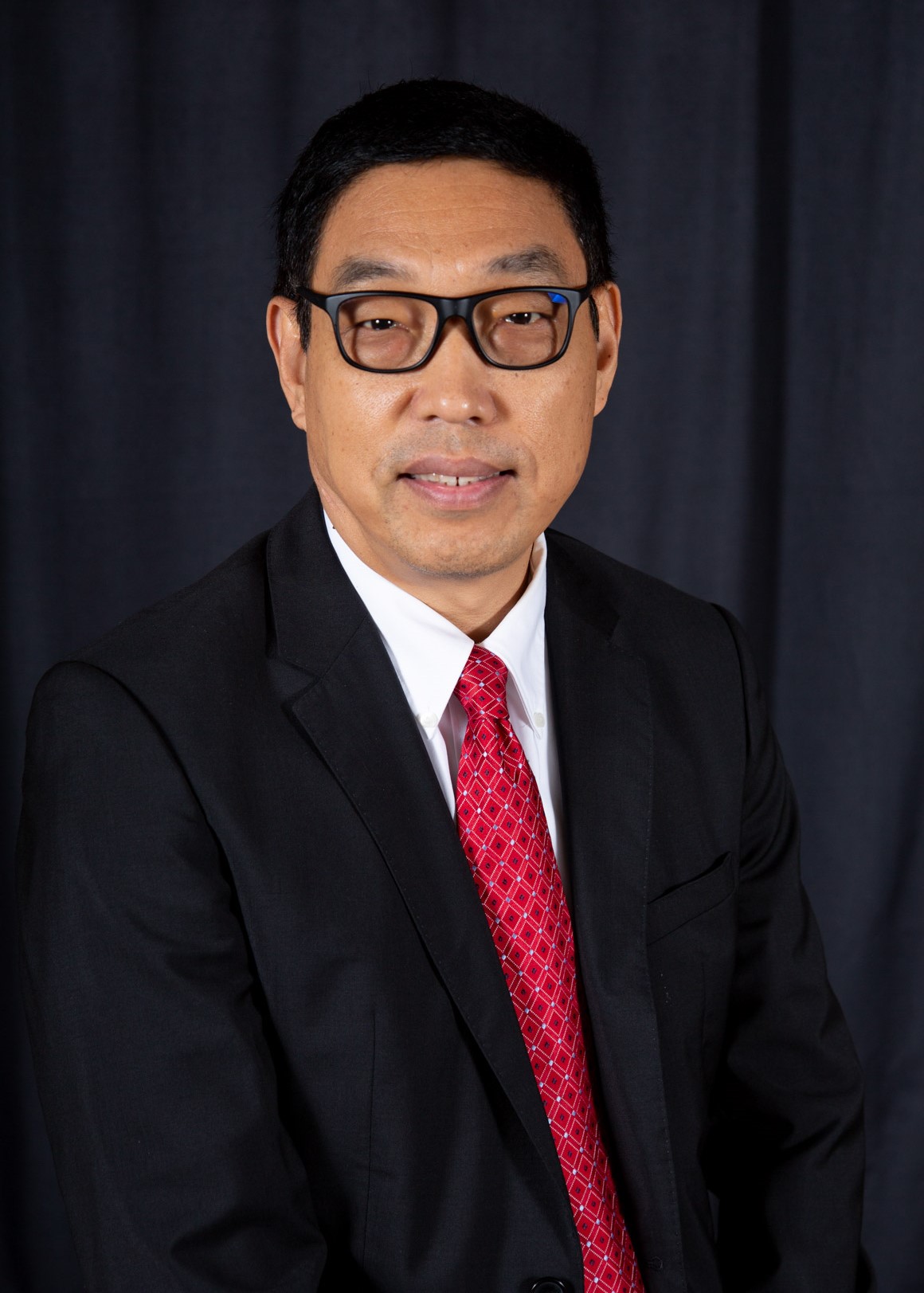
Rafael Borrajo is an Associate Professor at Oslo Metropolitan University's Faculty of Technology, Art and Design, Department of Mechanical, Electrical and Chemical Engineering. He teaches Materials Technology and Hydraulics and Machine Systems . Education : BSc in Industrial Engineering (University of Malaga, Spain, 2008), MSc (University of California, Irvine, 2012), and PhD (UC Irvine, 2014) in Material Science and Space Propulsion under Prof. Gamero-Castaño. Research Focus : Materials innovation/characterization using ion/nanoparticle beams, super-hard materials, steel optimization, and spacecraft propulsion. Expertise : SEM, TEM, FIB, EBSD, XRD, EDS, AFM. Collaborations : European Space Agency (ESA), Luleå Technical University, KTH Stockholm, Yale University. His research spans materials physics , nanostructuring , and space propulsion , with recent work in electrospinning for construction materials . He has contributed to understanding sputtering mechanisms and microstructure evolution in hard materials. Current affiliations: Member of research groups ADEPT (ADvanced hEalth intelligence and brain-insPired Technologies) and Mechanics, Mechatronics and Material Technology . Projects include Brain activation during gait and balance .
Herve Courtois is a Full Professor at Université Grenoble Alpes, affiliated with the Institut Néel (CNRS). He leads the Quantum Nano-Electronics and Spectroscopy (QuNES) team in the Department of Quantum Electronics, Surfaces and Spintronics (QUEST), focusing on experimental condensed matter physics. His research spans superconductivity, mesoscopic quantum transport, nanoscale thermodynamics, and scanning probe microscopy at ultra-low temperatures (e.g., AFM-STM combined techniques). Research interests include: Hybrid superconductor-semiconductor systems Quantum electronic devices (Josephson junctions, quantum dots) Low-temperature calorimetry and heat transport Graphene and 2D material physics Quantum Hall effect and topological phenomena His recent publications (2019-2023) predominantly explore quantum transport in nanostructures, with themes including quantum Hall physics in graphene, Josephson junction thermodynamics, and heat management in quantum dots. Trends indicate strong emphasis on experimental validation of quantum coherence, nonequilibrium phenomena, and nanoscale energy transfer. Professor Courtois has supervised 20 PhD students to completion. He coordinated major EU projects including ITN Q-NET (2011-2015), FET-open INFERNOS (2013-2015), and Marie Curie ITN QuESTech (2018-2021). Administrative roles include Director of Institut Néel (2011-2015), Director of UGA's Physics-Engineering-Materials Department (2016-2019), and Vice-President for Research & Innovation at UGA (2020-2023). He teaches 'Near-field Microscopies' (Nanosciences Master) and directs the European School on Nanosciences & Nanotechnologies (ESONN). Collaborations include CEA Grenoble, Aalto University, and IIT Kanpur. Lab facilities utilize sub-Kelvin scanning probe microscopy for quantum device spectroscopy.
Gabriel Gomila Lluch is a Full Professor at the University of Barcelona's Department of Electronics and Group Leader at the Institute for Bioengineering of Catalonia (IBEC). His research at the Nanoscale Bioelectrical Characterization group integrates Scanning Probe Microscopy, Artificial Intelligence, and Organic Bioelectronics to advance label-free characterization tools for Life Sciences and nanomedical diagnostics. PhD in Physics (University of Barcelona, 1997) Ramón y Cajal Fellowship recipient (2001) ICREA Academia awardee (2014) His research spans: Bioelectrical characterization of cells, bacteria, and nanocarriers Autonomous microscopy systems with AI integration Organic Bioelectronics for biosensing and signal transduction Cable bacteria conduction mechanisms Scientific contributions include: First supervised machine learning algorithm for Scanning Dielectric Microscopy data Breakthrough in confined water dielectric constant measurement (Science 2018) Pioneering work on nanoscale capacitance microscopy Key innovation areas: High-throughput multimodal characterization Autonomous probe microscopy systems Dielectric nanotomography Protein nanowire conductivity analysis
Prof. Dr. Axel Lubk is a faculty member holding the CEOS endowed professorship for electron optics at Technische Universität Dresden and serves as a research group leader at the Leibniz Institute for Solid State and Materials Research (IFW Dresden). His work focuses on advanced electron microscopy techniques and magnetic nanotextures. Institution: TU Dresden / IFW Dresden Contact: a.lubk@ifw-dresden.de Research Interests: Explore cutting-edge developments in TEM methodology (high-resolution imaging, tomography, holography, spectroscopy) and theoretical foundations of charge particle optics. Investigate magnetic textures (skyrmions, domain walls), plasmonics in heterogeneous structures, electronic properties of oxide interfaces, and semiconductor heterostructures. Recent Research Trends: His 2025-2024 publications demonstrate expertise in nanoparticle synthesis via electron irradiation, plasmon localization in random networks, thermoelectric multilayer engineering, and 3D magnetic soliton characterization using advanced tomography. Technical Leadership: Co-developer of novel algorithms for electron tomography (WRAP) and quantitative holography techniques. Regularly contributes to international microscopy standards through invited talks at major conferences (APMC2025, IMC20, PICO 2024).
Benjamin T. King is the Reynold Clayton Fuson Endowed Professor in Chemistry at the University of Nevada, Reno, within the College of Science. His research focuses on organic and organometallic chemistry, particularly the Scholl reaction for PAH synthesis, zirconium-mediated biphenylation, and carbon nanotube electronic structure. Ph.D. in Chemistry (University of Colorado, 2000, under Josef Michl) Postdoctoral Research Associate (University of California, Berkeley, 2000-2002) B.S. in Chemistry (Northeastern University, 1992) Research interests include developing synthetic methodologies for strained molecules, studying reaction mechanisms via computational and experimental approaches, and creating quantum sensors funded by the NSF. His work on valence-bond models for CNTs reveals reactivity patterns beyond steric effects. Recent publications span quantum sensors ( SHe-QUID ), organic thin-film transistor (OTFT) materials like silicon phthalocyanines, and high-intensity laser applications in particle physics. These articles reflect interdisciplinary trends in chemistry, materials science, and experimental physics. NSF Award for SHe-QUID (2025) Reynold Clayton Fuson Endowed Professorship (1984) He leads the King Group, which welcomed new members including Tolani Adegbemisola, Ifeanyi Ikebude, Anastasia Kesse, and John Nyogbe. The group also maintains a cloud-based file server ( kingcirrus.org ) and collaborates on quantum and sensor technologies.
Neil Drummond is a Senior Lecturer in the Physics Department at Lancaster University, where he conducts research in computational condensed matter physics. He is affiliated with both the Quantum Technology Centre and the Condensed Matter Theory group, focusing on advanced computational methods for studying quantum systems. Dr. Drummond's research interests center on the development and application of quantum Monte Carlo methods for calculating material properties from first principles. His work spans several key areas including two-dimensional materials (particularly graphene, silicene, and transition metal dichalcogenides), materials at high pressure, and electron(-hole) gases. His computational approach enables precise modeling of quantum effects in condensed matter systems that are challenging to study with conventional methods. Analysis of Dr. Drummond's recent publications reveals a strong focus on quantum Monte Carlo techniques applied to two-dimensional electron systems and novel materials. His work consistently addresses fundamental questions about electron correlation, phase transitions, and quasiparticle properties in low-dimensional systems. The research demonstrates increasing computational sophistication, with recent papers exploring GPU acceleration of quantum Monte Carlo codes and reproducibility of computational methods. Dr. Drummond currently supervises two postgraduate research students, James Doughty and Clio Johnson, guiding them in the development and application of quantum Monte Carlo methods. He serves as Principal Investigator for the PAX-HPC (Particles At eXascale On high Performance Computers) project, funded by the Engineering and Physical Sciences Research Council, which runs from December 2021 to March 2025. This project represents significant research funding supporting advanced computational physics research at Lancaster University. Within the Lancaster University research ecosystem, Dr. Drummond contributes to the Quantum Technology Centre, where his computational expertise complements experimental work on quantum materials and devices. His research forms part of the broader condensed matter physics efforts at the university, which spans both fundamental theoretical investigations and potential applications in next-generation electronic materials.
Dr. Xuejun Fan is a Regents' Professor and Mary Ann and Lawrence E. Faust Endowed Professor in the Department of Mechanical Engineering at Lamar University. His career spans academia and industry, with expertise in microelectronics packaging reliability, material characterization, and thermal management. He earned his Ph.D. in Solid Mechanics from Tsinghua University (1989) and held roles at Taiyuan University of Technology, University of Tokyo, and Intel Corporation before joining Lamar University in 2007, where he was promoted to full professor in 2013. Education: Ph.D. (Solid Mechanics, Tsinghua University), M.S. & B.S. (Applied Mechanics, Tianjin University) Dr. Fan's research focuses on multi-physics modeling of electronic packaging, moisture-induced reliability in IC devices, electromigration analysis in interconnects, and thermal management for LEDs and power electronics. His work includes nanoscale material characterization and warpage-free packaging design . Publications highlight applications in heterogeneous integration and corrosion-resistant nanomaterials . His 15 most recent articles emphasize chiplet packaging , electromigration modeling , and AI-driven reliability optimization . Key trends include thermal-mechanical stress analysis in SiC modules and moisture diffusion in nanocopper pastes. Scientific Awards: IEEE Fellow, EuroSimE Achievement Award, Top 2% Scientist (2024), Distinguished Faculty Research Fellow Dr. Fan mentors graduate students in finite element analysis , electromigration , and material testing using equipment like DMA/TMA/TGA analyzers and Labsphere Illumia Pro . He serves as Associate Editor for IEEE Transactions and Microelectronics Reliability, and contributes to industry standards via IEEE EPS.
Professor Brian Rodriguez is a full-time faculty member in the School of Physics at University College Dublin, based at the Conway Institute in Belfield, Dublin 4. His research bridges nanoscale materials physics and biomedical applications, with expertise in scanning probe microscopy techniques. He maintains an active teaching schedule across multiple modules and can be contacted via brian.rodriguez@ucd.ie or phone at 01 716 6744. His academic credentials include: BS from University of North Carolina MS from North Carolina State University, USA PhD in Physics from North Carolina State University, USA (2003) Professional Certificate in University Teaching & Learning from University College Dublin Rodriguez specializes in piezoresponse force microscopy (PFM) and atomic force microscopy (AFM) for characterizing ferroelectric materials, polar nitride semiconductors, and biological systems. His work has expanded into bio-inspired nanomaterials development, including sustainable peptide semiconductors for sensing, amorphous alloys for antibacterial implants, and electrocatalysts for green hydrogen. He actively integrates machine learning with AFM data to advance cancer diagnostics, emphasizing translational applications in biomedicine and energy. Recent publications (2024-2025) demonstrate interdisciplinary momentum toward sustainable nanomaterials for energy conversion and biomedical sensing. Key trends include seawater electrolysis catalysts using MBenes/borides, metal-free SERS platforms with peptide semiconductors, and electric-field-activated pathogen detection. His group pioneers techniques like fluid-phase 3D printing for hydrogel patterning and high-voltage KPFM adaptations, with consistent focus on fundamental electromechanical property characterization. Award highlights include: UCD College of Science Women in Science Mentoring Award (2024) Alexander von Humboldt Fellowship (2007) RMIT Foundation International Research Exchange Fellowship (2010) Two UT Battelle Team Awards (2006) Rodriguez coordinates core modules including Bio-inspired Technologies (2016-2025), AFM for Bionano (2016-2025), and Nanomechanics (2017-2025), using active-learning pedagogies. His research is funded through Science Foundation Ireland's GROW Supplement (2017), the OBRSS Research Support Scheme (2016-2023), and the Resolve-NP project grant (2023-2025) targeting lipid nanomedicine characterization at single-particle resolution. He leads the NanoFunction research group (nanofunction.org) within UCD's Conway Institute, focusing on nanoscale functional materials. Current projects involve peptide-based sensors, antimicrobial coatings, and electrocatalyst engineering, supported by collaborations with Zhang, Bao, and Brennan on the Resolve-NP grant. Rodriguez also contributes to SIMUFER (Single- and Multiphase Ferroics with Restricted Geometries) and maintains active professional society memberships.
Serge Lemay is a Full Professor in Bioelectronics at the MESA+ Institute, University of Twente. His research focuses on nanofluidics, electrochemistry, and sensor development at the nanoscale. Key affiliations: MESA+ Institute, University of Twente Research areas: Nanofluidics, Single-molecule detection, CMOS-integrated sensors Lemay’s work explores high-frequency electrochemical impedance spectroscopy, stochastic biosensing, and unconventional electrochemistry in nanoscale systems. He has pioneered CMOS-based nanocapacitor arrays for applications in DNA detection, viral sensing, and extracellular vesicle analysis. Recent research trends highlight advancements in particle impact electrochemistry, iontronic dynamics under confinement, and real-time monitoring of self-assembled monolayers. His work bridges microfluidics with electrochemical nanosensors, enabling ultra-low-concentration detection. Activities include organizing Faraday Discussion conferences (2023), invited talks on digital biosensing, and leadership roles at Aplife Biotech and OccamDX.
Dr. Ben McAllister is a Research Fellow at Swinburne University of Technology's School of Science, Computing and Emerging Technologies . He serves as leader of the Swinburne Axion Group and a node leader in the ORGAN and ADMX collaborations, with a focus on axion dark matter detection and quantum sensor development . His work bridges fundamental physics and quantum technology, supported by two major ARC grants. Research Areas : Axion dark matter detection, quantum sensors, microwave engineering, semiconductor physics, deep underground physics Awards : ARC DECRA Fellow Supervision : Available for PhD supervision in dark matter research McAllister's research explores the intersection of quantum technology and dark matter physics . Key projects include: Developing ultra-low-noise axion haloscopes using Josephson parametric amplifiers Advancing tunable cavity resonator designs for higher-frequency dark matter searches Investigating semiconductor conductivity at millikelvin temperatures for quantum applications Establishing cryogenic facilities for low-background fundamental physics experiments His scientific publications demonstrate expertise in: Microwave cavity design for dark matter detection Quantum-limited amplifier integration Material science for quantum devices Statistical analysis of dark matter coupling parameters Theoretical modeling of axion-electromagnetic interactions Scientific Awards : Australian Research Council DECRA Fellowship Research Leadership : • Leads Swinburne Axion Group • Node leader in ORGAN and ADMX dark matter experiments • Victorian lead for CELLAR cryogenic underground facility • Collaborates with Engineering and Optical Sciences Centre researchers Grants : • Enhancing Australian Dark Matter Searches with Quantum Technology (2025-2028) • Cryogenic Experimental Laboratory for Low-background Australian Research (2024-2025)
John C. Hemminger is a Distinguished Professor of Chemistry at the University of California, Irvine and an External Scientific Member of the Fritz Haber Institute. His research focuses on surface science methodologies applied to atmospheric chemistry, particularly reactions at air/water interfaces and on complex surfaces including nanostructures, catalysts, and atmospheric particles. Education: Ph.D. in Chemical Physics from Harvard University Research Interests: Prof. Hemminger combines structural experiments (scanning tunneling microscopy, electron microscopies) with spectroscopic techniques (vibrational spectroscopy, photoelectron spectroscopy, mass spectrometry) to investigate fundamental molecule-surface interactions. His work enables nanoscale control of surface structures for applications in atmospheric science, heterogeneous catalysis, and semiconductor design. Key contributions include demonstrating water's role in sea salt particle chemistry and bromide segregation effects in marine troposphere reactions. Scientific Awards: National Science Foundation Postdoctoral Fellowship Alfred P. Sloan Research Fellowship (1986) Distinguished Research Award of the UCI Alumni Association Fellow of the American Physical Society (1993) Fellow of the American Vacuum Society (1998) Alexander von Humboldt Senior Scientist Award (1999) Fellow of the AAAS (2002) Charles R. Bennett Award (2003) Arthur W. Adamson Award (2004) Medard W. Welch Award (2006) Advising and Grants: His research group develops innovative experimental approaches including laser-induced desorption/FT mass spectrometry for quantitative surface reaction analysis. While specific grant details aren't provided, his work demonstrates sustained funding for advanced instrumentation and collaborative atmospheric studies. Laboratory and Team: The Hemminger group operates specialized surface science facilities at UCI, utilizing STM to observe molecular-scale reaction dynamics. Their research involves international collaborations with the Fritz Haber Institute and focuses on atmospheric particle chemistry through custom-designed experiments that bridge fundamental surface physics with environmental applications.
Celso de Mello-Donega is an Associate Professor in the Department of Chemistry within the Faculty of Science at Utrecht University. He specializes in Condensed Matter and Interfaces, focusing on colloidal nanocrystals and sustainable energy solutions. His research integrates nanotechnology, materials chemistry, and spectroscopy to advance optoelectronic applications. Education: PhD in Chemistry, Utrecht University (1994) MSc in Chemistry (cum laude), São Paulo State University (1990) BSc in Chemistry, São Paulo State University (1986) His research explores colloidal nanocrystal synthesis, quantum materials, and sustainable technologies like luminescent solar concentrators. Key areas include: Nanoparticle optoelectronic properties Quantum dot heterostructures Energy conversion mechanisms Spectroscopic characterization of nanomaterials Recent publications (2020–2022) emphasize colloidal quantum dots, perovskite nanocrystals, and sustainable energy materials. Trends include advanced synthesis techniques, exciton dynamics, and applications in solar energy conversion. Laboratories & Teams: Leads research at the Debye Institute for Nanomaterials Science, collaborating on projects like Pathways to Sustainability (PtS).
Dr. Andrei V. Petukhov is an Associate Professor at the Van 't Hoff Laboratory for Physical and Colloid Chemistry within Utrecht University's Debye Institute for Nanomaterials Science . He holds a part-time associate professor position at Eindhoven University of Technology since 2016. As a leading expert in synchrotron-based X-ray techniques , he serves as Editor-in-Chief of MDPI journal Materials ' Advanced Nanomaterials section and chairs the beamtime allocation panel at ESRF. Founded and chairs International Advisory Council at Immanuel Kant Baltic Federal University (until 2022 resignation) Developed XFEL pump-probe methodology for studying extreme irradiation conditions Created microradian SAXS setups for nanoscale structural analysis His research focuses on colloidal self-organization across multiple length scales, using both nonspherical colloids and external field manipulations . Key themes include: Entropic patchiness in crowded suspensions Magnetic field control of anisotropic colloids Confinement effects in droplet-based assembly Phase transitions in colloidal crystals His group performs in situ X-ray scattering experiments at prestigious facilities like ID10 beamline and BM-26 DUBBLE , with notable methodological contributions to: X-ray cross-correlation analysis Coherent diffraction imaging Advanced colloidal crystallography
Erik Bakkers is a Full Professor at Eindhoven University of Technology (TU/e) in the Department of Applied Physics and Science Education, where he leads the Advanced Nanomaterials & Devices group and co-directs the Center for Quantum Materials and Technology Eindhoven. He founded his research group at TU/e in 2017 after previous positions at Philips Research (2000-2010) and as a part-time professor at Delft Technical University (2010). Bakkers holds a PhD in nanoelectrochemistry from Utrecht University. His research focuses on three key areas: Quantum materials: Nanowires for Majorana fermion research and quantum computing applications Photonics: Enabling light emission from silicon for optical communications Energy: High-efficiency flexible solar cells using III/V semiconductor nanowires His work manipulates quantum properties at nanoscale to develop new materials and test fundamental physics theories. Bakkers has published extensively in top journals including Nature , Science , and Nature Nanotechnology , with research spanning quantum computing, topological materials, and semiconductor physics. His recent work demonstrates strong focus on quantum devices and nanowire applications. Major scientific awards: ERC Advanced Grant (2019) for Majorana particle research ERC Consolidator Grant (2013) NWO Vici Award (2010) He leads the 'Enabling Majorana Braiding' project (2018-2028) and collaborates with industry partners including Philips, IBM, and Microsoft. His group develops quantum materials and devices for next-generation computing and sustainable energy solutions.
Erdmann Spiecker is a Professor in the Department of Materials Science at Friedrich-Alexander University Erlangen-Nuremberg (FAU). His research focuses on micro- and nanostructure analysis of materials, with expertise in electron microscopy, thin film technology, and catalytic material design. Key Research Areas: Nanotechnology, Photocatalysis, Surface Engineering, and Analytical Electron Microscopy. Notable Techniques: Correlative X-ray and electron tomography, 4D-STEM, Raman spectroscopy. Material Systems: Transition metal dichalcogenides, Ga–Pt liquid metal catalysts, TiO2 nanotubes, superalloys. His recent work explores stability mechanisms in organic photovoltaics, defect analysis in 2D materials, and hierarchical pore networks for catalysis. Articles highlight applications in renewable energy, alloy microstructures, and precision nanofabrication.