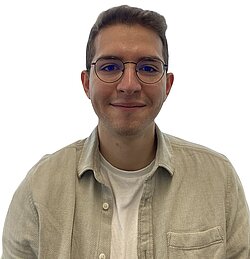
Leon-Cornelius Mock is a Researcher at the GEOMAR Helmholtz Centre for Ocean Research in the Ocean Dynamics department. His work focuses on physical oceanography, climate dynamics, and marine transport processes. Education : Bachelor's thesis on sea level variations in New York Bay (2021) Master's thesis on particle spreading at the Ewing Seamount (2023) Research spans submesoscale ocean dynamics , disease dispersal in marine ecosystems , and model resolution impacts on particle transport . His methods integrate numerical simulations, biophysical modeling, and field observations from oceanographic expeditions. Collaborations include work with oceanographers like Arne Biastoch and teams on projects related to Agulhas rings , European oyster restoration , and upwelling systems in the Benguela region.
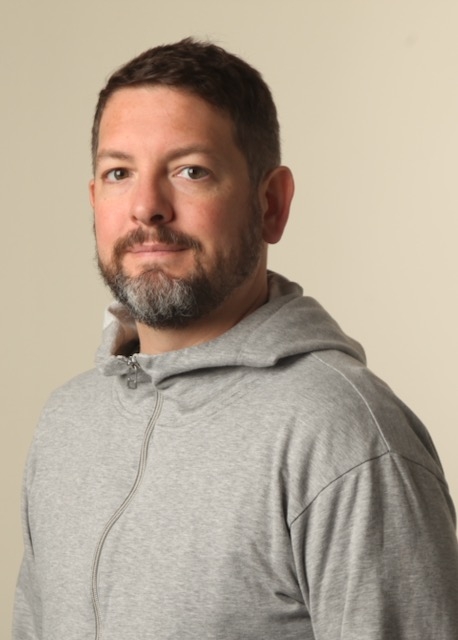
Chongai Kuang is an Assistant Scientist in the Atmospheric Sciences Division at Brookhaven National Laboratory, currently serving in the Environmental Science and Technologies Department. His research focuses on atmospheric aerosol physical and chemical processes, with particular expertise in aerosol nucleation and instrumentation development for detecting sub-1 nm particles. Education: Ph.D. in Chemical Engineering (major) & Nanoparticle Science and Technology (minor) - University of Minnesota, Minneapolis B.S. in Chemical Engineering (major) & Chemistry (major) - University of California, Berkeley Research Interests: Dr. Kuang's work is broadly bounded by the study of atmospheric aerosol physical and chemical processes, with specific focus on aerosol nucleation mechanisms and the development of advanced instrumentation capable of detecting newly formed particles down to below 1 nm. His current scientific efforts concentrate on developing microphysical-based parameterizations for aerosol nucleation and initial growth processes, integrating findings from intensive field campaigns and controlled laboratory experiments into large-scale atmospheric models. Research Methodology: His approach combines extensive field campaign participation with sophisticated laboratory experiments, utilizing state-of-the-art instrumentation to characterize aerosol properties across diverse environments including marine boundary layers, Amazon rainforest, Antarctic regions, and urban atmospheres. Scientific Recognition: 2012: American Association for Aerosol Research (AAAR) Sheldon K. Friedlander Award - recognizing outstanding contributions to aerosol science and technology Professional Service: Dr. Kuang actively contributes to the scientific community through various roles including proposal review for the German Science Ministry, journal review for Atmospheric Chemistry & Physics, membership in the Young Investigators Committee for AAAR, and co-leadership of the New Particle Formation Focus Group in the ASR Aerosol Life Cycle Working Group. He holds memberships in the American Geophysical Union, American Association for Aerosol Research, and American Institute of Chemical Engineers. Laboratory and Facilities: Dr. Kuang is based at Brookhaven National Laboratory's Environmental Science and Technologies Department, located in Building 815E, Room 1-45, where he conducts his cutting-edge research in atmospheric aerosol science.
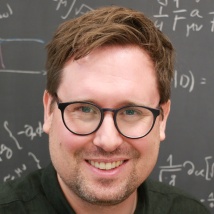
Dr. Matthew Hull serves as a Senior Teaching Fellow in the School of Mathematics and Physics at the University of Portsmouth, where he has taught continuously since 2014 across core physics and mathematics undergraduate programs. His academic qualifications include: PhD in Physics from the University of Portsmouth, awarded with an STFC research studentship for work on alternative gravity models in cosmology MSc with distinction in Theoretical Physics, specializing in Quantum Field Theory and Early Universe Cosmology MMath degree in Mathematical Physics Dr. Hull's research integrates Theoretical Physics and Mathematics , with primary focus on Modified Gravity theories and their cosmological applications. His work in Particle Cosmology examines connections between quantum field phenomena and cosmic evolution, while his mathematical research explores advanced Differential Geometry concepts including the Calabi Conjecture and Kahler-Einstein metrics . This interdisciplinary approach bridges abstract mathematical structures with physical models of the universe. Analysis of his recent publications (2015-2017) reveals concentrated expertise in Galileon and Horndeski gravity theories, particularly investigating self-accelerating cosmological solutions and inflationary constraints. His work demonstrates consistent integration of particle physics mechanisms—such as the Higgs mechanism—into gravitational frameworks, highlighting a distinctive cross-disciplinary methodology in theoretical cosmology. While specific research grants and student supervision details aren't documented in available materials, Dr. Hull's teaching portfolio indicates substantial mentorship through courses including Electricity & Magnetism, Computational Physics, Thermodynamics, and Particle Physics. His role as Senior Teaching Fellow reflects dual commitment to educational excellence and advancing theoretical physics research.
Pedro Vieira is a Portuguese theoretical physicist affiliated with the Perimeter Institute and ICTP-SAIFR . He specializes in mathematical physics , quantum field theory , and quantum gravity , with a focus on AdS/CFT correspondence and integrability . His groundbreaking work includes the exact solution for the spectrum of planar N=4 Super Yang-Mills theory and advancements in finite coupling proposals for polygonal Wilson loops and three-point functions. His research has established critical connections between quantum field theory and string theory, particularly in analyzing non-perturbative effects in supersymmetric systems. Key contributions involve Bethe ansatz techniques, flux tube S-matrices, and mathematical structures underlying integrability. Pedro Vieira has received numerous prestigious awards, including: Sloan Fellowship (2015) Gribov Medal (2015) Raymond and Beverly Sackler International Prize in Physics (2018) New Horizons in Physics Prize (2020) The articles in his bibliography highlight trends in quantum field theory, particularly in supersymmetric Yang-Mills theories , non-perturbative methods , and finite coupling phenomena , reflecting his expertise in mathematical structures of theoretical physics.
Professor Ivo Sachs is a distinguished theoretical physicist at the Ludwig-Maximilians-Universität München (LMU), where he holds a position at the Arnold Sommerfeld Center for Theoretical Physics with a Chair on Cosmology. His research spans multiple areas of theoretical physics with a particular focus on string theory, quantum field theory, and cosmological applications. He maintains an active research program with numerous recent publications in prestigious journals. Professor Sachs' research interests center around fundamental theoretical physics, with significant contributions to string field theory, cosmological perturbation theory, and the mathematical structures underlying quantum gravity. His work often bridges abstract mathematical concepts with physical applications, particularly in understanding the early universe and quantum aspects of gravity. He has developed innovative approaches to studying cosmological correlators, spinning particles, and the relationship between quantum field theory and gravitational physics. Analysis of his recent publications reveals a strong focus on the intersection of cosmology and string theory, with particular attention to mathematical structures in quantum gravity. His work demonstrates consistent exploration of how quantum field theory techniques can be applied to cosmological problems, especially regarding correlation functions in the early universe. He frequently collaborates with researchers across Europe, indicating an active international research network. Martín Enríquez Rojo (PhD, 2022): Asymptotic symmetries in FLRW and deformations of gravitational symmetry algebras
Kai Schmitz is a theoretical physicist affiliated with the University of Münster, specializing in the intersection of particle physics and cosmology. His research focuses on understanding fundamental aspects of the early universe, dark matter, and gravitational phenomena through theoretical frameworks. His primary research interests include: Cosmological implications of particle physics models Axion physics and its role in dark matter and inflation Gravitational wave signatures from cosmological phase transitions Leptogenesis and baryon asymmetry of the universe Neutrino physics and its cosmological implications Analysis of his recent publications reveals a strong focus on connecting theoretical particle physics with observable cosmological phenomena. His work often explores how physics beyond the Standard Model could leave detectable imprints in gravitational wave experiments like LISA and pulsar timing arrays. He has made significant contributions to understanding how axion physics could explain dark matter and baryon asymmetry, and how cosmic strings might produce detectable gravitational wave signals. Dr. Schmitz has received recognition through numerous publications in high-impact journals including: Journal of High Energy Physics Physical Review Letters Physical Review D Journal of Cosmology and Astroparticle Physics His collaborative work extends across international boundaries, with contributions to major projects like the LISA Cosmology Working Group and the International Pulsar Timing Array Collaboration. His research bridges theoretical developments with potential observational tests, positioning him at the forefront of modern theoretical cosmology.
Michael Bronstein is a Professor at Università della Svizzera italiana (USI Lugano) in Switzerland and Imperial College London in the UK, where he holds the Chair in Machine Learning and Pattern Recognition. He serves as Head of Graph Learning Research at Twitter following the acquisition of his startup Fabula AI, and maintains a principal engineer position at Intel Perceptual Computing. His research focuses on the interplay between geometry, machine learning, and computer vision, with particular emphasis on non-Euclidean structured data. Professor Bronstein received his Ph.D. with distinction in Computer Science from the Technion in 2007. He has held visiting appointments at Stanford University, MIT, Harvard University (as a Radcliffe Fellow), and Tel Aviv University, and has been affiliated with multiple Institutes for Advanced Study including TUM-IAS where he was a Rudolf Diesel Industry Fellow (2017). He is a Fellow of IAPR, Senior Member of the IEEE, and a member of the Young Academy of Europe. His research program centers on theoretical and computational methods in spectral and metric geometry applied to computer vision, pattern recognition, and machine learning. He pioneered the field of geometric deep learning, developing novel neural network architectures that process non-Euclidean data structures like graphs and manifolds. His work spans from theoretical foundations to practical applications, with over 100 publications in top scientific journals and conferences, and has been featured in international media including CNN. Analysis of his recent publications reveals a strong trajectory in geometric deep learning with applications spanning computer vision, 3D shape analysis, social network analysis, and bioinformatics. His research consistently bridges theoretical innovation with real-world applications, developing novel neural architectures for processing complex data structures. The work demonstrates increasing interdisciplinary reach, connecting machine learning with fields from particle physics to molecular biology. Dalle Molle Prize (2018) Royal Society Wolfson Research Merit Award (2018) ERC Proof of Concept Grant (2018) Amazon AWS Machine Learning Research Award (2018) Fellow, International Association for Pattern Recognition (IAPR) Google Faculty Research Award (2017) Radcliffe fellowship, Harvard University (2017) Rudolf Diesel industrial fellowship, TU Munich (2017) ERC Consolidator Grant (2016) World Economic Forum Young Scientist (2014) Professor Bronstein has secured multiple ERC grants (Starting Grant 2012, Proof of Concept Grants 2016 and 2018, Consolidator Grant 2016) and has mentored numerous students who have contributed to over 30 granted patents. He has chaired more than a dozen conferences and workshops in his field and served as area chair at major computer vision conferences including ECCV 2016 and ICCV 2017. His research group at USI Lugano collaborates extensively with industry partners including Intel and Twitter. As a serial entrepreneur, Professor Bronstein co-founded Novafora (2005-2009) developing large-scale video analysis, Invision (2009-2012) which created low-cost 3D sensors and was acquired by Intel, and Fabula AI (2018-2019) focused on fake news detection which was acquired by Twitter. His work bridges theoretical research with commercial applications, with his technology contributing to Intel RealSense and Twitter's graph learning infrastructure.
John Sarff is a Professor in the Department of Physics at the University of Wisconsin-Madison, specializing in plasma physics with a focus on tokamak and reversed field pinch (RFP) research . His work explores magnetohydrodynamic (MHD) stability , runaway electron dynamics , and magnetic reconnection phenomena in fusion devices such as the Madison Symmetric Torus (MST) and DIII-D tokamak. Key Research Areas: Tokamak disruptions, RFP relaxation, gyrokinetic simulations, and anomalous transport. Labs/Institutions: Wisconsin Plasma Physics Laboratory (WiPPL), MST, DIII-D collaborations. Techniques: Development of advanced diagnostics (e.g., Bdot-Mach probes, soft X-ray cameras) and computational modeling (NIMROD code).
Univ.-Prof. Christos N. Likos is a world-leading researcher at the University of Vienna , holding the chair in Multiscale Computational Physics since 2010. Affiliated with the Faculty of Physics and directing the Computational and Soft Matter Physics group, he bridges scales from microscopic to macroscopic in soft matter systems. Education: Dipl.-Ing. in Electrical Engineering (NTUA Athens), M.Sc. & Ph.D. in Physics (Cornell University) Honors: Fellow of the Royal Society of Chemistry (2013), University of Vienna Teaching Award (2025), Outstanding Referee Award (2009) His research in Soft Condensed Matter focuses on polymers, colloids, and biomolecular systems through coarse-graining , density functional theory , and Monte Carlo simulations . Key collaborations include institutions in Rome, Heraklion, San Sebastian, and Princeton. His work reveals principles of self-organization, non-equilibrium phenomena, and responsive material design with applications in cosmetics, nanotechnology, and biophysics. Recent publications highlight active matter , topological polymers , and electric field-responsive microgels . The group trains 18 current students (Ph.D., M.Sc., B.Sc.) and maintains partnerships with experimental teams across Europe. As Associate Editor of Soft Matter and member of Journal of Colloid and Interface Science Open editorial board, he shapes scientific discourse in his field. Teaching excellence is a hallmark, with courses on Advanced Statistical Physics and Soft Matter Principles . His group website details ongoing projects, while lab facilities in Vienna's Kolingasse campus enable interdisciplinary research.
John Fox serves as an Adjunct Professor in the Department of Applied Physics within Stanford University's School of Humanities and Sciences, specializing in accelerator physics and energy systems optimization. His research bridges theoretical control methods with practical engineering applications in particle accelerators and sustainable transportation. Ph.D. in Applied Physics with minor in Electrical Engineering from Stanford University (1986) A.B. in Physics from Harvard University (1977) Professor Fox's research focuses on two primary domains: (1) accelerator physics including RF systems, beam dynamics, and instability control for particle accelerators, where he leads LARP projects for LHC LLRF techniques and electron-cloud instability mitigation; and (2) optimal control methods for improving energy efficiency in plug-in hybrid vehicles. His work combines advanced digital signal processing with practical instrumentation challenges in both synchrotron facilities and automotive systems. The research demonstrates consistent innovation in control theory applications across disparate physical systems. His publication record shows strong interdisciplinary connections between accelerator physics and energy systems engineering, with recent work increasingly focusing on multilevel inverter technologies and battery health optimization. The publications reveal a consistent thread of applying advanced control theory to complex physical systems across both high-energy physics and sustainable energy domains. Scientific Recognition: Dean's Award for Distinguished Teaching (2001) Fellow of the American Physical Society (2008) IEEE Senior Member (2018) Professor Fox has successfully mentored 5 Ph.D. students to completion and supervised 13 M.S. students, with two students receiving American Physical Society Dissertation Prizes and another winning the Toohig Fellowship. His research has been supported by significant collaborations including the Ford-Stanford Alliance and Precourt Center for Energy, with projects focusing on battery health modeling and optimal control strategies for hybrid vehicles. Current research includes leadership roles in LHC accelerator projects and development of energy optimization algorithms for transportation systems. As Group Leader for LARP projects, he directs teams working on feedback control systems for the LHC and SPS accelerators, with expertise spanning electron/positron and hadron synchrotrons, storage rings, and LINAC systems. His laboratory work emphasizes practical implementation of theoretical control concepts in both accelerator and automotive contexts.
Malgorzata (Gosia) Chwatko is an Assistant Professor in the Department of Chemical and Materials Engineering at the University of Kentucky, affiliated with the Stanley and Karen Pigman College of Engineering. Her research focuses on sustainable separation processes, including membrane-enhanced peptide synthesis, green polymer development, and environmentally friendly particle synthesis. Education: Postdoctoral Fellow in Biomedical Engineering (2019-2020), Ph.D. (2019), M.S. (2019) in Chemical Engineering from the University of Texas at Austin, and B.S. in Chemical Engineering from the University of Connecticut (2015). The Chwatko research group investigates technologies to reduce solvent waste and improve sustainability in chemical processes. Key projects include membrane-enhanced liquid phase peptide synthesis , thermodynamic analysis of green solvent-polymer systems , and sustainable polymer synthesis with recyclability in mind . Recent publications highlight her work on PEG-based hydrogels for wound dressings , bioactive hydrogel coatings , and epoxide copolymerization mechanisms . Her team has produced award-winning researchers, including students honored at the 2024 REU and Super Collider events.
Fredrik Sandin is a Professor in the Department of Computer Science, Electrical and Space Engineering at Luleå University of Technology, where he leads the Machine Learning research group with approximately thirty members. His work focuses on neuromorphic technologies and the intersection of machine learning with computational physics to solve challenging real-world interaction problems. He coordinates the 'Teknisk fysik och elektroteknik' program at LTU and has been instrumental in establishing neuromorphic research activities at the university. Luleå University of Technology, Department of Computer Science, Electrical and Space Engineering Member of WASP (Wallenberg AI, Autonomous Systems and Software Program) and ELLIS (European Laboratory for Learning and Intelligent Systems) Coordinator of Neuromorphic Innovation Platform Sweden with KTH, Lund University, Uppsala University, FOI, ABB, Ericsson, and SAAB Fredrik earned his PhD in Physics from Luleå University of Technology in 2007, with thesis work focusing on dense states of matter in neutron stars. His academic journey began with an MSc diploma work in ATLAS at CERN in 2001, followed by postdoctoral research in computational physics at IFPA in Belgium (2008-2009) and brain-like computing at EISLAB with Prof. Jerker Delsing (2010-2011). Professor Sandin's research interests center around neuromorphic technologies, particularly neuromorphic computing and spiking neural networks. He investigates sensor/detector and intelligent systems co-design where constraints like energy, power, latency, and dynamic range challenge conventional digital approaches. His work spans mixed-signal neuromorphic circuits, algorithms, and systems, as well as machine learning projects involving industrial data and collaboration. He has been a key figure in establishing neuromorphic research at LTU, supported by The Kempe Foundations, particularly through the 2014 Gunnar Öquist Fellowship. His recent publications demonstrate a strong interdisciplinary focus spanning quantum phase transitions, particle physics detector optimization, renewable energy materials, and the integration of large language models into control systems. This diverse portfolio reflects his approach connecting machine learning with fundamental physics and practical engineering applications, particularly in neuromorphic computing and intelligent systems design, with emphasis on solving real-world problems through co-design of hardware and algorithms. Gunnar Öquist Fellowship Award and 3 MSEK grant from The Kempe Foundations ISSP award for an Original Work in Theoretical Physics (signed by Prof. 't Hooft and Prof. Zichichi) New-Talents award for original work in theoretical physics at the International School of Subnuclear Physics in Erice Professor Sandin has supervised numerous PhD students working on topics ranging from neuromorphic TinyML to materials for neuromorphic computing, privacy-preserving machine learning at the edge, and intelligent fault diagnosis. He has secured substantial research funding from various sources including Vinnova, ÅForsk, Kempe Foundations, WASP-WISE, and EU programs like ECSEL JU Arrowhead Tools and ITEA3 AutoDC. His current major projects include the Neuromorphic Innovation Platform Sweden and several initiatives focused on neuromorphic condition monitoring and computing, with total funding exceeding 30 MSEK in the past five years. He leads the Machine Learning group at LTU, which collaborates extensively with industry partners including ABB, Ericsson, SAAB, SKF, and RISE. The group is active in developing neuromorphic technologies for wireless sensor networks, condition monitoring systems, and next-generation intelligent systems that address energy, power, and latency constraints that challenge conventional digital approaches.
Dr. Axel Lubk is a Group Leader at the Institute for Solid State Research (IFW Dresden) , specializing in advanced electron microscopy techniques for materials science. His research spans four key areas: (1) TEM method development (high-resolution imaging, tomography, holography, and in-situ techniques), (2) charge particle optics and scattering theory , (3) magnetic nanotextures (domain walls, skyrmions), and (4) plasmonics (mode hybridization in heterogeneous structures and semiconductor heterostructures). Dr. Lubk’s work focuses on three-dimensional magnetic texture analysis using electron holography and tomography, particularly in systems like skyrmion tubes , FeGe , and Cr2O3 thin films . He has pioneered techniques for vector-field electron tomography and phase retrieval under varying boundary conditions, advancing nanoscale magnetic imaging. His recent studies include plasmonic properties in AgAu nanosphere chains , thermoelectric multilayer systems , and topological insulators like NiRh2Sb and TaTMTe4 . Dr. Lubk has published extensively in high-impact journals such as Nature Communications and Advanced Materials , with a focus on TEM instrumentation and quantitative analysis . He frequently presents at international conferences like the International Microscopy Congress and European School of Magnetism , emphasizing applications in spintronics , quantum materials , and nanostructured systems . His contributions to holographic vector-field electron tomography and machine learning for spectrum-image data have set new standards in electron microscopy.
Dario De Marinis is an Assistant Professor at the Department of Mechanics, Mathematics & Management, Politecnico di Bari, Italy. His research focuses on fluid dynamics with applications in biomedical engineering, aerospace, and computational physics. Research Interests Fluid-structure interaction modeling Microfluidics and particle transport Biomedical applications (blood flow, valve mechanics) Aerospace engineering (hypersonic flows, turbulence) Numerical methods (Lattice Boltzmann, immersed boundary) Publications Trend Dario's recent work (2015–2025) spans computational fluid dynamics, with emphasis on multiphase flows, viscoelastic material behavior, and biomedical microfluidic devices. He has contributed to aerospace applications and turbulent thermal flows.
Dr. Thangavel Thevar is a Senior Lecturer in the School of Engineering at the University of Aberdeen, where he has been teaching since 2005. He completed both his undergraduate degree (First Class Honours in Electrical Engineering) and PhD (in Laser Engineering) at the University of Aberdeen in 1989 and 1993 respectively. Prior to his academic career, he accumulated approximately 10 years of industrial R&D experience in the USA, working on solid-state laser development and holographic applications. Dr. Thevar's research focuses on several key areas: Digital holography for imaging of marine plankton and micro-particles Laser Induced Breakdown Spectroscopy (LIBS) for subsea applications Laser-based instrumentation development Development of solid-state lasers for scientific, industrial, and medical applications Engineering applications of holography His most notable recent achievement is leading a team that developed the weeHoloCam, a state-of-the-art ultracompact underwater holographic camera for imaging microorganisms. Weighing just 3.5 kg, this system is the lightest and most compact of its kind, capable of imaging 240 ml/s and continuously recording up to 200,000 holograms. The system incorporates a rapid hologram processor and an AI-based image classifier. This technology has significant applications in marine studies including spatial and temporal monitoring of plankton species, monitoring harmful plankton & micro-jellyfish, study of vertical transport of floc, and monitoring microplastic pollution in the ocean. Dr. Thevar has secured numerous research grants as Principal Investigator, including projects funded by Sustainable Aquaculture Innovation Centre (SAIC), BBSRC, DEFRA, and Defence & Security Accelerator (DSTL). His current research portfolio demonstrates strong interdisciplinary connections between optical engineering, marine science, and environmental monitoring. His scientific contributions include: Royal Academy of Engineering Visiting Teaching Fellow Award (2010-2013) US patent 8,494,012 B2 for Raman converters Development of alexandrite lasers and ruby holographic lasers during his industrial R&D period Work on US government contracts for non-destructive inspection methods for military aircraft and the space shuttle Sabbatical work at NASA Langley Research Centre developing diode pumped Thulium YALO lasers As an educator, Dr. Thevar has served as Coordinator of MSc Oil & Gas Engineering (2007-2020), Undergraduate Level 1 Coordinator, and has contributed to various committees including Quality Assurance and Students' Progression. He currently teaches courses including Principles of Electronics, Electrical & Mechanical Systems, Control Systems, and supervises individual projects at both undergraduate and postgraduate levels. He is accepting PhD students interested in Engineering research. Dr. Thevar is actively involved in professional organizations, serving as Technical Programme Chair for IEEE/OES Oceans Conference 2007, on organizing committees for various conferences, as a committee member of the Instrument Science and Technology Group (Institute of Physics), and as a member of both IET and IEEE. He also serves as a reviewer for optics-based journals.