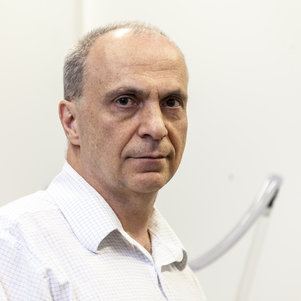
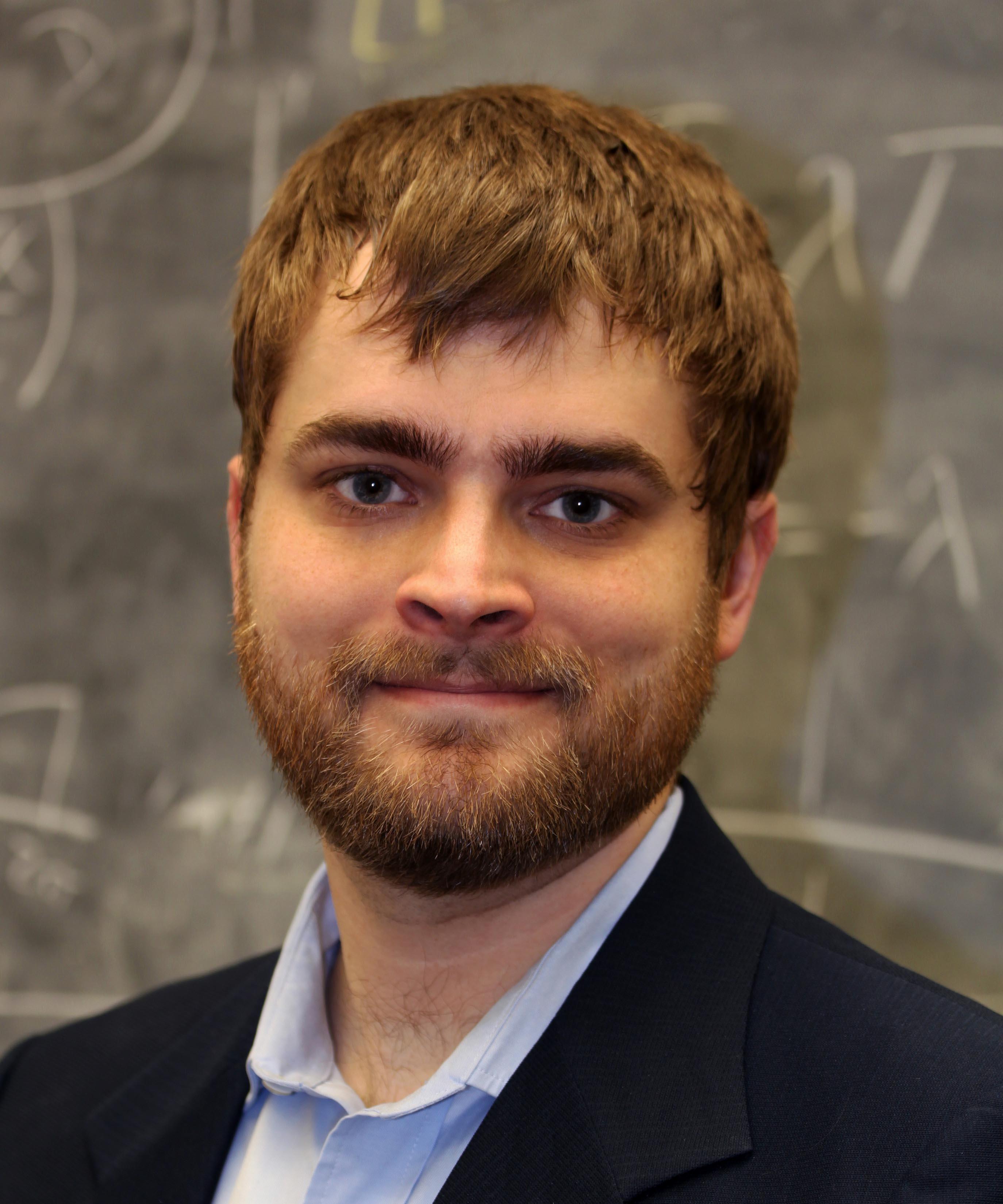
Dr. Luis Portela is a researcher at the Transport Phenomena Group within the Faculty of Applied Sciences at Delft University of Technology (TU Delft). His work focuses on multiphase flows, turbulence modeling, and separation technology, with a strong emphasis on computational fluid dynamics (CFD) and experimental validation. His recent research explores the hydrodynamics of bubble coalescence, inline swirl separators, and sediment transport using advanced imaging techniques like X-ray tomography. Collaborations include the TOMOCON project for tomography-driven flow control. Key contributions include developing control algorithms for gas-liquid separators and studying surfactant effects in industrial flows. He supervises PhD candidates such as Matheus Martinez Garcia, who focuses on inline fluid separation.
Daniel M. Harris is an Associate Professor of Engineering at Brown University's School of Engineering, promoted to this rank in July 2024. His research focuses on fluid mechanics, microfluidics, interfacial flows, nonlinear systems, and vibration through experimental and theoretical approaches in the Harris Lab. Harris holds the following educational qualifications: PhD in Applied Mathematics, Massachusetts Institute of Technology (2015) BS, Cornell University (2010) Postdoctoral Research Associate and Lecturer, University of North Carolina at Chapel Hill, Mathematics (2015-2017) His research spans biomedical engineering applications, fluid-structure interactions, capillary phenomena, and nonlinear dynamics. He is renowned for pioneering work on walking droplets, microfluidic device development, and vibration dynamics, with strong emphasis on connecting art, craft, and science through experimental fluid mechanics and soft matter physics. Recent publications (2018-2022) reveal dominant themes in microfluidics (Taylor dispersion, device fabrication), interfacial phenomena (capillary attraction, droplet impact), and nonlinear systems (bouncing dynamics, wave-propelled robotics). His work bridges fundamental fluid mechanics with biomedical engineering applications, particularly in micro-robotics for biological propulsion studies and surface property control. Harris has received significant recognition including: Dedicated Faculty Award (2023) American Physical Society Gallery of Soft Matter Winner (2023) Excellence in Research Mentoring Award (2022) Dean's Award for Teaching Excellence (2021) Multiple APS Gallery of Fluid Motion awards (2009, 2012, 2015) NSF Graduate Research Fellowship (2011-2013) He mentors students through research projects as evidenced by his mentoring award, and teaches core engineering courses including Fluid Mechanics and Vibration of Mechanical Systems. His educational innovations include course-based undergraduate research experiences in engineering electives. The Harris Lab actively engages in scientific communication, winning NSF/Popular Science Visualization awards for fluid dynamics demonstrations. The Harris Lab conducts custom experiments in fluid mechanics and soft matter with strong integration of mathematical modeling. The lab emphasizes artistic connections to science and maintains active public outreach through visualizations and demonstrations that have won multiple APS Gallery awards.
Michele Iovieno is an Associate Professor in the Department of Mechanical and Aerospace Engineering (DIMEAS) at the Polytechnic University of Turin. He is a member of the College of Mechanical, Aerospace and Automotive Engineering and teaches courses in Aerospace Engineering at both undergraduate and graduate levels. His academic career spans multiple doctoral cycles (28th through 40th) in Aerospace Engineering and Fluid Dynamics programs. Dr. Iovieno's research focuses on fluid dynamics, particularly turbulence and particle-laden flows. His work explores fundamental aspects of turbulent heat transfer, direct numerical simulation (DNS) of turbulent flows, and Large Eddy Simulation (LES) techniques. His research lines include particle-laden streams, mixed convection phenomena, and non-isothermal turbulent flows with suspended particles. His work aligns with broader societal goals including climate action, quality education, and industry innovation. Analysis of his recent publications (2023-2025) reveals a strong focus on heat transfer mechanisms in particle-laden turbulent flows, with particular attention to thermal feedback effects, particle clustering phenomena, and mixed convection regimes. His research demonstrates sophisticated numerical approaches to studying complex multiphase flow phenomena, often employing direct numerical simulation techniques to examine fundamental fluid-particle interactions at high resolution. Dr. Iovieno actively supervises PhD students in the Aerospace Engineering program, with current advisees working on topics including particle-laden channel flows, heat transfer in non-isothermal turbulent flows, and mixed convection phenomena. His teaching portfolio includes courses on Fluid Dynamics for the Environment and Energy, Aerodynamics, and Thermofluid Dynamics across multiple academic years. He is affiliated with research groups focused on Fluid Dynamics and Boundary Layer Flow within DIMEAS, contributing to the department's expertise in computational fluid dynamics and turbulence research. His work connects theoretical fluid mechanics with practical applications relevant to aerospace engineering and environmental fluid dynamics.
Dr. Huixuan Wu is an Adjunct Professor in the Department of Aerospace Engineering at the University of Kansas, bringing extensive expertise in experimental fluid dynamics and applied optics to the KUAE program. Education B.S. in Aeronautics and Astronautics, Beihang University M.S., Johns Hopkins University Ph.D., Johns Hopkins University Research Interests Dr. Wu’s work centers on experimental fluid mechanics and applied optics , with particular emphasis on turbulence and stochastic processes. Key thrusts include particle dynamics , Lagrangian turbulence , turbomachinery flows , thermal transport phenomena , and advanced optical measurement techniques such as particle image velocimetry (PIV), Lagrangian particle tracking, and vorticity optical probing. These pursuits often intersect through cross-disciplinary collaborations and instrument innovation. The experimental program is housed in the Experimental Fluid and Applied Optics Laboratory , where ongoing projects probe vorticity structures, particle-laden flows, and entropy generation in turbulent environments.
Dr. Gregory Lecrivain is the head of the DRESDEN-concept Research Group PRONTO (Particle Resuspension in Environmental Flows), a joint initiative between Technische Universität Dresden (TUD) and Helmholtz-Zentrum Dresden-Rossendorf (HZDR). He holds a doctorate from the University of Manchester (UK) and conducted research at Kyoto University (Japan) as a Marie Curie Fellow. His work focuses on microplastic transport in flowing waters, leveraging HZDR's ultrafast electron beam X-ray tomography and TUD's high-performance computing for environmental fluid dynamics. Collaborating with Professor Bernhard Vowinckel from TUD's Faculty of Environmental Sciences, Lecrivain's group addresses global challenges like microplastic pollution in aquatic ecosystems using interdisciplinary approaches. Education : PhD in Fluid Mechanics (University of Manchester, UK) Awards : Marie Curie Fellowship PRONTO's research combines experimental and computational methods to study particle-laden flows, with applications in environmental and energy engineering. The group benefits from dual institutional support, enabling novel investigations into pollutant dispersion and sustainable solutions.
Lucien Baldas is a Professor in the Mechanical Engineering Department at the National Institute of Applied Sciences of Toulouse (INSA Toulouse), where he serves as Associate Dean since 2020 and previously held roles including Director for International Relations (2007-2013). He is a member of the Modeling of Mechanical Systems and Microsystems (MS2M) research group, focusing on microfluidics and gas dynamics. His research spans microfluidics , gas microflows , fluidic micro-actuators for active flow control , particle-laden flows in microchannels , and mini pneumatic systems . Key projects include coordination of the ANR/DFG Project PuCK (2023-2026), Work-Package leadership for European Projects PERSEUS and MACAO, and coordination of the MIGRATE Training Network. His work demonstrates strong integration of theoretical modeling with experimental validation across fluid dynamics applications. Analysis of his 125+ publications reveals consistent focus on microscale flow phenomena , thermal effects in gas flows , and fluidic actuator development . Recent work (2021-2025) emphasizes additive manufacturing for microsystems , high-frequency fluidic oscillators , and multi-physics integration in microfluidic devices, with significant contributions to rarefied gas dynamics and particle transport phenomena. Key Administrative Roles: Associate Dean of Mechanical Engineering Department (2020-present) Elected Board of Studies member (2022-present) Co-chair of ISTEGIM 2019 Symposium Work-Package leader for multiple EU projects Co-Leader of Microfluidics Working Group (since 1999) His teaching portfolio includes Solid Mechanics, Automatic Control, Fluid Mechanics, and Computational Fluid Dynamics at INSA Toulouse. He has supervised numerous PhD students through EU projects and coordinates international research collaborations across Europe and North America.
Max Planck Institute for Dynamics and Self-OrganizationGermany
Gholamhossein Bagheri is a Scientist and Group Leader at the Max Planck Institute for Dynamics and Self-Organization in Göttingen, Germany, where he heads the Turbulence and Particles in Fluids research group within the Laboratory for Fluid Physics, Pattern Formation and Biocomplexity (LFPB). His research focuses on the complex physics of particle-laden turbulent flows across environmental, atmospheric, and biological systems. Dr. Bagheri's research spans multiple interconnected domains of fluid physics with significant real-world applications. His primary areas of investigation include: Cloud physics and aerosol-cloud interactions, particularly their role as major sources of uncertainty in weather models and climate projections Atmospheric transport of non-spherical particles such as volcanic ash, microplastics, pollen, and snowflakes Indoor air quality dynamics and the spatio-temporal evolution of respiratory aerosols relevant to infectious disease transmission Development of advanced measurement techniques for studying particle-laden flows in both laboratory and field conditions Analysis of Dr. Bagheri's publication record reveals a trajectory from fundamental fluid dynamics toward increasingly applied research addressing critical environmental and public health challenges. His work on respiratory particle transmission during the COVID-19 pandemic provided key evidence for mask efficacy that influenced policymakers and the public. His research consistently tackles significant uncertainties in atmospheric science while developing innovative instrumentation to bridge laboratory and field measurements. Dr. Bagheri leads an active research team that has developed several groundbreaking measurement platforms including the Max Planck CloudKite (MPCK), the HoloTrack instrument for cloud droplet measurements, and the WinDarts system for atmospheric turbulence measurements. His group has conducted major field campaigns such as the Pallas Cloud Experiment (PaCE) in September 2022 and IMPACT (In-situ Measurement of Particles, Atmosphere, Cloud, and Turbulence) from May to June 2024, where up to six second-generation WinDarts units were successfully deployed over Pallas, Finland.
Professor Takeshi Watanabe serves in the Department of Applied Physics at Nagoya Institute of Technology's Graduate School of Engineering. Specializing in fluid dynamics and turbulence theory, his research bridges fundamental physics with atmospheric and industrial applications. Education: Doctor of Science (2000.03, Kyushu University) Master of Science (1997.03, Kyushu University) Bachelor's Degree (1995.03, Tokyo University of Science, Faculty of Science, Department of Applied Physics) Watanabe's research focuses on turbulent flows , particularly particle-laden turbulence, cloud microphysics, and passive scalar transport. His work employs advanced computational techniques including direct numerical simulation (DNS) to investigate phenomena like energy dissipation statistics, vortex dynamics, and polymer scission in turbulent environments. Key contributions include modeling turbulence modulation by particles and supersaturation spectra in cloud systems. His publication record demonstrates consistent high-impact contributions to fluid mechanics, with recent articles in Physical Review Fluids and Journal of Fluid Mechanics addressing fundamental turbulence characteristics across diverse applications from atmospheric science to industrial fluid systems. Awards: Fellow Member Certification (Japan Society of Fluid Mechanics, 2023) HPCI Outstanding Research Achievement Award (RIST, 2021) Japan Fluid Mechanics Society Central Chapter Outstanding Presentation Award (2004) As Principal Investigator for multiple competitive grants including JSPS Kakenhi projects (totaling over ¥48 million), Watanabe leads collaborative research on cloud turbulence and particle-fluid interactions. His advisory role extends to high school outreach programs at Nagoya Institute of Technology, demonstrating commitment to science education. Watanabe actively contributes to academic governance as理事 (Board Member) of the Japan Society of Fluid Mechanics and strategic committee member at the National Institute for Fusion Science, where his expertise in turbulence informs plasma simulation research.