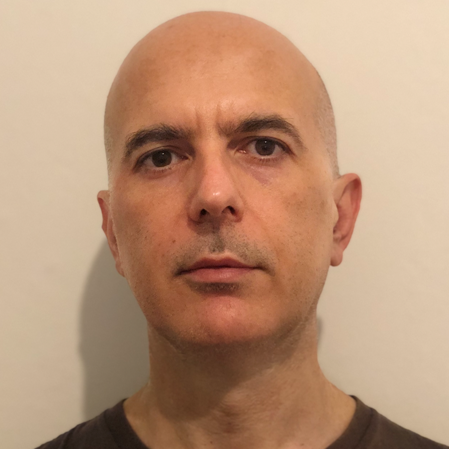
Nuno Loureiro is an Associate Professor at the Department of Nuclear Science and Engineering at MIT, with a secondary appointment in the Physics Department. He obtained his PhD in Physics from Imperial College London in 2005 and held postdoctoral positions at Princeton University and the UK’s Culham Centre for Fusion Energy before joining MIT in 2016. His research focuses on plasma physics , particularly theory and simulations of astrophysical and laboratory plasmas , including magnetic reconnection, turbulence, and kinetic effects. His work bridges classical plasma dynamics with emerging quantum computing applications. The 15 most recent publications highlight advancements in quantum algorithms for plasma simulations , magnetic reconnection mechanisms , and turbulence dynamics across relativistic and non-relativistic plasmas. Topics include plasmoid-mediated inverse energy transfer, data-driven fluid closures, and ion-acoustic instability impacts. 2015 Thomas H. Stix Award (American Physical Society) NSF CAREER Award
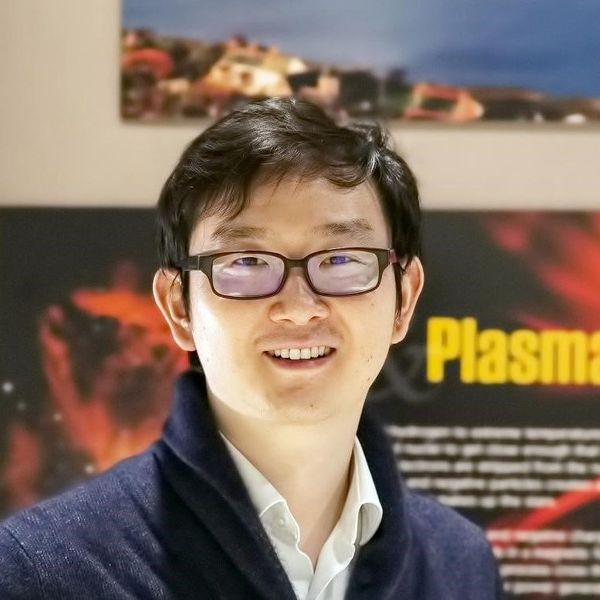
Assoc Prof Ng Teng Yong is an Associate Professor at the School of Mechanical & Aerospace Engineering (NTU), specializing in numerical modeling and simulation. With a background as Research Manager at A*STAR Institute of High Performance Computing, his work spans materials science, nanotechnology, and aerospace engineering. Current focus on graphene-based desalination membranes Expertise in molecular dynamics simulations Investigates nanoscale fluid mechanics and structural dynamics Recent publications highlight advancements in energy-efficient electrodialysis, smart robotics, and nonlinear vibration analysis. His interdisciplinary approach integrates computational methods with experimental validation in additive manufacturing and soft material mechanics.
Professor Emilio Artacho is a faculty member in the Department of Physics at the University of Cambridge, based at the Cavendish Laboratory. He transitioned from the Department of Earth Sciences in 2011, where he was granted a Professorship in 2006. His research focuses on computational simulations of non-equilibrium processes in condensed matter, particularly using first-principles molecular dynamics and density-functional theory. He co-developed the SIESTA program for linear-scaling electronic structure calculations, widely utilized in computational materials science. Artacho’s work spans far-from-equilibrium phenomena in irradiated matter, multiferroics, nanoconfined water systems, and surface chemistry. His contributions include studies of electronic stopping power in materials, 2D electron gas formation at ferroelectric interfaces, and the structural dynamics of water under confinement. His academic roles include adjunct positions at Ikerbasque (Nanogune, Spain) and visiting professorships at institutions like the University of California, Berkeley, and École Normale Supérieure de Lyon. Research interests are anchored in theoretical condensed matter physics, with applications to nanomaterials, radiation effects, and interfacial phenomena. His computational methods bridge quantum mechanics and classical dynamics, enabling insights into complex systems like proton-irradiated solar cells and confined water films.
Jennifer K. Ryan is a Professor and Division Head for Numerical Analysis, Optimization & Systems Theory at the Department of Mathematics, KTH Royal Institute of Technology, Stockholm. She is affiliated with the Digital Futures Faculty, a cross-disciplinary research center jointly established by KTH, Stockholm University, and RISE Research Institutes of Sweden. Her research focuses on developing numerical schemes for extracting enhanced accuracy from simulations, with applications in imaging, data analysis, and fluid dynamics. Ryan’s work emphasizes improving computational efficiency through theoretical insights and practical algorithms. Her academic roles include teaching courses like Numerical Methods for Differential Equations II and supervising student projects in numerical analysis. She has contributed to the SIAC MAGIC toolbox, a software package for accuracy-enhancing filtering techniques. Ryan’s research group actively explores discontinuous Galerkin methods, SIAC filtering, and multi-resolution analysis, addressing challenges in computational physics and engineering. Her publications span high-order numerical methods, mesh adaptivity, and applications in plasma physics and wave equations. Projects include error estimation for boundary integral methods and developing filters for noisy data. Ryan collaborates internationally, contributing to both theoretical advancements and practical implementations in computational science.
Matthew W. Kunz is an Associate Professor of Astrophysical Sciences at Princeton University, serving as Associate Chair of the Department of Astrophysical Sciences and Director of Graduate Studies for the Program in Plasma Physics. He holds a B.S. in Astronomy-Physics and B.A. in Music from the University of Virginia (2003), and a Ph.D. in Physics from the University of Illinois at Urbana-Champaign (2009). His research focuses on astrophysical plasma dynamics, including instability, turbulence, and transport in weakly collisional and poorly ionized plasmas, with applications to galaxy clusters, accretion disks, and the solar wind. Dr. Kunz's work employs analytical and numerical methods to study multi-scale plasma dynamics, aiming to understand angular momentum transport in accretion disks, kinetic turbulence cascades, and magnetic field evolution. His research has been recognized with several awards, including an NSF CAREER Award (2020-25), Alfred P. Sloan Research Fellowship (2017-20), and NASA Einstein Postdoctoral Fellowship (2011-14). He teaches courses on plasma astrophysics (AST 521), irreversible processes in plasmas (AST 554), and astrophysical research methods (AST 303). His publications demonstrate a consistent focus on plasma turbulence, magnetic reconnection, and cosmic ray propagation, with recent work emphasizing collisionless plasma dynamics and high-energy astrophysical phenomena.
Jennifer Ryan is a Professor of Numerical Analysis and Division Head of Numerical Analysis, Optimization, and Systems Theory at the Department of Mathematics, KTH Royal Institute of Technology. Her research focuses on designing and developing numerical schemes to extract accuracy from simulations, particularly through superconvergence properties and computational efficiency improvements. She applies these techniques to applications such as imaging, fluid visualization, and plasma dynamics. Education: PhD in Applied Mathematics, Brown University; MS in Mathematics, Courant Institute; BA in Applied Mathematics, Rutgers University. Professional Activities: Member of editorial boards for BIT Numerical Mathematics, ESAIM:M2AN, and Communications on Applied Mathematics and Computation; Steering committee member of AWM's Women in Numerical Analysis and Scientific Computing (WINASc). Her publications emphasize discontinuous Galerkin methods, SIAC filtering, and applications in fluid dynamics. She has served on multiple grant review panels and received awards for diversity and inclusion initiatives. Grants: Principal Investigator for projects funded by the Swedish Research Council, NSF, and US Air Force Office of Scientific Research. Awards: Fellow of UK Higher Education Academy, DAAD Fellowship, and Householder Fellowship.
Colby Haggerty is an Assistant Professor at the Institute for Astronomy (IfA Mānoa) at the University of Hawaiʻi at Mānoa. He specializes in computational plasma physics, focusing on magnetospheric, heliospheric, and astrophysical systems. His research emphasizes collisionless plasma shocks, magnetic reconnection, and kinetic plasma turbulence. He holds a Ph.D. in Plasma Physics from the University of Delaware (2017) and conducted postdoctoral work at the University of Chicago (2017–2021). His work bridges theory, numerical simulations, and observational data analysis using advanced computational tools like Python, C++, Fortran, and MPI/OpenMP frameworks. Research Interests: He investigates collisionless plasma shocks and energetic particle acceleration (e.g., Earth’s bow shock, coronal mass ejections), plasma instabilities, magnetic reconnection dynamics, and the role of turbulence in energy dissipation. His studies often involve hybrid and particle-in-cell (PIC) simulations to model cosmic phenomena like supernova remnants and solar wind interactions. Articles & Trends: His recent publications highlight advancements in understanding shock-drift acceleration mechanisms, the saturation of plasma instabilities (e.g., Bell instability), and scaling laws for magnetic reconnection in asymmetric and relativistic regimes. Collaborations with institutions like NASA Goddard, Columbia University, and the University of Chicago underscore his interdisciplinary approach. He has also contributed to developing Python-based plasma physics tools (e.g., PlasmaPy) for the scientific community. Grants & Impact: His CAREER award (2024) supports studies on collisionless magnetic reconnection as a heliospheric process. He emphasizes computational methods and educational outreach, reflecting his dual focus on advancing science and training future researchers. Labs & Teams: While no specific lab is named, his work relies on collaborative networks with leading institutions, leveraging state-of-the-art simulation infrastructure to tackle complex plasma problems.
Peter Awakowicz is a Senior Professor and former head of the Chair of Electrical Engineering and Plasma Technology at the Faculty of Electrical Engineering and Information Technology , Ruhr-Universität Bochum . His work focuses on plasma physics and technology, with applications in surface treatment, sterilization, and diagnostics. He is affiliated with the Department of Applied Electrodynamics and Plasma Technology, where he leads interdisciplinary research combining experimental plasma science with technological innovation. Research Interests: Plasma-assisted surface modification and thin-film deposition Dielectric barrier discharges and atmospheric pressure plasmas Plasma sterilization and biomedical applications Plasma-catalysis for environmental and energy applications Advanced plasma diagnostics and optical emission spectroscopy His recent publications demonstrate a strong focus on volatile organic compound (VOC) conversion , NO dynamics in low-pressure plasmas , microdischarge behavior , and plasma-assisted pyrolysis . These works highlight his expertise in both fundamental plasma physics and applied plasma engineering. Contact & Resources: Email: awakowicz@aept.rub.de Faculty Page: https://etit.ruhr-uni-bochum.de/en/faculty/professorships/prof-dr-ing-peter-awakowicz/ Google Scholar: https://scholar.google.de/citations?user=MPKunGAAAAAJ
Vladimir Zhdankin is an Assistant Professor of Physics at the University of Wisconsin-Madison , where he leads the Zhdankin Group. He received his Ph.D. and B.S. in Physics from UW-Madison in 2015 and 2011, respectively. His career includes postdoctoral appointments as a NASA Einstein Postdoctoral Fellow (2018-2021) and Flatiron Research Fellow (2021-2023). Research Interests : Theoretical and computational plasma physics Relativistic plasma turbulence and instabilities Nonthermal particle acceleration and radiative processes Nonequilibrium statistical mechanics of collisionless plasmas Coherent structures in astrophysical systems Scientific Awards : NASA Einstein Postdoctoral Fellowship Flatiron Research Fellowship Advising & Collaborations : Current group members: Braden Buck, Miguel Castelan Tanner, Petr Ugarov, Cristian Vega (joint with Prof. Rogerio Jorge), Louis Henderson Collaborators: Dmitri Uzdensky, Matthew Kunz, Alexander Philippov, Stanislav Boldyrev
Stefano Markidis is a Professor of Computer Science at KTH Royal Institute of Technology, affiliated with the School of Electrical Engineering and Computer Science and the Digital Futures Faculty. He holds a Ph.D. from the University of Illinois at Urbana-Champaign and an MS from Politecnico di Torino. His research focuses on high-performance computing systems, including supercomputers and quantum computers, with expertise in plasma simulations, quantum algorithms, and scalable computational frameworks. Markidis leads the development of the Neko framework for high-fidelity computational fluid dynamics and the iPIC3D particle-in-cell code for plasma physics. He teaches courses such as Quantum Computing for Computer Scientists, High-Performance Computing, and Applied GPU Programming. His work addresses exascale computing challenges, including optimizing algorithms for GPUs, quantum systems, and distributed architectures. Key research interests include: Parallel Programming Models and HPC Frameworks Quantum Computing Applications in Scientific Simulations Physics-Informed Machine Learning Exascale System Optimization Turbulence Modeling and Plasma Dynamics His publications span over 100 articles in journals like Journal of Computational Physics and Scientific Reports , focusing on topics such as scalable CFD, quantum neural networks, and plasma simulation techniques. He has advised numerous students in these areas. Markidis collaborates with institutions like Los Alamos National Laboratory and RISE Research Institutes of Sweden through the Digital Futures initiative, aiming to solve societal challenges via digital technologies.
Dr. John W. McClory is a Professor of Nuclear Engineering at the Air Force Institute of Technology (AFIT) , where he has been affiliated since 2008. He serves as the Director of Nuclear Expertise for the Advancing Technology (NEAT) Center, Director of the Nuclear Weapons Effects Graduate Certificate Program, and holds the AFTAC Endowed Term Chair for Materials. His academic career spans military service as a former Army officer and teaching at the United States Military Academy. Education : Ph.D. in Nuclear Engineering (AFIT, 2008), M.S. in Physics (Texas A&M, 1993), B.S. in Physics (Rensselaer Polytechnic Institute, 1984) Dr. McClory’s research focuses on radiation effects on military electronics , nuclear forensics , and nuclear weapon proliferation . His work includes neutron detection , scintillator development , and radiation transport modeling , with applications in nuclear security and materials science . His recent publications emphasize radiation-hardened materials , computational modeling of nuclear effects , and machine learning applications in nuclear forensics . Collaborative projects span neutron spectroscopy , high-power microwave detection , and radiation-induced defect analysis in semiconductors. Scientific Awards : MOAA AFIT Outstanding Military Professor (2010) Dr. Leslie M. Thornton Teaching Excellence Award (2011) Military Legion of Merit (2012) Dean's Distinguished Teaching Professor Award (2019) Ohio Magazine Excellence in Education Honoree (2013) Dr. McClory has advised 22 PhD and 41 MS students and secured 25 research grants . He leads the NEAT Center and contributes to nuclear weapons effects curriculum and AFTAC materials research .
Chuanfei Dong is an Assistant Professor of Astronomy at Boston University's College of Arts & Sciences and of Electrical and Computer Engineering at the College of Engineering. His research focuses on understanding plasma physics and its applications to space science, planetary atmospheres, and fusion energy. Dong joined BU in January 2023 after working as a staff scientist at the Princeton Plasma Physics Laboratory. Education: B.S. in Space Science from University of Science and Technology of China M.S. in Earth and Atmospheric Sciences from Georgia Institute of Technology M.S.E. in Nuclear Engineering and Radiological Sciences from University of Michigan M.S. in Planetary and Space Sciences from University of Michigan Ph.D. in Scientific Computing from University of Michigan Research Interests: Dr. Dong's research spans multiple disciplines within space physics and plasma science. His primary interests include Star-Terrestrial Planet Interactions in our Solar System and beyond, magnetic reconnection and turbulence phenomena, wave-particle interactions in space plasmas, and applications of physics-informed machine learning to plasma problems. He also investigates high-intensity laser-plasma interactions with applications to fusion energy research. His work bridges the gap between theoretical plasma physics and observational space science, with particular focus on planetary atmospheres, solar wind interactions, and exoplanet habitability. Dong's interdisciplinary approach combines computational modeling, observational data analysis, and theoretical frameworks to address fundamental questions in space physics. Research Trends: Dong's recent publications demonstrate a strong focus on applying advanced computational techniques to space plasma physics problems. His work spans solar system bodies including Earth, Mars, Mercury, and the Moon, with increasing attention to exoplanet systems. A notable trend is the integration of machine learning approaches with traditional plasma physics modeling, particularly for complex phenomena like Landau damping and magnetic reconnection. His research has significant implications for understanding atmospheric evolution, space weather, and potential habitability of planetary bodies. Scientific Awards: DOE Early Career Research Award (2023) - $875,000 grant for plasma turbulence research Alfred P. Sloan Research Fellow (2024) Metcalf Travel Award Advising and Grants: Dr. Dong mentors undergraduate research assistants and plans to expand his research group with the support of his DOE Early Career Award, which will fund a graduate student and postdoctoral researcher. His research is supported by the Department of Energy and has connections to NASA missions including MAVEN (Mars) and BepiColombo (Mercury). Dong is also involved with the Mauve telescope project as BU institutional PI. His work has been featured in numerous media outlets including Phys.org, Science Daily, and German TV program zdf/3sat. Labs and Teams: Dr. Dong leads a research group focused on computational plasma physics at Boston University. He collaborates with researchers at Princeton Plasma Physics Laboratory and is involved with multiple NASA missions. His team develops advanced computational models to simulate space plasma phenomena, with particular expertise in magnetohydrodynamics (MHD), particle-in-cell methods, and physics-informed machine learning approaches. Dong is also affiliated with BU's Hariri Institute for Computing.
Kaliramesh (Kali) Siliveru is an Associate Professor and University Outstanding Scholar in the Department of Grain Science and Industry at Kansas State University. His work focuses on grain processing, food safety, and process modeling , with expertise in milling technologies, particle mechanics, and material handling. He holds a B.S. in Food Science from Acharya N.G Ranga Agricultural University, India, and a Ph.D. in Grain Science from Kansas State University. Dr. Siliveru’s research has produced 75+ peer-reviewed articles, 13 book chapters , and impactful studies on reducing microbial contamination in wheat-based products, optimizing pulse processing, and advancing nonthermal technologies like cold plasma. He has received prestigious awards including the ASABE Early Career Engineer of the Year and the University Distinguished Faculty Award for undergraduate mentoring. He teaches GRSC 310 (Materials Handling) , GRSC 810 (Particle Technology) , and GRSC 840 (Advanced Grain Processing) . His lab affiliations include the BIVAP Feed Quality Assurance Lab and Hal Ross Flour Mill, where he explores milling efficiency, microbial control, and sustainable food processing . Current projects address novel applications for minor millets and engineering solutions for safe, nutritious food production.
Michael Hesse is a Professor of Space Physics at the University of Bergen, Norway. Previously, he held senior roles at NASA including Director of the Heliophysics Science Division (2012–2016) and Director of the Community Coordinated Modeling Center (1999–2012). He earned his PhD in theoretical physics from Ruhr-Universität Bochum, Germany (1988), followed by a Director’s Postdoctoral Fellowship at Los Alamos National Laboratory. His research focuses on magnetospheric dynamics, plasma simulations (particle-in-cell and magnetohydrodynamics), and space weather. He pioneered studies on magnetic reconnection and developed critical models for NASA’s space missions. Notable achievements include establishing the Space Weather Research Center and contributing to the Magnetospheric Multiscale (MMS) mission. Key Roles: NASA Director-level positions, University Professor Expertise: Plasma physics, numerical modeling, space weather forecasting Legacy: Over 270 peer-reviewed articles, H-index 51 He has received prestigious awards such as the NASA Distinguished Service Medal and AGU Fellowship. As a professor in Bergen, he actively mentors students and advances Norway’s space physics research.
Anatoly Spitkovsky is a Professor of Astrophysical Sciences at Princeton University. His work focuses on theoretical high-energy astrophysics, particularly relativistic outflows, pulsar magnetospheres, collisionless shocks, and nuclear burning on accreting neutron stars during X-ray bursts. He employs high-performance computing and numerical simulations to study these phenomena. Developed a numerical method for Force-Free Relativistic Magnetohydrodynamics (MHD) to model pulsar magnetospheres. Investigated relativistic collisionless shocks using 3D particle-in-cell (PIC) simulations. Studied hydrodynamical effects in thermonuclear burning on neutron stars. His research bridges plasma physics, computational methods, and astrophysical observations, with applications to pulsar emission mechanisms and gamma-ray burst dynamics. He collaborates on interdisciplinary projects and contributes to advancing simulation techniques for astrophysical systems.