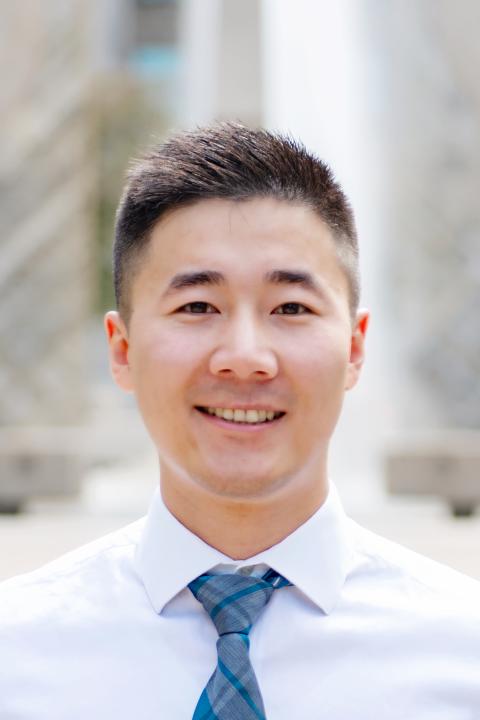
Jung-Ho Yu is Assistant Professor of Chemistry at the University of Waterloo, specializing in nanoscale bioanalytical platforms. His research develops nanotechnology for multiplexed molecular monitoring in biological systems, with applications in cancer imaging and diagnostics. Research focuses on: Design of excretable nanoparticle contrast agents Multiplexed tumor imaging using surface-enhanced Raman spectroscopy Advanced microscopy techniques for deep-tissue visualization Professional associations include the American Chemical Society and World Molecular Imaging Society. Teaches courses in Multi-Component Analysis and Analytical Chemistry.
Hilairy Hartnett is a Professor at Arizona State University (ASU) with joint appointments in the School of Earth and Space Exploration and the School of Molecular Sciences. She is affiliated with the Central Arizona-Phoenix Long Term Ecological Research (CAP LTER) and the Global Drylands Center, contributing to interdisciplinary initiatives like Earth Systems Science for the Anthropocene and the Global Futures Scientists and Scholars program. Her research focuses on biogeochemical processes, astrobiology, and urban ecology. Hartnett earned an A.B. in Chemistry from Vassar College (1990) and M.S./Ph.D. in Oceanography from the University of Washington. After postdoctoral work at Rutgers University studying river and estuarine systems, she joined ASU in 2003. Her expertise spans geochemical cycles, organic reactions under hydrothermal conditions, and planetary habitability assessments. Research Interests 1. Biogeochemistry : Investigates how geochemical, microbial, and human activities influence elemental cycles in modern and ancient environments. 2. Astrobiology : Explores organic geochemistry in hydrothermal systems and its implications for life detection on icy ocean worlds like Enceladus/Europa. 3. Urban Ecology : Analyzes ecological infrastructure in arid urban environments, such as central Arizona, focusing on stormwater systems and soil-water dynamics. 4. Interdisciplinary Science : Advocates for transdisciplinary approaches to address complex planetary and astrobiological challenges. Recent Trends in Publications Her work emphasizes experimental studies of organic reactions under hydrothermal conditions, leveraging mineral interactions to refine biosignature detection criteria for exoplanets. She also collaborates on global-scale initiatives like the TREC team to integrate elemental abundance data into planetary evolution models. Urban ecology research highlights innovative methods for water sustainability in hyperarid regions like the Atacama Desert. Advising & Grants While no formal advisees are listed, Hartnett leads collaborative research teams and participates in major programs (e.g., CAP LTER, Global Drylands Center). Grant details are not explicitly provided but inferred from her involvement in interdisciplinary projects and experimental facilities. Labs/Teams Affiliated with the Central Arizona-Phoenix LTER, Global Drylands Center, and the TREC team. These collaborations support her work on planetary habitability, astrochemical reactions, and urban biogeochemical processes.
Fei Han is an Assistant Professor in the Department of Civil and Environmental Engineering at the University of New Hampshire, affiliated with the College of Engineering and Physical Sciences. His research focuses on advanced sensing technologies, artificial intelligence, computational mechanics, decision-making systems, deep learning, optimization, plasticity, and soil mechanics & foundations. He teaches courses including Soil Mechanics, Geo-Environmental Engineering, and Foundation Design. His work integrates machine learning with geotechnical engineering to address challenges in infrastructure resilience, sustainable development, and disaster mitigation. Education : Ph.D., Purdue University M.S.C.E., Purdue University B.S., Huazhong University of Science Key Research Trends : Recent publications emphasize data-driven modeling for infrastructure systems (e.g., transfer learning for monopile foundations, deep reinforcement learning for equitable bridge maintenance), optimization algorithms (multi-objective genetic algorithms), and marine geology advancements. His work bridges computational methods with practical geotechnical challenges, addressing scour management, soil-structure interaction, and sustainable engineering solutions. Grants & Advising : No specific grants or student advisees are listed, though his courses suggest involvement in mentoring senior theses (e.g., CEE 799H). His research collaborations involve institutions like INDOT and international co-authors. Labs & Teams : Active in UNH’s geotechnical and environmental engineering research groups, focusing on sensor fusion, deep learning applications, and sustainable infrastructure systems.
Dr. Tathagata Bhaduri is a Lecturer in the Department of Civil and Environmental Engineering at Rensselaer Polytechnic Institute (RPI). He holds a Ph.D. in Civil Engineering from RPI (2021), an M.Tech. from the Indian Institute of Technology, Kanpur (2016), and a B.E. from the Indian Institute of Engineering, Science and Technology, Shibpur (2014). His research focuses on computational modeling of ultra-high-performance concrete (UHPC), particularly multi-scale techniques, fiber orientation effects, and failure modes in UHPC structures. He also explores smart systems for structural vibration control using bracing and fluid dampers. Dr. Bhaduri teaches core courses including Strength of Materials and Engineering Economics, and served as the course coordinator for Strength of Materials in Fall 2023. His professional involvement includes contributions to the American Concrete Institute (ACI) 239C committee, aiding in UHPC design guide development. His publications emphasize UHPC's mechanical properties, multi-scale modeling, and fiber-reinforced material behavior. Research trends highlight interdisciplinary approaches combining experimental and computational methods to address structural challenges in advanced materials.
Dr. Jaan Pu is an Associate Professor at the University of Bradford, UK, affiliated with the School of BEACI within the Faculty of Engineering & Digital Technologies. He holds visiting scientist roles at Tsinghua University and Nanyang Technological University. His research focuses on numerical and experimental approaches to water engineering challenges, including sediment transport, turbulence modeling, and flood dynamics. Dr. Pu serves as Associate Editor for Frontiers in Environmental Science and Frontiers in Built Environment , and editorial roles in other journals. His work integrates computational tools (e.g., Delft3D, MATLAB) with experimental techniques (ADV, PIV) to study flows in rivers, coastal areas, and urban environments. Research interests include turbulence structures around bridge piers, scour reduction mechanisms, and environmental hydraulics. Teaching areas cover Water Engineering, Fluid Dynamics, and Mechanics. His publications span 73 works addressing topics from coral reef protection to sedimentation in rainwater systems. Professional activities include editorial board memberships, conference organizing, and peer review for high-impact journals.
Kourosh Shoele is an Associate Professor in the Department of Mechanical Engineering at Florida State University (FSU), part of the FAMU-FSU College of Engineering. He previously held roles as an Assistant Research Scientist at Johns Hopkins University and a Post-doctoral Researcher at the University of California, San Diego. His research focuses on fluid-structure interaction, computational mechanics, and bioinspired engineering, with applications in renewable energy, aerospace, and biological systems. Education: Ph.D. (2011) and M.Sc. (2006) in Mechanical Engineering from the University of California, San Diego and Sharif University of Technology, respectively, and B.Sc. (2003) from Shiraz University. Research emphasizes multiphase fluid dynamics, aeroelasticity, energy harvesting, and shock wave dynamics. Notable projects include studies on cryogenic fuel storage, bioinspired robotics, and mask efficacy during respiratory disease transmission. His work has been recognized with awards such as the NSF Career Award (2020) and DARPA Young Faculty Award (2019). Advising and Team: Leads the Computational & Theoretical Multiphysics Laboratory (CTML), mentoring graduate students and postdocs across fluid dynamics, thermal management, and robotics. Collaborates on interdisciplinary projects including mask aerodynamics, flexible tree dynamics, and shock-boundary layer interactions. Labs/Teams: CTML Group, with ongoing collaborations in fluid-structure interaction, renewable energy systems, and biomimetic design. Active in publishing high-impact research in journals like Physics of Fluids and Journal of Fluid Mechanics.
Ria D. Corder is an Assistant Professor in the Department of Chemical and Biomolecular Engineering at the University of Tennessee, Knoxville, housed within the Tickle College of Engineering. Her research focuses on the rheological characterization of complex materials, including soft tissues, polymers, and nanocomposites, with applications in biomedical engineering, sustainable materials, and additive manufacturing. Education: BS and MS in Chemical Engineering, University of Alabama (2014) PhD in Chemical Engineering, North Carolina State University (2020) Lillian Gilbreth Postdoctoral Research Fellow at Purdue University College of Engineering (2021–2023) Research interests span rheological studies of biological tissues, enzyme-assisted biomass processing, and the design of functional materials for 3D printing. Her work integrates experimental techniques with data-driven modeling to understand and optimize material behavior under mechanical and chemical stimuli. Key areas include drug delivery systems, tumor mechanics, and ceramic-polymer composites. Publications reflect a focus on rheology-driven insights into material behavior, covering topics from thermosensitive drug carriers to nonlinear flows in industrial and biomedical contexts. Recent studies emphasize interdisciplinary applications, such as enzyme-mediated tissue digestion and additive manufacturing challenges in ceramics. Notable awards include the prestigious Lillian Gilbreth Postdoctoral Fellowship (2021–2023). While her advising record is not detailed here, her postdoctoral mentorship and collaborative projects suggest active involvement in training early-career researchers. She contributes to grants focused on sustainable biomaterials and advanced manufacturing technologies. No specific labs or research teams are explicitly mentioned, though her work aligns with UT’s initiatives in bioengineering and materials innovation.
Peter Vang Hendriksen is a Professor and Head of Section at the Department of Energy Conversion and Storage, Technical University of Denmark. He holds a Ph.D. in Materials Research (1993) from the same institution, focusing on nano-sized particles and particulate systems. His research emphasizes solid-state electrochemistry, solid oxide fuel cells, and electrolysis technologies, contributing to UN Sustainable Development Goals related to clean energy. He supervises multiple PhD projects on advanced materials for energy conversion and storage systems. He has authored over 416 publications and actively contributes to conferences and editorial work, including co-editing the Fuel Cells journal (2020-2021). His work addresses challenges in high-temperature materials durability, electrolysis efficiency, and green ammonia production. He has pioneered advancements in oxide compound stability and interconnect materials for solid oxide cells. Current projects include eco-friendly solid oxide electrolysis cell fabrication and novel ammonia synthesis routes. He collaborates internationally on materials characterization and techno-economic assessments of renewable energy systems.
Dr. William Fitzgerald is a Lecturer in Probability at The University of Manchester, focusing on probability theory and mathematical physics models. His research includes random growth models, interacting particle systems, and random matrices. He holds a PhD from the University of Warwick (2019) and previously served as a Postdoctoral Research Fellow at the University of Sussex (2019–2021). Research interests span determinantal/Pfaffian point processes, non-colliding stochastic processes, and Brownian motion applications. His work combines rigorous mathematical analysis with probabilistic models from physics. Recent articles explore polynuclear growth dynamics, ordered exponential random walks, and Fredholm Pfaffians in interacting systems. He actively supervises PhD students and currently offers funded projects in probability theory. No scientific awards are explicitly mentioned in the profile. Academic history includes postdoctoral research at Sussex University and doctoral training at Warwick. Collaborations with researchers like Denisov, Tribe, and Zaboronski are evident in co-authored works. His research bridges theoretical probability with applications in particle systems and random matrix theory.
Dr. David Green is a Senior Research Fellow at the School of Public Health, Faculty of Medicine at Imperial College London, leading the Aerosol Science Team within the Environmental Research Group. His research focuses on aerosol and gas measurement, source apportionment, and health impact studies. Key leadership roles include directing the Centre for Low Emission Construction and contributing to diversity initiatives. His work integrates advanced analytical techniques, such as real-time supersite monitoring in London, to inform public health policies and environmental forecasting systems. Research interests emphasize aerosol composition measurement, development of new techniques, and quantifying emission sources in urban environments. Collaborative projects span agencies like the Environment Agency, EPSRC, and EU initiatives. He supervises PhD students exploring topics such as non-road mobile machinery emissions, satellite-based traffic analysis, and subway air quality. His team’s work bridges environmental science and public health, addressing issues like ultrafine particle exposure, particulate matter on public transport, and policy-driven emission reductions. Key Collaborations: Includes STFC Air Quality Network, High Speed 2, and EU Metrology for Nitrogen Dioxide projects. Advising: Oversees five PhD students and post-doctoral fellows, focusing on environmental engineering and public health applications. Labs/Teams: Leads the Aerosol Science Team and contributes to the MRC Centre for Environment and Health.
Mark Meckes is a Professor at Case Western Reserve University, affiliated with the Department of Mathematics, Applied Mathematics, and Statistics within the College of Arts and Sciences. His research focuses on Geometry of Metric Spaces and High-Dimensional Probability, with contributions to topics like metric magnitude, convex bodies, and random matrix theory. He is reachable via mark.meckes@case.edu . His research interests delve into the geometric and probabilistic structures of metric spaces, including intrinsic volumes, spectral analysis, and applications to quantum mechanics and ecology. Recent work explores extremal metric spaces, fluctuations in random matrix ensembles, and quenched limits in stochastic models. Publications since 2015 highlight trends in random matrix theory, geometric measure theory, and interdisciplinary applications. Notable topics include the circular law for complex Ginibre ensembles, self-similarity in unitary ensembles, and biodiversity optimization. No scientific awards are explicitly listed in the provided material. Advising and grant details are not specified, though his work suggests active participation in academic mentorship. No lab or team affiliations are noted here.
David E. Kaplan is a Professor of Physics and Astronomy at Johns Hopkins University, where he has been a faculty member since 2002. He holds a PhD from the University of Washington (1999) and completed postdoctoral research at the University of Chicago/Argonne National Lab and SLAC. His research focuses on theoretical extensions of the Standard Model of particle physics and cosmology, with emphasis on dark matter, axions, quantum gravity, and experimental probes of fundamental physics. Notably, he created and produced Particle Fever , a documentary film awarded the DuPont Journalism Award. Key research interests include exploring new physics beyond the Standard Model, such as models addressing the strong CP problem, probing dark matter interactions via atom interferometry and spin precession, and studying cosmological implications of gravitational theories. He is a Fellow of the American Physical Society (APS), a DOE Outstanding Junior Investigator, Kavli Frontiers Fellow, and Alfred P. Sloan Fellow. His work integrates theoretical frameworks with experimental efforts, such as collaborations at SQMS (Quantum Sensing) and proposals for next-generation experiments like GALILEO (Galactic axion laser interferometer). His recent articles address topics ranging from nonlinear quantum mechanics to gravitational wave detection and cosmological constant relaxation.
Sean Carroll is the Homewood Professor of Natural Philosophy at Johns Hopkins University and Fractal Faculty at the Santa Fe Institute. His research spans philosophy of physics, quantum mechanics, cosmology, and complexity. He holds a PhD in Philosophy from Harvard University and explores foundational questions in physics, including spacetime, statistical mechanics, and the nature of reality. He is the author of The Biggest Ideas in the Universe: Quanta and Fields and hosts the Mindscape podcast, discussing diverse intellectual topics. His work focuses on bridging theoretical physics and philosophy, addressing topics like quantum measurement, cosmological fine-tuning, and the emergence of macroscopic phenomena. Articles emphasize quantum gravity, black hole physics, and interpretations of quantum mechanics. Despite no explicit awards listed, his contributions to science communication and interdisciplinary research are notable. He advises no listed students, and his professional roles prioritize research and public engagement.
Orlin D. Velev is the S. Frank and Doris Culberson Distinguished Professor of Chemical Engineering at North Carolina State University (NC State), part of the College of Engineering. His research focuses on colloid science, soft materials engineering, nanotechnology, and sustainable nanocomposites. He leads the Velev Lab, pioneering innovations in self-propelling microdevices, environmentally benign nanomaterials, and responsive materials for energy and biomedical applications. Velev's academic journey includes a PhD in Physical Chemistry from Sofia University (1999), followed by M.S. and B.Tech degrees in Chemical Engineering from NC State. His work bridges chemistry, physics, and biology, with notable contributions to microfluidics, colloidal assembly, and battery technologies. He has supervised numerous graduate and undergraduate students, fostering interdisciplinary research and innovation. Key research areas include: Directed assembly of colloids using external fields Self-propelling microbots and active particles Sustainable biopolymer composites (e.g., lignin-based nanoparticles) Soft robotic components and smart materials Biodegradable electronics and energy storage solutions Honors include the Braskem Award, AIChE’s Andreas Acrivos Award, and multiple fellowships. His lab’s recent advancements include osmotic-capillary wearable patches for sweat analysis and high-performance lithium-sulfur battery separators using soft dendritic colloids. Velev collaborates extensively, with projects funded by NSF, industry partnerships, and federal grants. His work emphasizes translating fundamental science into real-world applications, such as biodegradable packaging, microplastic remediation, and wearable health monitoring devices.
Ina Sarcevic is a Professor of Physics and Astronomy at the University of Arizona, holding the title of Primary Faculty. Her research focuses on particle astrophysics, dark matter, neutrinos, and collider physics. She has made significant contributions to the DUNE (Deep Underground Neutrino Experiment) collaboration, leading efforts in detector design, software development, and theoretical modeling. Her work bridges experimental and theoretical particle physics, addressing fundamental questions in astrophysics and cosmology. Education: Ph.D. in Physics from the University of Minnesota (1986), B.S. in Physics from the University of Sarajevo (1981), with notable fellowships including the Humboldt Fellowship (1989-1991) and a Doctoral Dissertation Fellowship (1985-1986). Research Interests: Dark matter detection via neutrinos, neutrino interactions at extreme energies, and the role of particle physics in cosmological phenomena. She explores theoretical frameworks for secret interactions of sterile neutrinos and their implications for the diffuse supernova neutrino background. Her work on detector technology for DUNE includes optimizing liquid argon time-projection chambers (TPCs) and developing algorithms for neutrino interaction reconstruction. Selected Honors: 2006 Fellow of the American Physical Society, recipient of the British Council Fellowship for Young Scientists (1980-1981), and Summa cum laude distinction at the University of Sarajevo. Grants and Collaborations: Principal investigator in DUNE-related projects, including detector design, software computing, and data analysis. Involved in international collaborations such as the LHC’s Forward Physics Facility and ProtoDUNE beam tests at CERN. Labs/Teams: Active member of the DUNE Collaboration, focusing on neutrino oscillation physics, supernova neutrino detection, and dark matter signatures in neutrino telescopes. Her group collaborates on developing advanced machine learning techniques for particle identification in large-scale detectors.