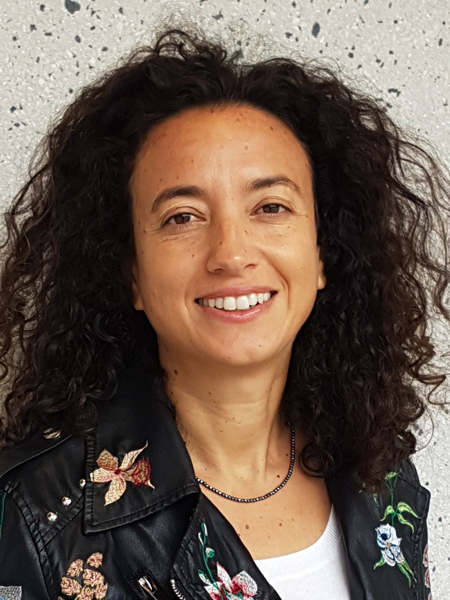
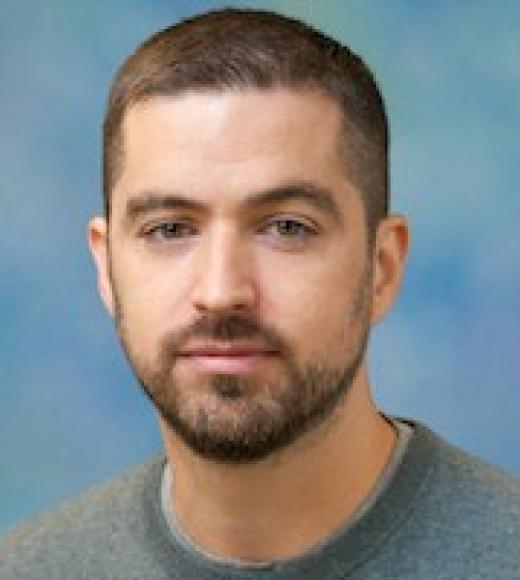
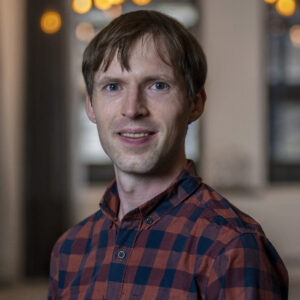
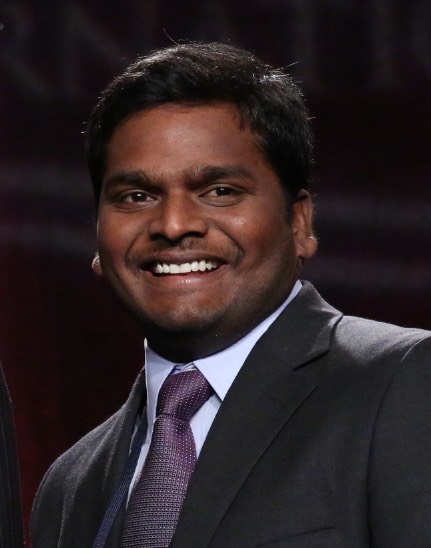
Costanza Bonadonna is a Full Professor at the University of Geneva (since 2019), specializing in volcanic hazards and Earth sciences. She holds a PhD supported by the European Commission (1998–2000) and has held academic positions across institutions including the University of South Florida and University of Hawaii. Her research focuses on volcanic ash dispersal modeling, risk assessment, and physical volcanology, with notable contributions to understanding tephra deposits and eruption dynamics. Bonadonna has received prestigious awards such as the 2020 AGU Volcanology presidency and the International Galileo Galilei Award. She leads the CERG-C (Centre for Environmental Risk Studies) and has organized major international workshops on volcanic risk and ash dispersal. Her work integrates numerical modeling, field investigations, and geophysical observations to enhance volcanic hazard forecasting and community resilience strategies. Research Grants: 2019–2023: SNSF Probabilistic volcanic risk framework 2018–2021: H2020 NEWTON-g and EUROVOLC networks 2017–2020: SNSF Gravitational instabilities in volcanic clouds Awards: 2020 President elect of AGU Volcanology Division Galileo Galilei Award (2020) Outstanding Woman in Science (2004, GSA) She has advised numerous international projects and collaborates with global institutions through initiatives like MeMoVolc and NEMOH. Her research bridges geophysical observations with computational models to address multi-hazard scenarios and improve disaster preparedness.
Santiago Barreda is an Associate Professor in the Department of Linguistics at the University of California, Davis, specializing in speech perception and phonetic analysis. His research examines how acoustic properties of speech convey speaker characteristics including age, gender, and physical attributes. Education: Ph.D. in Linguistics (Phonetics), University of Alberta, 2013 M.A. in Hispanic Studies (Language and Linguistics), University of Western Ontario, 2008 B.A. in Linguistics and Spanish Language and Literature, University of Western Ontario, 2006 Research Focus: Dr. Barreda employs behavioral experiments and statistical modeling to investigate perceptual mechanisms in speech recognition. His work bridges theoretical phonetics with practical applications, particularly in vowel normalization techniques and formant tracking algorithms. Key questions address how listeners extract speaker identity from acoustic cues and interpret social characteristics through vocal signals. Publication Trends: Recent publications (2020-2025) reveal three dominant themes: computational phonetic tools (FastTrack, phonTools), perception of social/physical speaker characteristics from children's voices, and interdisciplinary public health research on speech-related aerosol transmission. His work demonstrates strong methodological consistency in combining acoustic analysis with perceptual validation. Scientific Awards: No scientific awards were mentioned in the source material. Advising and Grants: The provided documentation does not specify graduate student advising roles or external grant funding. Technical Contributions: Dr. Barreda develops open-source phonetic analysis software including FastTrack (Praat-based formant tracking) and the phonTools R package, which have become standard resources in acoustic phonetic research.
Anne Berit C. Samuelsen serves as Associate Professor at the Department of Pharmacy, University of Oslo, where she also holds the position of Head of Education. Her academic foundation includes a Cand.pharm. degree and Dr.scient. doctorate, establishing her expertise in pharmaceutical sciences. Her research centers on polysaccharides from natural sources—particularly higher plants, cereals, and fungi (Basidiomycota)—with specialized focus on β-glucans. Key interests include carbohydrate chemistry, pharmacognosy, and the development of biopolymer-based pharmaceutical applications. Her work bridges fundamental structural characterization with practical drug delivery solutions, notably through liposome coating technologies and immunomodulatory compound development. Recent publications reveal a strong trajectory in fungal polysaccharide research, particularly with Pleurotus eryngii and Albatrellus ovinus species. Her team employs advanced techniques like diffusion-ordered NMR spectroscopy to analyze polysaccharide structures while investigating biological activities related to immune receptor binding (Dectin-1, Toll-like receptors) and therapeutic applications. This work demonstrates consistent output in high-impact journals including Carbohydrate Polymers and ACS Applied Bio Materials . She actively contributes to academic instruction through courses such as FARM1150 (Pharmaceutically Oriented Biochemistry), FARM3100 (Pharmacognosy), and FARM5200 (Use of Biopolymers in Pharmaceuticals). Her leadership extends to the Bioactive Natural Substances and Health Effects (BioNatH) research group and the Glyconor Consortium, where she investigates natural product applications for health improvement.
Huazhen Fang is an Associate Professor in the Department of Mechanical Engineering at the University of Kansas School of Engineering, where he joined in 2014. He leads the Information & Smart Systems Laboratory (ISSL) and holds a courtesy appointment in the Department of Electrical Engineering & Computer Science. His research focuses on enabling intelligence for complex systems through information-driven approaches. Dr. Fang received his Ph.D. in Mechanical Engineering from the University of California, San Diego in 2014, following an M.Sc. from the University of Saskatchewan and a B.Sc. in Computer Science & Technology from Northwestern Polytechnic University in China. He was a Visiting Faculty Fellow at Mitsubishi Electric Research Laboratories in 2022. His research interests span Systems and Control, Advanced Battery Management, Energy Storage Systems, and Robotics, with particular focus on system modeling, estimation, control design, machine learning and numerical optimization. Dr. Fang's work has significant applications in energy management, cooperative robotics, and environmental observing systems. His research has been supported by the National Science Foundation, Department of Energy, Army Research Laboratory, and Mitsubishi Electric Research Laboratories. His extensive publication record shows a clear trend toward increasingly sophisticated integration of physics-based modeling with machine learning approaches, particularly in battery management systems and autonomous vehicle control. Recent work demonstrates a growing emphasis on Bayesian inference methods, distributed control architectures, and safety-critical applications of intelligent control systems. Faculty Early Career Award from National Science Foundation (2019) University Scholarly Achievement Award (2024) Miller Professional Development Award (2022) Miller Faculty Scholar Award (2018, 2019, 2023) Wesley G. Cramer Outstanding Mechanical Engineering Faculty Award (2016) Big XII Faculty Fellowship (2015) IEEE Transactions on Transportation Electrification Prize Paper Award (2024) Dr. Fang has successfully mentored numerous graduate students through the Information & Smart Systems Laboratory, with many receiving awards for their research. His research has attracted significant funding from prestigious organizations including the National Science Foundation, Department of Energy, Army Research Laboratory, and Mitsubishi Electric Research Laboratories. He currently serves as an Associate Editor for multiple prestigious journals including Information Sciences, IEEE Transactions on Industrial Electronics, and IEEE Control Systems Letters. The Information & Smart Systems Laboratory (ISSL) under Dr. Fang's leadership has established itself as a center for cutting-edge research in information-driven smart systems. The lab focuses on pushing the frontiers of information extraction, analysis and exploitation for dynamic systems to deal with system complexity and enable system intelligence. The lab actively collaborates with industry partners and local communities, emphasizing research that serves societal needs.
Andrew F. Braham is a Professor in the Department of Civil Engineering at the University of Arkansas, College of Engineering. He holds a Ph.D. from the University of Illinois at Urbana-Champaign and is a licensed Professional Engineer (P.E.). His research focuses on asphalt emulsion technology, pavement maintenance and rehabilitation, and sustainability in civil engineering. Dr. Braham directs a comprehensive laboratory specializing in flexible pavement materials research and serves as Associate Director of the Southern Plains Transportation Center. Dr. Braham earned his Ph.D. from the University of Illinois at Urbana-Champaign (2008), M.S. (2002) and B.S. (2000) from the University of Wisconsin-Madison. Following his doctoral studies, he completed a Post-Doctoral Research Fellowship at Southeast University in Nanjing, China (2009-2010). His research interests center on asphalt emulsion technology, pavement maintenance and rehabilitation techniques, and sustainability applications in civil engineering. Dr. Braham has developed innovative testing methodologies for asphalt emulsion particle size analysis and has extensively studied cold in-place recycling and full-depth reclamation processes. His work bridges laboratory research with practical field applications, focusing on extending pavement life while reducing costs and environmental impacts. Analysis of Dr. Braham's recent publications reveals a strong focus on asphalt emulsion characterization, pavement preservation techniques, and sustainable infrastructure solutions. His research spans material science, transportation engineering, and environmental considerations, with particular emphasis on practical applications for state transportation agencies. The work demonstrates progression from fundamental material characterization to applied field implementation and economic analysis. Associate Director of Southern Plains Transportation Center (SPTC) (2023-present) Chair of TRB Committee AKN18 'Pavement Maintenance, Preservation, and Rehabilitation' (2025-present) Co-chair of AASHTO TSP-2 Emulsion Task Force Research Subcommittee (2023-present) Member of International Slurry Surfacing Association (ISSA) Sustainability Committee (2025-present) Dr. Braham has advised numerous graduate students through their doctoral and master's research, with many now working in transportation agencies and research institutions. His research has been funded by diverse sources including the Arkansas Department of Transportation, Federal Highway Administration, National Science Foundation, and various industry associations. He has developed and taught multiple courses on transportation infrastructure, sustainability in civil engineering, and pavement design. His laboratory capabilities include comprehensive testing for asphalt binder, asphalt emulsion, and asphalt mixture analysis. He also directs the TREAT Mobile Lab, which provides hands-on training for asphalt emulsion applications and pavement preservation techniques across the country.
Professor James Im serves as Professor of Materials Science in the Departments of Earth and Environmental Engineering and Applied Physics and Applied Mathematics at Columbia University, with an office at 1106 S.W. Mudd (Mail Code 4701). His academic career spans over three decades at Columbia, where he progressed from Assistant Professor (1991-1994) to Associate Professor (1995-2002), and ultimately to full Professor (2002-present), including a tenure as Chair of the Materials Science and Engineering Program (2002-2014). His educational background includes a B.S. with Distinction in Materials Science from Cornell University (1984) and a Ph.D. in Electronic Materials from MIT (1989), followed by postdoctoral research at Caltech (1989-1991). Cornell University: B.S. Materials Science (1984) MIT: Ph.D. Electronic Materials (1989) Caltech: Postdoctoral Scholar (1989-1991) Im's research centers on ultra-rapid phase transitions in beam-irradiated thin films, specifically focusing on laser crystallization of silicon films , energy-beam-induced melting and solidification , and nucleation in discontinuous phase transitions . His work employs experimental, computational, and theoretical approaches to develop innovative semiconductor materials for advanced displays, solar cells, and integrated circuits. Notably, his invention of Sequential Lateral Solidification (SLS) technology has been licensed to major display manufacturers (Samsung, LG, Sharp) and implemented in products by Apple, Blackberry, and Nokia. Current research focuses on advancing the Spot-Beam Crystallization (SBC) platform using fiber lasers for next-generation microelectronics. His publication record spans environmental aerosol studies (2019-2024), oilfield operations technology (2002-2014), and foundational atmospheric research (1980s), reflecting interdisciplinary expertise bridging materials science, environmental engineering, and petroleum technology. The most recent works emphasize low-cost sensor development and aerosol monitoring. Professional recognition includes membership in prestigious societies: Bohmisch Physical Society Sigma Xi Alpha Sigma Mu Materials Research Society American Physical Society Im's research group maintains strong industry connections through technology licensing and collaborative projects, particularly in display manufacturing. His leadership as former department chair demonstrates administrative commitment alongside scientific innovation. The laboratory leverages state-of-the-art laser systems and beam delivery optics for materials development, with recent focus shifting toward environmental monitoring applications while maintaining core semiconductor research.
Professor Jun Huang is a faculty member in the School of Chemical and Biomolecular Engineering at the University of Sydney, where he holds the rank of Professor and is Director of the Laboratory for Catalysis Engineering. He is also a Domain Leader for Materials at the nanoscale at Sydney Nano Institute and a member of several interdisciplinary institutes, including the China Studies Centre and Sydney Institute of Agriculture. His research focuses on catalysis engineering, with an emphasis on developing sustainable processes for renewable fuels, pollutant treatment, and greenhouse gas mitigation. Huang has held prestigious awards such as the Australia Research Council Future Fellowship (2022) and the Sydney Accelerator Fellowship (2018). Education: Huang earned his PhD from the University of Stuttgart (2008) and completed postdoctoral research at Georgia Institute of Technology and ETH Zurich. He joined the University of Sydney in 2010 as a Lecturer, advancing to Senior Lecturer, Associate Professor, and Professor. Research Interests: Huang's work centers on catalyst design for green chemical processes, including biomass conversion to biofuels, wastewater treatment, and CO2 utilization. He emphasizes sustainable manufacturing and environmental impact reduction through innovative catalytic systems. Current Projects: These include catalytic transformation of hydrocarbons/CO2/biomass, nano-catalysts for renewable energy, and advanced NMR spectroscopy for catalysis analysis. Collaborative projects involve anti-cancer therapies and drug pharmacology studies. Awards: Over 15 awards, including the 2021 ACS Sustainable Chemistry & Engineering Lectureship and 2017 Vice-Chancellor’s Research Excellence Award. Teaching: Huang instructs courses such as CHNG2801 (Conservation Processes), CHNG3802 (Industrial Systems), and advanced chemical engineering topics. He supervises PhD/Master students in catalysis and sustainable engineering. Labs/Teams: Leads the Catalysis Engineering Lab and collaborates with Sydney Nano Institute on nanomaterials research.
Calum Holmes is an Associate Professor at Heriot-Watt University, affiliated with the School of Engineering & Physical Sciences and the Institute of Biological Chemistry, Biophysics and Bioengineering. His research focuses on distilling science, brewing chemistry, and the optimization of malt whisky production processes. Key areas include volatile compound analysis, aroma development, and sustainable agricultural practices in beverage production. Holmes contributes to UN Sustainable Development Goals through his work on resource-efficient distilling methods and heritage grain utilization. Education details are not explicitly provided, but his research aligns with advanced studies in chemical engineering and food science. His recent work explores topics such as ester composition in whisky, tropical aroma profiles, and roasted malt impacts on spirit quality. Holmes is an active member of professional organizations like the Institute of Brewing and Distilling and has delivered invited lectures on topics including heritage barley applications and ancient grain utilization in modern malting. His publications emphasize analytical methodologies and sensory science in alcoholic beverage research. Collaborations span academic and industrial partners, focusing on innovation in distilling processes and product quality. Holmes' research also addresses forensic aspects of alcohol analysis, as seen in his work on Widmark equation uncertainties in beer alcohol content calculations.
Vladimir Zhdankin is an Assistant Professor of Physics at the University of Wisconsin-Madison , where he leads the Zhdankin Group. He received his Ph.D. and B.S. in Physics from UW-Madison in 2015 and 2011, respectively. His career includes postdoctoral appointments as a NASA Einstein Postdoctoral Fellow (2018-2021) and Flatiron Research Fellow (2021-2023). Research Interests : Theoretical and computational plasma physics Relativistic plasma turbulence and instabilities Nonthermal particle acceleration and radiative processes Nonequilibrium statistical mechanics of collisionless plasmas Coherent structures in astrophysical systems Scientific Awards : NASA Einstein Postdoctoral Fellowship Flatiron Research Fellowship Advising & Collaborations : Current group members: Braden Buck, Miguel Castelan Tanner, Petr Ugarov, Cristian Vega (joint with Prof. Rogerio Jorge), Louis Henderson Collaborators: Dmitri Uzdensky, Matthew Kunz, Alexander Philippov, Stanislav Boldyrev
Kaliramesh (Kali) Siliveru is an Associate Professor and University Outstanding Scholar in the Department of Grain Science and Industry at Kansas State University. His work focuses on grain processing, food safety, and process modeling , with expertise in milling technologies, particle mechanics, and material handling. He holds a B.S. in Food Science from Acharya N.G Ranga Agricultural University, India, and a Ph.D. in Grain Science from Kansas State University. Dr. Siliveru’s research has produced 75+ peer-reviewed articles, 13 book chapters , and impactful studies on reducing microbial contamination in wheat-based products, optimizing pulse processing, and advancing nonthermal technologies like cold plasma. He has received prestigious awards including the ASABE Early Career Engineer of the Year and the University Distinguished Faculty Award for undergraduate mentoring. He teaches GRSC 310 (Materials Handling) , GRSC 810 (Particle Technology) , and GRSC 840 (Advanced Grain Processing) . His lab affiliations include the BIVAP Feed Quality Assurance Lab and Hal Ross Flour Mill, where he explores milling efficiency, microbial control, and sustainable food processing . Current projects address novel applications for minor millets and engineering solutions for safe, nutritious food production.
Joseph Katz is the William F. Ward Distinguished Professor of Mechanical Engineering at Johns Hopkins University's Whiting School of Engineering and a member of the National Academy of Engineering. His research focuses on experimental fluid mechanics, multiphase flow, cavitation phenomena, and advanced optical diagnostics. He directs the Laboratory for Experimental Fluid Dynamics and co-founded the Johns Hopkins Center for Environmental and Applied Fluid Mechanics. Key research areas include: - Turbulent boundary layers and compliant wall interactions - Cavitation dynamics in turbomachinery - Environmental fluid dynamics (oil spills, oceanic flows) - Medical imaging applications of fluid mechanics - Turbomachinery flow control (axial compressors) His work has been funded by agencies including the Office of Naval Research, NSF, NASA, and DOE. Over 150+ journal papers, 220+ conference papers, and 7 patents reflect his prolific output. Notable awards include the ASME Fluids Engineering Award and fellowships from ASME and APS. Key Contributions: - Developed novel optical diagnostics techniques - Advanced understanding of tip clearance flows in compressors - Studied oil dispersion mechanisms in marine environments - Pioneered holographic PIV for 3D flow visualization
Aneta Iordanova is a Lecturer at the University of Illinois at Chicago (UIC), affiliated with the College of Engineering . She can be contacted at aiorda1@uic.edu , located in SES 2344 . Her research lies at the intersection of Particle Physics , Nuclear Physics , and Quantum Chromodynamics (QCD) , focusing on Heavy-Ion Collisions , Quark-Gluon Plasma , and Experimental Physics . Key trends in her work include measurements of Elliptic Flow , Jet Substructure , Meson Production , and Direct Photon Anisotropy across varying collision energies and rapidities. Dr. Iordanova's publications highlight her expertise in High-Energy Physics , with a focus on Collision Dynamics , Hadron Correlations , and Parton Energy Loss . Her work spans both Relativistic Heavy-Ion and Proton-Proton Collisions , utilizing data from experiments like PHENIX at RHIC.
Dr. Chad Paulk is an Associate Professor in the Department of Grain Science and Industry at Kansas State University. His research focuses on Feed Processing Technologies, Monogastric Nutrition, and Quality Assurance/Feed Safety. He holds a B.S. from the University of Georgia (2009) and M.S./Ph.D. degrees from Kansas State University (2011/2014). Previously, he served as an Assistant Professor of Swine Nutrition at Texas A&M University (2014–2017). His current role involves 60% research and 40% teaching, including courses like GRSC 100 (Foundations in Grain Science) and GRSC 650 (Nutritional Impacts of Processing). He advises Feed Science undergraduate students and co-leads the Feed Science Club. Key research themes include optimizing feed processing parameters, mitigating pathogen risks in feed systems, and evaluating novel feed ingredients like Kernza® grain. Recent work emphasizes viral pathogen detection in feed mills (e.g., African swine fever virus), enzyme supplementation effects, and the impact of feed particle size/pelleting on nutrient digestibility. He collaborates with industry partners to enhance feed safety protocols and sustainable practices. Laboratory affiliations include the BIVAP Feed Quality Assurance Lab and the O.H. Kruse Feed Technology Center. His research has addressed critical issues like mitigating porcine epidemic diarrhea virus contamination and optimizing feed formulations using thermal processing and organic additives.
Bern Klein is a Professor at the University of British Columbia's Faculty of Applied Science, specifically within the Norman B. Keevil Institute of Mining Engineering. His career spans over three decades, beginning with extensive industry experience from 1990 to 1998, followed by his academic role at UBC since 1997. He has held leadership positions including Graduate Advisor (1999-2008) and Department Head (2008-2014), and has been instrumental in establishing research centers like the Centre for Industrial Minerals Innovations and the Canadian International Resources and Development Institute. Education: PhD in Mineral Process Engineering, University of British Columbia (1992) BASc in Mining and Mineral Process Engineering, University of British Columbia (1985) Research Interests: Professor Klein's research is centered on mineral processing technologies , with a strong emphasis on energy efficiency and environmental sustainability in mining operations. His work encompasses: Comminution processes and energy optimization Rheology of mineral suspensions Sensor-based ore sorting technologies Water and energy conservation in mining Development of innovative mineral processing flowsheets His research has led to the creation of Mine Sense Technologies Ltd , a startup company that has developed novel sensor-based sorting systems for the mining industry. Scientific Awards: Institute of Mining and Metallurgy Transactions Best Paper Award (2008) Canadian Institute of Mining Distinguished Lecturer Award (2011) CEEC Medal for Best Paper (2013, 2016) CEEC Honorable Mention for Best Paper (2022) Mitacs Award for Exceptional Leadership for a Professor (2023) Teaching and Supervision: Professor Klein teaches courses including MINE 201 Mineral Resources Engineering II , MINE 434/524 Processing of Precious Metal Ores , MINE 508 Integrated Mining and Processing Systems , and MINE 579 Rheology of Mineral Suspensions . He has supervised numerous graduate students, with Uuganbadrakh Oyunkhishig being one of his Master's students. Research Teams and Labs: His research involves interdisciplinary collaboration, particularly through the Quantum Matter Institute and the Centre for Industrial Minerals Innovations. He is open to collaborations with undergraduate students and other researchers, fostering a collaborative research environment.
Adam K. Leibovich serves as the Dean of the Kenneth P. Dietrich School of Arts and Sciences at the University of Pittsburgh. He holds the rank of Professor and specializes in particle physics, focusing on Standard Model interactions, gravitational waves, and LHC physics. His research employs effective field theory techniques to study quarkonia, radiation reaction in compact binaries, and dark matter constraints. Key awards include AAAS and APS Fellowships (2018 and 2017), the Bellet Teaching Excellence Award (2010), and NSF CAREER and Cottrell Scholar Awards (2006). His work spans over 150 publications, with recent contributions on Higgs boson decays to charmonia and gravitational wave dynamics. Leibovich advises graduate students in theoretical physics and has contributed to LHCb experiments on quarkonium production. His leadership emphasizes interdisciplinary education and cutting-edge research in physics and astronomy.