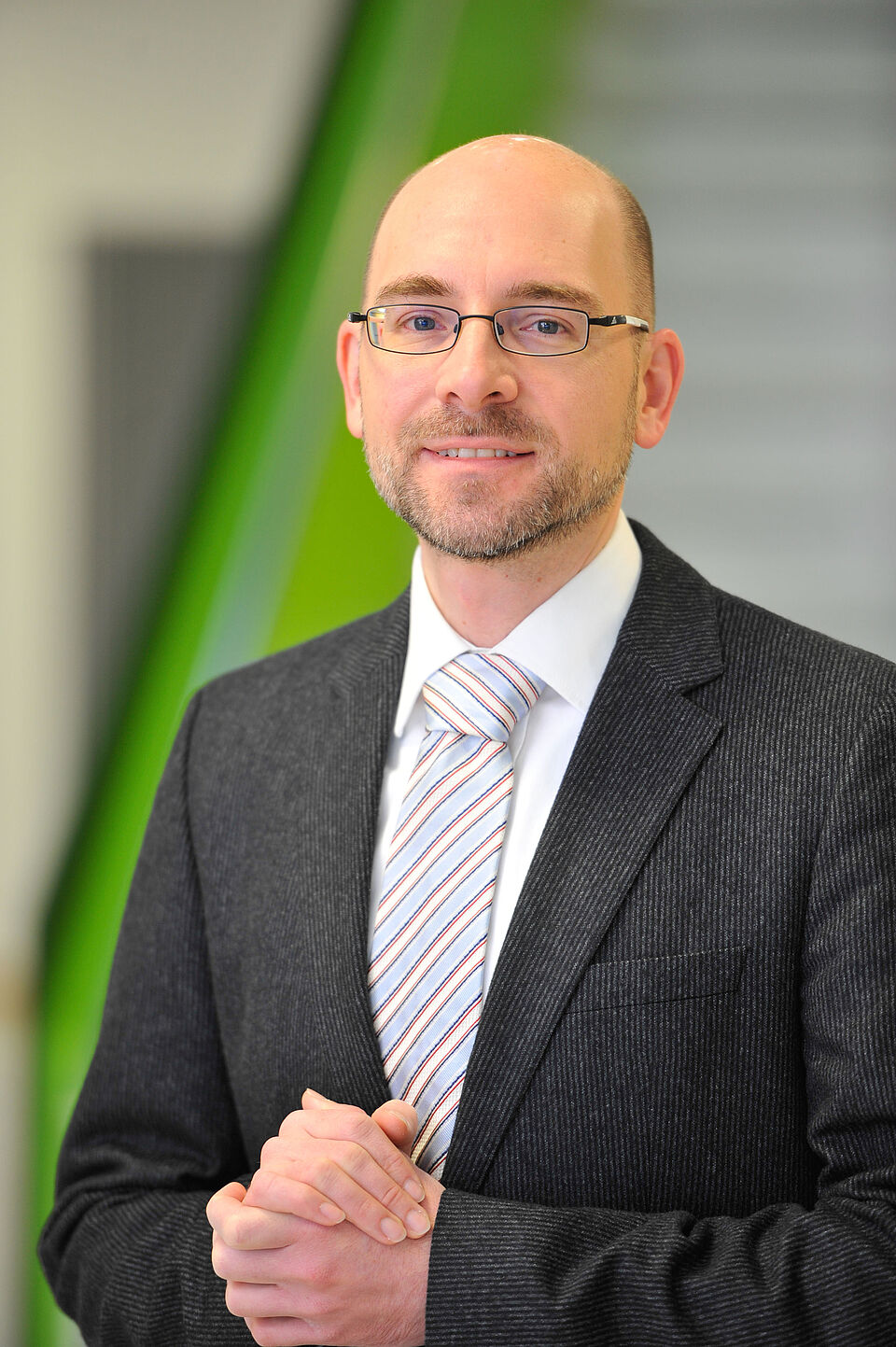
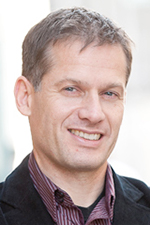
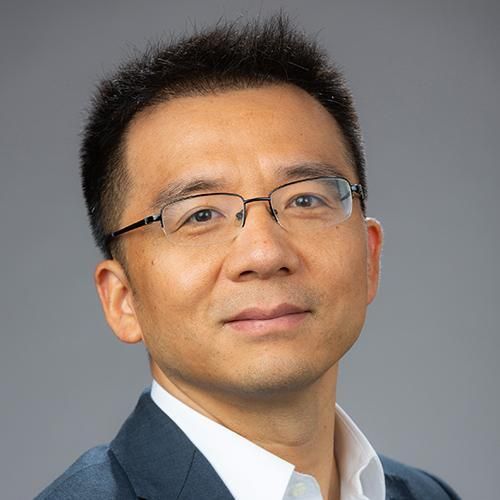
Prof. Dr. Georg Garnweitner is a full Professor of Nanomaterials at the Institute for Particle Technology , Faculty of Mechanical Engineering, Technische Universität Braunschweig. He has served as Dean of Studies since 2023, DFG Liaison Lecturer since 2021, and head of the Laboratory for Emerging Nanometrology (LENA) board since 2013. University Professorship in Nanomaterials (2013–present) Junior Professorship in Nanoparticles/Nanocomposites (2007–2013) Research at Max Planck Institute (2005–2006) His research focuses on nanomaterial synthesis , non-aqueous nanoparticle formation , and energy storage materials , particularly for lithium-sulfur batteries. He also explores drug delivery systems using silica aerogels and optofluidic particle analysis . His work combines materials science , surface chemistry , and advanced characterization techniques . Recent publications highlight breakthroughs in solid-state electrolyte design (2023), solvent-free drug loading (2022), and nanoparticle migration dynamics (2020). He contributes to crystal engineering (2021) and population balance modeling (2017) for nanoparticle formation.
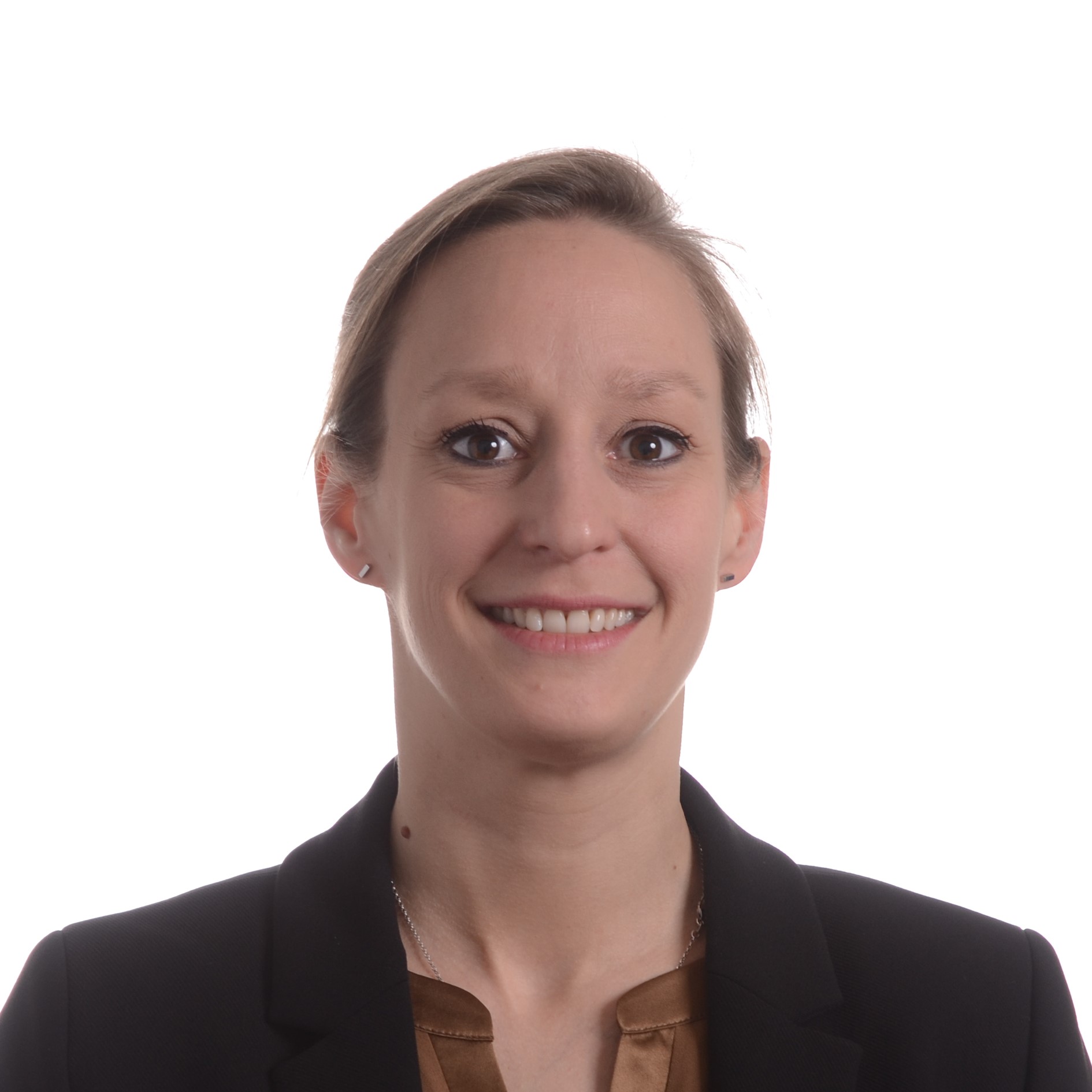
Prof. Dr.-Ing. Sabrina Zellmer holds the University Professorship for Battery and Fuel Cell Process Technology at the Faculty of Mechanical Engineering, Technische Universität Braunschweig since April 2023. She also serves as Head of the Department 'Process and production engineering for sustainable energy storage' at the Fraunhofer Institute for Surface Engineering and Thin Films IST since 2019. Her research focuses on sustainable energy storage solutions, battery technology, and mechanochemical synthesis of materials. Location: Volkmaroder Str. 5, 38104 Braunschweig Contact: s.zellmer@tu-braunschweig.de Research Focus Prof. Zellmer's work addresses critical challenges in: Direct recycling of battery production waste Mechanochemical synthesis of solid electrolytes Electrochemical modeling of novel battery systems Vacuum-based thin film technologies for cathode materials Circular economy approaches for lithium batteries Sustainability assessment of energy storage systems Scientific Contributions Her recent publications demonstrate expertise in: Advanced battery material processing Environmental impact optimization Innovative recycling methodologies Industrial sustainability strategies
Peter Zijlstra is a Full Professor in the Department of Applied Physics at Eindhoven University of Technology (TU/e), leading the Molecular Plasmonics group. His research focuses on single-molecule sensing using plasmonic and nanophotonic approaches to study biomolecular interactions in complex environments. He is a core member of the Institute for Complex Molecular Systems at TU/e, collaborating across disciplines like chemistry, biomedical engineering, and mathematics. Education: MSc in Applied Physics, University of Twente (2005) PhD from Swinburne University of Technology (2009), studying plasmonic nanoparticles in optical data storage Postdoctoral fellowship at Leiden University under Prof. Michel Orrit Research Interests: Developing novel sensing concepts via nanophotonics and super-resolution microscopy. Key areas include plasmon-enhanced fluorescence, real-time biomolecular dynamics, and applications in cancer management. His work contributes to UN Sustainable Development Goals through advancements in biosensing technologies. Awards: 2013 NWO Vidi Award for research on plasmonic imaging of enzymes in living cells Teaching & Activities: Teaches courses like Advanced Optical Microscopy and Electromagnetism Supervised 32 academic works Contributed to conferences and editorial roles for journals like npj Biosensing Labs & Collaborations: Molecular Plasmonics group website: www.molecular-plasmonics.nl Marie Curie ITN SuperCol project: www.supercol.eu
Dr. Taghi Miri is an Assistant Professor in the School of Chemical Engineering at the University of Birmingham, specializing in Chemical Engineering with a focus on food processing safety, environmental engineering, and nanotechnology. He holds a PhD from the University of Birmingham, focusing on plant-based food processing. His research spans food waste valorization, novel food processing technologies, and bioremediation of heavy metals. He has collaborated with industry leaders such as Marlow Food, CSM Bakery, and P&G, and has led modules in Food Engineering, Food Safety, and Chemical Engineering education. Education: BSc, MSc & PhD in Chemical Engineering from the University of Birmingham. Research Interests: Food safety challenges in reformulation, circular economy applications, and nanocomposite development for drug delivery. His current projects include food waste valorization via supercritical CO₂ extraction and ohmic heating for food safety. Editorial Roles: Associate Editor of the Journal of Water and Environmental Nanotechnology and Guest Editor of the Journal of Sustainability (Special Issue on Food Waste). Advising: Supervises PhD/MSc projects in Food Engineering and Environmental Bioprocessing. Leads modules such as 'Food Microbiology and Safety' and 'Novel Food Processing'.
Samo Smrke is a Researcher at the ZHAW School of Life Sciences and Facility Management, specializing in the Coffee Competence Centre and Analytical Technologies. His work focuses on advancing coffee science through projects like the SCA Coffee Expertise Program and collaborations with industry leaders such as Nespresso and Julius Meinl. He has led multiple research initiatives including studies on coffee freshness, roasting effects, aroma release mechanisms, and packaging technologies. Smrke's research interests span coffee chemistry, analytical techniques, and sensory analysis. He has published extensively on topics such as degassing kinetics of roasted coffee, antioxidant generation during roasting, and aroma modulation in instant coffee products. His work often employs advanced methods like proton transfer reaction mass spectrometry (PTR-MS) and gravimetric analysis. He is a co-author of influential books including The Coffee Freshness Handbook and The SCA Water Quality Handbook , which provide foundational knowledge for industry professionals. Smrke’s projects frequently bridge academic research with practical applications, addressing challenges in coffee production, storage, and quality assurance.
Dr. Nicolas Francois is an Associate Professor in the Department of Materials Physics at Australian National University (ANU), specializing in experimental geomaterials physics, soft matter, and fluid hydrodynamics. He leads the X-ray Tomography and Applications Research Group, combining curiosity-driven and applied research in out-of-equilibrium systems. ARC Industry Fellow (2024-2030): Improving Australian iron ore comminution for green steel production ARC DECRA Fellow (2016-2018): Biofilms in two-dimensional turbulent flows His research spans fundamental questions in: Fragmentation of solid materials Autonomous devices powered by chaotic flows Hydrodynamic waves Stochastic thermodynamics Granular matter Polymer rheology and applied areas in: Comminution of geomaterials Mechanics of fractured rocks Wave-energy conversion Environmental fluid mechanics Publications reveal a trajectory focused on X-ray tomography applications, granular dynamics, and turbulence-driven systems. He utilizes advanced imaging techniques to study material failure mechanisms and fluid-structure interactions, contributing to fields ranging from green steel production to biofilm dynamics. Current student projects and grants emphasize sustainable resource processing and fundamental fluid physics.
Aniket Ambekar is a Research Fellow at the Department of Chemical Engineering and Chemistry, Eindhoven University of Technology. His research focuses on multiphase flow dynamics in porous media, with expertise in computational fluid dynamics (CFD) and experimental validation techniques. He holds a PhD in Chemical Engineering from the Indian Institute of Technology Delhi (2022), an MSc in Computational Fluid Dynamics from National Institute of Technology (2016), and a BSc in Chemical Technology from the University of Pune (2013). Research interests include packed bed hydrodynamics, gas-liquid flow mechanisms, and the role of wettability in two-phase systems. His work combines high-resolution simulations (e.g., volume-of-fluid method) with experimental measurements to study flow regimes, interfacial dynamics, and phase distribution. Notable contributions address perforation effects in structured packings, particle aspect ratio impacts, and monolith gas-liquid interactions. He has received prestigious awards including the Marie Skłodowska-Curie postdoctoral fellowship (2022) and the Outstanding Ph.D. Thesis Award (2024). Collaborations span European institutions, focusing on energy-efficient separation processes and reactor design optimization.
Lucie Tvrznikova is a Postdoctoral Researcher at Lawrence Livermore National Laboratory, specializing in experimental particle physics and detector engineering. Her work focuses on direct dark matter detection, nuclear physics, and cyclotron radiation emission spectroscopy (CRES). She holds a Ph.D. from Yale University (2019), where her dissertation explored sub-GeV dark matter searches and electric field modeling in the LUX and LZ experiments. Her research has advanced understanding of low-mass dark matter particles, detector calibration techniques, and high-voltage behavior in liquid noble gases through projects like XeBrA and the Project 8 collaboration. Key contributions include developing methods to extend LUX's sensitivity using Bremsstrahlung and Migdal effects, creating 3D electric field models for xenon detectors, and advancing CRES technology for neutrino mass measurements. She collaborates on major experiments like LZ and the LUX-ZEPLIN initiative, addressing challenges in next-generation noble liquid detectors. Current work focuses on dielectric breakdown studies in liquid xenon, machine learning applications for data analysis, and neutrino mass measurements using Project 8's Kr and tritium systems.
Dr. Ivett Orsolya Bacskay is an Assistant Professor at the Department of Analytical and Environmental Chemistry, Institute of Chemistry, Faculty of Science, University of Szeged. Her research focuses on fundamental and applied aspects of separation science, particularly in liquid chromatography, with expertise in retention mechanisms, mass transfer, and stationary phase characterization. Research Interests: Her work spans several key areas in analytical chemistry, including hydrophilic interaction liquid chromatography (HILIC), size-exclusion chromatography, chiral separations, pore size distribution analysis, and molecular imprinting for artificial antibody development. She investigates both theoretical models and practical applications in chromatographic systems. An analysis of her recent publications (2010–2025) reveals a strong emphasis on improving chromatographic efficiency and understanding molecular interactions in separation processes. Her studies frequently address challenges in hold-up volume determination, overloading effects, and mass transfer in various stationary phases, contributing significantly to the advancement of HPLC and LC-MS methodologies. Scientific Awards: No awards mentioned in the provided text. Advising and Grants: While specific details about students or funded projects are not listed, her active research output and faculty position suggest involvement in mentoring graduate students and securing research support. She has contributed to interdisciplinary studies involving neuropharmacology and plant biochemistry, indicating collaborative research efforts. Labs and Teams: Dr. Bacskay is part of the Institute of Chemistry at the University of Szeged, where she conducts research within the Department of Analytical and Environmental Chemistry. Her work likely involves collaboration with analytical chemistry research groups focusing on method development, column technology, and environmental or pharmaceutical analysis.
Erik Luijten is the Associate Dean for Research and Doctoral Education at the McCormick School of Engineering, Northwestern University, where he also holds a Professorship in Materials Science and Engineering (with courtesy appointments in Engineering Sciences and Applied Mathematics, Physics and Astronomy, and Chemistry). His leadership includes overseeing research administration, doctoral programs, and global initiatives. He previously chaired the Department of Materials Science and Engineering. Educated at Utrecht University (M.Sc. Physics) and Delft University of Technology (Ph.D. Physics), Luijten specializes in computational materials science , focusing on soft matter systems like complex fluids, colloids, and active matter. His research combines advanced simulations (e.g., Monte Carlo methods) with theoretical frameworks to study self-assembly, electrokinetic phenomena, and dielectric effects. Notable contributions include accelerating simulation techniques for systems with long-range interactions and designing programmable materials. His work emphasizes practical applications , such as drug delivery via nanoparticle self-assembly, sustainable catalytic processes for plastic recycling, and dynamic hydrogel networks. Recent publications highlight innovations in active matter dynamics, nanoparticle crystal growth, and mesoporous catalytic architectures. Luijten’s awards include the NSF CAREER Award (2004) and Fellowship of the American Physical Society (2013) . He leads the Computational Soft Matter Lab , fostering interdisciplinary collaborations across engineering, physics, and chemistry. His academic service roles include the Racheff Assistant Professorship (2001–2003).
Ruben Snellings is a Professor at the KU Leuven , affiliated with the Institute for Sustainable Metals and Minerals and the Division of Geology . His research focuses on sustainable cementitious materials, mineral carbonation, and valorization of industrial by-products in construction. He actively contributes to RILEM technical committees, including TC 309-MCP and TC 267-TRM, establishing terminology and testing protocols for carbonation-based construction products. Research Highlights Advancing low-carbon binders through co-calcination of waste materials Investigating hydration kinetics and reactivity of supplementary cementitious materials (SCMs) Developing CO2 mineralization techniques for sustainable construction Technical Contributions Co-developing standardized R3 reactivity tests for SCMs Leading interlaboratory validation studies for binder performance Environmental Focus Reducing environmental leaching via carbonation of metallurgical slags Optimizing circular economy approaches for concrete recycling
Prof. Tom Van Gerven is a chemical engineering specialist at KU Leuven's Process Engineering for Sustainable Systems (ProcESS) group. His research focuses on process intensification using alternative energy forms (ultrasound, microwaves, light) for sustainable metallurgy, mineral carbonation, and solvent extraction applications. He leads innovations in low-grade ore processing and carbon capture technologies. Key Research Areas: Process intensification, green metallurgy, CO₂ utilization, and advanced crystallization techniques Recent Work: 2025 publications highlight reactor optimization, mineral carbonation of industrial residues, and acoustic/microwave-assisted separations Technical Expertise: CFD modeling, sonochemical reactors, ionic liquid extraction, and environmental impact analysis
Tony Jun Huang is the William Bevan Distinguished Professor of Mechanical Engineering and Materials Science at Duke University, with additional professorships in Electrical and Computer Engineering and Biomedical Engineering. His research focuses on acoustofluidics, optofluidics, and micro/nano systems for biomedical diagnostics and therapeutics. Ph.D. in Mechanical and Aerospace Engineering (UCLA, 2005) Huang's research has revolutionized biomedical microsystems through acoustofluidic technologies, enabling contactless particle manipulation, exosome isolation, and advanced diagnostic platforms. His work has been cited over 36,000 times (h-index: 102) with 30 issued/pending patents. Recent publications highlight his innovations in acoustic tweezers, extracellular vesicle analysis, topological acoustofluidics, and AI-assisted biomimetic imaging. His lab develops technologies for single-cell analysis, non-invasive diagnostics, and programmable material systems. 2023 Highly Cited Researcher (Web of Science) 2020 Fellow of the National Academy of Inventors (NAI) 2019 Van C. Mow Medal (ASME) 2017 Analytical Chemistry Young Innovator Award (ACS) 2010 NIH Director's New Innovator Award Huang has taught courses including ME 535: Biomedical Microsystems and mentored numerous graduate students through his Duke Acoustofluidics Lab. His lab's technologies are applied in cancer biomarker detection, Alzheimer's diagnostics, and wound healing hydrogels.
Zeynep Atamer is an Assistant Professor at Oregon State University's Food Science and Technology Department, affiliated with the Food Innovation Center in Portland, OR. Her research focuses on dairy science and technology, particularly bacteriophage dynamics, spore inactivation, milk protein behavior, membrane processing, and food safety optimization. Primary affiliation: Oregon State University, Food Innovation Center Department: Food Science and Technology Research interests include: Dairy bacteriophages and their thermal/non-thermal inactivation Spore-forming bacteria in dairy processing Milk protein fractionation and functional properties Membrane separation technologies for dairy applications Cheese and fermentation process optimization Development of phage-free dairy products and sensitive detection systems Recent publications highlight advancements in UV-C/phage reduction strategies, casein-based material development, bitter peptide characterization in cheese, and encapsulation technologies for microbial control. Key subfields include dairy processing stressors, whey protein stability, and gut microbiota modulation via phage delivery. Her work integrates industrial-scale validation with lab-to-commercial translation, addressing critical challenges in dairy safety and functionality through interdisciplinary approaches spanning microbiology, biochemistry, and food engineering.
Dr. Alan Jamison is an Assistant Professor at the University of Waterloo's Institute for Quantum Computing (IQC), located in the Quantum-Nano Centre. His research focuses on ultracold atoms and molecules to study quantum many-body physics and quantum chemistry, enabling precise control of quantum states for applications in quantum computing, sensors, and simulation. He teaches courses such as PHYS 359 (Statistical Mechanics) and PHYS 363 (Intermediate Classical Mechanics), having taught them since 2021. Jamison holds a PhD and MSc from the University of Washington (2014, 2008), and a BS in Mathematics from the University of Central Florida (2007). His accolades include the Henderson Thesis Prize (2015) and the Hans G. Dehmelt Prize (2013). He leads the Jamison Lab, a multidisciplinary team exploring quantum systems' fundamental properties and applications, with current and former students contributing to cutting-edge projects. The lab collaborates across disciplines, including economics, to apply quantum mechanics to diverse fields. Education: PhD Physics, University of Washington, 2014 MSc Physics, University of Washington, 2008 BS Mathematics, University of Central Florida, 2007 Research Interests: Jamison's work spans ultracold chemistry, quantum simulation, and quantum computing. His group uses lasers to cool atoms to near-absolute zero, creating systems to study quantum phenomena like supersolid phases and quantum interference-driven reactions. Recent projects include collisional cooling of molecules and probing spin-orbit coupling in Bose-Einstein condensates. Awards: Henderson Thesis Prize, University of Washington (2015) Hans G. Dehmelt Prize, University of Washington (2013) Mellam Teaching Fellowship, University of Washington (2008) Lab & Team: The Jamison Lab at IQC fosters collaboration across physics, mathematics, and economics. Current graduate students include Omar Hussein and Megan Byres, with undergraduates like Nabeel Rasheed. Former members have pursued roles at institutions like Harvard University and Pratt & Whitney. Labs/Teams: Jamison Lab is part of IQC, a hub for quantum research with faculty from diverse departments. Projects include exploring economic systems through quantum many-body techniques and advancing precision interferometry for quantum sensors.