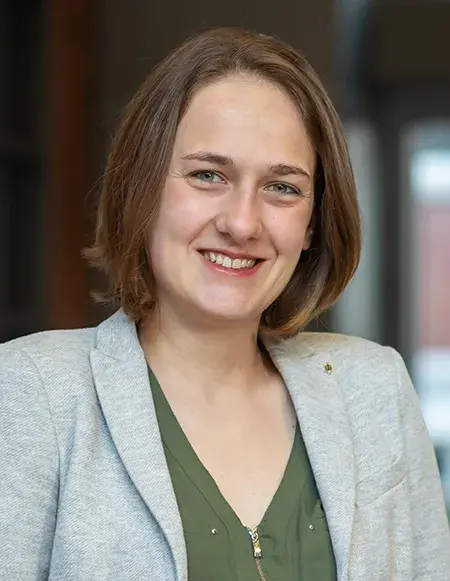
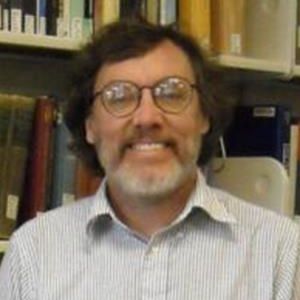
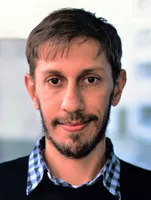
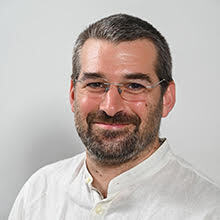
Malgorzata (Gosia) Chwatko is an Assistant Professor in the Department of Chemical and Materials Engineering at the University of Kentucky, affiliated with the Stanley and Karen Pigman College of Engineering. Her research focuses on sustainable separation processes, including membrane-enhanced peptide synthesis, green polymer development, and environmentally friendly particle synthesis. Education: Postdoctoral Fellow in Biomedical Engineering (2019-2020), Ph.D. (2019), M.S. (2019) in Chemical Engineering from the University of Texas at Austin, and B.S. in Chemical Engineering from the University of Connecticut (2015). The Chwatko research group investigates technologies to reduce solvent waste and improve sustainability in chemical processes. Key projects include membrane-enhanced liquid phase peptide synthesis , thermodynamic analysis of green solvent-polymer systems , and sustainable polymer synthesis with recyclability in mind . Recent publications highlight her work on PEG-based hydrogels for wound dressings , bioactive hydrogel coatings , and epoxide copolymerization mechanisms . Her team has produced award-winning researchers, including students honored at the 2024 REU and Super Collider events.
Fredrik Sandin is a Professor in the Department of Computer Science, Electrical and Space Engineering at Luleå University of Technology, where he leads the Machine Learning research group with approximately thirty members. His work focuses on neuromorphic technologies and the intersection of machine learning with computational physics to solve challenging real-world interaction problems. He coordinates the 'Teknisk fysik och elektroteknik' program at LTU and has been instrumental in establishing neuromorphic research activities at the university. Luleå University of Technology, Department of Computer Science, Electrical and Space Engineering Member of WASP (Wallenberg AI, Autonomous Systems and Software Program) and ELLIS (European Laboratory for Learning and Intelligent Systems) Coordinator of Neuromorphic Innovation Platform Sweden with KTH, Lund University, Uppsala University, FOI, ABB, Ericsson, and SAAB Fredrik earned his PhD in Physics from Luleå University of Technology in 2007, with thesis work focusing on dense states of matter in neutron stars. His academic journey began with an MSc diploma work in ATLAS at CERN in 2001, followed by postdoctoral research in computational physics at IFPA in Belgium (2008-2009) and brain-like computing at EISLAB with Prof. Jerker Delsing (2010-2011). Professor Sandin's research interests center around neuromorphic technologies, particularly neuromorphic computing and spiking neural networks. He investigates sensor/detector and intelligent systems co-design where constraints like energy, power, latency, and dynamic range challenge conventional digital approaches. His work spans mixed-signal neuromorphic circuits, algorithms, and systems, as well as machine learning projects involving industrial data and collaboration. He has been a key figure in establishing neuromorphic research at LTU, supported by The Kempe Foundations, particularly through the 2014 Gunnar Öquist Fellowship. His recent publications demonstrate a strong interdisciplinary focus spanning quantum phase transitions, particle physics detector optimization, renewable energy materials, and the integration of large language models into control systems. This diverse portfolio reflects his approach connecting machine learning with fundamental physics and practical engineering applications, particularly in neuromorphic computing and intelligent systems design, with emphasis on solving real-world problems through co-design of hardware and algorithms. Gunnar Öquist Fellowship Award and 3 MSEK grant from The Kempe Foundations ISSP award for an Original Work in Theoretical Physics (signed by Prof. 't Hooft and Prof. Zichichi) New-Talents award for original work in theoretical physics at the International School of Subnuclear Physics in Erice Professor Sandin has supervised numerous PhD students working on topics ranging from neuromorphic TinyML to materials for neuromorphic computing, privacy-preserving machine learning at the edge, and intelligent fault diagnosis. He has secured substantial research funding from various sources including Vinnova, ÅForsk, Kempe Foundations, WASP-WISE, and EU programs like ECSEL JU Arrowhead Tools and ITEA3 AutoDC. His current major projects include the Neuromorphic Innovation Platform Sweden and several initiatives focused on neuromorphic condition monitoring and computing, with total funding exceeding 30 MSEK in the past five years. He leads the Machine Learning group at LTU, which collaborates extensively with industry partners including ABB, Ericsson, SAAB, SKF, and RISE. The group is active in developing neuromorphic technologies for wireless sensor networks, condition monitoring systems, and next-generation intelligent systems that address energy, power, and latency constraints that challenge conventional digital approaches.
Dr. Thangavel Thevar is a Senior Lecturer in the School of Engineering at the University of Aberdeen, where he has been teaching since 2005. He completed both his undergraduate degree (First Class Honours in Electrical Engineering) and PhD (in Laser Engineering) at the University of Aberdeen in 1989 and 1993 respectively. Prior to his academic career, he accumulated approximately 10 years of industrial R&D experience in the USA, working on solid-state laser development and holographic applications. Dr. Thevar's research focuses on several key areas: Digital holography for imaging of marine plankton and micro-particles Laser Induced Breakdown Spectroscopy (LIBS) for subsea applications Laser-based instrumentation development Development of solid-state lasers for scientific, industrial, and medical applications Engineering applications of holography His most notable recent achievement is leading a team that developed the weeHoloCam, a state-of-the-art ultracompact underwater holographic camera for imaging microorganisms. Weighing just 3.5 kg, this system is the lightest and most compact of its kind, capable of imaging 240 ml/s and continuously recording up to 200,000 holograms. The system incorporates a rapid hologram processor and an AI-based image classifier. This technology has significant applications in marine studies including spatial and temporal monitoring of plankton species, monitoring harmful plankton & micro-jellyfish, study of vertical transport of floc, and monitoring microplastic pollution in the ocean. Dr. Thevar has secured numerous research grants as Principal Investigator, including projects funded by Sustainable Aquaculture Innovation Centre (SAIC), BBSRC, DEFRA, and Defence & Security Accelerator (DSTL). His current research portfolio demonstrates strong interdisciplinary connections between optical engineering, marine science, and environmental monitoring. His scientific contributions include: Royal Academy of Engineering Visiting Teaching Fellow Award (2010-2013) US patent 8,494,012 B2 for Raman converters Development of alexandrite lasers and ruby holographic lasers during his industrial R&D period Work on US government contracts for non-destructive inspection methods for military aircraft and the space shuttle Sabbatical work at NASA Langley Research Centre developing diode pumped Thulium YALO lasers As an educator, Dr. Thevar has served as Coordinator of MSc Oil & Gas Engineering (2007-2020), Undergraduate Level 1 Coordinator, and has contributed to various committees including Quality Assurance and Students' Progression. He currently teaches courses including Principles of Electronics, Electrical & Mechanical Systems, Control Systems, and supervises individual projects at both undergraduate and postgraduate levels. He is accepting PhD students interested in Engineering research. Dr. Thevar is actively involved in professional organizations, serving as Technical Programme Chair for IEEE/OES Oceans Conference 2007, on organizing committees for various conferences, as a committee member of the Instrument Science and Technology Group (Institute of Physics), and as a member of both IET and IEEE. He also serves as a reviewer for optics-based journals.
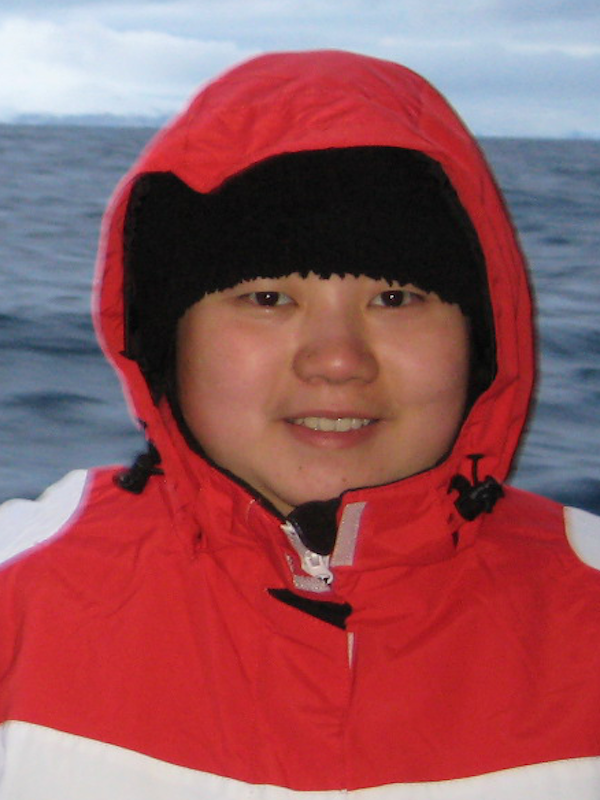
Dr. Yina Liu is an Assistant Professor in the Department of Oceanography at Texas A&M University, leading the Halo-Carbon Biogeochemistry Lab and serving as R&D Team Lead in the Geochemical and Environmental Research Group (GERG). Her research focuses on organic biogeochemistry, particularly halogenated compounds' roles in environmental processes. She employs advanced mass spectrometry and data science to study contaminant cycling, microbial transformations of oil components, and PFAS distributions. Education includes a Ph.D. in Chemical Oceanography (Texas A&M, 2013), B.S. in Environmental Sciences (UC Irvine, 2006), and postdoctoral work at Woods Hole Oceanographic Institution (2013-2015) and Pacific Northwest National Lab (2015-2017). Research interests span untargeted environmental analysis, halocarbon biogeochemistry, and eco-metabolomics, with emphasis on linking organic matter dynamics to ecological processes. Her lab investigates topics such as microbial degradation of crude oil components, PFAS environmental fate, and halogenated compound identification using novel computational algorithms. Current projects include developing cheminformatics pipelines for tarball fingerprinting and atmospheric particle characterization. She actively mentors students across undergraduate, graduate, and postdoctoral levels through Texas A&M's Oceanography program. Research highlights include groundbreaking work on oil spill bioremediation mechanisms and PFAS contamination in urban watersheds. Her methodologies combine field studies, laboratory experiments, and computational modeling to advance understanding of global carbon and contaminant cycles.
Dr. Gregory Ryskin is an Associate Professor in the Department of Chemical and Biological Engineering at Northwestern University. His research spans cosmology, geophysics, fluid dynamics, and theoretical physics, with a recent focus on cosmological models addressing dark energy and vacuum energy. He holds dual PhDs in Chemical Engineering (Caltech) and Theoretical Physics (St. Petersburg Polytechnic Institute). Research interests include cosmic expansion mechanisms, Earth's magnetic field generation, catastrophic geological events, and fundamental physics problems like Hawking radiation. His interdisciplinary work connects astrophysics with geophysical phenomena through fluid dynamical principles. Publications include theoretical studies of vanishing vacuum energy (2020), cosmic repulsion (2015), and Hawking radiation (2014), alongside earlier contributions to fluid dynamics of polymers and liquid crystals. His 2010 paper on abrupt Earth events received recognition from paleontologist David Raup. Dr. Ryskin's current work develops physics-based explanations for cosmological observations, providing alternatives to standard dark energy models through modified gravitational theories.
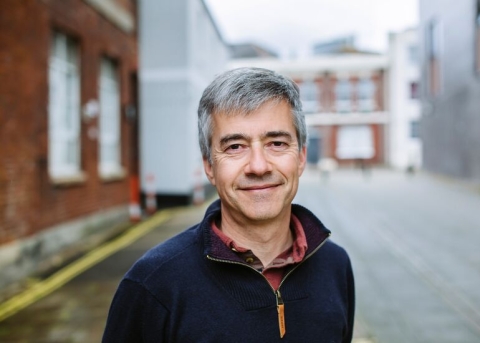
Professor Bertrand Jodoin holds a position in the Department of Mechanical Engineering at the University of Ottawa, where he has been since 1998. He founded the University of Ottawa Cold Deposition Laboratory and focuses on advanced material deposition processes for the aeronautics industry, including cold spray and shock wave deposition techniques. His research emphasizes nanocrystalline coatings, heat exchangers, and high-performance materials for gas turbines. Education: Ph.D. (Sherbrooke) and B.Eng. (Sherbrooke). His work bridges mechanical engineering and materials science, with recent publications addressing innovations in cold spray technology, transpiration cooling, and interdisciplinary applications like art creation using additive manufacturing. He has contributed to over 30 years of advancements in cold spray, emphasizing its potential for future technologies. Awards include the Journal of Thermal Spray Technology Best Paper Award (2022 and 2024). His research integrates computational modeling (e.g., molecular dynamics simulations) with experimental methods, addressing challenges in coating durability, thermal management, and antimicrobial surface treatments.
Yohan PETETIN is an Associate Professor at Telecom SudParis (Institut polytechnique de Paris) in the CITI Department. His research focuses on Bayesian filtering, Monte Carlo methods, hidden Markov models, and multi-object tracking. He has authored over 20 peer-reviewed articles since 2011, with notable contributions in IEEE Transactions on Signal Processing and other top venues. His work bridges statistical signal processing with machine learning applications. PhD: Algorithmes de restauration bayésienne mono- et multi-objets dans des modèles Markoviens (2013, Telecom SudParis) HDR: Generative models for time series data (2023, Institut polytechnique de Paris) Research interests emphasize sequential Monte Carlo algorithms, particle filtering optimizations, and deep learning integration for time-series analysis. Recent work explores expressivity comparisons between recurrent neural networks and hidden Markov models. Teaching includes courses on probabilistic graphical models, Bayesian filtering, and deep learning across undergraduate and graduate programs at Telecom SudParis and affiliated institutions.
Aleksandar R. Popović is a Full Professor at the University of Belgrade's Faculty of Chemistry, Department of Applied Chemistry. He holds a PhD from the same institution and has held academic positions since 1997, progressing from Teaching Assistant to Full Professor by 2013. His research focuses on environmental pollutants, waste material reuse, and atmospheric deposition, leveraging biomonitoring techniques. He has led or participated in multiple national and international research projects, including studies on soil contamination, airborne pollutants, and environmental risk assessment. Beyond academia, he served as Serbia's Minister of Science and Environmental Protection (2004–2007) and Minister of Mining and Energy (2007–2008). Education: Bachelor's in Chemistry, Faculty of Chemistry, University of Belgrade (1988–1993) Master's in Chemistry, Florida State University (1994–1996) PhD in Chemistry, Faculty of Chemistry, University of Belgrade (1996–2002) Research Projects: Active: International Cooperation - COST Actions project (2022–2026) Completed: National Fundamental Research Projects on pollutant dynamics and soil contamination Committee Roles: Chairman of the Committee for Recognition of Foreign Higher Education Documents (2021–2024) Member of the Committee for Education Strategy His research interests emphasize chemical transformations of pollutants, waste material repurposing, and environmental chemistry. Notable work includes studies on PAHs in food products, trace metal speciation in sediments, and bioindicator applications using moss. His recent publications (2021–2025) address environmental pollution impacts on ecosystems, human health risks, and innovative remediation techniques. Grants and collaborations include funding from the European Commission and Serbian and Slovak governmental bodies. His interdisciplinary approach bridges analytical chemistry, environmental science, and policy, reflecting his dual academic and governmental experience.
Prof. Dr. Thomas Franosch is a Full Professor of Theoretical Physics at the Universität Innsbruck, Department of Theoretical Physics. His research focuses on transport phenomena in complex systems, including crowded and disordered media, active matter, non-equilibrium systems, and the glass transition. He leads the Bio and Nano Physics research group and has held academic positions at institutions such as Friedrich-Alexander-Universität Erlangen-Nürnberg and Ludwig-Maximilians Universität München. His career includes a PhD from TU München (1996) and postdoctoral research at Harvard University (1998-2000). He has contributed extensively to understanding dynamics in confined colloidal systems, mode-coupling theories for glass transitions, and active particle dynamics. His work bridges theoretical frameworks with applications in soft matter and biophysics. Research interests emphasize time-dependent nonlinear response, anomalous transport, and the interplay between geometry and dynamics in confined environments. Recent publications explore light-induced caging effects in colloids, Anderson localization in fluctuating media, and stochastic dynamics of active particles. Publications span over two decades, with a focus on theoretical models explaining complex fluid behavior. Notable contributions include studies on confined hard-sphere fluids, Lorentz gas models, and active matter systems. His work frequently employs advanced simulation techniques and mode-coupling theory to analyze non-equilibrium phenomena.
Professor Hailiang Yu is an Honorary Fellow at the University of Wollongong's School of Mechanical, Materials, Mechatronic and Biomedical Engineering. His research focuses on engineering materials, manufacturing processes, and mechanical engineering, with over 100 journal/conference publications and 30 science-focused newspaper commentaries. He serves as co-Editor-in-Chief of Modeling and Numerical Simulation of Material Science , and holds editorial roles in Scientific Reports and International Research Journal of Engineering Science, Technology and Innovation . Yu has secured significant funding through grants such as the Australian Research Council's 'Large-volume gradient materials' project (2017–2020) and 'A Physical-based abrasive wear model' (2013–2016). His work emphasizes cryorolling, microstructure optimization, and advanced material fabrication techniques. He currently supervises Master's and PhD students in materials engineering and manufacturing innovation. Key research themes include cryogenically processed alloys, bimetallic clad sheets, and high-entropy composites. His publications in journals like Metallurgical and Materials Transactions A and Journal of Materials Processing Technology reflect expertise in structural optimization, tribology, and corrosion resistance. Yu aims to become an international leader in materials manufacturing and mechanical engineering.
Chris Valentin Nielsen is an Associate Professor in the Department of Civil and Mechanical Engineering at the Technical University of Denmark (DTU). His research focuses on metal forming, joining processes, and tribology, with expertise in formability, tool development, and numerical modeling. His work contributes to UN Sustainable Development Goals related to sustainable manufacturing. He supervises PhD students in projects such as sustainable busbars for electric vehicles and adjustable tool design for high-volume production. His research interests include metal forming (e.g., deep drawing, ironing), joining technologies (resistance welding, laser welding), and advanced manufacturing methods like additive manufacturing. He employs finite element modeling and experimental analysis to bridge fundamental and applied research. Collaborations span global institutions, addressing challenges in material behavior, process optimization, and tool durability. Recent publications explore topics such as dieless Nakajima testing for additive materials, punch design improvements, and asperity deformation mechanics. His work emphasizes sustainability, robust production systems, and eco-friendly lubrication solutions. Projects involve interdisciplinary teams, integrating numerical simulations with industrial applications to enhance manufacturing efficiency and material performance.
David Wands is a Professor of Cosmology at the University of Portsmouth, affiliated with the Faculty of Technology and the Institute of Cosmology and Gravitation (ICG). His research focuses on theoretical cosmology, particularly the physics of the early universe, primordial perturbations, gravitational waves, and dark energy. He has held leadership roles, including Director of the ICG from 2010 to 2020. Wands earned his DPhil in astrophysics from the University of Sussex in 1993 and has been a Royal Society University Research Fellow. He is a Fellow of the Royal Astronomical Society and the Institute of Physics. His work bridges fundamental physics with observational cosmology, including contributions to the study of inflation, large-scale structure formation, and gravitational-wave signatures. Wands has published over 150 papers and organized major conferences like the 30th Texas Symposium on Relativistic Astrophysics. He teaches advanced cosmology modules and contributes to editorial roles in prestigious journals, such as the Philosophical Transactions of the Royal Society A. Education: Bachelor's in Natural Sciences (Physics) and Mathematics at the University of Cambridge DPhil in Astrophysics at the University of Sussex (1993) Key Roles: Board Member, Gravitational Physics Division, European Physical Society Member, Particle Data Group collaboration Research Highlights: Primordial black hole formation and gravitational-wave detection Stochastic inflation models and quantum diffusion Non-linear cosmological perturbations and relativistic effects His research outputs span interdisciplinary topics such as modified gravity predictions using N-body simulations, CMB constraints on inflationary parameters, and applications of artificial neural networks in cosmology. Awards include the Daiwa-Adrian Prize for UK-Japan collaboration (2010).
David Seckel is a Professor of Physics & Astronomy at the University of Delaware, affiliated with the College of Arts & Sciences. His research focuses on cosmic rays, neutrino astrophysics, and the development of large-scale observatories like the IceCube Neutrino Observatory and the ANITA detector. He has contributed to studies of ultra-high-energy cosmic rays, neutrino detection techniques, and cosmological implications of particle interactions. Key research areas include analyzing atmospheric and astrophysical neutrino fluxes, probing cosmic ray composition via air shower measurements, and investigating neutrino emission from active galactic nuclei. His work leverages advanced detector technologies and machine learning methods for data analysis. Collaborations include the IceCube Collaboration, RNO-G radio array, and the PUEO payload for airborne neutrino detection.
Emiliano Cortés is an affiliated researcher at the Catalysis Research Center (CRC) of the Technical University of Munich (TUM). He leads the Nanocatalysis group, focusing on the interdisciplinary exploration of nanomaterials and their applications in energy conversion, storage, and catalysis. His work integrates physics, chemistry, and materials science to develop novel optical, electrical, and thermal materials, including metals, semiconductors, 2D materials, and carbon-based systems. Research interests emphasize plasmonic and photonic solutions for catalysis and energy management, with a focus on optimizing material properties for sustainable energy technologies. Recent contributions include studies on bimetallic plasmonic nanostructures for hydrogen generation and CO₂ conversion, as well as advancements in single-particle thermometry and light-activated catalysts. No scientific awards or grants are explicitly listed, though his work has been featured in high-impact journals like Nature Catalysis and Nature Communications . He collaborates with institutions globally and maintains an active research group at the CRC.
Sebastiano Vascon is an Associate Professor at Ca' Foscari University of Venice's Department of Environmental Sciences, Computer Science and Statistics (DAIS), and affiliated with the European Center for Living Technology. He earned his PhD in 2016 from the Italian Institute of Technology and University of Genoa, focusing on evolutionary game theory in pattern analysis and computer vision. His postdoctoral work spanned institutions like the Technical University of Munich and ETH Zurich, where he specialized in Active Learning and multi-object tracking. His research merges AI with interdisciplinary challenges, including climate change, environmental science, and cultural heritage preservation. Key areas include graph neural networks, computer vision, and game-theoretic models. He leads projects like RePAIR (AI for cultural heritage reassembly) and EasyWalk (AI-driven mobility solutions), and contributes to initiatives like MEMEX (digital storytelling). Teaching spans courses in Deep Learning, Machine Learning for Environmental Applications, and AI in Cultural Management. Research projects include: RePAIR: AI-driven 3D puzzle solving for artifact reconstruction EasyWalk: Socially-aware navigation systems MEMEX: AI for inclusive digital storytelling Climate modeling with IceBoost framework Publications highlight innovations in trajectory forecasting, environmental risk assessment, and graph-based methods. He actively reviews for top conferences (CVPR, ECCV) and journals.