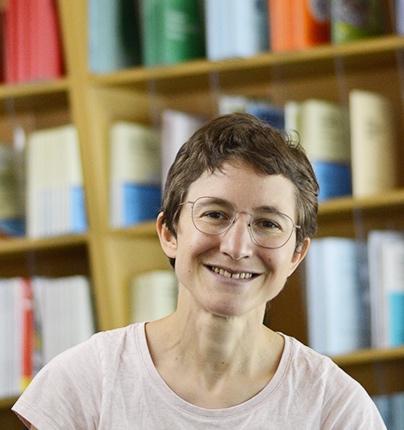
Naomi Lee is an Assistant Professor at the Weissman School of Arts and Sciences , Baruch College - CUNY. She holds a Ph.D. in Linguistics from New York University and an A.B. in Linguistics from Princeton University. Her work bridges theoretical morphology with variationist sociolinguistics. Ph.D., Linguistics, New York University A.B., Linguistics, Princeton University Lee's research investigates: Linguistic mental representations through computational simulations and experimental methods English morphological/syntactic variation Asian American ethnolinguistic repertoire formation Artificial language learning paradigms Her recent publications focus on particle verb alternation, syntactic universals, and computational modeling of language acquisition. She actively presents at major conferences including LSA, NELS, and NWAV. Lee teaches: First-year writing Theoretical linguistics Sociolinguistics Quantitative/Experimental methods in linguistics She serves on the Baruch Undergraduate Admissions Committee as a Faculty Presenter.
Namsoon Eom is a Senior Lecturer in the Department of Mechanics, Materials and Component Design at Lund University’s Faculty of Engineering (LTH). She is also a researcher at NanoLund: Centre for Nanoscience and a member of the LU Profile Area: Light and Materials. Her work focuses on computational nanomaterials research, with a strong emphasis on atomistic simulations and machine learning integration. Primary Affiliation: Department of Mechanics, Materials and Component Design, LTH, Lund University Secondary Affiliations: NanoLund: Centre for Nanoscience, LU Profile Area: Light and Materials Her research spans computational materials science, with a focus on metallic nanoparticles, nanowires, and their interfaces. Key projects include studies of diffusion in bimetallic systems nanowire growth mechanisms oxidation processes in nanoparticles machine learning for pattern recognition in simulation data Recent publications highlight her work in nanotechnology and materials synthesis, particularly in core-shell nanoparticle design and gas-phase synthesis methods. Trends include atomistic modeling of surface segregation, sintering, and oxidation phenomena. Scientific recognition includes the 2019 NanoLund Junior Scientist Ideas Award . She has supervised PhD students in projects related to heterogeneous nanoparticle synthesis and characterization. Her work aligns with UN Sustainable Development Goals, particularly in advancing nanotechnology for sustainable materials and energy-efficient synthesis methods.
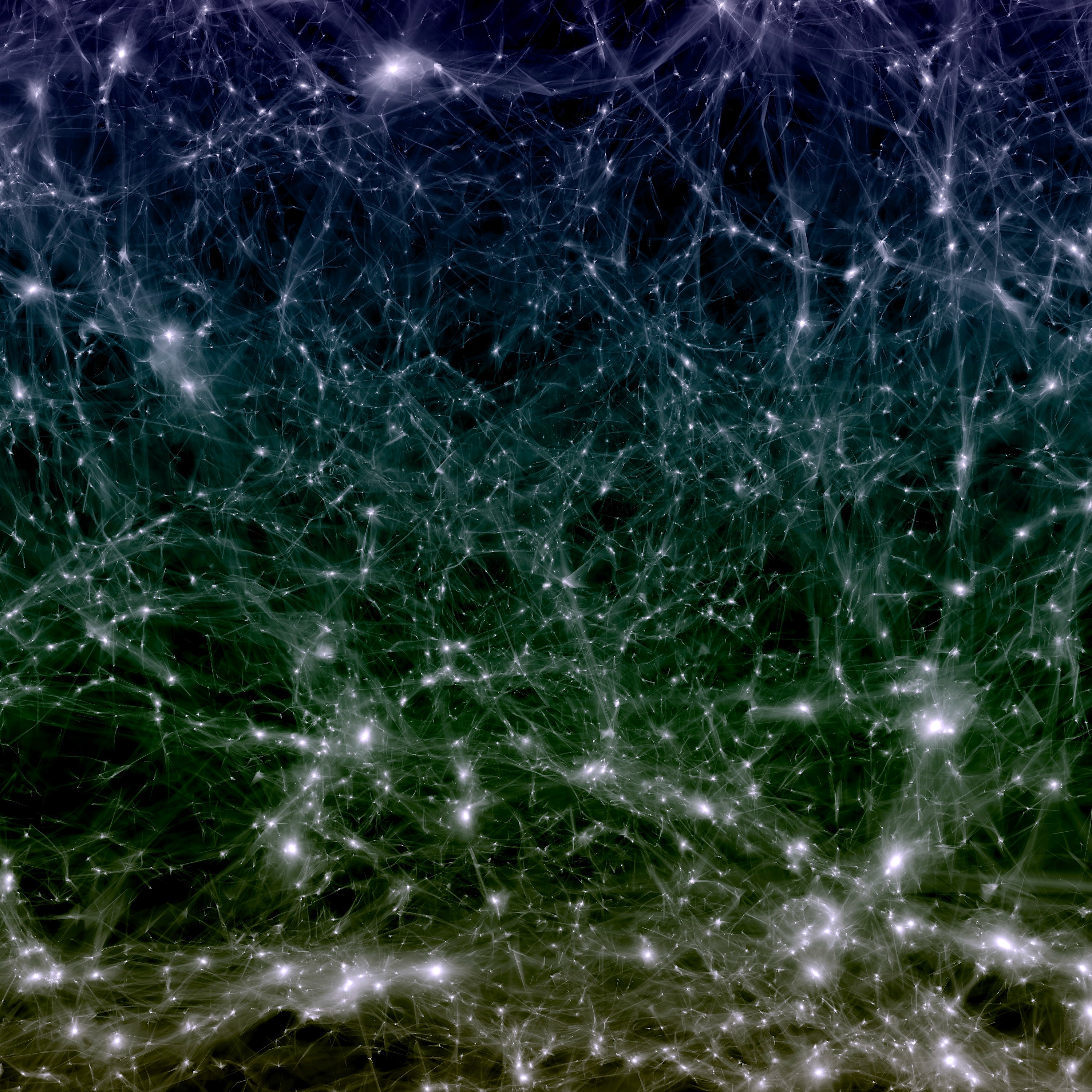
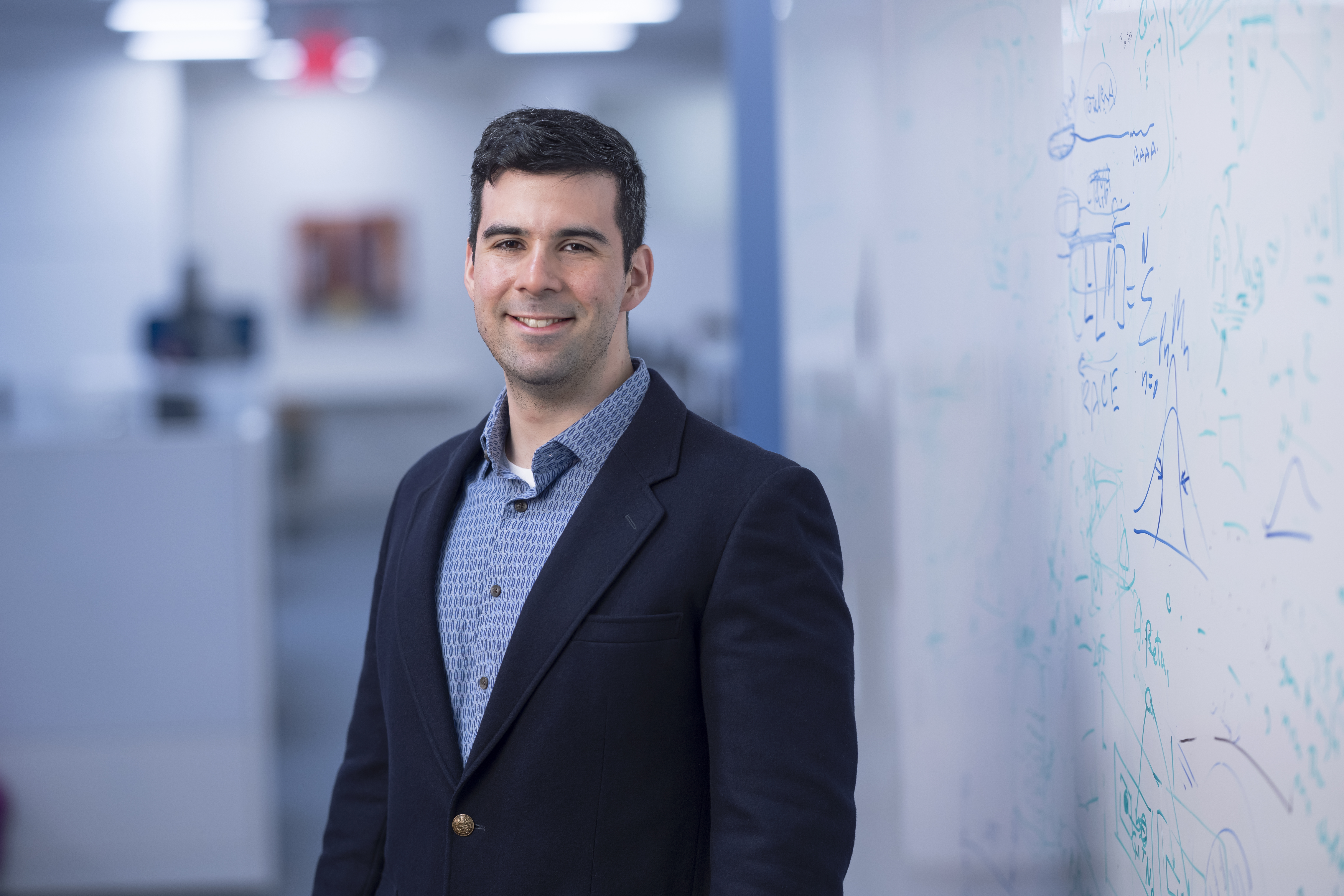
Ethan O. Nadler is an Assistant Professor at the University of California, San Diego, affiliated with the Department of Astronomy & Astrophysics. He previously held joint postdoctoral positions at Carnegie Observatories and the University of Southern California Department of Physics & Astronomy. His research bridges galaxy formation, dark matter physics, and near-field cosmology, with a focus on the faintest galaxies, microphysical DM nature, and small-scale cosmic structure. He employs cosmological simulations, semi-analytic models, and observational data from surveys like DES, SAGA, and DELVE. His recent publications highlight interdisciplinary work on dark matter-baryon interactions, self-interacting ultralight DM, and the Milky Way's dark matter distribution. As an educator, he teaches undergraduate and graduate courses at UCSD and has developed materials for advanced cosmology and galaxy formation at USC, UC Davis, and Stanford. NSF Graduate Research Fellow (Stanford University) Dr. Nadler mentors a diverse group of students, spanning undergraduate to graduate levels, on projects related to dwarf galaxy modeling, dark matter simulations, and cosmological data analysis. His leadership roles include co-convening the Dark Energy Science Collaboration's Dark Matter Working Group.
J. Westerweel is a Professor in the Department of Fluid Mechanics at Delft University of Technology, School of Mechanical Engineering. His research focuses on experimental fluid dynamics, particularly in Particle Image Velocimetry (PIV) , turbulent flow , and microfluidic systems . He has contributed extensively to understanding coherent structures , drag forces , and flow measurement methodologies . Research Trends: Recent works emphasize 3D flow reconstruction , microbubble dynamics , programmable hydrodynamics , and industrial fluid applications such as gypsum slurry flow optimization. His studies span both fundamental turbulence analysis and applied techniques in rowing propulsion , compliant coatings , and cavitation mitigation . Editorial Contributions: He has served as an editor for Experiments in Fluids and Flow, Turbulence and Combustion , ensuring quality in experimental methods across fluid mechanics.
Randy L. Vander Wal is a Professor at The Pennsylvania State University, holding appointments in the John and Willie Leone Family Department of Energy and Mineral Engineering, Materials Science and Engineering, and Mechanical Engineering within the College of Earth and Mineral Sciences. His research spans multiple areas of energy and materials science with a strong focus on nanomaterials synthesis and characterization. Dr. Vander Wal's research interests include energy generation through nanostructured catalysts for hydrocarbon processing, energy utilization through metal oxide gas sensors, energy conversion through nanostructured lubricants, and energy storage through new battery materials. His expertise also covers laser diagnostics for measuring species, temperature, pressure and flow, as well as various analytical methods including microplasmas and laser-based techniques like LIBS, LIF, LII, CRD, and DFWM. His work in materials chemistry focuses on nanomaterial syntheses using methods such as CVD, plasma, electrospinning, combustion, aerosol, mechanical processes and ablation, followed by comprehensive characterization and application testing. A significant contribution to the field was coining the term 'nanostructure' to describe the atomic layer planes comprising soot, enabling statistical comparison through custom algorithms developed specifically for HRTEM image quantification. Dr. Vander Wal's research portfolio demonstrates strong trends in carbon nanomaterials, particularly graphene and other graphitic forms, with applications spanning energy conversion, environmental monitoring, and advanced composites. His recent publications show increasing focus on sustainability applications, decarbonization technologies, and environmental health impacts of combustion products. His academic contributions extend to teaching courses including EGEE 120: Oil: International Evolution, ENVSE 406: Sampling and Monitoring of the Geo-Environment, FSC 431: Chemistry of Fuels, and several advanced graduate courses in nanotechnology and catalytic materials. His educational background includes a Ph.D. in Chemical Physics from The University of Wisconsin with research on 'The Vibrationally Mediated Photodissociation of Water,' and undergraduate degrees in Physics, Chemistry, and Math from Calvin College.
John H. Seinfeld is the Louis E. Nohl Professor of Chemical Engineering at the California Institute of Technology (Caltech). He holds a dual affiliation with the Division of Engineering and Applied Science and has served in various administrative roles, including Executive Officer for Chemical Engineering (1974-1990) and Chair of the Division of Engineering and Applied Science (1990-2000). His research focuses on atmospheric chemistry and physics, particularly aerosols, their formation, evolution, and impact on climate and air quality. B.S., University of Rochester (1964) Ph.D., Princeton University (1967) Honorary Doctorates from University of Patras, Carnegie Mellon University, and Clarkson University His work spans laboratory chamber studies of organic aerosols, airborne field measurements of atmospheric particles and clouds, and large-scale modeling of air quality and climate. He has developed critical frameworks for understanding aerosol dynamics in urban to global scales, emphasizing the role of organic components in atmospheric processes. Seinfeld teaches graduate and undergraduate courses at Caltech, including ChE 105 (Dynamics and Control of Chemical Systems), ESE/ChE 158 (Aerosol Physics and Chemistry), and ESE/Ge/Ch 172 (Atmospheric Chemistry II). His office is located in 206 Spalding Laboratory, and he is supported by assistant Matt Buga.
Professor Amarjit S. Virdi leads the Laboratory of Amarjit S. Virdi, PhD at Rush University Medical Center. As Director of the Graduate Program in Anatomy & Cell Biology and a member of the Faculty Profile , his research focuses on bone tissue regeneration and stem cell biology within orthopedic contexts. PhD from University of Oxford, England NIH COMMONS name: AVIRDI Scopus number: 6701742334 His translational work bridges biomechanics , biomaterials , and regenerative medicine . Publications demonstrate expertise in implant fixation , bone-implant interface , and cellular responses to mechanical stimuli . Over 25 years, his lab has developed preclinical models for osteoporotic bone healing , particle-induced inflammation , and ultrasound-enhanced bone formation . Recent studies highlight novel investigations into gut microbiota's role in implant loosening and seasonal birth effects on bone properties . The lab employs advanced methodologies including micro-computed tomography , gene expression profiling , and biomechanical testing . Current affiliations include the Department of Anatomy & Cell Biology and Rush's Research Enterprise .
Assistant Professor Radojica Pešić is affiliated with the Department of Chemical Engineering at the Faculty of Technology and Metallurgy, University of Belgrade. With expertise in chemical engineering and environmental applications, his work focuses on reactor design, mass transfer, and sustainable process optimization. Research spans environmental remediation , process design , and transport phenomena Active in bubble column reactors , CO2 capture , and industrial water treatment Supervised 10+ final theses in chemical engineering processes and environmental systems Recent publications highlight trends in electrochemical pollutant degradation , fluidized bed thermal dynamics , and sustainable material design . His teaching involvement includes Chemical Engineering Laboratory and Process Design courses. Advised research on distillation process optimization (2021), industrial water quality (2020), and PINCH methodology for mass integration (2018) Key methodologies: linear mass balance models , absorption column design , and quality control systems Contact: rpesic@tmf.bg.ac.rs | Office 37, TMF Building | Phone: +381 11/3303611
Helvi Witek is an Associate Professor in the Department of Physics and Astronomy at the University of Illinois Urbana-Champaign, with a joint appointment at the National Center for Supercomputing Applications (NCSA). She joined UIUC in 2020 as an Assistant Professor and was promoted to Associate Professor in 2024. Previously, she held prestigious fellowships including a Royal Society University Research Fellowship at King’s College London (2018–2019) and a Marie-Curie Fellowship at the University of Barcelona (2016–2017). Her research focuses on gravitation, cosmology, and astrophysics , specializing in numerical relativity, black hole dynamics, gravitational waves, and modified gravity theories. Key interests include: Scalarization in scalar-Gauss-Bonnet gravity Black hole hair growth and superradiant instabilities Neutron star mergers and viscous hydrodynamics Development of the numerical relativity library Canuda Her recent publications emphasize black hole physics in modified gravity , with trends including dynamical scalarization in binary mergers, stability analysis of self-interacting fields, and gravitational wave modeling for future detectors like LISA. Theoretical and numerical innovations dominate her work, often bridging fundamental physics with astrophysical observations. Awards and Honors: Royal Society University Research Fellowship (2018–2019) Marie-Curie Fellowship (2016–2017) She leads the Witek Gravity Group and co-developed a $680,000 NSF-funded Einstein Toolkit. She teaches courses including Classical Mechanics and General Relativity, receiving “Excellent Teacher” rankings from students.
Irène Marcovici is a Professor at the University of Rouen Normandy, affiliated with the Raphaël Salem Mathematics Laboratory (LMRS) and leading the Probability and Dynamic Systems Team. Her research spans probability theory, cellular automata, stochastic processes, and combinatorics, with a focus on ergodicity, percolation, and self-organization phenomena. She collaborates with institutions like the GDR Fundamental Computer Science and its Mathematics and has contributed to journals such as Probability Theory and Related Fields, Annales Henri Lebesgue, and Theoretical Computer Science. Education: Habilitation à Diriger des Recherches (2021, University of Lorraine), PhD in Mathematics (2013, University of Paris Diderot) Research Focus: Marcovici's work explores probabilistic cellular automata, percolation models, and their applications in physics, computer science, and mathematics. Key projects include analyzing stability regions in queueing systems, developing decentralized diagnostics, and studying self-descriptive sequences. Her articles highlight interdisciplinary connections between discrete mathematics and stochastic dynamics. Notable Collaborations: She has co-authored publications with researchers like Jérôme Casse, Régine Marchand, Nazim Fatès, and Mathieu Sablik. Her team participates in the ALEA and SDA2 working groups under GDR Fundamental Computer Science and its Mathematics.
Dr. Wayne Hocking is a Full Professor at Western University's Faculty of Science in the Department of Physics & Astronomy. His research focuses on atmospheric physics, with particular emphasis on mesosphere-stratosphere-troposphere dynamics, tornado genesis, and meteor physics. He contributes to Earth observation and exploration technology innovations as a Western Space Investigator. Research Interests : Atmospheric radar scattering processes Gravity wave-turbulence interactions Polar mesospheric phenomena Radio meteor physics Stratosphere-troposphere exchange The 15 most recent articles highlight his work in radar windprofiling, planetary wave dynamics, meteor trail analysis, and polar atmospheric phenomena. His studies employ meteor radars, ozonesondes, and satellite data to investigate middle-atmosphere coupling, severe weather detection, and dusty plasma in the mesosphere. Methodologically, he advances deconvolution techniques and error analysis for radar systems.
Raffaela Cabriolu is an Associate Professor in the Department of Physics at the Norwegian University of Science and Technology (NTNU). Her research focuses on computational and theoretical physics, materials science, and molecular dynamics simulations, with applications in colloidal systems, nanoporous materials, and soft matter physics. Her research interests include: Light propagation in colloidal particle systems Structural transitions in calcium carbonate Interfacial phenomena in ionic liquids Diffusion mechanisms in nanoporous materials Phase transitions under pressure Statistical mechanics of complex systems Recent work highlights trends in computational modeling, nanomaterials, and fluid dynamics. She has contributed to educational advancements in molecular simulation pedagogy and participated in outreach initiatives like the 2023 CSCS interview exploring nanobubble dynamics. Her teaching portfolio includes courses in electricity and magnetism (FY1003), numerical physics (TFY4235), and advanced numerical physics (FY8904).
Basab Chattopadhyay is an Associate Professor in the Department of Physics at the Norwegian University of Science and Technology (NTNU). He obtained his Ph.D. from the Indian Association for the Cultivation of Science (IACS), India in 2011 and completed postdoctoral research at ULB, Brussels (2012-2018) with an EU Marie-Curie Fellowship and "Chargé de Recherche" from the Belgian National Science Foundation, followed by a postdoc at NTNU (2018-2020). His research focuses on X-ray physics, particularly 4D imaging, biomineralisation, computational imaging, and materials physics. He leads the ICONIC project (2020-2026) which aims to use 3D Coherent X-ray Diffraction Imaging to understand biomineralisation pathways, and is involved in several other major projects including SaltyPore, MISSION-CCS, and EXCITE2. Current Projects: ICONIC (Project Leader), SaltyPore, MISSION-CCS, EXCITE2 Past Projects: EXCITE Dr. Chattopadhyay has received notable recognition including the Mandate of 'Chargè de Recherche' from the Belgian National Science Foundation (2015-2018) and the Marie-Curie International Incoming Fellowship from the European Commission (2012-2015). His recent publications demonstrate expertise in advanced X-ray imaging techniques applied to diverse fields including geophysics, materials science, and biomedical engineering. The research spans from fundamental biomineralisation processes to practical applications in carbon capture and storage. He currently supervises multiple PhD candidates and Master's students, focusing on advanced X-ray imaging techniques and their applications in materials science and geophysics. His work spans multiple disciplines from biomineralisation to carbon capture and storage technologies.
Michael Kachelriess is a Professor at the Department of Physics, Norwegian University of Science and Technology (NTNU). His research focuses on astroparticle physics and high-energy astrophysics, particularly cosmic ray physics, neutrino astronomy, and hypothetical particles like supersymmetric particles and axion-like particles (ALPs). Email: michael.kachelriess@ntnu.no Affiliation: Department of Physics, NTNU Research Interests High-energy astrophysics Hypothetical particles in astrophysics and cosmology Supersymmetry and beyond-standard-model physics Neutrino masses and mixing Matter interactions in extreme conditions Cosmic ray propagation and anisotropy Publication Trends Focus on cosmic ray sources (Vela, Cygnus) and their neutrino/gamma-ray signatures Development of computational tools like ELMAG and AAfrag for astroparticle simulations Analysis of photon-ALP oscillations and their detectability at TeV energies Investigation of cosmic ray escape mechanisms and Galactic magnetic field interactions Modeling of high-energy neutrino fluxes from Galactic superbubbles and local supernovae Study of antimatter production and heliospheric propagation effects
David Lyden is a Professor at Weill Cornell Medicine, holding the Stavros S. Niarchos Professorship in Pediatrics and Cell and Developmental Biology. He is a key faculty member in the Graduate School of Medical Sciences and maintains a strong research partnership with the Sloan Kettering Institute. His laboratory is dedicated to understanding the systemic effects of cancer, particularly through the lens of extracellular vesicles and particles (EVPs). Dr. Lyden's research focuses on cancer metastasis, with a central theme on how primary tumors secrete extracellular vesicles to establish the pre-metastatic niche (PMN) in distant organs. His lab was the first to define the PMN concept and demonstrate that tumor-derived exosomes and EVPs drive vascular leakiness, immunosuppression, and recruitment of bone marrow progenitor cells. His groundbreaking discovery that exosomal integrins dictate organ-specific metastasis has reshaped understanding of metastatic tropism. The lab also identified a novel abundant particle, the exomere, using asymmetric-flow field-flow fractionation. Current projects emphasize EVP biogenesis, cargo packaging, biomarker discovery for early detection, and EV-based theranostics. His publications from 2005 to 2024 reveal a sustained trajectory of high-impact research in Nature , Cell , and Nature Medicine . These works collectively highlight his leadership in elucidating the molecular mechanisms of pre-metastatic niche formation, multi-organ metastasis, and cancer-induced systemic dysfunction. The articles span topics from fundamental discoveries in metastasis to translational applications in biomarker development and metabolic reprogramming. Dr. Lyden has received extensive recognition through his influential publications and leadership in the field, although specific awards are not listed in the text. His research is supported by major grants enabling advanced proteomic, bioinformatic, and imaging studies. He mentors students and postdoctoral fellows, contributing to training the next generation of cancer biologists. His laboratory, known as the VIVO Lab, employs cutting-edge technologies including asymmetric-flow field-flow fractionation, mass cytometry, and super-resolution microscopy to characterize extracellular vesicles and their role in cancer progression. The team collaborates extensively within the Tri-Institutional network, including Memorial Sloan Kettering and Rockefeller University, fostering a highly interdisciplinary research environment.