Michael A. Lieberman is a Professor in the Graduate School at the Department of Electrical Engineering and Computer Sciences, University of California, Berkeley. He joined UC Berkeley in 1966 and has received numerous accolades, including the Distinguished Teaching Award (1971) and Guggenheim Fellowship (1972-1973). His research focuses on low-temperature plasma physics and chemistry, particularly plasma-assisted materials processing, capacitive/inductive discharges, and nonlinear plasma dynamics. Education: Ph.D., Electrical Engineering, Massachusetts Institute of Technology (1966) B.S./M.S., Electrical Engineering, Massachusetts Institute of Technology (1962) Research Interests: Prof. Lieberman's work bridges fundamental plasma theory and industrial applications. Key areas include: Modeling of electromagnetic effects in capacitive discharges Hybrid analytical/numerical simulations of plasma processes Nonlinear wave phenomena in RF plasmas Plasma-material interactions for semiconductor fabrication Development of global models for atmospheric-pressure discharges Current projects (2018-2019) involve 2D fluid-analytical simulations, high-pressure discharge modeling, and particle-in-cell methods. Publications Focus: Recent articles emphasize computational plasma physics, including PIC simulations of transport phenomena, sheath dynamics in electronegative plasmas, and resonance effects in RF heating. His work consistently advances predictive modeling for industrial plasma applications. Awards & Honors: AVS Plasma Science Prize (2022) NPSS Marie Curie Award (2020) Will Allis Prize (2006) Von Engel Prize (2005) IEEE Plasma Science Award (1995) Fellowships: APS, AAAS, IEEE, AVS, IPCS, IOP Collaborations & Support: Collaborates extensively with Prof. A.J. Lichtenberg (nonlinear dynamics/plasma textbooks). Research funded by DOE Office of Fusion Energy Sciences and Applied Materials/Display (AKT). Maintains active international partnerships in plasma diagnostics and simulation.
Professor Hongbin Li is a Professor and Canada Research Chair in the Department of Chemistry at the University of British Columbia. His research program focuses on single molecule biophysical chemistry, biomaterials, and protein engineering. He leads an active research group investigating the mechanical properties and conformational dynamics of elastic proteins using advanced single molecule techniques. Professor Li received his B.Sc in Polymer Engineering from Tianjin University, China in 1993. He earned his Ph.D. in Polymer Chemistry and Physics from Jilin University, China in 1998 under the supervision of Profs. Jiacong Shen, Xi Zhang and Hermann E. Gaub. During his doctoral studies, he was a visiting PhD student at Ludwig-Maximilians-Universität München, Germany (1996-1997) working with Prof. Hermann E. Gaub. Following his Ph.D., he completed a Research Fellowship at Mayo Medical Center, USA (1999-2002) with Prof. Julio M. Fernandez. Professor Li's research program centers on understanding the mechanical properties and conformational dynamics of elastic proteins at the single molecule level. His laboratory combines protein engineering with single molecule atomic force microscopy (AFM) and computational approaches to rationally design and engineer proteins with tailored mechanical properties. Using AFM as their primary tool, his team directly manipulates proteins one molecule at a time to measure mechanical properties and monitor folding/unfolding trajectories in real time. His research spans four main directions: (1) Protein Mechanics and Engineering, where they design proteins with specific mechanical properties; (2) Single Protein Folding/Unfolding Dynamics, investigating folding mechanisms at the single molecule level; (3) Protein-based Biomaterials, designing biomaterials with tailored mechanical properties for biomedical applications; and (4) Polymer physical chemistry using single molecule AFM. His work bridges fundamental protein mechanics with practical applications in biomaterials design. Professor Li has received numerous prestigious awards recognizing his contributions to biophysical chemistry and protein engineering: 2020: AAAS Fellow (the American Association for the Advancement of Science) 2012: Changjiang Guest Chair Professorship (Jilin University, China) 2011: JILA Visiting Fellowship (JILA and University of Colorado, Boulder) 2011: Alexander von Humboldt Fellowship (Technical University of Munich, Germany) 2010: JILA Distinguished Short-term Visiting Fellow 2010: Charles McDowell Award for Research (UBC) 2006: Michael Smith Foundation for Health Research Career Investigator Award 2005: Peter Wall Institute for Advanced Studies Early Career Award (UBC) Professor Li has mentored numerous graduate students and postdoctoral fellows throughout his career at UBC. His research has been supported by multiple grants, including his Canada Research Chair position which he has held continuously since 2004. His work bridges chemistry, physics, and biology, attracting funding from diverse sources including the Natural Sciences and Engineering Research Council of Canada (NSERC), the Michael Smith Foundation for Health Research, and international collaborations. His laboratory maintains strong connections with research groups worldwide, particularly in China and Germany, reflecting his international research profile. Professor Li leads an active research group within the Department of Chemistry at UBC that combines expertise in protein engineering, single molecule biophysics, and biomaterials science. His laboratory is equipped with state-of-the-art atomic force microscopes and optical trapping systems, enabling cutting-edge single molecule studies. The group maintains close collaborations with researchers in the Michael Smith Laboratories and other interdisciplinary centers at UBC, fostering a highly collaborative research environment focused on understanding protein mechanics and developing novel protein-based materials.
Dr. Peter Sadowski is an Associate Professor at the University of Hawaii at Mānoa in the Department of Information and Computer Sciences. His research focuses on machine learning and artificial intelligence, with an emphasis on deep learning applications in science and engineering. Ph.D., Computer Science, University of California, Irvine (2016) B.S., Computer Science, California Institute of Technology (2009) Dr. Sadowski's research explores the intersection of machine learning and scientific domains. He develops deep learning models to solve complex problems in physics, astronomy, and climate science, while advancing foundational neural network techniques like random backpropagation. His recent publications highlight deep learning's versatility, including applications in antimatter physics, particle physics, and interdisciplinary collaborations. Current projects aim to improve computational models for scientific data analysis and climate adaptation. NSF CAREER Award (2023) for machine learning in climate adaptation DOE Solar Forecasting Competition Prize (2022) NSF Awards (2021) for self-supervised learning in microbiome science and astronomy Dr. Sadowski teaches machine learning courses and runs an open AI seminar for students and faculty. He contributes to open-source machine learning tools like SHERPA (Hyperparameter optimization) and Keras tutorials.
Professor Timothy Horbury is a faculty member in the Department of Physics, Faculty of Natural Sciences at Imperial College London. His roles include Principal Investigator of the Solar Orbiter magnetometer, Science lead of the IMAP and HelioSwarm magnetometers, and membership in the FIELDS and SWEAP teams for the Parker Solar Probe. Affiliations: Space Lab, Space, Plasma and Climate Community. His research explores: Waves and turbulence in plasmas Solar wind structures Novel data analysis techniques Particle acceleration and propagation His broader research areas span Astronomical and Space Sciences, Atmospheric Sciences, Atomic/Molecular/Nuclear/Particle/Plasma Physics, Physical Chemistry, Geophysics, and Aerospace Engineering. Labs/Teams: Space Lab, Parker Solar Probe collaboration (FIELDS/SWEAP teams).
Claudia Felser is a Professor and Director at the Max Planck Institute for Chemical Physics of Solids , focusing on the design and multifunctional properties of Heusler compounds. Her work bridges computational materials science and experimental synthesis to create materials with tailored electronic, magnetic, and thermoelectric characteristics. Heusler compounds (over 1000 known members) Applications: thermoelectrics, topological insulators, magnetocaloric materials Approach: periodic table-based "Lego box" design and inverse design Recent publications highlight her exploration of electronic band structures and multifunctional properties in these materials. Her research has implications for sustainable energy technologies and quantum computing. The Max Planck Institute for Chemical Physics of Solids in Dresden, Germany, serves as the hub for her interdisciplinary work, combining theory with experimental validation to discover new Heusler materials.
Prof. Sebastian Kaiser is a full professor at the University of Duisburg-Essen's Institute for Combustion and Gas Dynamics, where he leads research on reactive fluid dynamics since 2011. His academic background includes a Bachelor's from Dartmouth College, Diplomingenieur from RWTH Aachen, and PhD from Yale University, followed by postdoctoral work at Sandia National Laboratories. Research Focus: Kaiser specializes in optical diagnostics for reactive systems with emphases on: High-speed imaging of combustion processes Nanoparticle synthesis via spray-flame techniques Tribology and fluid-structure interactions Engine diagnostics using laser-based methods His work bridges experimental techniques and simulation development for energy and propulsion systems. Publication Trends: Recent articles (2023-2025) demonstrate consistent focus on advanced optical diagnostics applied to combustion systems, nanoparticle synthesis, and engine research. Key methodologies include laser-induced fluorescence, high-speed imaging, and machine learning for fluid dynamics analysis. Awards & Honors: Harding-Bliss Prize for Engineering Excellence (Yale, 2005) SAE Excellence in Oral Presentation Award (2008) NRW Returning Scientists Grant (2010) Professional Affiliations: Member of Society of Automotive Engineers (SAE) and The Combustion Institute, with extensive experimental facilities for reactive flow characterization.
Daniel W Armstrong is a Professor at the University of Texas at Arlington in the Department of Chemistry and Biochemistry. With over 35 years of experience, he is a pioneering figure in chiral recognition, enantiomeric separations, and the biological relevance of D-amino acids. His work has led to over 740 publications, 35 patents, and 560 invited seminars worldwide. Developed first chiral recognition mechanism by cyclodextrins First to use macrocyclic antibiotics as chiral selectors Synthesized most new ionic liquids (ILs) globally Created ultra-fast separation techniques now standard in analytical chemistry Contributed to FDA 1992 guidelines on chiral drug separation His research focuses on chiral separations, ionic liquids, and the role of D-amino acids in biological systems. He has commercialized over 30 HPLC and GC columns, transforming analytical chemistry and pharmaceutical analysis. Recent publications demonstrate continued innovation in chiral chromatography, biomarker analysis, and AI-driven separation optimization. His grants include industry collaborations with Merck, Alcon, and Sigma-Aldrich, emphasizing practical applications of his work. Scientific honors include multiple lifetime achievement awards, fellowships in the Royal Society of Chemistry and American Chemical Society, the Chirality Medal, and induction into the National Academy of Inventors. He has mentored over 100 PhD students, many from first-generation college backgrounds.
Thomas Jonsson is an Associate Professor at KTH Royal Institute of Technology in the Division of Electromagnetic Engineering and Fusion Science within the School of Electrical Engineering and Computer Science. His research focuses on fusion plasma physics with particular emphasis on modeling plasma heating, stability, and confinement. He is actively involved in studies of plasma heating by radio waves at the JET experiment in Oxford and serves as task coordinator for heating and current drive modeling within the EUROfusion Consortium. Jonsson's research interests span plasma physics, fusion energy, electromagnetic engineering, radio frequency heating, and computational plasma modeling. His work centers on the development and application of advanced computational methods for understanding wave-particle interactions in fusion plasmas, particularly ion cyclotron resonance heating (ICRH) techniques. He investigates plasma stability mechanisms, confinement properties, and heating optimization strategies for tokamak devices, with direct applications to ITER and future fusion reactors. His research bridges theoretical modeling with experimental validation at major international facilities. Analysis of Jonsson's recent publications reveals a strong focus on computational methods for radio frequency wave propagation in tokamak plasmas, disruption prediction techniques, and experimental validation of heating schemes. His work demonstrates increasing sophistication in modeling approaches, with growing integration of machine learning techniques for plasma control. The research spans fundamental plasma physics to applied engineering solutions for fusion reactors, with particular attention to ITER-relevant scenarios and DEMO design considerations. As an educator, Jonsson teaches a range of courses including Plasma Physics (EF2200), Electromagnetic Waves in Dispersive Media (ED2210), and Project in Fusion Research (ED2247), serving as examiner and course responsible for several advanced courses. His teaching spans both Master's level courses in electromagnetic theory and plasma physics, as well as specialized PhD courses on charged particle motion, plasma waves, and fusion research. Jonsson maintains active collaborations with major European fusion research institutions, particularly through the EUROfusion Consortium, and contributes to the JET experimental program. His work supports the international effort toward practical fusion energy by addressing critical challenges in plasma heating and stability for next-generation fusion devices.
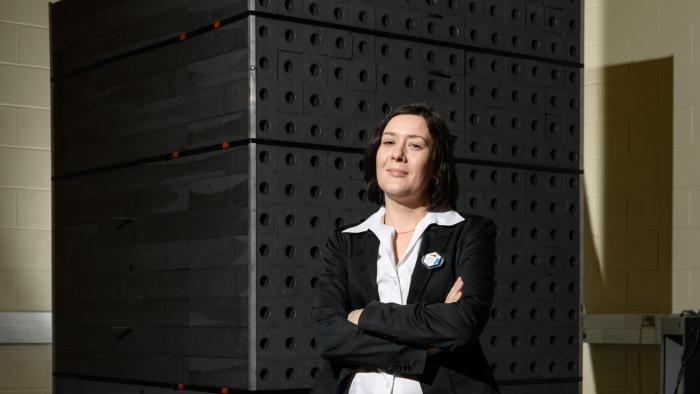
Anna Erickson serves as Woodruff Professor and Associate Chair for Research at Georgia Institute of Technology's George W. Woodruff School of Mechanical Engineering, where she bridges reactor engineering and nuclear nonproliferation through integrated theoretical and experimental approaches. Director of the $25M DOE NNSA-funded Consortium for Enabling Technologies and Innovation (12 universities, 12 national labs), she has authored over 100 publications including the seminal text Active Interrogation in Nuclear Security (Springer, 2018) and advises federal agencies on nuclear security policy. Education: Ph.D. in Nuclear Science and Engineering, Massachusetts Institute of Technology (2011) M.S. in Nuclear Science and Engineering, Massachusetts Institute of Technology (2008) B.S., Oregon State University (2006) Research Focus: Dr. Erickson pioneers nonproliferation-by-design methodologies through two integrated thrusts: advanced reactor analysis for proliferation-resistant nuclear energy systems and radiation detection for border security applications. Her work uniquely combines machine learning with nuclear engineering to develop safeguards for next-generation reactors, with significant contributions to antineutrino detection systems and medical physics applications like proton radiography. Current projects emphasize small modular reactor safety and spectral imaging techniques. Publication Trends: Analysis of her 15 most recent publications (2018-2020) reveals dominant themes in antineutrino-based reactor monitoring (60% of works), advanced radiation detection systems (30%), and small modular reactor design (10%). Key innovations include lithium-loaded scintillators for neutron detection, spectral X-ray correction algorithms, and high-temperature reactor concepts with inherent proliferation resistance, demonstrating consistent DOE funding focus on nuclear security infrastructure. Awards: Woodruff Professorship (2019) Lockheed Dean's Excellence in Teaching Award (2016) US Frontiers of Engineering Symposium (National Academy of Engineering, 2015) American Nuclear Society Graduate Scholarships (2006, 2009) Stewardship Science Graduate Fellowship (DOE, 2008-2011) Leadership & Funding: As director of the $25M Consortium for Enabling Technologies and Innovation, she manages cross-institutional R&D in machine learning, advanced manufacturing, and nuclear detection. Her Laboratory for Advanced Nuclear Nonproliferation and Safety (LANNS) coordinates with Aerospace Engineering, Chemistry, and International Affairs departments on nonproliferation projects, while her ELATES leadership program participation (2022) enhances STEM management capabilities. Recent media engagements with CBS News (nuclear fusion breakthrough) and CNN (radiation safety) demonstrate policy impact. Research Infrastructure: The multidisciplinary LANNS lab develops experimental detection systems alongside reactor modeling tools, supporting the Consortium's mission to create deployable nuclear security technologies. Collaborations with 12 national laboratories enable access to unique facilities for radiation source characterization and reactor simulation, with current efforts focused on AI-enhanced safeguards for commercial reactor fleets.
Valery Chernoray is a Research Professor at the Division of Fluid Dynamics, Chalmers University of Technology. Since 1996, he has specialized in experimental fluid dynamics with extensive expertise in modern flow analysis and measurement techniques. He currently leads the Chalmers Laboratory of Fluid and Thermal Science, a university-wide research infrastructure facility that provides equal access to flow, temperature, and motion measurement capabilities for researchers across all engineering disciplines at Chalmers. Professor Chernoray's research encompasses several key areas in fluid dynamics: Experimental validation of computational models using Particle Image Velocimetry (PIV) Turbomachinery aerodynamics, particularly turbine rear structures and outlet guide vanes Bearing lubrication systems and multiphase flow in mechanical components Active flow control applications for automotive and marine systems Wind engineering for urban and marine environments Heat transfer analysis in complex engineering systems His recent publications (2022-2024) reveal a strong emphasis on experimental validation of computational models, with particular focus on lubrication systems in bearings and gearboxes, turbine aerodynamics, and active flow control. His work consistently bridges theoretical fluid dynamics with practical engineering applications, demonstrating expertise in both fundamental research and industrial problem-solving. As head of the Chalmers Laboratory of Fluid and Thermal Science, Professor Chernoray oversees comprehensive experimental facilities supporting research across multiple engineering disciplines. The laboratory provides critical infrastructure for experimental work in air, water, and solid object measurements, serving as a hub for interdisciplinary collaboration at Chalmers University.
Prof.dr.ir. C. Poelma is a Professor in the Department of Process and Energy at Delft University of Technology (TU Delft). His research focuses on experimental fluid dynamics, multiphase flows, and measurement engineering. Research Areas: Cavity Engineering, Turbulent Flow, Reynolds Number Analysis, Air Lubrication, Velocity Field Measurement, and Wave Propagation. Projects: Led the Flows Unveiled project on multimodal measurement in opaque two-phase flows (2017-2022). Scientific Contributions: His work includes pioneering studies on ventilated cavities, bubbly shock waves, and particle-laden flows using X-ray and LED-based PIV techniques. He has received an ERC Advanced Grant for his research. Key Publications: 125+ research outputs, including articles in Journal of Fluid Mechanics , Ocean Engineering , and International Journal of Multiphase Flow . Datasets: Generated critical datasets for void fraction analysis, nozzle flow, and biomedical velociometry. Supervised Students: Mentored 9 PhD candidates and collaborated with researchers across fluid mechanics and biomedical engineering.
Dominic Pjontek is an Associate Professor in the Department of Chemical and Biochemical Engineering within the Faculty of Engineering at Western University. He is based in Room 377 of the Thompson Engineering Building and serves as an active researcher and educator in multiphase reactor engineering. His work is conducted both on the Western University campus and at the Institute for Chemicals and Fuels from Alternative Resources (ICFAR), a specialized facility for sustainable technology development. Dr. Pjontek received his Ph.D. and B.A.Sc. in Chemical Engineering from the University of Ottawa, where he earned multiple prestigious scholarships including the NSERC Postgraduate Scholarship for Doctoral Studies and the University of Ottawa Excellence Scholarship for Graduate Studies. His research focuses on the development and optimization of multiphase reactors through experimental studies, process modeling, and scale-up considerations. Key research areas include CO 2 conversion/utilization using gas-liquid-solid reactors, fundamental understanding of interfacial area and flow behavior in multiphase reactors, and innovative sustainable technologies for converting waste streams to value-added products. His work addresses critical technological barriers in developing next-generation reactors for sustainable chemical production. Analysis of Dr. Pjontek's recent publications reveals a strong trend toward carbon dioxide conversion technologies, fluid coker optimization, and sustainable process development. His research group has published extensively on gas-liquid-solid fluidized beds, reactor fouling mechanisms, and CO 2 hydrogenation processes, with increasing focus on sustainable chemical production methods that align with global decarbonization efforts. Scientific Awards and Recognitions: R. Mohan Mathur Award for Excellence in Teaching (2018) Maurice Bergougnou Teaching Award for Heat Transfer Operations (2015-2018) NSERC Postgraduate Scholarship for Doctoral Studies Multiple University of Ottawa Excellence Scholarships NSERC Canada Graduate Scholarship for Master's Studies Dr. Pjontek actively supervises numerous graduate students working on cutting-edge projects related to multiphase reactor engineering. His research group includes multiple Ph.D. and M.E.Sc. students working on projects such as CO 2 conversion to commodity chemicals, biosurfactant production, fluid coker heater modifications, and stripper shed fouling monitoring. He has successfully graduated numerous students who have completed theses on topics including fluid coker cyclone fouling, hydrodeoxygenation processes, and particle agglomeration phenomena. His research is supported through collaborations with industry partners like Syncrude Canada Ltd. and Origin Materials, as well as government funding agencies. Dr. Pjontek's laboratory work is conducted within the Chemical and Biochemical Engineering facilities at Western University, with specialized equipment for studying multiphase reactor systems. His research group maintains collaborations with other faculty members including Cedric Briens, Lars Rehmann, and Jose Herrera, forming a strong research cluster focused on sustainable process engineering and reactor technology development.
Fang Lu serves as Staff Scientist at Brookhaven National Laboratory's Center for Functional Nanomaterials (2012-present) and Adjunct Professor at Stony Brook University (2021-present), focusing on nanomaterial synthesis for energy applications. Education Ph.D. in Condensed Matter Physics, Chinese Academy of Sciences, China Research Focus Dr. Lu pioneers shape/size-controllable nanoparticle synthesis (Au, Ag, Pd, Pt) and multi-component nanostructures using DNA-driven assembly. His work bridges structural characterization (SAXS/EM) with functional applications in electrocatalysis and plasmonics, targeting energy-conversion materials. Expertise spans particle surface modification, collective optical properties, and biomolecule functionalization. Publication Trends Recent publications (2023-2025) reveal evolution from fundamental synthesis toward applied energy systems: DNA-mediated chiral nanomaterials for sensing, facet-specific electrocatalysis (e.g., glycerol oxidation), and perovskite solar cell enhancements. Consistent themes include nanocrystal interface engineering and translating structural control into functional properties. Laboratory Context At Brookhaven's Center for Functional Nanomaterials, Dr. Lu utilizes state-of-the-art nanofabrication and characterization facilities within a multidisciplinary team advancing energy, quantum, and biological nanotechnology research.
Ingrid Mann is a Professor in Space Physics at the UiT The Arctic University of Norway , Department of Physics and Technology. She leads and participates in multiple externally funded research initiatives including the Cosmic dust injection into the upper Earth atmosphere , MXD 2 rocket project to study the mesosphere , and EISCAT Research infrastructure project . ORCID: 0000-0002-2805-3265 Member of research group Space Physics Member of projects: Intermittent fluctuations in physical systems , Maxidusty-2 , CASCADE , Codia , Boosting Space Business , and Forskningsparken 1 A216 Her research spans space and atmospheric physics , focusing on dusty plasmas , cosmic dust dynamics , and polar atmosphere interactions . She employs spacecraft observations , EISCAT radar , rocket experiments , and machine learning for data analysis. Recent publications highlight cosmic dust detection with Parker Solar Probe and Solar Orbiter , PMSE multilayer properties , and dust impact signal modeling . Her work integrates radar , optical , and spacecraft data to understand polar atmospheric systems. She teaches FYS-2000 Kvantemekanikk , FYS-2019 Sun, Planets, and Space , and supervises G-Chaser student rocket projects . Her research group contributes to EISCAT_3D infrastructure and interplanetary dust modeling . Co-edited books: Nanodust in the Solar System (2012) Small Bodies in Planetary Systems (2008) Modern Meteor Science (2005)
Leonardo Ricci is an Associate Professor at the Department of Physics, University of Trento , with a 28-year teaching career spanning 56 courses (31 in English) and extensive roles in the Interdepartmental Center for Mind/Brain Sciences - CIMEC (30% affiliation). His research bridges nonlinear dynamics , information theory , and neuroscience , focusing on chaos detection in time series and entropy analysis. Academic Career : From 1994 post-doc at Max-Planck-Institut to 2022 promotion to Associate Professor Teaching : Courses in Experimental Physics, Advanced Electronics, and Statistical Methods across Physics and Computer Science programs Ricci leads the NSE Lab (Nonlinear Systems and Electronics) , developing hardware/software systems for experimental research. His 2022 Entropy cover story on permutation entropy highlights his impact in information theory. Scientific Contributions : 20 patents (visibility measurement devices), collaborations with international researchers on complex systems Editorial Roles : Associate Editor for Chaos, Solitons & Fractals and Frontiers in Network Physiology