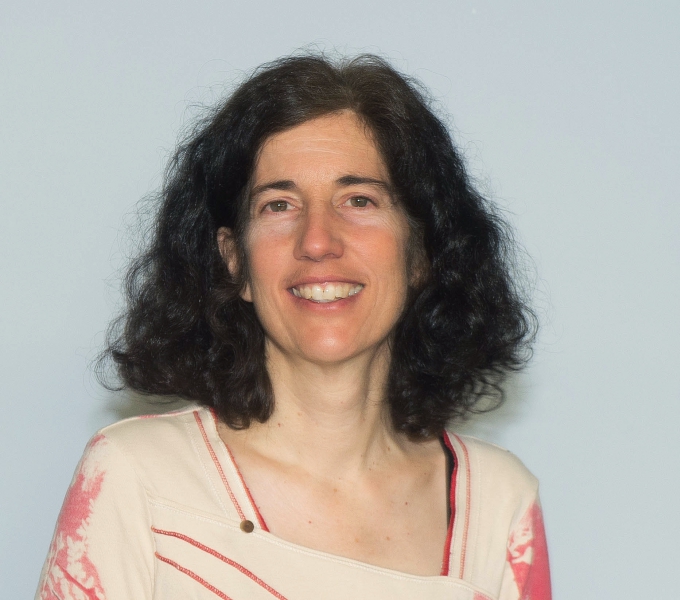
Donna Naples is a Professor in the Department of Physics & Astronomy at the University of Pittsburgh, affiliated with the Dietrich School. Her research focuses on neutrino physics, particularly their fundamental properties and oscillations. She is involved in major experiments such as NOvA, MicroBooNE, and the upcoming DUNE project at Fermilab. Her work contributes to understanding neutrino masses, mixing matrices, and potential sterile neutrinos. Naples has been recognized as a Fellow of the American Physical Society (2018). Research Interests: Neutrino oscillations and cross-section measurements High-intensity neutrino beam experiments (NuMI) Detector development for neutrino physics Search for sterile neutrinos and beyond-Standard-Model interactions Key Contributions: Leadership in the MicroBooNE detector design Analysis of MINERvA neutrino interaction data Role in planning the DUNE experiment Awards: Fellow of the American Physical Society (2018) Advising & Collaboration: Advises graduate student Fan Gao Collaborates with international teams on neutrino experiments
Pierre Baldi is a Distinguished Professor of Computer Science and Director of the Institute for Genomics and Bioinformatics at the University of California, Irvine (UCI). He is affiliated with the Donald Bren School of Information and Computer Sciences. His research spans artificial intelligence, machine learning, bioinformatics, and communication networks, with notable projects in protein structure prediction, gene expression modeling, and neutrino physics collaborations like DUNE. Baldi’s work bridges theoretical foundations (e.g., neural network theory) and applied domains, including medical imaging and fusion technology. Key research interests include AI-driven biomedical applications, neural network theory, and interdisciplinary projects such as the DUNE neutrino experiment. His contributions to neural network engineering were recognized with the 2023 INNS Dennis Gabor Award, highlighting his paradigm-changing impact on computational neuroscience and physics. Baldi’s academic leadership includes directing UCI’s Institute for Genomics and Bioinformatics, fostering collaborations in computational biology and AI. His recent work explores AI’s role in healthcare, climate modeling (e.g., ClimSim-Online), and fundamental physics challenges like neutrino oscillation studies.
Dr. Andrew Blake is a Lecturer in Experimental Neutrino Physics at the Department of Physics, Lancaster University. His research focuses on experimental neutrino physics, particularly neutrino event reconstruction and oscillation analysis using Liquid Argon Time Projection Chamber (LAr-TPC) technology. He collaborates on major international experiments including MINOS, MicroBooNE, SBND, and the future DUNE project at Fermilab. His primary research interests include: Precision measurements of neutrino oscillations Development of LAr-TPC detection technology Search for new physics beyond the Standard Model Neutrino interaction cross-section measurements CP symmetry violation in the neutrino sector Blake's recent publications (2025) demonstrate strong focus on: Advanced neutrino interaction measurements using MicroBooNE data Development of reconstruction algorithms for LAr-TPCs DUNE experiment capabilities for supernova detection and CP violation studies Validation methods for neutrino-nucleus interaction models He currently advises three PhD students: Krittika Adhikari (Experimental Particle Physics) Rachel Coackley (Experimental Particle Physics) Bethany McCusker (Experimental Particle Physics)
David Simmons-Duffin is a Professor of Theoretical Physics at the California Institute of Technology (Caltech), where he has held positions since 2016. He is part of the Division of Physics, Mathematics and Astronomy, contributing to the Physics Department. His career progression includes roles as Visiting Associate (2016–17), Assistant Professor (2017–20), and Associate Professor (2020–21) before becoming full Professor in 2021. Education: A.B. and A.M. from Harvard University (2006), CASM from the University of Cambridge (2007), and Ph.D. from Harvard University (2012). His research focuses on conformal field theory (CFT), bootstrap methods, quantum field theory, and AdS/CFT correspondence. Key areas include precision computations in strongly coupled systems, critical phenomena, and applications to holography and quantum gravity. Research highlights include advancing the conformal bootstrap program, analyzing CFT data in 3D Ising models, and exploring connections between CFTs and gravitational theories. His work often bridges theoretical frameworks with numerical methods, yielding insights into operator product expansions (OPE), spectral gaps, and causality constraints. Affiliations include the Institute for Quantum Information and Matter (IQIM) and other Caltech research centers. His contributions have shaped modern approaches to understanding universality in critical systems and the geometric aspects of quantum field theories. Notable collaborations involve high-precision calculations, bootstrap island techniques, and studies of thermal QFT and light-ray operators. His work emphasizes interdisciplinary methods, combining analytic tools with computational advancements to tackle complex theoretical problems.
Professor Stephen Croft is a faculty member at Lancaster University , affiliated with the School of Engineering . His research focuses on Nuclear Materials Measurement Science , with expertise in radiation detection, neutron interrogation, and X-ray/gamma-ray spectroscopy. Current projects include cosmic ray neutron monitoring , active neutron interrogation of nuclear materials , and radiation damage assessment . His recent publications emphasize semi-empirical modeling of atomic interactions and advanced detection techniques for nuclear applications. He has contributed to understanding vacancy transfer probabilities , X-ray fluorescence cross-sections , and water detection in nuclear environments . His work supports nuclear security, power plant safety, and space weather monitoring. Scientific awards : None explicitly mentioned in the text. Research groups : Involved in Nuclear Space Weather initiatives.
Michael P. Bradley is a Professor in the Department of Physics and Engineering Physics at the University of Saskatchewan, affiliated with the College of Arts and Science. He holds a Ph.D. from MIT and is a Professional Engineer (P.Eng.). His research focuses on precision measurement techniques, plasma-based nanofabrication, and quantum metrology, including work on diamond NV-centre magnetometers and superconducting watt balance systems. He leads the University of Saskatchewan Plasma Physics Laboratory (U of S PPL) and has received a Canada-UK Joint Quantum Technology grant for quantum sensor development. Education BSc (Honours) in Applied Physics, University of New Brunswick Ph.D. in Physics, Massachusetts Institute of Technology (MIT) Research Interests Bradley specializes in quantum magnetometry , plasma processing , semiconductor nanostructures , and precision electromagnetic measurements . His lab develops novel techniques for materials characterization and fabrication, including plasma immersion ion implantation (PIII) for micro- and nano-scale engineering, graphene doping, and silicon photonics. Recent work includes advancements in diamond NV-centre magnetometry for quantum technologies. Grants & Collaborations Recipient of a prestigious Canada-UK Joint Quantum Technology grant (2023). Collaborated internationally, including at the Bureau International des Poids et Mesures (BIPM) in France, where he contributed to superconducting watt balance prototypes for redefining mass standards. Teaching Teaches courses in optics, thermodynamics, and planetary astronomy, including EP421: Optical Systems & Materials and ASTR104: Planetary Astronomy .
Benedikt Günther is a research scientist at the Technical University of Munich (TUM) working within the Chair of Biomedical Physics led by Prof. Dr. Franz Pfeiffer. His research focuses on the Munich Compact Light Source (MuCLS), a laboratory-scale inverse Compton X-ray source that provides synchrotron-like radiation for biomedical applications. Günther plays a key role in developing, optimizing, and characterizing this innovative technology, contributing to both its fundamental physics and practical medical applications. His primary research interests center around X-ray physics and imaging techniques, particularly laser enhancement cavities for inverse Compton X-ray sources, X-ray microscopy, dynamic phase-contrast imaging, and X-ray spectroscopy. Günther's work bridges fundamental physics with practical medical applications, developing instrumentation that brings synchrotron-quality imaging to conventional laboratory settings. His research has significant implications for improving medical diagnostics while making advanced imaging techniques more accessible. Analysis of Günther's publication record reveals a consistent focus on advancing compact X-ray source technology and its applications. His work demonstrates expertise in both theoretical modeling and experimental implementation, with publications spanning instrument development, imaging techniques, and specific medical applications. The research shows progression from fundamental source characterization to increasingly sophisticated biomedical applications, particularly in breast imaging, dental diagnostics, and materials science. 2019 Best Poster Award at the combined meeting of the 68th Denver X-ray Conference (DXC) & 25th International Congress on X-ray Optics and Microanalysis (ICXOM) for 'Full-Field Structured Illumination Super-Resolution X-ray Transmission Microscopy' Günther regularly presents his work at major international conferences including the International Particle Accelerator Conference, High-Brightness Sources and Light-driven Interactions Congress, and specialized X-ray imaging meetings. His research is conducted within the Munich Compact Light Source facility, a collaborative project involving physicists, engineers, and medical researchers working to develop laboratory-scale synchrotron technology for widespread biomedical use.
Matias Zaldarriaga is the Richard Black Professor in the School of Natural Sciences at the Institute for Advanced Study (IAS), Princeton. His research focuses on theoretical cosmology, gravitational waves, and the Cosmic Microwave Background (CMB). He has held previous faculty positions at Harvard University (2003-2009) and New York University (2001-2002). Education: Ph.D. in Physics, Massachusetts Institute of Technology, 1998 Licenciado en Ciencias Físicas, Universidad de Buenos Aires, 1994 Zaldarriaga's work centers on decoding the early universe through CMB analysis and gravitational-wave astrophysics. He investigates inflation, large-scale structure formation, and black hole dynamics, leveraging advanced statistical methods to probe fundamental physics from cosmological data. His recent publications (2023-2025) demonstrate a strong focus on gravitational-wave data analysis, including novel algorithms for detecting binary black hole mergers, constraints on inflationary physics from large-scale surveys, and modeling supermassive black hole evolution. Key themes include higher-order waveform harmonics, pulsar timing arrays, and computational innovations for gravitational-wave astronomy. Awards and Honors: Gruber Cosmology Prize (2021) MacArthur Fellowship (2006) European Physical Society Gribov Medal (2005) Sloan Fellowship (2004) Helen B. Warner Prize, American Astronomical Society (2003) Packard Fellowship (2001) He collaborates extensively with international teams (e.g., LIGO-Virgo-KAGRA, DESI) and mentors researchers in cosmology and astrophysics. His group develops open-source tools for gravitational-wave inference and cosmological parameter estimation.
Alberto Belloni is an Associate Professor at the University of Maryland's Department of Physics. He is a key member of the CMS Collaboration at CERN, contributing to the Hadronic Calorimeter (HCAL) upgrade. His research focuses on high-energy particle physics experiments at the Large Hadron Collider (LHC), particularly Higgs boson studies and detector technology advancements. Education: B.S. from University of Pisa and Scuola Normale Superiore (2002), Ph.D. in Physics from MIT (2007). Teaching responsibilities include courses such as Physics 273 (Waves), Physics 275/276 (Experimental Physics), and advanced quantum/Modern Physics modules. Notable contributions include co-authoring landmark publications on Higgs boson discovery (ATLAS Collaboration, 2012) and precision W/Z boson measurements (2010). His work supports ongoing LHC experiments exploring fundamental particles and interactions.
Martha Constantinou is an Associate Professor of Physics at Temple University, specializing in Theoretical/Computational Nuclear Physics with a focus on Lattice Quantum Chromodynamics (QCD). Her research addresses fundamental questions in hadron structure, including nucleon spin content and proton radius puzzles, leveraging supercomputing resources. She leads a group conducting advanced numerical simulations at major computational facilities. Constantinou holds a Ph.D. in Theoretical Computational Physics (University of Cyprus, 2008) and a BS in Physics (University of Cyprus, 2003). Her work aligns with the upcoming Electron-Ion Collider (EIC) at Brookhaven National Lab, aiming to explore nucleon structure and dark matter connections. Key research areas include generalized parton distributions (GPDs), axial form factors, and high-performance computing applications. Notable awards include the US Department of Energy Early Career Award (2019) and the Selma Lee Bloch Brown Professorship (2020). Her publications (15 most recent listed) emphasize Lattice QCD advancements, with contributions to GPDs, quark-gluon momentum partitioning, and EIC theory. She actively promotes STEM outreach and public engagement through collaborative initiatives.
Oskari Ville Pakari is a Lecturer at the School of Basic Sciences, École polytechnique fédérale de Lausanne (EPFL), affiliated with both the Institute of Physics (IPHYS) and the Swiss Plasma Center (SPH-ENS). He contributes to teaching and research, particularly in reactor physics and radiation detection. His research focuses on nuclear reactor diagnostics , gamma noise analysis , and neutron spectroscopy . He actively develops mixed reality visualization tools for radiation detection data and participates in the European CORTEX project for reactor monitoring. Selected publications highlight his work in gamma-ray imaging , neutron noise simulations , and detector system validation using advanced statistical methods like bootstrapping and Welch's technique. Teaching activities include courses on Radiation biology, protection, and applications Radiation and reactor experiments He advises PhD student Saliba Michel and collaborates with international institutions such as CEA, KIT, and LRS (Laboratory of Reactor Physics and Systems Behaviour) at EPFL.
Wolfgang Lorenzon is a Professor of Physics at the University of Michigan, specializing in experimental particle physics, nuclear physics, and astrophysics. His research spans three major experimental programs: the LUX-ZEPLIN (LZ) dark matter experiment at SURF, the MUSE experiment at PSI for proton radius measurements, and the SpinQuest collaboration at Fermilab studying hadronic physics. He has held significant roles in major collaborations including SeaQuest and HERMES, where he served as Deputy Spokesman from 1997-1998. His educational background includes a Ph.D. (1988) and Diploma (1984), both from the University of Basel. Lorenzon has built a distinguished research career focusing on precision measurements in particle and nuclear physics, with particular expertise in detector development and experimental techniques. Lorenzon's research interests center on fundamental questions in particle physics. His work on the LZ experiment involves developing the in-line radon removal system for the central time-projection chamber, crucial for enhancing the detector's sensitivity to WIMPs. At PSI, he leads the development of liquid hydrogen targets for the MUSE experiment, which aims to resolve discrepancies in proton charge radius measurements. His hadronic physics work with SeaQuest and SpinQuest focuses on understanding nucleon structure through antiquark distributions and polarized Drell-Yan processes. His research bridges theoretical questions with cutting-edge experimental techniques, often requiring innovative detector solutions. Analysis of his recent publications (2023-2025) reveals a strong focus on dark matter detection using liquid xenon technology, precision measurements of nucleon structure, and development of next-generation detectors. His work spans theoretical interpretation of experimental results, detector development, and analysis of fundamental particle interactions. The research shows increasing collaboration across international boundaries, with significant contributions to multiple major experiments simultaneously. Scientific Awards: Fellow of the American Physical Society Lorenzon has mentored numerous graduate students through completion of their Ph.D. degrees, with recent graduates including Haley Reid (2024), Noah Wuerfel and Chami Amarasinghe (2023), Maris Arthurs (2022), Marshall Scott (2020), and Daniel Morton (2019). His current research group includes postdocs, graduate students, and undergraduate researchers. His research is supported by multiple grants from the National Science Foundation (Grant 2110229) and the Department of Energy (Grant SC0019193 and Subcontract 734299), as well as University of Michigan funding. Lorenzon leads a research group with active laboratories at both the Homer A. Neal Laboratory (3265 HANL) and West Hall (357 WH) at the University of Michigan. His team collaborates with international groups at Fermilab, SURF in South Dakota, and the Paul Scherrer Institute in Switzerland. The group maintains strong connections with the LZ collaboration, MUSE experiment, and SpinQuest collaboration, contributing both technical expertise and physics analysis capabilities to these major international efforts.
Foteini Oikonomou is an Associate Professor at the Department of Physics, Faculty of Natural Sciences, Norwegian University of Science and Technology (NTNU). She specializes in theoretical astroparticle physics, focusing on extreme astrophysical environments that accelerate particles to energies exceeding 10 20 eV. Current research includes multimessenger emission modeling of active galactic nuclei Expertise in cosmic ray acceleration and high-energy neutrino origin Active in teaching advanced astrophysics and particle physics Her work bridges astrophysics, particle physics, and cosmology, with particular attention to blazars, tidal disruption events, and ultra-high-energy cosmic rays. She contributes to major collaborations like GRAND and GCOS, developing future instrumentation for astroparticle detection. Recent publications explore cosmic ray propagation in diverse source populations, neutrino emission from transient astrophysical phenomena, and magnetic field line effects on particle acceleration. Her research has been featured in journals such as Nature Reviews Physics , Physical Review D , and The Astrophysical Journal . She teaches AST-3451 Astrophysics II and has previously taught particle physics (FY3403/FY8913) and general astrophysics (FY2450). Her outreach includes public explanations of ultra-high-energy cosmic ray research through popular science articles.
Aakash Sahai is an Assistant Research Professor in the CEDC-Electrical Engineering department at the University of Colorado Denver - Denver Campus. His research focuses on advancing plasma physics, laser-plasma interactions, and nanoplasmonic technologies for high-energy particle acceleration. He is actively involved in designing novel accelerator concepts, such as nanostructure-based plasmonic accelerators capable of achieving extreme electric fields (PetaVolts/meter). His work bridges theoretical, computational, and experimental approaches to address challenges in high-gradient acceleration, plasma wakefields, and extreme nanoscience. Key research interests include laser-driven plasma acceleration, plasmonic field enhancement in nanostructures, and applications of particle beams in medical and high-energy physics. He collaborates on projects like the EuPRAXIA design study, aiming to develop compact, cost-efficient particle sources. His contributions span experimental setups, computational modeling, and innovative methodologies for radio transmission through plasmas and particle beam processing. Notable achievements include pioneering studies on relativistic surface plasmons, PetaVolt plasmonics, and optimizing laser-plasma interactions for proton/ion acceleration. His research has implications for next-generation accelerators, compact X-ray sources, and advanced plasma diagnostics. Sahai’s interdisciplinary approach integrates electrical engineering, material science, and high-energy physics to push the boundaries of accelerator technology. Advising and grants: No formal advisees or grant details listed. His work is supported by collaborations and institutional resources, including participation in national and international initiatives like Snowmass workshops. Labs/Teams: Active contributor to the EuPRAXIA consortium and affiliated with plasma physics and accelerator research groups at University of Colorado Denver.
Wayne Springer is a Professor in the Department of Physics & Astronomy at the University of Utah, with a career spanning over 25 years. He has been actively involved in experimental particle astrophysics, ultra-high-energy cosmic ray (UHECR) physics, and gamma-ray astronomy. Ph.D. in Physics from University of Maryland (1991) B.S. in Physics from University of Maryland (1985) Postdoctoral training at University of Maryland and University of Alberta His research focuses on particle astrophysics, cosmic ray detection, and gamma-ray astronomy. He has made significant contributions to the development of the HiRes and Telescope Array cosmic ray observatories, as well as the HAWC and SWGO gamma-ray observatories. His recent work includes deployment of the Trinity neutrino detector prototype and serving as SWGO project manager for Chile site infrastructure. Article trends show strong emphasis on TeV gamma-ray observations (HAWC, SWGO), cosmic ray diffusion mechanisms, dark matter searches, and high-energy astrophysical source characterization (pulsars, microquasars, supernova remnants). He has secured multiple NSF grants for particle astrophysics research and leads detector working groups in international collaborations. Professor Springer actively participates in astronomy outreach, co-developing observatories and implementing computational physics teaching tools with Gradescope auto-graders for enhanced pedagogy. His work bridges experimental high-energy physics, detector development, and multiwavelength astrophysical studies.