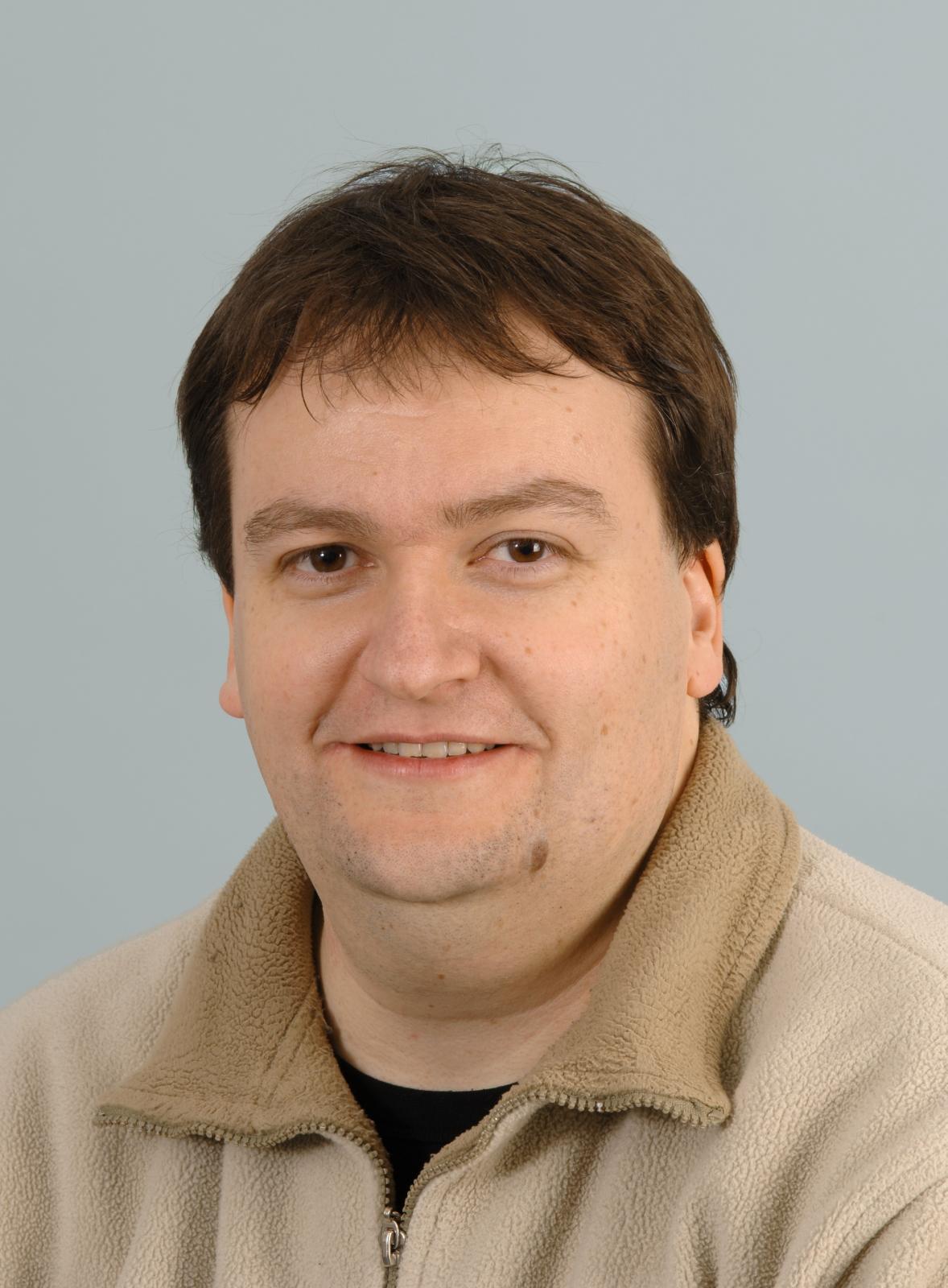
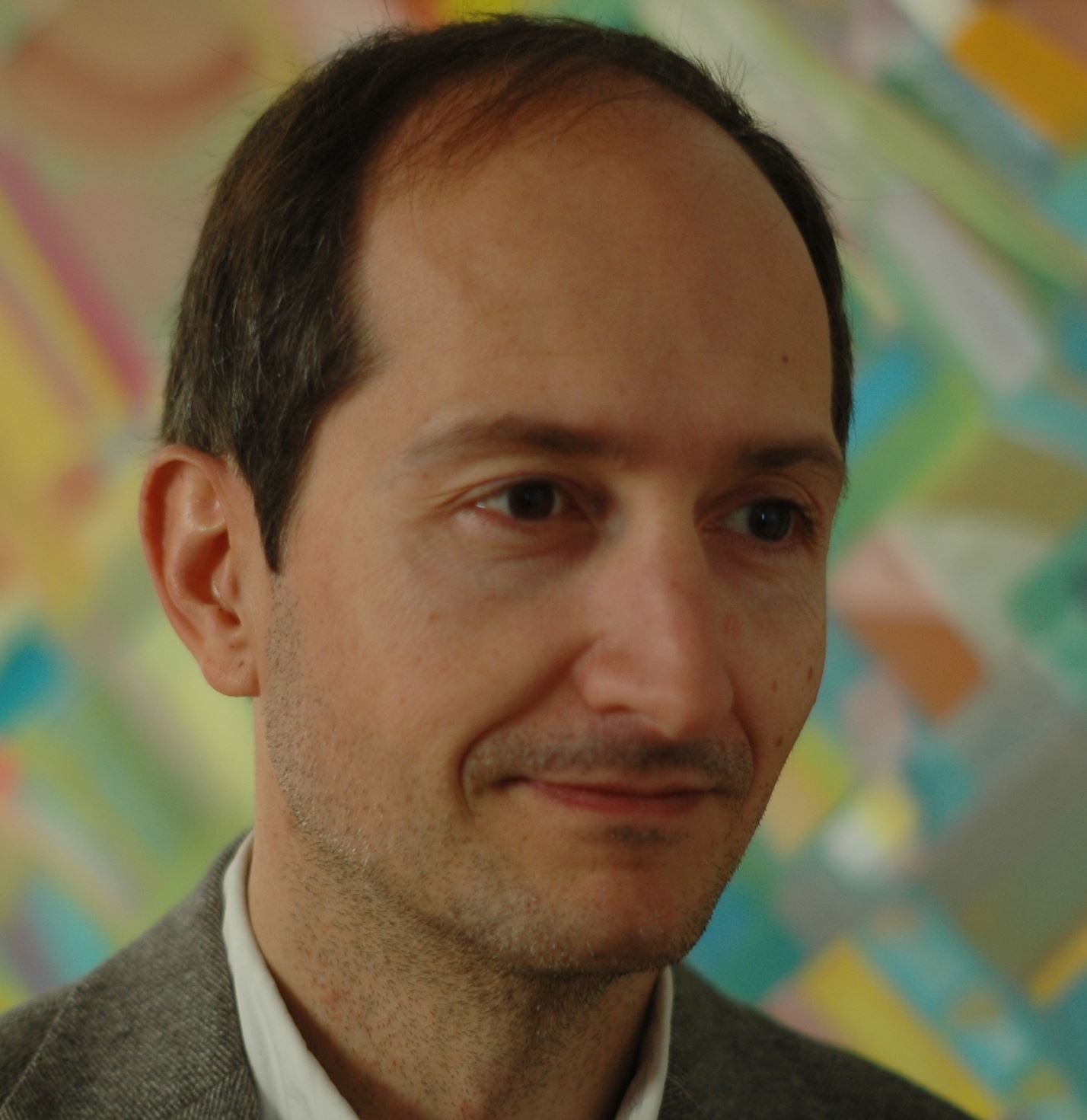
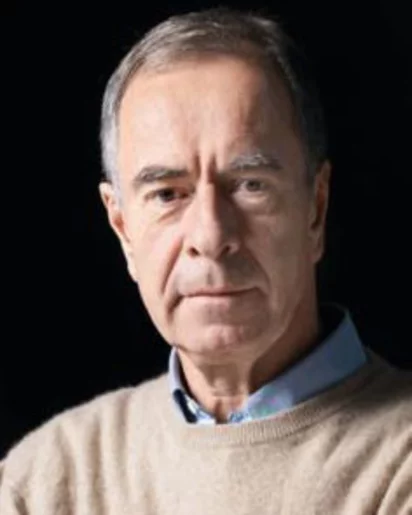
Prof. Dr. Günther Dissertori is a Full Professor and Rector of ETH Zurich, where he oversees teaching and academic affairs. His academic journey began at the University of Innsbruck, followed by a doctoral position at CERN, and he joined ETH Zurich as an Assistant Professor in 2001 before becoming a Full Professor in 2007. Academic Role: Full Professor of Particle Physics Institutional Leadership: Rector of ETH Zurich (since 2022) Contact: guenther.dissertori@sl.ethz.ch Research Interests: Dissertori's work spans Particle Physics and Experimental Physics , notably contributing to the CMS experiment at CERN, which was instrumental in the Higgs boson discovery. His group also developed cost-effective PET devices, leading to the spin-off Positrigo AG . Research keywords include Detector Development , Medical Imaging , and Quantum Physics . Teaching Excellence: Recognized with multiple Golden Owl awards (2005–2020) and the Credit Suisse Award for Best Teaching (2013), Dissertori is celebrated for his pedagogical impact in the Department of Particle Physics. Scientific Contributions: His publications include advancements in CMOS technology, quantum dynamics, and medical applications, reflecting interdisciplinary expertise in high-speed electronics, environmental science, and architectural history.
Prof. Dr. André Rubbia is a Full Professor of Experimental Physics at ETH Zurich's Department of Physics, holding this position since December 2003 after serving as Associate Professor from 1998. His research spans neutrino physics, astro-particle physics, and dark matter detection through major international collaborations including CERN, Gran Sasso National Laboratory, and Fermilab. He currently serves as Co-Spokesperson for the billion-dollar DUNE neutrino project at Fermilab, managing over 900 scientists. His educational background includes: Diploma in Physics from the University of Geneva (1990), with thesis work on the L3 experiment at CERN's LEP accelerator Ph.D. in Physics from MIT (1993) under Nobel Laureate S.C.C. Ting, focusing on high-energy electron-positron collisions Rubbia's research centers on fundamental particle interactions, particularly neutrino oscillations and physics beyond the Standard Model. He pioneered liquid Argon Time Projection Chamber (LAr TPC) technology and dual-phase detection systems, enabling breakthroughs in neutrino mass measurements and dark matter searches. His work spans underground laboratories (Gran Sasso, Canfranc), the LHC's CMS detector, and neutrino beam experiments like T2K. Recent explorations include antimatter gravity tests, electron-positron bound states, and dark hidden sector searches. His 2025 publications reveal intense focus on neutrino oscillation parameter precision (T2K, Hyper-Kamiokande), FASER's LHC neutrino program, and DarkSide-20k dark matter detector development. Key themes include cross-section measurements, advanced detector technologies (SiPMs, emulsion tracking), and statistical methods for oscillation analysis, reflecting integration of theoretical modeling with cutting-edge instrumentation. Scientific recognition includes: Breakthrough Prize for Fundamental Physics (2016) awarded to the international team for discovering matter-anti-matter asymmetry in neutrino oscillations APS Viewpoint selection for editing the paper announcing first electron neutrino appearance at accelerators Rubbia has supervised over fifty PhD and Master's theses while securing substantial research funding as Principal Investigator for 20+ Swiss National Science Foundation projects and Coordinator of two EU FP7 Design Studies. His DUNE leadership involves complex international grant management across 30+ countries. He leads ETH Zurich's experimental particle physics group across multiple facilities: the ICARUS neutrino detector at Gran Sasso, CMS at CERN, DUNE at Fermilab, and DarkSide-20k for direct dark matter detection. His team developed the first underground ton-scale liquid argon detector and maintains collaborations with Japanese (Super-Kamiokande) and American (Fermilab) institutions.
Oskari Ville Pakari is a Lecturer at the School of Basic Sciences, École polytechnique fédérale de Lausanne (EPFL), affiliated with both the Institute of Physics (IPHYS) and the Swiss Plasma Center (SPH-ENS). He contributes to teaching and research, particularly in reactor physics and radiation detection. His research focuses on nuclear reactor diagnostics , gamma noise analysis , and neutron spectroscopy . He actively develops mixed reality visualization tools for radiation detection data and participates in the European CORTEX project for reactor monitoring. Selected publications highlight his work in gamma-ray imaging , neutron noise simulations , and detector system validation using advanced statistical methods like bootstrapping and Welch's technique. Teaching activities include courses on Radiation biology, protection, and applications Radiation and reactor experiments He advises PhD student Saliba Michel and collaborates with international institutions such as CEA, KIT, and LRS (Laboratory of Reactor Physics and Systems Behaviour) at EPFL.
Prof. Rainer Wallny is a Full Professor of Physics at ETH Zurich and Head of the Institute for Particle Physics and Astrophysics. His research focuses on high-energy particle physics, particularly through the CMS experiment at the Large Hadron Collider (LHC), emphasizing Higgs boson studies and detector upgrades. He leads projects on Higgs boson characterization in photon and b-quark final states, as well as CMS pixel detector upgrades for Phase-2. His group also explores future collider technologies and contributes to teaching at all academic levels. Education: Studied Physics at Universities of Tübingen, Washington (M.Sc., 1994), and Heidelberg (Diplom, 1996) PhD in Physics from University of Zurich CERN Research Fellow (2001–2003) Faculty at UCLA (2003–2010), promoted to Full Professor in 2010 Joined ETH Zurich as Full Professor in 2010 Research Interests: Higgs boson properties and decay channels Supersymmetry searches in CMS data Detector development for CMS (pixel trackers, diamond sensors) Phase-2 LHC upgrade technologies Experimental particle physics at high-luminosity colliders Grants and Advising: Supervised over 20 PhD students since 2010 Leadership roles in CMS collaboration and detector R&D initiatives Active in curriculum design for physics education at ETH Labs & Teams: Wallny Group at ETH Zurich Institute for Particle Physics and Astrophysics (D-PHYS) Collaborations with CERN and global CMS teams
Emma Tolley is an Assistant Professor at EPFL, affiliated with the School of Basic Sciences (SB) and the Laboratory of Astrophysics (LASTRO) . She also holds positions in the SCITAS group and teaches through the SB-SPH and SPH-ENS departments. EPFL SB IPHYS LASTRO EPFL SB SB-SPH SPH-ENS EPFL VPA-AVP-CP SCITAS Her research bridges dark matter physics and radio astronomy , developing high-performance computing techniques to analyze data from the Large Hadron Collider and the Square Kilometer Array . She specializes in astrophysical data science and detector technology for particle astrophysics. Recent publications focus on dark matter models , next-generation radio surveys , and detector performance analysis . She mentors doctoral students in astrophysics and teaches General Physics: Mechanics and Environmental Chemistry courses.
Dr. Stefan Ritt is a prominent researcher and Group Leader of the Muon Physics group at the Paul Scherrer Institute (PSI) in Switzerland. With over 30 years of experience in particle physics, he has made significant contributions to muon decay experiments and detector development. His research focuses on precision measurements of muon properties and searches for physics beyond the Standard Model. Ritt's primary research interests encompass particle physics, muon physics, detector development, and data acquisition systems. His work has been instrumental in advancing high-precision measurements of muon decay processes, particularly in the search for lepton flavor violation. He has pioneered developments in waveform digitizing technology, most notably through the Domino Ring Sampler (DRS) series of chips, which have revolutionized data acquisition in particle physics experiments. Analysis of his recent publications reveals a strong focus on the MEG and MEG II experiments, which search for the rare decay μ+→e+γ. His work spans detector design, data acquisition systems, trigger implementation, and precision analysis techniques. The publications demonstrate expertise in liquid xenon detectors, silicon photomultipliers, timing resolution, and high-speed waveform digitization. 1984 Jugend Forscht Landessieger 2011 IEEE Senior Member 2016 IEEE Fellow for the development of the Domino Ring Sampler series of chips 2020 IEEE Emilio Gatti Radiation Instrumentation Technical Achievement Award for contributions to the development and democratization of ultra high-speed digitizers Ritt has served as a thesis examiner for institutions including INFN Pisa and ETH Zurich, demonstrating his role in academic mentoring. His leadership extends to coordinating beam time for PSI's secondary particle beam lines and organizing major international workshops. He has been instrumental in developing the Mu3e experiment and advancing muon beam technology at PSI. As head of the Muon Physics group (comprising 12 members), Ritt oversees fundamental particle physics experiments at PSI's secondary beam lines. His group is responsible for the design and implementation of data acquisition hardware and software for the MEG II experiment and serves as co-spokesperson for the Mu3e experiment.
Kirsten Andrea Schnorr is a Researcher at the Paul Scherrer Institute (PSI) in Switzerland, working within the Center for Photon Science and Laboratory for Femtochemistry. She joined the SwissFEL team in 2018 to develop the Maloja endstation for atomic, molecular, and non-linear physics, leading its design, construction, and operational commissioning for cutting-edge XUV/X-ray experiments. Her educational background includes: PhD in Physics (2014), Ruprecht Karl University Heidelberg, completed at the Max Planck Institute for Nuclear Physics under PD Dr. Robert Moshammer; thesis focused on XUV pump-probe experiments of electron rearrangement and interatomic Coulombic decay in diatomic molecules. Schnorr's research centers on photo-induced ultrafast relaxation mechanisms in atoms, molecules, and nanoparticles using time-resolved techniques at Free-Electron Lasers and High Harmonic Generation sources. She pioneers multi-color pump-probe schemes with ultrashort X-ray pulses to steer non-local decay processes like Interatomic Coulombic Decay and Electron Mediated Decay, enabling real-time observation of electron dynamics and proton transfer in molecular systems. Her publication trends (2025-2020) reveal dual expertise in fundamental molecular dynamics and instrumental innovation. Key themes include proton transfer in water dimers (Science Advances 2023), Coulomb explosion in iodinated compounds (2025), and engineering breakthroughs like compact gas attenuators (2023) and polarization control systems (2024), frequently published in Physical Review Letters, Nature Communications, and Journal of Synchrotron Radiation. Scientific awards: Peter Paul Ewald Fellowship from the Volkswagen Foundation (2015), supporting her research on non-linear relaxation processes at UC Berkeley's Physical Chemistry Department under Prof. Stephen Leone. No formal advisees or student supervision are documented. The Volkswagen Foundation fellowship served as her primary grant, funding postdoctoral work on real-time relaxation studies; no additional grants are specified. Her instrumental leadership at SwissFEL suggests mentorship of junior scientists, though no individual students are named. Schnorr directs the Maloja instrument at SwissFEL while contributing to the ATHOS beamline development. She collaborates extensively with PSI's detector teams (e.g., JUNGFRAU advancements) and international groups like UC Berkeley's Physical Chemistry Department, driving initiatives in ultrafast beamline technology and molecular dynamics experiments.
Emiliya Poghosyan is a Senior Scientist at the Paul Scherrer Institute (PSI) in Switzerland, affiliated with the Laboratory for Multiscale Bioimaging and the Electron Microscopy Facility. Since 2018, she provides user support, training, and manages advanced electron microscopy equipment while developing biological imaging methodologies. Her educational background includes: Bachelor of Science in Physics (with honours) from Yerevan State University Master's Degree in Nano-biophysics from Technical University of Dresden PhD in Cryo-electron microscopy from ETH Zurich Postdoctoral work on single particle cryo-EM of membrane proteins at University of Basel Her research focuses on cryo-electron microscopy techniques, structural biology, and membrane protein imaging. Recent publications highlight advancements in ptychography tools, X-ray tomography, and deep learning applications for electron microscopy. She actively contributes to method development and facility management. Scientific achievements include DAAD Long-Term Fellowships (2010-2012), PSI Research Grants (2021), and SDSC Collaborative Data Science Projects. She is a member of the Swiss Society for Optics and Microscopy (SSOM) and has delivered lectures at the University of Zurich (PHY 427). Teaching roles span multiple international cryo-EM schools and hands-on training programs since 2018, emphasizing practical microscopy education.
Mikhail Shaposhnikov is an Honorary Professor at the École Polytechnique Fédérale de Lausanne (EPFL), affiliated with the School of Basic Sciences (SB). His research focuses on particle physics, cosmology, and quantum field theory, with significant contributions to experiments like the SND@LHC and SHiP. He has supervised eight PhD theses at EPFL, including works on neutrino physics, collider experiments, and theoretical models. Shaposhnikov’s research interests span Einstein-Cartan gravity, dark matter, sterile neutrinos, and the interplay between gravitational and particle physics phenomena. He has led efforts in detector design for high-energy colliders and contributed to European particle physics strategy documents. His work often bridges theoretical frameworks with experimental validation, particularly in exploring new physics beyond the Standard Model. His experimental involvements include the SHiP experiment at CERN’s SPS beam dump facility, targeting hidden particles and dark matter candidates, and the SND@LHC detector for neutrino studies. He has also contributed to conceptual designs for future circular colliders and high-luminosity upgrades. Shaposhnikov’s theoretical work addresses scale invariance, conformal symmetry breaking, and quantum gravity challenges such as the hierarchy and strong CP problems. Notable collaborations include the Advanced SND Letter of Intent and studies on heavy neutral leptons. His publications reflect a blend of cutting-edge theory and experimental particle physics, emphasizing both foundational questions and applied technologies for next-generation accelerators.
Tommaso Dorigo is a Professor at the University of Padova, affiliated with the Department of Physics and Astronomy 'G. Galilei'. He serves as First Researcher at INFN-Padova and contributes to international collaborations including CMS, CDF, MODE, DarkMachines, and SWGO. His roles span research, teaching, and leadership in interdisciplinary initiatives. 2022-2025: President of USERN Organization 2020-Present: Coordinator of MODE Collaboration 2014-2019: Scientific Coordinator of AMVA4NewPhysics ETN 2016-2020: Board member of INFN CSN1 Research Interests: His work bridges Particle Physics (Higgs boson physics, top quark studies, new physics searches) and Statistics (parameter estimation, frequentist methods, nuisance parameters). In Computer Science , he develops machine learning tools for detector optimization, anomaly detection, and differentiable programming. Recent articles focus on end-to-end detector design, extended Higgs models, and systematic uncertainty-aware neural networks. Scientific Contributions: He has authored over 1600 publications (H-index 223) and pioneered algorithms like MuScleFit, INVERSE BAGGING, and INFERNO. His outreach includes a popular science blog with 15M+ visits and books like Anomaly! Collider Physics and the Quest for New Phenomena at Fermilab . Grants: Marie Curie ITN grants (AMVA4NewPhysics 2015; INSIGHTS 2017) Editorial: Editor for Elsevier journals Reviews in Physics and Physics Open Advising: Supervised 44 undergraduate/masters students and 11 PhD students Labs/Teams: Member of CMS experiment (CERN), former CDF (Fermilab), and leader of MODE collaboration
Brian McGowan is a Lecturer at the Department of Health Sciences and Technology (D-HEST) at ETH Zurich. His contact details include an email address at brian.mcgowan@hest.ethz.ch and an office at Schulhausgasse 6a, 3113 Rubigen, Switzerland. While his primary affiliation is within Health Sciences and Technology, his research contributions span interdisciplinary fields, including notable involvement in particle physics through collaborations like the Deep Underground Neutrino Experiment (DUNE). His work focuses on neutrino oscillations, detector design, and experimental physics, reflecting a blend of theoretical and applied research methodologies. No formal awards or grants are explicitly listed in the provided texts, though his extensive publication record in high-impact physics journals highlights his active research engagement. Brian’s advising and team collaborations are centered within the D-HEST framework, though specific student names or lab affiliations are not detailed here.
Prof. Dr. Roland Paul Horisberger is a Professor at the Paul Scherrer Institute's Laboratory for Particle Physics, where he leads research in high-energy physics and particle detector development. His work focuses on experimental approaches to fundamental particle interactions and advanced detector technologies. As group leader for High Energy Physics, he oversees experimental programs at major facilities including the Large Hadron Collider, contributing to significant advancements in particle detection methodologies.
Dr. Stefanie Kaser is a Researcher affiliated with the Professorship for X-ray Imaging at ETH Zurich and collaborates with the Paul Scherrer Institut (PSI) in Villigen, Switzerland. Her work focuses on advancing ion imaging techniques, particularly in proton and ion computed tomography (CT), with applications in radiation therapy and medical physics. She contributes to the development and optimization of imaging systems and reconstruction algorithms, including the TIGRE toolbox, to enhance accuracy in radiation dosimetry and clinical diagnostics. Her research bridges experimental physics, computational methods, and clinical applications. Key research areas include proton beam attenuation measurements, time-of-flight detection systems for particle tracking, and the integration of low particle flux techniques in clinical settings. Her interdisciplinary approach addresses challenges in radiation therapy planning, medical imaging software development, and the harmonization of particle imaging modalities.
Prof. Adrian Signer is a Professor at the Paul Scherrer Institute (PSI) in Switzerland, affiliated with the Laboratory for Theoretical Physics. His research focuses on high-precision calculations in particle physics, particularly in quantum electrodynamics (QED), hadronic physics, and muon physics. He is actively involved in developing theoretical tools for experiments at PSI and other high-energy facilities. His research interests span theoretical particle physics, including precision calculations for lepton physics, radiative corrections, event generation for collider experiments, and searches for physics beyond the Standard Model through charged lepton flavor violation. His work bridges theoretical predictions and experimental measurements, providing essential computational frameworks for high-precision experiments. Analysis of his recent publications (2019-2025) reveals a consistent emphasis on advancing precision in muon physics and low-energy hadronic cross sections. Key contributions include NNLO QED calculations via the McMule framework, high-precision muon decay predictions for axion-like particle searches, and theoretical support for electron-positron collision experiments. His work demonstrates strong integration of effective field theories and Monte Carlo methods to solve complex problems in particle phenomenology. No scientific awards were mentioned in the provided text. While no specific advisees or grants are documented, his extensive collaborative publications—featuring dozens of co-authors across international institutions—indicate active leadership in large-scale research consortia. His work directly supports experimental programs through theoretical interpretation and tool development. As a core member of PSI's Laboratory for Theoretical Physics within the Nuclear and Particle Physics division, he contributes to the institute's flagship muon and rare-decay experimental programs. His theoretical frameworks are integral to ongoing research at PSI's accelerator facilities.
Jean-Michel Sallese is a Senior Researcher at École polytechnique fédérale de Lausanne (EPFL), affiliated with multiple units including the Group of Semiconductor Devices (GR-SCI-IEL) , SEL-ENS , and EDMI-GE . His work focuses on semiconductor device modeling, biosensors, radiation effects in electronics, and microfluidic systems. Research Areas: Field Effect Transistor (FET) physics and modeling Radiation-induced soft errors in integrated circuits High-energy particle solid-state sensors Nanowire and junctionless FET biosensors Microfluidic mixer modeling Recent publications highlight advancements in ISFET biosensors , radiation-hard CMOS , and negative capacitance FETs , with applications spanning medical diagnostics, high-energy physics, and industrial monitoring. He supervises PhD students and co-developed the EDLAB initiative for device modeling. Teaching includes core electronics courses and specialized topics like Modeling Micro-/Nano-Field Effect Devices . No scientific awards are explicitly mentioned in the provided texts.