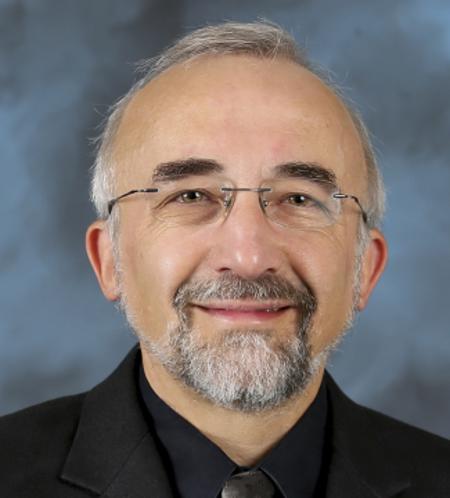
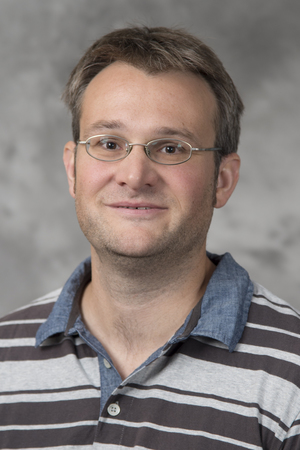
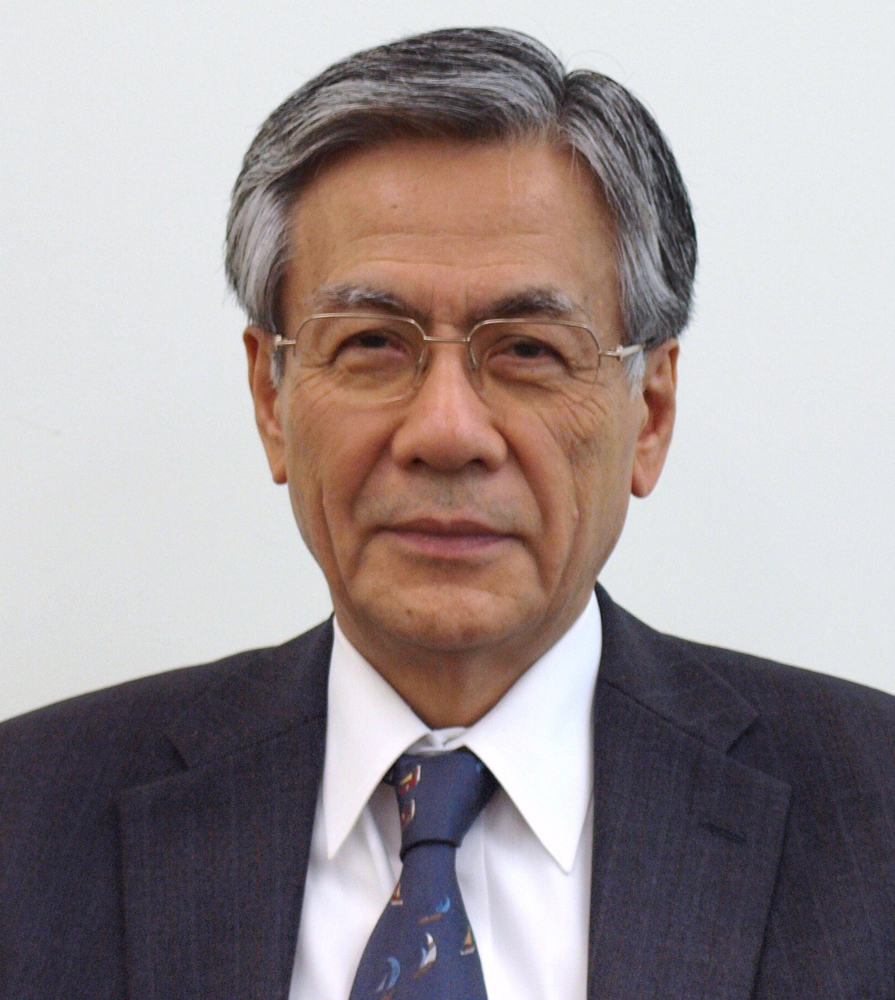
Prof. Stanley Lai is a Professor of Experimental Particle Physics at the Institute of Physics, University of Göttingen, Germany, with secondary membership in the Institute of Informatics. He conducts research as a member of the ATLAS experiment at CERN's Large Hadron Collider (LHC), focusing on proton-proton collisions at 13/14 TeV to investigate fundamental particles and electroweak symmetry breaking. His educational background includes: B.A.Sc. from the University of Toronto (1999) M.Sc. from the University of Toronto (2001) Ph.D. from the University of Toronto (2007) Prof. Lai's research centers on precision measurements of the Higgs boson's properties—including quantum numbers and couplings—to deepen understanding of electroweak symmetry breaking. He actively pursues searches for new physics beyond the Standard Model at TeV energy scales, leveraging the unprecedented collision energies of the LHC. His work bridges theoretical predictions with experimental validation through the ATLAS detector. He joined the University of Göttingen in 2015 as a Professor, following his tenure as Akademischer Rat (permanent academic position) at the University of Freiburg (2011-2015) and Postdoctoral Researcher there (2006-2011).
Dr. Yinghe Qi is a Professor in the Department of Experimental Fluid Dynamics at ETH Zürich, Switzerland. His research focuses on multiphase flows, turbulence, and free-surface dynamics, with applications in aerospace, marine engineering, and computational fluid dynamics. He has contributed extensively to understanding bubble dynamics, flow instabilities, and turbulence modulation through experimental and phenomenological studies. Research Interests: Dr. Qi’s work addresses complex phenomena in multiphase flow instabilities free-surface turbulence deformable bubble dynamics supersonic jet interactions vortex-induced fragmentation machine learning in fluid dynamics Recent Publications: His recent studies (2023–2025) explore multiscale bubble deformation, free-surface turbulence structure, and supersonic jet-plume interactions. Key themes include turbulent fragmentation, vortex-bubble coupling, and novel computational methodologies. Laboratory Affiliations: He collaborates with the Coletti Group, Jenny Group, and Supponen Group at ETH Zürich, advancing experimental and computational techniques in fluid dynamics.
Ben Goddard is a Professor in the School of Mathematics at the University of Edinburgh. His work bridges applied mathematics with real-world scientific challenges, emphasizing interdisciplinary collaboration across engineering, biology, chemistry, and physics. He earned his PhD at the University of Warwick, later completing his final year at TU Munich following his advisor. His research focuses on mathematical modeling, numerical methods, and asymptotic analysis applied to problems such as quantum chemistry, fluid dynamics, and biological systems. Education: Bachelor’s degree in Mathematics (undergraduate details unspecified) PhD in Mathematical Quantum Chemistry (University of Warwick/TU Munich) Research interests include: Dynamic density functional theory (DFT) for complex fluids and nanoparticles Interfacial phenomena and contact line dynamics Numerical optimization and pseudospectral methods Biological systems modeling (e.g., RNA transcription mechanics) Recent work explores applications like ouzo phase behavior, aerosol droplet stability, and opinion dynamics in social networks. His collaborations span diverse fields, including experimental biology at the Welcome Centre for Cell Biology. He advocates for mathematicians’ role in interdisciplinary problem-solving, emphasizing clear communication and adaptability. Advising and grants: While specific grant details are not listed, his projects reflect significant funding and team-based research. He actively promotes STEM engagement through activities like designing math-themed escape rooms with his spouse, a statistician. Labs/Teams: Collaborates extensively with Edinburgh’s Schools of Engineering, Biology, and Informatics, though no specific lab names are mentioned.
Allen Mincer is a Professor of Physics and Collegiate Professor at New York University's College of Arts and Science, Department of Physics. He leads research in experimental high energy particle physics and astrophysics as a member of the NYU Experimental Particle Physics Group, with major contributions to the ATLAS and Milagro collaborations. His educational background includes a Ph.D. from the University of Maryland, College Park (1984) and a B.S. from Brooklyn College (1978). Mincer's research spans particle physics discoveries (top quark, Higgs boson) and cosmic ray astrophysics. He specializes in detector development, data analysis for high-energy collisions, and cosmic ray observations. His work integrates experimental physics with innovative educational approaches, particularly in physics pedagogy. Analysis of his publications (2020-2005) reveals dual research trajectories: LHC-focused studies on Higgs physics, supersymmetry searches, and trigger systems via ATLAS, alongside Milagro-based cosmic ray research mapping TeV emissions and anisotropies in the Galactic plane. His scientific recognition includes: Teach/Tech Award, New York University (2018) Collegiate Professor appointment at NYU (2008) Golden Dozen Teaching Award, NYU (1995, 2000) Mincer mentors undergraduate and graduate researchers while pioneering physics education through flipped classrooms, experimental pedagogy courses, and curriculum development for courses ranging from introductory physics to graduate particle physics. He actively contributes to the NYU Experimental Particle Physics Group, maintaining leadership roles in ATLAS detector operations and Milagro cosmic ray data analysis.
Jonas Strandberg is an Associate Professor at KTH Royal Institute of Technology's Department of Physics, part of the School of Engineering Sciences. His research focuses on particle physics, particularly within the ATLAS Collaboration at the Large Hadron Collider (LHC). He contributed to the Higgs boson discovery and currently studies its properties. Strandberg has been involved in detector development, including the HGTD timing detector for the LHC upgrade. He holds a PhD from Stockholm University (2006) and worked as a postdoc at the University of Michigan (2006-2011) before joining KTH. His teaching responsibilities include courses on experimental particle physics, statistical methods, and engineering skills. Research interests span high-energy physics, collider technology, and detector systems. Research Highlights: Member of the ATLAS Collaboration since 2011 Key contributor to Higgs boson measurements Developed timing detector systems for LHC upgrades Published extensively on particle physics and accelerator technology Teaching & Supervision: Course responsible for Experimental Particle Physics (SH2203) Teaching roles in Applied Modern Physics (SH1015), Embedded Systems Design (IL2232), and more Professional Activities: ATLAS Data Preparation Coordinator (2015-2017) Member of the Particle and Astroparticle Physics Group at AlbaNova University Centre
Witold "Witek" Nazarewicz is a John A. Hannah Distinguished Professor in the Department of Physics & Astronomy at Michigan State University and serves as the Chief Scientist at the Facility for Rare Isotope Beams (FRIB). He is also a Corporate Fellow Emeritus at Oak Ridge National Laboratory (ORNL) and maintains a professorship at Warsaw University, Poland. Nazarewicz previously held positions as James McConnell Distinguished Professor at the University of Tennessee and served as Scientific Director of ORNL's Holifield Radioactive Ion Beam Facility from 1999-2012. His academic career spans multiple international institutions including Lund University, University of Cologne, Kyoto University, University of Liverpool, and Peking University. Nazarewicz's research focuses on theoretical nuclear physics with particular emphasis on exotic nuclei at the limits of nuclear existence. His work spans quantum many-body problems, physics of open quantum systems, superheavy elements, and nuclear fission. He has pioneered approaches to unify structure and reaction aspects of nuclei based on open quantum system many-body formalism, including the Gamow Shell Model. His research connects nuclear physics with high-performance computing, developing comprehensive descriptions of all nuclei through theoretical and experimental investigations of rare atomic nuclei. An analysis of Nazarewicz's recent publications reveals a strong focus on cutting-edge nuclear structure research, particularly concerning exotic nuclei near the driplines, charge radii measurements, superheavy elements, and the development of advanced computational methods. His work increasingly incorporates machine learning and Bayesian analysis techniques to address nuclear physics challenges. The publications demonstrate his leadership in connecting fundamental nuclear physics with applications in nuclear astrophysics, while also addressing foundational questions about the limits of nuclear existence and the nature of nuclear forces. Fellow of the American Physical Society Fellow of the U.K. Institute of Physics Fellow of the American Association for the Advancement of Science 2008 Carnegie Centenary Professor Honorary Doctorates from University of the West of Scotland (2009) and University of York (2019) 2012 Tom W. Bonner Prize in Nuclear Physics 2012 ORNL Distinguished Scientist 2013 UT-Battelle Corporate Fellow 2017 G.N. Flerov Prize 2025 Marian Smoluchowski Medal Nazarewicz has authored approximately 500 peer-reviewed publications with over 37,000 citations and an h-index of 103 (Web of Science). He has delivered over 220 invited talks at major international conferences and organized approximately 70 scientific meetings. His research has been supported by numerous grants from the Department of Energy, National Science Foundation, and international funding agencies. Nazarewicz plays a leadership role in major nuclear physics initiatives including the UNEDF, NUCLEI, and BAND collaborations, and has contributed to several National Academies reports on nuclear physics. As FRIB Chief Scientist, Nazarewicz leads theoretical efforts at one of the world's premier facilities for rare isotope research. His research group at MSU collaborates extensively with experimentalists worldwide, bridging theoretical predictions with cutting-edge measurements. He directs the FRIB Theory Alliance, fostering international collaboration in nuclear theory, and has established strong connections between nuclear physics and other disciplines including quantum information science and machine learning.
Norm Murray is a Professor at the Canadian Institute for Theoretical Astrophysics (CITA) within the University of Toronto . With a Ph.D. from UC Berkeley (1986), his research spans nonlinear dynamics , planetary formation , solar system evolution , and active galactic nuclei . His work combines theoretical physics with observational data from radio telescopes, X-ray satellites, and cosmological simulations. Recent research focuses on galaxy formation (via FIRE simulations), dark matter interactions in dwarf galaxies, and AGN disk dynamics . He employs machine learning for planetary collision modeling and investigates the interplay of magnetohydrodynamics and radiative transfer in quasar environments. Publications highlight his expertise in computational astrophysics, spanning topics from cosmic molecular gas mapping to the stability of exoplanetary systems.
Prof. Dr. Johanna Stachel is Chair of the Institute for Experimental Physics at Heidelberg University, where she leads research in high-energy nuclear physics. She maintains active affiliations with CERN's ALICE collaboration and serves on multiple international scientific committees including the American Physical Society Council. Her academic background includes a Doctorate in Physics from Mainz University (1982) under Prof. N. Kaffrell and earlier studies in Chemistry and Physics at Mainz University and ETH Zürich (1972-1978). Stachel's research focuses on Quantum Chromodynamics (QCD) and Quark-Gluon Plasma characterization through heavy-ion collisions. Her work examines particle production mechanisms , strangeness dynamics , and collective phenomena in proton-proton and nucleus-nucleus collisions. Key methodologies include femtoscopic correlation studies, heavy-flavor decay analysis, and multiplicity-dependent measurements to probe QCD phase transitions. Recent publications reveal strong emphasis on multiplicity-dependent phenomena across collision systems, with significant contributions to charm hadronization , vector meson production , and jet modification studies using ALICE data. Her team pioneers techniques for accessing hadronic interactions through correlation measurements. Stern-Gerlach-Medal of the German Physical Society (2019) Lise Meitner Prize of the European Physical Society (2014) Order of Merit of the Federal Republic of Germany (1999) Member of German National Academy of Science (2015) Presidential Young Investigator Award (1988) Stachel has directed major research initiatives including the ALICE Transition Radiation Detector project and served as spokesperson for the CERES experiment at CERN. Her leadership extends to institutional roles as former Dean of Heidelberg's Physics Department and President of the German Physical Society (2012-2014). She leads experimental teams within the Collaborative Research Center projects A02 ('From QCD transport to particle yields') and formerly C05 ('Probing the QCD phase structure with heavy quarks'), coordinating international efforts in heavy-ion collision analysis at the LHC.
Dr. Liang Cui is an Associate Professor at the University of Surrey , affiliated with the School of Sustainability, Civil and Environmental Engineering and Institute for Sustainability . With a PhD from University College Dublin (2006) and BE (1st honor) from Tsinghua University (2002) , his career spans geotechnical research and education since joining Surrey in 2009. Key roles: Undergraduate Programme Leader (2020-2022, 2023-on), MSc Programme Leader for Advanced Geotechnical/Civil/Structural Engineering (2022-2023) Professional memberships: Chartered Engineer (CEng), Member of Institution of Civil Engineers (MICE), Fellow of Higher Education Academy (FHEA) His primary research focuses on numerical modeling (DEM/FEM) for geotechnical applications including offshore wind foundations , geothermal energy systems , methane hydrate exploitation , and extra-terrestrial soil mechanics . Secondary interests involve material characterization of polymeric foams , porous media , and biological tissues . Recent 15 publications (2023-2025) demonstrate expertise in soil-structure interaction for renewable energy infrastructure, thermal feedback in groundwater heat pumps, and hypothesis-driven DEM simulations for lunar/martian environments. Collaborative projects span institutions including Tsinghua University , University of Bristol , and Indian Institute of Technology Bhubaneswar . Scientific Awards: Sustainability Fellow (University of Surrey, 2023) Chartered Engineer (CEng) and MICE FHEA for educational contributions Dr. Cui supervises 7 postgraduate researchers and contributes to teaching modules in soil mechanics and energy geotechnics. His work addresses challenges in hybrid marine energy systems , needleless drug delivery , and seismic resilience of critical infrastructure.
Kari Rummukainen is a Professor at the Department of Physics, Faculty of Science, University of Helsinki. His research focuses on theoretical particle physics and cosmology , particularly using computational methods . He leads the Computational Field Theory research group . Research keywords include: Physical sciences High Energy Physics Cosmology Lattice Gauge Theory Scientific awards: Finnish Academy of Sciences and Letters: 2008 Vaisala prize (awarded in Dec 2006) Current projects: Avaruuden ja kosmologian tutkimus (2024–2030) - University of Helsinki Funds CoCoS AdG (2024–2029) - European Research Council Particle cosmology and gravitational waves (2024–2027) - Academy of Finland
Andreas Jung is an Associate Professor of Physics and Astronomy at Purdue University, affiliated with the CMS experiment at CERN. His research focuses on understanding the electroweak scale stabilization via precision measurements of top quark interactions, Higgs boson studies, and detector R&D. He also explores quantum algorithms for high-energy physics and supply chain optimization. Jung earned his Ph.D. from the University of Heidelberg (2009) and a diploma from the University of Dortmund (2004). Education: Ph.D. in Physics, University of Heidelberg, 2009 (Dissertation: D* Meson Cross Section Measurement) Diploma in Physics, University of Dortmund, 2004 (Commissioning of H1 Fast Track Trigger) Research Interests: High Energy Physics, Particle Physics, Detector Development, Quantum Computing Applications, Material Science for Detectors, and Collider Experiments. His work includes analyzing top quark spin correlations, quantum annealing for vertex reconstruction, and carbon fiber composites for CMS upgrades. Awards: Senior Distinguished Researcher fellowship at Fermilab LHC Physics Center (2019) 3-year PhD scholarship from German Research Society (2004–2007) Teaching & Leadership: Teaches courses on particle physics and data science. Serves as Convener of CMS TOP Physics Analysis Group and leads detector mechanics R&D. Engages in quantum computing collaborations with DoD and industry partners. Labs/Teams: Jung Research Group at Purdue, CMS Collaboration, and Purdue Quantum Science & Engineering Institute (PQSEI). Active in detector development for the High-Luminosity LHC upgrade, including carbon fiber support structures and silicon pixel detectors.
Mark C. Kruse is a Professor in the Department of Physics at Duke University, within Trinity College of Arts & Sciences. His research focuses on High-Energy Particle Physics, particularly the analysis of data collected by the ATLAS detector at the Large Hadron Collider (LHC). With the Higgs boson discovered by ATLAS and CMS collaborations in July 2012, his work now centers on discovering models beyond the Standard Model of particle physics. Dr. Kruse's educational background includes: Ph.D. in Physics from Purdue University (1996) M.S. in Physics from University of Auckland, New Zealand (1988) B.S. in Physics from University of Auckland, New Zealand (1986) Professor Kruse's research primarily investigates phenomena beyond the Standard Model of particle physics. His work with the ATLAS detector at the LHC focuses on Higgs boson properties, top quark physics, and searches for new particles and forces that could explain dark matter and other cosmic mysteries. He has been instrumental in analyzing data from proton-proton collisions at various energy levels to uncover potential deviations from established physics theories. His research group at Duke actively contributes to the international effort to understand fundamental particles and their interactions at the highest energy scales accessible to humanity. Analysis of Professor Kruse's recent publications reveals a strong focus on Higgs boson physics, top quark measurements, and searches for physics beyond the Standard Model. His work with the ATLAS collaboration spans multiple areas including precision measurements of known particles, searches for exotic decays, and investigations of quark-gluon plasma. The research demonstrates increasing sophistication in data analysis techniques as the LHC continues to deliver higher luminosity and energy collision data. Professor Kruse has received several notable awards and recognitions: Dean's Leadership Award from Duke University (April 2013) Sir Thomas Lyle Fellowship from University of Melbourne, Australia (2013) Bass Society of Fellows at Duke University (May 2012) Shared recognition for the Discovery of the Top Quark (July 2019) As a dedicated educator and mentor, Professor Kruse has advised numerous students through independent study courses (PHYSICS 493) and thesis projects (PHYSICS 495). He has secured substantial research funding including the REU Site for Undergraduate Research in Nuclear Particle Physics (2022-2027) and the Support and Maintenance for the ATLAS Transition Radiation Detector at CERN (2025-2027). His grants consistently support both graduate and undergraduate research opportunities, reflecting his commitment to training the next generation of physicists. Professor Kruse is a key member of the ATLAS collaboration at CERN, where he serves as the US ATLAS Transition Radiation Tracker Level 3 Manager. His research group at Duke University works closely with international collaborators on data analysis and detector operations. The team contributes significantly to the ongoing physics program at the LHC, particularly in areas related to Higgs boson characterization and searches for new physics phenomena.
Christopher Hearty is a Professor in the Department of Physics & Astronomy at the University of British Columbia (UBC), Faculty of Science, and serves as an IPP (Institute of Particle Physics) Principal Research Scientist. His office is located in Hennings 268 with laboratory space at TRIUMF/Hennings 222, where he conducts cutting-edge experimental particle physics research using major international facilities. Hearty earned his B.Sc. in Mathematics and Physics from Simon Fraser University (1982), followed by a Ph.D. in Physics from the University of Washington (1987). He completed postdoctoral research at Lawrence Berkeley National Laboratory from 1987 to 1994 before joining UBC. B.Sc., Mathematics and Physics, Simon Fraser University, 1982 Ph.D., Physics, University of Washington, 1987 Postdoctoral Researcher, Lawrence Berkeley National Laboratory, 1987-1994 His research program focuses on direct searches for physics beyond the Standard Model through e+e- collisions, with particular emphasis on dark sector phenomena including dark photons, axion-like particles, and strongly interacting dark matter. As a key contributor to the Belle II experiment, he develops advanced calorimeter calibration techniques, reconstruction algorithms, and trigger systems while mentoring students in machine learning applications for large-scale data analysis. His work bridges theoretical phenomenology with experimental verification in the search for new fundamental particles. Recent publications demonstrate a concentrated effort on dark sector exploration at Belle II, featuring innovative approaches like graph neural networks for photon reconstruction and sophisticated analysis of displaced vertices. The research spans both visible and invisible decay channels, significantly advancing constraints on dark matter models while establishing Belle II's sensitivity to elusive particles through precision measurements of e+e- collision data. Hearty's scientific recognition includes: APS Fellow (2015) Breakthrough Prize in Fundamental Physics (2016) as part of the T2K collaboration He actively supervises graduate students on thesis projects spanning dark photon searches, axion-like particle detection, and detector development, while serving on UBC's teaching peer review committee and as LHCb chief reviewer for CERN's LHCC committee. His mentorship provides students with hands-on experience in international collaborations, detector instrumentation, and advanced data analysis techniques. Based at TRIUMF Canada's particle accelerator centre and UBC's Department of Physics & Astronomy, Hearty leads a research group within the global Belle II collaboration. His team contributes to multiple detector subsystems including calorimetry and tracking systems, while developing novel analysis frameworks for new physics signatures in high-energy collision data.
Affiliations and Roles Professor Wang holds dual appointments as Professor of Physics and Mechanical and Aerospace Engineering at Cornell University. She is affiliated with the Sibley School of Mechanical and Aerospace Engineering and the College of Arts and Sciences. Education B.S. in Physics, Fudan University, Shanghai, China (1989) Ph.D. in Physics, University of Chicago (1996) NSF-NATO Postdoctoral Fellow, Theoretical Physics, Oxford University (1997) Visiting Member, Courant Institute of Mathematical Sciences, NYU (1997-1999) Research Her research focuses on the physics of living organisms, particularly insect flight dynamics , biophysics , and computational modeling . Key projects include: Dragonfly righting reflex mechanisms Neuro-mechanical control in fruit flies Unsteady aerodynamics and fluid-structure interactions Awards and Honors Simons Fellowship in Theoretical Physics (2020) Radcliffe Fellowship (2007) Cornell Provost's Award for Distinguished Scholarship (2005) David and Lucile Packard Fellowship (2002) Labs and Collaborations Her work integrates experimental and computational approaches, often conducted in collaboration with institutions like the Janelia Research Campus (HHMI) and the Joint Texas Experimental Tokamak (J-TEXT).
Shoji Nagamiya is a distinguished physicist specializing in high-energy nuclear collisions and quark-gluon plasma research. He held academic positions including Professor at the University of Tokyo (1997–2013) and KEK (1997–2012), and directed J-PARC (2006–2012). Currently, he serves as a Science Advisor at RIKEN, advising Japan's particle/nuclear physics accelerators. His research focuses on RHIC experiments (PHENIX collaboration) and J-PARC accelerator design. Education : B.Sc. Physics, University of Tokyo (1967) M.Sc. Osaka University (1969) Ph.D. Osaka University (1972) Research Interests : Nuclear physics at extreme conditions, quark-gluon plasma formation, heavy-ion collision dynamics, and accelerator technology. His work explores phenomena like jet quenching, strangeness production, and relativistic collision mechanisms using facilities like RHIC and J-PARC. Key Awards : Order of Merit (Hungary, 2013) Japanese Inoue Science Prize (1992) APS Fellowship (1987) Leadership Roles : Chair, Columbia University Physics Department (1991–1994) President, Physical Society of Japan (2010–2011) Chair, IUPAP C12 Commission (2002–2005)