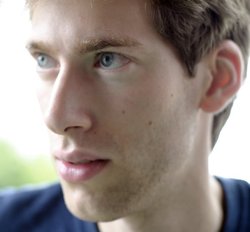
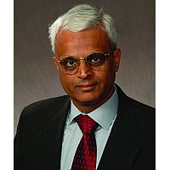
Dr. Jean-Christophe Nave is an Associate Professor in the Department of Mathematics and Statistics at McGill University, specializing in applied mathematics, numerical analysis, and computational methods. His research focuses on numerical methods for partial differential equations, fluid mechanics, interface problems, and computer graphics. He holds a PhD from UCSB (2004) and has held academic positions at MIT and McGill since 2005. Currently, he serves on committees such as the Steering Committee of the Institut des Sciences Mathematiques and the CRM Applied Mathematics Lab. His educational background includes a PhD under Professors Xu-Dong Liu and Sanjoy Banerjee. Key research areas include level set methods, fluid-structure interaction, and invariant numerical methods. Notable works include the Correction Function Method for interface problems and the Characteristic Mapping Method for advection problems. Nave’s publications span topics like Poisson equations with discontinuous coefficients, fluid dynamics simulations, and high-order numerical schemes. He has advised numerous graduate and undergraduate students, contributing to their research in applied mathematics and computational science. His work bridges theoretical rigor and practical applications in engineering and physics. He teaches advanced courses such as Numerical Analysis I/II and Computational Methods in Applied Mathematics. His research group collaborates on projects involving fluid dynamics, elasticity, and geometric algorithms, with a focus on developing robust numerical tools for complex systems.
Aram Harrow is a Professor of Physics at the Massachusetts Institute of Technology (MIT) , affiliated with the MIT Center for Theoretical Physics and MIT Center for Quantum Engineering . He focuses on quantum information science and quantum algorithms , with additional interests in representation theory and optimization . His recent work explores quantum computing applications in chemical physics and statistical mechanics . Undergraduate and graduate degrees in Physics at MIT Faculty positions: MIT (2013-present), University of Washington (2010-12), University of Bristol (2005-10) Research Interests: His work bridges quantum information theory and many-body physics , including: Quantum algorithm design for chemistry and optimization Quantum circuit complexity and t-designs Entanglement dynamics in quantum systems Quantum-classical hybrid computing models Key Publications: Recent articles demonstrate quantum speedups for biomolecular free energy calculations , Hamiltonian simulation , and jet clustering algorithms . His research combines quantum complexity theory with practical implementations on near-term quantum devices. Scientific Awards: 2023 Simons Investigator 2018 APS Bennett Award 2017 IEEE Best Paper Award 2016 Kavli Frontiers Fellow Mentorship: He advises current PhD students Shankar Balasubramanian , Angus Lowe , and Norah Tan , with 12 former advisees including Anand Natarajan and Saeed Mehraban . His 2026 recruitment seeks one new graduate student.
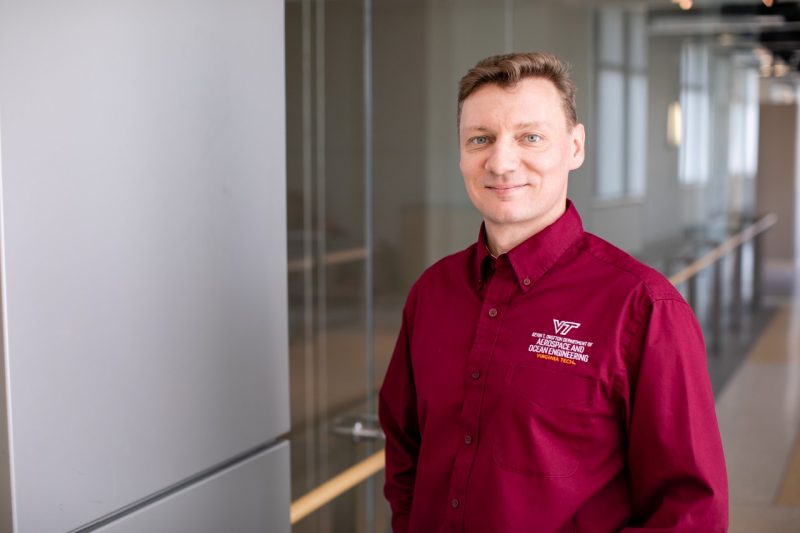
Dr. Mathieu Joerger is an Associate Professor in the Aerospace & Ocean Engineering Department at Virginia Tech, leading the Assured Vehicle Autonomy (AVA) Lab. He holds a Ph.D. (2009), M.S. (2002), and Diplôme d’Ingénieur (2002) from Illinois Institute of Technology and INSA Strasbourg. His research focuses on navigation safety, multi-constellation GNSS, and autonomous system integrity. He serves as Technical Editor for IEEE Transactions on Aerospace and Electronic Systems and co-leads the CARNATIONS initiative for resilient PNT systems. Notable awards include the ION Early Achievement Award (2015) and Bradford W. Parkinson Award (2009). Research interests include GNSS augmentation, LiDAR/IMU integration, and safety quantification for autonomous vehicles. His lab collaborates with industry/government on projects like CAAMS and develops methods to detect GNSS interference using UAS. Key publications address integrity monitoring in SLAM, particle filtering, and Kalman filter applications. Education: Ph.D. Mechanical & Aerospace Engineering, Illinois Tech (2009); M.S. Mechanical Engineering, Illinois Tech (2002); Diplôme d’Ingénieur, INSA Strasbourg (2002). Awards: ION Early Achievement Award, Outstanding NAVIGATION Reviewer, Bradford W. Parkinson Award. Professional Roles: Senior Editor for IEEE Transactions, ARAIM Standards Contributor, CARNATIONS Co-Director. Advises multiple PhD/Master’s students and oversees lab activities involving 20+ researchers. Projects include R-PNT systems, UAS-based RFI localization, and automotive GNSS safety. Active in international conferences like ION GNSS+ and AIAA forums.
Ann B. Lee is a Professor and Co-Director of the PhD Program in Statistics at Carnegie Mellon University , with a joint appointment in the Department of Statistics & Data Science and the Machine Learning Department. Prior to joining CMU, she held positions as a J.W. Gibbs Assistant Professor at Yale University and a visiting research associate at Brown University. PhD in Physics, Brown University MSc/BSc in Engineering Physics, Chalmers University of Technology, Sweden Her research focuses on statistical methodology for complex data in the physical sciences , emphasizing trustworthy inference, uncertainty quantification, and integration of classical statistics with machine learning. Recent work includes likelihood-free inference, calibrated forecasting, and diagnostics for generative models. The STAMPS research group , which she co-founded in 2018, hosts weekly meetings and public webinars. In Fall 2024, STAMPS will transition into a CMU Research Center. Recent publications span likelihood-free inference , climate modeling , and astronomy . Notable collaborations include applications to hurricane intensity guidance , galaxy redshift estimation , and cosmological parameter biases . She mentors PhD students and has advised multiple award-winning researchers, including ASA Best Student Paper Award winners. Her teaching includes advanced courses on probability, regression, and AI for climate sciences.
Soumya Dutta is an Assistant Professor in the Department of Computer Science and Engineering at the Indian Institute of Technology Kanpur (IITK), where he leads the INSIGHT: Intelligent Scientific and Visual Computing of Big Data Research Group. He joined IIT Kanpur in October 2022 after working as a Scientist II at Los Alamos National Laboratory (LANL) from July 2019 to August 2022, and previously as a Postdoctoral Research Associate at LANL from June 2018 to July 2019. His educational background includes a Ph.D. and M.S. in Computer Science and Engineering from The Ohio State University (2011-2018), where he was part of the GRAVITY research group, and a B.Tech. in Electronics and Communication Engineering from West Bengal University of Technology, India (2005-2009). Research Interests: Dr. Dutta's research focuses on the intersection of machine learning, visual computing, big data, and high-performance computing. His primary research areas include Machine Learning for Visual Computing and Image Analysis, Big Data Visualization and Analytics, Data Science and HPC, Machine Learning for Scientific Computing, and Explainability and Interpretability of AI Models. His work addresses various big data characteristics including the 5 Vs: Volume, Velocity, Variety, Veracity, and Value. He develops techniques that make complex machine learning models more interpretable and explainable, enabling their effective adoption in real-life applications across scientific domains, social media, IoT, healthcare, and industry applications. Dr. Dutta's research group has secured multiple funded projects including: DAVi: An Intelligent Data Analytics and Visualization Framework (funded by ISRO), Intelligent Visual Computing of Extreme-scale Data for Accelerating Scientific Discovery (IIT Kanpur Initiation Grant), Enabling Interactive Big Data Analytics and Visualization at Exascale (SERB), Development of AI-Enabled National Portal for Efficient Search of Missing People (C3iHub), and Proactive and Generalized Deepfake Defense Mechanisms (C3iHub). Best Reviewer, Honorary Mention Award for IEEE Transactions on Visualization & Computer Graphics (TVCG), 2021 Best Paper Award at ISAV 2021, co-located with Supercomputing (SC) LAAP Award at Los Alamos National Laboratory, 2021 Best Paper Award at TopoInVis 2019 Best Paper Award at ISAV 2018, co-located with Supercomputing (SC) Best Poster Award in 12th Annual CSE Student Poster Exhibition, The Ohio State University, 2018 Best Poster Award in 11th Annual CSE Student Poster Exhibition, The Ohio State University, 2017 Best Paper Honorable Mention Award at IEEE Visualization Conference (IEEE VIS) 2016 Dr. Dutta actively mentors a large group of students including Ph.D., M.Tech., and B.Tech. students. His current Ph.D. students include Shanu Saklani, Sankhadeep Bhowmick, Ananya Chaturvedi, Arpita Santra, Anubhav Dixit (co-supervised), and Robin Shah. He has supervised numerous M.Tech. students with thesis topics ranging from uncertainty-aware neural networks to deepfake detection. Dr. Dutta currently teaches courses including CS360 - Introduction to Computer Graphics and CS661 - Big Data Visual Analytics. The INSIGHT research group collaborates internationally with researchers from Meta, Oak Ridge National Laboratory, and National Taiwan Normal University. The group's work focuses on building machine learning and data science-based solutions to analyze large-scale multifaceted data in a scalable way, enabling interactive and interpretable analytics of complex data from scientific simulations, social media, IoT, healthcare, and other application domains.
Prof. Vasilis Ntziachristos is a Professor and Chair of Biological Imaging at the Technical University of Munich (TUM), leading the Institute of Biological and Medical Imaging at the Helmholtz Centre Munich. His research focuses on developing novel optical and optoacoustic imaging techniques for early disease detection, diagnostics, and theranostics. He holds a PhD in Bioengineering from the University of Pennsylvania and previously served as an Assistant Professor at Harvard University and Massachusetts General Hospital. Affiliations: TUM School of Medicine and Health, Helmholtz Munich, Institute of Biological and Medical Imaging. Key Research Themes: Non-invasive imaging methods, molecular imaging, optoacoustic technology, and clinical translation. His work bridges theoretical developments with clinical applications, including advancements in glucose monitoring, cancer imaging, and drug delivery systems. Notable awards include the Leibniz Prize (2013) and the World Molecular Imaging Society Gold Medal (2015). Labs/Teams: Imaging to Sensing I2S, Optoacoustic Mesoscopy, Fluorescence Imaging, and AI in Optoacoustics. Grants/Projects: Involvement in Horizon Europe initiatives and collaborations with TranslaTUM and Helmholtz Munich. Prof. Ntziachristos actively contributes to education via courses like 'Biological Imaging' and 'Introduction to Bioengineering', fostering the next generation of imaging scientists.
Prof. Dr. André Rubbia is a Full Professor of Experimental Physics at ETH Zurich's Department of Physics, holding this position since December 2003 after serving as Associate Professor from 1998. His research spans neutrino physics, astro-particle physics, and dark matter detection through major international collaborations including CERN, Gran Sasso National Laboratory, and Fermilab. He currently serves as Co-Spokesperson for the billion-dollar DUNE neutrino project at Fermilab, managing over 900 scientists. His educational background includes: Diploma in Physics from the University of Geneva (1990), with thesis work on the L3 experiment at CERN's LEP accelerator Ph.D. in Physics from MIT (1993) under Nobel Laureate S.C.C. Ting, focusing on high-energy electron-positron collisions Rubbia's research centers on fundamental particle interactions, particularly neutrino oscillations and physics beyond the Standard Model. He pioneered liquid Argon Time Projection Chamber (LAr TPC) technology and dual-phase detection systems, enabling breakthroughs in neutrino mass measurements and dark matter searches. His work spans underground laboratories (Gran Sasso, Canfranc), the LHC's CMS detector, and neutrino beam experiments like T2K. Recent explorations include antimatter gravity tests, electron-positron bound states, and dark hidden sector searches. His 2025 publications reveal intense focus on neutrino oscillation parameter precision (T2K, Hyper-Kamiokande), FASER's LHC neutrino program, and DarkSide-20k dark matter detector development. Key themes include cross-section measurements, advanced detector technologies (SiPMs, emulsion tracking), and statistical methods for oscillation analysis, reflecting integration of theoretical modeling with cutting-edge instrumentation. Scientific recognition includes: Breakthrough Prize for Fundamental Physics (2016) awarded to the international team for discovering matter-anti-matter asymmetry in neutrino oscillations APS Viewpoint selection for editing the paper announcing first electron neutrino appearance at accelerators Rubbia has supervised over fifty PhD and Master's theses while securing substantial research funding as Principal Investigator for 20+ Swiss National Science Foundation projects and Coordinator of two EU FP7 Design Studies. His DUNE leadership involves complex international grant management across 30+ countries. He leads ETH Zurich's experimental particle physics group across multiple facilities: the ICARUS neutrino detector at Gran Sasso, CMS at CERN, DUNE at Fermilab, and DarkSide-20k for direct dark matter detection. His team developed the first underground ton-scale liquid argon detector and maintains collaborations with Japanese (Super-Kamiokande) and American (Fermilab) institutions.
Prof. dr. Steven Hoekstra is an Associate Professor of Atomic and Molecular Physics at the University of Groningen's Faculty of Science and Engineering, within the Van Swinderen Institute. His research focuses on precision measurements using cold molecules to explore fundamental physics, including Stark deceleration, laser cooling, and searches for physics beyond the Standard Model. He leads the NL-eEDM program at Nikhef, investigating the electron's electric dipole moment. Hoekstra is also involved in educational innovation, having received the Teacher of the Year award (2020) and a Senior Teacher Qualification (2023). He has supervised over 11 PhD theses and currently mentors 5 students. His work combines experimental techniques with theoretical insights, addressing questions like symmetry violations and quantum dynamics. Key projects include manipulating BaF molecules with electrostatic fields and exploring levitated nanoparticles as sensors. Hoekstra has secured major grants, including NWO VICI (2022) and VIDI (2013), and collaborates internationally on projects like the European Strategy for particle physics. Recent articles highlight advancements in molecular beam control, spin-precession methods for EDM searches, and opportunities in radioactive molecules. He actively participates in the Physics Olympiad Netherlands as chair, contributing to science outreach and education.
Prof. Dr. Barbara Kraus is the Chair of Quantum Algorithms and Applications at the Technical University of Munich (TUM), affiliated with the TUM School of Natural Sciences. She previously held academic positions at the University of Innsbruck, where she founded her research group in 2010. Education : Physics and Mathematics at the University of Innsbruck; Post-doctoral work at MPI for Quantum Optics and University of Geneva. Her research focuses on foundational problems in quantum information theory, particularly entanglement in multipartite systems, quantum simulation, and verification of quantum processors. She develops theoretical tools for quantum many-body systems and explores applications in quantum computing, emphasizing error characterization and experimental validation. Recent publications highlight advancements in Hamiltonian learning, symmetry-resolved entanglement detection, and multipartite state transformations. Her work bridges theoretical quantum physics with practical implementations, including Rydberg platforms and quantum metrology. Key Awards : START Prize (2010), Ignaz L. Lieben Award (2013), Boltzmann Prize (2011), Südtiroler Sparkasse Research Prize (2019). She supervises doctoral students and postdocs in quantum information theory, with a focus on stabilizer states, quantum networks, and entanglement measures. Her courses at TUM include Quantum Information , Quantum Algorithms , and workshops on entanglement manipulation.
Alexis Berne is an Associate Professor at the Environmental Remote Sensing Laboratory (LTE) within the School of Architecture, Civil and Environmental Engineering (ENAC) at École Polytechnique Fédérale de Lausanne (EPFL). He co-directs the SSIE-GE program and serves as a member of the CDS (Commission for Doctoral Studies) . His research spans radar meteorology, precipitation microphysics, polar precipitation, and geostatistics, with a focus on mountainous and polar regions. Current Positions Associate Professor, LTE, EPFL (2013–present) Co-Director, SSIE-GE, EPFL PhD Program Committee Member, EDCE-GE, EPFL Research Interests include the remote sensing of precipitation, particularly snowfall and ice production mechanisms, using radar and geostatistical methods. His work addresses atmospheric processes in extreme environments like Antarctica and the Swiss Alps, leveraging machine learning and numerical modeling for climate analysis. Teaching encompasses courses on remote sensing, atmospheric processes, and climate change, emphasizing interdisciplinary approaches and spatiotemporal variability. He advises current PhD students such as Heather Anne Corden and Gionata Ghiggi, alongside mentoring past students like Jacopo Grazioli and Timothy Hugh Raupach.
N.K. Anand is a Distinguished Professor of Mechanical Engineering at Texas A&M University, holding the James J. Cain III Regents Professorship. He leads research in advanced computational methods and thermal-hydraulic systems, with affiliations to Multidisciplinary Engineering and Nuclear Engineering programs. His work focuses on physics-informed machine learning, finite volume methods, and aerosol transport in nuclear reactor contexts. Education: PhD (Mechanical Engineering, Purdue University, 1983), M.S. (Kansas State University, 1979), and B.E. (Bangalore University, 1978). Awards include the ASME James Harry Potter Gold Medal (2020) and multiple teaching/administrative excellence awards from Texas A&M. Research emphasizes fluid dynamics modeling (e.g., PINNs for periodic flows, turbulent deposition studies), heat pipe systems, and nuclear reactor thermal-hydraulics. His Versatile Test Reactor (VTR) contributions include cartridge loop designs and aerosol transport experiments. Active in high-temperature reactor safety, with facilities studying pebble beds, helical coil exchangers, and HTGR upper plenum dynamics. Publications span physics-informed ML applications, finite volume techniques, and nuclear thermal systems. Grants supported development of advanced CFD tools and reactor safety infrastructure. His lab collaborates on international nuclear energy projects and emerging AI-driven simulation methodologies.
Prof. Dr. Markus Zimmermann leads the Chair of Product Development and Lightweight Design at the Technical University of Munich (TUM). With a background in mechanical engineering from TU Berlin and the University of Michigan, and a doctorate from MIT on solid-state singularities, he bridges academic rigor with industrial application. His career spans 12 years at BMW focusing on vehicle development before transitioning to academia. Specializes in solution space engineering for robust design Expert in additive manufacturing and systems engineering Develops methodologies for managing design complexity and uncertainty His research focuses on multidisciplinary design optimization and lightweight structures , particularly in robotics and automotive systems . His team applies digital twin frameworks and attribute dependency graphs to enhance design processes. Recent publications emphasize topology optimization in robotic systems and thermal management for medical X-ray sources. Key trends in his 2024-2025 publications include: Topological optimization for additive manufacturing and robotics Application of solution spaces to manage design uncertainty Development of compact X-ray systems for medical therapy Integration of digital twin technologies in industrial contexts
Assoc Prof Ng Teng Yong is an Associate Professor at the School of Mechanical & Aerospace Engineering (NTU), specializing in numerical modeling and simulation. With a background as Research Manager at A*STAR Institute of High Performance Computing, his work spans materials science, nanotechnology, and aerospace engineering. Current focus on graphene-based desalination membranes Expertise in molecular dynamics simulations Investigates nanoscale fluid mechanics and structural dynamics Recent publications highlight advancements in energy-efficient electrodialysis, smart robotics, and nonlinear vibration analysis. His interdisciplinary approach integrates computational methods with experimental validation in additive manufacturing and soft material mechanics.
Giorgio Grisetti is a Full Professor at Sapienza University of Rome within the Department of Systems and Computer Science, maintaining active research roles in the RoCoCo lab at Sapienza since November 2010 and the Autonomous Intelligent Systems Lab at Freiburg University where he previously served as a Post Doc under Wolfram Burgard starting in 2006. His educational background includes a M.Sc. in Computer Engineering from the University of Rome (2001) and a Ph.D. from Sapienza University of Rome's Intelligent Systems Lab (2006), supervised by Daniele Nardi. His doctoral thesis focused on SLAM using Rao-Blackwellized particle filters. Dr. Grisetti's research centers on mobile robotics with emphasis on robust solutions for autonomous navigation systems. His work spans theoretical and practical advancements in Simultaneous Localization and Mapping (SLAM), robot localization, path planning, and sensor fusion, particularly leveraging LiDAR and multi-sensor configurations. Recent publications demonstrate strong focus on optimization techniques, sensor calibration, and real-time performance for autonomous systems operating in complex environments. His publication trends reveal deep specialization in LiDAR-based SLAM (7 of 15 recent articles), bundle adjustment methods (4 articles), and sensor calibration/perception (3 articles), with consistent contributions to top robotics venues like IEEE Robotics and Automation Letters and ICRA. Key recognitions include: Nomination for the best IROS paper award (2010) Open Source achievement award from Willow Garage (2010) Best paper award at the International Conference and Exhibition on Unmanned Areal Vehicles (2010) Best Paper award at ICRA 2009 (2009) His research is conducted through the RoCoCo lab at Sapienza University of Rome and the Autonomous Intelligent Systems Lab at Freiburg University, focusing on developing foundational algorithms for mobile robot autonomy. Current projects emphasize robust perception systems, optimization frameworks for sensor fusion, and practical implementations for real-world navigation challenges.
Justin D. Holmes is Professor of Nanochemistry in the School of Chemistry at University College Cork (UCC) and serves as a Principal Investigator at the Environmental Research Institute. He holds the position of Deputy Director at the Advanced Materials and Bioengineering Research (AMBER) centre, a Science Foundation Ireland-funded initiative that bridges academic research with industry applications. With more than 400 peer-reviewed publications in materials science, Professor Holmes has established himself as a leading figure in nanochemistry research and development. Professor Holmes' research program centers on developing chemical methods to synthesize and assemble nanostructured materials for environmental and energy applications. His work spans three primary domains: atmospheric sensors for detecting radicals and gases (RADICAL project), energy conversion through nanofluidic platforms for waste heat conversion (TRANSLATE project) and solar-to-chemical energy conversion (FreeHydroCells project), and sustainability through chemical recycling of waste plastics (AMBER project). His interdisciplinary approach integrates chemistry, materials science, and environmental engineering to address critical sustainability challenges through nanoscale innovation. Analysis of Professor Holmes' recent publications reveals a strong emphasis on sustainable materials development and energy applications. His research demonstrates consistent focus on germanium-based nanomaterials for electronics and energy storage, innovative polymer recycling techniques, and sustainable nanomaterial synthesis. The progression of his work shows increasing integration of circular economy principles, with significant contributions to plastic waste management and green chemistry approaches. Professor Holmes has received significant recognition for his contributions to science: Member of the Royal Irish Academy Fellow of the Royal Society of Chemistry His research is supported through substantial funding mechanisms, including his leadership role in the AMBER centre. Professor Holmes has successfully translated research into commercial applications through co-founding Glantreo Ltd., a UCC spin-out company. His work demonstrates a strong commitment to both fundamental scientific advancement and practical applications that address environmental challenges. Professor Holmes leads an active research group within the School of Chemistry at UCC, collaborating extensively through the Environmental Research Institute and the AMBER centre. His team maintains strong interdisciplinary connections across chemistry, materials science, and engineering disciplines, with sophisticated capabilities in nanomaterials synthesis, characterization, and application development. The research environment fosters innovation in environmental sensing, energy conversion technologies, and sustainable materials development.