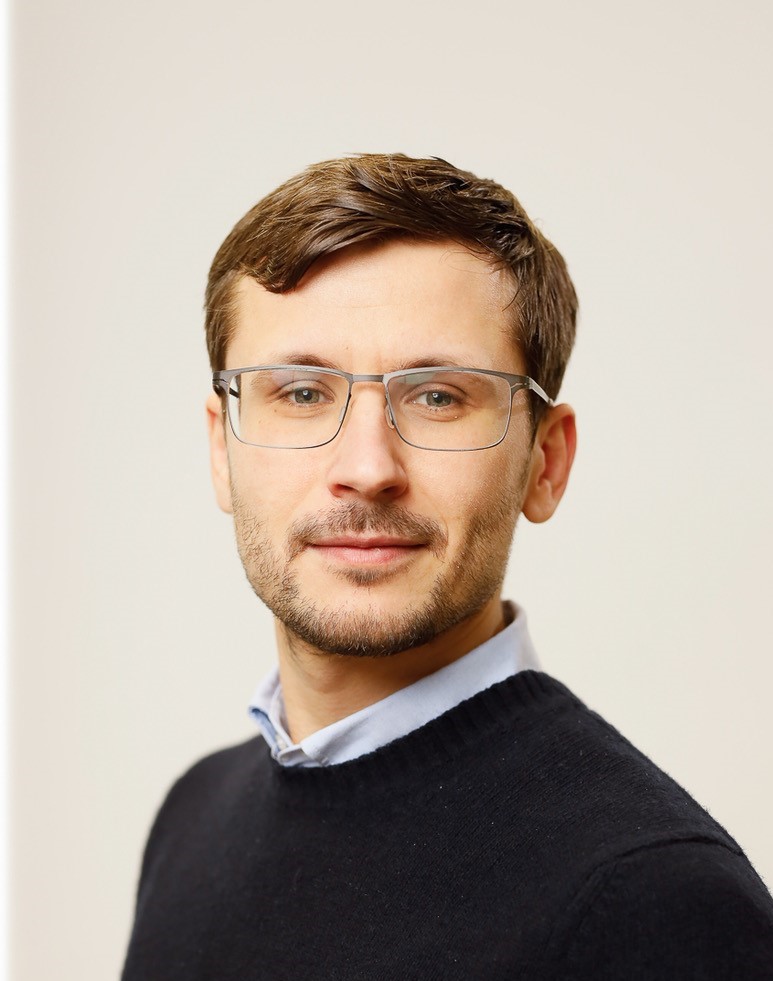
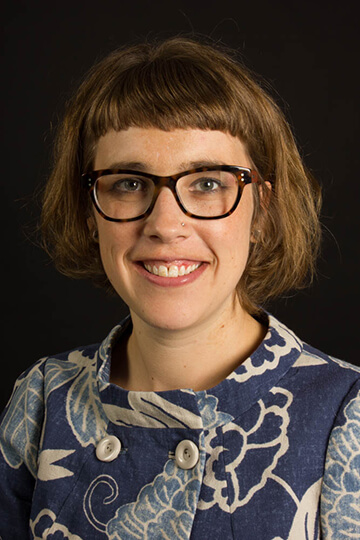
Isidro Maya Jariego is a Professor at the Department of Social Psychology , Faculty of Psychology , University of Seville. He leads the Laboratorio de Redes Personales y Comunidades and has coordinated numerous research projects focused on community psychology, social networks, migration, and cultural diversity. His work spans from 2000 to 2025, including projects like "Múltiples sentidos de comunidad" and international collaborations in Peru, Colombia, and Spain. Research Interests : Social network analysis for community cohesion Migration and transnational ties Volunteering and civic participation Digital transformation in education Ecosystem services and marine governance Article Trends : His recent publications emphasize network-based interventions in education (e.g., SELFIE project), personal network stratification in community integration, and ecological approaches to social issues like child labor. He integrates graph theory and mixed-methods research to address policy implementation and organizational dynamics. Projects and Leadership : He has led grants like "PADDLE" (EU-Africa-Brazil collaboration) and provided technical assistance for Andalusian strategic plans on volunteering. His editorial roles include co-editing the REDES journal and contributing to methodological frameworks in network research.
Stephanie Diem serves as Professor in the Department of Nuclear Engineering & Engineering Physics within the College of Engineering at the University of Wisconsin-Madison. She leads the Pegasus-III Experiment as Principal Investigator, pioneering innovations in solenoid-free fusion startup techniques to advance commercial fusion energy development. Her work bridges experimental plasma physics, international collaboration, and sociotechnical engagement in fusion energy systems. Dr. Diem's educational background includes: BS in Engineering Physics from University of Wisconsin-Madison MA in Plasma Physics from Princeton University PhD in Plasma Physics from Princeton University (National Spherical Tokamak Experiment research) Her research centers on experimental plasma physics for magnetic confinement fusion, with specialized expertise in radio frequency wave applications for plasma heating and current drive. Current investigations focus on electron Bernstein wave (EBW) physics, non-solenoidal startup via local helicity injection, and edge instability control in spherical tokamaks. This work integrates advanced diagnostics, numerical modeling validation, and international collaborations across facilities including Proto-MPEX (ORNL), MST (UW-Madison), NSTX, and MAST (UK). Analysis of her recent publications reveals strong emphasis on spherical tokamak startup physics, EBW heating systems, and sociotechnical dimensions of fusion development. Key trends include machine learning integration for plasma control, impurity transport during startup, and public engagement frameworks for equitable energy transitions. Her work spans fundamental plasma physics to policy-oriented fusion technology assessment. Notable scientific recognition includes: Kavli Fellow (National Academies, 2025) U.S. Science Envoy for Fusion Energy (2024/2025) David J. Rose Excellence in Fusion Engineering Award (Fusion Power Associates, 2023) New Voices of the National Academies cohort (2021, extended to 2024) Thomas H. Stix Graduate Prize (Princeton University) Dr. Diem actively mentors graduate students through NE 790/890/990 research courses while securing major grants for fusion research infrastructure. Her leadership extends to the Global Fusion Forum initiative and development of sociotechnical readiness frameworks for fusion systems. Current efforts include international collaborations under the PPPL-IAEA practical arrangement and U.S. Department of State science diplomacy initiatives. The Pegasus-III laboratory team develops cutting-edge diagnostics including multi-point Thomson scattering, impurity monitoring systems, and EBW emission measurements. The facility serves as a testbed for scalable startup techniques with partnerships spanning Oak Ridge National Laboratory, General Atomics, and international fusion centers.
David Burrows is an artist, writer, and Professor at the Slade School of Fine Art, University College London, where he serves as Head of Undergraduate Fine Art Media. Previously, he was Reader in Fine Art at Birmingham City University from 1997 until 2010. His work spans artistic practice, theoretical writing, and collaborative projects that explore the intersections of art, philosophy, and cultural theory. Burrows studied at Goldsmiths College, graduating in 1994. His educational background in fine art has informed his dual career as both practitioner and theorist, with a focus on how artistic practice engages with philosophical concepts and cultural formations. His research centers on notions and concepts of the new in sacred, mass, and avant-garde cultures, with particular interest in how fiction functions as a transformative process. Burrows investigates impermanence and immanence, violence, destruction, crisis, and disorientation as structural elements within various cultural formations. He draws extensively on continental philosophy, particularly examining subjectivity, ontology, and performance theory. A significant portion of his work explores diagrammatic practices in art and how these facilitate the production of impossible objects and events, connecting artistic practice with mathematical and topological concepts. Analysis of Burrows' publication history reveals consistent engagement with performance fiction, diagrammatic theory, and the relationship between art and philosophy. His work demonstrates an evolving trajectory from examining structural elements of cultural formations to developing theoretical frameworks for understanding art as diagrammatic practice. The publications show increasing sophistication in connecting artistic practice with philosophical concepts, particularly through his ongoing collaboration Plastique Fantastique, which serves as both artistic vehicle and theoretical laboratory. Becks Futures selection (2001) Paul Hamlyn Visual Artists Award (2003) Burrows has extensive teaching experience, having instructed undergraduates, graduates, and research students while supervising two doctoral students to completion. His academic work is deeply integrated with his artistic practice, creating a reciprocal relationship between theory and creation. While specific grant information isn't detailed in the provided text, his numerous exhibitions and publications suggest successful funding for artistic and research projects. His collaborative work with Simon O'Sullivan as Plastique Fantastique represents a significant sustained research project spanning over fifteen years. Burrows' primary creative laboratory is the performance-fiction collaboration Plastique Fantastique, which he has developed with Simon O'Sullivan since 2005. This project functions as a multi-platform research environment exploring the relationship between aesthetics, politics, and the sacred through various media including events, films, comics, writing, installations, and artifacts. Plastique Fantastique operates as a conceptual framework that generates what Burrows describes as 'communiqués from the extreme past and future' that are baroque, subversively urgent, and frequently participatory. This ongoing project represents his most sustained investigation into the transformative potential of fiction and performance as processes through which worlds and relations are formed and maintained.
Ben Gidley is a Reader in Sociology and Psychosocial Studies at the School of Social Sciences, Birkbeck, University of London, and a Research Associate at the Birkbeck Institute for the Study of Antisemitism. He is also affiliated with COMPAS (Centre on Migration, Policy and Society) at the University of Oxford as an Associate Professor and Senior Researcher. His academic work focuses on urban sociology, migration studies, and the lived experience of diversity in contemporary cities. Dr. Gidley holds a PhD in Sociology from the University of London (focusing on citizenship and belonging among East London Jewish radicals in the early twentieth century), an MA in Contemporary Urban Studies from Goldsmiths, University of London, and undergraduate studies in Anthropology. Before joining Birkbeck, he worked at interdisciplinary research centers on urban studies and migration at Goldsmiths University of London and the University of Oxford. His research interests span contemporary forms of racialization (including antisemitism and Islamophobia), intercultural encounters, diaspora studies, urban sociology, port cities, transnationalism, and conspiracy theories. His methodological approach incorporates participatory action research, visual methods, archival research, and ethnography, with a long-term ethnographic engagement with Southeast London and historical work in East London. He has led significant research projects including 'Muslim-Jewish encounter, diversity & distance in urban Europe: religion, culture and social model (ENCOUNTERS)' and 'Liminal Waterway Countercultures (LIMINALWATER)'. Dr. Gidley's publication record reveals consistent thematic development from historical studies of Jewish communities to contemporary analyses of multicultural urban life, with increasing comparative European focus. His work demonstrates methodological innovation in studying diversity, particularly through ethnographic approaches to urban spaces and attention to the spatial dimensions of cultural encounters. Recent publications emphasize Jewish-Muslim relations in urban Europe, antisemitism in political contexts, and postcolonial urban studies. Key achievements include: Leading the ENCOUNTERS project, one of 13 transnational projects funded in the 2021-23 Open Research Area for the Social Sciences Co-editing 'Antisemitism and Islamophobia in Europe: A Shared Story' (2017), a breakthrough volume in comparative racism studies Co-authoring 'Turbulent Times,' the first sociological monograph on British Jews in several decades Serving as Director of Research and Sociology REF lead for Psychosocial Studies at Birkbeck Dr. Gidley actively supervises doctoral students, with nine current supervisees working on urban ethnography, racialized subjectivities, diaspora studies, and anti-racism. He teaches modules including 'Theories and Sites of the Psychosocial,' 'Hate: On the Power of the Negative,' 'Racism and Antisemitism,' and 'Crossing Borders.' He serves on the board of the European Sociological Association Research Network 31 on Racism and Antisemitism and the British and Irish Association of Jewish Studies.
Victor Bolbot serves as a Postdoctoral Researcher in the Department of Energy and Mechanical Engineering at Aalto University, Finland, affiliated with the Marine and Arctic Technology research group. His work focuses on advancing safety, reliability, and cybersecurity frameworks for autonomous maritime systems through rigorous systems engineering approaches and data-driven methodologies. He maintains active collaborations with international researchers and institutions, evidenced by extensive co-authorship across high-impact publications. Dr. Bolbot's research centers on autonomous ships, marine systems safety, ship propulsion cybersecurity, and risk modeling. He employs systems-theoretic process analysis (STPA), Bayesian networks, and association rule mining to address critical challenges including maritime accident causation, cybersecurity vulnerabilities in dual-fuel engines, safety acceptance criteria for autonomous vessels, and socio-technical implications of maritime automation. His methodological innovations bridge theoretical safety engineering with practical applications in Arctic navigation, inland waterways, and regulatory compliance, emphasizing the integration of cyber-physical risk assessment. Analysis of his 2023-2025 publications reveals three dominant research trajectories: (1) Development of cyber-physical risk frameworks like STPA-Cyber for maritime cybersecurity; (2) Real-time Bayesian modeling for dynamic operations including remote pilotage and ice navigation; and (3) Socio-technical investigations into regulatory frameworks, educational needs, and workforce skill transformations for autonomous shipping. His work consistently addresses the interplay between technological innovation and safety assurance, with growing emphasis on cybersecurity as a critical maritime safety component. As an active member of Aalto University's Marine and Arctic Technology research group, Dr. Bolbot contributes to interdisciplinary projects tackling complex challenges in marine safety engineering, Arctic operations, and sustainable maritime technologies. The group's collaborative environment supports the development of safer, more efficient, and environmentally conscious maritime systems through experimental validation, computational modeling, and industry partnerships.
Pedro Rebelo is a Professor at the Sonic Arts Research Centre (SARC) at Queen's University Belfast, where he leads innovative research at the intersection of sound art, technology, and community engagement. His work spans participatory sound projects, locative media installations, and socially engaged artistic practices that explore the relationship between sound, place, and identity. Rebelo's research interests focus on soundwalking, participatory sound projects, and socially engaged arts. He develops innovative methodologies for exploring everyday sound practices through projects like Som da Maré in Rio de Janeiro's favelas and Belfast Soundwalks, which use GPS-enabled mobile technologies to create site-specific listening experiences. His work bridges ethnographic research with artistic practice, examining how sound mediates our experience of place and community. His creative output demonstrates consistent exploration of distributed interaction in public spaces, from Game Play for Noisy Crowds to immersive installations like the Barnardo's Fostering and Adoption project. These works reveal his commitment to making sonic arts accessible while investigating fundamental questions about listening, participation, and the social dimensions of sound. Rebelo has secured significant funding including from the Arts and Humanities Research Council's Cultural Engagement Fund for the Belfast Soundwalks project, developed in collaboration with Belfast City Council and the Institute for Collaborative Research in the Humanities. His research connects with community organizations to create meaningful public engagement through sound. As director of SARC, Rebelo oversees a vibrant research environment focused on sonic arts, where he develops both theoretical frameworks and practical applications for sound in public spaces, fostering connections between academic research, artistic practice, and community needs.
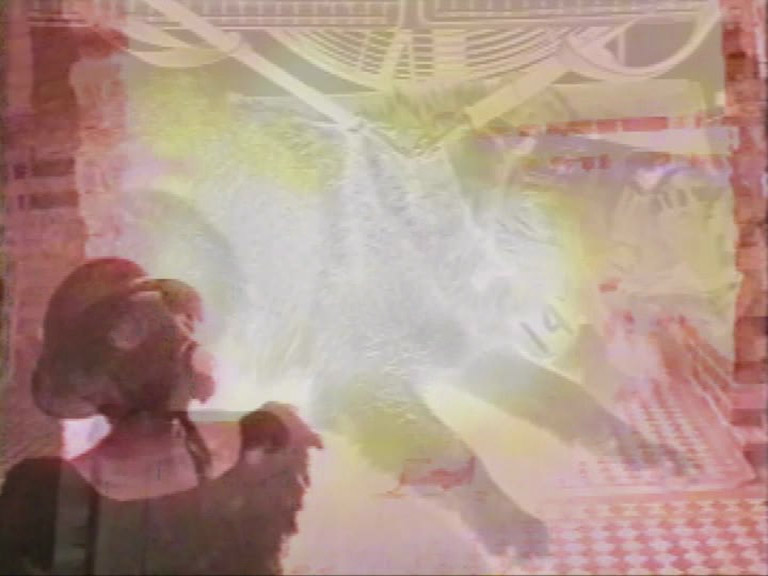
Joshua Oppenheimer is a celebrated documentary filmmaker and academic currently serving as Principal Investigator on the Arts and Humanities Research Council's Documentary of the Imagination research project and as artistic director of the Centre for Documentary and Experimental Film at the University of Westminster. His groundbreaking work has redefined documentary cinema, particularly through his exploration of the 1965-66 Indonesian genocide and its aftermath. Oppenheimer's research focuses on the documentary of the imagination, experimental methods in nonfiction cinema, self-staging in nonfiction, new narrative forms, and the performance and remembrance of mass violence. His work uniquely bridges artistic expression with political engagement, examining how storytelling functions as both instrument of terror and pathway to truth and reconciliation. He has developed innovative approaches where subjects reenact traumatic historical events, creating what he terms 'the documentary of the imagination' that challenges conventional documentary forms. His films have garnered international acclaim and numerous awards: MacArthur Fellowship (2014) Two-time Academy Award nominee (The Act of Killing, 2014; The Look of Silence, 2016) 72 awards for The Act of Killing including European Film Award, BAFTA, Asia Pacific Screen Award, Berlinale Audience Award, and Guardian Film Award for Best Film 72 awards for The Look of Silence including Independent Spirit Award and Gotham Award City of Cologne's Phoenix Prize (2016) Named decade-defining filmmaker by Cinema Eye Honors (2016) Oppenheimer's work extends beyond filmmaking into academic research and education. His Documentary of the Imagination project explores new methodologies in nonfiction cinema. He has served on the jury of the 2016 Venice Film Festival, was Guest Director of the 2017 Telluride Film Festival, and has been instrumental in creating spaces for dialogue about historical trauma and impunity. His films have sparked significant social impact, helping transform Indonesia's understanding of its history and prompting the US government to declassify thousands of files about American complicity in the 1965-66 massacres. Through the Vision Machine Film Project (2001-2007), which he co-founded, Oppenheimer has worked collaboratively with communities to develop participatory filmmaking approaches. His work with Indonesian plantation workers on The Globalisation Tapes exemplifies his commitment to giving voice to marginalized communities while examining power structures and historical violence.
Corey Dzenko, Ph.D., is an Associate Professor in the Department of Art and Design at Monmouth University, where she also serves as Departmental Advising Coordinator. Her academic work bridges studio practice and art historical analysis, with a focus on contemporary art at the intersections of photography, performance, and expanded/new media. Dr. Dzenko's educational background includes a Ph.D. in Art History (History of Photography) from the University of New Mexico, an M.A. in Art History from the University of Alabama, and a BFA in Two-Dimensional Art (Photography) from Central Michigan University. She has served as a Visiting Fellow at the University of Nottingham's Department of Art History. Her research interests center on contemporary art history and theory, the history and theories of photography and expanded/new media, art as an agent of social change, and ideologies of identity. A significant portion of her work examines how identities are constructed as 'normative' within U.S. culture, challenging biases in art-related fields and broader cultural contexts. She has recently expanded her research to include contemporary art in Brazil. Dr. Dzenko's scholarly output demonstrates a consistent focus on intersectional approaches to art and identity, with particular attention to gender, citizenship, and spatial politics. Her publications reveal strong thematic connections between artistic practice and social engagement, particularly regarding how visual culture shapes and is shaped by political realities. Her academic service includes numerous presentations at major conferences including the Latin American Studies Association, College Art Association, and Association of Art Historians. She has taught a wide range of courses including Art Appreciation, History of Photography, History of Western Art, and History of New and Expanded Media in Art.
Juli Carson is a Professor of Art and Director of University Art Galleries at the University of California, Irvine, within the Claire Trevor School of the Arts. She previously held the Philippe Jabre Professorship at the American University of Beirut (2018-2019), where she curated exhibitions blending psychoanalysis and contemporary art. Her research focuses on intersections of psychoanalysis, hermeneutics, and conceptual art, with major publications including Exile of the Imaginary (2007), The Hermeneutic Impulse (2019), and Mary Kelly’s Concentric Pedagogy (2024). Carson directs UCI’s Critical and Curatorial Area, overseeing exhibitions at the University Art Galleries and Catalyst Gallery. She curates projects like caesura—a moment in time, again rubbed smooth (2018-2019) and maintains pharmakon.art , a platform for artist-scholar dialogues. Her work interrogates institutional frameworks, cultural memory, and feminist art practices. Recent exhibitions include collaborations with artists like Adrià Julià, Jane and Louise Wilson, and Cog*nate Collective. Her writings critically engage postcolonial theory, neoliberal cultural economies, and curatorial ethics. She earned a PhD in Art History from MIT and has been a key figure in redefining contemporary art education and curatorial praxis. Grants and institutional roles include leadership in UCI’s Institute and Museum of California Art. Her scholarship bridges academic critique with activist art, addressing urgent socio-political themes through interdisciplinary frameworks.
Prof. Dr. Stephanie Rosenkranz is a Professor of Microeconomics and Dean of the Utrecht University Honors College. She holds a Ph.D. from Humboldt University of Berlin (1996) and a Habilitation from the University of Bonn (2003). Her primary affiliation is with the Utrecht School of Economics (USE) within the Faculty of Law, Economics and Governance. Rosenkranz leads research in microeconomic theory with a focus on behavioral economics, network analysis, and experimental methods. She has directed major research programs such as the UU-Hipo 'Dyconi' project (2005-2013) exploring cooperation networks and institutions. Her research interests span social preferences, institutional design, and applied behavioral insights in policy contexts like energy efficiency and social assistance. Notable recent work includes studies on voting behavior, lying in multi-dimensional contexts, and the impact of communication strategies on firm energy conservation. Rosenkranz has served in academic leadership roles including Director of the Undergraduate School at USE (2007-2011) and currently chairs the GXP Foundation. Her work bridges theoretical microeconomics with practical policy applications in sustainability and public governance. Rosenkranz has published over 70 peer-reviewed articles and book chapters, with contributions to journals like Journal of Public Economics, Political Science Research and Methods, and Experimental Economics. Her research often employs experimental methods to analyze strategic behavior in social dilemmas, network formation, and institutional frameworks. Recent grants include investigations into welfare policy design and the behavioral economics of money laundering regulations. Her academic networks include memberships in the Econometric Society, European Economic Association, and American Economic Association. Rosenkranz leads the 'Institutions for Open Societies' research theme at Utrecht University, emphasizing transdisciplinary approaches to societal challenges such as sustainable diets and participatory governance reforms.
Dr. Pierre Chopin is an Assistant Professor at the Institute for Environmental Studies (IVM) within the Faculty of Science at Vrije Universiteit Amsterdam. His research focuses on redesigning agricultural and landscape systems to enhance sustainability, reduce environmental impacts, and improve livelihoods across diverse regions including the Caribbean, East Africa, and Vietnam. He holds a PhD in Agricultural Sciences from INRAE (Guadeloupe, France). Education: 2015 PhD in Agricultural Sciences, INRAE Institute for Agriculture, Food and Environment (Guadeloupe, France) Research Interests: Climate-smart agriculture and farming system sustainability Agroforestry systems and livelihood impacts Small island state spatial planning Carbon sequestration in tropical and dryland ecosystems Policy analysis for biodiversity conservation and climate adaptation Recent Work Trends: His articles emphasize interdisciplinary approaches combining participatory modeling, spatial analysis, and empirical field studies to address global sustainability challenges. Key themes include agroecological transitions, land-use policy design, and multi-scale sustainability assessments. Awards: Lecturer of the Year, Swedish University of Agricultural Sciences (2022) Grants/Projects: KNOWING Project (2022-2026): Investigates climate mitigation pathways via integrated assessment of adaptation strategies Labs/Teams: Active contributor to IVM's Environmental Geography and Sustainability Science research groups, collaborating internationally on tropical and small-island development studies.
Elahe Abdi is a Senior Lecturer in the Department of Mechanical & Aerospace Engineering at Monash University, affiliated with the Victorian Heart Institute (VHI). Her research focuses on robotics and automation in construction, medical robotics, human-robot interaction, and control systems. She holds academic positions within the Faculty of Engineering and collaborates with institutions like the School of Translational Medicine and Alfred Health. Dr. Abdi is actively involved in multidisciplinary projects, including surgical robotics, autonomous construction systems, and human-centric robotics design. She is currently accepting PhD students in these areas. Her work integrates advanced technologies such as physics-informed neural networks, experimental methodologies, and real-time control systems. Key collaborations include partnerships with the Ecole Polytechnique Fédérale de Lausanne (EPFL) and Imperial College London. Dr. Abdi’s research emphasizes practical applications in healthcare, construction, and environmental engineering, with a focus on improving operational efficiency and safety through innovative robotic solutions. Recent projects highlight advancements in surgical workflow recognition (PCNet), crane dynamics modeling, and foot-controlled robotic interfaces for laparoscopic surgery. Her contributions span both theoretical developments and empirical studies, bridging the gap between academic research and real-world implementation.
Casey Mullen is a Postdoctoral Research Associate at Northeastern University's College of Social Sciences and Humanities, affiliated with the Social Science Environmental Health Research Institute (SSEHRI) and the Silent Spring Institute. She holds a PhD in Sociology from the University of Utah. Specializes in environmental justice, air pollution, and public health Conducts community-engaged research using air quality sensors Focuses on distributive inequity and policy implications Recent research explores PM2.5 impacts on education, indoor air pollution disparities, and citizen science frameworks. Her work highlights racial and socioeconomic inequities in environmental exposure across Salt Lake County, Los Angeles County, and post-Hurricane Harvey contexts. Scientific Awards 2022 Advancing Equity and Connecting Communities (University of Utah) Collaborates with Professor Linda Blum and Professor Emeritus Michael Brown. Coordinates community engagement through the iSUPER Impact Engine in Greater Boston.
Kevin Murphy is a Professor of International Seed and Cropping Systems and Director of the WSU Breadlab at Washington State University (WSU), affiliated with the Department of Crop and Soil Sciences within the College of Agricultural, Human, and Natural Resource Sciences (CAHNRS). He leads specialty crop breeding and agronomy programs focused on increasing genetic and bio-diversity in cropping systems, particularly in Washington State and internationally in Rwanda, Malawi, and Ecuador. His work emphasizes crops like quinoa, barley, spelt, buckwheat, and millets, prioritizing nutritional value, climate resilience, and sustainable farming practices. Education: Ph.D. in Plant Breeding and Genetics (WSU), M.A. in Anthropology (University of Idaho), M.S. in Crop Science (WSU), and B.A. in Biology (Colorado College). Teaching includes courses on agroecology and sustainable food systems. He serves on boards for the Crop Science Society of America, Global Rice Research Foundation, and Open Source Seed Initiative. Recent awards include Fulbright Global Scholarships and WSU’s Faculty of the Year Award. Research interests span crop-breeding innovations, agronomic practices (e.g., intercropping, no-till farming), and nutritional profiling of crops. His work bridges agriculture, nutrition, and public health, exemplified by WSU’s Soil to Society project, which aims to enhance food nutrient density from soil to consumer. Key publications focus on quinoa and barley genetics, crop adaptation, and biofortification strategies. Awards and grants include a $10M USDA-NIFA grant for nutrient-enriched crops and a FFAR grant for quinoa research. Labs include the WSU Breadlab and Sustainable Seed Systems Lab. He collaborates globally to address food security and sustainable agricultural practices through participatory breeding and crop diversification.
Manon Revel is a Postdoctoral Research Scientist at Meta FAIR and a former Postdoctoral Employee Fellow at Harvard's Berkman Klein Center (2023–2024). She holds a PhD in Social and Engineering Systems and Statistics from MIT, alongside degrees from Ecole Centrale Paris and MIT's Technology and Policy program. Her research focuses on computational social choice, collective intelligence, and AI alignment, blending mathematics, political theory, and technology to design democratic decision-making systems. She has pioneered work on liquid democracy, governance frameworks for social media, and ethical AI alignment metrics. Revel has taught at MIT, Notre Dame, and the Kroc Institute for International Peace Studies, and led initiatives like the Future of Social Media reading group at the Institute for Rebooting Social Media. Her interdisciplinary approach addresses challenges in democratic innovation and AI ethics, with notable contributions to Management Science, AAAI, and AAMAS. Education: PhD in Social and Engineering Systems & Statistics, MIT (2023) M.S. in Technology and Policy, MIT B.S./Diplôme d'Ingénieur in Engineering & Applied Mathematics, Ecole Centrale Paris Research Interests: Designing mathematical models for collective decision-making in human and AI systems AI alignment through reward model evaluation and systematic error analysis Governance frameworks for social media and democratic institutions Liquid democracy's epistemic performance and scalability Key Contributions: Revel's work bridges theory and practice, including the SEAL framework for AI alignment, the Democracy Levels framework for ethical AI governance, and empirical studies on liquid democracy's truth-tracking capabilities. Her publications analyze social media regulation, interdisciplinary dialogue in academia, and representative body selection using axiomatic models. Awards & Affiliations: Doctoral Democracy Fellow, Harvard Kennedy School's Ash Center (2021–2023) Adjunct Professor, University of Notre Dame (past) Lead of AI & Democracy research program at Berkman Klein Oral presentation at AAAI-25 for SEAL: Systematic Error Analysis for Value Alignment Labs & Collaborations: Revel collaborates with institutions like the MIT Media Lab, the Responsible AI Institute, and the Center for Strategic and International Studies, focusing on interdisciplinary projects at the intersection of technology, democracy, and ethics.