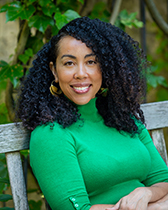
Dr. Farzana Aman Tanima is a Senior Lecturer at the University of Sydney Business School’s Accounting, Governance, and Regulation department. She previously held roles at the University of Wollongong (2017–2023). Her research focuses on critical and dialogic accounting, social justice, and challenging neoliberal frameworks through participatory approaches. Born in Bangladesh, she earned her PhD in 2015 from Victoria University of Wellington, New Zealand, with a thesis on dialogic accounting practices for marginalized women. Education: PhD in Accounting, Victoria University of Wellington, 2015 Undergraduate Honours Degree, Victoria University of Wellington Research Interests: Dr. Tanima’s work centers on dialogic accounting to democratize accounting practices, with focus on NGOs, microfinance, Indigenous education, and race. She employs participatory action research and autoethnography to address systemic inequalities. Key areas include: Accounting’s role in empowerment and development Decolonizing accounting education through Jindaola Critical race theory and counter-accounting Awards: 2024 Mary Parker Follet Award (AAAJ Journal) 2020 VC OCTAL Teaching Award 2015 AFAANZ Best PhD Award Teaching & Mentorship: She leads pedagogical initiatives embedding Indigenous perspectives into curricula and fosters dialogic learning. Supervised two completed PhDs, with co-authored publications. Active in mentoring early-career researchers through invited talks and workshops. Labs/Teams: Part of the Alternative Accounting Research Network and editorial boards for CPA Journal and Financial Accountability & Management . Co-leads special issues on critical dialogics and publicness in accounting.
Jo Wood is Professor of Visual Analytics in the Department of Computer Science at City, University of London, where she has been employed since January 14, 2000. Her work bridges computer science, geographic information science, and human-computer interaction, focusing on innovative methods for visualizing complex spatial and behavioral data. Her research interests center on visual analytics , information visualization , and geovisualization , with applications in transportation, public health, crisis response, and citizen science. She investigates how interactive visual interfaces can support exploratory data analysis, decision-making, and storytelling, particularly through small multiples, faceted views, and sketch-based rendering techniques. The trends in her recent publications reflect a consistent focus on user-centered design , spatial data abstraction , and interactive exploration of multivariate datasets. Her work often integrates real-world behavioral data such as GPS tracks, cycling patterns, and crowd-sourced information to build meaningful visual narratives and support analytical reasoning. Throughout her career, Jo Wood has contributed significantly to the advancement of visual analytics through high-impact publications in top-tier venues such as IEEE Transactions on Visualization and Computer Graphics and Computer Graphics Forum. Her collaborations with researchers like Jason Dykes and Aidan Slingsby highlight her role in a vibrant research community. She has supervised numerous research projects and mentored students in visualization and geospatial analytics, though specific names are not listed in the provided text. Her work has been supported by various research grants, particularly in domains involving urban mobility, energy modeling, and crisis informatics, though grant details are not specified here. Jo Wood has also contributed to the design of visual analytics systems for applications including disease spread modeling, bicycle-hire scheme monitoring, and persuasive technology for health and leisure, demonstrating a strong commitment to impactful, interdisciplinary research.
Nick Abel is an Honorary Associate Professor at the Fenner School of Environment & Society, Australian National University. With a distinguished international career spanning Africa and Australia, he has worked in Zimbabwe, Kenya, Ethiopia, Botswana, Somalia, Swaziland, Zambia, and Australia. His academic credentials include a Ph.D., M.Sc., and B.Sc.(Hons.), reflecting a strong foundation in environmental sciences and complex systems thinking. Abel's research program centers on the critical challenge of human adaptation to climate change, with particular focus on why adaptation efforts are insufficient to prevent environmental and social tipping points. He critically examines Australia's role as the world's third largest exporter of fossil fuels while facing escalating climate impacts, investigating how fossil fuel companies have maintained influence over public policy. His work integrates social-ecological systems theory, resilience thinking, and practical governance frameworks to address climate adaptation challenges. His publication record demonstrates a clear evolution from foundational work in rangeland management and complex adaptive systems toward urgent climate policy interventions. Early research established theoretical frameworks for understanding resilience in dryland ecosystems, while recent work focuses on transformation pathways, Indigenous engagement, and community-based adaptation strategies. A consistent thread throughout his career is the integration of diverse knowledge systems and the development of practical approaches for environmental governance in rapidly changing conditions. Abel has registered to supervise research students at ANU and participates in significant collaborative projects, including the current 'Partnering with local communities in regional Australia to increase resilience to flood events' (2022-2025). His high-impact publications, including the highly cited 'Resilience management in social-ecological systems' (1,120 Scopus citations) and 'From Metaphor to Measurement: Resilience of What to What?' (2,596 Scopus citations), demonstrate his foundational contributions to the field. Through his work with various research groups and projects, Abel has helped establish frameworks for understanding social-ecological systems and climate adaptation. His contributions to the Fenner School include advancing methodologies for integrating scientific and Indigenous knowledge systems, developing practical approaches to environmental governance, and critically examining the political economy of climate policy in Australia.
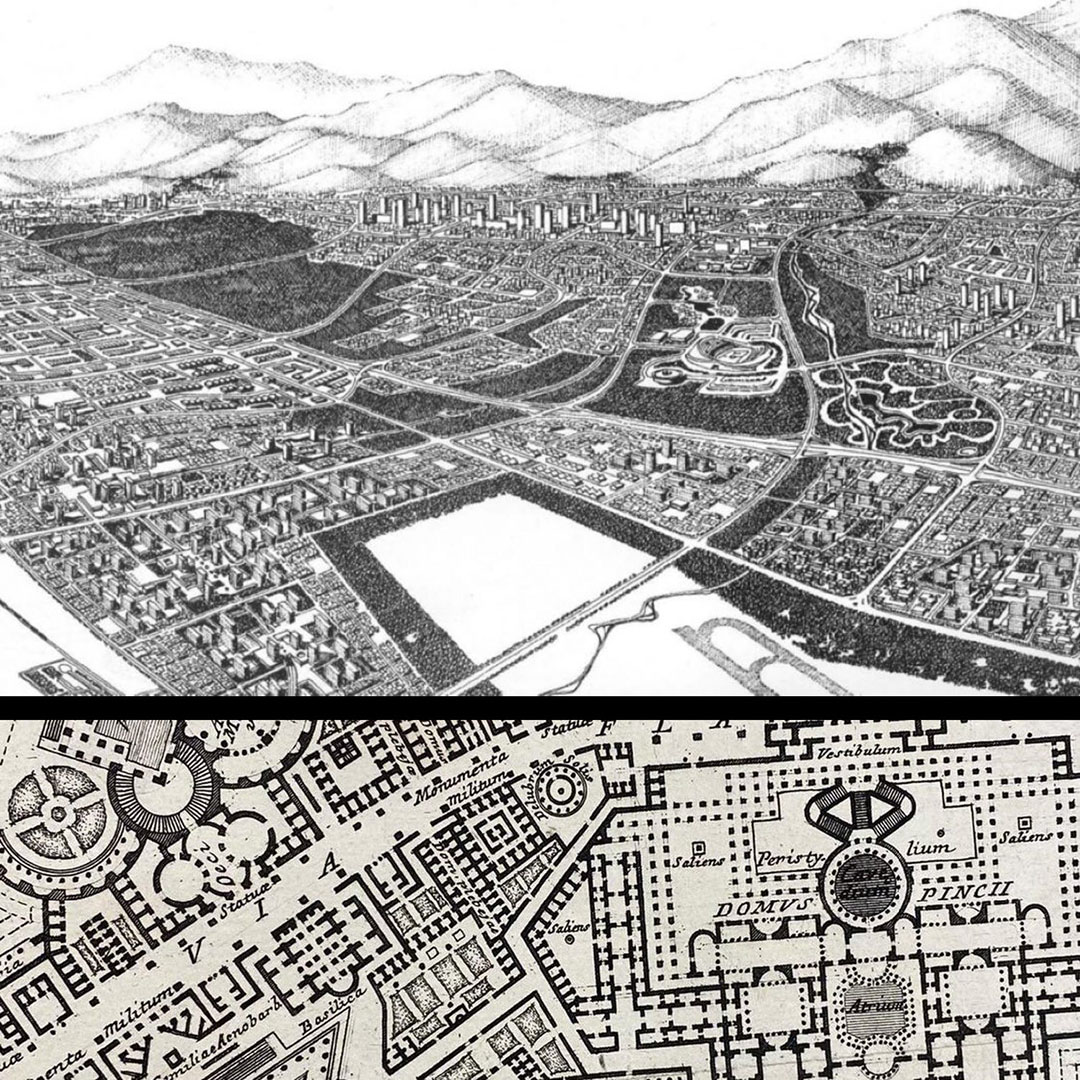
Stephen Marshall is Professor of Urban Morphology and Urban Design at The Bartlett School of Planning, University College London. He also served as Visiting Professor at the Department of Architecture and Urban Studies, Politecnico di Milano, Italy from 2019 to 2021. With over twenty-five years of experience in the built environment fields, initially in consultancy and subsequently in academia, Professor Marshall has established himself as a leading expert in urban morphology and design. His educational background includes a Doctor of Philosophy from University College London (2001), a Postgraduate Diploma from Edinburgh College of Art (1995), a Master of Science from the University of Leeds (1989), and a Bachelor of Engineering from the University of Glasgow (1988). Professor Marshall's principal research focuses on urban morphology and street layout, examining their relationships with urban formative processes including urban design, coding and planning. His work bridges urban design theory with practical applications, exploring how cities evolve through complex interactions of physical form, social processes, and planning interventions. He has written or edited several influential books including 'Streets and Patterns' (2005), 'Cities, Design and Evolution' (2009), and 'Urban Coding and Planning' (2011). His recent publications reveal a growing interest in applying complexity science to urban morphology, with particular attention to biological analogies for understanding self-organizing cities. He has pioneered research on digital participation methods in urban planning, exploring how online platforms can enhance public engagement in urban space design. His work consistently bridges theoretical urban morphology with practical applications for contemporary urban challenges like pandemic adaptation and sustainable transport. Professor Marshall has served as Chair of the Editorial Board of Urban Design and Planning from its launch to 2012, and is now co-editor of Built Environment journal. His editorial work has significantly shaped scholarly discourse in urban planning and design. He leads several significant research initiatives including the Incubators of Public Spaces project, which explores digital platforms for co-creating urban spaces, and the Self-Organising Built Environment project, which investigates biological analogies in urbanism. These projects reflect his interdisciplinary approach to understanding and shaping urban environments, connecting with Sustainable Development Goal 11 (Sustainable Cities and Communities).
Peter W. Klein is an Emmy Award-winning full professor at the University of British Columbia's School of Journalism, Writing, and Media within the Faculty of Arts. He founded the UBC Global Reporting Centre and served as director of the school from 2011 to 2015. Klein also holds an affiliation as a faculty associate at the UBC School of Public Policy and Global Affairs. He runs the Global Reporting Program, a year-long course that works with master's journalism students from UBC and other universities worldwide. Klein's research focuses on Global Journalism, Innovation in Journalism, Documentary Production, and Investigative Reporting. His work emphasizes collaborative international reporting frameworks, solutions-focused empowerment journalism, and the ethical dimensions of global reporting practices. He has developed long-term investigative projects like Hidden Costs, which examines the hidden costs of global commerce through data, field reporting, academic research, and artistic exhibits. His scholarly output demonstrates consistent focus on international reporting practices, fixer-journalist relationships, data journalism, and environmental investigations. The articles reveal a career-long commitment to investigative methodologies with emphasis on cross-border collaboration, ethical reporting frameworks, and innovative storytelling approaches that bridge journalism with academic research. Emmy Award for Best Investigation (National Academy of Television Arts & Sciences) Sigma Delta Chi award Edward R. Murrow award Rosalynn Carter Mental Health Journalism fellowship Ochberg Fellow at Columbia University's Dart Center 2011 UBC President's Award for Public Education through Media Klein has supervised numerous student-led investigative projects through the International Reporting Program and Global Reporting Program, working with news organizations including The New York Times, Toronto Star, The Guardian, PBS Frontline, Vice News and Al Jazeera. His research projects have received funding from SSHRC and CIHR, including the Hidden Costs initiative and Million Dollar Meds project. He has also collaborated with the Peter Wall Institute for Advanced Studies on solutions-focused empowerment journalism projects.
Vicki L. Plano Clark is a Professor in the Research Methods area of the School of Education at the University of Cincinnati, where she advises students in the Quantitative and Mixed Methods Research Methodologies (QMRM) concentration of the Educational Studies doctoral program and the Applied Research Methods (ARM) track of the Educational Studies master's program. She joined the University of Cincinnati in 2012 after serving as the director of the Office of Qualitative and Mixed Methods Research at the University of Nebraska-Lincoln. Dr. Plano Clark earned her Ph.D. in Quantitative and Qualitative Methods in Education from the University of Nebraska-Lincoln (2005), M.S. in Physics from Michigan State University (1993), and B.A. in Physics from Kalamazoo College (1990). Her academic journey transitioned from physics education to research methodology, bringing a unique interdisciplinary perspective to her work. As a leading methodologist specializing in mixed methods research, Dr. Plano Clark's scholarship focuses on delineating useful designs for conducting mixed methods research, examining procedural issues associated with these designs, and exploring the contexts for the adoption and use of mixed methods. Her research spans diverse application areas including cancer pain management, STEM graduate student identity development, teacher professional development, and the well-being of rural low-income families. Her work demonstrates how mixed methods approaches can effectively address complex research questions across multiple disciplines. Dr. Plano Clark has made significant contributions to the field through her editorial leadership and publications. She was the founding Managing Editor for the Journal of Mixed Methods Research and currently serves as an Associate Editor. In 2011, she co-led the development of Best Practices for Mixed Methods in the Health Sciences for NIH's Office of Behavioral and Social Sciences Research. In 2012, she became a founding co-editor of the Mixed Methods Research Series with Sage Publications. She has authored numerous influential books including 'Designing and Conducting Mixed Methods Research' (now in its 3rd edition) and 'Mixed Methods Research: A Guide to the Field.' Founding Managing Editor for the Journal of Mixed Methods Research Co-developer of NIH's Best Practices for Mixed Methods in the Health Sciences (2011) Founding co-editor of the Mixed Methods Research Series with Sage Publications (2012) Chair of the Mixed Methods Research Special Interest Group of AERA As an active researcher, Dr. Plano Clark has secured multiple grants including a Department of Education grant evaluating Ohio Network of Education Transformation (ONET) Schools (as Principal Investigator) and a UC University Research Council grant on reducing mass incarceration by improving public defense (as Collaborator). Her recent publications continue to advance methodological understanding in mixed methods research, with a focus on integration techniques, terminology challenges, and applications across health sciences and education. Dr. Plano Clark maintains an active role in the research community through invited presentations and workshops worldwide, helping to train the next generation of researchers in mixed methods approaches and contributing to the ongoing development of methodological standards and practices.
Olivia Khoo is Professor of Film and Screen Studies and Head of Film, Screen and Culture in the Faculty of Arts at Monash University. She is a leading scholar in Asian Australian and Asian cinema studies, with extensive contributions to media diversity, gender and sexuality in media, and streaming technologies. She is actively involved in national research leadership, including roles in the Australian Research Council College of Experts and the Screen Diversity and Inclusion Network. PhD in Cultural Studies – University of Melbourne LL.B. (Hons) – University of New South Wales B.A. (Hons) in English Literature – University of Western Australia Graduate Certificate in Higher Education – Monash University Her research centers on screen media diversity, streaming platforms, and transnational Asian and Asian Australian cinema. She explores how gender, sexuality, and race intersect in media representation, with a strong focus on diasporic identities and cultural citizenship. Her work bridges cultural studies, legal frameworks, and media industry practices to advocate for inclusive screen ecosystems. The recent publications reflect a sustained engagement with streaming technologies, racial representation, leadership in Asian Australian communities, and policy development for media diversity. Her work spans academic monographs, journal articles, and influential policy reports, demonstrating both theoretical depth and real-world impact in shaping equitable media landscapes. Special Commendation for the Dean’s Award for Postgraduate Research Supervision (2022) Three-time nominee, Monash Graduate Association Supervisor of the Year Award Founding Series Editor, Gender, Sexualities and Cultures in Asia (Springer) Founding Associate Editor, Studies in World Cinema: A Critical Journal (Brill) Olivia has supervised 18 PhD and MA students to completion and has led major research projects, including two ARC Discovery Projects. She is currently leading interdisciplinary collaborations across Law, Business, and Arts at Monash, particularly on the Incentivising Australian Screen Diversity report. She also co-founded the Asian Australian Studies Research Network and has held fellowships at the Asia Research Institute (NUS) and the University of California Humanities Research Institute. She leads the Film, Screen and Culture program at Monash and is central to initiatives like the Streaming Industries & Genres Network. Her collaborative projects involve national and international institutions, focusing on media flows between Australia and East Asia, and the transformation of cultural identity through digital platforms.
Prof. Tine De Moor is a leading scholar at Rotterdam School of Management, Erasmus University Rotterdam , holding the Chair of Social Enterprise and Institutions for Collective Action . With a PhD in History from Ghent University (2003), she specializes in long-term institutional analysis of collective action across historical and modern contexts. Department of Business-Society Management ERIM Research Member Former Utrecht University Professor (2012-2020) Research Focus: Her work examines institutions for collective action from medieval commons to modern cooperatives, with key contributions to understanding energy cooperatives, citizen collectives, and social enterprises. She leads innovative citizen science projects and investigates labor market participation patterns over the past millennium. Publication Trends: Recent articles focus on platform cooperatives in the gig economy , energy prosumerism motivations , and institutional grammar applications . She explores paradoxes in cooperative governance and develops computational models for historical institutional analysis. Awards & Grants: Recipient of prestigious honors including ERC Starting Grant NWO-VIDI Grant International Association for Study of the Commons Leadership Advising & Collaboration: She has co-authored with scholars like Daan van Weeren and David Bunders, with significant citations in environmental and social science domains. Her work informs policy on collective resource management and sustainable transitions. Labs & Teams: Founding editor of the International Journal of the Commons , she leads the CollectieveKracht knowledge platform and collaborates with Triodos Bank stakeholders. Her research integrates GIS, archival analysis, and agent-based modeling.
Fulong Wu holds the prestigious Bartlett Chair of Planning at University College London's Bartlett School of Planning since 2011. This distinguished position has previously been held by notable figures including Sir Patrick Abercrombie, Sir William Holford, Lord Richard Llewelyn-Davies, Sir Peter Hall, and Mike Batty FRS. Professor Wu's appointment represents a significant moment for the school to redefine planning discipline in global terms for a new generation. Wu received his BSc and MSc degrees from Nanjing University and completed his PhD at the University of Hong Kong. Prior to joining UCL, he taught at the Universities of Southampton and Cardiff. His academic journey reflects a deep commitment to urban planning scholarship with a specific focus on Chinese urban contexts. BSc, Nanjing University MSc, Nanjing University PhD, University of Hong Kong Professor Wu's research centers on urban development in China and its social and sustainable challenges. His work critically examines the Chinese model of urban governance, state entrepreneurialism, and the financialization of Chinese cities. He has made significant contributions to understanding migration patterns, spatial inequalities, suburbanization, neighborhood governance, and urban poverty in Chinese cities. His research provides valuable insights that challenge Western-centric planning theories while enriching global urban studies with Chinese perspectives. His recent publications reveal a clear trend toward analyzing the evolving relationship between statecraft and urban governance in China, particularly in the context of post-pandemic recovery and financialization processes. A significant portion of his recent work examines how Chinese cities manage crises, with several studies focusing on the Shanghai lockdown experience. His ERC-funded project on rethinking China's model of governance serves as an intellectual anchor for much of this research, demonstrating how Chinese urban governance represents both a distinctive model and a critical lens for understanding global urban transformations. Professor Wu's scholarly recognition includes: Fellow of the Academy of Social Sciences (2016) ESRC 2013 Outstanding International Impact Award Fellow of the Higher Education Academy (2002) British Academy Fellow As Principal Investigator of a European Research Council (ERC) Advanced Grant project titled 'Rethinking China's Model of Governance,' Professor Wu leads significant research funding that supports his team's work. He co-founded and coordinates the China Planning Research Group (CPRG) at UCL with Professor Fangzhu Zhang, which has become an influential research cluster generating substantial impact within and beyond the university. His mentorship extends to supervising PhD students and collaborating with early-career researchers on China-focused urban studies. The China Planning Research Group (CPRG), jointly coordinated by Professor Wu and Professor Zhang, serves as a vital hub for research on Chinese urban development. This group has produced influential work on topics including rural migrants in urban China, Chinese land and housing development, urban neighborhoods, and regional governance systems. The CPRG's research output has significant policy implications and contributes to global debates about alternative urban development models beyond neoliberal paradigms.
Pieter Desmet serves as Professor of Design for Experience at Delft University of Technology's Faculty of Industrial Design Engineering, specifically within the Department of Human-Centered Design. He directs the Delft Institute of Positive Design, focusing on advancing knowledge for designing human flourishing. His research centers on emotional design mechanisms, particularly how product design evokes emotions and contributes to individual and community well-being. Key interests include Positive Design frameworks, mood-regulation interventions, AI-emotion alignment, and multisensory experiences in packaging and museum contexts. Recent work explores liminal spaces in exhibits, autoethnography ethics, and group mood dynamics in workplaces. Analysis of his 275+ publications reveals consistent focus on emotional design theory with expanding applications in AI, healthcare, and sustainability. His work bridges academic research with practical design tools for emotional well-being. No scientific awards are documented in the provided materials. Desmet actively supervises doctoral candidates (evidenced by PhD thesis datasets) and secures research grants through institutional collaborations. His leadership in organizing major conferences like IASDR 2023 and Design & Emotion events demonstrates significant academic influence. He leads the Delft Institute of Positive Design research group, which investigates user experience aspects through interdisciplinary projects integrating psychology, design, and technology.
Yasmin Kafai is a Professor at the University of Pennsylvania's Graduate School of Education (GSE), Department of Learning Sciences. Her research focuses on computational thinking, AI education, and equitable K-12 computing pedagogy. She has pioneered work on integrating electronic textiles (e-textiles) and participatory design into STEM education to engage youth in critical perspectives of technology. Kafai's recent work emphasizes algorithmic literacy, youth-led auditing of machine learning systems, and bridging technical and societal dimensions of computing. Key research areas include: computational empowerment, AI ethics in education, youth agency in technology design, and culturally responsive computing curricula. Her projects often involve hands-on making activities, such as constructing generative AI models or debugging e-textile systems, to foster both technical and critical understandings. Publications from 2024-2025 highlight trends in youth engagement with generative AI, algorithm auditing frameworks, and the intersection of physical computing with growth mindset practices. She has also explored the role of storytelling methodologies in reimagining computing narratives for marginalized groups. Kafai collaborates extensively with teachers to develop scalable professional development programs addressing equity in CS education. Her work frequently appears in learning sciences and computing education journals, with a focus on practical classroom implementations and systemic educational reforms. Ongoing efforts include designing 'Hour of Code' activities that integrate critical AI literacy and fostering youth as co-designers of ethical technology solutions.
Dr. Susana Castro-Kemp is an Associate Professor in Psychology and Human Development at University College London's Institute of Education (IOE), where she serves as Director of the Centre for Inclusive Education (CIE) since September 2023. Previously, she was a Reader in Education at the University of Roehampton for eight years. Her work focuses on inclusive education policy and practice globally, with particular expertise in special educational needs and disabilities (SEND), early childhood intervention, and mental health in schools. The IOE has been ranked number one in the world for Education for several consecutive years, providing an ideal environment for her impactful research. Dr. Castro-Kemp holds a PhD in Psychology jointly awarded in 2012 by the University of Porto (Portugal) and the University of North Carolina at Chapel Hill (USA). Her doctoral research was fully funded by the Foundation for Science and Technology/European Commission and the Global Education and Development Studies scholarships. She is a Chartered Psychologist with the British Psychological Society, a Senior Fellow of Advance HE, and a Recognised Research Supervisor by the UK Council for Graduate Education. Dr. Castro-Kemp's research centers on policy regulating education, health, and welfare services for children, particularly those with support needs. She examines inclusive education practices from users' perspectives, policy models leading to effective inclusive pedagogy, and country-level policy impacts on outcomes for children with special educational needs. Her work moves away from diagnostic labels toward engagement and civic participation as educational outcomes. She also investigates inclusion and early intervention in low- and middle-income countries, mental health in schools, and quality of early childhood education. Her recent publications reveal several key trends in inclusive education research. There's growing emphasis on understanding educational experiences through the voices of children and families rather than diagnostic labels. Much of her work examines the implementation gap between inclusive education policy and classroom practice. She has conducted significant research on how children with special educational needs experienced the pandemic, revealing both challenges and unexpected "silver linings" for some groups. Her corpus analysis of Ofsted reports shows narrow focus in early childhood education inspections, while her work on SEND policy increasingly takes an international comparative approach. Dr. Castro-Kemp has received recognition for her impactful work, including: Best Digital Humanities Project for Community Engagement Prize (2023) from the National Institute of Humanities and Social Sciences of South Africa for her project "Optimising collaborations and reducing inequalities of Early Childhood Intervention in post-Covid-19 South Africa" Dr. Castro-Kemp has secured approximately £1.3 million in research funding from various sources including ESRC, British Academy/Leverhulme Trust, European Commission, and private sponsors. Her current major project is 'ScopeSEND' (2024-2026), funded by the Nuffield Foundation (£250,000), examining international SEND policies. She has led numerous projects including "Transdisciplinary provision for children with disabilities in the Global South" (£3,500), "Optimising collaborations in South Africa" (£47,200), and "Froebel meets Ofsted" (£19,185). As a supervisor, she mentors MA/MSc and PhD students in education policy, early childhood, and inclusive education, having been nominated for student choice awards for excellent feedback and outstanding research supervision. As Director of the UCL Centre for Inclusive Education since 2023, Dr. Castro-Kemp leads a team focused on advancing knowledge exchange and research in inclusion and special needs. The Centre works with schools, educators, parents, and early years settings to translate research into practice. Her international collaborations include work with the World Health Organization as a technical advisor on the use of the International Classification of Functioning, Disability and Health (ICF) system in educational contexts. She also serves on the SEN Policy Research Forum and has provided oral evidence to the House of Commons Education Select Committee.
Theo Arentze is a Full Professor at Eindhoven University of Technology (TU/e) in the Department of the Built Environment, leading the Real Estate Management and Development group. He is affiliated with EAISI Health and EAISI Mobility research institutes. Education: MSc in Psychology (Cognitive Psychology & AI) from Groningen University, PhD from TU/e Urban Planning Research: Spatial choice behavior, decision support systems, activity-based modeling, agent-based simulation His research integrates bounded rationality into spatial choice models to enhance behavioral realism, with applications in real-estate management , neighborhood development , healthy cities , and hybrid work environments . Recent work includes child-friendly urban planning and energy-efficient housing impacts . Prominent article themes include: Hybrid work location decisions Urban public space affective experiences Child friendliness in residential choices Sustainable energy preferences Spatial decision support systems Social network modeling Scientific recognition includes: Best Poster Award (2025) - Computational Urban Planning Conference Long Paper of Distinction (2021) - Healthy Buildings Europe EuroFM Best Paper Award (2017) Pyke Johnson Award (2016) As an educator, he teaches courses in Urban Planning , Housing Economics , and Quantitative Research Methods . His multidisciplinary team combines expertise from psychology, sociology, and urban economics to create high-quality built environments through behavioral research.
Asma Mehan, Ph.D. , is an Assistant Professor at the Huckabee College of Architecture, Texas Tech University , with a Ph.D. in Architecture, History, and Project from Politecnico di Torino (2017). Her work bridges architectural humanities and critical urban studies , focusing on urban inclusivity, heritage preservation, and climate justice. She authored two books— Tehran: From Sacred to Radical (2022) and Kuala Lumpur: Community, Infrastructure, and Urban Inclusivity (2020)—and leads the Coordination Team of the AESOP Young Academics network. Education: Ph.D. in Architecture, History, and Project, Politecnico di Torino (2017) Her research spans spatial justice , feminist placemaking , and heritage studies , addressing issues like oil urbanism , digital citizen participation , and resilient housing . Articles highlight her interdisciplinary approach to urban resilience, AI integration, and socio-environmental equity. She has held fellowships including the FCT Scientific Employment Stimulus and NIAS-KNAW Urban Citizenship Fellowship. Scientific Awards: AESOP Young Academics Award European Architectural History Network (EAHN) Fellowship Society of Architectural Historians (SAH) Grant ZK/U Berlin Researcher-in-Residence SAHGB Award Dr. Mehan has taught at TU Delft and Politecnico di Torino, guest lectured at TU Munich and Deakin University, and conducted visiting research in Switzerland, Australia, and Berlin. Her work appears in over 50 publications across English, Persian, and Italian, emphasizing critical pedagogy , collaborative design , and policy toolkits for urban inclusivity.
Kihana Miraya Ross is an Assistant Professor in the Department of Black Studies at Northwestern University, affiliated with the Weinberg College of Arts & Sciences. She holds a Ph.D., M.A., and B.A. from UC Berkeley in Social and Cultural Studies of Education, African American Studies, and Sociology. Her research focuses on antiblackness in education, Black educational fugitivity, and educational reparations, employing critical ethnography and participatory design methods. Her book project examines the afterlife of school segregation and strategies for Black educational futurities. She co-directed the documentary Stolen School , exploring the closure of Evanston’s Foster School and its lasting impacts. Ross has received major grants from the Spencer Foundation and fellowships from the Ford Foundation. Education: Ph.D. in Social and Cultural Studies of Education (UC Berkeley, 2016) M.A. in Social and Cultural Studies of Education (UC Berkeley, 2011) B.A. in African American Studies, Sociology, and Education (UC Berkeley, 2002) Key Projects: Spencer Foundation-funded research on Evanston’s educational reparations Documentary Stolen School (2023) Awards: 2021 Spencer Foundation Large Grant 2017 Ford Foundation Postdoctoral Fellowship Ross’s work bridges historical analysis and contemporary activism, advocating for systemic change through frameworks like Black fugitivity. She collaborates with community organizations like Shorefront Legacy Center and mentors interdisciplinary projects on race, education, and spatial justice.