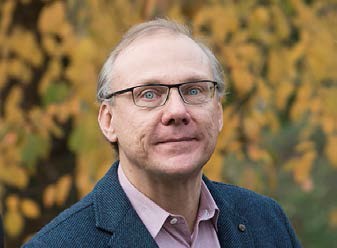
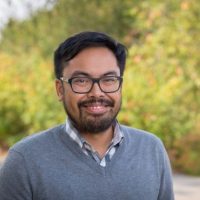
Peter Mooney is a Lecturer in the Department of Computer Science, Faculty of Science & Engineering at Maynooth University. His research focuses on Volunteered Geographic Information (VGI), OpenStreetMap, spatial data analysis, and geospatial data integration in applications such as environmental monitoring and pervasive health systems. Institution: Maynooth University School: Faculty of Science & Engineering Department: Computer Science Role: Lecturer Mooney's research explores the use of crowdsourced geospatial data, particularly through OpenStreetMap, analyzing data quality, community roles, and integration into location-based services. His work bridges technical analysis with policy considerations in geospatial data management. Recent publications highlight his contributions to understanding spatial data dynamics, including attribute changes in OpenStreetMap, characteristics of edited objects, and applications of VGI in environmental systems. He also investigates the intersection of haptics and GIS for novel interaction methods. Contact: peter.mooney@mu.ie
Dr. Koen Leurs serves as an Associate Professor in Gender, Media and Migration Studies at the Graduate Gender Program, Department of Media and Culture Studies, Utrecht University, Netherlands. His research centers on digital migration studies, examining how digital technologies intersect with migration experiences, particularly focusing on gender dynamics, youth cultures, and datafication processes. Leurs has established himself as a leading scholar through influential publications including Digital Migration (Sage, 2023) and Doing Digital Migration Studies (Amsterdam University Press, 2024), with his current work focusing on Inclusive Media Education: Critical Media Literacies for Diverse Societies for Routledge. Leurs' research interests span migration studies, digital technology, gender, and youth cultures, with particular attention to how digital platforms shape migrant experiences. His work critically examines both the empowering potential and discriminatory aspects of digital technologies in migration contexts, investigating how migrants use digital tools to connect, resist, and create new forms of belonging while navigating surveillance, datafication, and border control systems. Recent projects have increasingly focused on the ethical implications of digital technologies in asylum procedures and migration management. His scholarly output reveals a consistent trajectory examining the intersection of migration, digital technology, and social justice. Leurs' work demonstrates growing attention to the material consequences of digital migration studies, particularly regarding mobile phone screening in asylum processes, the datafication of migration pathways, and how digital platforms shape the experiences of migrant women and domestic workers. His research combines theoretical innovation with practical engagement, often employing participatory methods that involve migrant communities in knowledge production. Principal Investigator for Co-designing a fair digital asylum procedure (2022-2023), funded by Digital Society program and COMMIT/ Principal Investigator for Young Connected Migrants (2016-2019), funded by Netherlands Organization for Scientific Research Principal Investigator for Media literacy through Making Media (2017-2019), funded by Dutch National Research Agenda Current member of Management Committee for COST Action DATA-MIG CA22135 on European Migration and Border Control Former chair of European Communication Research and Education Association (ECREA) Diaspora, Migration and the Media section (2016-2021) Leurs' research is situated within Utrecht University's strategic themes including Dynamics of Youth (DoY), Governing the Digital Society, and Institutions for Open Societies (IOS), with particular alignment with the IOS focus on Gender, Diversity and Global Justice. His collaborative work spans international institutions including the Chinese University of Hong Kong, National University of Singapore, Charles University, and University of Groningen, reflecting the transnational nature of his research on digital migration.
Dr. Damian Zaitch is an Associate Professor at the Willem Pompe Institute for Criminal Law and Criminology, School of Law, Utrecht University. He has been with Utrecht University since 2009, having previously taught at the Department of Criminology at Erasmus University Rotterdam from 2000 to 2009. His academic work spans three interconnected research domains: illegal drug trafficking and policies, cross-border organized and corporate crime, and green criminology. Zaitch's research interests include Corporate Crime, Drug Trafficking and Policies, Organized Crime, Latin America, and Environmental Criminology. His methodological expertise lies in qualitative research methods, particularly virtual ethnography and visual criminology. He has conducted extensive fieldwork on drug trafficking through the port of Rotterdam, synthetic drug markets in Amsterdam, and alternative drug policies in Latin America, with a focus on harm reduction approaches. His recent publications demonstrate a strong focus on green criminology, particularly examining environmental crimes related to resource extraction in Latin America, as well as continuing work on transnational organized crime networks. His research often examines the intersection of state and corporate power in creating environmental harms and human rights violations. Willem Nagel Prize (2003) for his PhD research Founding and board member of CIROC (Center for Information and Research on Organized Crime) Coordinator of the Erasmus Mundus Doctorate in Cultural and Global Criminology Coordinator of the Utrecht PhD Summer School on Advanced Qualitative and Legal Methods in Criminology Zaitch teaches courses including International Organized Crime, Crimes of the Powerful, and Green Criminology at both undergraduate and graduate levels. He co-supervises numerous PhD projects on topics ranging from Nigerian cocaine trafficking networks to environmental rights violations by multinational corporations. His research is conducted within Utrecht University's strategic themes of Institutions for Open Societies and Pathways to Sustainability.
Mark R. Warren is a Professor in the Department of Public Policy & Public Affairs at the University of Massachusetts Boston. A sociologist and community-engaged scholar, he focuses on community organizing, educational justice, and racial equity, particularly through grassroots movements dismantling systemic racism in schools. Author of six books, including the 2021 Oxford University Press title Willful Defiance , which won the 2025 Grawemeyer Education Award. Co-founder of networks like the People’s Think Tank for Educational Justice and the Urban Research Based Action Network (URBAN). Research Interests : Grassroots community organizing against the school-to-prison pipeline. Intersectional approaches to educational justice, linking race, immigration, and LGBTQ+ rights. Collaborative, community-engaged research methodologies. Scientific Awards : 2025 Grawemeyer Education Award 2022 Chancellor’s Award for Distinguished Scholarship (UMass Boston) Guggenheim Fellowship SAGE McCune Fellow at Stanford’s CASBS AERA Fellow Notable Contributions : Multi-year studies in Mississippi, LA, and Chicago; frameworks for local-national movement interplay; advocacy for police-free schools and restorative justice practices.
Dr. Kathy Bishop serves as Associate Professor and Program Head for the Master of Arts in Leadership (Executive Leadership specialization) and Graduate Certificate in Values-Based Leadership at Royal Roads University's School of Leadership Studies. Joining in 2013, she brings over 30 years of multidisciplinary leadership experience spanning counselling, social services, not-for-profit agencies, small business development, and adult education. Her academic credentials include a PhD in Interdisciplinary Studies (Leadership and Applied Theatre) from the University of Victoria (2015) and a Bachelor of Social Work from the University of British Columbia (1986). As a scholar-practitioner, she has maintained her own consulting business since 2000 and previously served as Executive Director of the Parksville and District Chamber of Commerce and a youth-focused non-profit organization. Dr. Bishop's research centers on values-based leadership, organizational culture change, and creativity, utilizing creative, experiential, participatory, nature-based, and transformative learning methods. Her work explores leadership development, online education, action-oriented research, and arts-based methodologies, with particular emphasis on ethical frameworks in applied theatre contexts. Analysis of her publications reveals a consistent trajectory toward integrating arts-based approaches with leadership education, especially in online and collaborative environments. Key themes include mindfulness practices in business education, narrative métissage for community engagement, and ethical considerations in research-based theatre, demonstrating her commitment to innovative, experiential pedagogical models. Her scientific recognition includes: Interdisciplinary Graduate Fellowship Award (2013-14, University of Victoria) Interdisciplinary Graduate Fellowship Award (2012-13, University of Victoria) Through her dual role as academic leader and active consultant, Dr. Bishop bridges theoretical scholarship with practical leadership development, having previously worked as a registered social worker and executive director for community organizations. Her professional journey reflects a continuous commitment to applying leadership principles across diverse social and organizational contexts.
Anna Serra Salvi serves as a Lecturer in the Department of Specific Didactics at the University of Girona, specializing in Didactics of Social Sciences. She teaches primary and secondary teacher education programs and conducts research through the GRECA group (Research Group in Scientific and Environmental Education) within the Institute of Educational Research. Her academic qualifications include: Doctorate in Education from University of Girona (2019) Bachelor's in Philosophy and Letters (Geography and History) from University of Girona (1998) Teaching Diploma in Primary Education (Social Sciences specialty) from University of Girona (1993) Dr. Serra Salvi's research centers on sustainability education through social dimensions, particularly gender perspectives and vulnerable groups, alongside heritage/citizenship education and landscape didactics. Her work emphasizes integrating Sustainable Development Goals into teacher training while promoting proactive citizenship through gender-sensitive geographical approaches. She examines how urban environments function as learning spaces and investigates emotional dimensions of heritage education in Catalan contexts. Analysis of her 15 most recent publications reveals consistent focus on socially transformative educational practices. Her work demonstrates strong methodological preference for qualitative case studies and intergenerational analyses, particularly examining Girona's urban spaces. Key thematic clusters include pandemic-era adaptations of sustainability education (2020-2023), gender-responsive urban geography pedagogy (2021-2022), and heritage education frameworks for early childhood (2019-2020), all reflecting commitment to contextually grounded, socially just educational praxis. As faculty, she advises undergraduate and master's students in teacher education programs while contributing to GRECA's research on scientific and environmental education. Her professional trajectory spans university teaching (2015-present), secondary education (2011-2024), and primary education (1993-2011) within Catalonia's education system, providing rich practical foundations for her academic work. She actively participates in GRECA's collaborative projects examining science and environmental education innovations, with particular focus on community-based learning approaches in Girona's urban landscape. Her current research continues exploring intersections between educational practice, urban geography, and social justice frameworks.
Pavithra Vasudevan is an Assistant Professor at the University of Texas at Austin, affiliated with the Department of African & African Diaspora Studies and the Center for Women’s & Gender Studies. She is also a member of the University of Texas Feminist Geography Research Collective. Education: Ph.D. in Geography (2018) from the University of North Carolina, Chapel Hill. Research: Focuses on racial capitalism, environmental justice, and feminist geography through the lens of industrial toxicity and community resistance. Her work bridges critical theory with grassroots organizing, emphasizing arts-based methods like Bharata Natyam and Aikido. She has received prestigious fellowships from the National Science Foundation and the Society of Women Geographers. Scientific Awards: National Science Foundation Dissertation Fellowship Society of Women Geographers Dissertation Fellowship Center for the Study of the American South Dissertation Fellowship Graduate Education Advancement Board’s Impact Award Vasudevan’s publications examine occupational health disparities, biopolitics, and the racialized burden of industrial environments. She teaches courses on feminist geopolitics, Black studies methods, and environmental justice storytelling.
Laia Mogas-Soldevila serves as Assistant Professor of Graduate Architecture and Director of DumoLab Research at the University of Pennsylvania's Stuart Weitzman School of Design, pioneering radically sustainable material practices that bridge science, engineering, and the arts for architectural and product design innovation. Her academic credentials include: Interdisciplinary doctorate in biomaterials science, biomedical engineering, and advanced design from Tufts University School of Engineering Two master’s degrees from the Massachusetts Institute of Technology School of Architecture Licensed architect with Fine Arts minor from Polytechnic University of Catalonia and École Nationale Supérieure de Beaux-Arts Dr. Mogas-Soldevila's research reimagines matter as a fundamental design driver through biomaterials and bio-based fabrication , emphasizing environmental justice and circular economy principles. Her work partners with scientists to develop unprecedented material capabilities, spanning from molecular-scale biopolymer engineering to full-scale architectural applications that address climate challenges. Analysis of her 15 most recent publications (2020-2025) reveals dominant themes in carbon-sequestering living materials, agricultural waste valorization, and adaptive biological skins. These works consistently bridge architecture, material science, and environmental engineering, with increasing focus on participatory design and urban farming applications as seen in her 2024 Portable Bioremediation Technologies project. Her scientific recognition includes: Johnson&Johnson Foundation Woman in STEM2D Scholar Award Research funding encompasses Penn's Research Foundation Grant, Environmental Innovation Grant, Sachs Art Innovation Grant, and Global Engagement Fund, supporting her interdisciplinary exploration of sustainable material systems. Her pedagogy cultivates novel theory and applied methods for biomaterial implementation across design disciplines. As DumoLab Research Director, she leads cross-disciplinary collaborations developing material-driven computational workflows for digital fabrication, with recent projects exhibited at MoMA, Milan/London Design Weeks, and ACADIA conferences, translating laboratory innovations into tangible environmental solutions.
Dr. Andrea L. Wirtz is an Associate Professor in the Department of Epidemiology at Johns Hopkins Bloomberg School of Public Health, with primary division in Infectious Disease Epidemiology and joint division in Social and Behavioral Interventions. She is affiliated with the Center for Global Health, Center for Humanitarian Health, and Center for Public Health and Human Rights. Her educational background includes: PhD, Johns Hopkins Bloomberg School of Public Health (2015) MHS, Johns Hopkins Bloomberg School of Public Health (2007) Dr. Wirtz advances epidemiologic methods to measure associations between human rights and health outcomes, with particular focus on evidence-based interventions and translation to policy. Her research centers on community-partnered international and domestic epidemiologic research addressing intersections between human rights and HIV and other health outcomes, with specific attention to populations traditionally excluded from research or underserved in health services. Internationally, she serves as joint Principal Investigator for estimating HIV prevalence among Venezuelan migrants and refugees in Colombia. In the U.S., she leads a nationwide cohort study focused on health and HIV risks in transgender women. Her work integrates epidemiologic expertise into complex humanitarian interventions and human rights investigations across diverse settings. Analysis of her recent publications reveals a strong focus on transgender health, HIV prevention and treatment, migrant and refugee health, and the application of epidemiologic methods to human rights investigations. Her research increasingly addresses long-term health conditions in marginalized populations, including studies on Long COVID, cardiovascular disease in transgender women with HIV, and pandemic impacts on healthcare access for vulnerable groups. Her scientific recognition includes: Robert Carr Memorial Research Award (2022) for community-academic partnerships advancing human rights-based policies Global Leadership in HIV Prevention Research award from US Department of State (2021) Multiple teaching awards from Johns Hopkins Bloomberg School of Public Health (2014-2022) Advising, Mentoring, & Teaching Recognition Award (2015-16) At Johns Hopkins, Dr. Wirtz instructs graduate-level courses on health survey research methods and using epidemiologic methods to investigate human rights violations. She has secured significant grant funding for studies on HIV prevention, transgender health, and migrant health interventions. Her research portfolio includes community-academic-policy collaborations that address complex health challenges through rigorous epidemiologic approaches. Dr. Wirtz leads several major research initiatives including the American Cohort to Study HIV Acquisition among Transgender Women (LITE study), development of screening tools for gender-based violence in humanitarian settings, and effectiveness studies of HIV preventive interventions for vulnerable populations globally.
Dr. Carlos Aguiar serves as Assistant Professor in the Industrial Design Program at the University of Illinois Urbana-Champaign's School of Art and Design, with affiliate status in Informatics at the School of Information Sciences. He directs the Design, Technology, and Society Lab, where he investigates human-artifact interactions through critical design frameworks and cyber-physical systems development. His academic foundation includes a Ph.D. in Design & Human Behavior from Cornell University (2021) with minors in Science and Technology Studies and Information Science, an M.S. in Design Computing from the University of Washington (2017), and a Bachelor's in Architecture & Urbanism from Brazil's Universidade Estácio de Sá (2012). Aguiar's research integrates Science and Technology Studies, Design Philosophy, and Critical Theory to develop technologies that foster social change while examining material culture's societal implications. His dual-focus methodology simultaneously creates tangible artifacts that enhance human-agent-material relations and analyzes how emerging technologies shape societal structures through empirical investigation and critical reflection. This approach prioritizes inclusivity in future-making processes and examines emergent behaviors in technological appropriation. His publication trajectory (2016-2024) reveals consistent advancement in human-computer interaction, particularly in assistive technologies for rehabilitation and autism support, social interaction design in public spaces, and architectural robotics for community building. Key thematic developments include the evolution from single-user wearable devices (Erglove, GripAid) to community-scale cyber-physical systems (communIT, transFORM), with recent work expanding into eco-consciousness and restorative environments through socially interactive robotics. No scientific awards were documented in the provided source materials As lab director, Aguiar cultivates interdisciplinary collaboration between design, informatics, and engineering disciplines. His grant activities focus on developing cyber-physical artifacts that transform underused public spaces into community engagement hubs while addressing societal challenges through human-centered technological innovation. The Design, Technology, and Society Lab functions as an experimental platform where theoretical frameworks from STS and critical design directly inform the creation of responsive environments, objects, and spaces that actively shape social interactions and cultural practices.
Dr. Christine Drew serves as Assistant Professor in Auburn University's College of Education within the Department of Special Education, Rehabilitation, and Counseling. She coordinates the Graduate Transition Certificate Program and advises the EAGLES Program, leveraging her expertise in behavior analysis for intellectual and developmental disabilities. Her academic foundation includes a Ph.D. from the University of Oregon, M.Ed. in Special Education from Texas State University, and B.A. in Economics from the University of Texas. Educational background: Ph.D. in Special Education from University of Oregon M.Ed. in Special Education with Applied Behavior Analysis concentration from Texas State University B.A. in Economics with minor in secondary social studies education from University of Texas Dr. Drew's research pioneers intersections of behavior analysis, sexuality education, and IDD support through parent collaboration. Her work advances telehealth interventions for challenging behavior and inclusive practices for neurodiverse populations, with growing emphasis on social justice dimensions like LGBTQIA+ inclusion and racial equity in autism services. Methodologically, she integrates single-case designs with community-based participatory approaches to address systemic barriers. Analysis of her 2021-2025 publications reveals three dominant trajectories: (1) Practical skill-building interventions for daily living and menstrual health, (2) Telehealth adaptations for family-implemented behavior support across generations, and (3) Critical examinations of equity gaps in disability research and incarceration systems. Her scholarly impact extends through editorial contributions to the Journal of Positive Behavior Interventions . Professional recognition includes Board Certified Behavior Analyst-Doctoral (BCBA-D) status achieved in 2019, though no formal scientific awards are documented. Her editorial board service demonstrates peer acknowledgment of expertise. As EAGLES Program Faculty Research Advisor, Dr. Drew mentors transition-focused projects while coordinating graduate certificate training. Her telehealth research during the pandemic suggests NIH or IES grant involvement, though specific funding isn't detailed. Current work emphasizes sustainable activism models for behavior analysts. Dr. Drew leads Auburn's EAGLES Program research initiatives, developing inclusive higher education frameworks for students with IDD. Her telehealth case studies involve multi-stakeholder teams including grandparents, parents, and school personnel, reflecting her commitment to ecological intervention approaches.
Prof. Dr. Roland A. Müller serves as Department Head of Systemic Environmental Biotechnology at the Helmholtz Centre for Environmental Research - UFZ in Leipzig, Germany, and holds an Honorary Professorship for Integrated Wastewater Resource Management at Leipzig University of Applied Sciences (HTWK) since 2016. With over three decades of experience at UFZ, he has held progressively senior positions including Head of Department SUBT since 2013, Speaker of the Department from 2010-2012, and Head of Infrastructure Unit from 1996-2010. His educational foundation includes university studies in Technical Microbiology at the Carolo-Wilhelmina Technical University of Braunschweig (1984-1990). This technical microbiology background has informed his interdisciplinary approach to environmental biotechnology. Prof. Müller's research pioneers the integration of ecological principles into urban water management systems, particularly focusing on Multifunctional BlueGreen Water Infrastructures for Water Sensitive Cities. His work spans Decentralized Rainwater & Wastewater Treatment, Ecological Engineering, and Resource-efficient Wastewater Treatment systems, with special attention to applications in water-scarce regions like Jordan. He has developed innovative approaches for implementing nature-based solutions that simultaneously address urban flooding, water scarcity, and climate adaptation challenges. His research combines engineering, ecology, and urban planning to create resilient water systems that enhance urban sustainability. Analysis of his recent publications reveals a consistent focus on implementing the 'Leipziger Modell Blau-Grün' - a comprehensive approach to integrated blue-green infrastructure in urban settings. His work demonstrates how nature-based solutions can simultaneously address stormwater management, irrigation needs, and urban greening. A significant portion of his research examines decentralized wastewater treatment systems, with particular attention to their application in arid and semi-arid regions where water resources are constrained. His publications increasingly emphasize participatory planning approaches involving municipal authorities, housing associations, and research institutions to co-design water-sensitive urban developments. 2018: German Environmental Award for solving a central water problem in a decentralized manner in Jordan 2016: Winner of UFZ Knowledge Transfer Award for contributions to Jordanian wastewater policy framework 2014: UFZ Technology Transfer Award for development of vertical filter systems for groundwater purification 2014: Finalist for Hugo Junkers Prize for innovative groundwater purification research Prof. Müller has been instrumental in advising on water policy frameworks, particularly in Jordan where he served as the German representative in the National Implementation Committee for decentralized Wastewater treatment. His work directly influenced the development of national certification standards for wastewater treatment systems with capacities up to 5,000 PE in Jordan. He leads the 'Leipziger BlauGrün' project, a German model city initiative for resource-efficient urban districts that demonstrates practical implementation of his research concepts. His department collaborates with international partners on projects addressing water challenges across diverse climatic conditions. As head of the Systemic Environmental Biotechnology department at UFZ, Prof. Müller oversees research at the intersection of environmental engineering, microbiology, and urban planning. His department is actively involved in the Technical Biogeochemistry Integration Platform, which focuses on 'Tapping Nature's Potential' for sustainable water management solutions. The department maintains strong international partnerships, particularly with institutions in water-stressed regions, to develop and implement decentralized wastewater management concepts that are both scientifically sound and practically implementable in resource-constrained settings.
Mandy Hauser is a Researcher in the "Education with Special Needs and Intellectual Development" department at the Institute for Special Needs Education , Leipzig University , where she has taught and researched since 2012. Her work focuses on participatory and inclusive research, methodological and ethical challenges in empirical social research involving individuals with intellectual disabilities, inclusion-sensitive university development, disability studies, and self-reflexivity in teacher training programs. Education: Ph.D. in "Quality and Goodness in Joint Research with People with Learning Difficulties" (2019), funded by the Heinrich Böll Foundation Special Education Teaching Degree (intellectual development & communication) at Leipzig University (2002-2005) Studies in General Linguistics, Comparative Literature, and Medieval/Modern History (2000-2005) Research Interests center on participatory methodologies in disability studies, ethical frameworks for inclusive research, and transforming higher education to support inclusion. Her work addresses ambivalent emotions in academic inclusion, ableism in teacher education, and contradictions in inclusion-focused knowledge production. Recent Publications (2020-2025) explore themes like collaborative research quality, inclusive university didactics, and the intersection of disability studies and pedagogy. Notable projects include ParLink (2018-2021), funded by the German Federal Ministry of Education and Research. Notable Awards: Heinrich Böll Foundation scholarship for doctoral research She has also held an Acting Professorship at Martin Luther University Halle/Wittenberg (2011) and participated in teaching initiatives like " Kleine Forscher:innen " (2009-2013) for kindergarten education and feminist editorial work in " Outside the Box " (2009-2013).
Christopher Raymond is a Professor of Sustainability Science at the University of Helsinki, where he is based at the Ecosystems and Environment Research Program within the Helsinki Institute of Sustainability Science (HELSUS). He is also affiliated with the Department of Economics at the University of Helsinki and leads the transdisciplinary Human-Nature Transformations Research Group. Raymond serves as Executive Director of the International Association of Society and Natural Resources and Director of the Enabling Multispecies Transitions of Cities and Regions (MUST) Strategic Research Council Project. His research group hosts over 15 researchers committed to "Transforming human-nature relationships for a just, healthy and sustainable future." PhD in Philosophy, University of South Australia (2012) BAppSc (Honours) in Environmental Management, University of South Australia (2005) Guest Professor, Swedish University of Agricultural Sciences (2019-2021) Professor Raymond's research focuses on conceptualizing and assessing the diverse values of nature and finding new ways to embed them into sustainability transformations. His work examines innovative approaches to represent and engage diverse communities (including other species) in nature-based solutions planning in urban areas. He has authored seminal works on Senses of place, socio-cultural valuation of Ecosystem services, and served as Coordinating Lead Author of the IPBES Values Assessment, where his team co-created "an inclusive typology of values for navigating Transformations towards a just and sustainable future." His research contributes significantly to urban and regional planning, biodiversity conservation, restoration planning, Sustainability science, and human geography. Raymond's recent publications demonstrate a strong focus on multispecies justice, urban nature-based solutions, and the integration of diverse values into sustainability governance. His work increasingly examines the temporal dimensions of urban green infrastructure, the role of listening in interdisciplinary scholarship, and the application of role-playing for justice awareness in educational contexts. A consistent theme across his recent work is the exploration of how to better incorporate relational values and justice considerations into environmental policy and planning, particularly in urban contexts where climate, biodiversity, and human health intersect. World's Most Cited Scholar (2019) World's Most Cited Scholar (2020) Professor Raymond serves as Supervisor in the Doctoral Programme in Interdisciplinary Environmental Sciences and has supervised Master's theses for students including Juulia Lehtinen and Anna Ahdekivi. His research is supported by numerous grants including GREEN TALENT (2025-2029), GoGreenNext (2024-2028), MUST (2023-2026), and CO CARBON (2023-2026) projects. These projects focus on urban sustainability transitions, carbon sequestration in urban green infrastructure, and multispecies justice in nature-based solutions. Raymond leads the Human-Nature Transformations Research Group, which actively engages in the Helsinki Institute of Sustainability Science (HELSUS) and carries out research through collaborative projects including MUST, Transformative Cities, RECONNECT, GO GREEN NEXT, GREEN TALENT and SusTra Doctoral Pilot. The group utilizes acoustic recorders for long-term socio-ecological monitoring across Finland as part of their research infrastructure.
Ilyan Ferrer is an Associate Professor at the School of Social Work , Carleton University . With a PhD in Social Work and MSW from McGill University , their work focuses on aging within racialized immigrant communities, digital storytelling methodologies, and transformative education. They are currently on sabbatical from July 2025 to June 2026. Education : MSW, McGill University PhD in Social Work, McGill University Their research integrates intersectional life course perspectives to examine how immigration, precarious labor, and systemic racism shape aging experiences. They have pioneered podcasting as a pedagogical tool for community engagement and social justice, including the Critical Issues in Social Work Podcast and Filipino Canadian Social and Community Workers Network . Recent research trends include digital storytelling , financial inequality among older immigrants , and anti-oppressive practices in gerontological social work. Their publications span journals like Journal of Gerontological Social Work , Journal of Aging Studies , and Canadian Ethnic Studies . Selected projects include SSHRC-funded initiatives such as Kwentuhan (storytelling) with Filipino/a/x Canadian social work practitioners (2022-2023) and Multidirectional (im)migration, aging and care (2020-2022). They have also received teaching grants like the UCalgary Scholarship of Teaching and Learning Grant (2017-2019).