Nathaly Carolina Pinto Torres is a Doctoral Researcher at Aalto University's Department of Design, working on critical design interventions for marginalized communities. Since 2020, she has led the "Emergencia de Educación en la Amazonía Ecuatoriana" project, collaborating with indigenous students and Confeniae to develop pictographic communication systems challenging social exclusion. Her research spans: Participatory design with indigenous communities Gender justice in education during crises Epistemic justice in plurinational contexts Visual resistance strategies in Amazonian regions Postcolonial educational frameworks Design for socio-environmental transformation Publication trends show focus on: Visual communication systems for marginalized groups Crisis-driven educational design Decolonial methodologies Intersectional analysis of exclusion Epistemic justice in academia Collective resilience building Scientific recognition includes: Best Demo Award (2021) SENESCYT International Graduate Scholarship (2019) Netherlands Fellowship Programmes (NFP) (2010)
Nina Vollenbroker serves as Associate Professor of Architecture and Director of the Architectural Design PhD programme at University College London's Bartlett School of Architecture. A registered architect in the UK (ARB) and Germany (Architektenkammer NRW), she also acts as editor for Architectural Research Quarterly since 2020 and serves on the Society of Architectural Historians’ advisory committee on accessibility. Her educational background includes a PhD in Architectural History from UCL, along with multiple UCL degrees: Master of Architecture (2005), Certificate (2004), Master of Science (2002), Diploma (2001), and Bachelor of Architecture from Oxford Brookes University (1997). Vollenbroker's research centers on the intersection of deafness, disability, and architectural design, challenging normative spatial paradigms through historical and contemporary lenses. Her current Paul Mellon Centre-funded project "Hide and Speak" examines the first purpose-built deaf schools in 19th-century Britain, revealing how architecture actively shaped cultural understandings of deafness. She extends this work through "Deafening Architectural Modernism," which re-evaluates Adolf Loos's contributions through the lens of his hearing loss, demonstrating how sensory experience fundamentally informs spatial design. Her broader research encompasses migration studies, gendered domestic spaces, and critical examinations of architectural exclusion. Her recent publications span architectural history, disability studies, and material culture, with significant contributions to edited volumes on deafness in architecture (University of Illinois Press, 2025), mobile home-making (Brill, 2025), and the American West (Routledge, 2025). These works consistently demonstrate her methodological approach of centering marginalized perspectives within architectural discourse. Wilhelm Award from Pioneer America Society for outstanding research in material cultures studies Paul Mellon Centre Mid-Career Fellowship Royal Institute of British Architects Research Award British Academy Research Fund Award Vollenbroker supervises doctoral students in architectural design while securing major research funding from bodies including the Arts and Humanities Research Council, British Academy, and Royal Institute of British Architects. Her international collaborations include work with the Lebanese NGO Biladi on migration studies and knowledge-exchange programs funded by The Council for British Research in the Levant. She regularly convenes major conference sessions, including at the Society of Architectural Historians and Architectural Humanities Research Association conferences, and presents at institutions worldwide including Columbia University, Yale University, and Heidelberg University. Her research group actively engages with disability advocacy organizations and architectural practitioners to translate historical insights into contemporary inclusive design practices, particularly through her editorial work on special journal issues addressing disability and architecture.
Ben Rampton is a Professor of Applied and Socio-Linguistics at King's College London, affiliated with the School of Education, Communication & Society and the Centre for Language, Discourse & Communication. He previously directed the Centre for Language Discourse & Communication (founded by him) and the King’s Interdisciplinary Social Science Doctoral Training Centre (2011-2014). He is an Honorary Doctorate recipient from the University of Copenhagen and a Fellow of the Academy of Social Sciences and Royal Anthropological Institute. His research focuses on ethnographic and interactional discourse analysis, addressing topics such as urban multilingualism, youth culture, securitisation, language education, and research methodology. He has held editorial roles in journals like Journal of Sociolinguistics and Applied Linguistics , and edits the Working Papers in Urban Language & Literacies series. His work frequently intersects with anthropology, sociology, and cultural studies. Rampton supervises PhD students in areas including multilingualism, language policy, and sociolinguistic citizenship. His recent publications explore linguistic citizenship in England, securitisation discourse, and interdisciplinary approaches to memory studies. He has contributed to projects on language education coalitions and the methodological challenges of linguistic ethnography. Education: PhD (1987), MA (1978), and BA (1976) from the University of London, University of London, and University of York, respectively. Grants/Projects: Includes research on memory politics, language socialization in diasporas, and sociolinguistics and security funded by the British Academy and Leverhulme Trust. Rampton leads initiatives like the Hub for Education and Language Diversity (HELD), collaborating with academic and third-sector organizations. His teaching spans undergraduate and postgraduate courses in sociolinguistics, language and power, and research methodology.
Professor Gabriel Kuperminc is a faculty member at Georgia State University’s College of Arts & Sciences, Department of Psychology, with a secondary appointment in the School of Public Health. He serves as Chair of the Community Psychology Program and a member of the Developmental Psychology Program. His research focuses on resilience in adolescence, community-based prevention programs, and cultural factors influencing health and development. He collaborates with non-profits to evaluate youth programs and has expertise in mentoring interventions, substance abuse prevention, and immigrant youth studies. Education: Ph.D., University of Virginia, 1994. Research interests include understanding how cultural contexts shape youth development and health behaviors. His work emphasizes collaboration with marginalized communities, including immigrant families and organizations addressing systemic inequities. Notable projects include studies on group mentoring effectiveness (funded by DOJ), photovoice methodologies for trauma recovery, and interventions targeting acculturative stress among Latino youth. Key affiliations include the Center for Latin American and Latino Studies, Center for Human Rights and Democracy, and Center for Research on School Safety. Since 2009, he leads a Maymester Study Abroad Program on Human Rights in Argentina. Grants and collaborations include DOJ-funded research on juvenile justice system interventions and CDC evaluations of public health programs. He directs the Social Ecology and Adolescent Development Lab, focusing on youth resilience and community health interventions.
Dr. Hooman Foroughmand Araabi is a Senior Lecturer in Urban Planning and Design at the University of the West of England (UWE) , affiliated with the Faculty of Environment and Technology and the Department of Architecture and the Built Environment . His work bridges critical theory and creative urban design, focusing on the alignment of criticality and creativity to enhance public spaces. Research Interests: Urban design theory, inclusivity in the built environment, decolonising urbanism, beauty in urban design, and governance of design. He also explores urbanism in Iran and the Middle East, emphasizing sociopolitical frameworks and localized design knowledge. Publication Trends: His 15 most recent articles (2011–2025) highlight themes like urban design theory, critical methodologies, participatory design, and regional urbanism. Notably, he develops a Deleuzoguattarian approach for urban design and examines the ethics of beauty in public spaces.
Patrick C. Shih is an Associate Professor of Informatics in the Luddy School of Informatics, Computing, and Engineering at Indiana University Bloomington, where he also serves as the Director of Graduate Studies for Data Science and Co-Director of the Animal Informatics MS and PhD track. He directs the Societal Computing Lab (SoCo Lab) and is a core faculty member of the Health Informatics PhD track. Dr. Shih's research focuses on how to better support health and wellbeing, specifically that of underserved and vulnerable populations, through the design, development, and evaluation of sociotechnical systems and community-based mechanisms. His work also designs technologies to amplify human and animal capabilities in animal-assisted interventions, improve animal welfare, and cultivate empathy for others. His research spans human-computer interaction, social media, collective intelligence, crowdsourcing, and online and geographic communities, with a particular emphasis on leveraging awareness of individual and community activities embedded in social media for civic engagement platforms. His recent publications reveal a strong trend toward health equity research, particularly focused on African American/Black communities, Alzheimer's disease and related dementias, breast cancer survivorship, and autism spectrum disorder. His work increasingly integrates generative AI, mobile health applications, and community-based participatory design approaches to address health disparities in vulnerable populations. ACM Senior Member (2020) NSF CAREER Award recipient Indiana University Trustees Teaching Award (2018-19) IU Groups Scholars Program STEM Mentor of the Year (2018-19) Multiple best paper awards at top-tier conferences Dr. Shih has successfully secured significant funding for his research, including a $3.7 million award to investigate inequities in environmental stressors and cognitive decline in urban and rural older adults. He serves on numerous editorial boards and program committees for leading HCI and computing conferences. His teaching portfolio includes courses on usable AI, mobile and pervasive design, and social computing. He leads the Societal Computing Lab, which focuses on developing technologies that address societal challenges through community engagement and participatory design.
Jose Antonio Gomez Hernandez is a Professor at the University of Murcia , affiliated with the Faculty of Communication and Documentation and the Department of Library and Documentation Science . He holds a Doctorate from the University of Murcia (2006), completing his thesis on the role of libraries in higher education. His research focuses on public libraries' societal roles, digital literacy, transparency in governance, and social inclusion. Key projects include the IRIS Program , which educates students on transparency and participatory governance. His work emphasizes libraries as hubs for digital empowerment, particularly for marginalized groups like migrant women and vulnerable populations. He has collaborated on projects funded by grants like OTRI 34820, addressing digital competencies and public library innovation. His publications explore topics such as public library functionality, citizen engagement, and the intersection of technology with civic rights. He is part of the Libraries, Archives and Information Culture research group. Recent articles highlight his contributions to understanding digital skills programs, social capital creation in libraries, and the alignment of libraries with UN Sustainable Development Goals. His work bridges academic research with practical initiatives, advocating for libraries as essential institutions in fostering equitable societies.
Kathryn Macapagal, PhD is an Associate Professor at Northwestern University's Feinberg School of Medicine with appointments in Medical Social Sciences (Implementation Science), Medical Social Sciences (Intervention Science), and Psychiatry and Behavioral Sciences. She is a licensed clinical psychologist with expertise in health psychology and serving LGBTQ individuals and people living with HIV/AIDS. Her research focuses on translational, social-behavioral and implementation science approaches to improve the health and wellbeing of sexual and gender minority (SGM) adolescents and young adults. She employs online, technology-based, and community-engaged research methods to understand sexual health and HIV prevention needs of SGM adolescents, developing digital behavioral health interventions to address these needs. Dr. Macapagal's work includes examining awareness and use of HIV pre-exposure prophylaxis (PrEP) among SGM adolescents, exploring use of online spaces for sexual development, and developing text-message interventions to improve HIV testing access. Her research portfolio demonstrates strong trends toward implementation science, digital health interventions for HIV prevention, and addressing health disparities among marginalized youth populations through innovative technological approaches. She serves on several professional leadership roles including as Chair of the Health Equity Special Interest Group for the Society for Digital Mental Health (2023-present) and as a Member of the University of Minnesota Institute for Sex and Gender Health Annual Survey Advisory Council (2022-present). She previously served as Associate Editor for Archives of Sexual Behavior (2020-2023) and on the Medical Advisory Board for Flo Health (2019-2022). Dr. Macapagal leads active clinical trials including a text messaging program designed to increase sexual health information and behavioral skills for LGBTQ+ teens (IRB number STU00217358). She is affiliated with the Institute for Public Health and Medicine (IPHAM) and the Northwestern University Clinical and Translational Sciences Institute (NUCATS).
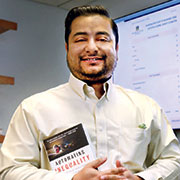
Shion Guha is an Assistant Professor at the University of Toronto's Faculty of Information, cross-appointed to the Department of Computer Science. He directs the Human-Centered Data Science Lab and is affiliated with the Schwartz Reisman Institute for Technology and Society and the Data Sciences Institute. His research focuses on integrating technical methodologies with critical social science approaches to address algorithmic biases in public sectors like child welfare, healthcare, and policing. Key roles include coordinating the Human-Centred Data Science concentration in the Master of Information program and advising national policies on AI ethics. Education: PhD in Information Science and Statistics, Cornell University (2016) MS in Information Science, Indian Statistical Institute (2010) Bachelor of Business Administration, Jadavpur University (India) Research Interests: Human-Centered Data Science, AI ethics, public policy, healthcare systems, algorithmic accountability, and marginalized communities' interaction with technology. His work emphasizes participatory design and real-world impact, addressing high-stakes decisions in public services. Recent Trends in Articles: Focus on participatory AI design in public sectors, algorithmic harms in child welfare, and cultural biases in NLP tools. His studies explore the intersection of technical systems and societal values, advocating for equity and transparency in algorithmic decision-making. Awards: Way-Klingler Early Career Award (2019) Connaught New Researcher Award (2021) Schwartz-Reisman Institute Faculty Fellowship (2023–2025) Grants & Advising: Secured funding from NSERC, CIFAR, and others for projects like the Responsible AI for Health Systems (RAIHS) framework. Advises PhD students through cross-departmental programs and collaborates with organizations like Parkview Health and the ACLU. Current supervisees include Ramaravind Kommiya Mothilal and Seh Young Moon. Labs & Initiatives: Leads the Human-Centered Data Science Lab, contributing to interdisciplinary research on AI ethics. Active in policy advocacy, including work with the Canadian government’s AI Policymakers Expert Group and the CIFAR AI Solutions Network.
Danaë Metaxa is an Assistant Professor at the University of Pennsylvania, with a primary appointment in the Department of Computer and Information Science and a secondary appointment at the Annenberg School for Communication. They co-founded the Penn HCI group and focus on bias and representation in sociotechnical systems, particularly in high-stakes domains like politics and employment. Primary: Department of Computer and Information Science, University of Pennsylvania Secondary: Annenberg School for Communication Their research develops sociotechnical auditing methods that combine algorithmic analysis with user-centered behavioral interventions. Key areas include algorithmic justice, human-computer interaction, and marginalized groups' experiences with AI systems. Recent publications analyze generative AI harms, political content on TikTok, and automated hiring biases. They emphasize youth participation in algorithm auditing and ethical AI education. Danaë teaches courses like Algorithmic Justice and Human-Computer Interaction , and mentors PhD students in interdisciplinary research. They are a General Chair for FAccT 2025 and advocate for equity in AI research opportunities.
Maree Higgins is a Senior Lecturer at the University of New South Wales (UNSW) , affiliated with the Faculty of Arts and Social Sciences and the School of Social Work . She serves as the Social Work Honours Program Convenor and is an Associate of the Australian Institute of Human Rights , with links to the Forced Migration Research Network , Kaldor Centre , and Gendered Violence Research Network . Education : Doctor of Philosophy (Social Work), Australian Catholic University (ACU National) Bachelor of Social Work (Hons First Class), UNSW Research Interests : Maree’s work centers on social justice , human rights , and contextualized lived experience , with a focus on refugee and migrant populations , disability studies , aged care , criminal justice reform , and participatory research methods . Her recent publications emphasize lived experience-led knowledge , co-design practices , and trauma-informed approaches . Grants : She has secured funding for projects like Missing Girls: from childhood runaway to criminalised woman (2022–2025; $204,307) and Ethics and community-based participatory research in refugee studies (2019; $5,000). Supervision : Maree supervises PhD candidates in areas such as intellectual disability and support needs , intimate partner violence , and border policy impacts on asylum seekers . Her completions include honors and master’s theses on autonomy in eating disorder treatment , technology-facilitated abuse , and Aboriginal women in maternity care . Professional Engagement : She collaborates with organizations including STARTTS , Foundation House , Black Dog Institute , and Prince of Wales Hospital , while actively participating in Australian Heads of Schools of Social Work , National Field Educational Network , and African Studies Association of Australasia and the Pacific .
Erin Barnes is a Clinical Associate Professor in the Department of Counselor Education at the University of Iowa’s College of Education. She holds a PhD from the University of Iowa and is credentialed as both a Certified Rehabilitation Counselor (CRC) and National Certified Counselor (NCC). Her career spans over 10 years in higher education teaching and clinical practice, with expertise in rehabilitation counseling, mental health advocacy, and homeless individuals’ well-being. Barnes focuses on experiential learning methods to enhance student skills in clinical mental health and rehabilitation contexts. Education: Barnes earned her undergraduate and graduate degrees from the University of Iowa, with specializations in counselor education and rehabilitation. Research Interests: Her work addresses diversity in counseling professions, psychopathology assessment, educational equity for marginalized groups, and culturally sensitive rehabilitation practices. She emphasizes the intersection of mental health, disability, and socioeconomic factors in her scholarship. Awards: Barnes has received notable recognition, including the 2023 Collegiate Teaching Award and the Rehabilitation Counseling Alumnus of the Year Award (2017). Her leadership development includes participation in the HERS Leadership Institute and the National Research Mentor Network (NRMN). Grants & Advising: Barnes directs grants focused on telemental health, community-engaged practice, and opioid epidemic response. She collaborates on projects like the Center for Community-Engaged Practice and Research for Counselor Educators and the Opioid Workforce Expansion Program. Her mentorship emphasizes inclusive pedagogy and supporting high-achieving, low-income students. Labs/Teams: She leads initiatives through the University of Iowa’s Center for Community-Engaged Practice and Research, fostering partnerships between academic programs and community agencies to address mental health and disability challenges.
Prof. Bettina van Hoven holds the Aletta Jacobs Chair in 'Place, Social Change and Collaborative Research for Wellbeing and Justice' at University College Groningen (University of Groningen). She earned her PhD in 1999 from the University of Plymouth with research on post-socialist rural societies in Germany. Her work focuses on participatory methodologies addressing marginalized groups' spatial experiences, including disability, aging, migration, and environmental challenges. She advocates 'slow science' emphasizing ethical collaboration and community co-creation. Education: PhD (University of Plymouth, 1999), studies in Biology and Physical Geography (University of Osnabrück and Plymouth). Research: Integrates visual methods, community partnerships, and arts-based dissemination to produce inclusive knowledge. Key themes include urban wellbeing, disability inclusion, and participatory resilience-building. Teaching: Project-based learning focused on bridging theory and real-world challenges. Advising: Supervised 9 PhD students since 2013, including works on climate action, Syrian refugee masculinities, and aging-in-place. Labs/Teams: Leads the Aletta Jacobs Chair research group, collaborating with organizations like 'This Abled City' to improve urban accessibility. Serves on editorial boards for Emotion, Space and Society and Journal for Undergraduate Ethnography .
Mehmet Soyer , Assistant Professor at Utah State University’s College of Arts & Sciences , specializes in the School of Social Sciences . His work bridges environmental sociology , social inequality , and pedagogical innovation . Research Focus : Socio-environmental conflicts, hydraulic fracturing impacts, autoethnography, and community-engaged learning. Teaching Philosophy : Advocates for experiential learning, digital tools, and brave spaces in classrooms. Publication Trends : Recent work highlights climate activism, inclusive education, and interdisciplinary approaches to sustainability. Earlier research explores Kurdish identity, sociological theory, and health dynamics.
Mónica González Ybarra is an Assistant Professor in both the Department of Curriculum and Instruction and the Department of Latina/Latino Studies at the University of Illinois at Urbana-Champaign. Her research focuses on centering Chicanx/Latinx communities' linguistic and cultural knowledge in educational spaces, particularly through community-based pedagogies and youth participatory action research. She earned her B.A. in Latina/Latino Studies and Spanish from the University of Illinois (2011), M.A. from the University of Utah (2013), and Ph.D. from the University of Colorado Boulder (2018). Dr. González Ybarra’s work emphasizes the intersection of education, race, and language, advocating for transformative educational practices that honor students' home and community knowledge. Her research explores topics such as translanguaging, resistant pedagogies, and the role of 'chisme' (gossip) as a literacy tool for marginalized girls. She has received awards including the Cultivating New Voices Fellowship (NCTE) and AERA Minority Dissertation Fellowship. Awards: Cultivating New Voices Fellow (NCTE), AERA Minority Dissertation Fellowship Research Focus: Bilingual education, sociopolitical navigation, community literacies Teaching: Prepares bilingual teachers to integrate homeplace knowledge into curricula Her recent publications analyze Latinx youth agency, linguistic expertise, and feminist pedagogies, with a focus on creating equitable educational spaces for communities of color. She collaborates with after-school programs and pre-service teachers to reimagine literacy and leadership frameworks.