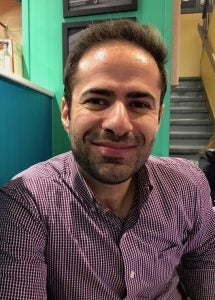
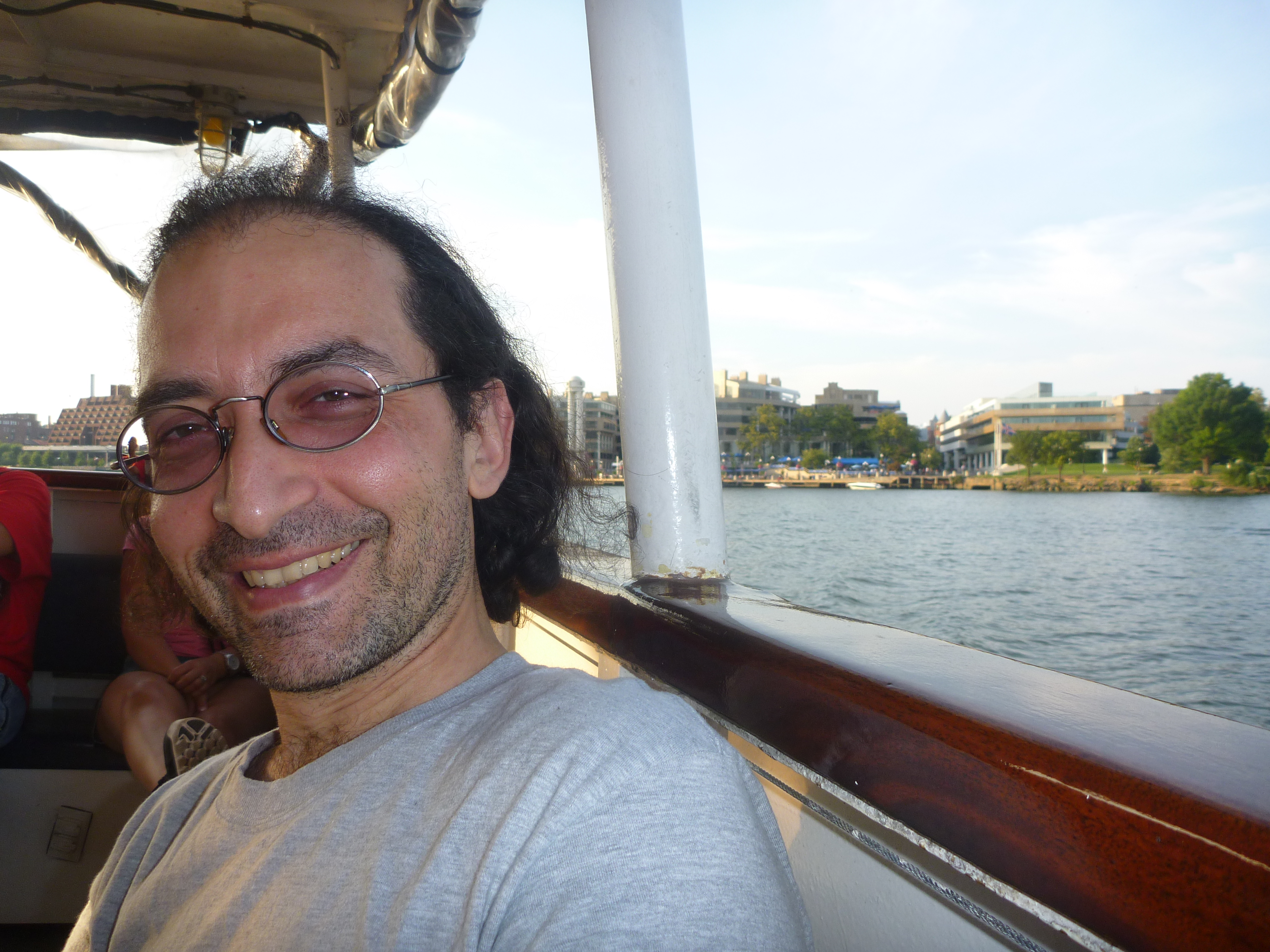
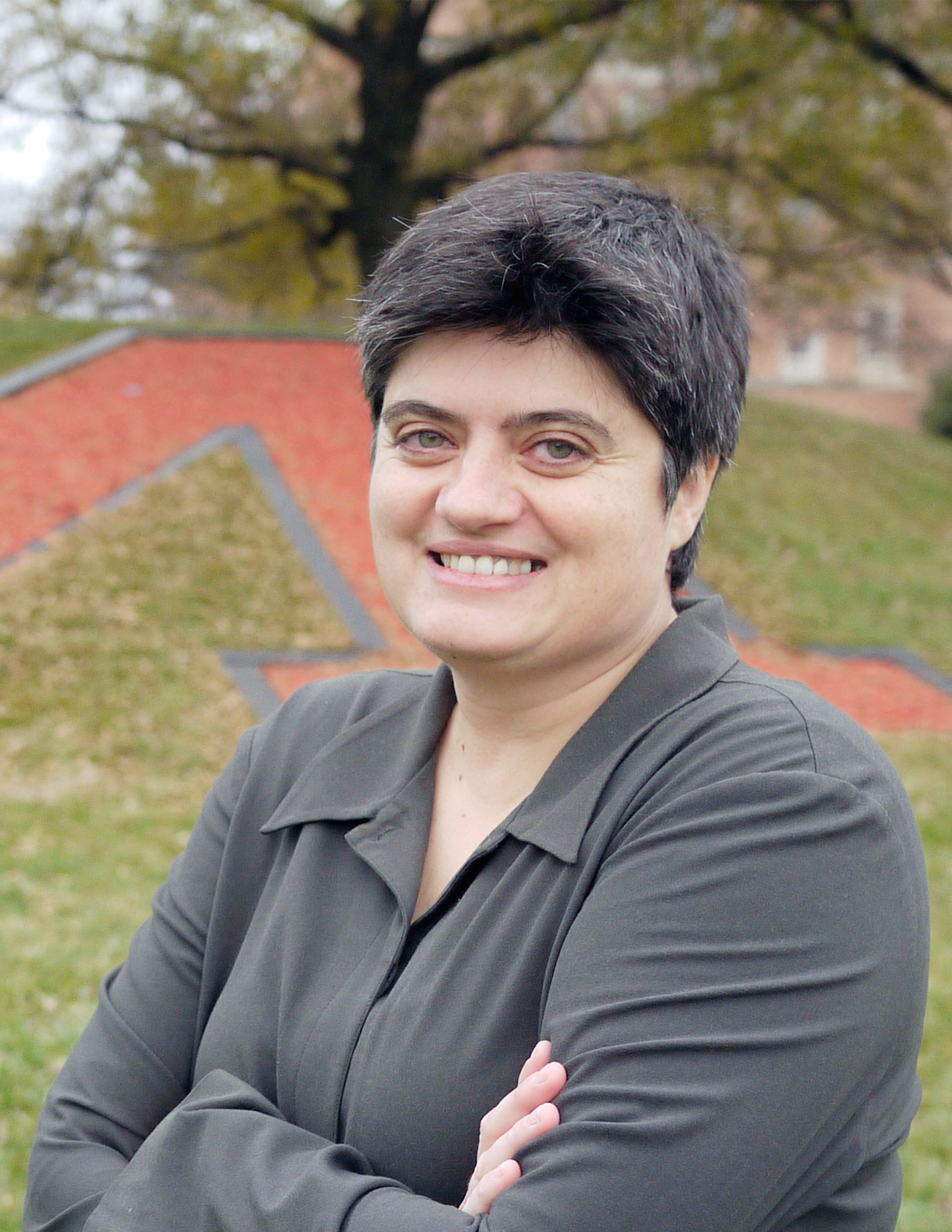
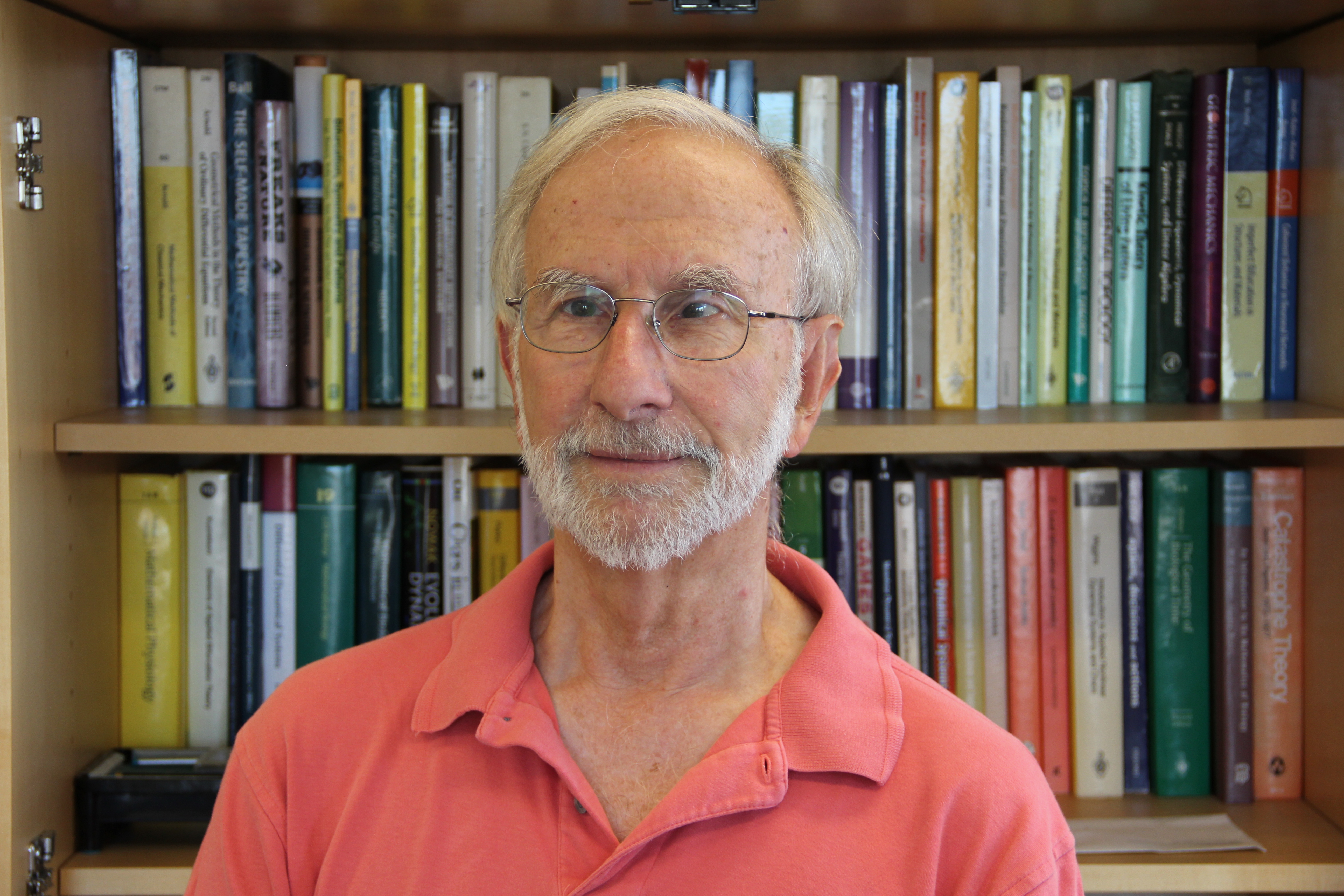
Kieran James Walsh is a Lecturer at the Department of Management, Technology, and Economics of ETH Zürich, affiliated with the KOF Swiss Economic Institute. His primary research focuses on macroeconomics, international finance and trade, finance, and applied econometrics. He has published extensively on topics such as competitive equilibrium uniqueness, fiscal stimulus effects, and asset pricing models. Key Research Areas: Macroeconomic modeling with DSGE frameworks Equilibrium multiplicity and stability in general economic models Climatic and geopolitical risk analysis for economic systems Wealth inequality and financial market dynamics Recent Publications: His 2025 work includes a model of expenditure shocks and heterogeneity analysis in fiscal stimulus responses. Earlier works explore topics like the equity premium puzzle (2020) and climate risk pricing in municipal bonds (2024).
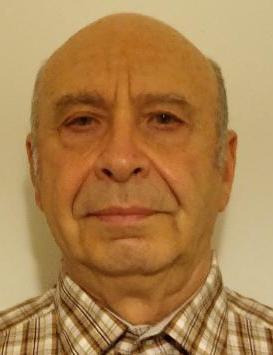
Zaher Hani is a Professor of Mathematics at the University of Michigan, holding the Frederick W. and Lois B. Gehring Professorship. He previously served as an assistant professor at Georgia Tech (2014-2018) and as a Courant Instructor/Simons Fellow at NYU's Courant Institute (2011-2014). He earned his Ph.D. (2011) and M.A. (2008) in Mathematics from UCLA under Terence Tao. Research Focus: Nonlinear partial differential equations (PDE), particularly dispersive wave equations, turbulence theory, and connections to harmonic analysis, dynamical systems, probability, and mathematical physics. Editorial Roles: Editor for Archive for Rational Mechanics and Analysis and Ars Inveniendi Analytica . His work explores the behavior of solutions to nonlinear dispersive PDEs in deterministic and probabilistic frameworks, with applications in quantum mechanics, nonlinear optics, plasma physics, and general relativity. Recent publications focus on wave kinetic equations, turbulence derivation, and Sobolev norm growth. He has collaborated extensively with Yu Deng, Pierre Germain, Jalal Shatah, and others. Scientific Awards: Courant Instructor/Simons Fellow at NYU Frederick W. and Lois B. Gehring Professorship He contributes to expository works and curriculum development, including a Ph.D. thesis on nonlinear Schrödinger equations. His teaching and administrative contact details are listed at the University of Michigan's Mathematics Department.
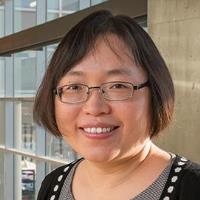
Fan Zhang is a Postdoctoral Fellow at the Rosseland Center for Solar Physics, University of Oslo, specializing in computational fluid dynamics and solar plasma modeling. His research bridges high-order numerical methods with astrophysical applications, particularly in magnetohydrodynamics (MHD) for solar corona and wave propagation studies. University of Oslo Rosseland Center for Solar Physics Research Interests Zhang's work focuses on advancing numerical techniques for shock-capturing and MHD simulations, enabling precise modeling of solar phenomena like coronal mass ejections (CMEs), Alfvén waves, and plasma dynamics. He develops finite-volume and compact nonlinear schemes tailored for unstructured grids, addressing challenges in numerical stability and accuracy. Recent Publications His 15 most recent articles (2025–2021) highlight innovations in time-accurate MHD models (e.g., SIP-IFVM, COCONUT), mesh topology effects on solar simulations, and algorithms for overshooting oscillation suppression. Key themes include computational efficiency, high-order numerical schemes, and two-fluid modeling of solar plasmas. Collaborative Work Zhang frequently collaborates with international researchers on projects like COCONUT, which optimizes preprocessing of magnetic maps for space-weather forecasting and solar cycle modeling. His contributions span algorithm design, model validation, and cross-disciplinary computational frameworks.
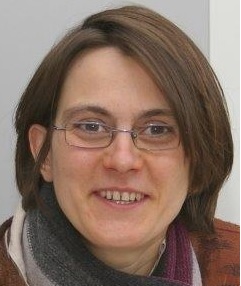
Maria del Carmen Vazquez Pampin is a researcher at the Faculty of Economic and Business Sciences within the Department of Mathematics at the University of Vigo , Spain. She holds a PhD in Mathematics from the University of Vigo (1995) with a dissertation on Uniform Preferences in Banach Lattices , supervised by Dr. Manuel Besada Morais. Fields of Research: Game theory, mathematical economics, numerical analysis, utility theory, and optical modeling in biophysics. Publications: 12 peer-reviewed works since 1998, primarily in Mathematical Social Sciences and Journal of Mathematical Economics , addressing preference ranking systems, model risk quantification, and light propagation algorithms. Key Research Trends include: Preference axiomatization in infinite economic spaces Mathematical modeling of ocular optics Computational finance and semiconductor physics simulations Notable Collaborations with economists like Ricardo Arlegi and Miguel Ballester, and physicists such as Jorge Pérez-Velasco and David Mas. Technical Expertise spans Banach lattice theory, Fourier transforms, and finite difference methods for PDEs.
Alexander Komech is a Researcher at the Institute of Mathematics , University of Natural Resources and Life Sciences, Vienna (BOKU), focusing on mathematical physics , quantum mechanics , and nonlinear partial differential equations . His work bridges Hamiltonian PDEs, soliton theory, and scattering asymptotics. Email: alexander.komech@boku.ac.at Mailing Address: Institute of Mathematics, Gregor-Mendel-Straße 33, 1180 Vienna, Austria Research Interests : Dr. Komech investigates attractors and stability of stationary states in nonlinear wave and field equations. His core work includes Maxwell-Lorentz systems , Klein-Gordon equations , Dirac field interactions , and soliton dynamics , with applications to quantum mechanics and crystal models. Publication Trends : His 15 most recent articles (2017-2023) focus on Hamiltonian PDEs , soliton stability , scattering theory , and discrete space-time models . Key themes include energy decay, asymptotic completeness, and quantum-classical correspondence via rigorous mathematical frameworks. Collaborations : Coauthoring with Elena Kopylova , Tatiana Dudnikova , and Boris Vainberg , he explores connections between nonlinear oscillators, wave equations, and statistical mechanics.
Rui Hu is an Associate Professor at the Department of Mathematics and Statistics within MacEwan University's Faculty of Arts and Science. Their expertise lies in Experimental Design , Robustness in Statistics , and Spatial Statistics , with a strong focus on mathematical analysis and modeling. Education: PhD in Statistics (2016), with a thesis on Robust Designs for Model Discrimination and Prediction of Threshold Probability. Rui's research bridges fractional calculus, functional analysis, and epidemiological modeling, particularly through applications of partial differential equations and Sobolev/Besov space inequalities. Their recent work explores nonlocal operators and extensions via the Caffarelli–Silvestre framework. Rui has published extensively on topics including metapopulation disease models , robust experimental design , and mathematical biology , with a chronological focus from 2011 to 2025. Key trends include stability analysis in population dynamics and innovative applications of probability density functions in sound detection.
Christophette Blanchet-Scalliet is a Lecturer in the Department of Mathematics and Computer Science at École Centrale de Lyon, affiliated with the Camille Jordan Institute (UMR CNRS 5208). She obtained her doctorate in 2001 and her Habilitation to Supervise Research in 2016. Currently serving as Director of the Mathematics and Computer Science Department and Head of the Dual Diploma program at Centrale Lyon-ENSAE, she has been active in academia since 2002, with positions at both École Centrale de Lyon (since 2007) and the University of Nice Sophia-Antipolis (2002-2007). Her research spans applied probability , statistics , stochastic processes , stochastic control , Kriging , and robust optimization . She has developed significant expertise in Ornstein-Uhlenbeck processes, backward stochastic differential equations, Hamilton-Jacobi-Bellman equations, and applications in financial mathematics. Her work bridges theoretical probability with practical applications in risk assessment, insurance, and optimization under uncertainty. Analysis of her recent publications reveals a consistent focus on stochastic processes and their applications, with increasing emphasis on computational methods, sensitivity analysis, and optimization techniques. Her research shows strong connections between theoretical probability and practical applications in finance, insurance, and environmental risk assessment, with growing interdisciplinary collaboration across mathematical fields. Dr. Blanchet-Scalliet has supervised five doctoral students since 2015: Mélina Ribaud (2015-2018), Laura Gay (2016-2019), Thierry Gonon (2019-2022), Benoit Nieto (2021-2024), and Noé Fellmann (2021-2024), typically in co-supervision with colleagues from related research groups. She has secured significant research funding through multiple projects including the CIROQUO Consortium (2020-2028), ANR DREAMES (2021-2025), ANR Oquaido Chair (2015-2020), and others. She is actively involved in the CIROQUO research consortium as co-leader, which brings together multiple academic institutions and industry partners including École Centrale de Lyon, Mines Saint-Etienne, University of Toulouse 3, Stellantis France, BRGM, CEA, IFP Energies Nouvelles, and others to advance research in uncertainty quantification and optimization.
Panagiota Birmpa is an Assistant Professor in the Department of Actuarial Mathematics & Statistics at Heriot-Watt University's School of Mathematical and Computer Sciences, Edinburgh. Her research bridges advanced mathematical theory with cutting-edge machine learning applications, focusing on uncertainty-aware methodologies for complex data systems. She actively supervises PhD students and maintains strong collaborative ties with international research groups in applied mathematics and computational science. Her academic credentials include: BSc+MSc (integrated master) in Applied Mathematics and Physical Sciences (majors in Analysis and Statistics) from National Technical University of Athens (NTUA), 2011 MSc in Pure Mathematics from National and Kapodistrian University of Athens (NKUA), 2014 PhD in Mathematics from University of Sussex, UK, 2018 (Thesis: Quantification of Mesoscopic and Macroscopic Fluctuations in Interacting Particle Systems) Dr. Birmpa's research program integrates theoretical mathematics with modern computational challenges through seven core domains: Generative modeling, Scientific Machine learning, Uncertainty Quantification, Probabilistic Graphical models, Interacting Particle Systems, Optimal transport Theory, and Partial Differential Equations. Her interdisciplinary approach enables innovative solutions for complex data analysis problems across scientific domains, particularly where traditional statistical methods face limitations in high-dimensional spaces. Analysis of her publication trajectory reveals a progression from foundational statistical physics (2017-2018 interface dynamics research) toward contemporary machine learning applications (2021-2024). Her recent work demonstrates increasing sophistication in merging deep learning architectures with uncertainty quantification frameworks, especially for scarce high-dimensional data scenarios where conventional approaches fail. This evolution reflects broader trends in mathematical data science toward robust, interpretable AI systems. No scientific awards or fellowships are currently listed in her professional profile. Dr. Birmpa accepts PhD candidates for projects exploring deep learning-graphical model interfaces with uncertainty quantification, building on her prior AFOSR-funded postdoctoral research at UMass Amherst (2021-2022). Her grant history includes significant support from the Air Force Office of Scientific Research for developing particle-based generative algorithms. She maintains active supervision of graduate researchers while pursuing methodological innovations in probabilistic modeling. Her collaborative research network spans multiple institutions including University of Massachusetts Amherst, with interdisciplinary teams developing novel mathematical frameworks for scientific machine learning. Current projects focus on Lipschitz-regularized gradient flows and generative particle algorithms for high-dimensional data, extending her earlier work on non-equilibrium fluctuations in particle systems.
Tobias Kasper Skovborg Ritschel serves as Assistant Professor (Tenure Track) in the Department of Applied Mathematics and Computer Science (DTU Compute) at the Technical University of Denmark. His research bridges theoretical advances in control systems with practical implementation across energy systems, bioreactors, epidemiology, and medical applications. Ritschel directs a productive research program focusing on computational methods for complex dynamical systems with rigorous thermodynamic foundations. His educational background demonstrates deep technical training: PhD in Applied Mathematics (2015-2018), Technical University of Denmark MSc in Mathematical Modeling and Computation (2013-2015), Technical University of Denmark BSc in Mathematics and Technology (2010-2013), Technical University of Denmark Ritschel's research expertise spans multiple domains of control theory and mathematical modeling. His core competencies include stochastic adaptive control, model predictive control, and optimal control frameworks applied to nonlinear dynamical systems. He specializes in numerical methods for differential equations (stochastic, partial, delay, and differential-algebraic) with computational implementations in MATLAB, C/C++, and Python. His application areas demonstrate remarkable breadth: from oil reservoir management and nuclear power systems to bioreactor operations, epidemiological modeling, and diabetes management technologies. Analysis of his publication trajectory reveals a strategic evolution from foundational work on thermodynamically rigorous reservoir simulation toward increasingly diverse applications. Early publications (2017-2019) focused on oil and gas applications with rigorous phase equilibrium modeling, while recent work (2020-2024) addresses pressing societal challenges including pandemic response strategies, power grid flexibility for renewable integration, and biomedical control systems. This demonstrates his ability to transfer core methodological expertise across disparate application domains while maintaining mathematical rigor. Dr. Ritschel actively supervises numerous students across all academic levels, with recent BSc projects focusing on molten salt reactors and demand-side flexibility in power systems. His teaching portfolio includes advanced graduate courses in stochastic adaptive control, dynamical systems, and time series analysis. He maintains strong industry connections through EU-funded projects including COCOP (Horizon 2020) and OPTION (Innovation Fund Denmark).
Dionisios Margetis is a Professor in the Department of Mathematics at the University of Maryland, College Park. He is affiliated with the Institute for Physical Science and Technology (IPST), Center for Scientific Computation and Mathematical Modeling (CSCAMM), and Maryland NanoCenter. His research lies at the intersection of applied mathematics, theoretical physics, and materials science, focusing on connecting continuum laws (e.g., PDEs) to microscopic models in classical and quantum systems. Education: Diploma (summa cum laude), Electrical Engineering, National Technical University of Athens (1992) SM, Applied Physics, Harvard University (1994) PhD, Applied Physics, Harvard University (1999) Current research interests include mathematical modeling of materials surfaces/interfaces, plasmonics on 2D materials, quantum dynamics of Bose-Einstein condensation, quantum information, classical wave diffraction, and crystal growth under extreme pressure. Application areas span nanoscale light propagation, surface evolution in epitaxy, quantum computing decoherence, and microscale effects at large scales. Selected scientific awards: NSF CAREER Award (2009-2014), two RASA Awards (2013-14, 2018-19), Dean’s Excellence in Teaching Award (2011), and early career prizes from IEEE and Sigma Xi. He has organized numerous workshops on multiscale modeling, quantum systems, and non-equilibrium dynamics. Students & Mentees: Advisees include PhD graduates in Applied Mathematics, Physics, and Mathematics, many of whom now hold academic or research positions. Undergraduate mentees from NSF REU programs worked on topics like Schrödinger equation solutions and crystal-step interactions. Collaborators & Labs: Key collaborators include researchers from MIT, Harvard, Duke, and NIST. He contributes to interdisciplinary teams within the University of Maryland’s CSCAMM and NanoCenter, integrating computational methods with experimental validation.
Konstantina Trivisa is a Professor of Mathematics at the University of Maryland, holding joint appointments at the Department of Mathematics, the Institute for Physical Science and Technology (IPST), and the Center for Scientific Computation and Mathematical Modeling (CSCAM). She currently serves as Director of IPST and Founding Faculty Director of the Masters of Professional Studies in Quantum Computing. Previously, she was Director of the Applied Mathematics & Statistics, and Scientific Computation Program (AMSC) from 2007-2018. She earned her Ph.D. in Applied Mathematics from Brown University in 1996, with a dissertation titled "A priori estimates on the total variation of solutions to hyperbolic systems of two conservation laws via generalized characteristics." Her undergraduate degree is a B.S. in Mathematics with high distinction from the University of Patras, Greece (1990). Trivisa's research lies at the interface between nonlinear partial differential equations and continuum physics, with applications in fluid dynamics, multiphase flows, continuum mechanics, materials science, and mathematical biology. Her work spans theoretical analysis, computational methods, and applications to real-world problems including tumor growth modeling, quantum computing algorithms, and fluid-particle interactions. She has developed innovative mathematical approaches to problems in superfluidity, polymer dynamics, and ferrofluids. Her recent publications demonstrate a strong trajectory toward interdisciplinary applications, particularly in quantum computing and mathematical biology. The 15 most recent articles show increasing focus on computational methods for complex fluid systems, quantum algorithms for differential equations, and mathematical models of tumor growth. Her work bridges pure mathematical analysis with practical applications across multiple scientific domains. Alfred P. Sloan Research Fellowship Presidential Early Career Award for Scientists and Engineers (PECASE) Simons Foundation Fellowship 2023 AWM Fellow 2023 SIAM Fellow 2018 Outstanding Director of Graduate Studies Award Trivisa has advised numerous Ph.D. students and postdoctoral associates, many of whom have secured prestigious academic positions. Her research has been supported by multiple NSF grants including DMS-2008568 (2020-2023), DMS-1614964 (2016-2021), and earlier PECASE funding. She has also received funding from Northrup Grumman and The World Bank for interdisciplinary research partnerships. As Director of IPST, she leads an internationally recognized center for interdisciplinary research at the boundaries between physical, mathematical and life sciences, and engineering.
Max Nielsen is an Associate Professor in the Department of Food and Resource Economics at the University of Copenhagen's Faculty of Science, specifically within the Section for Environment and Natural Resources. He holds a Ph.D. in Economics from the University of Southern Denmark (2004) and has dedicated his career to fisheries and aquaculture economics since 1993. His research interests span five key areas: 1) International fish trade and markets, 2) Fish demand, supply and price formation, 3) Fisheries and aquaculture economics and management, 4) Bio-economic modelling of fisheries, and 5) Eco-system economics and management of the marine environment. He employs econometric techniques including co-integration analysis, bio-economic supply models, and partial equilibrium models in his research. Max Nielsen's recent publications (2024-2025) demonstrate a strong focus on global aquaculture economics, climate change impacts on fisheries, food security, and international market dynamics. His work shows significant international collaboration, particularly with researchers in Bangladesh, Indonesia, and across Europe. His research output includes diverse publication types with 68 journal articles, 43 reports, and 19 memorandums among his 146 total research outputs. He teaches Welfare Economics and Policy for second-year bachelor's students in agricultural and environmental economics, emphasizing the connection between theoretical research and practical policy applications. His philosophy states that 'involvement in good research work makes public consultancies better, and that involvement in public consultancies improves the policy relevance of research.'
Zhan Wang serves as an Assistant Professor in the Department of Food and Resource Economics at the University of Copenhagen's Faculty of Science, where his research examines the intricate relationships between land use, agricultural production systems, and environmental sustainability through advanced computational modeling techniques including general/partial equilibrium frameworks and geospatial data analysis. His work specifically investigates global, national, and gridded-scale impacts of international trade dynamics, climate change scenarios, and transportation infrastructure development on agricultural ecosystems. His academic background includes: PhD in Agricultural Economics from Purdue University (2018-2023) Dr. Wang's research expertise spans agricultural economics, land use change modeling, environmental impact assessment, and innovative economic education methodologies. He employs multi-scale analytical approaches to study sustainability challenges in food, land, and water systems, with particular emphasis on Brazil's agricultural infrastructure and China's ecological programs. His work bridges economic theory with environmental science to inform policy decisions regarding resource allocation and sustainable development. Analysis of his recent publications reveals a strong thematic focus on transportation infrastructure expansion and climate change impacts on agricultural systems, particularly in Brazil and China. His modeling frameworks like GTAP-SIMPLE-G integrate economic and geospatial data to evaluate policy interventions, while his educational tools demonstrate commitment to advancing applied economics pedagogy. The publications consistently employ multi-scale analysis techniques to address complex sustainability challenges. No scientific awards were documented in the available sources. Information regarding student advising, research grants, laboratory facilities, or research teams was not provided in the source materials, though his collaborative publications suggest interdisciplinary partnerships. His external position as Post-doctoral Research Associate at Purdue University (August 2023-June 2025) indicates ongoing academic engagement beyond his primary appointment.
Martin Golubitsky is a Professor in the Department of Mathematics at The Ohio State University and served as Director of the Mathematical Biosciences Institute (MBI) from 2008 to 2016. He previously held professorial roles at Arizona State University (1979–1983) and as the Cullen Distinguished Professor at the University of Houston (1983–2008). His research explores nonlinear dynamics and bifurcation theory, emphasizing symmetry in pattern formation and network architecture in coupled systems, with applications to biological phenomena like animal gaits, visual cortex, and homeostasis. PhD in Mathematics, MIT (1970) Research Interests Dr. Golubitsky investigates symmetry in physical and biological systems, coupled cell dynamics , and mode interactions in reaction-diffusion equations. His work spans nonlinear dynamics , bifurcation theory , and applied mathematics , focusing on transitions between patterns (e.g., squares to stripes) and bursting mechanisms in fast-slow systems. Article Trends His publications highlight symmetry analysis in discrete and continuous systems, bursting dynamics in neuroscience, and hidden symmetries in boundary conditions. Key themes include codimension theory, mode interactions, and applications to biological pattern formation. Scientific Recognition Fellow of the American Academy of Arts and Sciences Fellow of AAAS, AMS, and SIAM Esther Farfel Award (1997) Ferran Sunyer i Balaguer Prize (2001) Moser Lecture Prize (2009) Labs & Collaborations As founding Editor-in-Chief of the SIAM Journal on Applied Dynamical Systems and MBI Director, he led interdisciplinary research bridging mathematics and biosciences. His work involves collaborations with the Mathematical Biosciences Institute and theoretical neuroscience communities.
Pierrette Guichardon is a Professor at Aix-Marseille University, affiliated with the M2P2 laboratory (Laboratory of Mechanics, Modeling and Clean Processes). She leads the Small-scale Processes and Mechanics research team, focusing on fundamental and applied chemical engineering research with emphasis on fluid mechanics and process engineering. Her primary research domains include: Membrane Technology (reverse osmosis, nanofiltration, fouling mechanisms) Microfluidics and microencapsulation systems Micromixing characterization and reaction engineering Thermodynamics of vapor-liquid equilibria Supercritical water oxidation processes Environmental applications in water treatment Her work consistently integrates sustainability principles, particularly in developing eco-friendly synthesis methods and green chemistry approaches for microcapsule production and water purification systems. Analysis of her 15 most recent publications (2016-2025) reveals three dominant research trajectories: 1) Advanced membrane processes with focus on concentration polarization, osmotic counter-effects, and fouling mechanisms; 2) Microfluidic synthesis of polyurea microcapsules using low-toxicity reagents and eco-friendly esters; 3) Fundamental studies in multiphase flows, micromixing kinetics, and thermodynamic modeling of complex mixtures. Her interdisciplinary approach bridges chemical engineering fundamentals with practical environmental applications. No scientific awards were documented in the provided source material. While the source material confirms active research leadership, specific details regarding graduate student advising, grant funding, or collaborative projects were not explicitly mentioned in the available information. Dr. Guichardon operates within the Small-scale Processes and Mechanics team at M2P2, a CNRS joint research unit (UMR 7340) involving Aix-Marseille University and École Centrale de Marseille. This laboratory environment supports her experimental and theoretical work in fluid mechanics, membrane processes, and microscale phenomena, with strong connections to industrial applications in water treatment and materials science.