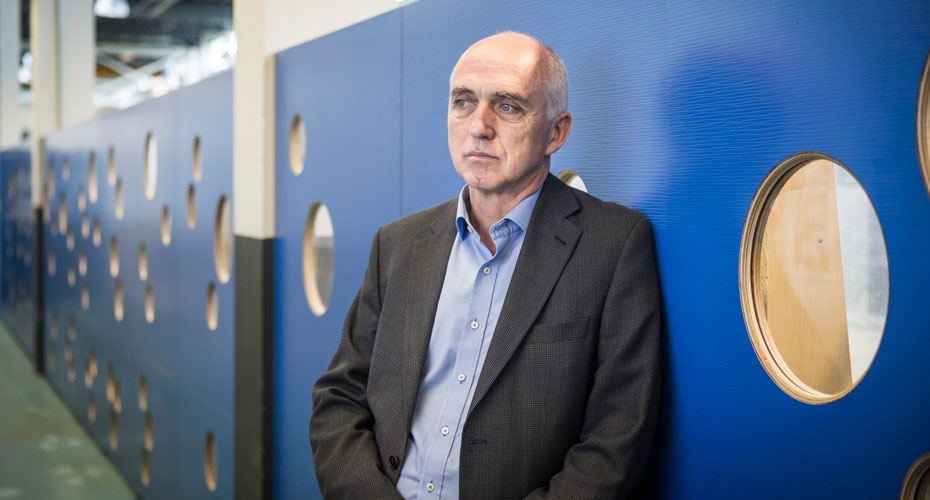
Professor Eugene O’Brien is a leading academic in UCD School of Civil Engineering, part of University College Dublin. His research focuses on enhancing bridge safety through innovative traffic loading analysis methods. He co-founded ROD-IS, a consultancy applying academic insights to real-world infrastructure projects, including assessments of the Malahide Railway Viaduct and Firth of Forth Bridge in Scotland. His work integrates Weigh-in-Motion (WIM) sensors and camera-based monitoring to address critical gaps in assessing long-span bridges under congested traffic conditions. Key projects include developing probabilistic models for bridge lifetime safety, optimizing traffic management to extend bridge lifespans, and reducing environmental impacts through carbon footprint minimization. He has secured significant EU funding, including an €890,000 grant for bridge longevity research. His research group collaborates internationally on projects like the Chacao Channel Bridge in Chile, emphasizing sustainable infrastructure solutions.
Francesca Arnavas is a Research Fellow in Comparative Literature and Literary Theory at the University of Tartu’s Institute of Cultural Research, affiliated with the Faculty of Arts and Humanities. Her work focuses on narrative theory, Victorian literature, cognitive narratology, and fairy tales, with a specialization in Lewis Carroll’s Alice books and their interdisciplinary implications. She holds a PhD from the University of York (2018) and has contributed to international conferences and publications, emphasizing cognitive approaches to literature and cultural dynamics. Education: PhD in English and Related Literature, University of York (2015–2018) Master’s in Economics and Management in Arts, Culture, Media, and Entertainment, University Bocconi (2009–2012) BA in Philosophy, Università Ca’ Foscari Venice (2005–2008) Research Interests: Arnavas explores narrative structures, cognitive approaches to literary analysis, and the intersection of Victorian literature with modern cultural dynamics. Her work bridges traditional literary studies with cognitive science, examining how narrative frameworks shape understanding of fictional worlds and human cognition. Key themes include fairy tale hybridity, uncanny elements in literature, and the evolution of narrative forms across media. Projects: She leads or contributes to projects such as ‘Experimental Cultures of the 1980s–2020s’ (2024–2027) and ‘Unnatural Fairy Tales: A Cognitive Approach’ (2019–2021). Recent creative work includes an exhibition titled ‘Transforming Literary Places’ (2024) as part of Tartu’s European Capital of Culture events. Awards: Recipient of the 2023 Kulka Scholarship from the Cultural Endowment of Estonia for creative academic activity. Teaching and Advising: Taught courses on narrative theory and cognitive humanities. Supervised Laura Kiik’s BA thesis on narrative structures in Miyazaki’s films. Engaged in pedagogical training at the University of Tartu. Publications: Authored monographs on Lewis Carroll and cognitive narratology, edited volumes on fairy tales, and numerous articles in journals like Marvels & Tales and Futures. Her work bridges literary analysis with interdisciplinary themes like eco-criticism and post-pandemic narrative futures.
Satu Ojala is an Associate Professor at the Unit of Social Research, Faculty of Social Sciences, Tampere University. Her research focuses on social policy, labour market dynamics, and work careers, with expertise in quantitative methods and analysis of survey and register data. She has led multiple nationally and internationally funded projects, including 'Demanding Activation – Harming Outcomes?' (2024–2028) and 'Tendered Services and Job Quality' (2024–2026). Her work addresses issues such as precarious employment, active labour market policies, and the impact of economic crises on workers. Key Research Projects: Principal Investigator (PI) of projects like 'Employment and Social Security Careers of the Population out of Labour Force' (Kone Foundation, 2021–2025) and 'The Future of Work: Opportunities and Challenges for the Nordic Models' (Nordic Council of Ministers, 2017–2021). Contributed to studies on workplace discrimination, temporal flexibility, and the effects of temporary employment. Teaching & Grants: Teaches courses on social policy and work life research. Her grants include funding from the Research Council of Finland, The Finnish Work Environment Fund, and the Academy of Finland. She collaborates with institutions such as the Work Research Centre, VATT Institute, and the Finnish Institute of Occupational Health. Labs/Teams: Affiliated with the Work Research Centre (WRC) and collaborates in interdisciplinary teams addressing labour market reforms, social security policies, and workplace well-being.
Craig Evan Pollack, MD, MSc, MHS, is a Professor in the Department of Health Policy and Management at the Johns Hopkins Bloomberg School of Public Health, with joint appointments in the School of Medicine and School of Nursing. He is affiliated with the Welch Center for Prevention, Epidemiology and Clinical Research and the Institute for Health and Social Policy. His research focuses on housing and health, social determinants of health, and cancer health services. MD, University of California, San Francisco (2004) MHS, University of California, Berkeley (2001) MSc, University of Pennsylvania (2008) BA, Brown University (1997) Dr. Pollack’s research examines how housing policies—such as housing vouchers, mobility programs, and place-based initiatives—affect health outcomes, healthcare use, and disparities. He also investigates cancer prevention and control, with a focus on disparities, provider networks, and screening practices. His interdisciplinary work integrates public health, medicine, and policy to inform equitable interventions. His recent publications highlight the health impacts of eviction, foreclosure, housing affordability, and neighborhood environments. He has led studies on Medicaid populations, older adults, and urban communities, often using large datasets and mixed methods. His work appears in top-tier journals including JAMA, Health Affairs, and The Lancet. Robert Wood Johnson Foundation U.S. Department of Housing and Urban Development (HUD) National Institutes of Health (NIH) Dr. Pollack has authored over 100 peer-reviewed articles and mentors numerous students and early-career researchers. He leads collaborative teams across disciplines and institutions, contributing to national health policy discussions on housing, equity, and cancer care. He is actively involved in advising and research leadership, with no indication of retirement or part-time status. His work continues to shape understanding of how social and structural factors influence health and healthcare.
Eric A. Greenleaf is a Professor of Marketing at New York University's Leonard N. Stern School of Business, where he has been a faculty member since 1988. He teaches undergraduate and MBA courses in Introduction to Marketing, Market Research, New Product Development, and Pricing Strategies, as well as doctoral seminars on Pricing Theory and Response and Context Effects in Surveys. Education: Ph.D. in Marketing, Columbia University, 1986 M.B.A., Columbia University, 1981 B.S. in Town Planning and Design, University of New Hampshire, 1977 (Summa Cum Laude) Professor Greenleaf's research centers on consumer behavior in pricing, auctions, and marketing research. His work explores how consumers react to prices, the economics of auctions (particularly in art markets), the application of neuroscience in marketing, aesthetic responses to products, and methodological issues in survey research. He has published in leading journals such as Journal of Consumer Research , Marketing Science , Management Science , and Public Opinion Quarterly . The analysis of his recent publications reveals a consistent focus on behavioral aspects of pricing and auctions, with increasing integration of neuroscience and psychological mechanisms. His work spans experimental design, field studies, and theoretical modeling, often bridging marketing with economics and psychology. Key themes include partitioned pricing, bidding behavior, regret and rejoicing in auctions, and context effects in consumer judgment. Scientific Awards and Honors: Winner, Marketing Science Institute Behavioral Pricing Competition Grant (2004) Winner, MSI Pricing Strategy Competition Research Grant (1994) Nominated for Paul E. Green Award, Journal of Marketing Research (1998) Beta Gamma Sigma Honor Society Phi Beta Kappa Honor Society Summa Cum Laude, University of New Hampshire Professor Greenleaf has received significant research funding, including a large NIH grant (2009) with colleagues in Psychology and Marketing to study public service ads using neuroscience methods. He has advised on school enrollment forecasting in Manhattan. He has held visiting positions at Columbia University, Wharton, and the Haas School of Business. He has not advised any named students in the provided texts, but his long tenure suggests mentorship of numerous doctoral candidates. He is actively engaged in research and teaching, with no indication of retirement or part-time status.
Lisa Hansson is a Professor of Community Planning at Molde University College, specializing in urban governance and transport policy. She is affiliated with the Logistics Department and actively contributes to sustainable mobility, socio-technical change, and multi-level governance research. PhD in Science and Technology Studies (2011), Linköping University MSc in Political Science/Public Administration (2005), Gothenburg University BA in Human Geography/Urban Planning (2003), Karlstad and Gothenburg Universities Her research focuses on sustainable transport systems, visual representation in planning, and policy adaptation. She leads externally funded projects like LEAD (Digital Twins for logistics) and SNAPSHOT (e-commerce transport), with partners including SINTEF and K2 Sweden. Her work bridges political science and transport governance, challenging economic-technical discourses. Recent articles analyze equity in 15-minute city planning, social justice in transport protests, and regulatory governance for autonomous vehicles. She chairs the WCTRS SIG G1 Transport Governance group and serves on the Thredbo Conference Committee. 2023: Co-authored Public Participation in Transport in Times of Change (Emerald) 2021: Chapter on Transport Policy and Governance (Elsevier) 2020: Editorial in Transportation Research Part A Lisa teaches MA/BA courses like Smart Mobility, European Transport Policy, and Future Cities. She supports Master’s and PhD research in sustainable urban development and transport policy.
Deena M. Lin , an Adjunct Professor and part-time faculty member at the University of San Francisco , holds a PhD in Philosophy of Religion and Theology from Claremont Graduate University. She specializes in the intersections of Eastern and Western philosophical and religious traditions, feminist philosophy, poststructuralist thought, and social justice. Education: PhD, Claremont Graduate University (2013) MA, Claremont Graduate University (2007) BA, University of San Francisco (2000) Her research focuses on philosophical theology, comparative religion, and ethical frameworks for addressing race and systemic inequality. Recent collaborative work emphasizes anti-racist, liberatory pedagogical approaches. Her publications include critical reviews of works on Christian privilege, faith crises, and philosophical dialogues between Whitehead and Butler. These works span themes in continental philosophy, process theology, and identity deconstruction.
Dr. Steven Parsons is a Lecturer in Astrophysics and an Ernest Rutherford Fellow at the University of Sheffield's School of Mathematical and Physical Sciences. His research focuses on white dwarf stars and their binary systems, particularly eclipsing binaries that provide precise measurements of stellar properties. As part of the astronomy group, he contributes to understanding stellar evolution, binary star interactions, and the progenitors of Type Ia supernovae. Dr. Parsons received his academic training at: MPhys in Physics with Astrophysics at the University of Kent (2008) PhD at the University of Warwick under Professor Tom Marsh Dr. Parsons specializes in the study of white dwarfs - the incredibly dense remnants of dead stars that have masses similar to the Sun but are only Earth-sized. His research particularly focuses on white dwarfs in binary systems, especially those that eclipse, allowing precise measurements of their properties. He uses telescopes worldwide to investigate these systems to better understand stellar structure, composition, and evolution. A key aspect of his work involves searching for progenitors of Type Ia supernovae in our Galaxy to determine how these white dwarfs gain mass to reach the Chandrasekhar limit and explode, which has implications for cosmological distance measurements. Dr. Parsons' publication record demonstrates a consistent focus on white dwarf binary systems, with particular emphasis on eclipsing binaries that allow precise mass and radius measurements. His work spans observational studies using ground-based and space telescopes, theoretical modeling of binary evolution, and large-scale surveys to identify and characterize white dwarf systems. Recent work shows increasing involvement with major astronomical surveys like Gaia and TESS, expanding the scope of his research to larger stellar populations and connecting observational data with theoretical models of stellar evolution. Dr. Parsons has received several prestigious fellowships supporting his research: ESO/Comite Mixto Post Doctoral fellowship at Universidad de Valparaiso FONDECYT Post Doctoral fellowship Leverhulme Early Career Fellowship STFC Ernest Rutherford Fellowship As an active researcher in the astronomy group at Sheffield, Dr. Parsons collaborates extensively with international teams on white dwarf research. His work with the HiPERCAM project demonstrates his involvement in cutting-edge instrumentation for high-speed astronomy. While specific student advisement details aren't provided, his role as Astronomy L2 Year Tutor indicates significant involvement in undergraduate education and mentorship. His research connects with broader efforts to understand stellar evolution and the role of binary systems in shaping the final stages of stellar life. Dr. Parsons is a key contributor to the 'white dwarf binary pathways survey' which systematically investigates the evolution of white dwarf binary systems. His work connects observational astronomy with theoretical models of binary star evolution, particularly focusing on post-common envelope binaries and systems that may lead to Type Ia supernovae. The team utilizes data from major observatories worldwide and space-based missions to build comprehensive understanding of these stellar systems, with implications for fundamental astrophysics and cosmology.
Magnus Strand serves as Senior Lecturer in Civil Law at the Department of Law, Uppsala University (2025-present) and Associate researcher at the Department of Business Administration (2025-present). Previously, he was Research leader in commercial law (2021-2025), Member of the Education Committee of the Faculty of Social Sciences (2020-2025), and Director of Studies in Commercial Law (2016-2020). He also held a Part-time Professor position at the European University Institute in Florence (2019-2020). Doctor of Laws, Uppsala University (2015) Bachelor of Laws, Lund University (2006) Bachelor of Philosophy, Uppsala University (2006) Associate lawyer at Lindahl law firm (2006-2008) Professor Strand's research focuses on the complex interaction between EU law and national legal systems, with particular expertise in competition law, damages law, and the regulatory challenges posed by artificial intelligence and digital markets. His scholarly work has evolved from traditional EU competition law topics toward the emerging challenges of AI governance. Recent publications demonstrate his ability to identify and engage with cutting-edge legal challenges as they emerge in the digital economy, particularly examining how national legal frameworks interact with EU regulations in commercial contexts. His publication record reveals a clear trajectory from foundational work on competition damages (2010-2017) toward contemporary issues in AI regulation (2022-2025). The most recent articles show increasing focus on algorithmic trading, AI-based regulatory technology, and adaptation of damage law to AI systems. This evolution demonstrates his scholarly agility in addressing rapidly developing legal frontiers while maintaining expertise in core EU law principles. Editor of the European Law Journal (ERT) Member of steering group for Swedish Network for European Law Research (2012-2015) Coordinator for Uppsala University's European Law Moot Court Competition (2008-2012) As an educator and administrator, Strand has significantly contributed to legal education through curriculum development and interdisciplinary approaches. His research leadership extends to multiple funded projects examining regulatory governance in digital markets and AI technology, particularly within financial sectors, demonstrating his commitment to bridging theoretical scholarship with practical regulatory challenges. Professor Strand leads several major research initiatives including "Konkurrenstvister bortom harmoniseringen" (financed by Konkurrensverket), "AI Design Futures," and "AI-based RegTech" (both financed by The Wallenberg AI, Autonomous Systems and Software Program – Humanity and Society). These projects position him at the forefront of legal scholarship addressing the intersection of competition law, digital markets, and AI governance.
Provvidenza Rita D'Urso is a Fixed-term Assistant Professor at the University of Catania's Department of Agriculture Food and Environment (Di3A), specializing in Rural Buildings and Agro-forest Land Planning within the School of Agriculture. Her current position runs from March 1, 2023 to February 28, 2026, as part of the SAMOTHRACE project funded by the European Union through NextGenerationUE. She maintains an office in the Engineering Area at Via Santa Sofia, 100, and conducts research focused on environmental monitoring in agricultural settings. Dr. D'Urso earned her PhD in Agricultural, Food and Environmental Science from the University of Catania in 2022 with a thesis on measuring ammonia and GHG concentrations in dairy housing systems. She holds dual qualifications as both a Civil and Environmental Engineer (2017) and an Agronomist and Forestry Doctor (2020), demonstrating her interdisciplinary expertise. Her educational background includes two Master's degrees earned cum laude : one in Agricultural Sciences and Technologies (2018) and another in Building Engineering and Architecture (2016). Her research interests center on environmental monitoring in agricultural contexts, particularly focusing on ammonia and greenhouse gas emissions from livestock housing systems. She investigates innovative measurement techniques using infrared photo-acoustic multi-gas analyzers and low-cost devices, while also exploring mitigation strategies including green wall systems and bio-acidification treatments. Her work bridges agricultural engineering with environmental protection, addressing critical challenges in sustainable farming practices. Analysis of her recent publications reveals a strong focus on precision environmental monitoring in agricultural settings, with particular emphasis on spatial and temporal distribution of gaseous emissions in dairy barns. Her research demonstrates methodological rigor in measurement techniques while maintaining practical applications for emission reduction in livestock farming. She frequently employs geospatial analysis and contributes to systematic literature reviews that advance understanding of environmental impacts across agricultural sectors. National Scientific Qualification as Associate Professor (2023) PhD awarded with honors (unanimous decision by Committee, 2022) Multiple Master's degrees earned 110/110 cum laude Active member of the Italian Society of Agricultural Engineering (AIIA) Dr. D'Urso serves as an academic advisor and collaborator on multiple research projects, frequently working with Professor Claudia Arcidiacono as primary supervisor. Her research group focuses on developing practical solutions for environmental challenges in Mediterranean agricultural systems, with particular attention to measurement methodologies and mitigation strategies that can be implemented in real-world farming operations. She maintains active collaborations with European research institutions through COST Training School programs.
Ludovic Saint-Bauzel is a lecturer at Sorbonne University and head of the IRIS team at the Institute of Intelligent Systems and Robotics (ISIR). His work focuses on improving physical human-robot interaction for individuals with autonomy loss through disability or aging. Specializes in computational models of disabilities Develops user intent detection through sensor fusion Active in IFRH and Fedrha federations IEEE and True Life Lab member Research interests His research centers on Human-robot physical interaction with applications in Elderly care , Smart-walker development, and Walking exoskeleton systems. Key methodologies include: Sensor fusion (depth cameras, force sensors, IMUs) Adaptive robot control systems Pathological movement modeling Motor intent prediction algorithms Article trends show consistent focus on haptic communication (6/15), assistive robotics (9/15), and sensorimotor interaction (11/15) across 2013-2022 publications. Laboratory involvement : Leads the IRIS team at ISIR, part of Fedrha (Federation for Research on Disability and Autonomy) with 50+ research teams.
Aurel Bulgac is a Professor in the Department of Physics at the University of Washington, part of the College of Arts & Sciences. His research focuses on quantum many-body nuclear physics, nuclear theory, and superfluid systems. He specializes in time-dependent density functional theory (TDDFT) and its applications to nuclear fission, vortex dynamics in superfluids, and cold atomic gases. Affiliations: Nuclear Theory Group, Department of Physics, University of Washington Research Interests: Exploring the dynamics of strongly interacting fermionic systems, including nuclear fission processes, vortex behavior in superfluids, and quantum turbulence. His work combines advanced computational methods like quantum Monte Carlo and high-performance computing to model complex phenomena such as neutron star crust dynamics and unitary Fermi gases. Key Contributions: Developed frameworks for real-time simulations of nuclear fission, quantized vortices, and superfluid turbulence. His research bridges nuclear physics, condensed matter, and quantum many-body theory, with applications to neutron stars and cold atoms. Scientific Awards: Fellow of the American Physical Society, APS Outstanding Referee Grants & Advising: Leads projects supported by initiatives like the UNEDF collaboration, focusing on computational nuclear physics. Advises students on topics spanning nuclear dynamics and quantum simulations. Active in developing numerical tools like the LISE and W-SLDA packages for simulating fermionic systems. Labs/Teams: Member of the Nuclear Theory Group at UW, collaborating internationally on projects involving fission dynamics, vortex physics, and computational methods.
Yuan Yang is an Associate Professor at the University of Illinois Urbana-Champaign (UIUC) in the Department of Bioengineering and an adjunct Associate Professor at Northwestern University's Feinberg School of Medicine. He also holds a part-time role as Associate Professor at Carle Foundation Hospital. His research focuses on neural engineering, neurorehabilitation, and biomedical imaging, particularly in stroke recovery and Alzheimer's disease biomarkers. Yang leads the Illinois-Carle Joint Neural Engineering and Rehabilitation Laboratory (JNERL), collaborating on innovative solutions for neurological conditions using advanced imaging and neurotechnology. Education: PhD in Signal and Images from Telecom ParisTech (2013), MS in Biomedical Engineering from Shanghai Jiao Tong University (2010), and BS from Central South University (2008). He has held faculty positions at UIUC, the University of Oklahoma, and Northwestern University since 2017. Research interests include cortical connectivity, non-invasive brain stimulation (e.g., HD-tDCS), functional MRI analysis, and electrophysiological signal processing. His work bridges engineering and clinical applications, addressing motor impairment in stroke and cognitive decline in Alzheimer's. Key contributions include studies on sex differences in brain connectivity and neuroplasticity, as well as developing targeted interventions using EEG and neuroimaging. Yang has received prestigious awards such as the NSF CAREER Award and serves as an IEEE Distinguished Lecturer. Professional service includes roles in grant review for NIH, AHA, and international bodies, along with editorial positions in major journals like Frontiers in Neuroscience and Medical & Biological Engineering & Computing.
Christopher Gill is a Professor of Computer Science & Engineering at the McKelvey School of Engineering, Washington University in St. Louis. He joined the faculty in 2001 after roles as a research associate and industry experience at companies like SBC Communications and Teknivent Corp. His research focuses on real-time, embedded, and cyberphysical systems, emphasizing system software architectures and assurance of timing, memory, and fault-tolerance in heterogeneous environments. Education: DSc, Washington University in St. Louis, 2002 MS, Missouri University of Science & Technology, 1997 BA, Washington University in St. Louis, 1987 (English & Biology, cum laude, National Merit Scholar) Research Interests: Professor Gill develops novel system software for distributed real-time systems, addressing software complexity and unpredictable environments. His work spans middleware, operating systems, virtualization, and trustworthy AI in cyberphysical systems (as part of the Center for Trustworthy AI in CPS). Awards & Affiliations: NSF CAREER Award recipient ACM Distinguished Member (2022) Vice Chair, IEEE Technical Committee on Real-Time Systems (2020–present) Teaching & Labs: He employs a lab-based approach, emphasizing hands-on software engineering. His lab focuses on high-quality software design and implementation, with projects in earthquake safety applications (e.g., cyberphysical systems for structural health monitoring).
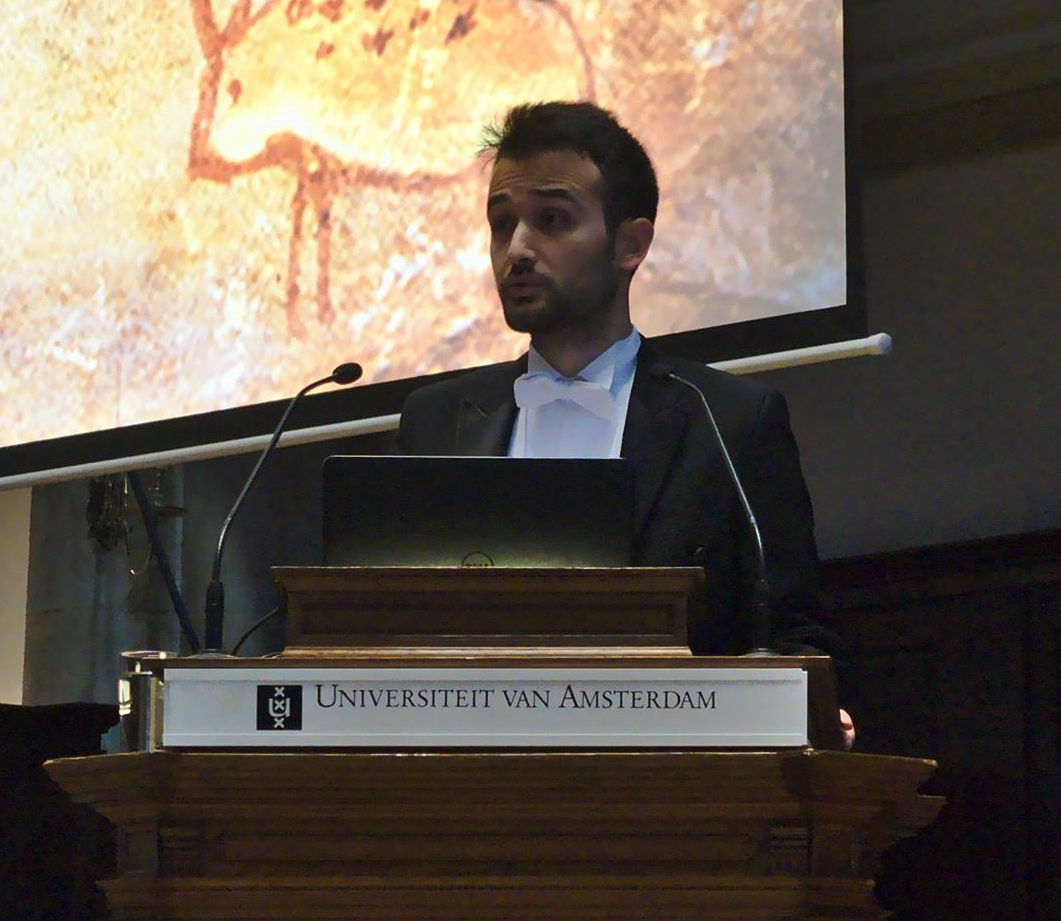
Sezer Karaoglu is a Lecturer and part-time postdoctoral researcher at the Computer Vision Group, Informatics Institute, University of Amsterdam. He is also the CTO and Co-Founder of 3DUniversum, a technology spin-off of the University of Amsterdam that provides state-of-the-art 2D/3D computer vision solutions. Additionally, he has co-founded other startups including Scanm and 3DHealthScan. Dr. Karaoglu received his PhD from the Computer Vision Group, Informatics Institute, University of Amsterdam, with research funded by the COMMIT project. His educational background includes a double master's degree: an optics, image and vision master's degree from University Jean Monnet in France and a media technology master's degree from Gjovik University College in Norway. He completed his undergraduate studies with honors at Istanbul Technical University in Telecommunication Engineering. His research focuses on Artificial Intelligence and 3D Computer Vision, with specific interests in SLAM, re-localization, 3D reconstruction, 3D object detection and segmentation, synthetic media, generative AI, deep fake creation and detection, and VR/AR technologies. His work has significant applications in healthcare, particularly in using deepfake technology for therapy for victims of sexual violence-related PTSD and moral injury, as documented in a Frontiers in Psychiatry article. Analyzing his recent publications reveals a strong trend toward neural scene reconstruction, intrinsic image decomposition, and the application of diffusion models to computer vision problems. His research increasingly integrates 3D scene understanding with language models, as evidenced by his work on language-to-3D scene generation. The applications span from healthcare (deeptherapy.ai) to media authenticity (deepfake detection) and industrial applications. ICT.OPEN Poster Award (3rd Position), Oct'13 Pascal VOC'12 Classification challenge, 2nd Position, Sep'12 Pascal VOC'12 Detection challenge, 3rd Position, Sep'12 Best project award at Nokia and CIMET project competition Outstanding reviewer at CVPR'21 PROVADA Future Startup Battle winner Best Dutch AI startup by Valuer Dr. Karaoglu has supervised numerous PhD, Master's, and Bachelor's students, demonstrating his commitment to academic mentorship. His research has attracted significant media attention, with features on Dutch national TV programs including NPO, VPRO, RTL, and international outlets like BBC News. He has received research funding through the COMMIT project during his PhD studies and has successfully translated his research into commercial applications through his startups. His work on deepfake technology has been applied in innovative therapeutic contexts through DeepTherapy.ai, showing the real-world impact of his research. Dr. Karaoglu leads research efforts at the Computer Vision Group Amsterdam and through his company 3DUniversum, which has developed applications like weScan, DeepTherapy, and FairFake.ai. His team collaborates with various institutions including the Netherlands Film Academy for grief therapy applications using deepfake technology. The DeepTherapy project represents a particularly impactful application of his work, using deepfake technology to help victims of sexual violence confront perpetrators in therapeutic settings.


.jpg)