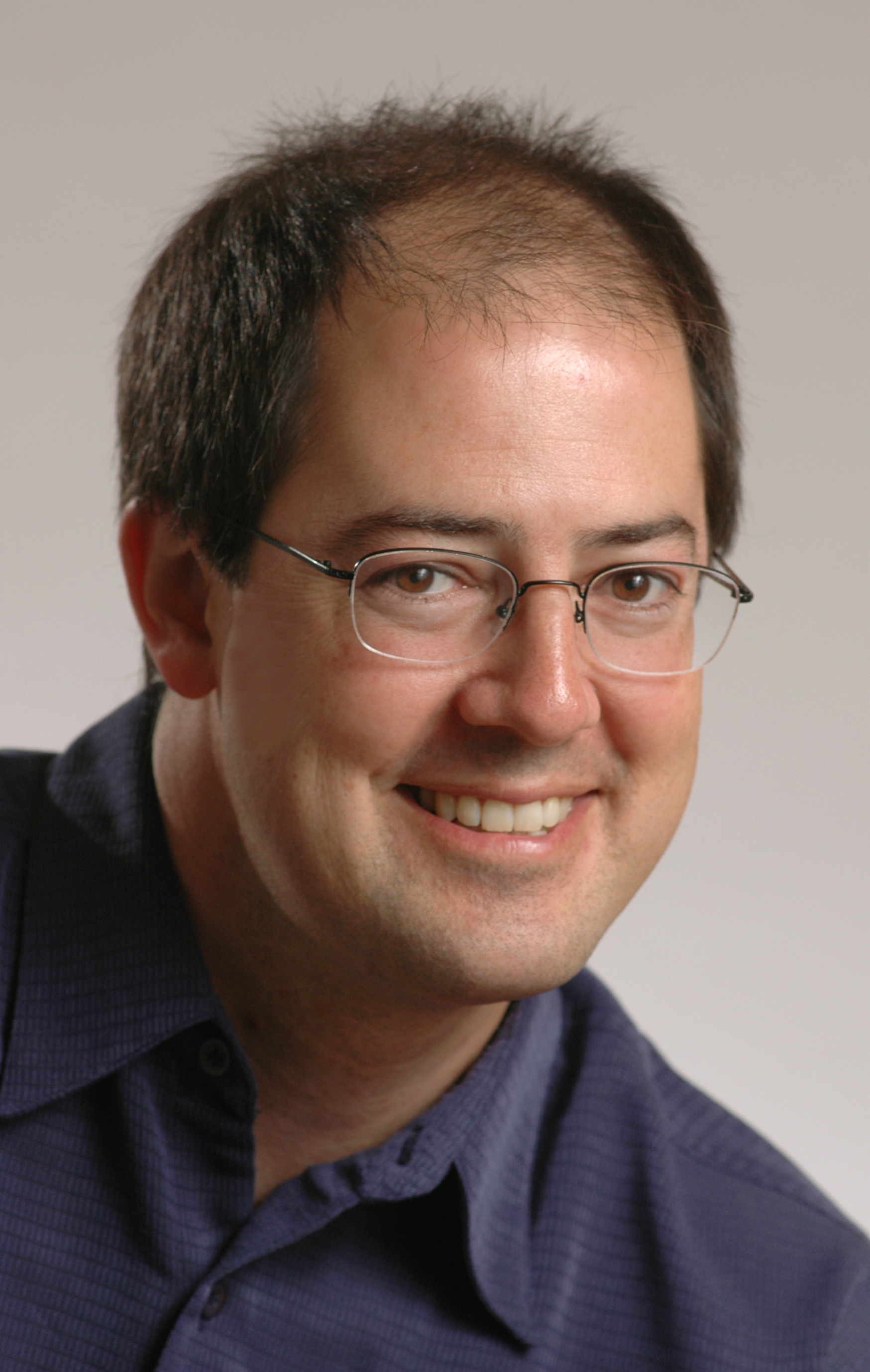
Laurence Hunt is an Associate Professor of Experimental Psychology at the University of Oxford and a Tutorial Fellow in Psychology at St John's College. He leads the Laboratory of Decision Dynamics, focusing on neural mechanisms underlying decision-making. His work integrates mathematical models with electrophysiological techniques in humans and animal models to study behavioral and neural data. Key roles include the Wellcome/Royal Society Sir Henry Dale Fellowship and prior postdoctoral positions at UCL and Oxford's Department of Psychiatry. Education: D.Phil in Neuroscience from the University of Oxford (2007-2011), pre-clinical Medicine at Cambridge University. Research emphasizes cognitive computational neuroscience, particularly how neural systems process value, uncertainty, and learning. Collaborators include notable figures like Matthew Rushworth and Christopher Summerfield. Scientific Awards: Wellcome/Royal Society Sir Henry Dale Fellow Advising & Grants: His research is supported by fellowships, though specific grants or advisees are not detailed. The Hunt Lab actively explores topics such as reward processing, decision dynamics, and neural geometry using advanced analytical methods. Labs/Teams: Director of the Laboratory of Decision Dynamics, part of the Department of Experimental Psychology. Engaged in interdisciplinary collaborations across Oxford and international institutions.
Mark Lee is an Adjunct Professor in the People Analytics department at NYU’s Tandon School of Engineering, specializing in Technology Management and Innovation. He holds a Ph.D. in Engineering Psychology from Georgia Institute of Technology (1996). Currently, he serves as Head of Research, Analytics, and Business Development at UL ComplianceWire, focusing on pharmaceutical and medical device manufacturing training. His research leverages large datasets to improve healthcare safety through regulatory compliance and best practices. Courses taught include Human Factors Engineering, Workplace Design, and Predictive Analytics. Education: Ph.D. in Engineering Psychology, Georgia Tech (1996) Key Roles: Adjunct Professor, Head of Research at UL ComplianceWire Research Focus: Human Factors, Training Systems Design, Healthcare Compliance His work spans auditory display systems for aviation (e.g., 3D audio cockpit interfaces) and ergonomic design for industrial products. Recent projects emphasize data-driven solutions for regulatory challenges in life sciences. Publications highlight studies on visual search strategies, age-related cognitive performance, and application of signal detection theory in decision-making. He actively collaborates with industry and government entities, exemplified by the FDA-UL Cooperative Research Agreement.
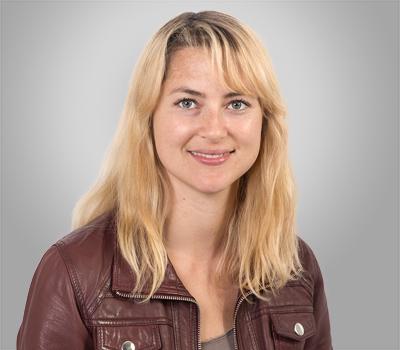
Lena Hoffmann is a Professor at the University of Bielefeld, affiliated with the Faculty of Linguistics and Literary Studies. She is based in the Department of Literary Studies and also associated with the Department of Cultural Studies. Her academic work centers on children's and young adult literature, particularly its role in primary education. She is a member of the Center for Childhood and Youth Research (ZKJF) and BiSEd, highlighting her interdisciplinary engagement in educational research. Faculty of Linguistics and Literary Studies Department of Literary Studies Department of Cultural Studies Center for Childhood and Youth Research (ZKJF) BiSEd Members Her research interests include children's literature, young adult fiction, German literary studies, and the pedagogical application of literature in primary education. She is module responsible for 'Aspects of German Literature Relevant to Primary Schools,' indicating strong teaching involvement. Lena Hoffmann serves on key academic committees, including the Habilitation Committee, the Faculty Conference, and the Commission for Research and Young Academics, where she acts as deputy. Despite a dedicated research profile section, no specific publications or research projects are listed in the available data. Children's Literature Young Adult Literature German Literature Literary Studies Cultural Studies Primary Education She actively contributes to academic governance and educational development at Bielefeld University, with no indication of part-time status or retirement. Her office is located at UHG U7-217, and she can be reached via email at lhoffmann24@uni-bielefeld.de or by phone at +49 521 106-3706.
Kristofer Pister is a Professor in the Department of Electrical Engineering and Computer Sciences at the University of California, Berkeley. He co-directs the Berkeley Sensor and Actuator Center (BSAC) and the Ubiquitous Swarm Lab. His career spans groundbreaking innovations in Micro/Nano Electro Mechanical Systems (MEMS), Control Systems, and Low-Power Circuits, with a focus on Smart Dust and synthetic insects. Education: Ph.D. and M.S. in EECS from UC Berkeley (1992, 1989); B.A. in Applied Physics from UC San Diego (1986). His research areas include MEMS , Control Systems , Robotics , and Integrated Circuits , with recent work on self-powered micro-sensors, crystal-free radios, and interplanetary swarm networks. Key awards include the ISA Albert F. Sperry Founder Award (2009) , Alexander Schwarzkopf Prize (2006) , and the NSF CAREER Award (1996) . He has authored numerous influential publications in wireless sensor networks and microrobotics. His lab, Ubiquitous Swarm Lab , explores distributed robotics and swarm intelligence. Pister emphasizes open collaboration in research, ethical conduct in academia, and efficient resource utilization for graduate students.
Soumya Dutta is an Assistant Professor in the Department of Computer Science and Engineering at the Indian Institute of Technology Kanpur (IITK), where he leads the INSIGHT: Intelligent Scientific and Visual Computing of Big Data Research Group. He joined IIT Kanpur in October 2022 after working as a Scientist II at Los Alamos National Laboratory (LANL) from July 2019 to August 2022, and previously as a Postdoctoral Research Associate at LANL from June 2018 to July 2019. His educational background includes a Ph.D. and M.S. in Computer Science and Engineering from The Ohio State University (2011-2018), where he was part of the GRAVITY research group, and a B.Tech. in Electronics and Communication Engineering from West Bengal University of Technology, India (2005-2009). Research Interests: Dr. Dutta's research focuses on the intersection of machine learning, visual computing, big data, and high-performance computing. His primary research areas include Machine Learning for Visual Computing and Image Analysis, Big Data Visualization and Analytics, Data Science and HPC, Machine Learning for Scientific Computing, and Explainability and Interpretability of AI Models. His work addresses various big data characteristics including the 5 Vs: Volume, Velocity, Variety, Veracity, and Value. He develops techniques that make complex machine learning models more interpretable and explainable, enabling their effective adoption in real-life applications across scientific domains, social media, IoT, healthcare, and industry applications. Dr. Dutta's research group has secured multiple funded projects including: DAVi: An Intelligent Data Analytics and Visualization Framework (funded by ISRO), Intelligent Visual Computing of Extreme-scale Data for Accelerating Scientific Discovery (IIT Kanpur Initiation Grant), Enabling Interactive Big Data Analytics and Visualization at Exascale (SERB), Development of AI-Enabled National Portal for Efficient Search of Missing People (C3iHub), and Proactive and Generalized Deepfake Defense Mechanisms (C3iHub). Best Reviewer, Honorary Mention Award for IEEE Transactions on Visualization & Computer Graphics (TVCG), 2021 Best Paper Award at ISAV 2021, co-located with Supercomputing (SC) LAAP Award at Los Alamos National Laboratory, 2021 Best Paper Award at TopoInVis 2019 Best Paper Award at ISAV 2018, co-located with Supercomputing (SC) Best Poster Award in 12th Annual CSE Student Poster Exhibition, The Ohio State University, 2018 Best Poster Award in 11th Annual CSE Student Poster Exhibition, The Ohio State University, 2017 Best Paper Honorable Mention Award at IEEE Visualization Conference (IEEE VIS) 2016 Dr. Dutta actively mentors a large group of students including Ph.D., M.Tech., and B.Tech. students. His current Ph.D. students include Shanu Saklani, Sankhadeep Bhowmick, Ananya Chaturvedi, Arpita Santra, Anubhav Dixit (co-supervised), and Robin Shah. He has supervised numerous M.Tech. students with thesis topics ranging from uncertainty-aware neural networks to deepfake detection. Dr. Dutta currently teaches courses including CS360 - Introduction to Computer Graphics and CS661 - Big Data Visual Analytics. The INSIGHT research group collaborates internationally with researchers from Meta, Oak Ridge National Laboratory, and National Taiwan Normal University. The group's work focuses on building machine learning and data science-based solutions to analyze large-scale multifaceted data in a scalable way, enabling interactive and interpretable analytics of complex data from scientific simulations, social media, IoT, healthcare, and other application domains.
Parastoo Abtahi is an Assistant Professor in the Computer Science Department at Princeton University. She leads the Situated Interactions Lab (Ψ Lab) as part of the Princeton HCI Group, focusing on AR/VR and spatial computing. Prior to Princeton, she worked at Meta Reality Labs Research. PhD in Computer Science from Stanford University BSc in Electrical and Computer Engineering from University of Toronto (Engineering Science program) Her research explores wearable interactive technologies that augment human intelligence in physical contexts through: Input on-the-go: Low-effort, privacy-preserving multimodal interfaces Intelligent output: Timely, minimal multisensory systems Situated AI: Personalizable, predictable, safe physical-digital interaction Recent publications analyze: Drone-based haptic illusions for AR/VR Microgestures for mobile AR input Interactivity in explainable AI systems Temporal dynamics in VR haptics Awards include: 2025 Google Research Scholar Award CHI 2019 & 2018 Honorable Mentions She teaches courses like: COS 436: Human-Computer Interaction COS IW: AR Meets AI
Dr. Melanie Brunner is a Lecturer in Medieval Studies at the School of History, University of Leeds, and has served as Editorial Director of the International Medieval Bibliography since October 2024. She studied at the University of Augsburg and the University of Edinburgh before completing her part-time PhD at the University of Leeds (2006). Her roles at Leeds include Project Editor of the IMB (2007–present) and teaching in Medieval Studies (2013–present). Education MA in Medieval History, Modern History, and English Language, University of Augsburg PhD in Medieval Studies, University of Leeds (part-time) Melanie's research focuses on late medieval ecclesiastical and religious history, particularly the intersections of theology, canon law, and papal administration. Her work explores the mendicant orders (especially Franciscans), voluntary poverty, religious reform, and papal court dynamics in Avignon (1305–1378). She has contributed to collaborative projects such as Imitation: Mechanismen eines kulturellen Prinzips im Mittelalter (DFG-funded) and Stilus Curiae (DFG), and previously participated in the EU COST Action New Communities of Interpretation . Her recent publications analyze decision-making in the Avignon papal curia, Franciscan polemics, and ecclesiastical authority structures. She supervises PhD students in areas including mendicant orders, bishop administration, and medieval religious discourse, often in co-supervision with colleagues.
Rita Cucchiara is a Full Professor at the Department of Engineering 'Enzo Ferrari' of the University of Modena and Reggio Emilia. She leads the AImageLab research laboratory, part of the Artificial Intelligence Research and Innovation Center (AIRI) in Modena. Her research focuses on Computer Vision, Pattern Recognition, Machine Learning, and Multimedia, with applications in video surveillance, medical imaging, human-centered AI, and generative models. She is actively involved in interdisciplinary projects like ELIAS (European Lighthouse for AI Sustainability) and ELSA (European Lighthouse on Secure AI). Her recent roles include being elected Rector of the University of Modena and Reggio Emilia in 2025. She has organized and participated in major AI events, including workshops at NeurIPS, CVPR, and ECCV, and has contributed to advancements in multimodal models, deepfake detection, and trustworthy AI. Education details are not explicitly provided, but her extensive academic and research experience at the University of Modena underscores her expertise. She collaborates with institutions like NVIDIA, CINECA, and industry partners such as Digital Design and NVIDIA's AI Technology Center. AImageLab's projects include developing systems for medical imaging, ethical AI, and generative adversarial networks (GANs) for design surfaces. She co-organizes initiatives like the ELLIS Summer School on Large-Scale AI and contributes to policy discussions on AI ethics and societal impact. Her work spans from foundational research (e.g., vision transformers, continual learning) to applied projects (e.g., DDGan system for surface printing). Key grants and collaborations include the FAIR project and PNRR-M4C2 initiatives. She advises students and researchers in AI, with 7 PhD positions funded under national programs. Her leadership roles in AIRI and AImageLab highlight her commitment to bridging academia and industry, fostering innovation in AI-driven solutions for sustainability and healthcare.
Joanna Millstein is a Post-doctoral Fellow in Geophysics at the Colorado School of Mines. She earned her Ph.D. in Geophysics from the Massachusetts Institute of Technology in 2023 as part of the MIT-WHOI Joint Program in Oceanography and Engineering, where her dissertation focused on The Flow and Fracture of Antarctic Ice Shelves . She also holds an A.B. in Earth Sciences from Dartmouth College (2017). Her research centers on the deformation and fracture of glacier ice, working at the intersection of fracture mechanics, remote sensing (particularly SAR and InSAR processing), statistical mechanics, and stochastic models. Millstein uses observational data from satellites and field measurements to derive mechanical and statistical models for glacier ice processes, with particular focus on reconciling observations of ice fracture and iceberg calving with theoretical models. Her work aims to resolve the nonlinear physics of glacier ice to better understand future global climate change impacts. Millstein's publication record shows a strong focus on Antarctic ice dynamics, with recent work applying extreme value theory to analyze 47 years of iceberg calving events. Her research demonstrates consistent attention to both theoretical modeling and practical applications for understanding climate change impacts on polar regions. She has developed computational tools including CryoCloud, reflecting her commitment to open science and cloud-based infrastructure for cryosphere research. Her scientific contributions span ice shelf mechanics, fracture prediction, rheology, and statistical modeling of glacial processes. Millstein maintains an active research presence with publications extending to 2025, demonstrating ongoing contributions to the field of glaciology and climate science. She is affiliated with the glaciology research center at Colorado School of Mines and maintains an active GitHub presence with climate-related code repositories. Her work bridges theoretical geophysics with practical climate change impact assessment, particularly regarding ice sheet stability and sea level rise projections.
Noah J. Cowan is a Professor of Mechanical Engineering at Johns Hopkins University's Whiting School of Engineering, with secondary appointments in Computer Science, Electrical & Computer Engineering, and Neuroscience. He is the founder and director of the Locomotion in Mechanical and Biological Systems (LIMBS) Laboratory, part of the Laboratory for Computational Sensing and Robotics. His research focuses on neuromechanics, robotics, and control theory, bridging neuroscience, biomechanics, and engineering. Cowan's work investigates how organisms achieve precise locomotion and applies these insights to advance robotics, neuroprosthetics, and rehabilitation technologies. Education: B.S. Electrical Engineering (Ohio State, 1995), M.S. and Ph.D. Electrical Engineering & Computer Science (University of Michigan, 1997/2001). Postdoctoral fellowship at UC Berkeley (2001–2003) before joining Johns Hopkins. Research Interests: Neuromechanics of motion, bio-inspired robotics, multisensory integration in animals (e.g., electric fish, Drosophila), and sensorimotor control in clinical contexts like cerebellar ataxia. His lab studies how neural circuits interact with biomechanics to produce movement, with applications to robotic design and neurological disorder treatments. Awards & Recognition: Presidential Early Career Award for Scientists and Engineers (2010), IEEE Fellow, NSF CAREER Award (2009), and multiple teaching and research excellence awards at Johns Hopkins. His work has been published in top journals like Nature , Proceedings of the National Academy of Sciences , and IEEE Transactions on Robotics . Outreach & Mentorship: Longtime mentor for high school and undergraduate students in STEM, leading programs like the Baltimore Ingenuity Project and WISE. Served as team leader for the STEM Achievement in Baltimore Elementary Schools (SABES) initiative. Key Projects: Development of the LIMBS Lab’s VR systems for animal studies, bioelectric navigation technologies for medical devices, and collaborations with clinicians on upper limb movement disorders. His team’s research on electric fish and fruit flies has revealed principles of adaptive control applicable to robotics and AI.
Roberta Sinatra is a Professor in Social Data Science at the University of Copenhagen, with part-time affiliations at ITU Copenhagen, ISI Foundation (Italy), and CSH (Austria). She co-founded the NERDS Research Group at ITU and co-leads the Pioneer Centre for AI in Copenhagen. Research Interests: Her work spans computational social science, network science, and data science, focusing on fairness in AI, scientific careers, and human mobility. Recent projects include analyzing child protection algorithms and modeling urban bicycle networks. Scientific Awards: ERC Consolidator Grant Villum Young Investigator Grant Complex Systems Society Junior Prize DPG Young Scientist Award for Socio- and Econophysics Sapere Aude: Starting Grant Publications: Her research, often in top-tier venues like Nature and Science , explores interdisciplinary themes, including AI ethics, gender disparities in science, and social network dynamics. Labs & Teams: She leads research initiatives at the Center for Social Data Science (KU) and co-founded the NERDS Research Group at ITU, fostering international collaboration in network science and AI ethics.
Daria Frank is a Senior Teaching Associate in Computational Mathematics at the Department of Applied Mathematics and Theoretical Physics (DAMTP), University of Cambridge, a position held since 2023. Previously, she served as Sultan Qaboos Early-Career Research Fellow and College Lecturer in Mathematics at Corpus Christi College (2020-2023), Director of Studies in Mathematics at Selwyn College (2019-2020), and Research Associate in Fluid Mechanics at DAMTP (2015-2019). Her academic foundation includes a PhD from DAMTP, University of Cambridge (2012-2015), Part III Mathematical Tripos at Cambridge (2009-2010), Diploma in Mathematics from Friedrich-Alexander-University of Erlangen-Nuremberg (2010-2011), and undergraduate studies in Mathematics and Physics at the same institution (2006-2009). Dr. Frank's research centers on complex fluid phenomena with emphasis on buoyancy-driven environmental flows , rotating plume dynamics , and practical engineering applications . Her work investigates pollution dispersal mechanisms, tornado formation processes, and energy-efficient building systems through rigorous theoretical and experimental frameworks. Key contributions address multiphase interactions in stratified environments and vortex behavior under rotational forces, bridging fundamental fluid dynamics with real-world environmental challenges. Publication trends reveal consistent focus on geophysical and environmental fluid mechanics, with recurring themes of density stratification effects, multiphase plume behavior, and rotational influences across atmospheric, oceanic, and built environments. Her work demonstrates strong interdisciplinary connections between theoretical modeling and practical engineering solutions. Dr. Frank held the prestigious Sultan Qaboos Early-Career Research Fellowship, supporting her investigations into fluid mechanics phenomena. Her academic service includes significant teaching responsibilities as Director of Studies in Mathematics at Corpus Christi College. As Director of Studies, she oversees undergraduate mathematics education while conducting research within DAMTP's fluid dynamics community. Her Sultan Qaboos Fellowship provided dedicated research time for fluid mechanics investigations, complementing her teaching role through integration of cutting-edge research into pedagogy. Current work continues to explore environmental fluid dynamics with potential applications in climate modeling and sustainable engineering.
Furkan Alaca is an Assistant Professor at Queen's University's School of Computing, part of the Faculty of Arts and Science. His research focuses on user authentication systems, addressing security and usability challenges. He holds a Ph.D. (2018) in Computer Science from Carleton University, an M.A.Sc. (2012) in Electrical and Computer Engineering, and a B.Eng. (2010) in Communications Engineering, all from Carleton University. His academic career includes teaching roles at Queen's University and the University of Toronto Mississauga, where he taught courses such as Cryptography, Cybersecurity, and Discrete Mathematics. He is affiliated with Queen's Security Research Group and Computer Security Research Lab. Research interests include computer and internet security, usable security, authentication mechanisms, and systems security. He has contributed to advancements in web authentication frameworks, malware analysis, and privacy-preserving technologies. His work spans conferences like IEEE and ACM, with notable publications in cybersecurity, machine learning, and network efficiency. Current teaching includes CISC 447 (Introduction to Cybersecurity) and CISC 468 (Cryptography). He has advised on courses ranging from undergraduate programming to graduate-level security topics.
Clark Olson is a Professor in the Division of Computing & Software Systems at the University of Washington Bothell, part of the School of Science, Technology, Engineering & Mathematics. He earned his Ph.D. in Computer Science from UC Berkeley (1994), M.S. in Electrical Engineering (1990), and B.S. in Computer Engineering (1989) from the University of Washington, Seattle. Education: Ph.D. in Computer Science (2017) from University of California, Berkeley M.S. in Electrical Engineering (1990) from University of Washington, Seattle B.S. in Computer Engineering (1989) from University of Washington, Seattle His research focuses on computer vision, robot navigation, and clustering algorithms. He has developed techniques for Mars rover terrain mapping, subspace clustering, and geometric feature matching. His work bridges theory and application in autonomous systems and image analysis. Analysis of his publications reveals expertise in computer vision (8 papers), clustering algorithms (4 papers), and robotics (5 papers). Key subtopics include Mars exploration (3 papers), Hough transforms (3 papers), and probabilistic methods (3 papers). Professor Olson teaches courses ranging from introductory programming (CSS 161-162) to advanced topics in computer vision (CSS 487-587) and algorithm design (CSS 549). He also advises on the CSSE Capstone (CSS 497) projects requiring rigorous prerequisites and structured evaluation criteria.
Heather Knight is an Assistant Professor in the Department of Electrical Engineering and Computer Science at Oregon State University, part of the College of Engineering. Her research focuses on social robotics and human-robot interaction, emphasizing non-verbal communication and the design of non-anthropomorphic robots. She directs the CHARISMA Research Lab, which applies principles from performing arts to enhance robot charisma through expressive motion and interaction design. Dr. Knight holds a Ph.D. in Robotics from Carnegie Mellon University (2016), and dual M.S. degrees in Robotics (Carnegie Mellon) and Electrical Engineering & Computer Science (MIT, 2008), alongside a B.S. in Electrical Engineering from MIT (2006). She also leads Marilyn Monrobot, a robot theater company producing comedic performances and an annual Robot Film Festival. Her work bridges technical innovation with societal impact, exploring how robots can better communicate intent through motion and interaction. Notable contributions include the 'Sanitizerbot' project for playful public health support and the development of Laban-based motion frameworks for expressive robotics. Awards include being named to Forbes' 30 Under 30 in Science (2011) and her TED talk on robot comedy. Key Research Themes: Multi-robot formations, expressive motion design, human-robot social dynamics, and ethical integration of AI in robotics. Recent Projects: VR storytelling with social robots, service robots in workplace environments, and motion-based affective communication. Her articles span topics from robot humor generation to industrial light communication systems, reflecting a commitment to both foundational research and applied solutions for human-robot coexistence.