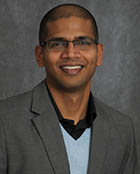
Zihan Zhou is an Assistant Professor at the College of Information Sciences and Technology, Penn State University, specializing in computer vision, machine learning, and 3D reconstruction. His research bridges geometric modeling, image processing, and human-computer interaction, with applications in assistive technology and creative design. Email: zuz22@psu.edu His work focuses on robust face recognition, sparse representation, and vision-language approaches for converting 2D CAD drawings into 3D parametric models. Recent projects include neural rendering for wireframe-to-image translation and data-driven 3D scene modeling. The 15 most recent publications highlight his contributions to end-to-end floorplan generation, depth estimation, trajectory prediction, and structured 3D modeling. These works integrate convolutional neural networks, graph construction, and optimization algorithms. Projects like Building Energy Savings by Tuning Indoor Lighting underscore his interdisciplinary approach, combining computer vision with environmental sustainability.
Pedro Felzenszwalb is a Professor of Engineering and Computer Science at Brown University , with a research focus spanning computer vision, artificial intelligence, machine learning, and algorithms. Born in Rio de Janeiro, Brazil, he earned his BS in Computer Science from Cornell University (1999) and MS/PhD in EECS from MIT (2001/2003). He previously held a faculty position at the University of Chicago (2004-2011) before joining Brown in 2011. Education : PhD in EECS, MIT (2003) MS in EECS, MIT (2001) BS in Computer Science, Cornell University (1999) His research integrates computer vision and AI, emphasizing scalable algorithms for object recognition, image segmentation, and probabilistic modeling. Key methodologies include deformable part models, belief propagation, and dynamic programming. His work has significant applications in early vision tasks, scene understanding, and geometric constraints in 3D object recognition. Pedro’s publications demonstrate a trajectory from foundational graph/image algorithms (2004-2006) to advanced machine learning approaches (2010-2023), with recurring themes in optimization, clustering, and multiscale modeling. Notable journals include Journal of the ACM , IEEE Transactions , and Communications of the ACM . Scientific Awards : ACM Grace Murray Hopper Award IEEE Technical Achievement Award PASCAL Visual Object Challenge Lifetime Achievement Prize Longuet-Higgins Prize NSF CAREER Award He has received NSF funding for projects including Graph Cut Algorithms (2012-2015) and Object Recognition with Hierarchical Models (2008-2013). At Brown, he teaches graduate courses in machine learning, linear systems, and pattern recognition.
Prof. Nina Kazanina is a faculty member in the Department of Basic Neurosciences at the University of Geneva’s Faculty of Medicine. She co-directs the NCCR Evolving Language and previously served as an Associate Professor in Psychology and Cognitive Neuroscience of Language at the University of Bristol’s School of Psychological Science. Research focuses on the neural mechanisms underlying language, memory, and cognitive domains Lab employs EEG, MEG, fMRI, and behavioral methods Translational work targets language assessment in neurodegeneration and stroke Recent work explores grammatical abstraction in language models, neural oscillations in syntax, and reward-modulated memory. Her lab investigates how the brain encodes linguistic categories and hierarchical structures, bridging neuroscience and theoretical linguistics. Key translational applications include cognitive assessment across the lifespan. Lab members include postdocs (Theo Desbordes, Berk Gercek, Mamady Nabe, Itsaso Olasagasti) and PhD student Katarina Labancova. Contact: nina.kazanina@unige.ch
Carlos Guestrin is the Fortinet Founders Professor of Computer Science at Stanford University, Director of the Stanford AI Lab (SAIL), and Senior Fellow at the Stanford Institute for Human-Centered AI (HAI). He also serves as Chief Scientist at Visual Layer and Virtue AI, and is a Member of the National Academy of Engineering. His research centers on Machine Learning Methods, Explainability, Fairness & Ethics of AI, and Machine Learning Systems. He develops interpretable and reliable models, addresses algorithmic fairness, and builds efficient large-scale ML systems through frameworks like XGBoost. His work bridges theoretical rigor with real-world applications in healthcare and human-centered AI. His recent publications (2023–2025) demonstrate leadership in generative AI evaluation, model reliability, and ethical frameworks. Key trends include developing live benchmarks for research synthesis, on-device calibration techniques, multi-objective optimization with constraints, and societal impact assessment tools—showcasing a trajectory from foundational ML systems to responsible AI deployment. Honors include: Member of the National Academy of Engineering Details about his advising and grant activities were not provided in source materials, though his leadership roles indicate extensive mentorship and funding oversight. As Director of SAIL, he shapes one of the world’s premier AI research centers, while his HAI fellowship drives interdisciplinary initiatives ensuring AI advances human welfare. His industry roles at Visual Layer and Virtue AI translate academic research into practical AI solutions.
Peter Kleiweg is a researcher in the Computational Linguistics group within the Faculty of Arts at the University of Groningen, specializing in computational approaches to Dutch language analysis and dialectology. His primary research domains include: Computational Linguistics and Natural Language Processing Dialectology and Dialectometry Language Variation and Syntax Phonotactics and Parameter Setting Recent publications demonstrate a consistent trajectory in developing computational frameworks for linguistic research, particularly through tools like SPOD (Syntactic Profiler of Dutch) and AlpinoGraph for treebank analysis. His work bridges theoretical linguistics with practical tool development, emphasizing quantitative methods for dialect variation studies and syntactic profiling in Dutch. As an active member of Groningen's Computational Linguistics research team, Kleiweg contributes to collaborative projects advancing Dutch language processing through innovative computational methodologies and open-access tools.
Berke Özenç is a full-time Lecturer in the Department of Computer Engineering at the Faculty of Engineering and Natural Sciences, Işık University. He teaches core computer science courses including Computer Networks, Android Programming, Microprocessors, Computer Organization, Data Structures and Algorithms, and Object Oriented Programming across multiple academic periods from 2023-2025. His educational qualifications include: PhD in Computer Engineering from Işık University Institute of Science (2018-2025) Master's Degree in Computer Engineering with thesis from Işık University Institute of Science (2016-2018) Bachelor's degree in Software Engineering from Işık University Faculty of Engineering (2011-2016) with 50% scholarship Dr. Özenç's research centers on computational linguistics for Turkic languages, specializing in morphological analysis of Turkish and Azerbaijani Turkish. His work integrates computer science with linguistic theory to develop tools like morphological analyzers and explore syntactic structures. Key contributions include visual modeling techniques, finite-state transducer implementations, and systematic studies of morphotactics for grammatical categories like person and tense. No scientific awards were documented in the source materials. Regarding academic mentorship and research funding, the available information does not specify any graduate students, advising relationships, or grant acquisitions.
Dr. Tazar Hussain is a Lecturer in Computing Science at the School of Computing, Ulster University , where he teaches deep learning and IoT. He completed his PhD at Ulster University on IoT management frameworks for decision-making under unreliability and worked as a part-time Research Associate on the BTIIC 'Data to Action' project. Previously, he served as a Lecturer at King Saud University (9 years) , securing research funding from NPST and DSU. Education: PhD (Ulster University), MSc in Data Telecommunication and Networks (Salford University), Bachelor of Information Technology (Sarhad University) Research Focus: Deep Learning, NLP, IoT Security, Explainable AI, and Human Activity Recognition (HAR) Projects: Active member of the PwC Advanced Engineering and Research Centre (2021-2026), specializing in Few-Shot Learning and Smart Cities His work bridges IoT systems and cybersecurity , with a focus on intrusion response mechanisms. Publications span machine learning applications in security, risk-based decision frameworks , and C4I systems . He is a certified IBM Security Specialist and trained in smart cities and cloud technologies. Key Trends: 1) Application of Explainable AI in pathology LIS systems, 2) Cognitive modeling for IoT cyberattack responses, 3) Risk-based decision-making in IoT environments, 4) Cost-sensitive intrusion response systems, 5) Formal methods (e.g., Situation Calculus) in cybersecurity Collaborations include Invest Northern Ireland and BTIIC , with expertise aligning to UN Sustainable Development Goals in digital security and smart infrastructure.
Gang Tan is an Associate Professor at the Pennsylvania State University's College of Engineering, Department of Computer Science and Engineering. He also holds the James F. Will Career Development Professorship and is affiliated with the Institute for Computational and Data Sciences (ICDS). His research focuses on binary reverse engineering , cybersecurity , Internet of Things (IoT) security , machine learning fairness , and information flow security . He has led numerous NSF-funded projects, including work on precise binary analysis, IoT policy enforcement, and automated fairness repair in AI systems. Recent work trends include memory safety validation , pseudocode extraction , and control-flow integrity mechanisms. His 127+ research outputs reflect deep engagement with static program analysis , cache side-channel detection , and secure kernel-driver interfaces . Scientific Awards: James F. Will Career Development Professorship Gang Tan has secured multiple grants from the National Science Foundation (NSF) and U.S. Navy for projects like Sliver (information flow verification) and Semantics-Directed Binary Reverse Engineering . His work involves advising teams on IoT safety, and he has 19 active or completed grants since 2008.
Mengjun Xie serves as Professor and Head of the Department of Computer Science & Engineering at the University of Tennessee at Chattanooga (UTC), holding dual distinguished titles as Guerry Professor and UC Foundation Professor. He directs the UTC InfoSec Center, a hub for cybersecurity research and education, and teaches advanced courses including Algorithm Analysis, Network Security, and Software Engineering. His leadership spans departmental administration, curriculum development, and strategic initiatives in computer science education. Education: PhD in Computer Science, College of William and Mary, 2010 (Supporting Areas: Cybersecurity) Dr. Xie's research spans Cybersecurity, Cloud/Edge Computing, Mobile Computing, Social Network Analysis, Big Data Analytics, and Computer Education. His work focuses on practical security solutions for IoT systems through knowledge graph applications, remote live forensics for Android devices, and blockchain-based IoT platforms. He pioneers educational tools for hands-on cybersecurity training, emphasizing privacy technologies and cloud-based lab development. His publications demonstrate consistent innovation at the intersection of theoretical research and real-world implementation. Recent publications (2022-2024) reveal a strong trend toward knowledge graph applications in cybersecurity, particularly for IoT forensics and log anomaly detection. His research bridges cloud security challenges with educational outreach, evidenced by developments like ForensiQ for IoT forensics and hands-on lab materials for privacy education. This dual focus on cutting-edge security research and pedagogical innovation defines his scholarly impact. Dr. Xie actively mentors students through thesis and dissertation supervision and serves as Faculty Advisor for UTC MocSec Cyber Defense since 2018. His service portfolio includes: Faculty Member, UTC Quantum Initiative (2022-Present) Committee Member, UTC Faculty Senate (2020-2024) Project Supervisor, UTC Employee COVID-19 Self-Check Application (2020-2021) Committee Chair, UTC CAE-CD Re-designation Committee (2022-2023) Committee Member, CECS Outreach and Research Committee (2023-2025) As Director of the InfoSec Center , he leads a multidisciplinary team advancing cybersecurity research, education, and community engagement through the CAE-CD program, industry partnerships, and national collaborations including NSA-sponsored initiatives.
Ross Greer is an Assistant Professor in the Department of Computer Science & Engineering at the University of California Merced. He leads the Mi³ Lab, focusing on machine intelligence, human-agent interaction, and safe autonomous systems. Education : B.S. and B.A. in EECS, Engineering Physics, and Music from UC Berkeley (2015), M.S. in Electrical & Computer Engineering from UC San Diego (2018), Ph.D. in Electrical & Computer Engineering at UC San Diego (2021) under Mohan Trivedi and Shlomo Dubnov. His research explores computational intelligence for open-world adaptability, robustness to rare events, and safety in chaotic environments. Key applications include autonomous driving, driver state analysis, trajectory prediction, and AI-assisted musical creativity. Recent publications emphasize vision-language models, active learning for 3D object detection, and safety metrics. Awards include the 2024 Interdisciplinary Research Award, Henry Booker Award for Ethical Engineering, and multiple best poster/grand prizes. Scientific Awards : 2024 Interdisciplinary Research Award 2024 Henry Booker Award for Exemplary Ethical Engineering Postdoctoral Networking Fellowship (Germany's Academic Exchange Service) Grand Prize (AWS Automotive Day competition at IEEE Intelligent Vehicles Symposium, 2023) Best Poster Awards (2021/2023 Jacobs Research Expo) He also co-authored the textbook Deep and Shallow: Machine Learning in Music and Audio (Chapman & Hall, 2023) and serves as a music director for UCSD's Symphonic Student Association and UC Merced's marching band.
Deniz Yuret is a Professor in the Department of Computer Engineering at Koç University , Istanbul, and the founding director of the KUIS AI Center . Previously, he spent 12 years at the MIT AI Lab and co-founded Inquira, Inc. His research focuses on Natural Language Processing and Machine Learning , with significant contributions in dependency parsing , language modeling , grounded language learning , and character-level NLP . He has pioneered frameworks like Knet , a deep learning library in Julia, and AutoGrad.jl for automatic differentiation. Deniz's academic work spans neural architectures for language-robot interaction, transfer learning in low-resource NMT, and context embeddings for grammatical category acquisition. His recent publications emphasize transformer models , multimodal systems , and efficient language modeling . He has supervised multiple graduate students, including Emre Can Açıkgöz (PhD, UIUC), Onur Kuru (M.S. 2016), Saman Zia (M.S. 2016), and Osman Baskaya (M.S. 2015). His projects include the TUBITAK 1001 (2016-2018) and ReGROUND (2015-2018) in collaboration with international institutions.
Niranjan Balasubramanian is an Assistant Professor in the Department of Computer Science at Stony Brook University with additional affiliations in the Department of Biomedical Informatics and the Center of Excellence in Wireless & Information Technology (CEWIT). His research focuses on Natural Language Processing and Information Retrieval systems that extract, understand, and reason over textual information. Education: PhD, University of Massachusetts Amherst (Center for Intelligent Information Retrieval) MS, Computer Science, University at Buffalo (2003) His research spans question answering for elementary education, event schema generation from news, machine learning for information retrieval, energy-efficient mobile search, and automatic Wikipedia content generation. Recent work explores causal reasoning in event extraction, multimodal claim verification, authorship fairness, and secure coding with large language models. Analysis of his 15 most recent publications (2024-2025) reveals intensive focus on advancing NLP through causal/temporal reasoning, multimodal verification, and LLM optimization. Key trends include psychological modeling of human language, energy-efficient architectures, and addressing misattribution in authorship analysis. Scientific Awards: No awards mentioned in provided text Advising and grants information was not provided in the source materials. His postdoctoral background at the University of Washington's Turing Center and industry experience at Syracuse University's Center for Natural Language Processing inform his applied research approach. Labs and Teams: Affiliated with Stony Brook's Center of Excellence in Wireless & Information Technology (CEWIT), contributing to interdisciplinary AI initiatives while maintaining primary focus in the Computer Science department.
Jan-Matthias Braun is an Associate Professor at the Maersk Mc-Kinney Moller Institute, University of Southern Denmark, specializing in Applied AI and Data Science. His research bridges artificial intelligence, robotics, and medical device engineering. Current projects focus on explainable AI integration in colon capsule endoscopy Development of real-time FPGA-based systems for colorectal diagnostics Biomechanical modeling for adaptive orthotic devices His work emphasizes cross-disciplinary applications of machine learning in healthcare, particularly for gastrointestinal disease detection and assistive robotics. Publications demonstrate expertise in deep neural networks, hardware acceleration, and smart environment control systems. Teaching responsibilities include: Advanced cybersecurity courses Deep learning applications in epilepsy detection Mentorship in capsule endoscopy image analysis
Daisuke Kawahara is a Professor at Waseda University's Faculty of Science and Engineering and a Visiting Professor at the National Institute of Informatics. He holds a PhD in Informatics from Kyoto University (2005) and has previously served as Associate Professor at Kyoto University and Senior Researcher at NICT. His research spans natural language processing, computational linguistics, and AI infrastructure. Education: Ph.D. in Informatics, Kyoto University (2005) Graduate Studies in Intelligent Informatics, Kyoto University (1999–2002) M.Eng. in Electronic & Communication Engineering, Kyoto University (1997–1999) B.Eng. in Electrical Engineering, Kyoto University (1993–1997) Research Focus: Kawahara specializes in NLP, including syntactic parsing, semantic role labeling, language resource development (e.g., JGLUE benchmark), and multilingual corpus construction. His work integrates machine learning with linguistic theory to improve text understanding systems, error correction tools, and dialogue agents. Publication Trends: His recent articles emphasize Japanese and Chinese NLP, neural network-based parsing, and practical applications like educational tools and pandemic information systems. Common themes include benchmarking, corpus annotation, and cross-lingual adaptation. Awards: 情報処理学会 自然言語処理研究会 優秀研究賞 (2025) 言語処理学会最優秀論文賞 (2024, 2023) 科学技術分野の文部科学大臣表彰 (2017) Multiple Best Paper Awards from NLP conferences (2000–2025) Projects & Advising: He leads JSPS-funded projects like Building General Language Understanding Infrastructure (2021–2025) and Acquisition of Knowledge Frames (2018–2021). No student advisees are listed. Labs & Teams: Collaborates with RIKEN Center for Advanced Intelligence Project and maintains ties to Kyoto University's NLP lab. Focuses on large-scale language modeling and collaborative AI-human intelligence frameworks.
Mansour Mehranfar is a Researcher at the Chair of Computing in Civil and Building Engineering, Technical University of Munich (TUM). He contributes to advancing AI applications in digital twinning of the built environment through the AI4Twinning research initiative, focusing on automated generation of semantic building models from point cloud data and imagery. His research centers on Digital Twinning, Building Information Modeling (BIM), and Computer Vision, with specific expertise in point cloud processing, semantic segmentation, and 3D reconstruction. He develops AI-driven frameworks that integrate deep learning with geometric modeling to convert raw sensor data into semantically enriched digital representations of buildings and infrastructure components. Recent publications reveal a strong emphasis on staircase modeling, indoor space documentation, and domain adaptation techniques. Key innovations include hybrid top-down/bottom-up approaches for Manhattan-world structures, parametric prototype model fitting, and multi-task learning frameworks that simultaneously handle scene parsing and 3D reconstruction from single images. Dr. Mehranfar actively supervises Master's theses, guiding students in topics such as load-bearing wall detection, staircase modeling automation, and BIM change management. He teaches Engineering Databases at TUM and collaborates within the university's BIM-Lab ecosystem, leveraging facilities for robotic fabrication and mobile machinery research.