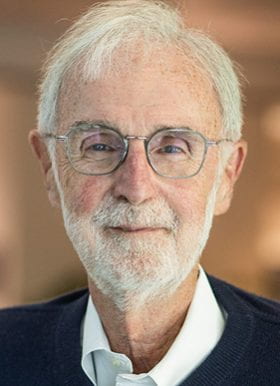
Marijn van Vliet is a Research Fellow at Aalto University's Department of Neuroscience and Biomedical Engineering, specializing in computational neuroscience and brain imaging. He focuses on decoding cognitive processes through advanced analysis of MEG/EEG data. Academy Research Fellow (2021-present) Principal investigator in projects like 'Unraveling language in the brain through biologically plausible modeling' His research combines machine learning with neuroimaging to explore language comprehension, semantic processing, and functional connectivity. Key methodologies include convolutional networks, representational similarity analysis, and beamforming techniques. Active in open science initiatives Developed tools like mne-rsa and mne-faster Recent work investigates cortical dynamics during semantic processing, feedforward/backward visual word recognition, and test-retest reliability of MEG connectivity metrics. His projects are supported by the Academy of Finland and RCF Academy funding.
Cierra Keith, Ph.D., serves as an Assistant Professor at West Virginia University School of Medicine with triple appointments in the Department of Behavioral Medicine & Psychiatry, the Department of Neuroscience, and the Rockefeller Neuroscience Institute. As a licensed Clinical Neuropsychologist, she provides specialized cognitive assessments and contributes to the Memory Clinic's diagnostic and therapeutic services, focusing on complex neurodegenerative cases within West Virginia's healthcare system. Her research program centers on the neuropsychological characterization of Alzheimer's disease and mild cognitive impairment, with particular emphasis on differentiating amyloid-positive and amyloid-negative patient populations. She investigates neural correlates of memory consolidation, executive functions, and procedural learning through multimodal approaches combining structural MRI, PET imaging, and comprehensive cognitive testing. Her work examines cortical thickness patterns, glucose metabolism, and regional atrophy in temporal, parietal, and frontal lobes to identify diagnostic biomarkers and track disease progression. Analysis of her 14 recent publications (2022-2025) reveals consistent focus on biomarker-guided dementia classification, with significant contributions to understanding insula function in memory, early-onset AD signatures, and metabolic predictors of treatment response. Her collaborative work spans neurology, psychiatry, and neurosurgery departments, often involving interdisciplinary teams at the Rockefeller Neuroscience Institute. Dr. Keith also addresses healthcare system challenges through research on optimizing primary-specialty care coordination for neurocognitive disorders. While no scientific awards or major grants are documented in the provided materials, her clinical-academic role bridges patient care and translational research. There is no indication of graduate student mentorship or dedicated laboratory facilities in the available information, though her publications suggest active participation in the university's broader neuroscience research infrastructure.
Marine Lunven is a Senior Lecturer in Intervenional Neuropsychology at École Normale Supérieure (ENS), Paris, where she conducts research at the Laboratory of Interventional Neuropsychology. Her work focuses on spatial cognition, visual neglect, and neurodegenerative disorders, particularly Huntington’s and Parkinson’s diseases. She is actively involved in developing and validating digital cognitive tools for remote monitoring and assessment. Her research interests span neuropsychology , spatial cognition , prism adaptation therapy , cognitive decline in neurodegeneration , and digital phenotyping . She employs advanced neuroimaging, behavioral testing, and computational methods to understand the neural basis of attention and time perception, especially in patients with right hemisphere damage or basal ganglia disorders. Recent publications (2020–2024) highlight her focus on digitized cognitive assessments (e.g., SelfCog, DAT), speech-based biomarkers in Huntington’s disease, and the anatomical underpinnings of rehabilitation efficacy. Her work shows a strong trend toward integrating clinical neuroscience with digital health technologies for early detection and monitoring of cognitive decline. Scientific Contributions: Developed and validated digital cognitive tests for Huntington’s and Parkinson’s diseases. Investigated the role of the striatum in time perception using neurodegenerative models. Explored the efficacy and neural predictors of prism adaptation therapy in neglect patients. Used graph-based methods and speech analysis to detect spatial and cognitive impairments. She supervises master’s level internships, indicating active mentorship. Collaborators include Paule Bartolomeo, Charlotte Jacquemot, and Anne-Catherine Bachoud-Levi. While no formal awards or grants are listed, her publication record in high-impact journals reflects significant scientific contributions. Her laboratory focuses on interventional neuropsychology, combining behavioral interventions with neurocognitive assessment to improve outcomes in brain-damaged and neurodegenerative patients. The lab appears to emphasize translational research, bridging clinical observation with digital innovation.
Mike Miller is a Professor and Dean of Undergraduate Education at the University of California, Santa Barbara (UCSB), within the Department of Psychological & Brain Sciences. He holds a BA from San Francisco State University (1994) and a PhD in Cognitive Neuroscience from Dartmouth College (1998). Since 2002, he has been a faculty member at UCSB, previously serving as an Assistant Professor at the University of Massachusetts Boston (1999–2002). His research focuses on the neural and psychological mechanisms of human memory, decision-making, and individual differences, employing techniques like fMRI, EEG, TMS, split-brain studies, and signal detection analysis. He is Vice Director of the Sage Center for the Study of the Mind and Editor of The Year in Cognitive Neuroscience . Key research themes include criterion shifting in recognition memory, parietal lobe contributions to memory, and the implications of split-brain studies for understanding hemispheric function. His work emphasizes individual variability in neural activity patterns, aiming to understand how these relate to cognitive processes. Notable contributions include critiques of fMRI methodology regarding statistical reliability and sample size requirements. Dr. Miller has mentored numerous graduate students and postdocs, many of whom hold academic or industry positions. His lab has presented at major conferences such as the Cognitive Neuroscience Society (CNS), Society for Neuroscience (SfN), and Psychonomic Society. He has also contributed to public science through media appearances, including a featured segment on PBS NOVA's 50th-anniversary episode. Scientific awards include the Achievement Award for College Scientists during his doctoral training. Current roles include leadership in interdisciplinary initiatives like the RADARS project (Institute for Collaborative Biotechnologies) studying decision-making under stress. The Miller Lab's research is supported by grants and collaborations with institutions like Cedars-Sinai Medical Center and the University of Virginia.
Dr. Christopher Striemer is a Professor in the Department of Psychology at MacEwan University and an affiliate faculty member at the Neuroscience and Mental Health Institute of the University of Alberta. He holds a PhD in Psychology from the University of Waterloo (2008), preceded by an MA (2005) and BA Hons. (2001) from the University of Saskatchewan. His research focuses on the cognitive neuroscience of attention, perception, and visuomotor control , utilizing behavioral testing, eye tracking, and MRI in both healthy individuals and neurological patients. Education PhD, Psychology (Behavioral and Cognitive Neuroscience), University of Waterloo (2008) MA, Psychology, University of Waterloo (2005) BA Hons., Psychology, University of Saskatchewan (2001) His work examines how cerebellar lesions affect spatial neglect and attention, with recent studies on visuomotor adaptation , executive function , and stroke rehabilitation . His Google Scholar profile highlights publications on topics like optical ataxia , prism adaptation , and non-conscious visual processing . He has received significant recognition including the NSERC Discovery Grant and the Board of Governors Research Chair at MacEwan University. Scientific Awards NSERC Discovery Grant (2022–2027) Board of Governors Research Chair, MacEwan University (2021) Distinguished Researcher Award, MacEwan University (2020)
Richard Nkrumah is a Researcher in the Department of Neuroimaging at the Central Institute of Mental Health, Mannheim, with contact details including phone: +49 621 1703-2966. His work is institutionally anchored in clinical neuroscience research within a leading German psychiatric facility. His primary research focuses on the neurobiological mechanisms of trauma-related disorders, specifically investigating how childhood abuse and early adversity manifest in brain structure and function. Utilizing advanced multimodal neuroimaging techniques, he examines PTSD pathophysiology through lenses of cortical volume alterations, functional connectivity disruptions, and dissociative symptomatology. Key emphases include the superior parietal region's role in avoidance behaviors and the mediating effects of neural changes between trauma exposure and clinical symptoms. Analysis of his 2024-2025 publications reveals a cohesive research trajectory centered on identifying objective neuroimaging biomarkers for PTSD. His work consistently bridges clinical psychiatry with quantitative neuroimaging, emphasizing childhood trauma as a critical etiological factor. Collaborative patterns show strong ties with researchers including Demirakca, von Schröder, Schmahl, and Ende across multiple high-impact studies. No information regarding scientific awards, student supervision, grant funding, or laboratory infrastructure was provided in the source material.
Professor Mark Buckley is a leading researcher in Behavioural and Cognitive Neuroscience at Oxford University, affiliated with the Department of Experimental Psychology and Queen’s College. He also holds visiting positions at Tohoku University Brain Science Centre and RIKEN Brain Science Institute in Japan. Education: D.Phil. in Experimental Psychology from Oxford University His research focuses on understanding how interconnected neural systems in the brain underpin learning, memory, and decision-making, with a particular emphasis on the prefrontal cortex and temporal lobes. His work bridges basic neuroscience with applications in dementia, amnesia, and psychiatric disorders. Recent publications highlight his exploration of neural dynamics in problem-solving, executive control fluctuations, and frontopolar cortex functions. His studies employ neuropsychological, neurophysiological, and neuroimaging techniques across normal and lesioned brain models. Scientific Awards: Medical Research Council Research Training Fellowship Royal Society University Research Fellowship Buckley teaches undergraduate and graduate courses in psychobiology, behavioral neuroscience, and memory neurobiology. He oversees research projects and dissertations, fostering advanced study in cognitive processes. His laboratory is funded by the Medical Research Council (MRC), Biotechnology and Biological Sciences Research Council (BBSRC), and Wellcome Trust, reflecting the significance of his work in cognitive neuroscience.
Stanislas Dehaene is a renowned French cognitive neuroscientist currently serving as Professor at Collège de France where he holds the Chair of Experimental Cognitive Psychology. He is also the Director of INSERM Unit 562 "Cognitive Neuroimaging" at the Neurospin center in Gif-sur-Yvette, France. His laboratory comprises five research teams investigating various aspects of cognitive neuroscience. Dehaene received his education at prestigious French institutions: Mathematics studies at École Normale Supérieure (1984-1989) Master's degree in Applied Mathematics and Computer Science from University of Paris VI (1985) PhD in Experimental Psychology from École des Hautes Études en Sciences Sociales (1989) Dehaene's research spans several groundbreaking areas in cognitive neuroscience. He is best known for his work on numerical cognition , which he synthesized in his influential book "The Number Sense." His research on the neural basis of reading led to the identification of the "visual word form area" (VWFA), and his work on consciousness has advanced Global Workspace Theory through computational modeling and neuroimaging experiments. His interdisciplinary approach combines mathematics, psychology, and neuroscience to understand fundamental cognitive processes. Analysis of Dehaene's recent publications reveals a continued focus on the neural mechanisms of consciousness, reading, and numerical processing. His work increasingly incorporates advanced neuroimaging techniques and computational models to explore how the brain processes information at both conscious and unconscious levels. There's a noticeable trend toward studying cross-cultural and developmental aspects of cognitive functions, as evidenced by research with indigenous populations and children. Dehaene's exceptional contributions have been recognized with numerous prestigious awards: James S. McDonnell Foundation Centennial Fellowship (1999) Grand Prix scientifique de la Fondation Louis D. (2003) Prix Jean Rostand for "La Bosse des Maths" The Brain Prize (2014) Lewis Thomas Prize for writing about science (2025) As director of the Cognitive Neuroimaging Unit, Dehaene oversees a research group of nearly 30 graduate students, post-doctoral fellows, and researchers. His laboratory has received substantial funding from French and international sources, including the European Research Council. Dehaene serves on the editorial boards of leading journals including Cognition, NeuroImage, and PLoS Biology, and has mentored numerous researchers who have gone on to establish their own successful careers in cognitive neuroscience. Dehaene's INSERM-CEA Cognitive Neuroimaging Unit comprises five specialized teams: Languages of the Brain (directed by Christophe Pallier), Neuroimaging of Development (directed by Ghislaine Dehaene-Lambertz), Primate Consciousness and Cognition (directed by Béchir Jarraya), Cognition and Brain dynamics (directed by Virginie van Wassenhove), and The Computational Brain (directed by Florent Meyniel). This collaborative environment fosters interdisciplinary research using cutting-edge neuroimaging techniques to investigate fundamental questions about human cognition.
Giovanni Battistella is an Assistant Professor of Otolaryngology–Head and Neck Surgery at Harvard Medical School , affiliated with the Dystonia and Speech Motor Control Laboratory at Massachusetts Eye and Ear. His work bridges clinical research and advanced neuroimaging techniques to study speech-related disorders. University: Harvard Medical School Department: Otolaryngology–Head and Neck Surgery Battistella's research focuses on the neural mechanisms underlying speech motor control and neurodegenerative speech-language disorders. His work examines: Functional and structural brain connectivity in laryngeal dystonia Neural substrates of primary progressive aphasia variants Brain network alterations in speech production and language processing Applications of multimodal MRI in clinical populations A recent meta-analysis of his publications reveals consistent themes in neural network disorders , speech motor control , and neuroimaging applications across conditions like focal dystonia and primary progressive aphasia (PPA). Methodological innovations in functional connectivity mapping and brain-behavior correlations appear prominently in his work. No formal awards or honors are mentioned in available sources.
Brancucci Alfredo is an Associate Professor at the University of Rome Foro Italico, working within the Department of Human and Health Sports Sciences. His position as Associate Professor - Level II reflects his standing in the academic community with expertise in PSIC-01/B - Neuropsychology and Cognitive Neuroscience. His research interests span a diverse range of neuroscience topics including hemispheric functional and behavioral asymmetries, neural correlates of consciousness, neuroscience of music, various neuroimaging techniques (EEG, MEG, fMRI), perception systems, psychobiology of nutrition, motor system analysis, and non-invasive brain stimulation methods. His work uniquely bridges sports science with neuroscience, creating interdisciplinary connections that inform both fields. Professor Brancucci's publication record demonstrates consistent contributions to cognitive neuroscience, with recent work focusing on transcranial stimulation techniques, consciousness studies through ambiguous figure perception, hemispheric asymmetries in auditory processing, and innovative computational methods for neuroimaging data analysis. His research shows a clear trajectory from foundational work on pain perception and motor systems to more recent explorations of consciousness and brain stimulation techniques. He actively teaches courses related to lifelong healthy habits, sport psychology, and developmental educational psychology, while serving on multiple university committees that shape sports science education. His international collaborations with institutions in Denmark and Germany demonstrate the global recognition of his research expertise. Professor Brancucci participates in significant research projects including studies on neurophysiological correlates of perception with the CNR/Institute of Cognitive Sciences and Technologies and leads work at UniRoma4's Laboratory of Sport and Applied Medical Technical Sciences on the relationship between microbiota, brain function, and sports performance.
Stephen T. Moelter is a Professor and Co-Director of the Neuroscience Program in the Department of Psychology at Saint Joseph's University. He holds a PhD in Clinical Psychology from Drexel University and completed pre- and postdoctoral fellowships in neuropsychology at the University of Pennsylvania School of Medicine. His research examines cognitive impairment in Alzheimer's disease, Parkinson's disease, sleep apnea, and heart failure, with emphases on electrophysiology, consent capacity, and diagnostic tool development. Recent publications focus on: Electrophysiological markers of time perception (2018) Cardiovascular disease impacts on cognition (2011–2018) Neurodegenerative disorder assessment methods (2012–2016) Grant support includes the NIH, Pennsylvania Department of Health, and VA Stars and Stripes Healthcare Network. No lab, students, or awards are detailed in the source text.
Marcus E. Raichle, MD, is the Alan A. and Edith L. Wolff Distinguished Professor of Medicine at Washington University School of Medicine, where he also holds professorships in Radiology, Neurology, Neuroscience, Biomedical Engineering, and Psychological & Brain Sciences. As a pioneering neurologist and researcher at the Mallinckrodt Institute of Radiology, Raichle has spent over 50 years at Washington University, making fundamental contributions to our understanding of human brain function through advanced imaging techniques. Dr. Raichle's research interests focus on functional brain imaging with positron emission tomography (PET) and magnetic resonance imaging (fMRI), with particular emphasis on studying human brain organization and function in health and disease. His work can be divided into two main categories: studies of normal human brain function and investigations into the biological origins of functional brain imaging signals obtained with MRI and PET. He uses fMRI to determine brain systems involved in cognitive and emotional functions, studies patients with psychiatric diseases like depression and anxiety, and relates changes in blood flow and brain metabolism to underlying cellular activity. Raichle's most significant contributions include developing the first integrated strategy for functional brain imaging, discovering that blood flow and glucose utilization change more than oxygen consumption in active brain regions, and pioneering the concept of the brain's default mode network - a unique fronto-parietal network active when the brain is not engaged in specific tasks. His 2001 paper on the default mode network revolutionized neuroscience and is now central to studies of brain function worldwide. Throughout his distinguished career, Raichle has received numerous prestigious awards including the 2014 Kavli Prize in Neuroscience, the Ralph W. Gerard Prize in Neuroscience, and the George A. Miller Prize. He is a member of the National Academy of Sciences, the American Academy of Arts and Sciences, and the American Neurological Association, and serves on the Editorial Board of the Proceedings of the National Academy of Sciences. Raichle's recent research continues to explore the relationship between the default mode network, glycolysis, and neurodegenerative diseases like Alzheimer's. He collaborates with researchers including Andrei Vlassenko and Manu Goyal to investigate how brain glucose metabolism relates to aging and cognitive decline, with implications for understanding why diabetes is linked to Alzheimer's disease.