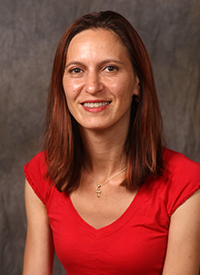
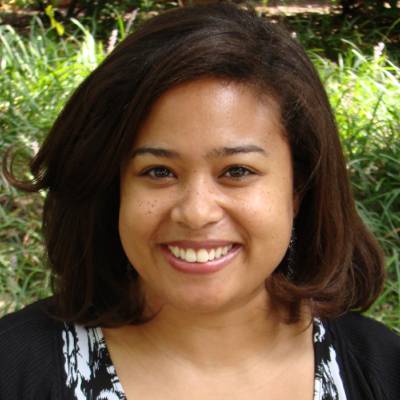
Dr. Mbita Mbao is an Assistant Professor in the School of Social Work at Salem State University, where she teaches courses including SWK 700 (Human Behavior), SWK 704/705 (Social Work Practice), and aging-focused courses like SWK 871. Her teaching philosophy emphasizes experiential learning and valuing student experiences. Dr. Mbao's research focuses on behavioral health, aging populations, workforce development, and immigrant issues. She actively works to expand aging-related curriculum and services through her involvement with the Older Adults Behavioral Health Network and Salem for All Ages initiative. Her education includes a BSW from Bowling Green State University, MSW from Rhode Island College, and PhD from Simmons University. As a Licensed Clinical Independent Social Worker, she maintains a clinical practice providing in-home therapy to older adults. Honors include: 2025 North Star Collective Fellow 2019 AGESW Pre-Dissertation Fellow 2021 GSA MCDTAW Early Career Diversity Fellow
Rainer Watermann is a Full Professor for Empirical Research in Education at the Free University of Berlin since 2011, previously serving as Full Professor for Education and Empirical Research in Schools at Georg-August University of Göttingen (2005-2011). His academic career includes significant research positions at the Max Planck Institute for Human Development in Berlin (1997-2005). Watermann earned his Diploma in Educational Science from the University of Münster (1996), followed by a Dr. phil (2002) and Habilitation (2005), both from Freie Universität Berlin. His educational background established the foundation for his extensive research in educational transitions and disparities. His research focuses on educational transitions, particularly from primary to secondary school and into higher education, examining motivational factors, social background influences, and achievement goal development. Watermann's work consistently addresses how social disparities affect educational opportunities and outcomes, with particular attention to gender differences and longitudinal developmental patterns. His methodological expertise includes latent class analysis, structural equation modeling, and large-scale assessment design. Watermann's publication portfolio reveals consistent research trajectories examining motivational frameworks (particularly expectancy-value theory), educational transitions, social disparities in education, and political socialization. His work spans both theoretical development and practical applications for educational policy and practice, with increasing focus on intervention effectiveness in recent years. As an active member of the academic community, Watermann serves on multiple editorial boards including the Swiss Journal for Educational Sciences and Empirical Educational Science , and regularly reviews for major educational and psychological journals. He has also contributed to significant research centers, including serving as spokesman for the Center for Empirical Research on Teaching and Learning in Schools (ZeUS) at the University of Göttingen (2008-2010). Watermann maintains an active research program with numerous collaborations across Germany and internationally, evidenced by his consistent publication record through 2025. His work bridges educational psychology, sociology of education, and policy-relevant research, maintaining strong connections between theoretical frameworks and practical educational contexts.
Dr. Kai Liu is a University Associate Professor at the Faculty of Economics, University of Cambridge, and a Fellow at Selwyn College. He earned his Ph.D. in Economics from Johns Hopkins University in 2011. His research focuses on labor economics, public economics, applied microeconometrics, and China's economic development, with specific investigations into wage dynamics, human capital formation, and household decision-making under uncertainty. His research interests span: Labor market dynamics including wage risk, job mobility, and gender wage gaps Public policy analysis in education, healthcare, and family support systems Household behavior under economic uncertainty and policy reforms Human capital investments across the life cycle Economic development challenges in China Recent publications (2023-2025) demonstrate strong focus on education policy impacts, health insurance effects on agricultural investments, and family environment dynamics. His work consistently applies advanced microeconometric methods to evaluate policy interventions and economic behaviors. Dr. Liu currently supervises three PhD students: Shengjuan He, Qianya Xu (researching empirical microeconomics and labor economics), and Shania Mustika (researching labor economics, education economics, and racial relations). He has secured significant research funding including: British Academy grant for 'Capital Market Imperfections, Skill Accumulation, and Inequality' (2024-2026) ESRC grant for 'Demand and Welfare Analysis using Micro-data' (2022-2026) British Academy grant for family policy research (2019-2021)
Laura E. Brumariu is a Professor and Associate Dean for Professional Programs and Student Advancement at the Gordon F. Derner School of Psychology, Adelphi University. She holds a Ph.D. from Kent State University and completed postdoctoral research fellowships at Harvard Medical School. Her office is located in the Hy Weinberg Center, and she is licensed as a psychologist in New York State. Education: Postdoctoral Research Fellow, Harvard Medical School/CHA/MGA (2013) Postdoctoral Research Fellow with Clinical Attributions, Cambridge Health Alliance/Harvard Medical School (2012) Ph.D., Kent State University (2010) Her research adopts a developmental psychopathology perspective, focusing on how parent-child attachment influences emotional and social development, particularly in middle childhood. She investigates emotion regulation, anxiety, disorganized attachment, role-confusion, and family processes related to borderline personality features and dissociation. She developed the Middle Childhood Attachment Strategies Coding System and leads the Child and Adolescent Research (CARE) Lab. Her recent work emphasizes meta-analytic reviews on emotion socialization, attachment, anxiety, and empathy. Her most recent publications reflect trends in attachment theory, emotion regulation, parenting, and internalizing disorders across development, often using meta-analytic and longitudinal methods. Much of her work integrates international collaboration, especially with Romanian researchers. Scientific Awards and Honors: Clinical Research Training Program, Harvard Medical School, Research Fellow (2010–2012) The Jeanette and Louis Reuter Fellowship in Developmental Sciences, Kent State University (2008–2009) She has mentored numerous doctoral students whose research spans topics such as gratitude, empathy, emotion socialization, and trauma. She teaches courses in psychological research, family therapy, and doctoral thesis supervision. She has secured research funding and collaborates extensively on studies related to child and adolescent mental health, though specific grants are not detailed in the text. Her professional activities include frequent presentations at major psychological conferences such as the Association for Psychological Science and the International Attachment Conference. Labs and Research Teams: She directs the Child and Adolescent Research (CARE) Lab at Adelphi University, which focuses on attachment, emotion regulation, and psychopathology in children and adolescents. The lab conducts both observational and survey-based research and trains graduate students in developmental and clinical methods.
Caroline K. Milne, M.D., is Professor (Clinical) of Internal Medicine at the University of Utah School of Medicine, where she also serves as Vice Chair for Education and Program Director of the Internal Medicine Training Program. In addition, she directs the fourth-year sub-internship and leads clinical-skills education for medical students. Education & Training M.D., University of Wisconsin School of Medicine Residency & Chief Residency, Internal Medicine, University of Utah School of Medicine Fellowship in General Medicine / Medical Education Research, University of Pennsylvania M.B.A., Business Administration, University of Utah Fellowship in Executive Leadership in Health Care, Drexel University Research Focus Dr. Milne’s scholarly work centers on medical education research, particularly the assessment and development of clinical skills, evaluation of residency training programs, and policy studies on resident wellness and parental leave. Her investigations employ mixed-methods and multi-institutional survey designs to inform best practices in graduate medical education. Clinically, she practices general internal medicine at the VA Medical Center, integrating bedside teaching with outpatient and inpatient care. This dual role informs her research on optimizing educational experiences within clinical environments and improving systems of care for veterans. Publication Themes Across more than two decades, her peer-reviewed articles reveal consistent themes: evaluating learner performance, refining feedback mechanisms, exploring health-system responses (e.g., during COVID-19), and analyzing policies affecting residents’ well-being. The work bridges education science, health-services research, and quality improvement. Scientific Awards No specific awards are listed in the provided material. Advising & Grant Activity While formal student advisees are not enumerated, Dr. Milne’s roles as Program Director and Director of Clinical Skills imply extensive mentorship of residents and medical students. Grant details are not provided. Laboratories & Teams She collaborates with the Internal Medicine residency leadership team and the School of Medicine’s clinical-skills educators, operating primarily within the University of Utah’s academic medical center and the affiliated VA Medical Center.
Pardis Emami-Naeini is an Assistant Professor of Computer Science at Duke University, with joint appointments in the Sanford School of Public Policy and the Department of Electrical and Computer Engineering. She serves as the Director of the Duke Interdisciplinary Security, Privacy, and Interaction Research (InSPIre) lab and is a Duke Science and Technology Scholar. Her interdisciplinary work bridges computer science, public policy, and electrical engineering, with a focus on developing usable privacy and security solutions that empower individuals from diverse sociodemographic backgrounds. Dr. Emami-Naeini earned her Ph.D. in Computer Science from Carnegie Mellon University in 2020, followed by postdoctoral research at the University of Washington (2020-2022). Her research sits at the intersection of security, privacy, and human-computer interaction, with particular expertise in IoT security, technology-enabled abuse, reproductive health privacy, and smart city security. She has published extensively at flagship venues including IEEE S&P, CHI, CSCW, and SOUPS, with her work covered by major media outlets such as Wired and The Wall Street Journal. Her recent publications reveal a clear trajectory toward examining the human dimensions of security and privacy in emerging technologies, from LLM chatbots for mental health to social robots and period-tracking apps in the post-Roe v. Wade landscape. Her work consistently emphasizes the need for privacy-aware design that accounts for diverse user needs and contexts, particularly for vulnerable populations. Google Systems and ML Research Gift Award (2025) Google AI Research Scholar Program Award (2024) Top 5% Instructor in Duke Trinity College (2024) ORAU Ralph E. Powe Junior Faculty Enhancement Award (2023) Duke Science and Technology Scholar (2022) IEEE S&P paper highlighted in IEEE Security and Privacy Magazine (2021) CyLab Presidential Fellowship (2019) Dr. Emami-Naeini actively mentors several Ph.D. students including Jabari Kwesi, Jessie Cao, and Hiba Laabadli, as well as undergraduate and master's students. Her research has influenced key organizations including the National Institute of Standards and Technology (NIST), Consumer Reports, and the World Economic Forum in creating usable security and privacy labels for smart devices. She serves on numerous program committees including USENIX Security and CHI, and has participated in NSF grant review panels, demonstrating her growing leadership in the security and privacy community. Her InSPIre lab conducts user-centered research to uncover security and privacy needs of diverse stakeholders, with a particular focus on marginalized communities. The lab's work spans multiple domains including intimate partner violence, reproductive health, virtual reality, and smart cities, always with a strong emphasis on translating research findings into practical tools and policy recommendations.
Judi Mesman is a Professor of the Interdisciplinary Study of Social Challenges at Leiden University, where she also holds the position of University Professor of Societal Responsibility and Impact since 2024. She is affiliated with the School of Governance and Global Affairs and the Department of Education and Child Studies. Previously, she served as Dean of Leiden University College The Hague from 2016 to 2022 and as Scientific Director of the Institute of Education and Child Studies from 2012 to 2016. Mesman's research focuses on social (in)justice, particularly intergenerational issues at individual and institutional levels. Her work examines how social and cultural norms in children's upbringing and education influence their self-image and worldview, with special attention to how children perceive and internalize norms regarding sexuality, ethnicity, and gender. She investigates how parents and educators unintentionally transfer prejudices to children through subtle messages and implicit stereotyping. Mesman's research program has significant societal impact, as demonstrated by her receipt of the prestigious Stevin Prize in 2021, the highest award in the Netherlands for researchers who effectively translate knowledge into societal benefits. Her work has influenced educational publishers, teacher training programs, and diversity initiatives. She has conducted studies on implicit stereotyping in schoolbooks and developed interventions to promote anti-racist education. Stevin Prize (2021) Member of Royal Netherlands Academy of Arts and Sciences (2018) Member of Royal Holland Society of Sciences and Humanities Recipient of NWO Veni, Vidi, Vici grants Recipient of ERC Starting and Consolidator Grants Mesman has supervised 26 PhD students to completion and teaches Intercultural Pedagogy in the Bachelor's program in Educational Sciences. She has developed the minor 'The (Un)Just Society' and created a podcast series on working with youth in a multicultural society, for which she received a teaching award. Her current research focuses on how norms and values about gender, ethnicity, and sexuality are transferred among professionals who work with children, including in teacher training programs.
Dr. Gary Nihan serves as a Visiting Associate Professor in the Department of Sport and Movement Science at Salem State University . With a 36-year career in public education, he previously held leadership roles including K-12 Director of Health and Physical Education in Danvers Public Schools and administrative positions in Reading Public Schools. His expertise spans curriculum design , standards-based assessment , and bullying prevention in athletics . Education: Doctorate in Education (Curriculum Leadership) from Northeastern University Current Responsibilities: Supervising teacher candidates and teaching courses like First Responder and Fundamentals of Fitness Grant Work: Provides technical assistance for Carol M. White Pep Grants in Massachusetts and Maine Dr. Nihan's research focuses on evidence-based approaches to bullying prevention , instructional strategies in physical education, and pre-service teacher training . His publications and presentations emphasize sequential K-12 curriculum development and student growth measurement through NASPE PE Metrics. He also explores the integration of physical activity into community education programs. Recent works highlight interdisciplinary connections between physical education, health promotion, and behavioral science. His editorial contributions address systemic gaps in physical education programming and youth driver education policies. Dr. Nihan collaborates with institutions on grant management and sustainability strategies, while maintaining active teaching roles in both academic and community settings. Personal interests include cycling, skiing, golf, and fiction reading.
Professor John Powell is a Professor of Digital Health and NIHR Senior Investigator at the University of Oxford's Nuffield Department of Primary Care Health Sciences. He holds a Senior Research Fellowship at Jesus College and serves as a Consultant Public Health Physician. His roles include leading digital health research initiatives, advising national agencies like NICE and MHRA, and co-directing the MSc in Applied Digital Health. Powell has dual degrees from the University of Cambridge (Social and Political Sciences and Clinical Medicine) and advanced qualifications from the London School of Hygiene and Tropical Medicine. Research Focus: Digital health transformation, AI in healthcare, patient feedback systems, and evaluation of digital health technologies. His work explores how digital tools reshape patient-clinician interactions and improve service delivery in the NHS. Notable projects include NHS App evaluations, social media's health impact, and frameworks for medical education in digital competencies. Recent Contributions: Key publications analyze NHS App adoption patterns, social media influencers' health impact, and challenges in AI ethics. He leads the Digital Health Theme in NIHR ARC and HRC, driving translational research. Powell's work bridges academia and policy, with past roles including Clinical Director of NHS Choices and Editor-in-Chief of major health technology assessment journals. Honors & Roles: Fellowships in Public Health and Clinical Informatics, Honorary Professor at University of Bristol, and former Warwick Professor of Public Health. Active in global health policy through roles like senior clinician at NICE.
Maureen Kendrick is a Professor and Deputy Department Head in the Department of Language & Literacy Education at the University of British Columbia's Faculty of Education. Her research examines literacy and multimodality as integrated communicative practices, addressing social and cultural issues in diverse contexts with particular emphasis on visual communication and refugee/migrant education. Her research interests span digital literacies, multiliteracy and multimodality, and international perspectives on literacy education. She investigates how youth from refugee backgrounds use multimodal approaches to construct identities and engage with learning, often through digital storytelling and visual methodologies. Her work extends to health literacy in Ugandan contexts and the role of play in early childhood literacy development across Canada, Kenya, and Uganda. Analysis of her recent publications reveals consistent focus on refugee/migrant education, digital storytelling, and multimodal literacy. She examines how digital tools empower marginalized youth to express identities while addressing challenges in language learning and cultural integration. Her research also explores HIV/AIDS education through makerspaces and the intersection of arts-based practices with science literacy. Dr. Kendrick's scientific recognition includes: Canadian Committee for Graduate Students in Education (CCGSE) Mentorship Award (2024) Killam Teaching Prize (2012-13) Alan C. Purves Award (2013) She actively supervises graduate students across doctoral and master's programs, with current research focusing on refugee education and multilingual learners. Her SSHRC-funded projects include the 2025-2029 grant 'Digital Multimodal Composing-To-Learn' and the 'Language and Literacy Learning Among Refugee and Migrant Background Children' initiative, involving collaborators from UBC, York, and Western universities. Dr. Kendrick leads international research teams across Canada, Uganda, and Kenya, developing community-engaged approaches to literacy education that bridge academic research and classroom practice.
Ricardo Filipe da Silva Pocinho is an academic researcher affiliated with the Higher School of Education and Social Sciences (ESECS) at the Polytechnic Institute of Leiria, Portugal. He joined the faculty in March 2022 and holds the role of Assessor in the Regional Health Administration of the Center (ARS Centro). His primary research focuses on educational evaluation , social competence development , and pedagogical innovation , with emphasis on school-based interventions and socioemotional learning programs. He has supervised five doctoral students and published extensively on topics including family involvement in education, pandemic impacts on teaching, and workplace happiness initiatives. His work integrates interdisciplinary approaches, combining educational psychology with social work methodologies. Recent publications highlight projects like the 'Smiling Team' workplace well-being program and evaluations of educational interventions for youth transitioning from residential care. He collaborates closely with institutions like the University of Coimbra and has presented at major conferences such as TEEM20 and the International Conference on Childhood and Adolescence. Key contributions include designing programs to promote socioemotional competencies in schools and analyzing social policies during pandemics. His research emphasizes practical applications, evidenced by projects like the 'Third Age Universities' study in Portugal and Brazil, and pedagogical innovations in technical director training.
Marita Dale is a Senior Lecturer in the Discipline of Physiotherapy at the University of Sydney and an Early Career Researcher affiliated with the Charles Perkins Centre. She specializes in cardiorespiratory physiotherapy, focusing on exercise interventions for chronic respiratory and cardiac diseases, particularly asbestos-related and dust-related conditions. Her work emphasizes improving accessibility to pulmonary rehabilitation services and leveraging mHealth technologies for patient care. Education: PhD in Physiotherapy (2016, University of Sydney). Her research interests include optimizing pulmonary rehabilitation through mobile health platforms, such as the m-PR™ app, and investigating pediatric burn injury rehabilitation, including orthosis use and scar prevention. She also explores multimorbidity management and simulation-based learning in healthcare education. Recent studies have highlighted her contributions to COPD care protocols, telehealth implementation during the pandemic, and qualitative analyses of patient experiences. Major awards: Sydney School of Health Sciences Teaching Citation (2022), Ashurst Prize for Outstanding Oral Presentation (2015), Helga Pettitt FHS Postgraduate Study Award (2010). Marita supervises Honours, Masters, and PhD students, including Mitchell Taylor on airway clearance in bronchiectasis. Her teaching spans undergraduate and postgraduate programs in cardiopulmonary and musculoskeletal physiotherapy. She collaborates on projects like the Lung Support Service, a nationwide text message program for chronic respiratory patients during the pandemic, and contributed to the commercialization of the Perx-R app for pulmonary rehab. Labs/teams: Active member of the Charles Perkins Centre, focusing on interdisciplinary chronic disease research and healthcare innovation.
Heather A. Jones, Ph.D., serves as Associate Professor in the Department of Psychology within Virginia Commonwealth University's College of Humanities and Sciences, holding joint appointments with the Department of African American Studies, Department of Pediatrics, and Institute for Women's Health. As a licensed clinical psychologist in Virginia, she maintains an active research program focused on reducing mental health disparities through culturally responsive interventions. Ph.D. in Psychology, University of Maryland at College Park (2006) Dr. Jones' research centers on three interconnected pillars: Black children and families' mental health, maternal mental health across the perinatal spectrum, and training culturally competent clinical psychologists. Her work specifically examines ADHD manifestations in Black youth, impacts of racial discrimination on adolescent mental health, and integration of behavioral health services within primary care settings. She employs mixed-methods approaches to address systemic barriers in mental healthcare access for underserved communities. Analysis of her 2023-2025 publications reveals consistent emphasis on health equity through studies of cultural competence in cancer survivorship, ADHD treatment representation gaps, and digital interventions for perinatal depression. Her methodological approaches span latent class analyses of service utilization, content analyses of historical research biases, and clinical trials of integrated care models, all contextualized within structural determinants of health. Dr. Jones has received significant recognition for her contributions: VCU College of Humanities and Sciences Distinguished Teaching Award (2023) VCU Department of Psychology Outstanding Mentoring Award (2023) Elizabeth Fries Young Investigator Award (2016) Clinical and Translational Research Award (2016) She actively mentors students, particularly supporting Black graduate trainees in pediatric psychology as evidenced by numerous student co-authorships. As Principal Investigator, she directs the $1.4M HRSA-funded Primary Care Psychology Training Collaborative providing pro bono services to urban Richmond and rural Virginia communities, recently expanded through an additional $1.1M grant serving Latinx immigrants and refugees. Her federally funded work consistently bridges research, clinical service, and community engagement. Dr. Jones co-directs the Families and Mental Health Research Lab and Primary Care Psychology Training Collaborative, leading interdisciplinary teams comprising psychology graduate students, pediatric residents, and community health workers. These initiatives operate within VCU's integrated primary care clinics, focusing on implementation science to scale evidence-based practices for underserved populations while training the next generation of healthcare providers.
Robin Weersing is a Professor of Psychology at San Diego State University's College of Sciences and Co-Director of the SDSU/UC San Diego Clinical Psychology Joint Doctoral Program. With a focus on child and adolescent mental health, her research emphasizes development of efficient psychosocial interventions for anxiety and depression, particularly in underserved populations. PhD in Clinical Psychology, University of California, Los Angeles (2000) MA in Clinical Psychology, University of California, Los Angeles (1995) BA in Psychology, Linfield College (1993) Her work bridges clinical psychology and health services research, prioritizing transdiagnostic behavioral therapies that address comorbid anxiety and depression in youth. Key areas include: Telehealth adaptation for diverse populations Parental influences on treatment outcomes Racial/ethnic disparities in mental health care Cost-effectiveness analysis of community interventions Implementation science for primary care settings Recent publications highlight therapeutic mechanisms like avoidance reduction and parent-child interaction modifications. Her lab examines: Neural reactivity changes during treatment Implementation barriers in low-resource settings Minority stress in LGBTQ+ youth Interpersonal conflict mediation
Mark W. Newman is an Associate Professor in the School of Information at the University of Michigan, with a joint appointment in the EECS Department. His research focuses on human-computer interaction, ubiquitous computing, and health informatics, emphasizing the design of technologies that integrate seamlessly into everyday life. He teaches courses on user experience research, programming, and application development, contributing to curriculum design efforts such as the User Experience Design track and programming curricula for undergraduate and graduate programs. His work spans smart home technologies, mobile health interventions, and collaborative health management systems. Notably, he collaborates across disciplines to address challenges in healthcare technology, including patient-generated data integration and sustainable energy solutions. Newman actively mentors students and leads design projects that prioritize user-centered approaches, such as the UX Research & Design Specialization on Coursera. His recent scholarship explores adaptive mHealth interventions, context-aware systems, and participatory design methods to enhance health equity.