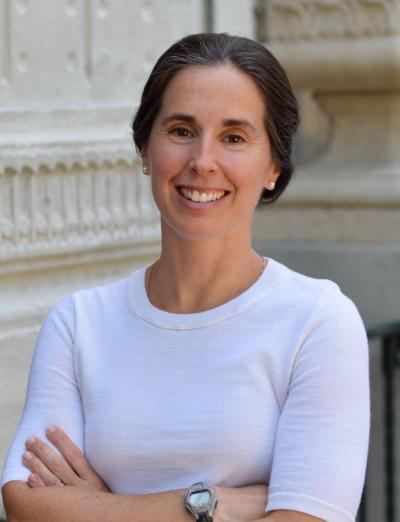
Meredith Fowlie is a Research Fellow at the University of California, Berkeley, affiliated with the Department of Agricultural & Resource Economics and the Environment and Energy Economics Program. Her work focuses on environmental economics, energy policy, and industrial regulation, with particular expertise in climate policy, emissions trading, and market-based solutions. University : University of California, Berkeley School : College of Natural Resources Department : Department of Agricultural & Resource Economics Role : Co-Director of the Environment and Energy Economics Program, Research Fellow Over the past two decades, Fowlie has led influential research on carbon pricing, insurance market adaptations to climate change, energy efficiency programs, and regulatory design. Her publications span topics like NOx trading programs , satellite-based air quality analysis , and default effects in electricity pricing . She has collaborated extensively with scholars such as Catherine Wolfram, Christopher R. Knittel, and Nicholas Muller. Her recent work (2025-2022) emphasizes catastrophe insurance equity , climate risk classification , and carbon pricing mechanisms . Earlier studies (2020-2008) addressed co-benefits in regulatory analysis, emissions leakage in incomplete markets, and optimal pollution regulation across stationary/non-stationary sources.
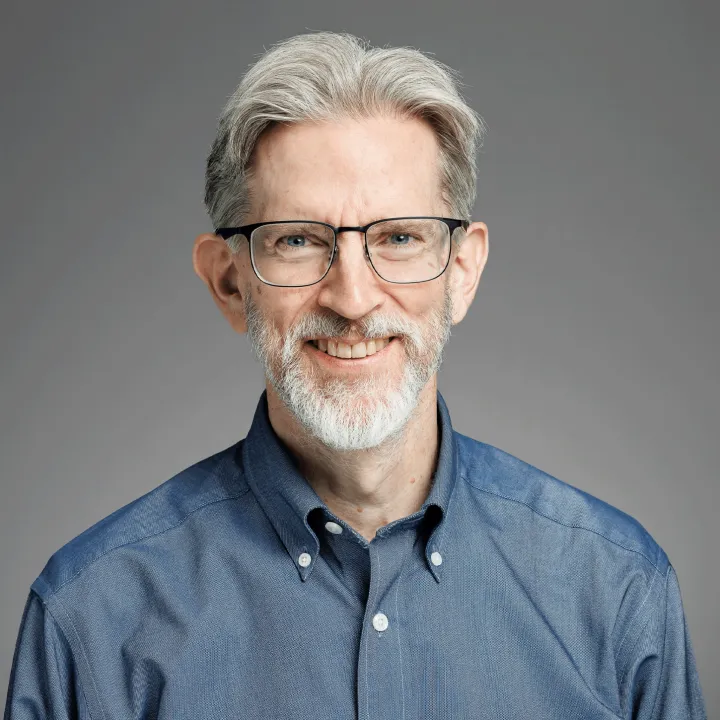
Lawrence H. Staib is a Professor of Biomedical Engineering at Yale University, with additional academic appointments in Electrical & Computer Engineering and Radiology & Biomedical Imaging. He holds a Ph.D. from Yale University and specializes in automated medical image analysis, including techniques like model-based segmentation, nonrigid registration, and diffusion tensor imaging (DTI). His research focuses on applications in neuroscience, cardiology, and cancer imaging, emphasizing machine learning and functional MRI analysis. His key contributions include advancements in white matter tractography via anisotropic wavefront evolution, real-time neural tract parcellation (Fasciculography), and noise reduction in diffusion tensor fields. Staib is a Fellow of the American Institute for Medical and Biological Engineering (2015), recognizing his impactful work in medical imaging technologies. Staib's research also encompasses statistical deformation models, perturbation-based shape analysis, and 3D deformable models for volumetric segmentation. He has developed patented 3D ultrasound computed tomography systems (USPTO #6878115, 7025725). His work bridges clinical needs with computational methods, addressing challenges in image registration, structural connectivity analysis, and medical robotics.
Kuanshi Zhong is an Assistant Professor in the Department of Civil and Architectural Engineering and Construction Management at the University of Cincinnati. He holds a PhD from Stanford University (2021) in Civil and Environmental Engineering, with prior degrees from Stanford (Master, 2017) and Tongji University (Bachelor, 2015). His research focuses on earthquake engineering, structural resilience, and advanced computational methods for infrastructure safety. Key research interests include seismic design of tall buildings, probabilistic modeling of structural response (e.g., using Probabilistic Learning on Manifolds), and material failure mechanisms in reinforced concrete. He also explores multi-hazard resilience, regional risk assessment, and software tools for disaster simulation (e.g., R2DTool and EE-UQ). Dr. Zhong has secured grant funding as PI/Co-PI, including a National Science Foundation grant (2023-2026) for equitable building decarbonization strategies and a Concrete Reinforcing Steel Institute grant (2024-2025) for bar performance improvements. He teaches graduate/undergraduate courses on concrete design and structural mechanics. His work spans collaborations with institutions like Stanford University and the SimCenter, contributing to open-source tools for regional loss assessments and hurricane impact modeling. Current projects address cascading hazards, steel reinforcement durability, and high-resolution seismic risk evaluation.
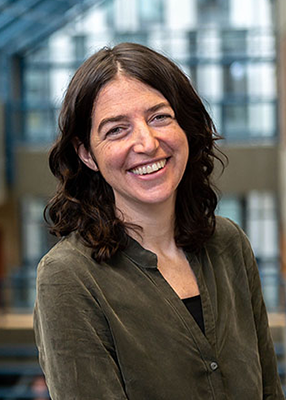
Dr. Lauren Emberson (she/her/hers) is an Associate Professor in the Department of Psychology at the University of British Columbia, Faculty of Arts. She directs the Baby Learning Lab, which is part of UBC's Early Development Research Group, a consortium focused on infant and child development. Prior to her position at UBC, Dr. Emberson was an Assistant Professor at Princeton University where she co-founded and co-directed the Princeton Baby and Princeton Kid Labs. Education: Postdoctoral Associate, University of Rochester (PI Aslin) Ph.D, Cornell University (PIs Amso, Goldstein, Spivey) B.Sc, University of British Columbia Dr. Emberson's research focuses on learning, perception (audition, vision, crossmodal or multisensory), language development, face/object perception, and attention in infants. She investigates these capacities using behavioral and neuroimaging techniques, particularly fNIRS (functional near infrared spectroscopy), working primarily with very young infants (birth through 1 year) and preterm/premature infants. Her work examines how infants' learning capacities contribute to rapid development of perception in ecological contexts, with implications for understanding how early life experiences affect later outcomes. Analysis of Dr. Emberson's recent publications reveals a consistent focus on infant perception, learning mechanisms, and neuroimaging methodology. Her work increasingly incorporates advanced fNIRS techniques while maintaining focus on fundamental questions about how infants learn from their environment. There's a growing emphasis on individual differences, cross-cultural comparisons, and applications to infants facing developmental challenges. Dr. Emberson serves on the editorial board of Infancy (journal of the International Congress of Infancy Studies) and is a consulting editor for the Journal of Cognitive Neuroscience . Her research has been published in top journals including PNAS, Current Biology, Psychological Science, Cognition, Developmental Science, and the Journal of Neuroscience. Dr. Emberson has secured significant research funding from prestigious organizations including the Bill and Melinda Gates Foundation, James S. McDonnell Foundation, Natural Sciences and Engineering Research Council (NSERC), Canadian Institutes of Health Research (CIHR), and the National Institutes of Health (NIH). She collaborates with clinicians at BC Women's and Children's Hospitals to understand how different early life experiences impact learning and brain development. Dr. Emberson is currently accepting graduate students into her research program. The Baby Learning Lab, under Dr. Emberson's direction, is part of UBC's Early Developmental Research Group and collaborates with multiple institutions. The lab strives to provide interactive research experiences for infants and families while advancing scientific understanding of early cognitive development. The lab acknowledges that it operates on the traditional, ancestral, and unceded territory of the xʷməθkʷəy̓əm (Musqueam) people.
Dr. Steven Manson is a Professor in the Department of Geography, Environment, and Society at the University of Minnesota's College of Liberal Arts, where he also served as Associate Dean for Research and Graduate Programs. He directs the Human-Environment Geographic Information Science (HEGIS) laboratory and leads major data science initiatives like the National Historical Geographic Information System (NHGIS) and IPUMS Terra. PhD in Geography, Clark University (2002) BA Honours in Geography, University of Victoria (1995) His research focuses on geographic information science and human-environment systems , using agent-based modeling and big data to analyze land use change, urban dynamics, and sustainability challenges. Recent work explores spatiotemporal data harmonization and geospatial cyberinfrastructure . The articles reveal trends in GIScience methodology , urbanization analysis , and data-intensive sustainability research . Key contributions include self-organizing map applications for health data and hybrid statistical-GIS techniques for environmental policy. Scientific accolades include: Ecological Society of America Sustainability Science Award NASA Earth System Science Fellow McKnight Land Grant Professorship As Principal Investigator for NHGIS and IPUMS Terra, he secured over $40M in NSF, NIH, and DOJ grants for spatiotemporal data infrastructure. Outreach initiatives include developing open geospatial textbooks adopted globally and collaborating with Twin Cities K-12 programs.
Derek T. Robinson is an Associate Professor at the University of Waterloo's Department of Geography and Environmental Management , specializing in land-use science, agent-based modeling, and geospatial analysis. His work integrates GIS, ecological models, and human decision-making to assess impacts of land policies on ecosystem services and human well-being. Research Interests : Land-use/cover change and carbon cycle dynamics Agent-based modeling of socio-ecological systems Exurban land management and fragmentation Ecosystem service quantification Land policy scenario analysis Teaching : Courses in spatial analysis, advanced GIS, and land-use-carbon interactions. His lab utilizes cutting-edge tools like ArcGIS, NetLogo, and UAV systems (e.g., Aeryon SkyRanger) for fieldwork and modeling.
Dr. Jose Escribano is a Lecturer in Aviation & Logistics at the Department of Civil and Environmental Engineering within the Faculty of Engineering at Imperial College London. His research focuses on humanitarian logistics optimization, AI-driven airspace management, and urban resilience strategies. He holds a First Class Honours bachelor’s degree (2015) and a PhD (2021) from Imperial College London. Dr. Escribano is affiliated with the Centre for Transport Engineering and Modelling and the Transport Systems and Logistics Project D-Risk SHIFT. His academic qualifications include a BEng in Engineering and a PhD in Civil Engineering, both from Imperial College London. His professional affiliations include the Institution of Civil Engineers, Chartered Institute of Logistics and Transport, and the American Institute of Aeronautics and Astronautics. He has received the 2023 Transportation Research Board Best Paper Award and a JSPS Fellowship for urban evacuation modelling. Dr. Escribano’s research integrates stochastic modelling, machine learning, and simulation to address challenges in humanitarian response, UAV coordination for disaster relief, and airspace safety. His work emphasizes endogenous value-of-information analysis and the application of cutting-edge technologies to enhance societal resilience. He has collaborated with the United Nations World Food Programme on UAV deployment models for humanitarian contexts. His recent publications span topics like air traffic network resilience, autonomous vehicle optimization, and last-mile delivery mechanisms. He advises doctoral candidates in transportation systems, logistics, and air traffic management, offering opportunities for PhD research in these domains.
Isabella Di Lenardo is a Lecturer and Scientist at the Digital Humanities Institute (DHI) at École Polytechnique Fédérale de Lausanne (EPFL), where she also serves as the coordinator of the EPFL Time Machine Unit and the European Local Time Machines. She holds affiliations across multiple departments, including DHI-GE, SAR-ENS, SHS-ENS, and EDDH-ENS, reflecting her interdisciplinary role in teaching and research. Her educational background includes a PhD in Theories and Art History, with postdoctoral and faculty experience at institutions such as INHA (Paris), EPFL, and IUAV (Venice). Her research spans Digital Humanities, Art History, Urban History, and GIS , with a focus on digital urban reconstruction, historical cadastres, and AI applications in cultural heritage. She employs advanced computational methods including machine learning, 4D modeling, and semantic segmentation to analyze historical maps, cadastral records, and art archives. Her work bridges humanities scholarship with computer science, particularly in reconstructing urban evolution and analyzing visual patterns. The recent publications reveal a consistent trend in AI-powered historical data analysis , especially in processing non-standardized historical documents, reconstructing urban spaces, and developing open-source tools for digital heritage. Her work frequently involves large-scale datasets from Venice, Lausanne, Paris, and Jerusalem, demonstrating a transnational and interdisciplinary approach. She has contributed to significant collaborative projects such as the Venice Time Machine , Parcels of Venice , and Time Machine Organization , often acting as a principal investigator or project leader. Her role involves coordinating diverse teams of researchers, engineers, and cultural institutions. Scientific contributions include: Development of the Morphograph tool for visual pattern recognition in art archives Automatic vectorization and analysis of Napoleonic cadastres Creation of 4D models for historical cities AI-driven text and pattern extraction from historical maps Building discovery engines for digital art history She actively teaches ex cathedra courses in Digital Urban History and Art History at EPFL and internationally. Her work in grants and projects emphasizes open data, reproducibility, and interdisciplinary collaboration. She has led research funded by organizations supporting digital heritage innovation. She is a key member of the Digital Humanities Laboratory at EPFL and the Time Machine Organization , where she fosters collaboration between computer scientists, historians, and cultural institutions. Her work in the Replica Project and ARCHiVe center highlights her leadership in digitizing and making accessible large art historical archives.
R. Jayakrishnan , a Professor in the Department of Civil and Environmental Engineering at the Samueli School of Engineering , University of California, Irvine, is a leading researcher in transportation systems engineering. Ph.D., University of Texas, Austin, Civil Engineering, 1992 M.S., University of Texas, Austin, Civil Engineering, 1987 B.S., Indian Institute of Technology, Madras, India, 1985 His research focuses on dynamic traffic assignment , urban traffic simulation , and real-time information systems to improve congested traffic corridors. He is developing advanced dynamic simulation-assignment models for urban traffic networks. Recent publications highlight his contributions to: Crowdsourced delivery optimization using decomposition heuristics Eco-driving algorithms with V2I communication Multi-furniture placement applications via augmented reality Subscription mobility services cost-benefit analysis Agent-based lane-changing coordination systems These works demonstrate his interdisciplinary approach combining transportation engineering, optimization algorithms, and emerging technologies like AR and connected vehicles.
William Stewart is an Assistant Professor in the Department of Mechanical Engineering at Stony Brook University. He joined the university in 2022 and leads the Soft Flyers Group laboratory. His research focuses on multimodal robotics, particularly in developing robots that integrate principles from soft robotics, biology, and science fiction to enhance capabilities in challenging environments. He holds a Ph.D. in Aerospace Engineering from North Carolina State University (2018) and has postdoctoral experience at École Polytechnique Fédérale de Lausanne (2018–2022). Prof. Stewart's work emphasizes practical modeling, rigorous experimentation, and full vehicle validation. His research interests include eclectic robot design, energy-efficient perching mechanisms, bio-inspired systems, and resilient multi-modal drones. He actively reviews for journals such as Bioinspiration and Biomimetics, Robotics and Automation Letters, and Springer Nature Applied Sciences. His educational background includes degrees from North Carolina State University: a B.S. (2012), M.S. (2014), and Ph.D. (2018), all in Aerospace Engineering. His professional experience combines academic leadership with advanced robotics research, contributing to innovations in aerial, ground, and underwater robotics.
Dr. Roza Gunes Bayrak is a Senior Research Engineer and Research Assistant Professor in the Department of Electrical and Computer Engineering at Vanderbilt University, with secondary appointments in the Department of Computer Science. She leads the Neuroimaging & Brain Dynamics Lab (NEURDY Lab) and is affiliated with multiple interdisciplinary institutes including the Vanderbilt Institute for Surgery and Engineering (VISE) and the Vanderbilt University Institute of Imaging Science (VUIIS). PhD in Computer Science from Vanderbilt University (2023) MS in Electrical Engineering from Tufts University BS in Electronic and Communication Engineering from Çankaya University, Turkey Her research focuses on advancing neuroimaging methodology for studying brain dynamics and brain-body interactions. Key areas include: Temporal modeling of neuroimaging data Development of open-source tools like PRAGMA and PhysioPy Graph-based machine learning for brain connectomics Reconstruction of physiological signals from fMRI data Interactive visualization techniques for functional brain parcellation Her recent publications emphasize: Graph neural networks for analyzing brain connectivity networks (Neurograph 2023) Deep learning approaches to decode respiration and heart rate from fMRI (DeepPhysioRecon 2023) Subject-specific functional brain mapping techniques (2022-2024) Reproducibility studies in white matter tractography (2021-2022) Roza actively promotes open science through leadership roles in initiatives like BrainHack Vanderbilt and the Organization for Human Brain Mapping's Open Science Special Interest Group.
Zhengwu Zhang is an Associate Professor in the Department of Statistics and Operations Research at the University of North Carolina at Chapel Hill. His research focuses on developing statistical and machine learning methods for analyzing high-dimensional neuroimaging data, particularly structural and functional brain connectomics. He leads the UNC Education Program of Intelligence and Connectomics (EPIC), an interdisciplinary initiative training students in brain network analysis. His work addresses challenges in large-scale neuroimaging datasets, including computational efficiency and reproducibility. Zhang completed his Ph.D. in Statistics at Florida State University under Anuj Srivastava. His funding includes NIH grants for CRCNS, structural connectome analysis, and personalized cognitive training. He serves as an Associate Editor for the Journal of the American Statistical Association (Reproducibility). Key contributions include tools like the Surface-Based Connectivity Integration (SBCI) GitHub repository for brain network analysis pipelines. His awards include the 2022 UNC Junior Faculty Development Award and the Oak Ridge Powe Award. Teaching roles include courses on data science, machine learning, and statistical consulting. His research spans brain network dynamics, genetic contributions to connectome structure, and applications of deep learning in neuroscience.
Kirsikka Riekkinen is an Assistant Professor at Aalto University in the Built Environment domain, specializing in land administration , cadastral systems , and property rights . Her research bridges technological innovation with policy analysis, focusing on digitalization , security implications , and climate impacts of land governance frameworks. Research Focus Development of holistic cadastral frameworks for mature systems Land consolidation in Finland and Africa, including climate effects Security-based property restrictions in Northern Europe Integration of blockchain , text mining , and 3D modeling into land administration Comparative analysis of Nordic and African land policies Scientific Trends in Publications Her article corpus (2012-2025) reveals a sustained focus on land consolidation (with climate implications), cadastral modernization (digitalization, blockchain), and cross-national policy analysis (Finland, Nigeria, Rwanda). Recent works emphasize public value perspectives and security challenges in cadastral systems. Teaching & Professional Role As an Assistant Professor, she contributes to academic discourse in land governance. Contact: kirsikka.riekkinen@aalto.fi
Amanda Stathopoulos is the William Patterson Junior Professor and Associate Professor of Civil and Environmental Engineering at Northwestern University's McCormick School of Engineering. She holds affiliations with the Transportation Center and Spatial Intelligence Learning Center. Her research focuses on the 'human' aspects of sustainable mobility systems, including behavioral modeling, disaster management, and urban policy. She earned her Ph.D. in Transport Economics from the University of Trieste and completed postdoctoral work at EPFL. Education: Ph.D., Trieste University (2009-2011); M.Sc., Sapienza University (2006-2008); B.A., University of Roma Tre (2003-2006) Her research integrates quantitative methods (discrete choice modeling, statistical analysis) with qualitative approaches (focus groups, ethnography) to study decision-making in transformative mobility systems. Key areas include disaster resilience, telework impacts, automated vehicles, and equity in urban transport. Recent studies explore pandemic-era shifts in consumer spending, telehealth adoption by vulnerable populations, and employer perspectives on hybrid work. Her work emphasizes interdisciplinary tools like latent class analysis and network-based modeling. Lab Members: 7 current PhD students and 6 former researchers Funding: NSF CAREER Award, NIST grants, and transportation agencies Her lab's focus includes developing decision-support tools for policymakers and fostering socially inclusive mobility solutions through mixed-method frameworks.
Rebecca Muenich is an Associate Professor in the Department of Biological & Agricultural Engineering at the University of Arkansas. Her research bridges watershed modeling, agricultural ecosystems, and the food-energy-water nexus, with a focus on surface hydrology, water quality, and climate impacts. She holds a Ph.D. (2015) and M.S. (2011) in Agricultural & Biological Engineering from Purdue University, and a B.S. in Biological Engineering (2009) from the University of Arkansas. Her research explores watershed and environmental modeling, agricultural management, urban agriculture, and climate impacts on water resources. Key interests include mitigating nutrient pollution, enhancing ecosystem services, and developing sustainable land-use strategies. Recent publications emphasize machine learning applications in environmental monitoring, phosphorus circularity, and climate-resilient water management. Muenich leads significant grants including a USDA NRCS project on PFAS in agriculture (2023-2027), NSF-STC’s Science and Technology for Phosphorus Sustainability (2021-2031), and DISES research on cyanobacterial blooms (2022-2025). She mentors students in her research group (Muenich Lab) and collaborates on interdisciplinary projects. Lori Libbert New Faculty Commendation (2024) Early Career Alumni Award, UA Engineering (2022) New Face of ASABE (2020) National Science Foundation Graduate Research Fellowship (2009)