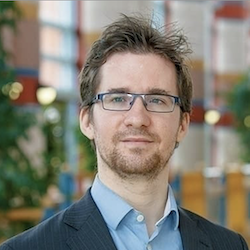
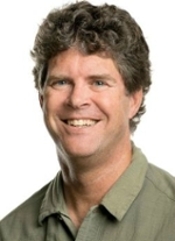
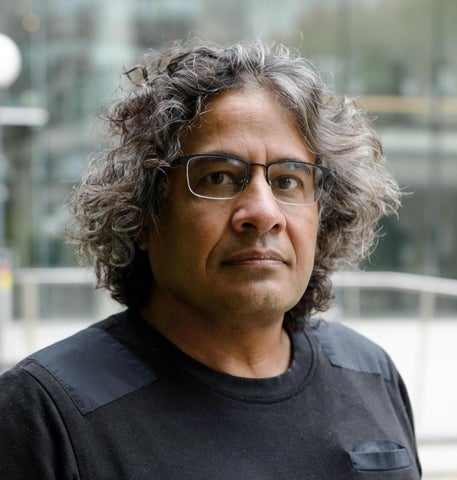
Michael Lucey is the Sidney and Margaret Ancker Chair and Distinguished Professor of French and Comparative Literature at the University of California, Berkeley. His work bridges French literature from the 19th to 21st centuries with social theory, sexuality studies, and linguistic anthropology. He has authored the critically acclaimed What Proust Heard: Novels and the Ethnography of Talk (2022) and Thinking about Sexuality with Novels (forthcoming). As founding director of the Center for the Study of Sexual Culture , he has shaped interdisciplinary research in queer theory and gender studies. Current research focuses on novels as ethnographic tools Specializes in Proust, Balzac, Woolf, and contemporary French fiction Translation work includes Didier Eribon and Édouard Louis His recent articles explore phonetics in narrative, readability frameworks, and sociological implications of literary form. He actively engages with comparative methodologies and critical theory, while his teaching spans British and American literature’s intersections with French modernism. Lucey’s academic leadership includes directing Berkeley’s Center for the Study of Sexual Culture, which supports global discourse through fellowships and conferences. His office hours are held in Dwinelle Hall and via Zoom. Contact: mlucey@berkeley.edu
Sarah Billington is the UPS Foundation Professor of Civil and Environmental Engineering at Stanford University and a Senior Fellow at the Woods Institute for the Environment. Her research program focuses on sustainable building design, human wellbeing, and ethical supply chain practices. Education: PhD, University of Texas at Austin, Structural Engineering (1997) MSE, University of Texas at Austin, Structural Engineering (1994) BSE, Princeton University, Civil Engineering & Operations Research (1990) Her lab employs interdisciplinary methods to study how built environments impact human physical, psychological, and social wellbeing. Current projects include developing tools to quantify nature exposure in buildings, exploring affordable housing's role in wellbeing, and using AI to assess forced labor risks in material supply chains. While no longer active in this area, her group previously pioneered research on sustainable construction materials like bio-based composites and ductile cement-based composites. Her recent publications address topics such as nature integration in architecture, workplace design optimization, and health impacts of building materials. The Billington Lab at Stanford fosters collaborative team science, welcoming partnerships to advance occupant-centric engineering solutions.
Deborah Frances Smith is a Professor affiliated with the Centre for Immunology and Infection. She has held former roles including Head Of Department, Biology Pro-Vice-Chancellor for Research, and Special Adviser to the Vice Chancellor in the Vice Chancellor's Office. She is also associated with CNAP (Cancer and Neuroscience Academic Programme) and the Jack Birch Unit. Her research focuses on leishmaniasis, parasite biology, and drug/vaccine development. Key projects include leading the 'C2D2 research 1a & 2b' (2012–2012) to establish sandfly colonies for leishmaniasis studies and co-investigating an integrated crystallization facility (2013–2018). She secured the Wolfson Research merit Award (2009–2010) from the Royal Society. Her work spans academic leadership, collaborative research, and translational medicine targeting neglected tropical diseases.
David Stillwell serves as Professor of Computational Social Science at Cambridge Judge Business School and Academic Director of The Psychometrics Centre, University of Cambridge. His research leverages big data to understand human psychology and behavior, with significant contributions in personality prediction from digital footprints and personalized advertising applications. His educational background includes: BSc in Psychology from the University of Nottingham (2007) MSc in Research Methods from the University of Nottingham (2008) PhD in Decision Making from the University of Nottingham (2012) Dr. Stillwell's research centers on computational social science and psychometrics, pioneering the myPersonality Facebook application that collected data from over 6 million users. His work demonstrates computers can predict personality as accurately as spouses, reveals psychological targeting's advertising effectiveness, and establishes links between personality-matched spending and life satisfaction. He also explores linguistic honesty markers through profanity analysis and personality-based dating patterns. His recent publications (2019-2025) reveal a strong trajectory toward AI evaluation using psychometric frameworks, particularly in medical and general-purpose AI assessment. Key themes include fairness metrics in language models, crisis emotional responses through social media, and computational personality recognition - demonstrating consistent innovation at the psychology-technology intersection. He has received significant recognition: Top 10 most influential papers of 2013 by Altmetric Nieman Journalism Lab highlight of 2013 Named in 'top 30 thinkers under 30' by Pacific Standard Magazine Dr. Stillwell maintains active industry engagement through consultancy with Barclays, Hilton, and Ubisoft on projects spanning computer-adaptive testing systems to interactive experiences like Predictive World for Watch Dogs 2. His policy impact is substantial, with citations by the European Data Protection Supervisor, World Bank, and multiple national governments, leading to speaking engagements at the European Parliament and Bank of England. As Academic Director of The Psychometrics Centre, he leads a global hub for advancing psychological assessment through innovative methods including Concerto open-source software, collaborating with organizations ranging from the European Commission to major corporations on psychometric applications in people analytics and digital behavior.
Karen Piper Hanley is Professor of Molecular Medicine and Head of Division in the Division of Diabetes, Endocrinology & Gastroenterology at the University of Manchester. She serves as the fibrosis lead in the Wellcome Trust Centre for Cell-Matrix Research and previously served as Director of Core Research Technologies (2019-2022). She is also an editorial board member for Scientific Reports. Her research focuses on fibrosis (scarring) mechanisms across multiple organs, particularly liver, kidney, and lung fibrosis. Her lab investigates the cellular and molecular basis of fibrotic disease, with emphasis on how pathological scar components are produced and how they signal to surrounding cells. Key areas include the role of SOX9 transcription factor, integrin beta-1 signaling, Group 1 PAKs, and YAP1 in fibrosis progression. Her recent publications reveal trends toward increased clinical translation of fibrosis research, with studies on health inequalities in liver cancer care, post-COVID diabetes incidence, and innovative approaches to liver disease detection. Her work increasingly integrates spatial transcriptomics and advanced omics technologies to understand cellular transitions in liver disease. Career-track postdoctoral fellowship from the University of Southampton (2006) As senior postgraduate tutor, she has mentored numerous PhD students who have presented at key conferences and authored high-quality manuscripts. All her PhD students have submitted and been awarded their degrees within 4 years. She has successfully guided previous Academic Clinical Fellows to win MRC clinical training fellowships. Her teaching extends to undergraduate Personal & Professional Development and supervision of MRes and BSc students, many of whom have achieved first-class degrees and prestigious awards. Her lab maintains active collaborations with Professor Neil Hanley's group on human development, stem cells, and regenerative medicine, bridging developmental biology with fibrosis research to understand why regeneration is impaired in chronic diseases.
Mark Lewis is the Kennedy Chair in Mathematical Biology at the University of Victoria, holding joint appointments in the Departments of Mathematics and Statistics and Biology. His research focuses on spatial ecology and mathematical modeling, addressing ecological challenges such as animal movement, invasive species, and disease dynamics. Lewis earned his D.Phil. in Mathematical Biology from the University of Oxford and has been elected a Fellow of the Royal Society UK. His work integrates mathematical analysis, field studies, and interdisciplinary approaches to solve ecological problems. Current projects include modeling polar bear populations, cyanobacteria dynamics, and the impact of climate change on wildlife. Lewis supervises students across both UVic and his former University of Alberta lab. Education: D.Phil. in Mathematics (Mathematical Biology), University of Oxford Awards: Royal Society Fellowship, CRM-Fields-PIMS Prize, and Okubo Prize Key Research Areas: Animal movement modeling, aquatic ecology, wildlife disease, and invasive species management Publications highlight his contributions to understanding disease spread, parasite dynamics, and ecological responses to environmental changes. Lewis collaborates widely, applying mathematical tools to real-world conservation and health challenges.
Muhannad S. Bakir is the Dan Fielder Professor in the School of Electrical and Computer Engineering at Georgia Institute of Technology and serves as the Director of the 3D Systems Packaging Research Center. His research focuses on heterogeneous integration of microsystems, including 2.5D and 3D ICs and packaging technologies, with significant contributions to advanced cooling systems, electrical and photonic interconnects, and biosensor integration with CMOS. Dr. Bakir's research interests span heterogeneous microsystem design and integration, advanced cooling and power delivery for emerging architectures, electrical and photonic interconnect technologies, biosensor technologies, and nanofabrication. His work addresses critical challenges in next-generation electronics, enabling polylithic integration that concatenates heterogeneous ICs of various functionalities while mimicking monolithic-like densities. His research particularly focuses on co-design of thermal technologies, power delivery networks, and signaling networks for silicon nanoelectronic systems. His recent publications demonstrate strong trends in fused-silica stitch-chip technology for heterogeneous integration, with particular emphasis on RF and mm-wave applications, power delivery for AI accelerators, and thermal management solutions. His work bridges electrical engineering, materials science, and thermal management to solve critical bottlenecks in computing performance and efficiency. 2013 Intel Early Career Faculty Honor Award 2012 DARPA Young Faculty Award 2011 IEEE CPMT Society Outstanding Young Engineer Award 2012 National Academy of Engineering Frontiers of Engineering Symposium Invited Participant 2015 IEEE CPMT Society Distinguished Lecturer 2014 Best Paper of the IEEE Transactions on Components Packaging and Manufacturing Technology More than 25 conference and student paper awards Twelve issued US Patents Dr. Bakir leads the Integrated 3D Systems Lab (I3DS) at Georgia Tech, which is actively researching advanced packaging, interconnects, electrical and thermal design, and system integration. His team has received significant recognition for their work, including multiple best paper awards from major conferences like ECTC, IITC, and CICC. The lab is currently seeking postdoctoral researchers and research faculty to advance next-generation electronics through collaborative research. His lab focuses on enabling the next phase of Moore's Law through polylithic integration, which concatenates heterogeneous ICs of various functionalities (digital, analog, photonic, and mm-wave) using advanced off-chip '2.5D' and '3D' heterogeneous interconnects and packaging. This work impacts applications in high-performance computing, machine learning, edge intelligence, autonomous vehicles, augmented/virtual reality, and healthcare.
Professor Peter Banks is a prominent academic in Conservation Biology at The University of Sydney's School of Life and Environmental Sciences. His research focuses on developing humane solutions to invasive species impacts, particularly through understanding predator-prey dynamics and behavioral interventions. He has held roles including Treasurer of the Royal Zoological Society of NSW and editorial board memberships at journals like Oecologia. Education: PhD (2004, University of Sydney), BSc (1991, University of Sydney). His career includes positions at UNSW and University of Turku (Finland). Research interests span animal behavior, ecology, and conservation strategies. Research Themes: Animal behavior and ecophysiology, ecology and evolution, wildlife conservation. Collaborations include projects with Finland’s University of Turku on predator-prey deception and New Zealand’s Landcare Research on pest management. Recent publications emphasize olfactory misinformation tactics, urban tick ecology, and predator learning mechanisms. His work bridges behavioral ecology with applied conservation, exploring innovative methods to mitigate wildlife conflicts.
Saji George is an Associate Professor at McGill University's Macdonald Campus, affiliated with the Department of Food Science and Agricultural Chemistry. Their research focuses on sustainable nanotechnology applications for food and agricultural systems, emphasizing safety and environmental responsibility. Research Areas: Sustainable crop/livestock systems, safe food supply, human nutrition, bioaerosols, and antibacterial nanotechnology. Awards: Canada Research Chair (Tier 2) in Sustainable Nanotechnology for Food and Agriculture. Contact: Email saji.george@mcgill.ca or call 514-398-7920.
Michele Klingbeil is a Professor in the Department of Microbiology at the University of Massachusetts Amherst, where she leads the Klingbeil DNA Replication Laboratory. She received her PhD in Cell and Molecular Biology from the University of Toledo in 1996 and previously worked at Johns Hopkins School of Medicine before moving to UMass in July 2007. Her educational background includes: PhD in Cell and Molecular Biology, University of Toledo, 1996 Dr. Klingbeil's research focuses on the unique biology of trypanosomatid parasites, particularly Trypanosoma brucei , the causative agent of African sleeping sickness. Her laboratory investigates two main areas: (1) replication of the unusual mitochondrial DNA network called kinetoplast DNA (kDNA), and (2) nuclear DNA replication initiation. Her work on kDNA is particularly significant as this structure is essential for parasite survival but has no counterpart in mammalian hosts, making it an attractive drug target. She employs a combination of reverse genetics (RNAi), cell biology, and biochemistry to understand the replication and repair mechanisms of kDNA, with a special focus on a family of four DNA polymerases related to bacterial Pol I. Dr. Klingbeil's recent publications reveal her laboratory's deep investigation into mitochondrial DNA polymerases in trypanosomatids, with discoveries showing multiple polymerases having specialized functions in kDNA replication and repair. Her research has established that several of these polymerases are essential for parasite viability, opening new avenues for drug development. She has also made significant contributions to understanding the simplified Origin Recognition Complex in trypanosomatids compared to other eukaryotes. Dr. Klingbeil has received the Thomas G. Lessie Distinguished Lectureship Award for her impact on teaching at the graduate level. Her research is funded by the National Institutes of Health, U.S. Department of Agriculture, the Joeph P. Healey Endowment, and the University of Massachusetts Amherst. She has mentored numerous graduate and undergraduate students, including current PhD candidates Dave Bruhn, Jeniffer Concepción, and Juemin Luo, as well as visiting scholar Eva Vidal Rico. Her former students have gone on to positions at institutions including Dana Farber/Broad Institute, Regis College, and Flagship Ventures. The laboratory regularly participates in scientific conferences including the Molecular Parasitology Meeting at Woods Hole and the Kinetoplastid Molecular Cell Biology conference. Dr. Klingbeil teaches several courses including Parasitology (MICRO 590S), Parasitology Lab (MICRO 590L), Molecular Mechanisms of Pathogenesis (MICRO 797P), Advanced Cell Biology (MCB 641), and Writing in Microbiology (MICRO 360). Her laboratory organizes regular social events including pumpkin carving parties and outings to Six Flags New England and Mt. Sugarloaf.
Thomas Pape is a Professor at The Natural History Museum of the University of Copenhagen, specializing in the systematics, taxonomy, phylogeny, biogeography and evolution of Diptera (two-winged insects), with special emphasis on Calyptratae families including Sarcophagidae, Oestridae, and Calliphoridae. He has been a professor since 2025 after serving as an Associate Professor from 2004-2024. PhD from Copenhagen University (1990) Docent at Stockholm University (1998) Associate Professor at Danish Bilharziasis Laboratory (1990-1992) Research Entomologist at Naturhistoriska Riksmuseet, Stockholm (1994-2004) His research spans taxonomy, systematics, phylogeny, biogeography and evolution of Diptera with special emphasis on calyptrate families. He collaborates on Systema Dipterorum, conducts comparative larval morphology studies, and investigates the phylogeny of Calyptrata. His work includes Diptera nomenclature and large-scale biodiversity inventories. Analysis of his recent publications reveals a strong trend toward molecular phylogenetics (using RAD-seq and anchored phylogenomics), forensic entomology applications, and biodiversity informatics. His research spans entomology, systematics, evolutionary biology, and increasingly intersects with bioinformatics and conservation science, with significant contributions to understanding flesh flies, bot flies, and blow flies. President of the International Council of Zoological Nomenclature (since 2016) Chair of the Council for the International Congresses of Dipterology (2010-2018) Member of editorial boards for Entomotropica, Studia dipterologica, Stuttgarter Beiträge zur Naturkunde, and Tijdschrift voor Entomologie Dr. Pape teaches courses in Entomology (structure, phylogeny and biology of terrestrial arthropods), Field Biology II - Zoology, and Ecology and Evolution of East Africa (a 2-week field course in Tanzania with Nikolaj Scharff). He has served on scientific panels for SYNTHESYS and as chair of the scientific advisory committee for Museum Koenig in Bonn (2006-2009). His research group employs both morphological and molecular approaches to address evolutionary questions in Diptera, with particular expertise in calyptrate families. The laboratory maintains active international collaborations across multiple continents, as evidenced by his extensive publication record and research network.
Loli Kim is a Lecturer on Modern Korea at the Faculty of Asian and Middle Eastern Studies, University of Oxford, with a Leverhulme Postdoctoral Research Fellowship (2022–2025). She specializes in cross-cultural multimodal analysis of Asian communication systems, particularly Korean cinema, folklore, and representation in media. Education: DPhil in Asian and Middle Eastern Studies (2019–2022), University of Oxford Research Focus: Multimodal discourse analysis, foodscaping theory, haenyeo women’s communication Editorial Roles: Assistant Editor of European Journal of Korean Studies; General Editor of 'Foodscaping Asia' series Her work develops the Segmented Film Discourse Representation Structures (SFDRS) methodology for analyzing Korean films' narrative conventions, including violence in revenge cinema and socio-pragmatic dimensions of fashion. She collaborates globally as a visiting lecturer and conference organizer. Kimi’s recent publications examine multimodal translation gaps, cultural representation in children’s literature, and the sociocultural implications of foodscaping. She has delivered keynote talks at institutions including Edinburgh University and SOAS, and co-organizes the Translating Squid Game talks series.
Sachdev Sidhu is a Research Professor and Entrepreneur in Residence at the University of Waterloo. His research focuses on synthetic antibodies, protein engineering, and biotechnological applications. He leads efforts in developing novel therapeutic antibodies, engineered protein systems, and molecular tools for biomedical research. His work spans cancer therapy, viral infection countermeasures, and regenerative medicine. Sidhu is also involved in translational research, bridging academic discoveries with commercial applications through entrepreneurial ventures. Key research interests include synthetic antibody libraries, CAR T-cell engineering, ubiquitin-based therapeutics, and phage display technologies. He has contributed to advancements in targeted therapies for glioblastoma, leukemia, and ocular diseases. His team develops innovative methods for protein design, such as engineered ubiquitin variants and modular antibody architectures. Publications highlight breakthroughs in antibody-based treatments, including synNotch CAR T cells for glioblastoma and neutralizing antibodies against SARS-CoV-2. His work integrates structural biology, molecular biology, and computational approaches to address complex biomedical challenges. Sidhu collaborates with industry partners to advance technologies into clinical and commercial settings.
Christine Selhuber-Unkel is a Full Professor (W3) for Molecular Systems Engineering at the Institute for Molecular Systems Engineering and Advanced Materials (IMSEAM) at Heidelberg University. She serves as co-chair of the Executive Board of the Flagship Initiative 'Engineering Molecular Systems' and is a spokesperson for the 'Cellular Biophysics' section of the German Biophysical Society. Additionally, she is a member of the executive board of the Cluster of Excellence '3D Matter Made to Order'. Education: Studied physics at Heidelberg University (2000-2002) M.Sc. degree in Physics from Uppsala University (2003) PhD in Physics from Heidelberg University (biological adhesion on nanopatterned substrates) Professor Selhuber-Unkel's research focuses on functional interfaces and their interactions with biological systems, including responsive interfaces, micro-/nanostructured interfaces (including 2-photon laser printing), and biofunctionalized hydrogels. Her work specifically targets controlling cellular properties such as parasite migration, with potential applications in soft robotics and biomaterials. She also experimentally studies biophysical properties of cells including mechanosensing, cellular force generation, adhesion forces, and statistical properties of intracellular motion and migration. Her research group is involved in multiple projects related to parasite physics, including studies on Giardia adhesion, Plasmodium infected erythrocytes, and Toxoplasma gondii. Her recent publications demonstrate a strong focus on hydrogel engineering, cellular mechanics, and microfluidic systems for studying cell behavior. The research spans from fundamental biomaterials development to applications in ophthalmology, tissue engineering, and parasite mechanics. Scientific Awards: European Research Council Consolidator Grant (PHOTOMECH) European Research Council Starting Grant (CELLINSPIRED) Feodor Lynen Fellow for research stay at Cornell University Emmy Noether postdoctoral fellowship Otto Hahn Medal from the Max Planck Society Professor Selhuber-Unkel has received significant research funding, including multiple ERC grants and DFG funding. She previously served as spokesperson for the DFG research training group 'Materials for Brain' at Kiel University (2017-2020). Her research group maintains strong collaborations across multiple institutions focused on biophysical approaches to understanding cellular and parasite mechanics. Her laboratory develops advanced techniques including traction force microscopy, atomic force microscopy (AFM), and microengineered systems for studying cellular mechanics in confined environments. The group's work bridges materials science, biophysics, and parasitology to develop novel approaches for understanding and controlling cellular behavior.
Rebecca Dyer is a **Professor of English** at **Rose-Hulman Institute of Technology**, where she has been affiliated since 2002. Her academic career includes teaching Technical and Professional Communications, film, and literature courses, with a focus on transnational, postcolonial, and British studies. She holds a PhD in English from the University of Texas at Austin (2002), an MA from the University of Tulsa (1995), and a BS in Journalism from Oklahoma State University (1989). Her research explores class, power, and anticolonial dynamics in literature and film. Notable projects include analyses of works by Graham Greene, Harold Pinter, Mahmoud Darwish, and filmmakers like Jean-Luc Godard. She conducted Fulbright-funded research in Lebanon (2007–08), producing scholarship on servant narratives and Lebanese cultural studies. Her work frequently intersects with migration, displacement, and transnational identities. Dr. Dyer’s awards include the **Fulbright Traditional Scholars Award** (Lebanon) and **Rose-Hulman’s Scholar of the Year Award** (2007). Her teaching and research span global literatures, with a particular emphasis on British and Arabic texts. She has also taught at France’s Université d’Orléans (2015–16) and contributed to cultural studies courses abroad. Her publications address themes like servant-worker depictions, postcolonial cinema, and memorialization of conflicts. Current research includes forthcoming analyses of Bong Joon Ho’s *Parasite* and Steven Zaillian’s *Ripley* series, exploring parasitic power dynamics.