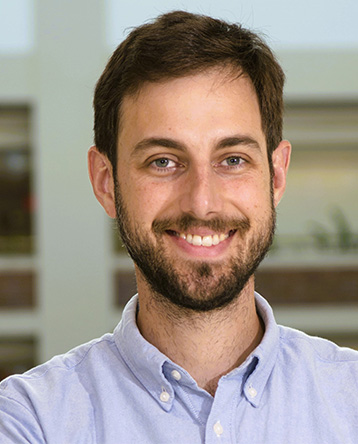
Peter Boag is an Associate Professor at Monash University's Department of Biochemistry & Molecular Biology, affiliated with the Monash Biomedicine Discovery Institute. His research focuses on RNA biology, small RNA pathways, and gene regulation in the model organism Caenorhabditis elegans , with applications in biomedical discovery and parasitology. Key research areas: RNA-protein interactions, germ cell development, and anthelmintic drug discovery. External affiliation: Adjunct role at the University of Melbourne. Research Trends : The latest publications highlight genomic integrity in C. elegans (2024), miRNA pathways (2024), anthelmintic screening methodologies (2022-2021), translational regulation mechanisms (2020), and epigenetic inheritance studies (2018). Articles consistently emphasize the role of RNA biology in developmental processes and biomedical applications. Projects : Current initiatives include Biomolecular Condensates in mRNA Regulation (2024-2027) and collaborations on food-borne parasite interventions. Past projects explored RIO kinases (2013-2015) and RNA salon platforms (2017).
Panayiota Touloupou is a Lecturer in Mathematics and Statistics at the School of Mathematics, University of Birmingham. Her research focuses on statistical methodology and computational statistics, particularly applied to stochastic epidemic models and infectious diseases. She is affiliated with the Mathematical Biology and Healthcare Group, Applied and Computational Statistics Group, and the Institute of Data and AI. Her work has been supported by grants from the Bill and Melinda Gates Foundation and the Task Force for Global Health. Education: BSc in Mathematics and Statistics, University of Cyprus (2011) MSc in Statistics, University of Warwick (2012) PhD in Statistics, University of Warwick (2016), thesis: 'Bayesian inference and model selection for partially observed stochastic epidemics' Research Interests: Her research integrates statistical methods with epidemiological modeling, including Bayesian inference, model selection, and geospatial analysis. Key areas include lymphatic filariasis elimination strategies, disease intervention projections, and the impact of global health crises like the pandemic on neglected tropical disease programs. She develops frameworks for linking geostatistical data with transmission models to inform public health policies. Awards: None explicitly listed. Grants & Advising: Supervises PhD students in Applied Statistics and epidemiology. Active in the Neglected Tropical Disease modeling consortium. Funded by major health initiatives. Labs/Teams: Member of the Mathematical Biology and Healthcare Group, Applied and Computational Statistics Group, and Institute of Data and AI. Also serves on the School of Mathematics' Equality, Diversity and Inclusion committee.
Akira Kaneko is a Professor at the Department of Microbiology, Tumor and Cell Biology at Karolinska Institutet, leading the Island Malaria Group. He has conducted extensive research on malaria epidemiology, chemotherapy, and elimination in regions including Vanuatu, Papua New Guinea, Indonesia, Cambodia, Malawi, Zanzibar, Ghana, and Kenya since 2011. His academic career includes a PhD from Karolinska Institutet (1999) and an MD from Hirosaki University School of Medicine (1982). Research focuses on global health challenges, particularly tropical medicine, with a specialization in malaria control strategies and their socioeconomic implications. Notable contributions include studies on Plasmodium species distribution, drug resistance mechanisms, and intervention efficacy in high-endemic areas. Key achievements include the TROPMED Outstanding Alumni Award (2018) and the Tropical Medicine Award (2016). He has authored over 150 peer-reviewed articles, including recent works on spatial analysis of malaria vaccine access and genomic surveillance of Plasmodium falciparum in East Africa. Current projects include evaluations of financial incentive interventions for malaria reduction in Kenya and studies on Cryptosporidium parvum inactivation via ozonated water. He collaborates with international teams across epidemiology, genomics, and public health policy.
Derin Sevenler is an Assistant Professor in Chemical Engineering at Carnegie Mellon University. His research addresses problems at the interface of biotechnology and fluid mechanics with specific interests in microfluidics, biomaterials, and molecular diagnostics. His work focuses on developing innovative technologies for intracellular delivery, biosensing, and cryopreservation. Research includes viscoelastic mechanoporation systems for gene therapy, high-throughput intracellular delivery platforms, and advanced vitrification techniques for biological preservation. Dr. Sevenler received the NIH Pathway to Independence Award recognizing his contributions to microfluidic diagnostics. He completed his PhD in Biomedical Engineering at Boston University and postdoctoral training at Massachusetts General Hospital. His lab develops practical solutions for healthcare challenges through microengineering approaches.
Ken H Holscher is an Associate Professor Emeritus at Iowa State University's Department of Entomology. He specializes in livestock and poultry pest management, public health pest control, and stored grain insect management. His extension programs focus on practical pest solutions for agriculture and public health. Dr. Holscher holds a Ph.D. in Entomology from Oklahoma State University (1981), an M.S. in Entomology (1978), and a B.S. in Secondary Education from Kearney State College (1972). His research interests center on tick biology, including molting behavior, host detection mechanisms, and disease transmission pathways. He has extensively studied species like Ornithodoros and Amblyomma ticks, focusing on environmental stimuli (e.g., CO₂) and chemical ecology. His work bridges laboratory studies with field applications in agricultural pest management. Teaching responsibilities include courses such as Principles of Biology I, Introduction to Insects, Pesticide Applicator Certification, and Livestock Entomology. He also supports the Iowa Agricultural Aviation Association Fly-In Clinics and Pesticide Applicator Certification Program. His publications (1978–1987) emphasize tick behavior, vector biology, and pest control strategies. Notable topics include carbon dioxide effects on molting, in vitro tick feeding, and host effluent analysis.
John Blanton is an Associate Dean for Research in the College of Agriculture, Food and Environmental Sciences at South Dakota State University (SDSU), and Director of the South Dakota Agricultural Experiment Station. He holds a Professor rank in animal science with a focus on livestock health and production systems. His roles include overseeing research programs, managing agricultural research stations, and guiding interdisciplinary initiatives. Blanton's research emphasizes bovine respiratory disease (BRD) pathogenesis, antimicrobial resistance in livestock pathogens, and transcriptomic approaches to predict disease outcomes. His work bridges veterinary medicine and agricultural systems, addressing challenges in cattle health, feed efficiency, and sustainable livestock management. He has contributed to studies on endophyte-infected forages, dietary interventions for growth optimization, and molecular mechanisms underlying disease resistance. Key areas of focus include: Development of predictive biomarkers for BRD using transcriptomic data Evaluation of antimicrobial metaphylaxis strategies and their impact on pathogen resistance Investigation of dietary lysine effects on muscle protein dynamics in pigs Optimization of vaccination/deworming protocols for stocker cattle Analysis of forage quality and ergot alkaloid impacts on cattle performance His publications span over three decades, demonstrating sustained contributions to livestock health science, animal nutrition, and applied agricultural research. Blanton collaborates with industry stakeholders to translate scientific findings into practical solutions for cattle producers and veterinary practitioners.
Chinonyelum Linda Oforka is a Teaching Professor II in the Department of Entomology at the University of Wisconsin-Madison. She holds a PhD in Applied Entomology and Pest Management from the University of Lagos (2018) and a BS in Zoology from the same institution (2010). Her research focuses on vector-borne diseases, particularly onchocerciasis (river blindness) and malaria, with an emphasis on neglected tropical diseases (NTDs) and global public health. She has conducted fieldwork in Nigeria and served as a visiting scholar at Auburn University, AL, USA. At UW-Madison, she specializes in instructional support for Global Health programs, developing teaching methods and supervising instructional staff. Her research explores the ecology of disease vectors like mosquitoes and black flies (Simulium damnosum complex), investigating their distribution, transmission dynamics, and control strategies. Recent work includes studies on urban mosquito ecology in Lagos, Nigeria, and the repellent efficacy of tropical plant-derived compounds. She also examines public health perceptions and practices related to disease prevention in underserved communities. Dr. Oforka’s publications span entomological research, public health interventions, and molecular characterization of vector species. Her work bridges ecological and social dimensions of disease transmission, emphasizing practical solutions for global health equity.
Honorary Professor George Dennis Shanks is affiliated with the School of Public Health at the University of Queensland. With over four decades of research spanning military medicine, historical epidemiology, and tropical infectious diseases, his work bridges clinical practice, historical analysis, and public health policy. His extensive publication record demonstrates sustained scholarly contribution to understanding disease patterns across time and conflict zones. Professor Shanks' research primarily focuses on malaria epidemiology, particularly Plasmodium vivax biology and historical outbreaks, with significant contributions to understanding disease patterns in military contexts. His work examines malaria's impact on military operations from the American Revolutionary War through World War II, analyzing how infectious diseases shaped historical outcomes. He has also investigated influenza pandemics, scrub typhus, dengue, and other tropical diseases through historical and epidemiological lenses. His research methodology uniquely combines archival analysis with modern epidemiological techniques to extract insights from historical disease patterns. Analysis of his recent publications reveals a consistent focus on historical disease outbreaks with contemporary relevance. His work often examines how past epidemics inform current disease control strategies, particularly regarding malaria elimination efforts. The publications demonstrate expertise in both clinical malaria treatment and the historical evolution of disease control measures, with particular attention to military medical history and tropical disease challenges in the Asia-Pacific region. Professor Shanks has contributed significantly to malaria research through collaborations with the Army Malaria Institute and other military medical research organizations. His work spans drug development, historical analysis of disease impact on military operations, and contemporary malaria control strategies. While specific grant information isn't detailed in the provided text, his extensive publication record suggests sustained research funding across multiple decades. His research has been conducted through affiliations with military medical research institutions and academic public health departments, focusing on laboratory analysis, historical documentation, and field epidemiology related to tropical disease outbreaks and military medicine.
Benedikt Ley is a researcher at the Menzies School of Health Research with a PhD and ORCID ID 0000-0002-5734-0845. He is registered to supervise postgraduate research and has an extensive publication record with 96 research outputs spanning from 2008 to 2025. His work has accumulated 2371 citations with an h-index of 29. Dr. Ley's research focuses on the interaction between G6PD enzyme deficiency and the malaria parasite Plasmodium vivax in the human host, as well as assessing G6PD deficiency as a risk factor in standard malaria treatment. His work significantly contributes to Sustainable Development Goals related to health and well-being. His publication record shows consistent research output with notable increases in 2012, 2017-2019, 2022-2023, and recent publications in 2024-2025. His recent work demonstrates strong international collaboration across multiple continents, with research conducted in Cambodia, Ethiopia, Indonesia, and Papua New Guinea. His scientific contributions fall primarily within the areas of malaria research, G6PD testing methodologies, antimalarial treatment protocols, and diagnostic test evaluation. His work has been published in high-impact journals including BMJ Global Health, Malaria Journal, BMC Infectious Diseases, and PLoS Neglected Tropical Diseases. Dr. Ley has supervised at least two postgraduate research projects and collaborates extensively with researchers worldwide, particularly with Price R.N. and Thriemer K. as evident from co-authorship patterns. His research has practical implications for malaria elimination programs and improving treatment safety in malaria-endemic regions.
Dr. Yujuan Li is a Research Fellow in Plant Biosecurity affiliated with the Faculty of Science and Technology. She holds a PhD in Ecology from Fudan University (2008) and a Bachelor of Science in Plant Pathology from Yangtzeu University (2003). Her research focuses on nematology, plant pathology, and biosecurity, with emphasis on crop protection, soil health, and sustainable agricultural practices. Key areas include investigating plant-parasitic nematodes' ecological impacts, developing biocontrol agents using nematode-trapping fungi, and converting agricultural waste into high-value products. She collaborates with industry stakeholders to bridge research and practical applications, promoting environmental and economic sustainability in Australian agriculture. Education: PhD in Ecology, Fudan University (2003–2008) Bachelor of Science in Plant Pathology, Yangtzeu University (1999–2003) Research Interests: Ecological impacts of plant-parasitic nematodes (PPNs) Biocontrol using fungi like Arthrobotrys oligospora Sustainable agricultural waste conversion Biosecurity measures for pest management Recent work highlights biochar-fertilizer synergies for crop yield, nitrogen application timing in sweetpotato, and organic amendments against Meloidogyne spp. Her projects address pest distribution in northern Australia and involve horticultural crops like ginger and cotton. Advising & Grants: Registered to supervise postgraduate research Leading the 'Understanding current and future distribution of parasitic plant nematodes in northern Australia' project (2023–2025) Labs/Teams: Collaborates with AgTech companies, farmers, and government agencies through interdisciplinary projects.
Elvin Lufele is a PhD candidate at the Menzies School of Health Research, focusing on malaria in pregnancy. His research emphasizes prevention strategies to improve birth outcomes and reduce malaria transmission. He holds degrees from the University of Papua New Guinea and has conducted malaria research at the PNG Institute of Medical Research. Education: Bachelor of Science (University of Papua New Guinea) Bachelor of Science with Honours (University of Papua New Guinea) Master of Medical Science (University of Papua New Guinea) Research Interests: Maternal and child health, malaria prevention in pregnancy, infectious disease control, and global health interventions. Projects: Principal Investigator for the HDR Project 'Malaria in pregnancy: novel preventative strategies to reduce adverse pregnancy outcomes and malaria transmission' (2022–present). Labs/Teams: Collaborates with researchers at Menzies School of Health Research and institutions across the Asia-Pacific region.
Abris Bendes is a Researcher at Abo Akademi University's Faculty of Natural Sciences and Engineering, within the Biochemistry and Cell Biology department. Their work focuses on malaria parasite biology, enzymology, and structural biology, particularly studying actin capping proteins and dUTPase enzymes. They are part of the InFLAMES flagship program, which develops solutions based on immune system research. Research interests include understanding molecular mechanisms in parasitic pathogens like Plasmodium , enzyme inhibition pathways, and structural biology applications in drug discovery. Their publications (2011–2022) highlight studies on actin dynamics in malaria parasites and enzymatic processes in Mycobacterium tuberculosis . No scientific awards are explicitly mentioned. Advising no students, their research aligns with the InFLAMES ecosystem. No grants or labs are detailed in the provided text.
Jack Hearn is an Applied Data Scientist at Scotland's Rural College (SRUC), affiliated with the Veterinary And Animal Science department and the Centre for Epidemiology and Planetary Health (CEPH). He holds a PhD in Genetics from the University of Edinburgh (2009–2013), following a Master's (University of Edinburgh, 2007–2008) and Bachelor's (Imperial College London, 2004–2007). His research focuses on insecticide resistance mechanisms in malaria vectors, particularly Anopheles species, and explores genetic, epidemiological, and molecular aspects of parasitology. Notable projects include studying pyrethroid resistance in Anopheles funestus and investigating the genetic basis of resistance in Psoroptes ovis, a parasite of cattle. He has held external roles as an Associate at Liverpool School of Tropical Medicine (2018–2022) and the University of Edinburgh’s Institute of Evolutionary Biology (2013–2018). Recent work emphasizes genomic and transcriptomic approaches to identify resistance markers, such as CYP450 enzymes and structural variations. Collaborations span Africa and Asia, addressing global health challenges in vector-borne diseases. His current project (2024–2027) investigates resistance mechanisms in sheep scab mites, targeting macrocyclic lactone resistance. Publications (46+ articles) highlight contributions to understanding resistance evolution, metabolic pathways, and community-wide treatment impacts on parasitic infections. Research outputs span BMC Genomics , Genetics , and Nature Communications .
Fiona Menzies is a Senior Lecturer at the School of Health and Life Sciences, University of the West of Scotland (UWS), where she serves as Programme Leader for undergraduate Biomedical Science degrees (BSc and Applied BSc). She holds a Senior Fellowship from AdvanceHE and coordinates modules including Human Biology, Bio-Professional Practice, and Clinical Immunology. Her academic career includes doctoral research at the University of Strathclyde (focused on progesterone’s role in immune modulation) and post-doctoral work at the University of Glasgow in Reproductive & Maternal Medicine. Research Interests: Dr. Menzies specializes in Reproductive Immunology, specifically human pregnancy immunology. Key projects address UN Sustainable Development Goal 3 (health/well-being), including: ethanol’s impact on placental function, IL-33 and ACKR2 roles in the placenta, and Toxoplasma gondii-induced inflammation control. She aims to establish UWS as a global leader in translational reproductive immunology research. Engagement & Awards: A registered STEM ambassador, she actively engages schools and early learning centers through public outreach. Her 2017 Royal Society of Biology Science Communication Award recognizes her contributions. Collaborations include NHS Greater Glasgow/Clyde, Universities of Glasgow/Strathclyde, and Renfrewshire Council.
Dr. Maxwell Farrell is a Lecturer in Artificial Intelligence at the University of Glasgow's School of Biodiversity, One Health and Veterinary Medicine and an Affiliate Researcher at the MRC-University of Glasgow Centre for Virus Research . He earned a PhD in Biology from McGill University and conducted postdoctoral work at the University of Georgia , University of Toronto , and University of Glasgow . Since 2024, he has led a research group focusing on the ecology and evolution of infectious diseases through a macroecological lens. Research Affiliations: MRC-University of Glasgow Centre for Virus Research Leverhulme Programme for Doctoral Training in Ecological Data Science Crucible-funded Data Sonification Working Group Research Interests include: Host-pathogen interaction networks Text mining and AI for biodiversity science Phylogenetic comparative methods in disease ecology Macroecological modeling of multi-species pathogens Computational statistics for ecological synthesis Biodiversity genomics for disease surveillance Publication Trends show sustained contributions to Proceedings of the Royal Society B , Nature Microbiology , Lancet Planetary Health , and Philosophical Transactions of the Royal Society B , with recent articles emphasizing large language models for pest control synthesis, text mining frameworks in ecology, and global threat interconnections between climate change and zoonotic diseases. Supervision: Avery Holmes (Wellcome Trust IIB PhD) Erwin John Sioson (NorthWest Bio DTP) Claire Walden (VetFund PhD Scholarship) Collaborative Networks include the Viral Informatics, Biostatistics, and Evolution (VIBE) Lab , the SBOHVM Stats Support Group , and the Leverhulme Ecological Data Science DTP .