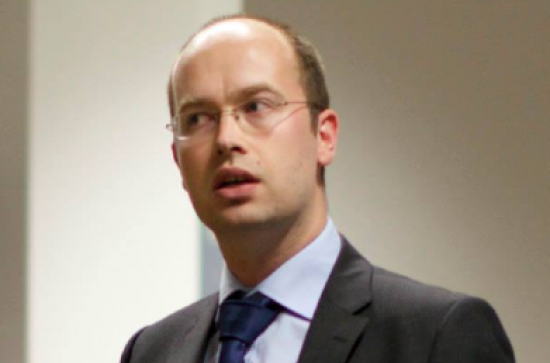
Aleksandra Pomiecko is a Lecturer in Modern History at King's College London, specializing in Eastern European and Soviet history. She has held teaching positions at the University of St Andrews, the University of Manitoba, and the University of Toronto, and was a postdoctoral fellow at the Mandel Center for Advanced Holocaust Studies. PhD, University of Toronto MA, Uniwersytet Jagielloński Her research focuses on war and violence in twentieth-century Eastern Europe, particularly paramilitary activity, partisan movements, and local experiences of conflict. She explores topics such as Belarusian nationalism, post-war insurgency, and the role of religious institutions during the Holocaust. Recent publications examine paramilitarism in Polish borderlands, Soviet nation-building policies, and religious resistance in wartime Poland. Her work contributes to understanding the longue durée of paramilitary dynamics and their global implications. Scientific awards: Postdoctoral Fellowship at the Mandel Center for Advanced Holocaust Studies
Sveinung Sandberg is a Professor at the Department of Criminology and Sociology of Law, University of Oslo. His research spans marginalization, illegal drug markets, radicalization, and narrative criminology, combining theoretical frameworks from Bourdieu and narrative analysis. Academic Interests: Marginalisation, Legal & Illegal Drugs, Violence, Radicalization, Bourdieusian Criminology, Narrative Criminology, Latin American Studies, Social Movements Education: PhD from University of Bergen Research Focus includes: Street capital theory in criminology Drug market cultural dynamics Narrative approaches to extremism Latin American criminal trajectories Recent Publications examine pandemic-related crime shifts, gendered drug use patterns, and narrative mechanisms in criminal justice. His 2021-2025 projects Radicalization and Resistance and Crime in Latin America (CRIMLA) involve cross-country life-story analyses. Scientific Awards: Fridtjof Nansen's Award for Young Researchers (2011) The Meltzer Prize for Young Researchers (2010) Editorial Roles include board memberships at Theoretical Criminology , Deviant Behavior , and International Criminal Justice Review . He has conducted fieldwork in Mexico and held visiting positions at institutions including CIDE (Mexico City) and European Monitoring Centre for Drugs and Drug Addiction (Lisbon).
Richard Steigmann-Gall is an Associate Professor of History at Kent State University's Department of History, within the College of Arts & Sciences. He previously served as Director of the Jewish Studies Program (2004–2010). Holding degrees from the University of Michigan (BA, MA) and the University of Toronto (PhD), his research focuses on religion and Nazi Germany, transatlantic fascism, and antisemitism. His seminal work, *The Holy Reich: Nazi Conceptions of Christianity, 1919-1945*, has been translated into Spanish, Portuguese, and Italian, earning widespread academic and public acclaim. His research has been supported by grants from institutions like the Social Science and Humanities Research Council of Canada, the Max Planck Institute, and the U.S. Holocaust Memorial Museum. Dr. Steigmann-Gall has presented globally, including at Georgetown, NYU, Cambridge University, and the University of Sydney. He is a recipient of the Distinguished Teaching Award from Kent State's College of Arts & Sciences (2004) and has been a frequent media commentator on fascism and modern political movements. Research & Education: His expertise spans Nazism’s religious dimensions, comparative fascist ideologies, and the cultural underpinnings of antisemitism. Current projects include a chapter on religion and genocide in pre-WWII American fascist thought for *American Fascism: Past and Present* (Cambridge). He has published in journals like *German History*, *Journal of Holocaust Research*, and *Totalitarian Movements and Political Religions*. Teaching & Outreach: Dr. Steigmann-Gall teaches courses on modern European history, fascism, and the Holocaust. He has mentored students in topics including Nazi Germany and transnational extremism, and his pedagogical approach has been recognized through teaching awards and nominations. He has also engaged with public discourse through media appearances in *The New York Times*, *The Daily Beast*, and documentaries on the History Channel. Awards & Grants: Distinguished Teaching Award (2004) Grants from the Max Planck Institute, SSHRC, and the U.S. Holocaust Memorial Museum Collaborations & Networks: He has collaborated on edited volumes and contributed to projects at institutions worldwide, reflecting his commitment to transnational historical inquiry.
Kevin Limonier is a lecturer in geography and Slavic studies at the French Institute of Geopolitics (Paris 8 University) and deputy director of GEODE, a Center of Excellence selected by France's Ministry of the Armed Forces. His research focuses on the geopolitics of Russian-speaking cyberspace, digital sovereignty, and open-source intelligence (OSINT), with particular relevance to the Ukraine conflict and Russian information warfare. His work bridges digital and physical spaces, challenging traditional notions of cyberspace by proposing the datasphere as a tangible layer of reality. He has developed tools for tracking information dissemination on social networks and analyzing Russian strategies of influence, including fake news and support for political figures like Marine Le Pen. Expertise : Digital ethnography, cybersecurity, Russian strategic studies Key Contributions : Co-editor of Hérodote issue 186 on OSINT, fieldwork in Dubna (Russia) on nuclear cities and hacker communities His articles highlight trends in cyber geopolitics , Ukraine war analysis , digital sovereignty , and Russian influence operations , particularly in Africa and Europe.
Clemencia Rodríguez is a Professor in the Department of Media Studies and Production at Temple University's Lew Klein College of Media and Communication. Her work bridges Colombian and Philadelphia-based research on citizens' media, focusing on environmental communication in post-conflict Colombia and local community media initiatives in the U.S. She co-founded OURMedia/NUESTROSMedios and serves on the Independence Public Media Foundation's board. Education: BA in Communication, Universidad Javeriana (Colombia) MA in Communication and Development, Ohio University PhD in International Telecommunications, Ohio University Research Focus: Community/alternative media theory War, peace, and media interactions Environmental communication in grassroots movements Media representations of gender, class, and race Teaching: Media studies Communication and social change Latin American media systems
Dr. Grzegorz Gil is a Lecturer at the Department of International Security , Maria Curie-Skłodowska University in Lublin , Faculty of Political Science and Journalism. Holds a PhD in Political Science (2010) and MA in International Relations (2005) from UMCS. Research focuses on state failure , post-conflict recovery , and international security with regional expertise on Africa , Middle East , and Pacific states . Teaches courses on: International relations Humanitarian operations Australian foreign policy Economic diplomacy Publications (over 15 works) analyze state collapse (Somalia, Yemen, Colombia), military interventions , and regional integration (EU-ASEAN relations). Currently serves as expert for Team Europe Direct (2023–present) and juror in Academic Polish Oxford Debating Championships .
Dr. Michael Flavin is a Professor at King’s College London, holding the position of Reader in Global Education at the African Leadership Centre within the School of Global Affairs. He earned a degree, three master’s degrees, and two doctorates: one in 19th-century literature (University of Kent, 1999) and another in Education with a focus on technology-enhanced learning (Open University, 2014). His work bridges education technology, disruptive innovation, global leadership, and 19th-century literature. Flavin’s research spans technology-enhanced learning strategies, leadership in conflict contexts (e.g., Northern Ireland’s Troubles), and the sociopolitical dimensions of higher education. His 2018 work on technology-enhanced learning was a runner-up in the ALT Research Project of the Year award. He has authored numerous books, including novels like The Voice Hearer (2024) and One Small Step (2022), and edited Research in Learning Technology . He reviews for major publishers like Palgrave Macmillan and Routledge. His recent publications analyze leadership failures in Irish paramilitary groups, neoliberal values in university prospectuses, and the evolution of learning technology research. Flavin’s interdisciplinary approach integrates literary analysis, policy critique, and educational innovation.
Matthew Casey is an Associate Professor and Director of the School of Humanities at the University of Southern Mississippi (USM). He holds a PhD from the University of Pittsburgh (2012) and teaches courses on Latin American and Caribbean history, including HIS 102, HIS 310, and HIS 424. His research focuses on Cuba and Haiti, examining themes of migration, labor, and US imperialism during the early 20th century. Education: PhD in History, University of Pittsburgh (2012) MA in History, University of Pittsburgh (2006) BA in History, University of Texas at Austin (2003) Research interests include transnational migration patterns, colonial and postcolonial governance, and the socio-economic impacts of US interventions in the Caribbean. His 2017 monograph Empire's Guest Workers analyzes Haitian laborers in Cuba during US occupations, while recent articles explore labor conflicts, paramilitary politics in Republican Cuba, and pedagogical approaches to linking African American and Latin American histories. Publications span peer-reviewed journals such as International Labor and Working Class History and Caribbean Studies , reflecting interdisciplinary engagement with labor history, political economy, and cultural studies. Casey is fluent in Spanish and actively contributes to scholarly debates on Caribbean historiography.
Andres D. Uribe is an Assistant Professor of Political Science at the University of Wisconsin-Madison, where he also holds the 2024-25 Anna Julia Cooper Postdoctoral Fellowship. His research investigates the complex interactions between democracy, violence, and state formation in the Americas, with a particular focus on how armed non-state actors influence electoral politics and governance. Dr. Uribe earned his PhD in Political Science from the University of Chicago in 2023. Prior to joining UW-Madison, he was a Postdoctoral Fellow at Stanford University's Center on Democracy, Development, and the Rule of Law (CDDRL) during 2023-24. His scholarly work spans several critical areas in political science: democratic resilience against violent interventions, rebel governance in civil war contexts, and strategies of democratic backsliding . Through multi-method research combining large-N statistical analysis with in-depth case studies, Uribe examines how criminal organizations, rebels, and paramilitaries establish governance structures, influence elections, and interact with state institutions. His book project, War on the Ballot Box: How Violent Actors Corrupt and Disrupt Democracy , analyzes electoral interventions by armed groups across Latin America. Uribe's recent publications (2020-2025) reveal a consistent focus on non-state governance and democratic vulnerability. His work on criminal governance in Latin America demonstrates its surprising correlation with state presence, while studies of Colombian civil war dynamics show how rebels opportunistically exploit temporary state weaknesses. Research on Mexican democracy documents how presidential rhetoric can degrade public confidence in institutions—a key mechanism for democratic erosion. Collectively, these contributions illuminate the multifaceted challenges to democratic governance in conflict-affected societies. Dr. Uribe has received significant recognition for his work: Anna Julia Cooper Postdoctoral Fellow, University of Wisconsin-Madison (2024-25) Postdoctoral Fellow, Center on Democracy, Development, and the Rule of Law (CDDRL), Stanford University (2023-24) While specific details about his advising activities and research grants are not provided in the available materials, his collaborative publications with scholars across multiple institutions suggest active engagement in interdisciplinary research networks. His work frequently involves partnerships with experts in criminology, conflict studies, and comparative politics. Though no dedicated research laboratory is mentioned, Uribe's projects often employ innovative methodologies including text-as-data analysis, survey experiments, and spatial analysis of conflict data, indicating sophisticated research infrastructure support at his host institutions.
Tatiana Terry is a Brazilian architect and urban planner holding the position of Professor at the Pontifical Catholic University of Rio de Janeiro (PUC-RIO) since 2013, and concurrently serves as a Visiting Research Fellow at King’s Brazil Institute, School of Global Affairs, King’s College London. Her work focuses on urban informality, critical cartography, and public housing policies in favelas, particularly in Rocinha, Rio de Janeiro. Education: Postgraduate degree in Urban Planning from the Federal University of Rio de Janeiro, with a doctoral dissertation on social-spatial transformations in favelas influenced by speculative real estate markets and paramilitary groups. Research Interests: Explores alternative representations of favelas beyond hegemonic narratives, emphasizing participatory projects and collaborations with grassroots collectives. Current research project: Mapping Rocinha from new perspectives: critical cartography as a backdrop , analyzing how marginalized communities document their spaces through insurgent citizenship practices (Holston, 2008). Advising/Grants: Leads curricularization efforts at PUC-RIO, integrating real-world favela projects into undergraduate education. Collaborates with UNIR PROJECT, bridging Rocinha’s grassroots movements and academic research. Labs/Teams: Co-founder of UNIR PROJECT, a knowledge-bridge initiative between Rocinha residents and PUC-RIO researchers.
Dr. Tristan Sturm is a Reader in Human Geography at Queen's University Belfast, School of Natural and Built Environment. He holds a fellowship at the Senator George J Mitchell Institute for Global Peace, Security and Justice. His research focuses on conspiracy theories, apocalyptic thought, and geopolitical dynamics, particularly in the context of Northern Ireland and Israel/Palestine. He has published extensively on topics such as Christian Zionism, climate change conspiracies, and sectarian reconciliation. Education: Ph.D., Geography, University of California, Los Angeles (2006–2011) M.A., Geography & Environmental Studies, Carleton University (2004–2006) B.A., Geography (honours & distinction), University of Victoria (2001–2003) Research Interests: Dr. Sturm explores apocalyptic geopolitics, the intersection of religion and politics, and the societal impact of conspiracy theories. His work includes studies on paramilitary funeral rituals in Northern Ireland for reconciliation and the role of Christian Zionism in Middle Eastern geopolitics. Key Awards: Affective Apocalypses Fellowship (£3250, ICRH, 2015) Centre for Apocalyptic and Post-Apocalyptic Studies Grant (€16,000, 2025) Grants & Collaborations: Co-investigator in the Dementia NI Service project (2016–present). Active in interdisciplinary collaborations, including projects on urban environmental exposures and religious geopolitics. Labs/Teams: Leads the Apocalyptic Geopolitics research group and contributes to the Mitchell Institute’s work on global peace and justice initiatives.
Kimberly Marten is a Professor of Political Science at Barnard College, Columbia University. She specializes in international relations, international security, Russia, and the global politics of climate change. She is a faculty member and executive committee member of Columbia’s Harriman Institute for Russian, Eurasian, and East European Studies and Saltzman Institute of War and Peace Studies. She is also a member of the Council on Foreign Relations (CFR) and the International Institute for Strategic Studies. Educated at Harvard University (A.B.) and Stanford University (Ph.D.) Her research focuses on Russian foreign policy, paramilitary organizations, NATO enlargement, Arctic security, and the intersection of climate change with geopolitics. She has testified before the U.S. House Foreign Affairs Committee and participated in bipartisan cybersecurity task forces. Her recent publications analyze the Wagner Group, Russia’s strategic alliances, and the implications of NATO expansion. Kimberly Marten’s courses include POLS BC3605: The Global Politics of Climate Change , POLS BC3060: Colloquium on the Politics of the Arctic , and POLS BC3118: Colloquium on International Security . She actively contributes to policy discussions on Russia, cybersecurity, and Arctic governance, blending academic rigor with practical policy analysis.
Dr. John Morrison is an Associate Professor in Criminology at Maynooth University's School of Law and Criminology. He holds a PhD in International Relations (University of St Andrews), an MA in Forensic Psychology (University College Cork), and a BA in Psychology (University College Dublin). His research focuses on terrorist decision-making, including organizational splits, radicalization, and trust dynamics in extremist groups. Funded by ESRC and Minerva, his work has been published in journals like Terrorism and Political Violence and Studies in Conflict and Terrorism . Morrison serves as Co-Editor of Behavioral Sciences of Terrorism and Political Aggression , and is an Associate Fellow at the International Centre for Counter-Terrorism. He founded research centers on terrorism and extremism at Royal Holloway and the University of East London. His teaching includes modules on criminology and terrorism at Maynooth. Recent students include Dr. Daniella Scerri and Dr. Eke Bont. Key roles include Director of Teaching and Learning at Maynooth’s School of Law and Criminology, and advisory board member for the Society for Terrorism Research. His podcast Talking Terror interviews leading experts in counter-terrorism studies. Awards include an honorary lectureship from UCL’s Security and Crime Science department. Research interests span disengagement strategies, CVE initiatives, and the psychology of extremist group membership. He has authored/co-authored over 30 peer-reviewed articles and books, including 100 Years of Irish Republican Violence (2016). Current projects address climate change and terrorism linkages, and interdisciplinary criminal justice research frameworks.
Professor Jonathan Tonge is a leading academic in the Department of Politics at the University of Liverpool, currently serving as the REF outputs coordinator. His research focuses on Northern Ireland politics, peace processes, devolution, and political parties and elections in the UK and Ireland. He has supervised numerous PhD students on these topics and led major projects like the Leverhulme Trust’s voting age study. Key Appointments: President of the British Politics Group (2016-present), former President of the Political Studies Association of the UK (2008-11), and Visiting Professor at the University of Ulster (2006-7). Grants: Recently secured funding from the British Academy and ESRC for studies on the Alliance Party and Northern Ireland elections (2023-2025). His publications span books and journal articles analyzing Northern Ireland’s political evolution, including works on the Alliance Party’s role in peace processes and voter behavior. Awards include the University of Liverpool Civic Contribution Award (2012) and the PSA Bernard Crick Prize (1997). He chairs committees, edits Parliamentary Affairs , and collaborates with institutions like Queen’s University Belfast and the University of Huddersfield. Scientific Awards: University of Liverpool Civic Contribution Award (2012) CiCea Best Research Publication (2012) PSAI Brian Farrell Prize (2010) PSA Bernard Crick Prize (1997)
Professor F. LeRon Shults holds a faculty position at the University of Agder's Department of Global Development and Planning. His research focuses on social simulation, computational social science, and the cognitive science of religion. He leads projects analyzing secularization trends, prosocial behavior, and pandemic response strategies through agent-based modeling. Collaborations include international teams addressing issues like religious demography, ethical AI systems, and conflict resolution. Key contributions include modeling the role of religious motivation in societal cooperation and simulating emotional contagion during crises. Research groups affiliated with him include 'Mobility, culture and gender' and 'Social simulation'. His work bridges disciplines such as sociology, cognitive science, and public policy. Recent studies explore secularization's evolutionary foundations, psychedelic experience analysis, and the ethics of artificial societies. He actively participates in conferences and publishes in journals like *Theory and Society* and *Religion, Brain and Behavior*.